1
Characteristics
of
Gothic Literature
When did it become popular?
• Later 18th Century
• Started with a “Gothic
Revival” -- mid-1700’s
• Visible in gardens
• Seen in architecture
(gargoyles) of the
Middle Ages
• 1740’s - Horace Walpole
- Strawberry Hill estate
near London
• Published The Castle of
Otranto: a Gothic Story -
1764
http://www.puzzlehistory.com/gothgrdn.jpg
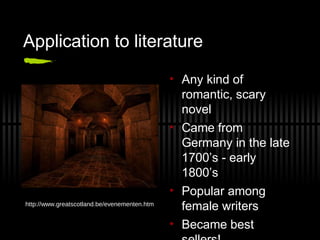
Application to literature
• Any kind of
romantic, scary
novel
• Came from
Germany in the late
1700’s - early
1800’s
• Popular among
female writers
• Became best
http://www.greatscotland.be/evenementen.htm
Famous Gothic Writers
• Ann Radcliffe - The Mysteries
of Udolpho
• Jane Austen -- Northanger
Abbey (parody of Gothic
novels)
• Charlotte Bronte -- Jane Eyre
• Emily Bronte -- Wuthering
Heights
• Shirley Jackson, Daphne du
Maurier, Barbara Michaels,
Anne Rice
A classic
• Mary Shelley’s
Frankenstein (1818)
• Single most important
product of this tradition
• Themes relate to
science, poetry,
psychology, alienation,
politics, education,
family relationships, etc.
• Tradition: 8-foot tall
monster made of
separate body pieces
librarycommission.lib.wv.us/ WVLC%20BOOK/Frank...
Influence felt elsewhere
• Rime of the Ancient Mariner
by Coleridge-- skeleton ship
and the crew’s reaction
• Christabel by Coleridge--
atmosphere, setting, and
fragmentary plot of
seduction and witchery
• Manfred by Byron -- initial
scene
• The Even of St. Agnes by
Keats -- setting
http://www.wilsonsalmanac.com/images2/ancient_mar
iner4.jpg
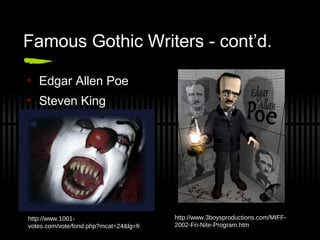
Famous Gothic Writers - cont’d.
• Edgar Allen Poe
• Steven King
http://www.3boysproductions.com/MIFF-
2002-Fri-Nite-Program.htm
http://www.1001-
votes.com/vote/fond.php?mcat=24&lg=fr
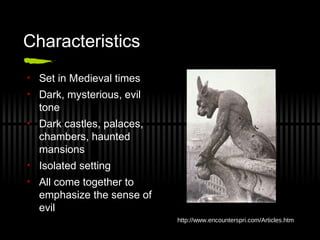
Characteristics
• Set in Medieval times
• Dark, mysterious, evil
tone
• Dark castles, palaces,
chambers, haunted
mansions
• Isolated setting
• All come together to
emphasize the sense of
evil
http://www.encounterspri.com/Articles.htm
More characteristics
• Presence of ghosts,
spirits, vampires, and
other supernatural
entities
• Mysterious
disappearances and
reappearances
• Supernatural or
paranormal
occurrences http://www.penelopesweb.com/gargoyles.html
Characteristics -- cont’d.
• Religion, usually
Christianity or at
least spirituality, is
confronted.
• A gothic “double” is
used in which a
character who
seems to be good is
linked with another
who is evil www.pagedepot.com/.../ GOTHIC%20CHAPBOOKSX.HTM
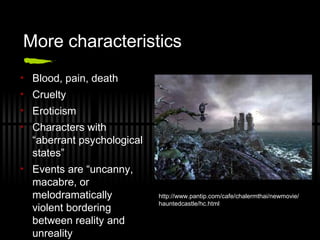
More characteristics
• Blood, pain, death
• Cruelty
• Eroticism
• Characters with
“aberrant psychological
states”
• Events are “uncanny,
macabre, or
melodramatically
violent bordering
between reality and
unreality
http://www.pantip.com/cafe/chalermthai/newmovie/
hauntedcastle/hc.html
Purpose
• To evoke “terror”
versus “horror” in the
reader because of
situations bordering
reality/unreality
•Often used to teach a
message
• May lack a Medieval
setting but will develop
an atmosphere of
gloom and terror
Differentiating between the two
• Horror
•“An awful
apprehension”
•Described distinctly
•Something grotesque
•So appalling,
unrealistic
•Depends on physical
characteristics
• Terror
• “A sickening realization”
• Suggestive of what will
happen
• Depends on reader’s
imagination
• Sense of uncertainty
• Creates an “intangible
atmosphere of spiritual
psychic dread”
American Gothic
• Important from the mid-18th
Century on
• Related to “Romantic Period”
• Criticizes “national myth of new-
world innocence by voicing the
cultural contradictions that
undermine the nation’s claim to
purity and equality” - Teresa A.
Goddu
•Tells of historical horrors that make
national identity http://photos1.blogger.com/img/154/1420/1024/american
%20gothic.jpg
Southern Gothic
• Customary setting because it’s the source of values not
necessarily welcome in the rest of the country
• Poe was the first Southern gothic writer
• Common themes: race, alienation, sense of “otherness”
http://www.madelinecarolgallery.c
om/images/Southern
%20Plantation.jpg
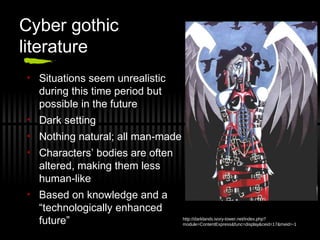
Cyber gothic
literature
• Situations seem unrealistic
during this time period but
possible in the future
• Dark setting
• Nothing natural; all man-made
• Characters’ bodies are often
altered, making them less
human-like
• Based on knowledge and a
“technologically enhanced
future” http://darklands.ivory-tower.net/index.php?
module=ContentExpress&func=display&ceid=17&meid=-1
Sources of text
• http://www.acsu.buffalo.edu/~mdward/essay2.html
• http://www.wwnorton.com/nael/romatic/topic_2/welc
• www.mchs.net/.../ldunnreier2/ldunnreier2/.../Gothi...
•
•

Gothic literature 2

  • 1.
  • 2.
    When did itbecome popular? • Later 18th Century • Started with a “Gothic Revival” -- mid-1700’s • Visible in gardens • Seen in architecture (gargoyles) of the Middle Ages • 1740’s - Horace Walpole - Strawberry Hill estate near London • Published The Castle of Otranto: a Gothic Story - 1764 http://www.puzzlehistory.com/gothgrdn.jpg
  • 3.
    Application to literature •Any kind of romantic, scary novel • Came from Germany in the late 1700’s - early 1800’s • Popular among female writers • Became best http://www.greatscotland.be/evenementen.htm
  • 4.
    Famous Gothic Writers •Ann Radcliffe - The Mysteries of Udolpho • Jane Austen -- Northanger Abbey (parody of Gothic novels) • Charlotte Bronte -- Jane Eyre • Emily Bronte -- Wuthering Heights • Shirley Jackson, Daphne du Maurier, Barbara Michaels, Anne Rice
  • 5.
    A classic • MaryShelley’s Frankenstein (1818) • Single most important product of this tradition • Themes relate to science, poetry, psychology, alienation, politics, education, family relationships, etc. • Tradition: 8-foot tall monster made of separate body pieces librarycommission.lib.wv.us/ WVLC%20BOOK/Frank...
  • 6.
    Influence felt elsewhere •Rime of the Ancient Mariner by Coleridge-- skeleton ship and the crew’s reaction • Christabel by Coleridge-- atmosphere, setting, and fragmentary plot of seduction and witchery • Manfred by Byron -- initial scene • The Even of St. Agnes by Keats -- setting http://www.wilsonsalmanac.com/images2/ancient_mar iner4.jpg
  • 7.
    Famous Gothic Writers- cont’d. • Edgar Allen Poe • Steven King http://www.3boysproductions.com/MIFF- 2002-Fri-Nite-Program.htm http://www.1001- votes.com/vote/fond.php?mcat=24&lg=fr
  • 8.
    Characteristics • Set inMedieval times • Dark, mysterious, evil tone • Dark castles, palaces, chambers, haunted mansions • Isolated setting • All come together to emphasize the sense of evil http://www.encounterspri.com/Articles.htm
  • 9.
    More characteristics • Presenceof ghosts, spirits, vampires, and other supernatural entities • Mysterious disappearances and reappearances • Supernatural or paranormal occurrences http://www.penelopesweb.com/gargoyles.html
  • 10.
    Characteristics -- cont’d. •Religion, usually Christianity or at least spirituality, is confronted. • A gothic “double” is used in which a character who seems to be good is linked with another who is evil www.pagedepot.com/.../ GOTHIC%20CHAPBOOKSX.HTM
  • 11.
    More characteristics • Blood,pain, death • Cruelty • Eroticism • Characters with “aberrant psychological states” • Events are “uncanny, macabre, or melodramatically violent bordering between reality and unreality http://www.pantip.com/cafe/chalermthai/newmovie/ hauntedcastle/hc.html
  • 12.
    Purpose • To evoke“terror” versus “horror” in the reader because of situations bordering reality/unreality •Often used to teach a message • May lack a Medieval setting but will develop an atmosphere of gloom and terror
  • 13.
    Differentiating between thetwo • Horror •“An awful apprehension” •Described distinctly •Something grotesque •So appalling, unrealistic •Depends on physical characteristics • Terror • “A sickening realization” • Suggestive of what will happen • Depends on reader’s imagination • Sense of uncertainty • Creates an “intangible atmosphere of spiritual psychic dread”
  • 14.
    American Gothic • Importantfrom the mid-18th Century on • Related to “Romantic Period” • Criticizes “national myth of new- world innocence by voicing the cultural contradictions that undermine the nation’s claim to purity and equality” - Teresa A. Goddu •Tells of historical horrors that make national identity http://photos1.blogger.com/img/154/1420/1024/american %20gothic.jpg
  • 15.
    Southern Gothic • Customarysetting because it’s the source of values not necessarily welcome in the rest of the country • Poe was the first Southern gothic writer • Common themes: race, alienation, sense of “otherness” http://www.madelinecarolgallery.c om/images/Southern %20Plantation.jpg
  • 16.
    Cyber gothic literature • Situationsseem unrealistic during this time period but possible in the future • Dark setting • Nothing natural; all man-made • Characters’ bodies are often altered, making them less human-like • Based on knowledge and a “technologically enhanced future” http://darklands.ivory-tower.net/index.php? module=ContentExpress&func=display&ceid=17&meid=-1
  • 17.
    Sources of text •http://www.acsu.buffalo.edu/~mdward/essay2.html • http://www.wwnorton.com/nael/romatic/topic_2/welc • www.mchs.net/.../ldunnreier2/ldunnreier2/.../Gothi... • •