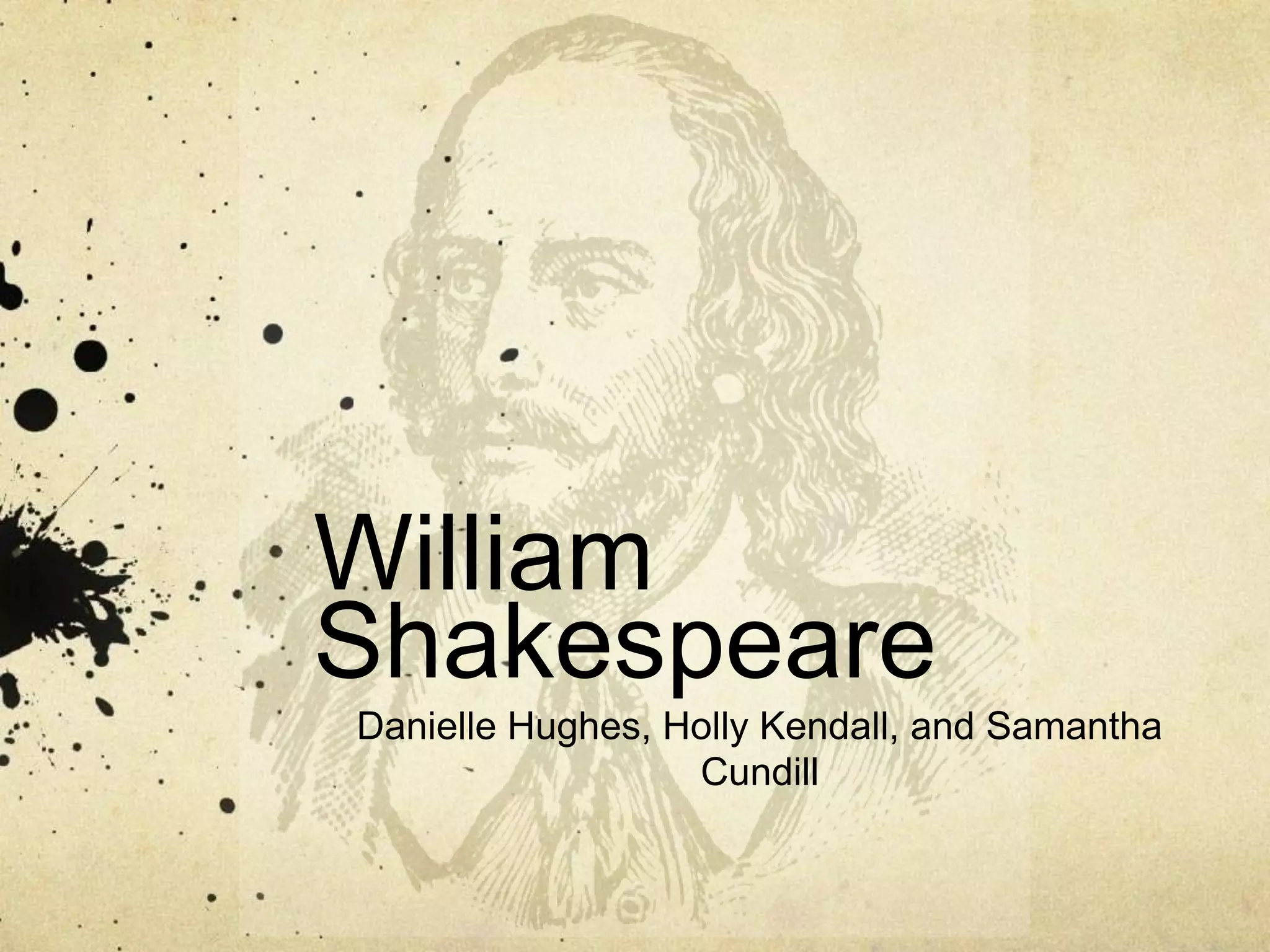
William ShakespeareDanielle Hughes, Holly Kendall, and Samantha Cundill
Shakespeare’s Early LifeStarted seeing plays at very young ageTaught himself how to read and writeFollowed his father and became a glove makerTravelled to London to start his career
The Lord Chamberlain’s MenA group of actors who performed for Queen Elizabeth the IOne of the most popular companies at the time Shakespeare joined at age 22Changing point for Shakespeare’s careerShakespeare wrote his plays, mostly for the group
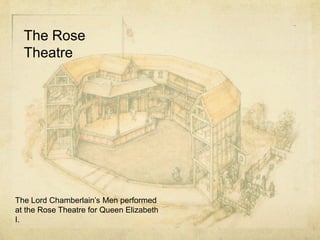
The Rose TheatreThe Lord Chamberlain’s Men performed at the Rose Theatre for Queen Elizabeth I.
Shakespearean LanguageMade over 17,000 wordsSome words are still used todayExamples:Saucy – cheeky/sassyHark – listenHither – Here
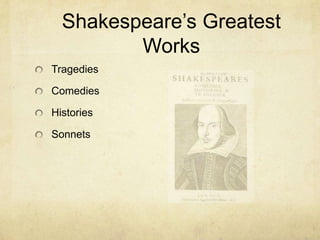
Shakespeare’s Greatest WorksTragediesComediesHistoriesSonnets
TragediesUnhappy or disastrous endingsExamples:HamletKing LearMacbethOthello
ComediesHappily ever after endingExamples:A Midsummer’s Night DreamMuch Ado About NothingTwelfth NightThe Winter’s TaleThe Merry Wives of Windsor
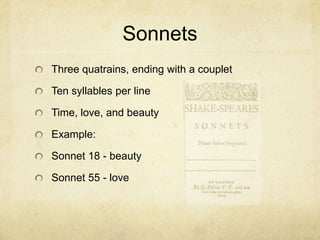
SonnetsThree quatrains, ending with a coupletTen syllables per lineTime, love, and beautyExample:Sonnet 18 - beautySonnet 55 - love
Shakespeare’s Later LifeWrote fewer plays from 1606-1607Retired to Stratford-upon-Avon around 1613Shakespeare wrote three final plays for the new dramatists for the Lord Chamberlain’s MenShakespeare died on 23 April, 1616
Shakespeare’s ImpactAble to summarize human emotionsRelatable to everyday lifeOther poets and play writes of his time used his languageCharacters are complexExample:Hamlet – gentle, but still seeking murderous revenge

William Shakespeare Presentation