SESSION PLANNING
Anup K Singh, PhD
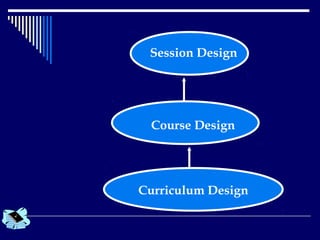
Curriculum Design
Course Design
Session Design
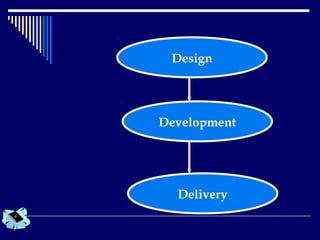
Design
Development
Delivery
Curriculum Design 408/08/14
Programme Architecture
 Learning outcomes
 Balance between theoretical and applied
outcomes
 Number of courses, workshops and other
learning events
 Pedagogical approach
 Participant’s load
 Learning units
 Balance between different types of faculty
Curriculum Design 508/08/14
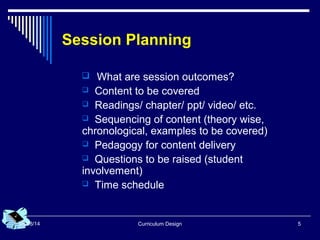
Session Planning
 What are session outcomes?
 Content to be covered
 Readings/ chapter/ ppt/ video/ etc.
 Sequencing of content (theory wise,
chronological, examples to be covered)
 Pedagogy for content delivery
 Questions to be raised (student
involvement)
 Time schedule
Curriculum Design 608/08/14
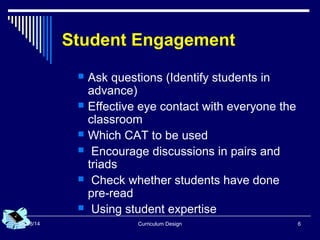
Student Engagement
 Ask questions (Identify students in
advance)
 Effective eye contact with everyone the
classroom
 Which CAT to be used
 Encourage discussions in pairs and
triads
 Check whether students have done
pre-read
 Using student expertise
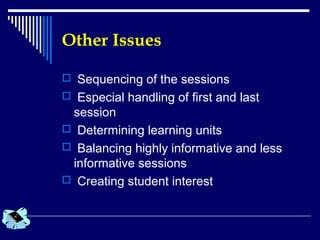
Other Issues
 Sequencing of the sessions
 Especial handling of first and last
session
 Determining learning units
 Balancing highly informative and less
informative sessions
 Creating student interest
Curriculum Design 808/08/14
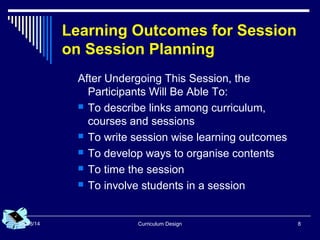
Learning Outcomes for Session
on Session Planning
After Undergoing This Session, the
Participants Will Be Able To:
 To describe links among curriculum,
courses and sessions
 To write session wise learning outcomes
 To develop ways to organise contents
 To time the session
 To involve students in a session
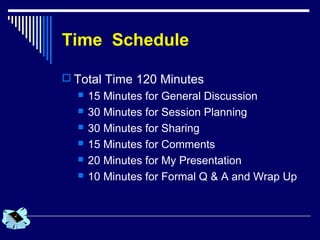
Time Schedule
 Total Time 120 Minutes
 15 Minutes for General Discussion
 30 Minutes for Session Planning
 30 Minutes for Sharing
 15 Minutes for Comments
 20 Minutes for My Presentation
 10 Minutes for Formal Q & A and Wrap Up
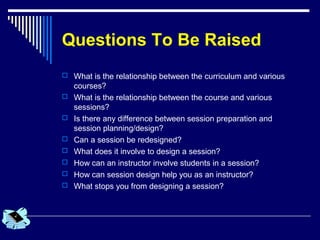
Questions To Be Raised
 What is the relationship between the curriculum and various
courses?
 What is the relationship between the course and various
sessions?
 Is there any difference between session preparation and
session planning/design?
 Can a session be redesigned?
 What does it involve to design a session?
 How can an instructor involve students in a session?
 How can session design help you as an instructor?
 What stops you from designing a session?
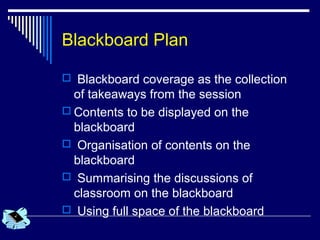
Blackboard Plan
 Blackboard coverage as the collection
of takeaways from the session
 Contents to be displayed on the
blackboard
 Organisation of contents on the
blackboard
 Summarising the discussions of
classroom on the blackboard
 Using full space of the blackboard
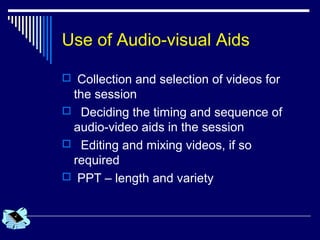
Use of Audio-visual Aids
 Collection and selection of videos for
the session
 Deciding the timing and sequence of
audio-video aids in the session
 Editing and mixing videos, if so
required
 PPT – length and variety
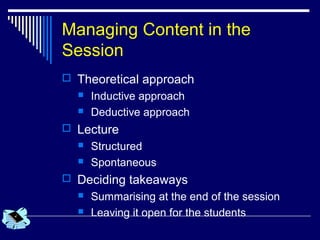
Managing Content in the
Session
 Theoretical approach
 Inductive approach
 Deductive approach
 Lecture
 Structured
 Spontaneous
 Deciding takeaways
 Summarising at the end of the session
 Leaving it open for the students
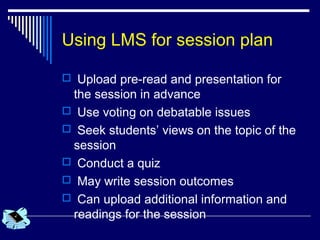
Using LMS for session plan
 Upload pre-read and presentation for
the session in advance
 Use voting on debatable issues
 Seek students’ views on the topic of the
session
 Conduct a quiz
 May write session outcomes
 Can upload additional information and
readings for the session
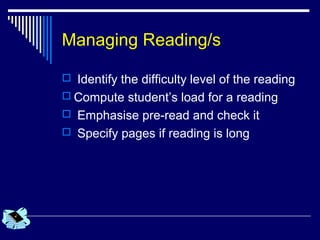
Managing Reading/s
 Identify the difficulty level of the reading
 Compute student’s load for a reading
 Emphasise pre-read and check it
 Specify pages if reading is long
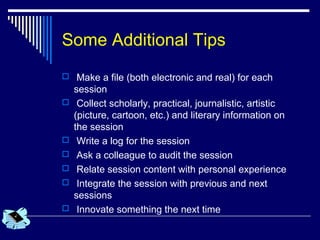
Some Additional Tips
 Make a file (both electronic and real) for each
session
 Collect scholarly, practical, journalistic, artistic
(picture, cartoon, etc.) and literary information on
the session
 Write a log for the session
 Ask a colleague to audit the session
 Relate session content with personal experience
 Integrate the session with previous and next
sessions
 Innovate something the next time

Session planning

  • 1.
  • 2.
  • 3.
  • 4.
    Curriculum Design 408/08/14 ProgrammeArchitecture  Learning outcomes  Balance between theoretical and applied outcomes  Number of courses, workshops and other learning events  Pedagogical approach  Participant’s load  Learning units  Balance between different types of faculty
  • 5.
    Curriculum Design 508/08/14 SessionPlanning  What are session outcomes?  Content to be covered  Readings/ chapter/ ppt/ video/ etc.  Sequencing of content (theory wise, chronological, examples to be covered)  Pedagogy for content delivery  Questions to be raised (student involvement)  Time schedule
  • 6.
    Curriculum Design 608/08/14 StudentEngagement  Ask questions (Identify students in advance)  Effective eye contact with everyone the classroom  Which CAT to be used  Encourage discussions in pairs and triads  Check whether students have done pre-read  Using student expertise
  • 7.
    Other Issues  Sequencingof the sessions  Especial handling of first and last session  Determining learning units  Balancing highly informative and less informative sessions  Creating student interest
  • 8.
    Curriculum Design 808/08/14 LearningOutcomes for Session on Session Planning After Undergoing This Session, the Participants Will Be Able To:  To describe links among curriculum, courses and sessions  To write session wise learning outcomes  To develop ways to organise contents  To time the session  To involve students in a session
  • 9.
    Time Schedule  TotalTime 120 Minutes  15 Minutes for General Discussion  30 Minutes for Session Planning  30 Minutes for Sharing  15 Minutes for Comments  20 Minutes for My Presentation  10 Minutes for Formal Q & A and Wrap Up
  • 10.
    Questions To BeRaised  What is the relationship between the curriculum and various courses?  What is the relationship between the course and various sessions?  Is there any difference between session preparation and session planning/design?  Can a session be redesigned?  What does it involve to design a session?  How can an instructor involve students in a session?  How can session design help you as an instructor?  What stops you from designing a session?
  • 11.
    Blackboard Plan  Blackboardcoverage as the collection of takeaways from the session  Contents to be displayed on the blackboard  Organisation of contents on the blackboard  Summarising the discussions of classroom on the blackboard  Using full space of the blackboard
  • 12.
    Use of Audio-visualAids  Collection and selection of videos for the session  Deciding the timing and sequence of audio-video aids in the session  Editing and mixing videos, if so required  PPT – length and variety
  • 13.
    Managing Content inthe Session  Theoretical approach  Inductive approach  Deductive approach  Lecture  Structured  Spontaneous  Deciding takeaways  Summarising at the end of the session  Leaving it open for the students
  • 14.
    Using LMS forsession plan  Upload pre-read and presentation for the session in advance  Use voting on debatable issues  Seek students’ views on the topic of the session  Conduct a quiz  May write session outcomes  Can upload additional information and readings for the session
  • 15.
    Managing Reading/s  Identifythe difficulty level of the reading  Compute student’s load for a reading  Emphasise pre-read and check it  Specify pages if reading is long
  • 16.
    Some Additional Tips Make a file (both electronic and real) for each session  Collect scholarly, practical, journalistic, artistic (picture, cartoon, etc.) and literary information on the session  Write a log for the session  Ask a colleague to audit the session  Relate session content with personal experience  Integrate the session with previous and next sessions  Innovate something the next time