Download as PDF, PPTX

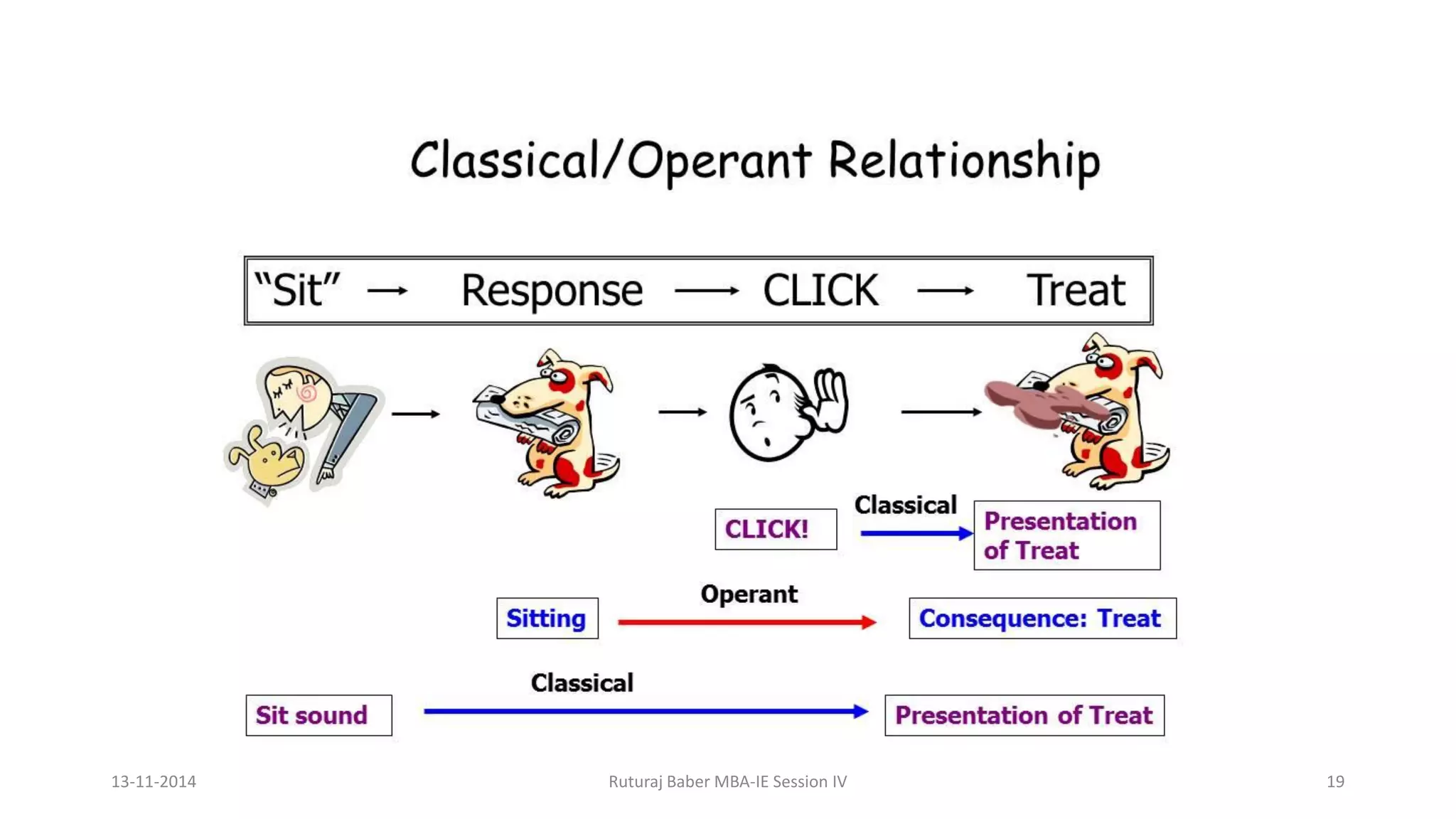
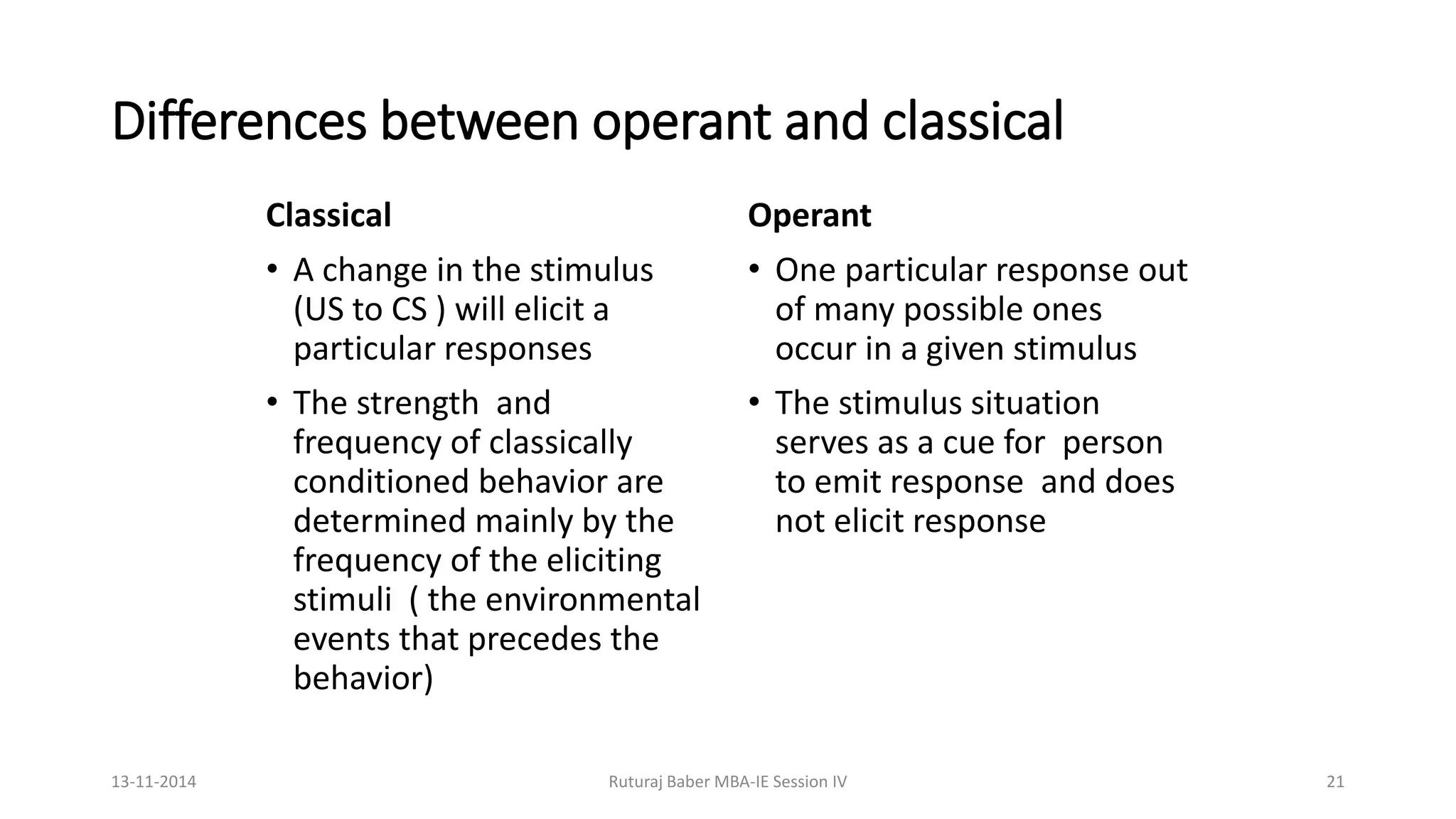
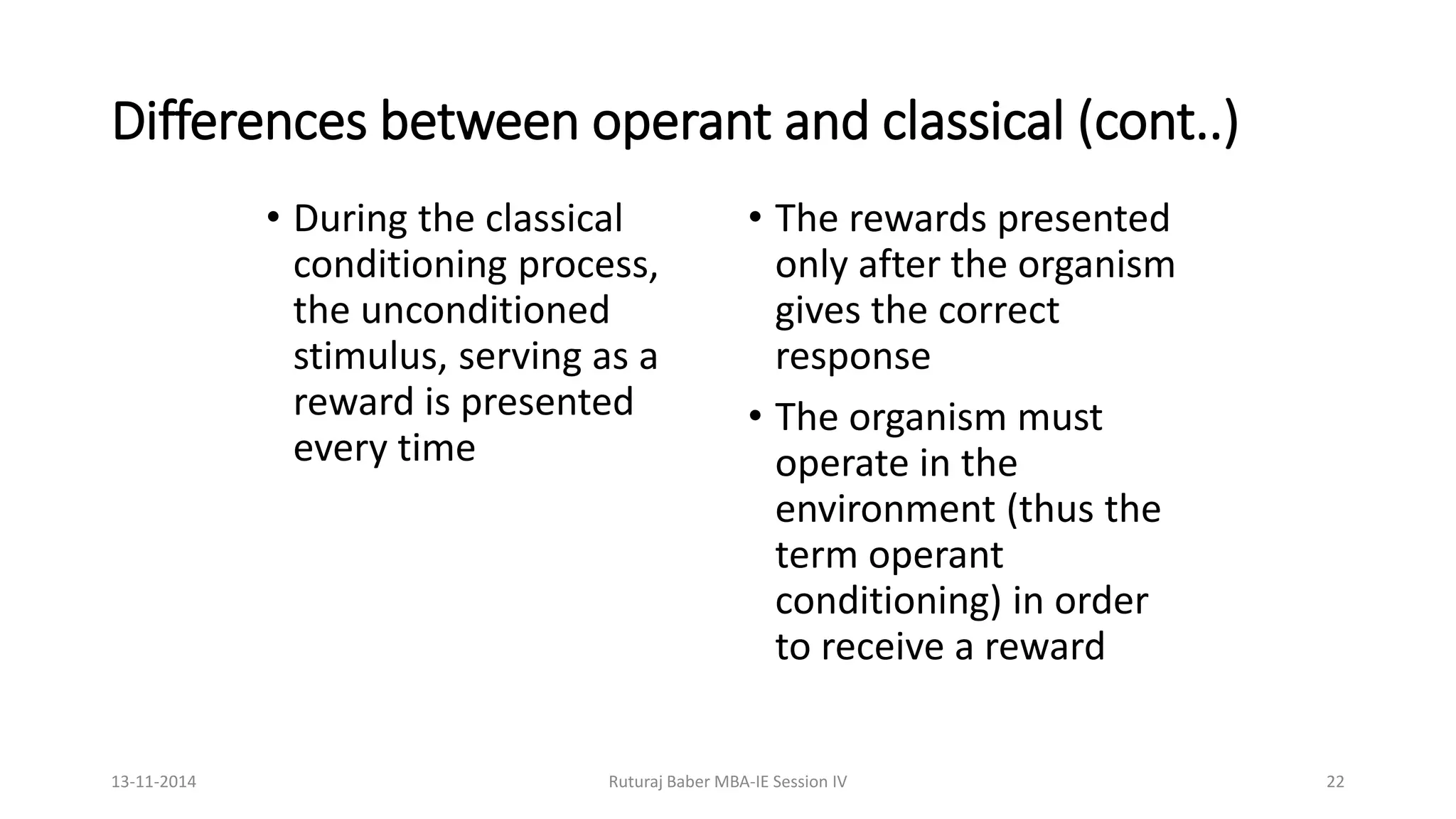
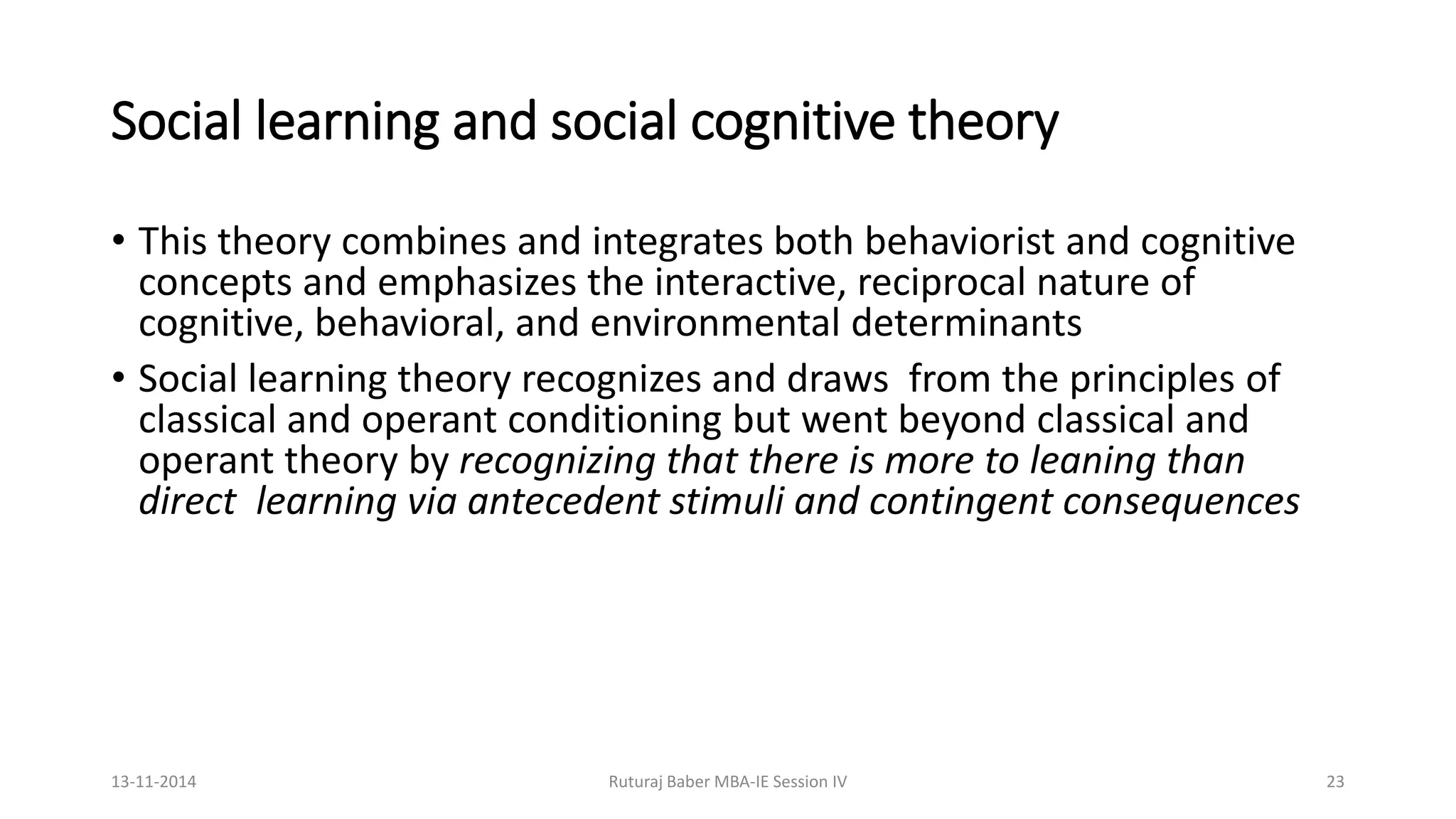
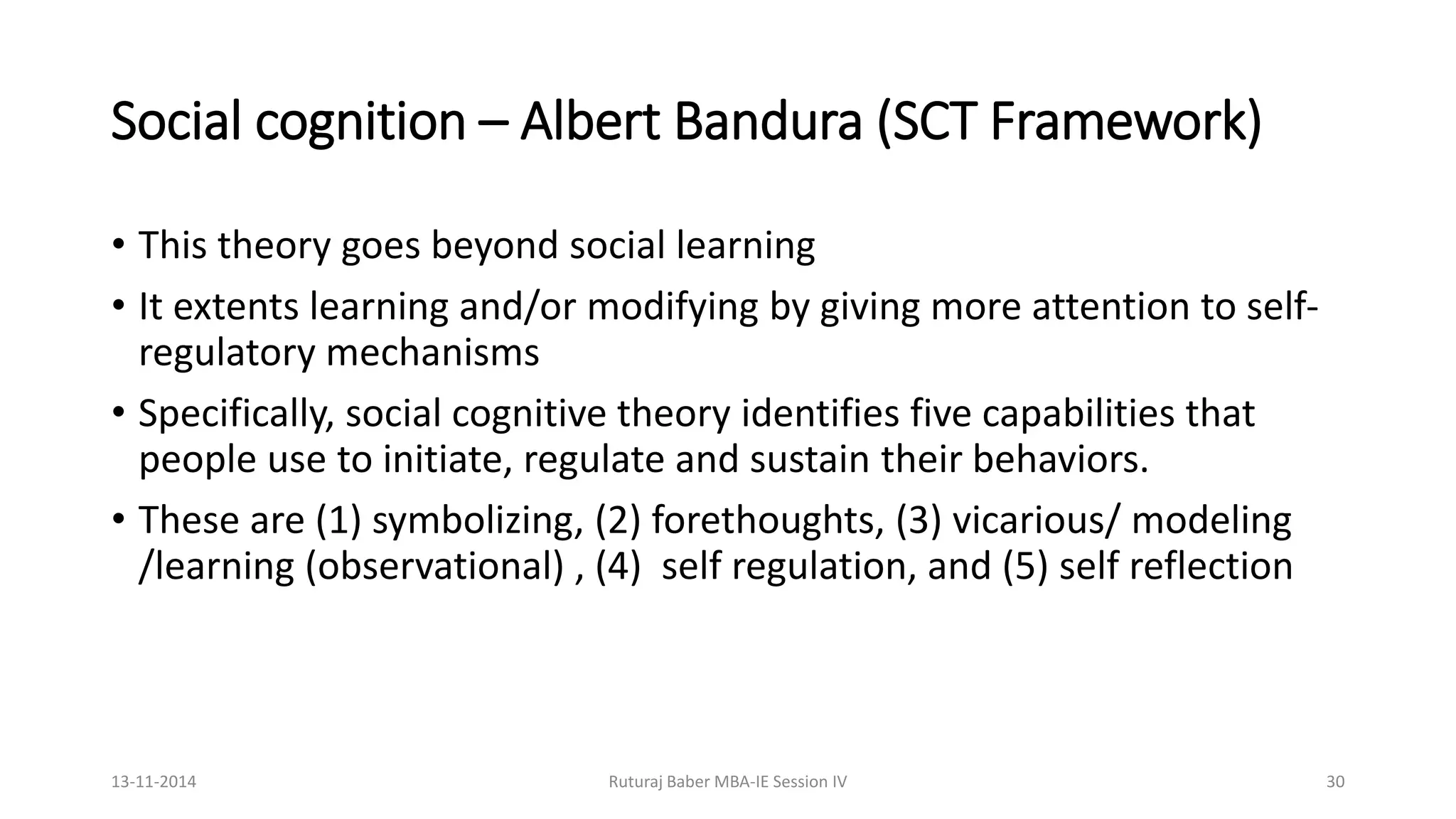
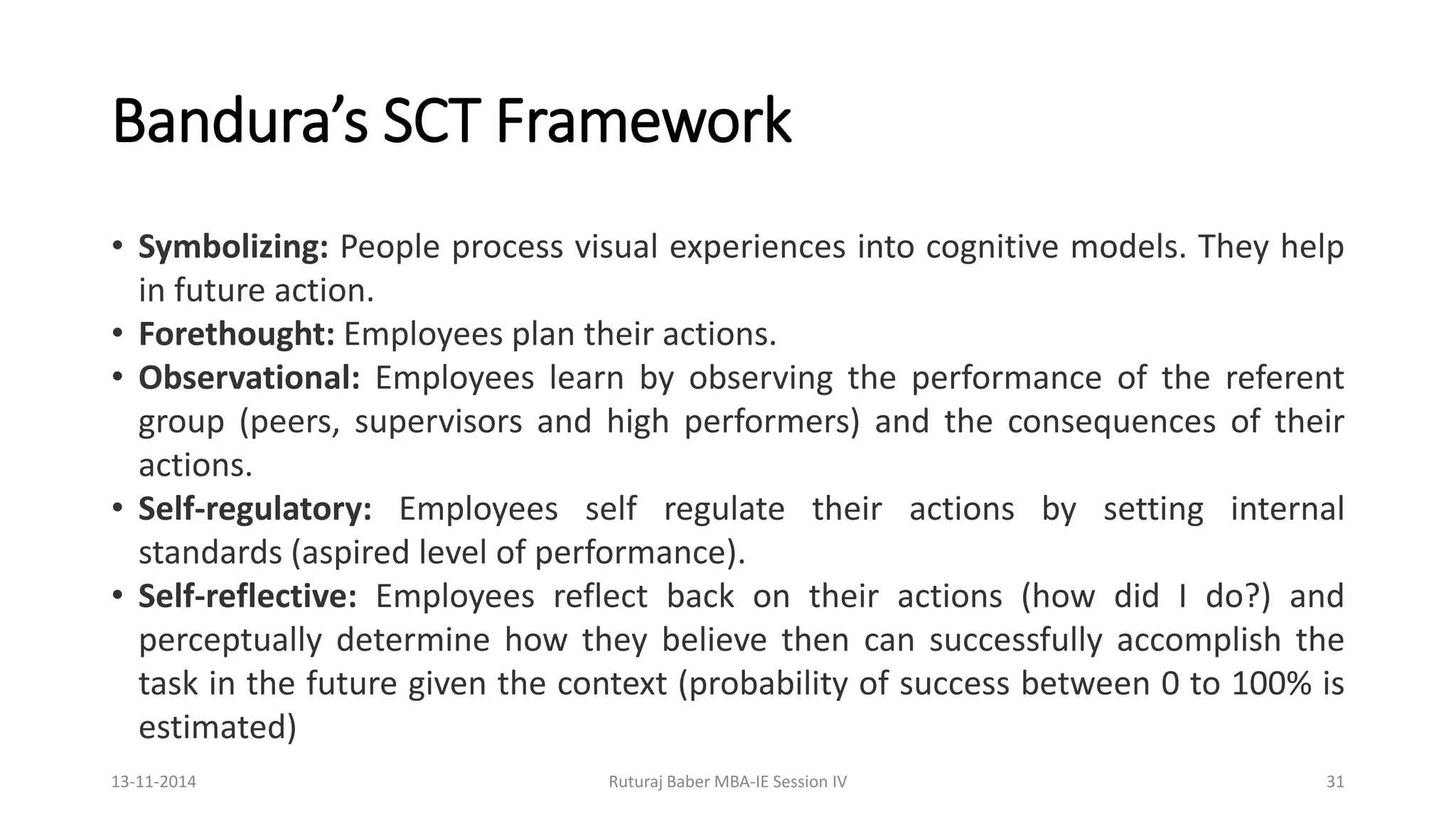


The document discusses three theoretical frameworks for organizational behavior: cognitive, behaviorist, and social cognitive. It outlines classical conditioning, operant conditioning, and cognitive theories under the behaviorist framework. Edward Tolman's cognitive theory of learning through expectations is explained. Social learning theory integrated cognitive and behaviorist concepts and emphasized reciprocal determinants. Albert Bandura's social cognitive theory extended learning through self-regulation capabilities like symbolization, forethought, observational learning, self-reflection. Learning principles can explain other organizational behavior concepts like motivation, perception, and attitudes.


