Download to read offline

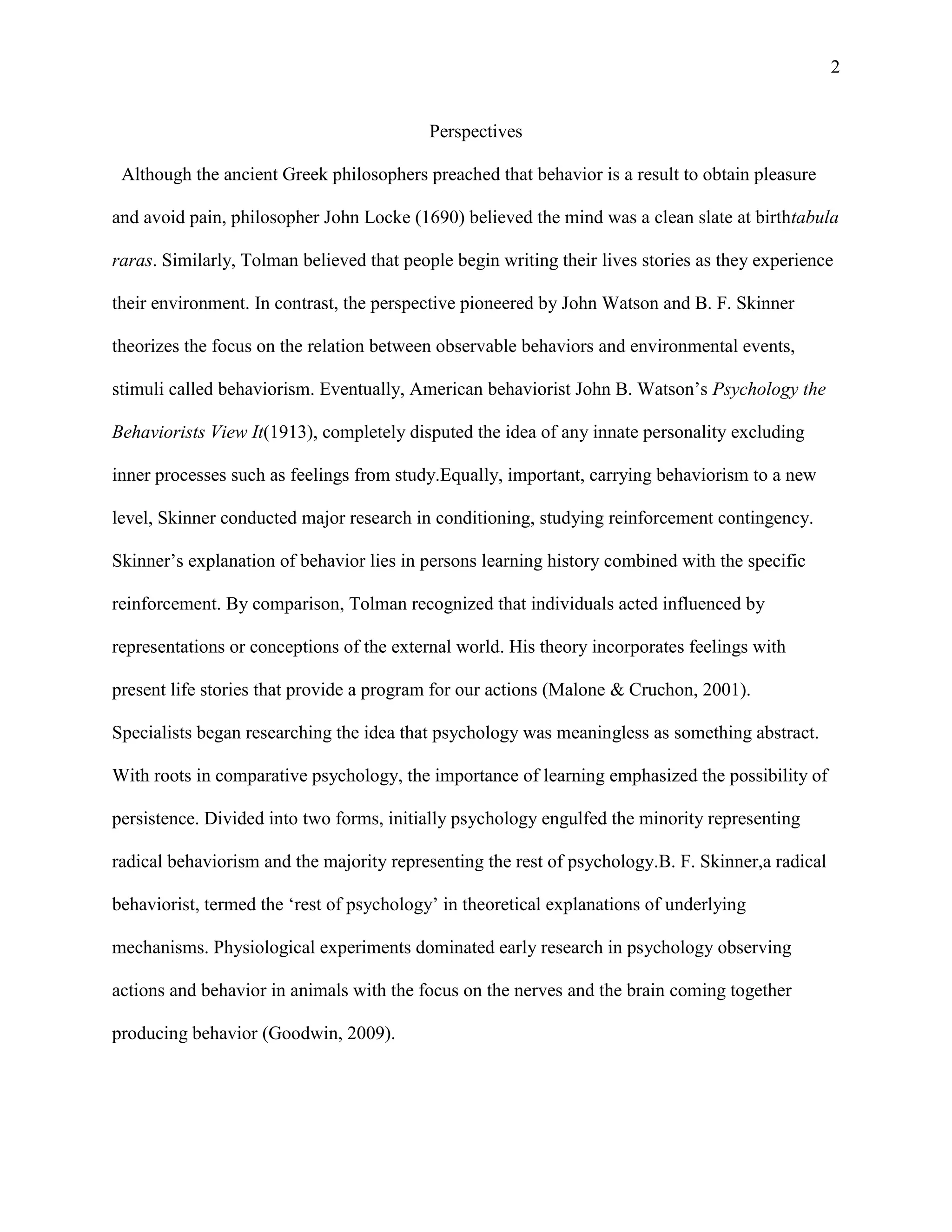

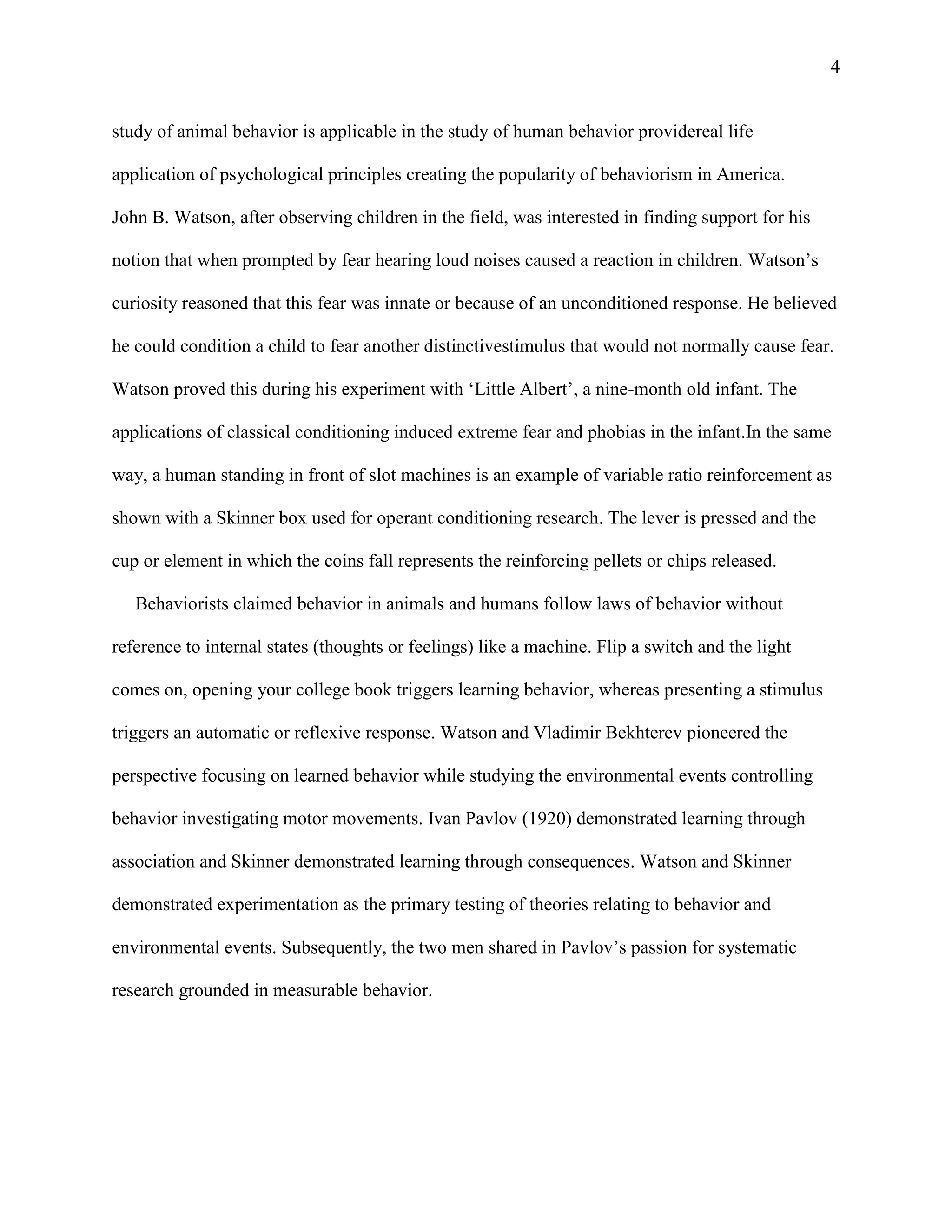


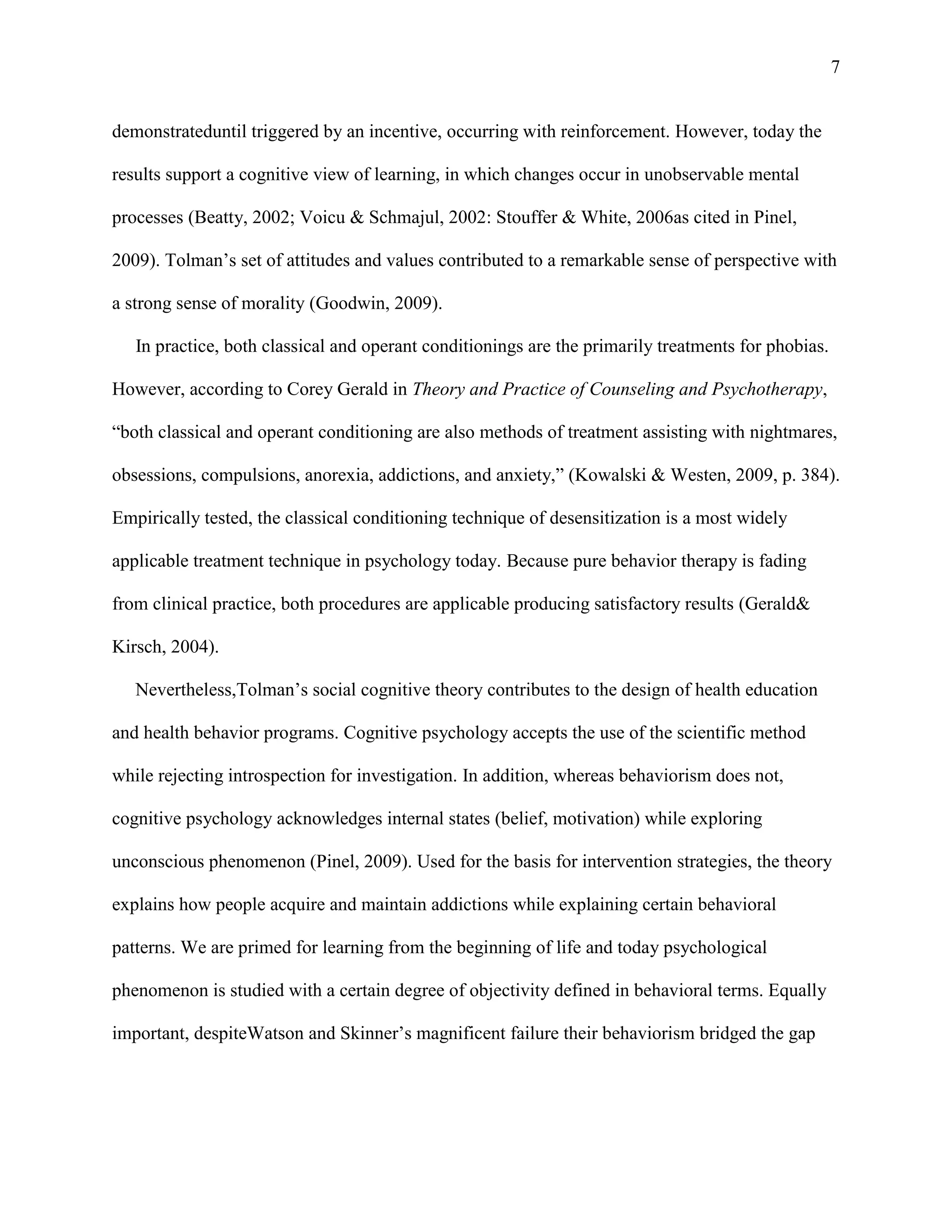

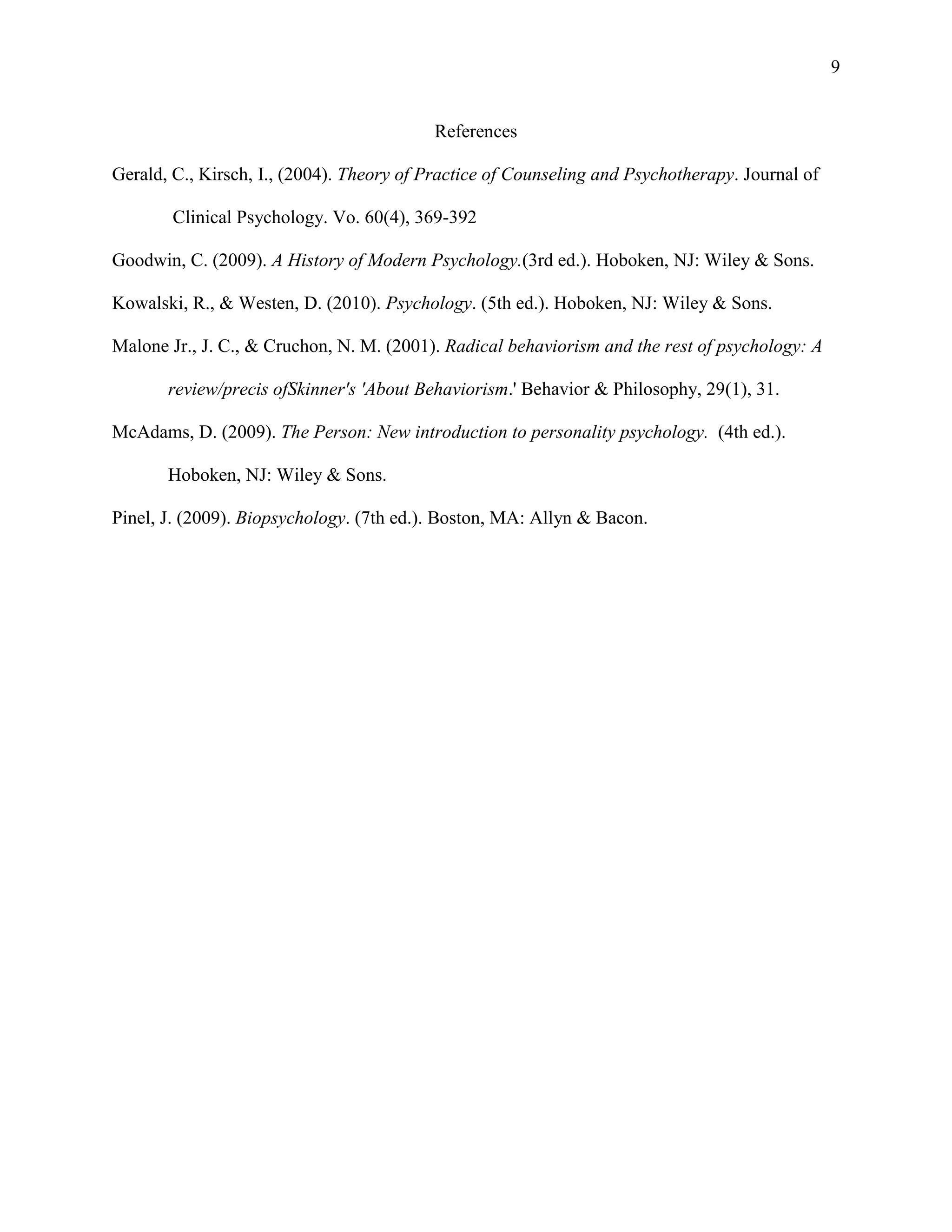

1. Behaviorism emerged from the work of philosophers like John Locke and psychologists like John Watson and B.F. Skinner who focused on observable behaviors and their environmental causes rather than internal mental states. 2. Early behaviorist theorists like Watson and Skinner conducted experiments on animal and human subjects using classical and operant conditioning to demonstrate how behaviors are learned through reinforcement and punishment. 3. Later theorists like Tolman incorporated cognitive elements into behaviorism by recognizing the role of internal representations and goal-directed behaviors, bridging behaviorism with cognitive psychology.


![MEDICAL_BEHAVIORAL_SCIENCE[1] [Autosaved].pptx](https://cdn.slidesharecdn.com/ss_thumbnails/medicalbehavioralscience1autosaved-241126100112-21c18b33-thumbnail.jpg?width=640&height=640&fit=bounds)


