+
SERVICES
MARKETING
CHAPTER 5
THE PRICING OF SERVICES
+
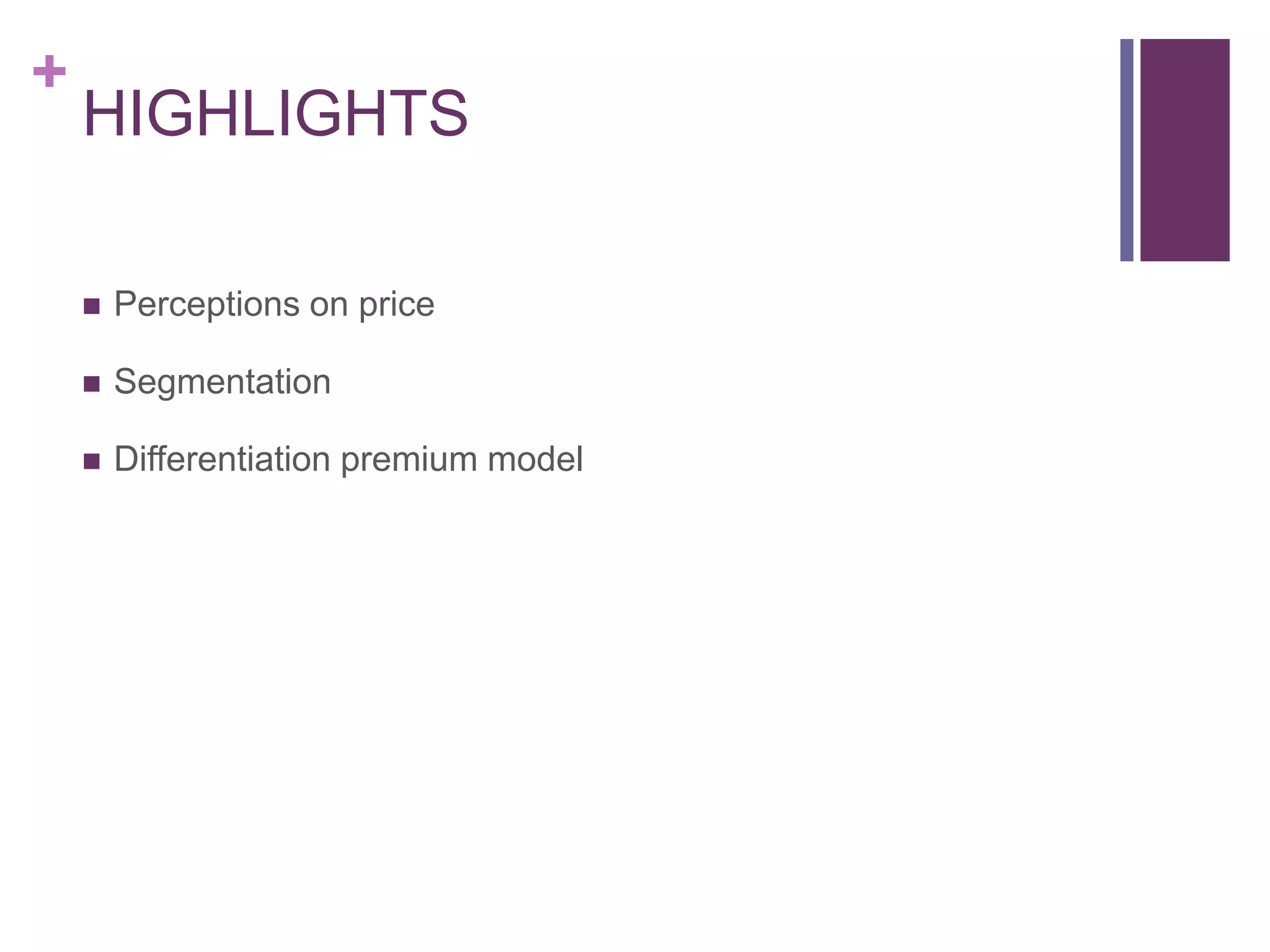
HIGHLIGHTS
 Perceptions on price
 Segmentation
 Differentiation premium model
+
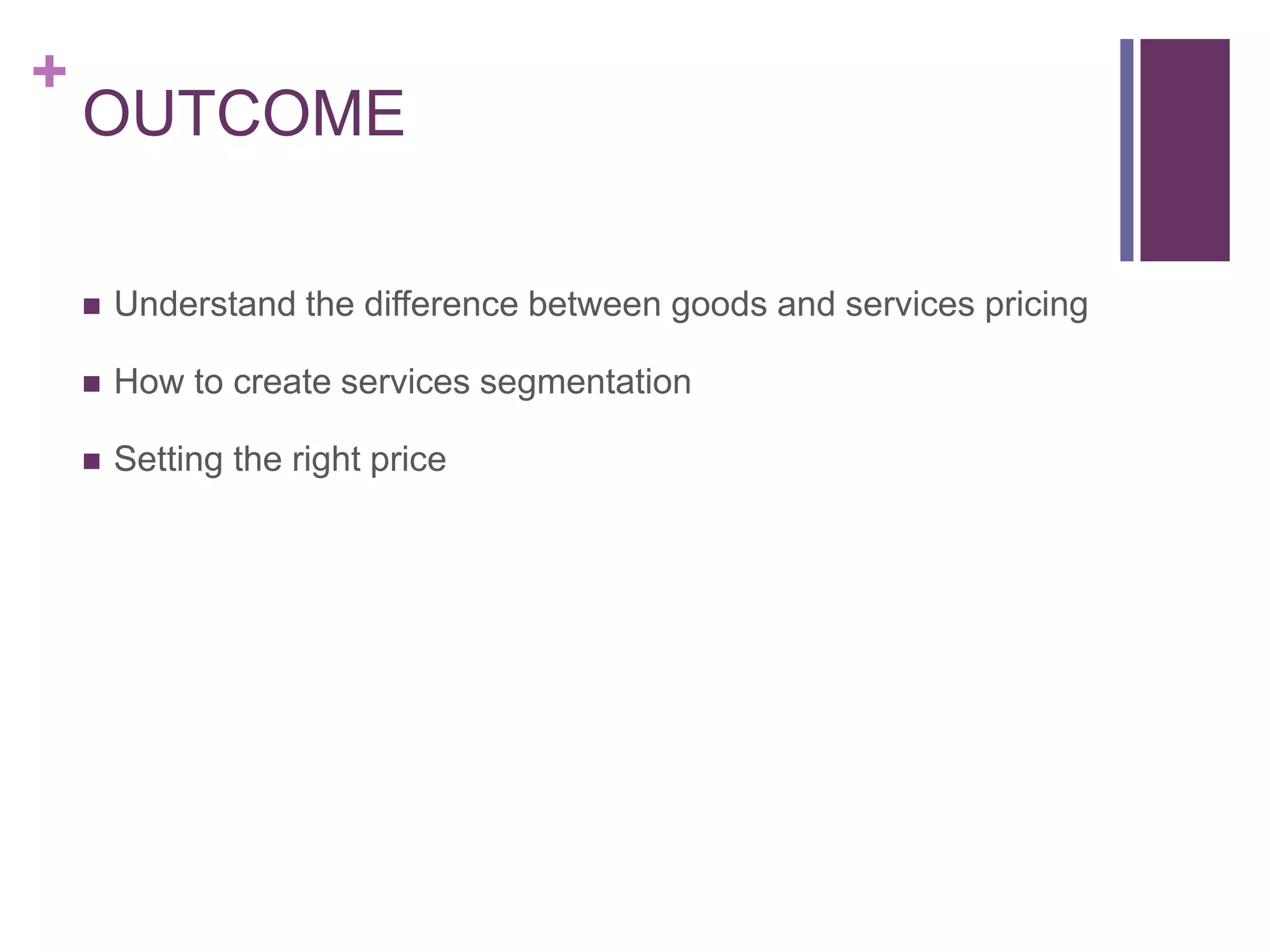
OUTCOME
 Understand the difference between goods and services pricing
 How to create services segmentation
 Setting the right price
+
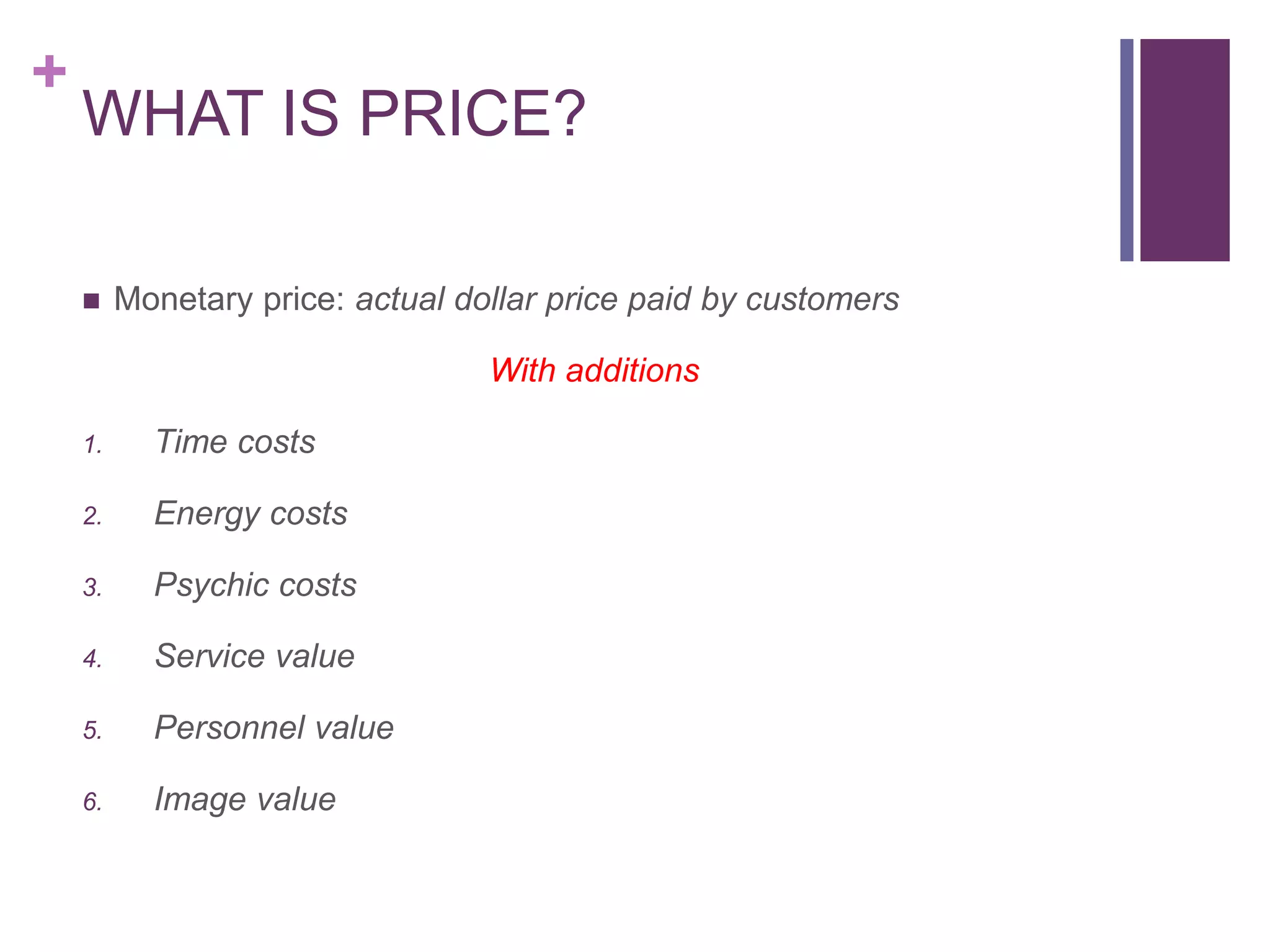
WHAT IS PRICE?
 Monetary price: actual dollar price paid by customers
With additions
1. Time costs
2. Energy costs
3. Psychic costs
4. Service value
5. Personnel value
6. Image value
+
PERCEPTION OF VALUE:
CUSTOMERS’ PERPECTIVE ON
PRICE
 Total customer value that extends beyond monetary value
 Price sensitivity
+
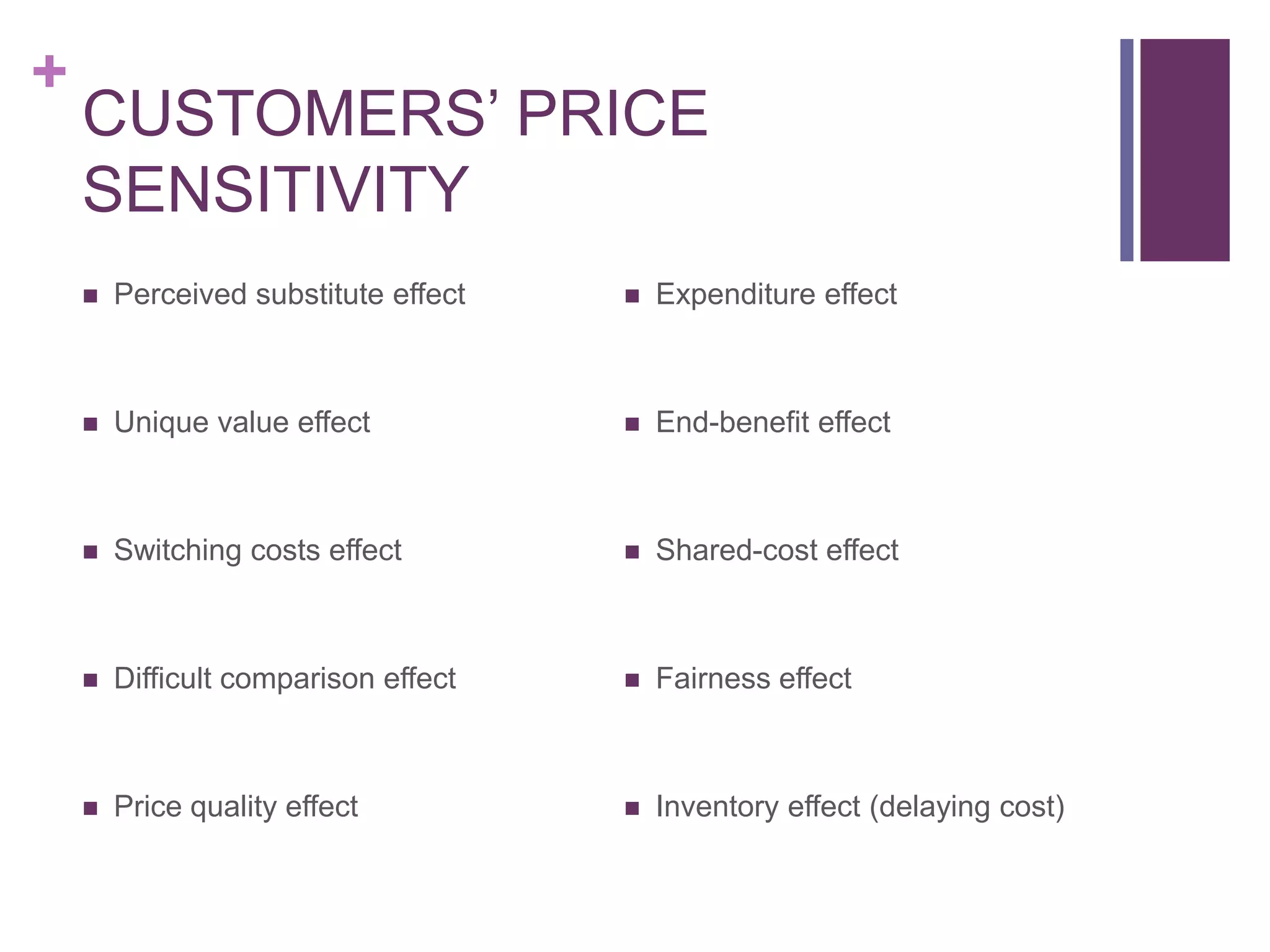
CUSTOMERS’ PRICE
SENSITIVITY
 Perceived substitute effect
 Unique value effect
 Switching costs effect
 Difficult comparison effect
 Price quality effect
 Expenditure effect
 End-benefit effect
 Shared-cost effect
 Fairness effect
 Inventory effect (delaying cost)
+
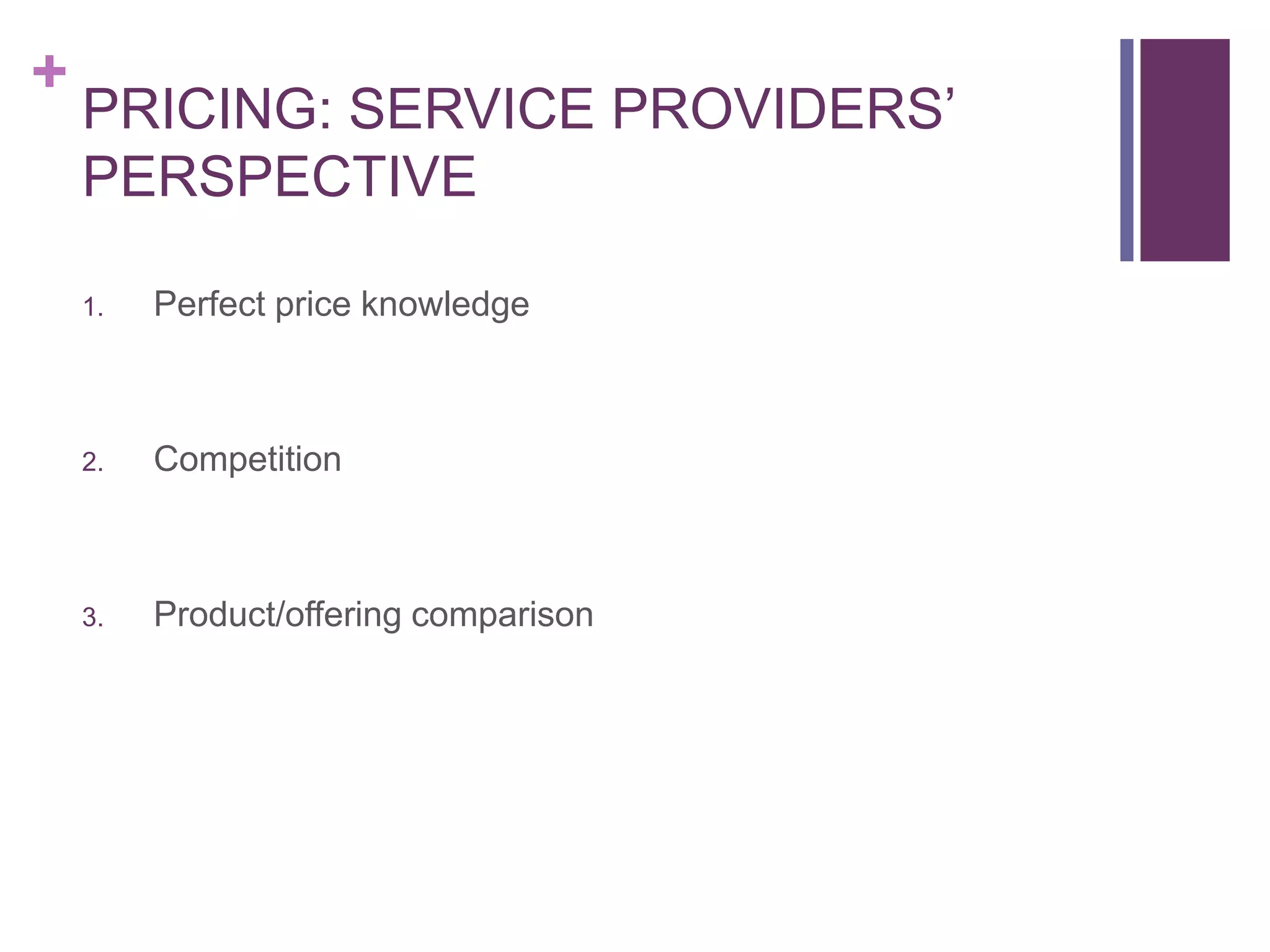
PRICING: SERVICE PROVIDERS’
PERSPECTIVE
1. Perfect price knowledge
2. Competition
3. Product/offering comparison
+
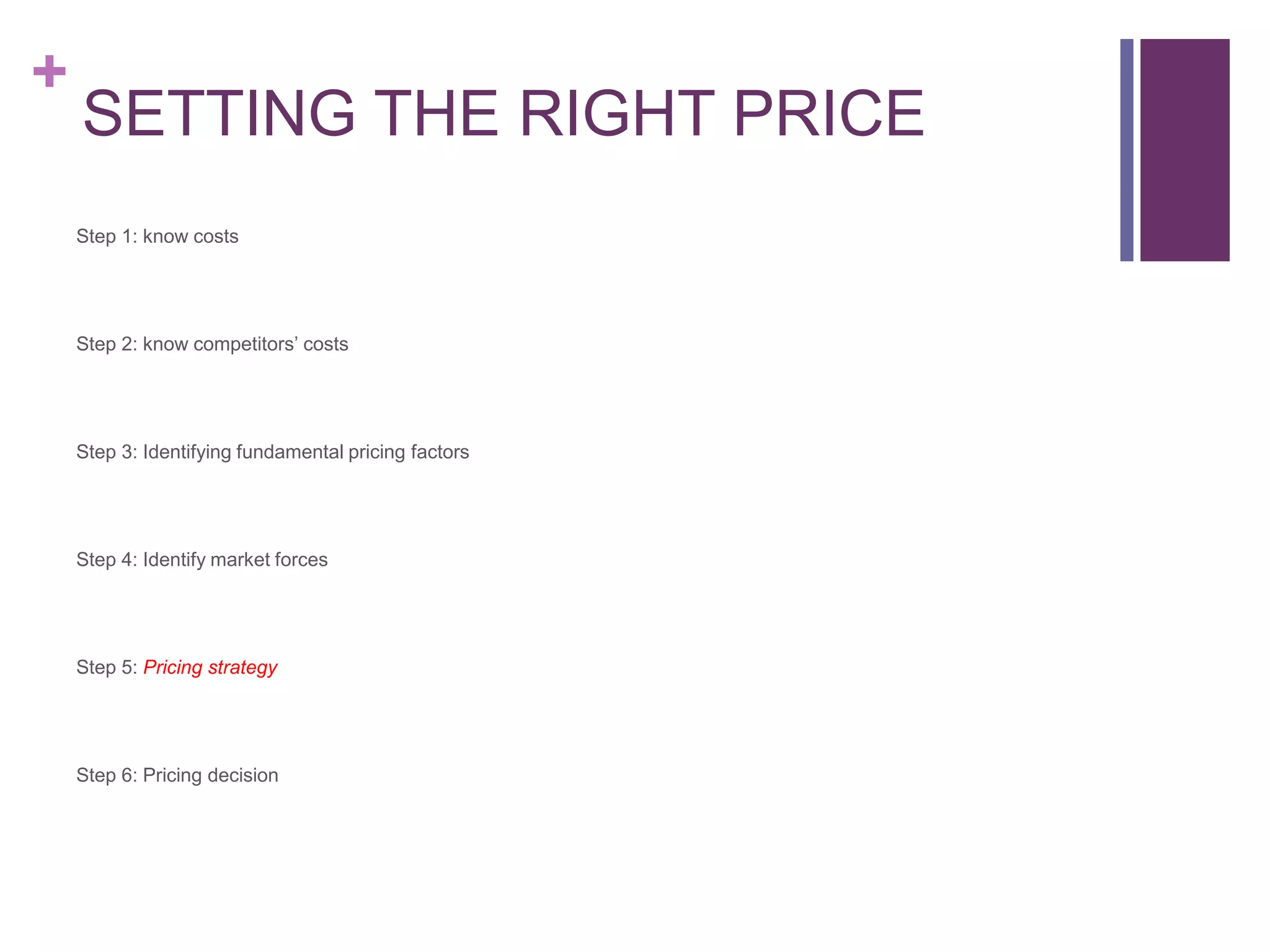
SETTING THE RIGHT PRICE
Step 1: know costs
Step 2: know competitors’ costs
Step 3: Identifying fundamental pricing factors
Step 4: Identify market forces
Step 5: Pricing strategy
Step 6: Pricing decision
+
PRICE SEGMENTATION
 The use of different price brackets where different segments
are prepared to pay different prices
+
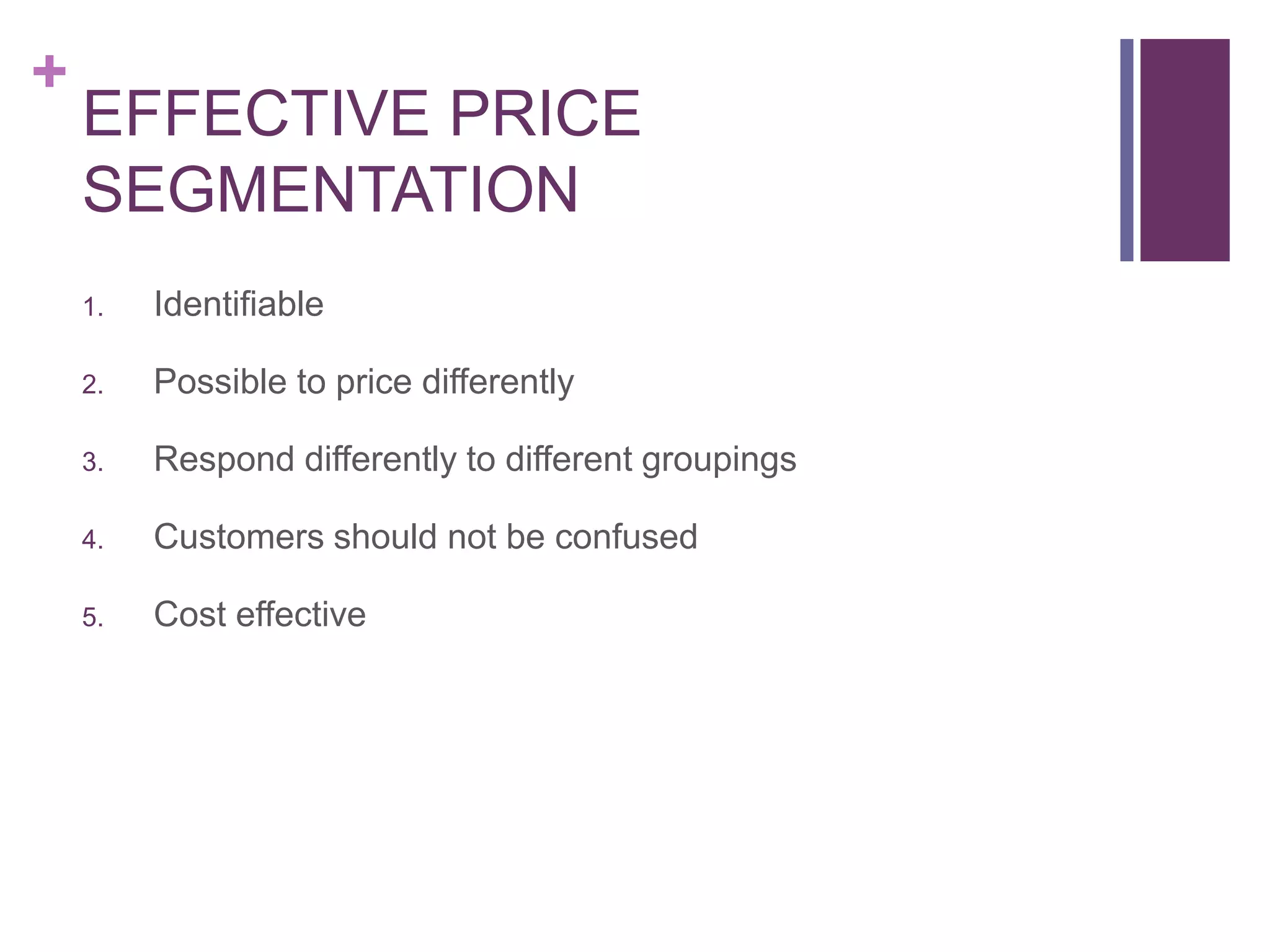
EFFECTIVE PRICE
SEGMENTATION
1. Identifiable
2. Possible to price differently
3. Respond differently to different groupings
4. Customers should not be confused
5. Cost effective
+
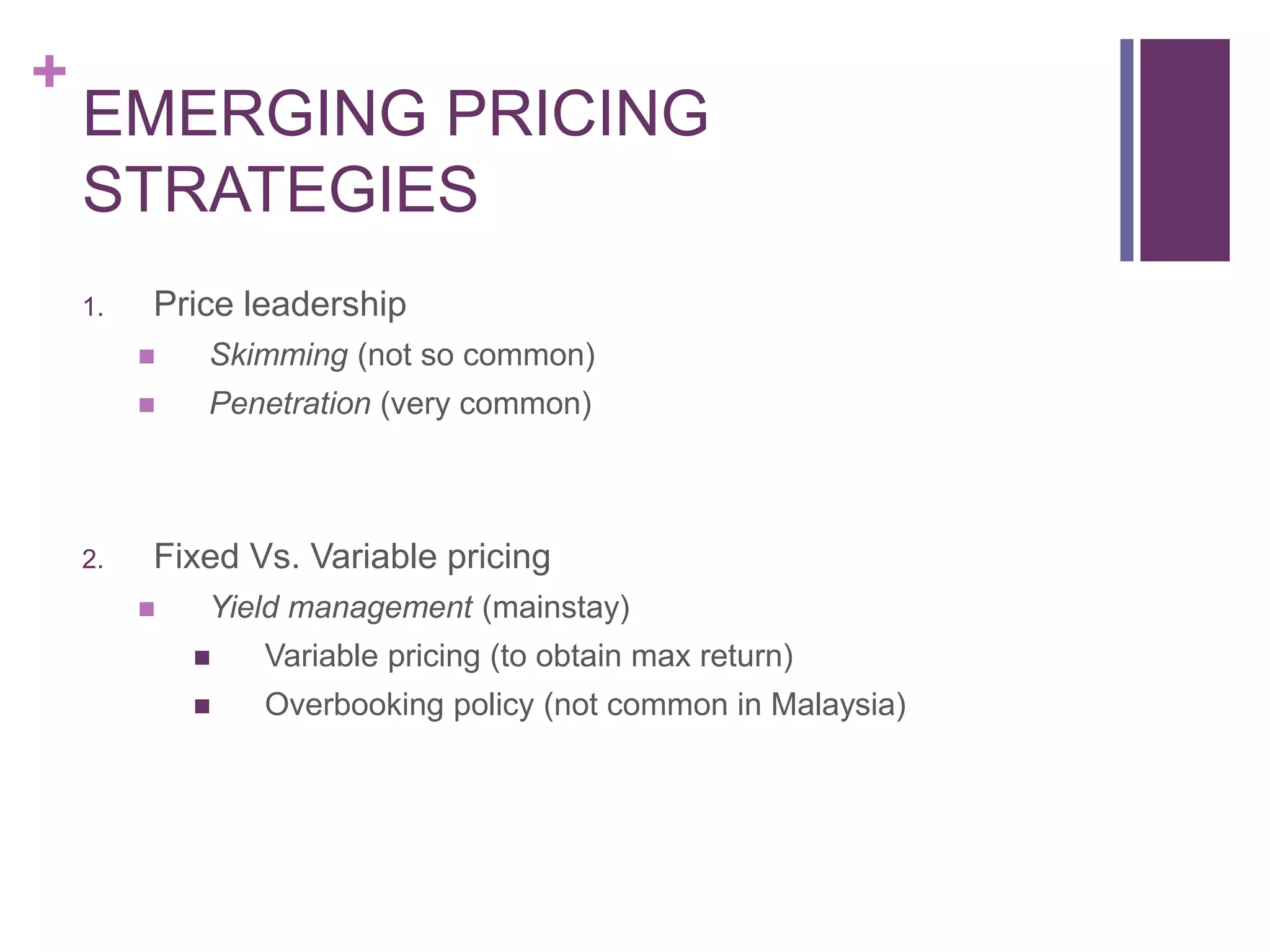
EMERGING PRICING
STRATEGIES
1. Price leadership
 Skimming (not so common)
 Penetration (very common)
2. Fixed Vs. Variable pricing
 Yield management (mainstay)
 Variable pricing (to obtain max return)
 Overbooking policy (not common in Malaysia)
+
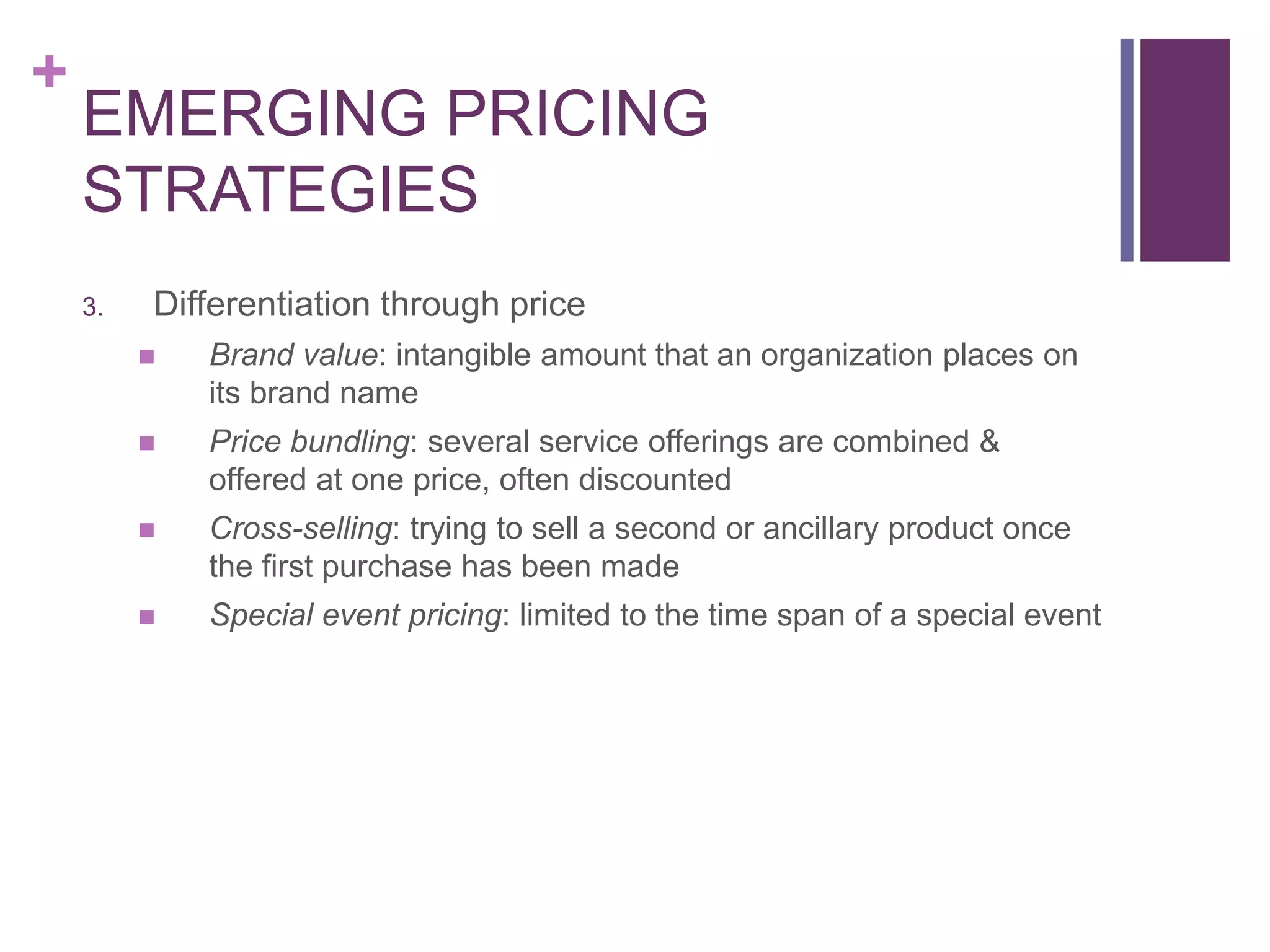
EMERGING PRICING
STRATEGIES
3. Differentiation through price
 Brand value: intangible amount that an organization places on
its brand name
 Price bundling: several service offerings are combined &
offered at one price, often discounted
 Cross-selling: trying to sell a second or ancillary product once
the first purchase has been made
 Special event pricing: limited to the time span of a special event
+
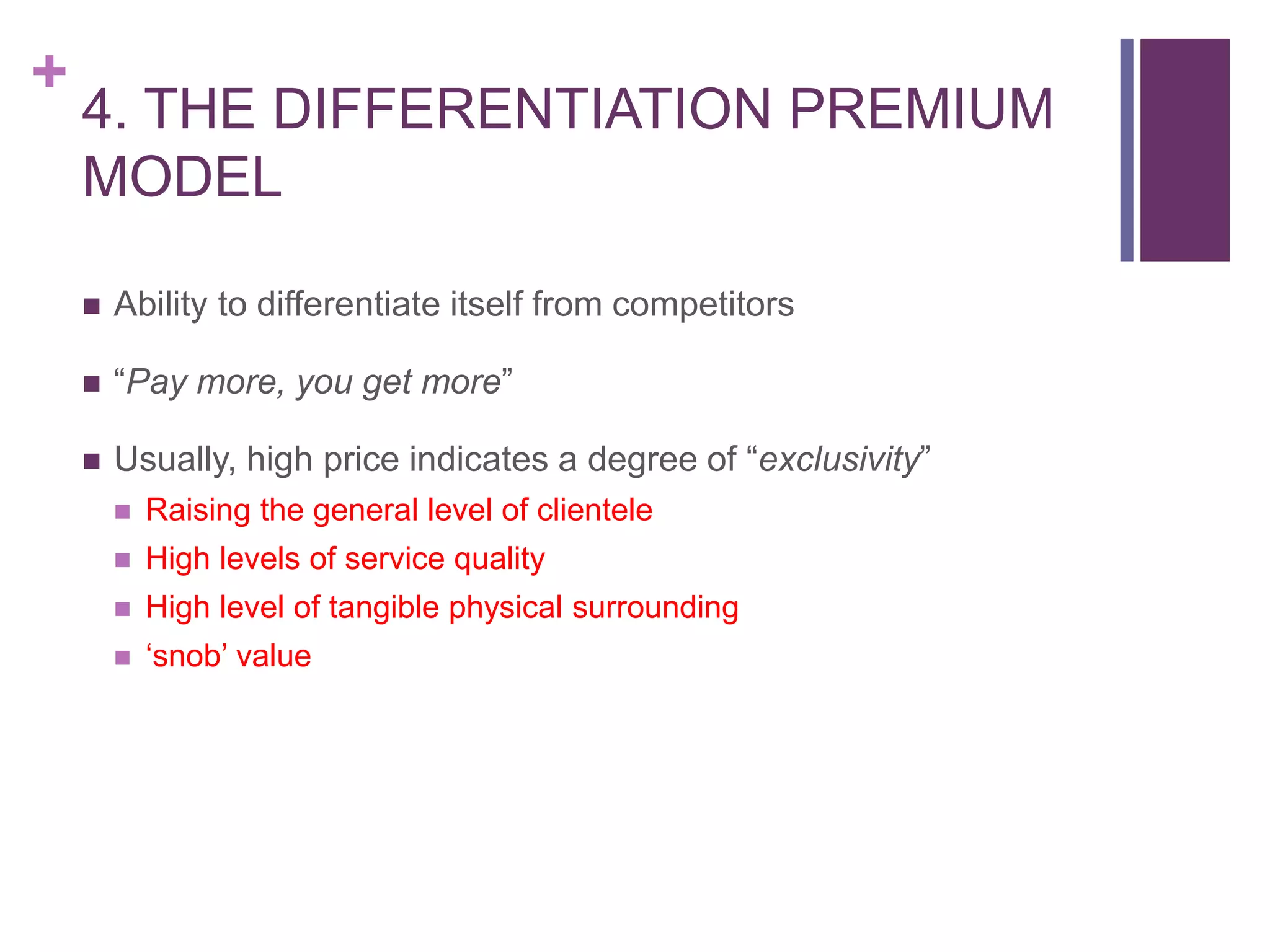
4. THE DIFFERENTIATION PREMIUM
MODEL
 Ability to differentiate itself from competitors
 “Pay more, you get more”
 Usually, high price indicates a degree of “exclusivity”
 Raising the general level of clientele
 High levels of service quality
 High level of tangible physical surrounding
 ‘snob’ value
+
THANK YOU
Q&A

Servmarkchpter5

  • 1.
  • 2.
    + HIGHLIGHTS  Perceptions onprice  Segmentation  Differentiation premium model
  • 3.
    + OUTCOME  Understand thedifference between goods and services pricing  How to create services segmentation  Setting the right price
  • 4.
    + WHAT IS PRICE? Monetary price: actual dollar price paid by customers With additions 1. Time costs 2. Energy costs 3. Psychic costs 4. Service value 5. Personnel value 6. Image value
  • 5.
    + PERCEPTION OF VALUE: CUSTOMERS’PERPECTIVE ON PRICE  Total customer value that extends beyond monetary value  Price sensitivity
  • 6.
    + CUSTOMERS’ PRICE SENSITIVITY  Perceivedsubstitute effect  Unique value effect  Switching costs effect  Difficult comparison effect  Price quality effect  Expenditure effect  End-benefit effect  Shared-cost effect  Fairness effect  Inventory effect (delaying cost)
  • 7.
    + PRICING: SERVICE PROVIDERS’ PERSPECTIVE 1.Perfect price knowledge 2. Competition 3. Product/offering comparison
  • 8.
    + SETTING THE RIGHTPRICE Step 1: know costs Step 2: know competitors’ costs Step 3: Identifying fundamental pricing factors Step 4: Identify market forces Step 5: Pricing strategy Step 6: Pricing decision
  • 9.
    + PRICE SEGMENTATION  Theuse of different price brackets where different segments are prepared to pay different prices
  • 10.
    + EFFECTIVE PRICE SEGMENTATION 1. Identifiable 2.Possible to price differently 3. Respond differently to different groupings 4. Customers should not be confused 5. Cost effective
  • 11.
    + EMERGING PRICING STRATEGIES 1. Priceleadership  Skimming (not so common)  Penetration (very common) 2. Fixed Vs. Variable pricing  Yield management (mainstay)  Variable pricing (to obtain max return)  Overbooking policy (not common in Malaysia)
  • 12.
    + EMERGING PRICING STRATEGIES 3. Differentiationthrough price  Brand value: intangible amount that an organization places on its brand name  Price bundling: several service offerings are combined & offered at one price, often discounted  Cross-selling: trying to sell a second or ancillary product once the first purchase has been made  Special event pricing: limited to the time span of a special event
  • 13.
    + 4. THE DIFFERENTIATIONPREMIUM MODEL  Ability to differentiate itself from competitors  “Pay more, you get more”  Usually, high price indicates a degree of “exclusivity”  Raising the general level of clientele  High levels of service quality  High level of tangible physical surrounding  ‘snob’ value
  • 14.