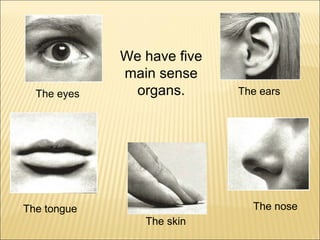
We have five 
main sense 
The eyes organs. 
The tongue 
The ears 
The nose 
The skin
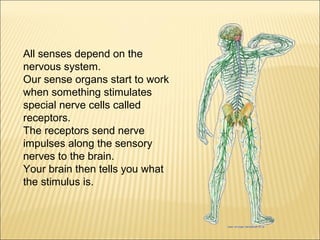
All senses depend on the 
nervous system. 
Our sense organs start to work 
when something stimulates 
special nerve cells called 
receptors. 
The receptors send nerve 
impulses along the sensory 
nerves to the brain. 
Your brain then tells you what 
the stimulus is.
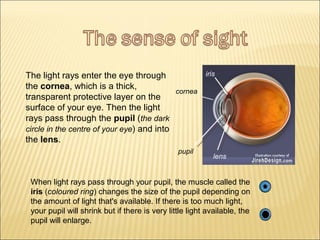
The light rays enter the eye through 
the cornea, which is a thick, 
transparent protective layer on the 
surface of your eye. Then the light 
rays pass through the pupil (the dark 
circle in the centre of your eye) and into 
the lens. 
cornea 
pupil 
iris 
lens 
When light rays pass through your pupil, the muscle called the 
iris (coloured ring) changes the size of the pupil depending on 
the amount of light that's available. If there is too much light, 
your pupil will shrink but if there is very little light available, the 
pupil will enlarge.
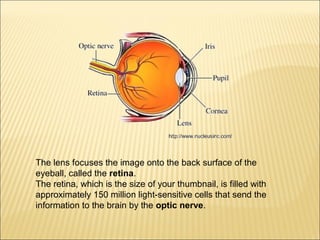
The lens focuses the image onto the back surface of the 
eyeball, called the retina. 
The retina, which is the size of your thumbnail, is filled with 
approximately 150 million light-sensitive cells that send the 
information to the brain by the optic nerve.
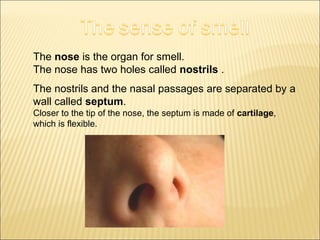
The nose is the organ for smell. 
The nose has two holes called nostrils . 
The nostrils and the nasal passages are separated by a 
wall called septum. 
Closer to the tip of the nose, the septum is made of cartilage, 
which is flexible.
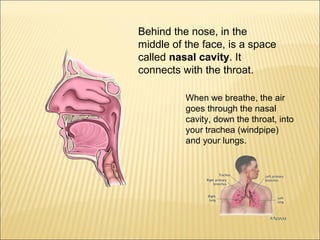
Behind the nose, in the 
middle of the face, is a space 
called nasal cavity. It 
connects with the throat. 
When we breathe, the air 
goes through the nasal 
cavity, down the throat, into 
your trachea (windpipe) 
and your lungs.
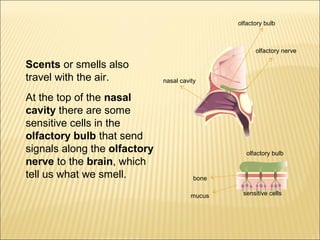
Scents or smells also 
travel with the air. 
At the top of the nasal 
cavity there are some 
sensitive cells in the 
olfactory bulb that send 
signals along the olfactory 
nerve to the brain, which 
tell us what we smell. 
olfactory bulb 
olfactory nerve 
nasal cavity 
olfactory bulb 
bone 
mucus sensitive cells
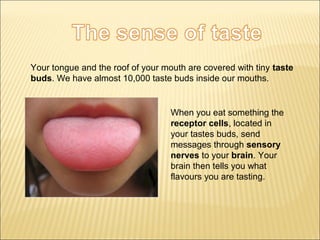
Your tongue and the roof of your mouth are covered with tiny taste 
buds. We have almost 10,000 taste buds inside our mouths. 
When you eat something the 
receptor cells, located in 
your tastes buds, send 
messages through sensory 
nerves to your brain. Your 
brain then tells you what 
flavours you are tasting.
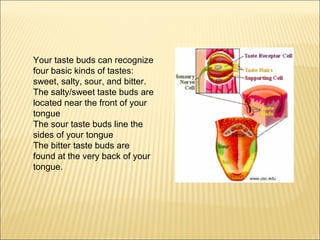
Your taste buds can recognize 
four basic kinds of tastes: 
sweet, salty, sour, and bitter. 
The salty/sweet taste buds are 
located near the front of your 
tongue 
The sour taste buds line the 
sides of your tongue 
The bitter taste buds are 
found at the very back of your 
tongue.
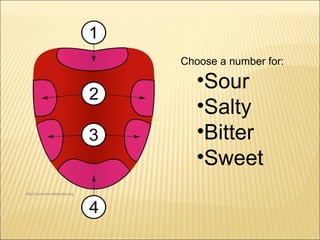
Choose a number for: 
•Sour 
•Salty 
•Bitter 
•Sweet 
http://commons.wikimedia.org
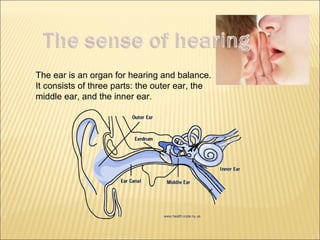
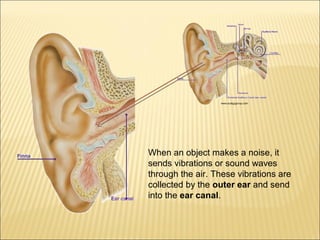
The ear is an organ for hearing and balance. 
It consists of three parts: the outer ear, the 
middle ear, and the inner ear.
www.audigygroup.com 
When an object makes a noise, it 
sends vibrations or sound waves 
through the air. These vibrations are 
collected by the outer ear and send 
into the ear canal.
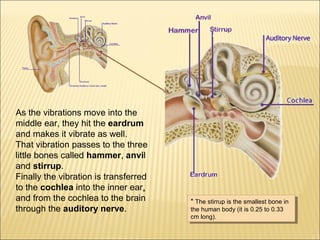
As the vibrations move into the 
middle ear, they hit the eardrum 
and makes it vibrate as well. 
That vibration passes to the three 
little bones called hammer, anvil 
and stirrup. 
Finally the vibration is transferred 
to the cochlea into the inner ear, 
and from the cochlea to the brain 
through the auditory nerve. * The stirrup is the smallest bone in 
* The stirrup is the smallest bone in 
the human body (it is 0.25 to 0.33 
cm long). 
the human body (it is 0.25 to 0.33 
cm long).
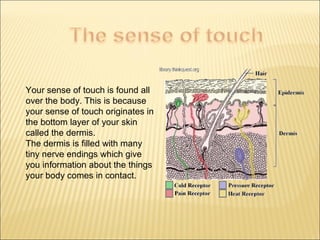
Your sense of touch is found all 
over the body. This is because 
your sense of touch originates in 
the bottom layer of your skin 
called the dermis. 
The dermis is filled with many 
tiny nerve endings which give 
you information about the things 
your body comes in contact.
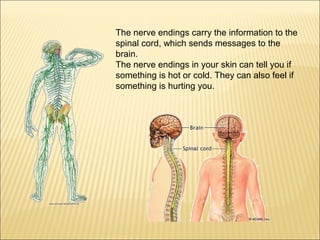
The nerve endings carry the information to the 
spinal cord, which sends messages to the 
brain. 
The nerve endings in your skin can tell you if 
something is hot or cold. They can also feel if 
something is hurting you.
Credits: 
http://library.thinkquest.org/ 
http://dorlingkindersly.co.uk 
http://commons.wikimedia.org 
http://contenidos.educarex.es/bancoimagenes/ 
Published by Ana Maestro Güemes 2008

Senses

  • 2.
    We have five main sense The eyes organs. The tongue The ears The nose The skin
  • 3.
    All senses dependon the nervous system. Our sense organs start to work when something stimulates special nerve cells called receptors. The receptors send nerve impulses along the sensory nerves to the brain. Your brain then tells you what the stimulus is.
  • 4.
    The light raysenter the eye through the cornea, which is a thick, transparent protective layer on the surface of your eye. Then the light rays pass through the pupil (the dark circle in the centre of your eye) and into the lens. cornea pupil iris lens When light rays pass through your pupil, the muscle called the iris (coloured ring) changes the size of the pupil depending on the amount of light that's available. If there is too much light, your pupil will shrink but if there is very little light available, the pupil will enlarge.
  • 5.
    The lens focusesthe image onto the back surface of the eyeball, called the retina. The retina, which is the size of your thumbnail, is filled with approximately 150 million light-sensitive cells that send the information to the brain by the optic nerve.
  • 6.
    The nose isthe organ for smell. The nose has two holes called nostrils . The nostrils and the nasal passages are separated by a wall called septum. Closer to the tip of the nose, the septum is made of cartilage, which is flexible.
  • 7.
    Behind the nose,in the middle of the face, is a space called nasal cavity. It connects with the throat. When we breathe, the air goes through the nasal cavity, down the throat, into your trachea (windpipe) and your lungs.
  • 8.
    Scents or smellsalso travel with the air. At the top of the nasal cavity there are some sensitive cells in the olfactory bulb that send signals along the olfactory nerve to the brain, which tell us what we smell. olfactory bulb olfactory nerve nasal cavity olfactory bulb bone mucus sensitive cells
  • 9.
    Your tongue andthe roof of your mouth are covered with tiny taste buds. We have almost 10,000 taste buds inside our mouths. When you eat something the receptor cells, located in your tastes buds, send messages through sensory nerves to your brain. Your brain then tells you what flavours you are tasting.
  • 10.
    Your taste budscan recognize four basic kinds of tastes: sweet, salty, sour, and bitter. The salty/sweet taste buds are located near the front of your tongue The sour taste buds line the sides of your tongue The bitter taste buds are found at the very back of your tongue.
  • 11.
    Choose a numberfor: •Sour •Salty •Bitter •Sweet http://commons.wikimedia.org
  • 12.
    The ear isan organ for hearing and balance. It consists of three parts: the outer ear, the middle ear, and the inner ear.
  • 13.
    www.audigygroup.com When anobject makes a noise, it sends vibrations or sound waves through the air. These vibrations are collected by the outer ear and send into the ear canal.
  • 14.
    As the vibrationsmove into the middle ear, they hit the eardrum and makes it vibrate as well. That vibration passes to the three little bones called hammer, anvil and stirrup. Finally the vibration is transferred to the cochlea into the inner ear, and from the cochlea to the brain through the auditory nerve. * The stirrup is the smallest bone in * The stirrup is the smallest bone in the human body (it is 0.25 to 0.33 cm long). the human body (it is 0.25 to 0.33 cm long).
  • 15.
    Your sense oftouch is found all over the body. This is because your sense of touch originates in the bottom layer of your skin called the dermis. The dermis is filled with many tiny nerve endings which give you information about the things your body comes in contact.
  • 16.
    The nerve endingscarry the information to the spinal cord, which sends messages to the brain. The nerve endings in your skin can tell you if something is hot or cold. They can also feel if something is hurting you.
  • 17.
    Credits: http://library.thinkquest.org/ http://dorlingkindersly.co.uk http://commons.wikimedia.org http://contenidos.educarex.es/bancoimagenes/ Published by Ana Maestro Güemes 2008