Studies in Semantics

Sense and Reference
The definition of sense:
Sense       is    abstract    and   de-
contextualized, and it refers to the
inherent meaning of the linguistic
form.
Sense is concerned only with intra-
linguistic relations.
It is the collection of all the semantic
features of the linguistic form.
Examples:

Dog: domesticated canine mammal,
occurring in many breeds showing
great size, color, and form variety.
Desk: piece of furniture with a flat top
and legs, used to read and write.
I: pronoun, indicating the speaker.
The definition of reference:
Reference is what a linguistic
form points to in the real world.
It deals with the relationship
between the linguistic element
and the metalinguistic world of
experience.
Examples:

• “I am a PhD student.” “I” refers to
  Fadi Sukkari.

• “The door in this classroom is
  white.” “door” refers to the flat
  surface that separates our room
  from the corridor.
Sense     and       Reference
are both parts of meaning
             yet,

        what relation

           is there

    between them?
Sense vs. Reference:
1- A linguistic form with a unique
sense may have different referents in
different situations.
2- The same referent might be
pointed to by numerous linguistic
forms having different senses.
3- All linguistic forms have sense, but
not necessarily reference.
“A proper name (word or sign)
expresses its sense, and designates
its reference.” Frege, 1892.

Every expression has both a sense
and a reference; actually, it denotes
its reference, and expresses its
sense.
A- Sense   many references
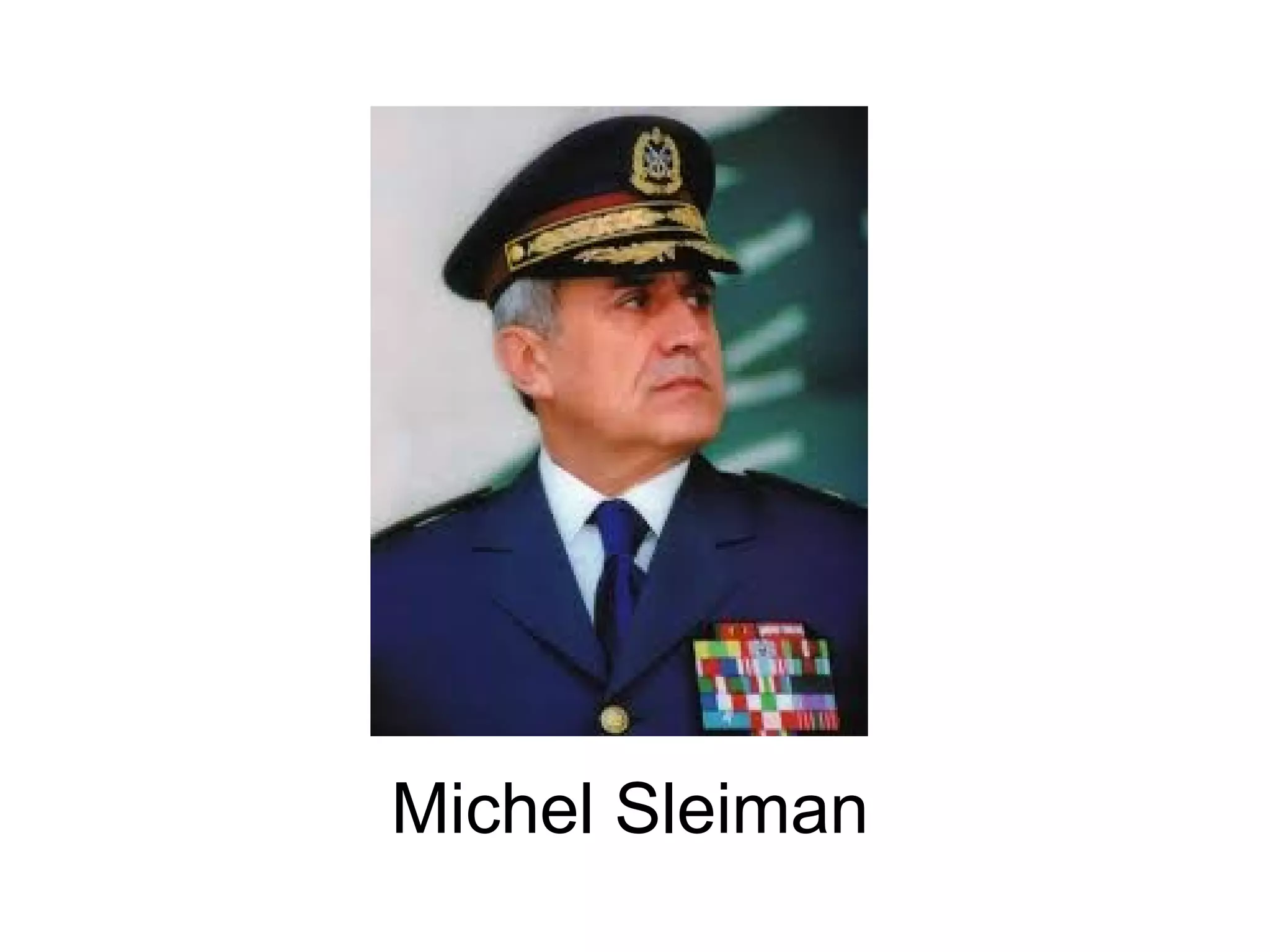
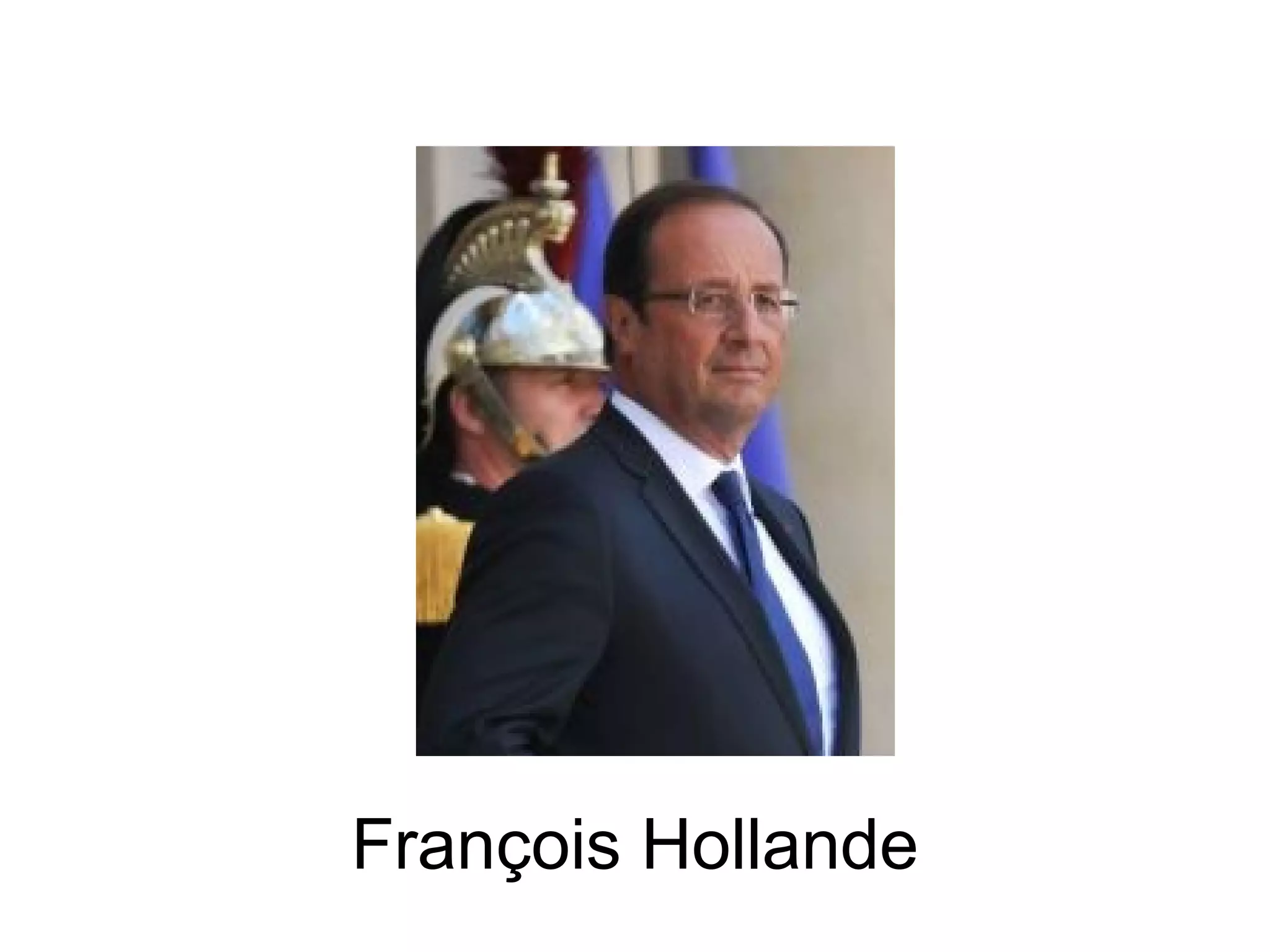
“Our president is giving a speech.”


               →
Michel Sleiman
François Hollande
“Is there still any hot water?”

             →
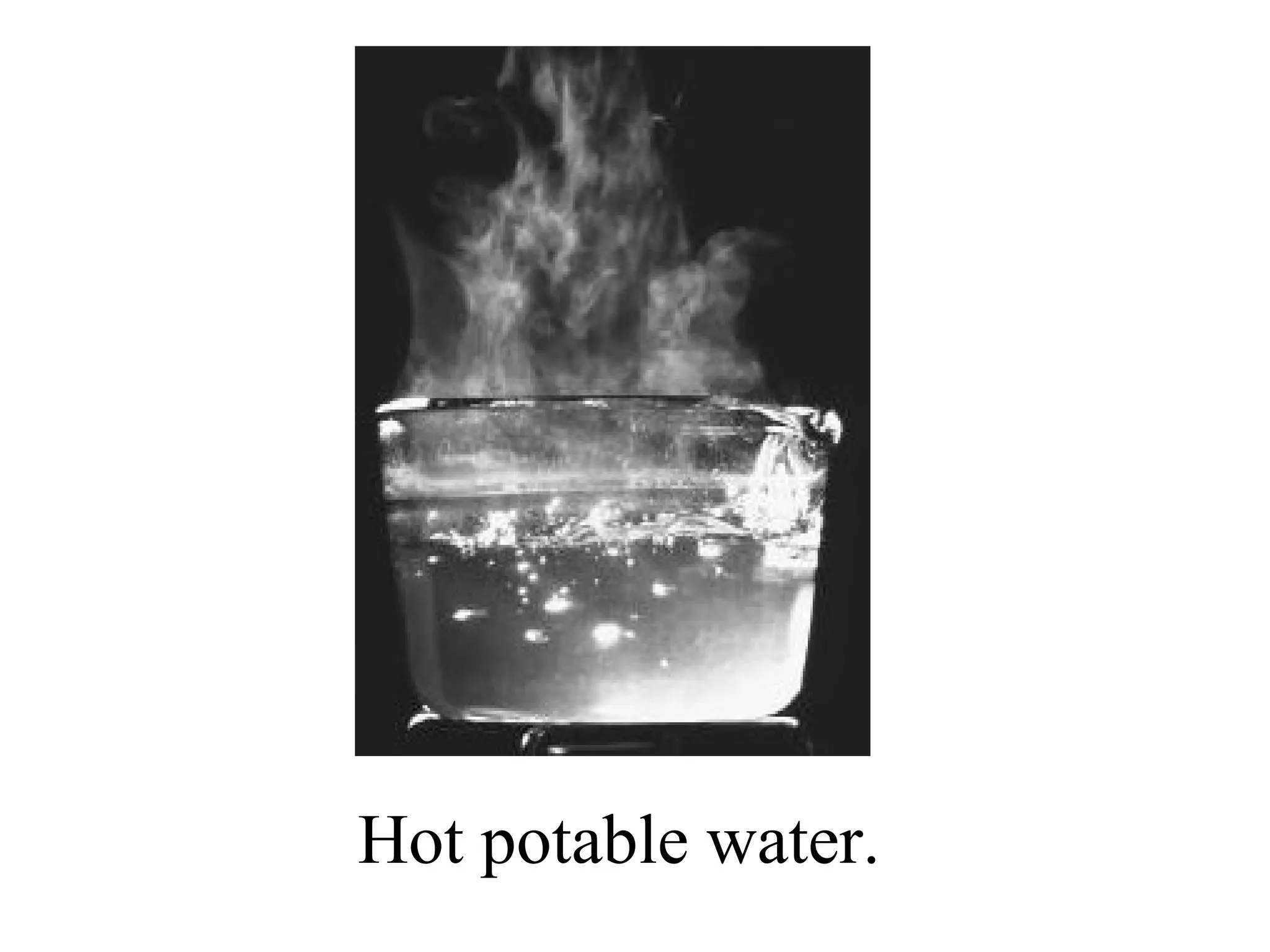
Hot potable water.
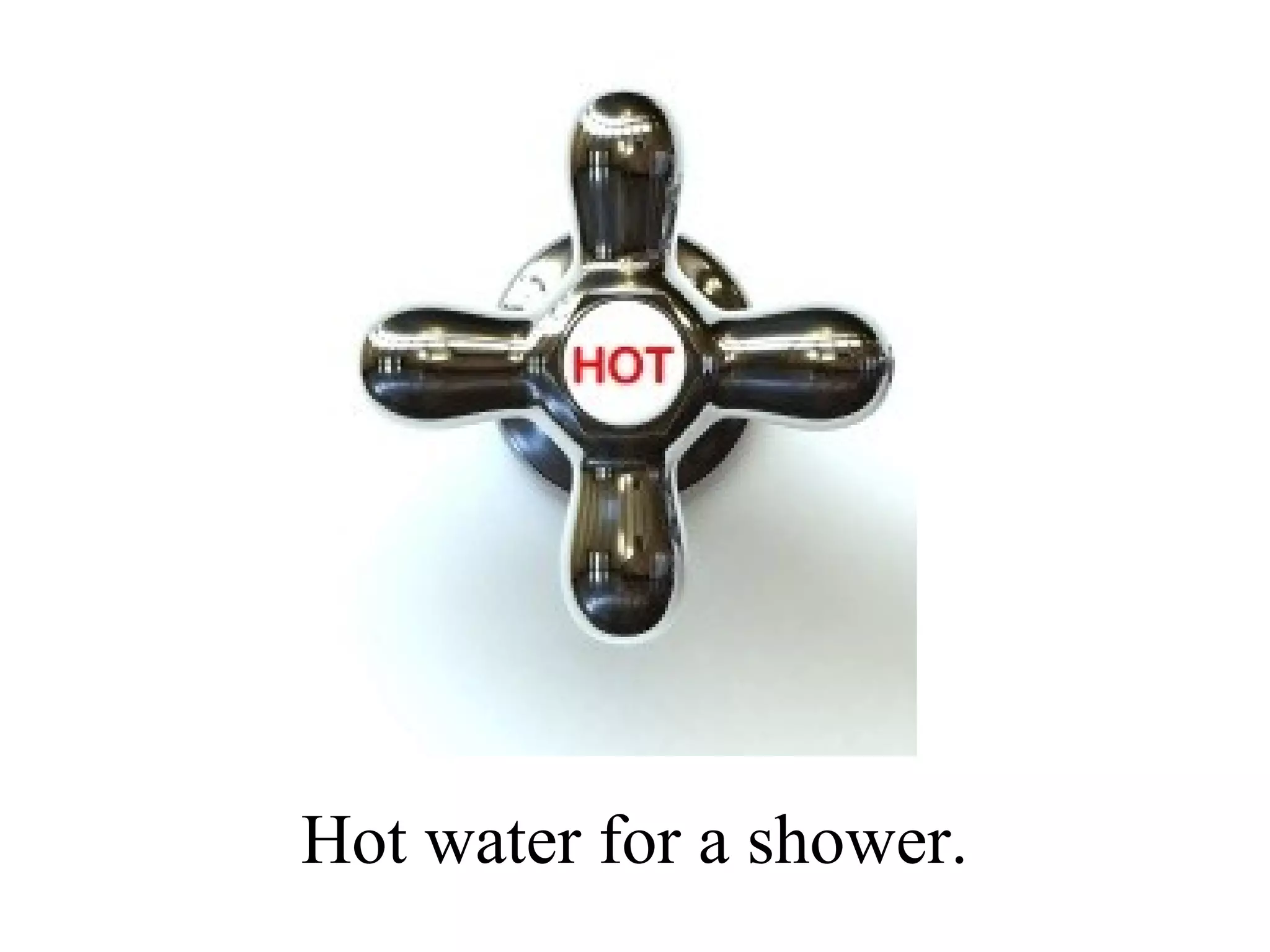
Hot water for a shower.
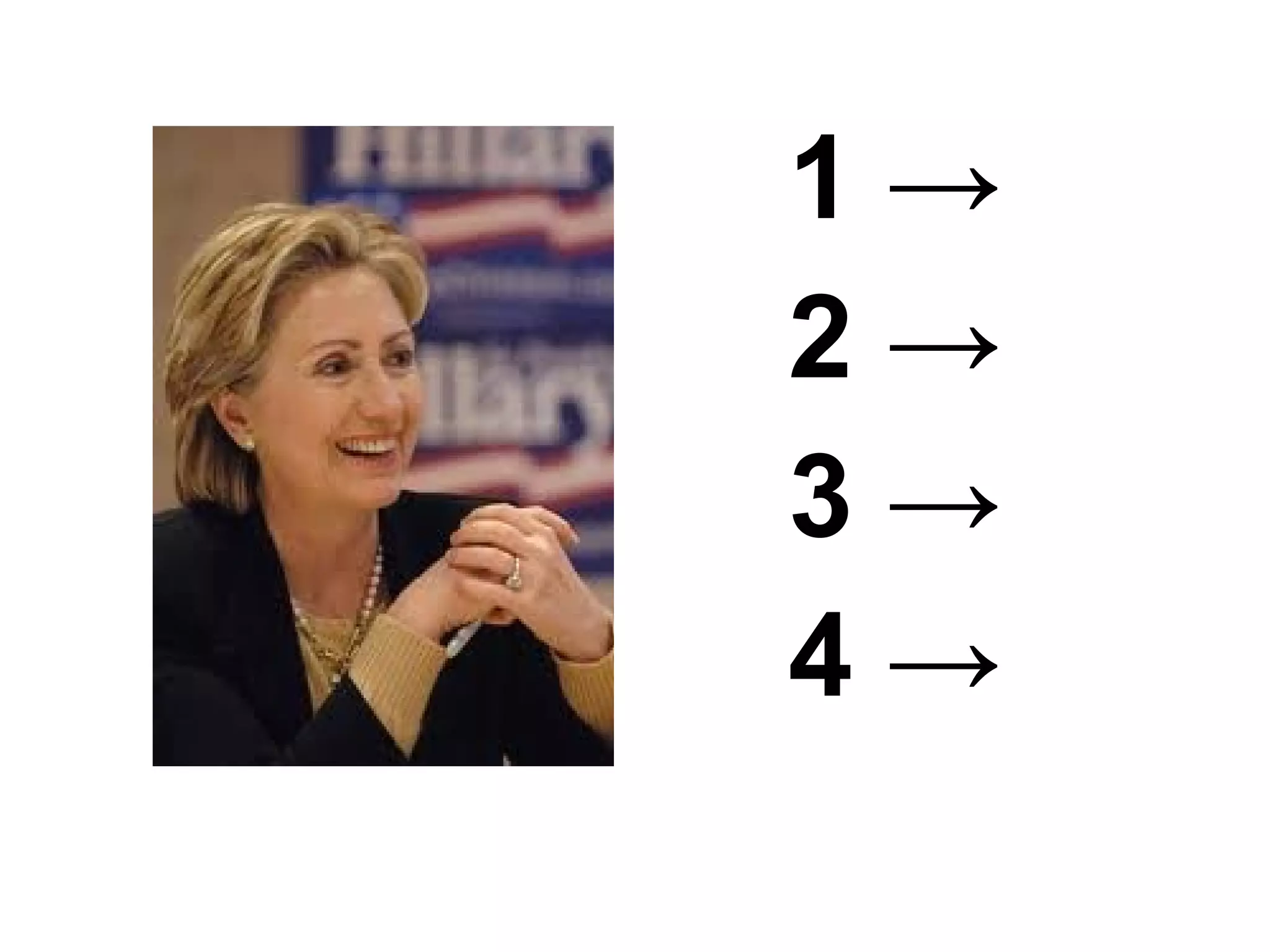
B- Reference   many senses
1→
2→
3→
4→
Bill’s wife.
The winner of the Ohio elections.
The Minister of Foreign affairs.
Hillary Clinton!
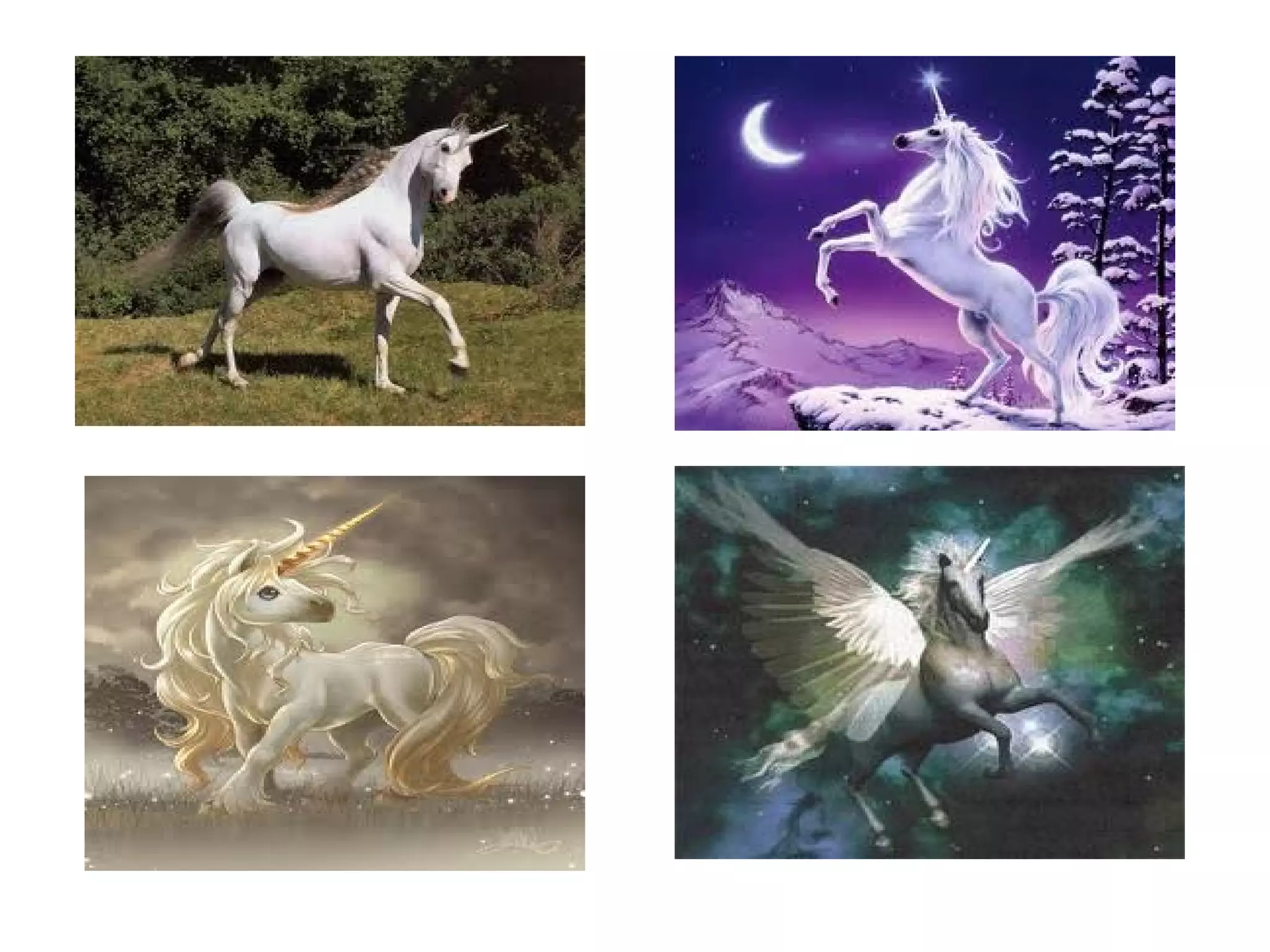
C- Sense   no reference
“A white unicorn is in my garden.”


               →
But Unicorns Don’t Exist!
D- Reference   no sense ***
???????
If you ignore
 what LITCHIES are,
then you have missed
   a really delicious
       CHINESE
         FRUIT!
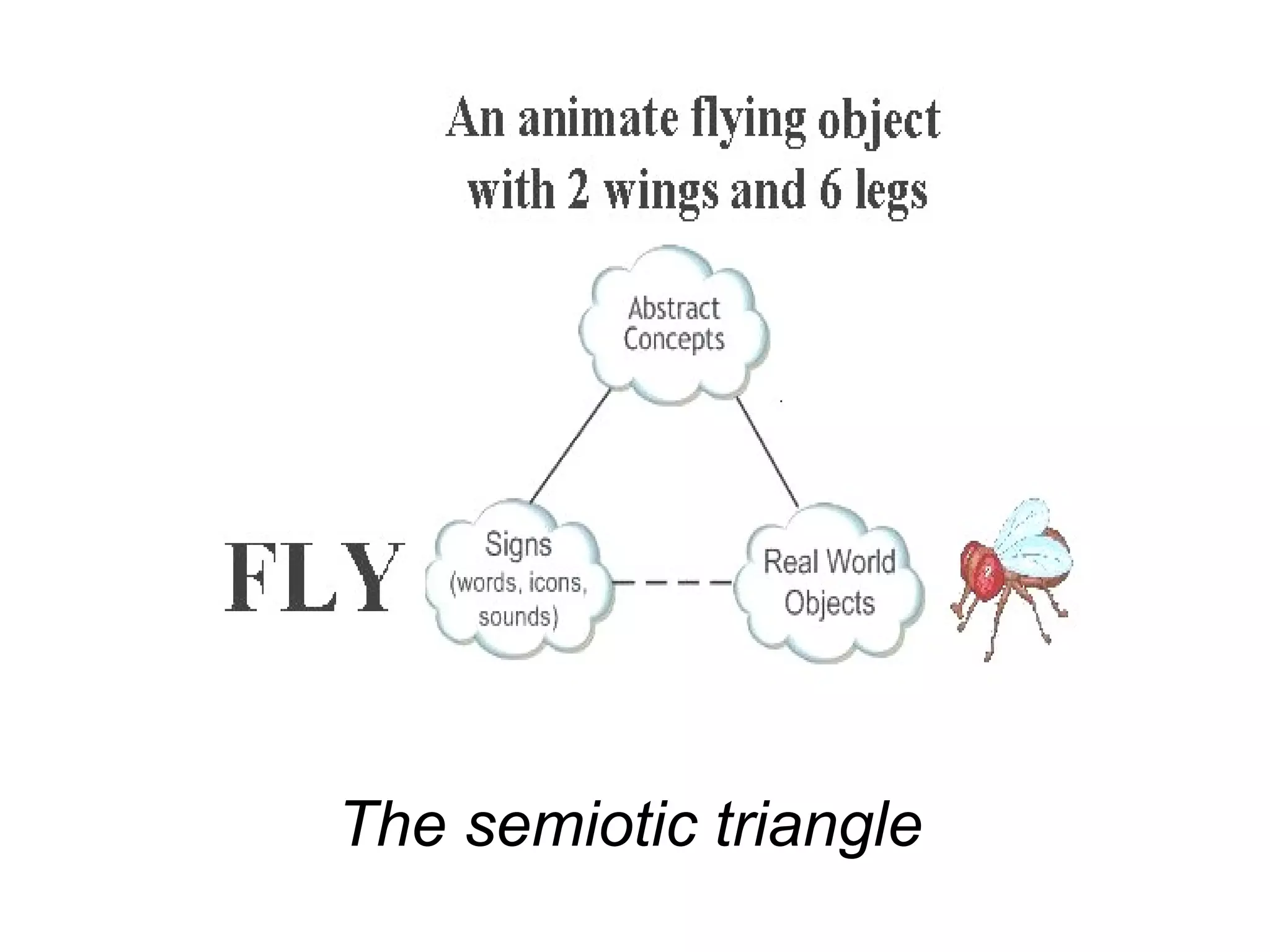
The semiotic triangle
“Ich bin ein Berliner”

I am a berliner

I am a Jelly doughnut

«Berliner» is polysemic and can denote
more than one referent.
a- The Siamese breed is a very healthy
type of cat. (Declarative)
b- Semantics is so interesting! (Affective)
“The meaning of … a sentence is
determined … by the meanings of its
constituents. Semantics is primarily
denotational   …       meanings     are
denotations of linguistic entities: the
denotations of words are objects, while
those of sentences are truth values.”
Frege.
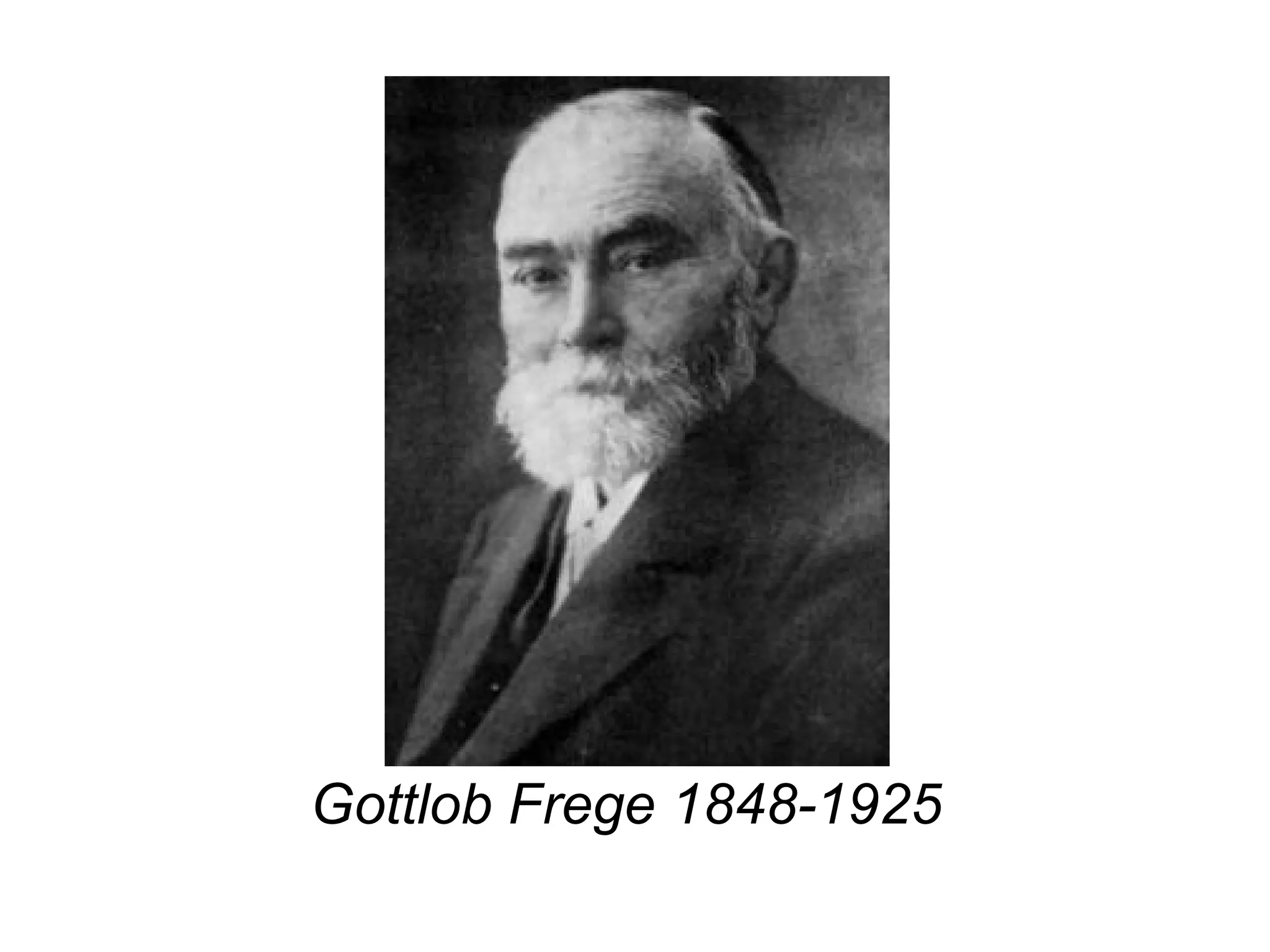
Gottlob Frege 1848-1925
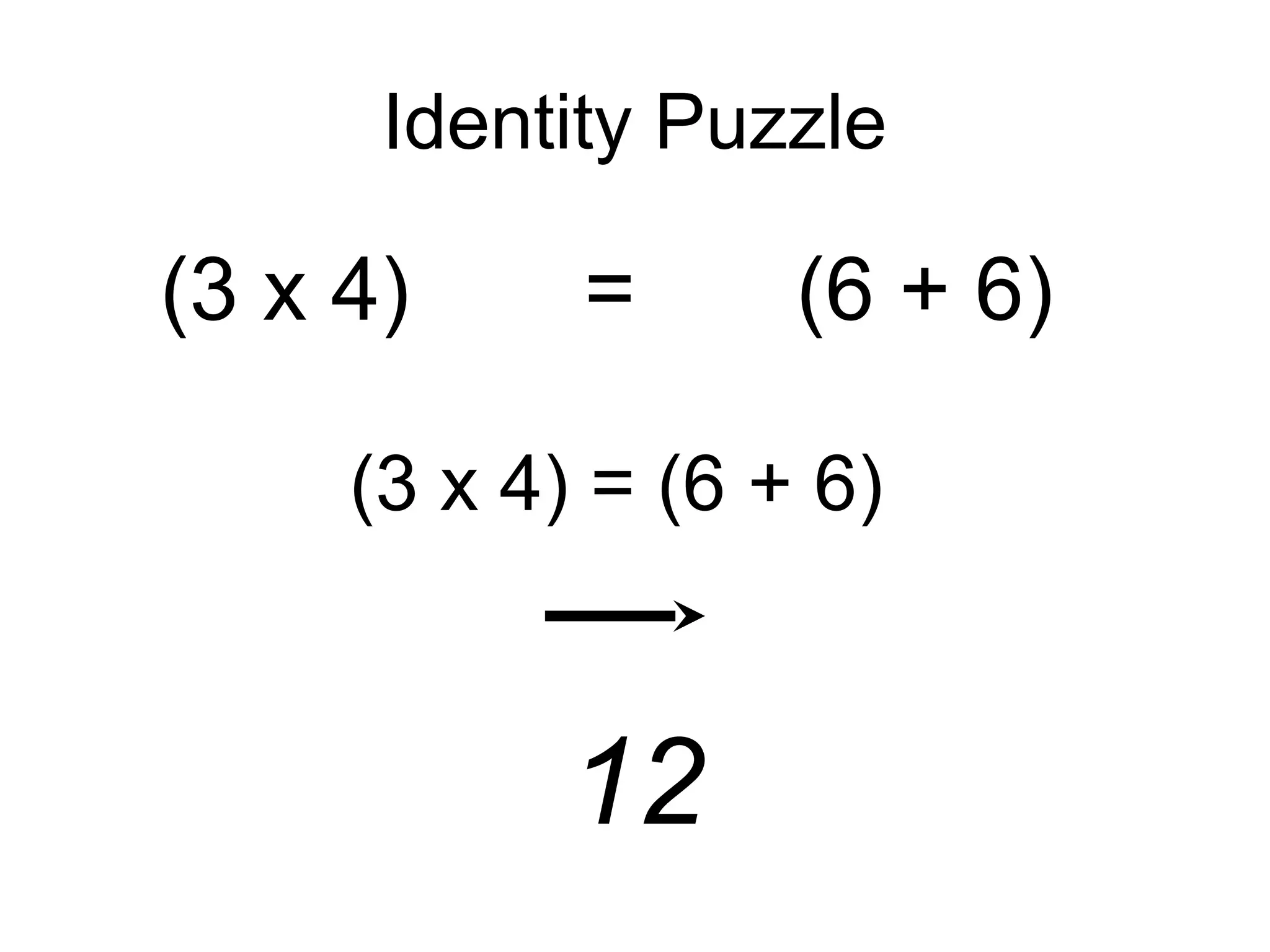
Identity Puzzle

(3 x 4)     =      (6 + 6)

     (3 x 4) = (6 + 6)


           12
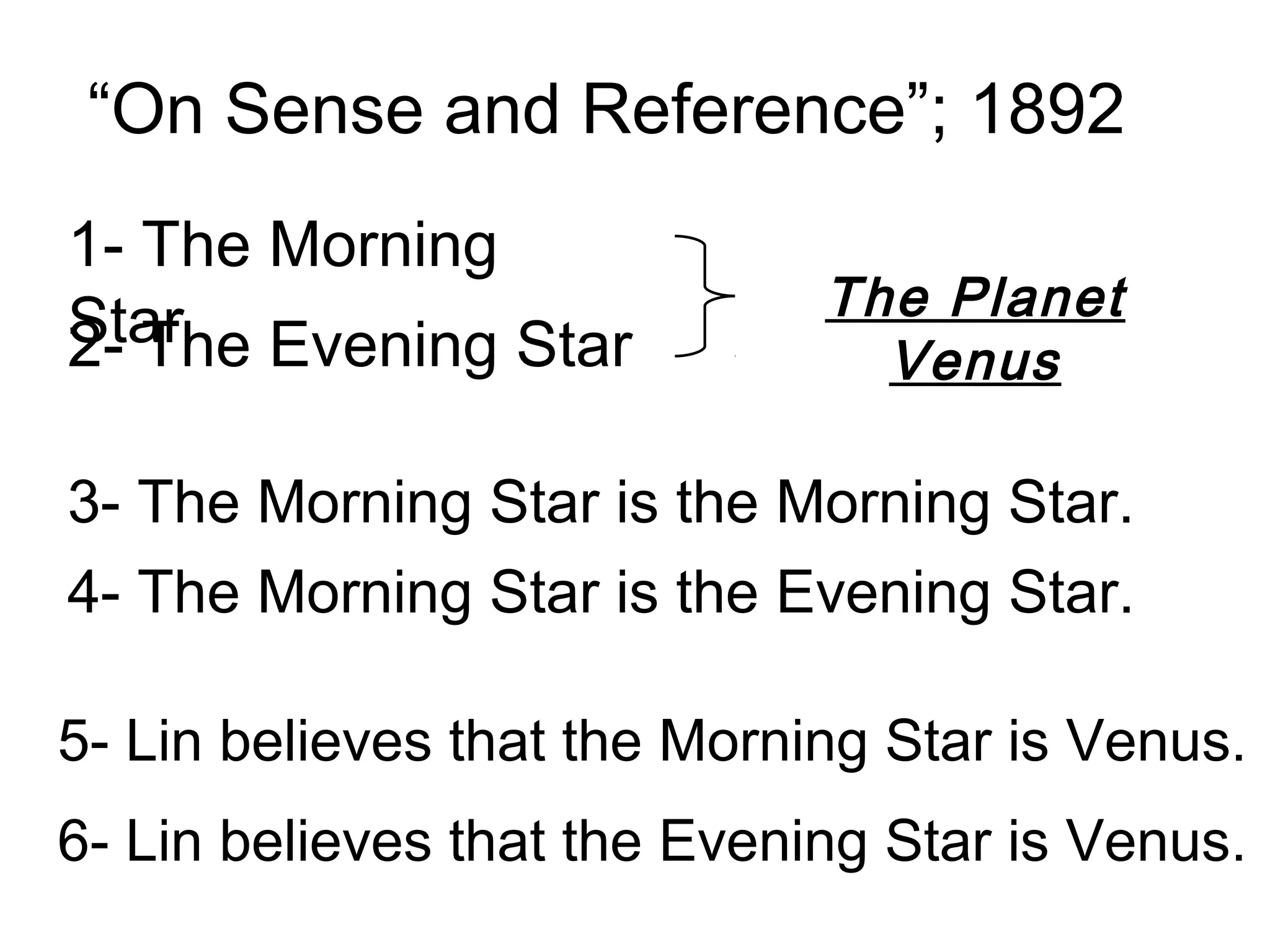
“On Sense and Reference”; 1892
1- The Morning
Star Evening Star             The Planet
2- The                          Venus

3- The Morning Star is the Morning Star.
4- The Morning Star is the Evening Star.

5- Lin believes that the Morning Star is Venus.
6- Lin believes that the Evening Star is Venus.

Sense reference

  • 1.
  • 2.
    The definition ofsense: Sense is abstract and de- contextualized, and it refers to the inherent meaning of the linguistic form. Sense is concerned only with intra- linguistic relations. It is the collection of all the semantic features of the linguistic form.
  • 3.
    Examples: Dog: domesticated caninemammal, occurring in many breeds showing great size, color, and form variety. Desk: piece of furniture with a flat top and legs, used to read and write. I: pronoun, indicating the speaker.
  • 4.
    The definition ofreference: Reference is what a linguistic form points to in the real world. It deals with the relationship between the linguistic element and the metalinguistic world of experience.
  • 5.
    Examples: • “I ama PhD student.” “I” refers to Fadi Sukkari. • “The door in this classroom is white.” “door” refers to the flat surface that separates our room from the corridor.
  • 6.
    Sense and Reference are both parts of meaning yet, what relation is there between them?
  • 7.
    Sense vs. Reference: 1-A linguistic form with a unique sense may have different referents in different situations. 2- The same referent might be pointed to by numerous linguistic forms having different senses. 3- All linguistic forms have sense, but not necessarily reference.
  • 8.
    “A proper name(word or sign) expresses its sense, and designates its reference.” Frege, 1892. Every expression has both a sense and a reference; actually, it denotes its reference, and expresses its sense.
  • 9.
    A- Sense many references
  • 10.
    “Our president isgiving a speech.” →
  • 11.
  • 12.
  • 13.
    “Is there stillany hot water?” →
  • 14.
  • 15.
    Hot water fora shower.
  • 16.
    B- Reference many senses
  • 17.
  • 18.
  • 19.
    The winner ofthe Ohio elections.
  • 20.
    The Minister ofForeign affairs.
  • 21.
  • 22.
    C- Sense no reference
  • 23.
    “A white unicornis in my garden.” →
  • 25.
  • 26.
    D- Reference no sense ***
  • 27.
  • 28.
    If you ignore what LITCHIES are, then you have missed a really delicious CHINESE FRUIT!
  • 29.
  • 30.
    “Ich bin einBerliner” I am a berliner I am a Jelly doughnut «Berliner» is polysemic and can denote more than one referent.
  • 31.
    a- The Siamesebreed is a very healthy type of cat. (Declarative) b- Semantics is so interesting! (Affective) “The meaning of … a sentence is determined … by the meanings of its constituents. Semantics is primarily denotational … meanings are denotations of linguistic entities: the denotations of words are objects, while those of sentences are truth values.” Frege.
  • 32.
  • 33.
    Identity Puzzle (3 x4) = (6 + 6) (3 x 4) = (6 + 6) 12
  • 34.
    “On Sense andReference”; 1892 1- The Morning Star Evening Star The Planet 2- The Venus 3- The Morning Star is the Morning Star. 4- The Morning Star is the Evening Star. 5- Lin believes that the Morning Star is Venus. 6- Lin believes that the Evening Star is Venus.