SOFIYANA
 Reference and Denotation
 Connotation
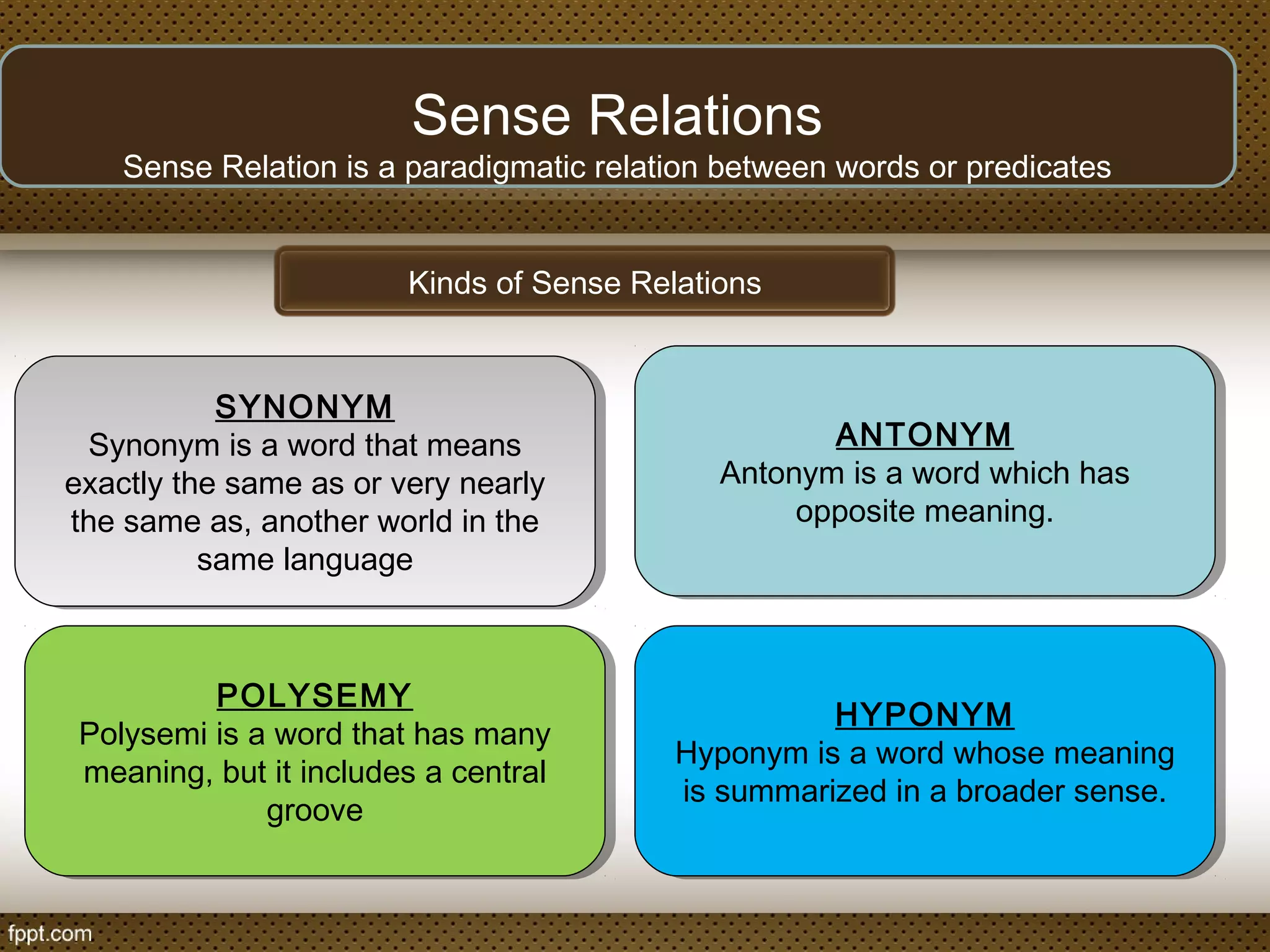
 Sense Relations
 Lexical and Grammatical Meanings
Reference
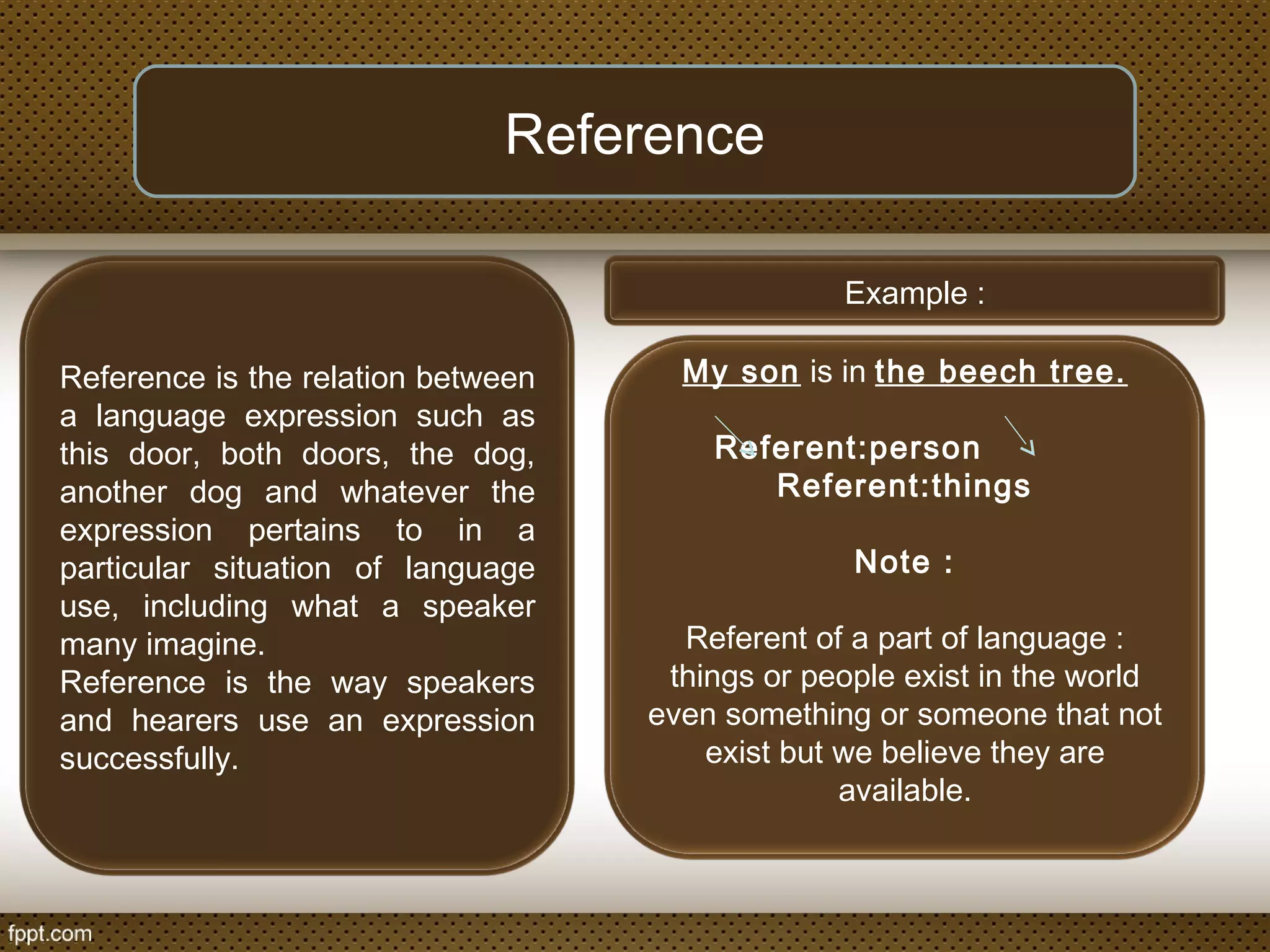
Reference is the relation between
a language expression such as
this door, both doors, the dog,
another dog and whatever the
expression pertains to in a
particular situation of language
use, including what a speaker
many imagine.
Reference is the way speakers
and hearers use an expression
successfully.
Example :
My son is in the beech tree.
Referent:person
Referent:things
Note :
Referent of a part of language :
things or people exist in the world
even something or someone that not
exist but we believe they are
available.
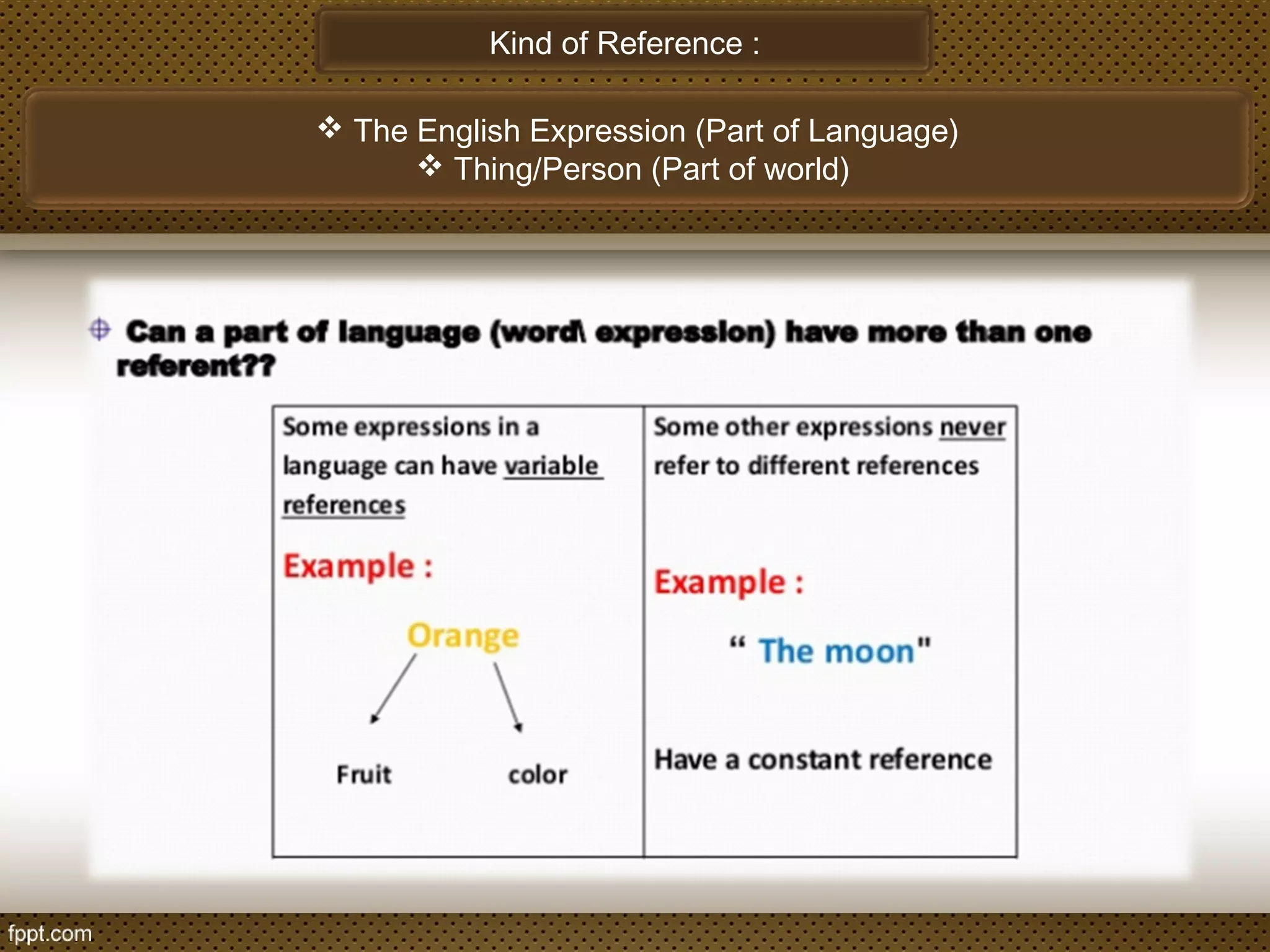
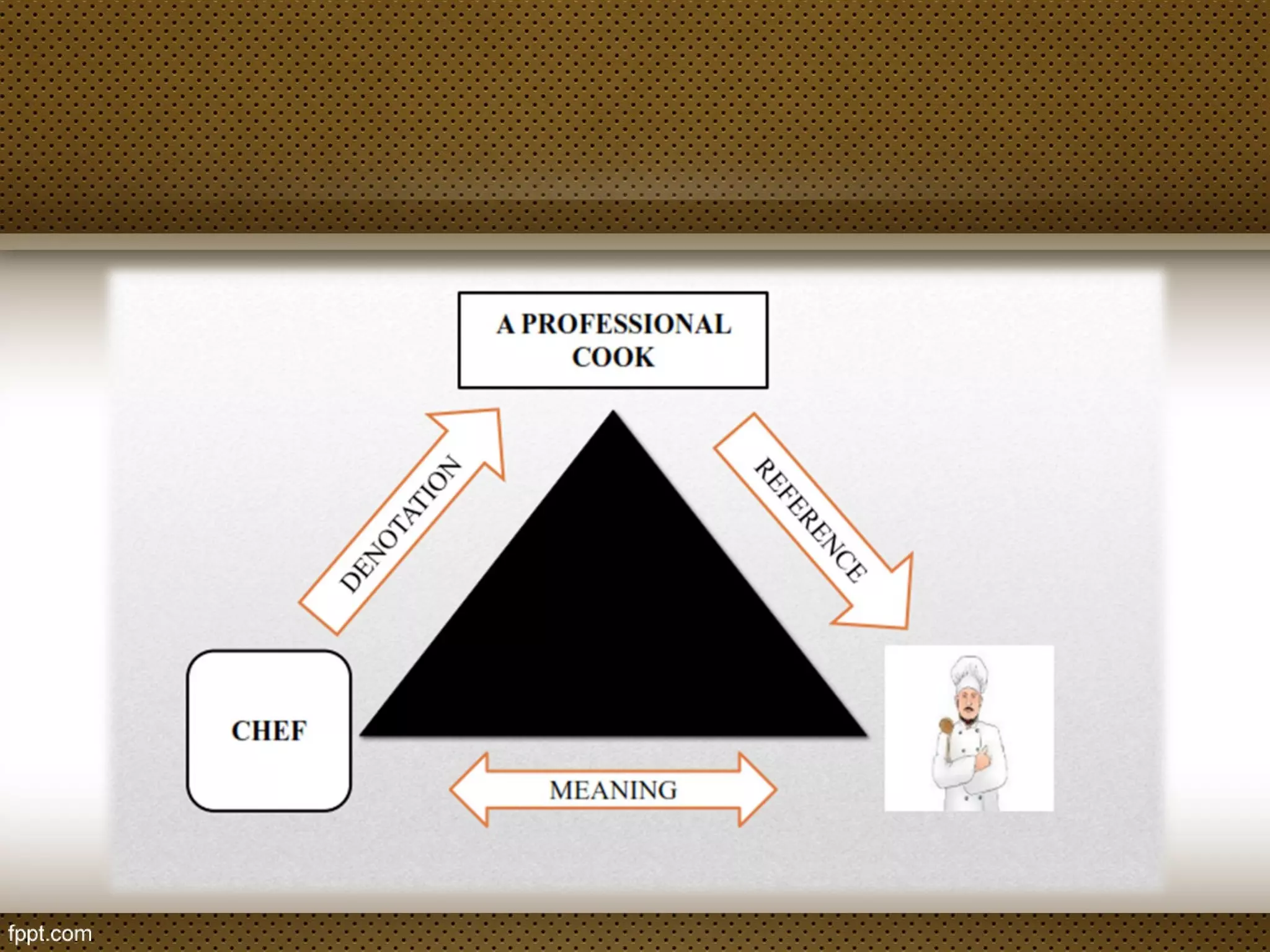
Kind of Reference :
 The English Expression (Part of Language)
 Thing/Person (Part of world)
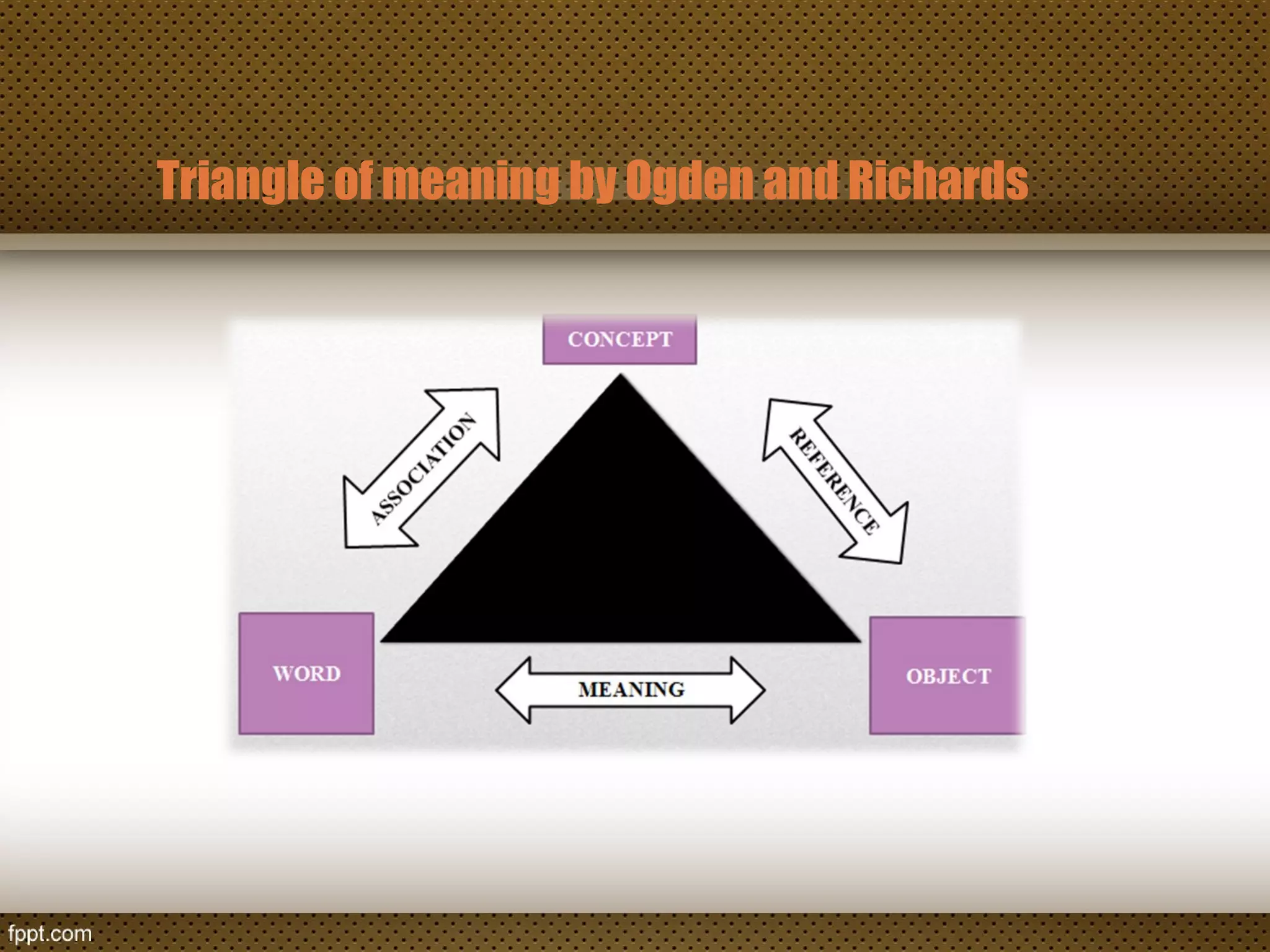
Triangle of meaning by Ogden and Richards
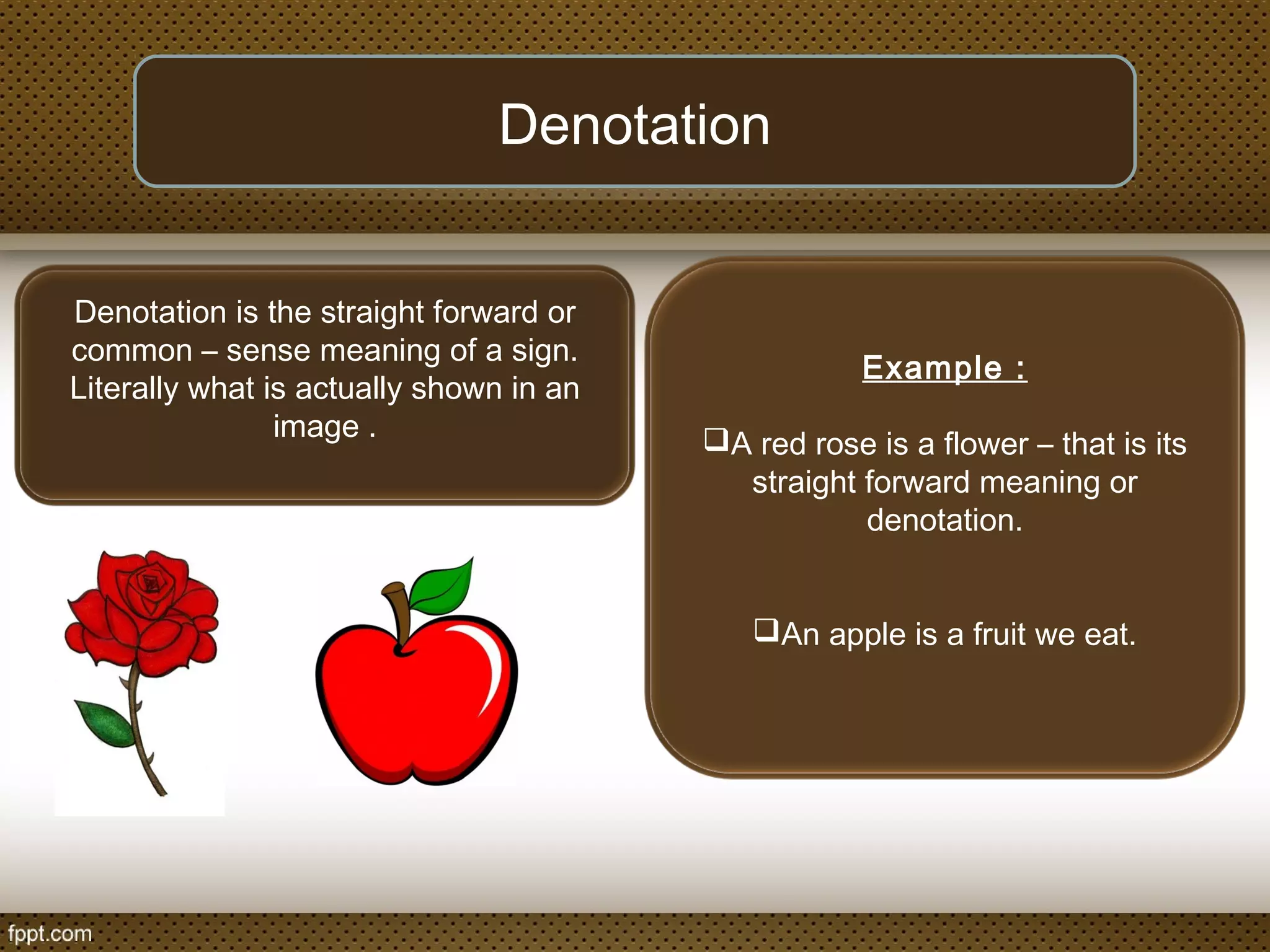
Denotation is the straight forward or
common – sense meaning of a sign.
Literally what is actually shown in an
image .
Denotation
Example :
A red rose is a flower – that is its
straight forward meaning or
denotation.
An apple is a fruit we eat.
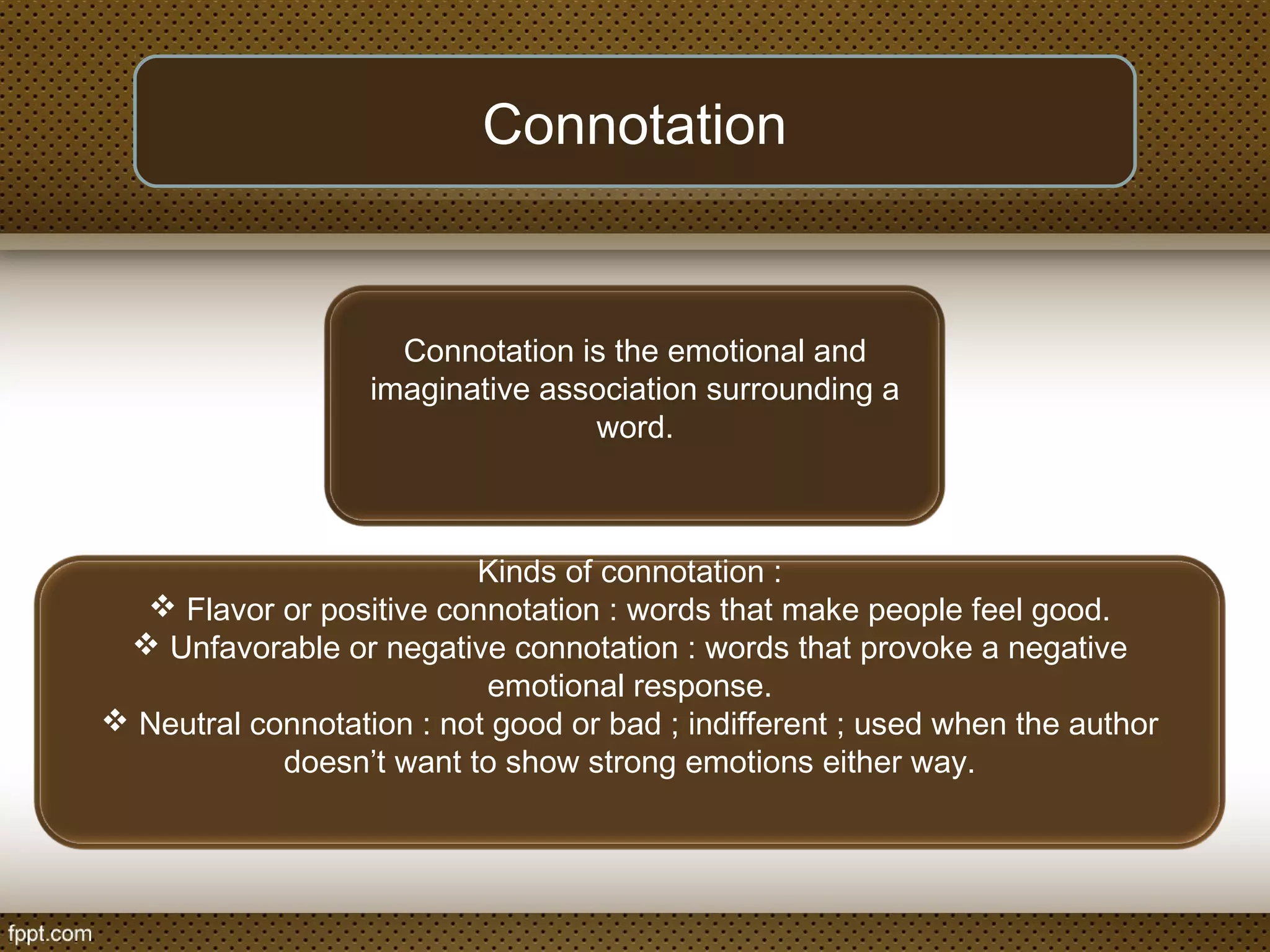
Connotation
Connotation is the emotional and
imaginative association surrounding a
word.
Kinds of connotation :
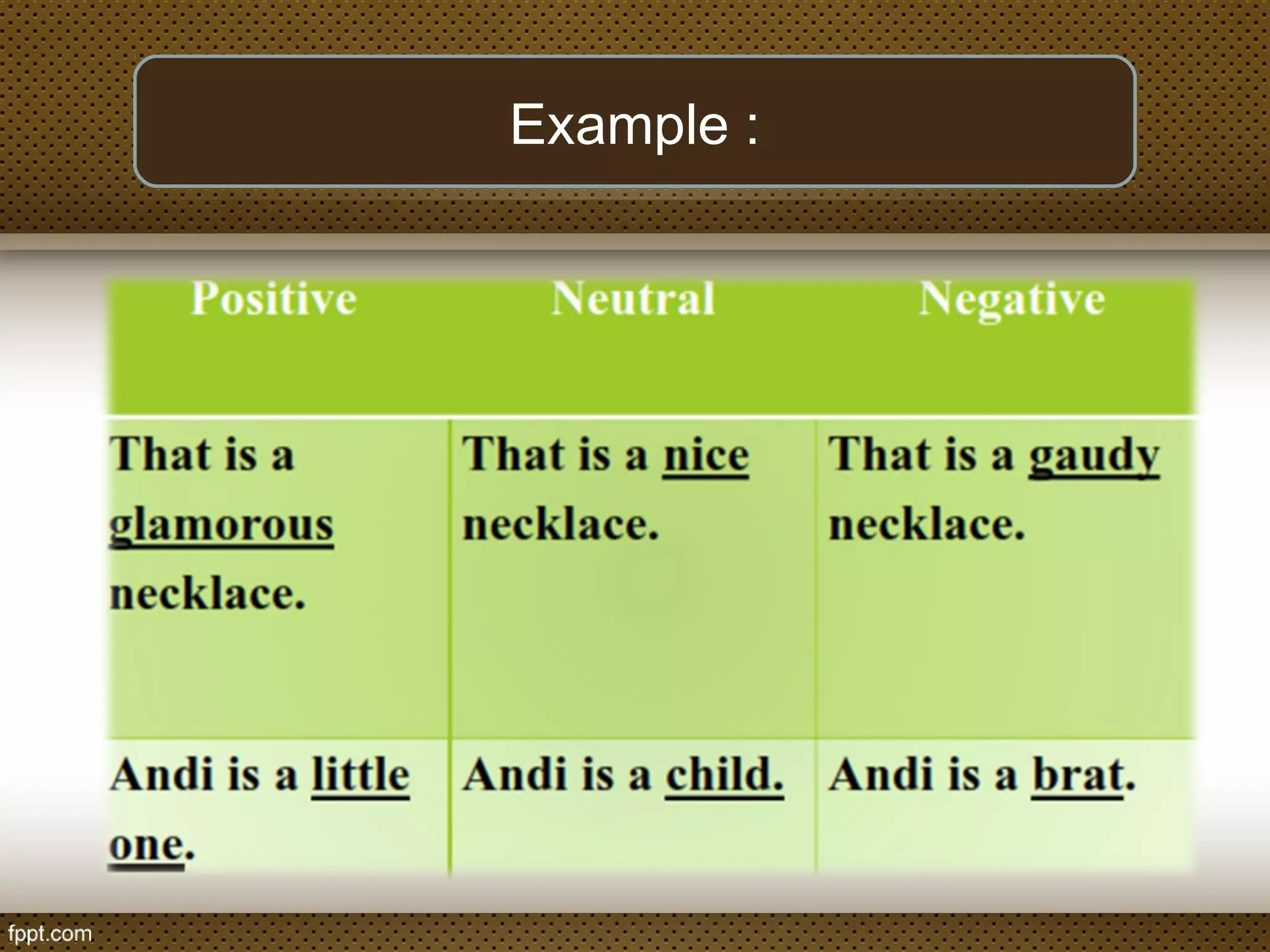
 Flavor or positive connotation : words that make people feel good.
 Unfavorable or negative connotation : words that provoke a negative
emotional response.
 Neutral connotation : not good or bad ; indifferent ; used when the author
doesn’t want to show strong emotions either way.
Example :
Sense Relations
Sense Relation is a paradigmatic relation between words or predicates
Kinds of Sense Relations
SYNONYM
Synonym is a word that means
exactly the same as or very nearly
the same as, another world in the
same language
SYNONYM
Synonym is a word that means
exactly the same as or very nearly
the same as, another world in the
same language
ANTONYM
Antonym is a word which has
opposite meaning.
ANTONYM
Antonym is a word which has
opposite meaning.
POLYSEMY
Polysemi is a word that has many
meaning, but it includes a central
groove
POLYSEMY
Polysemi is a word that has many
meaning, but it includes a central
groove
HYPONYM
Hyponym is a word whose meaning
is summarized in a broader sense.
HYPONYM
Hyponym is a word whose meaning
is summarized in a broader sense.
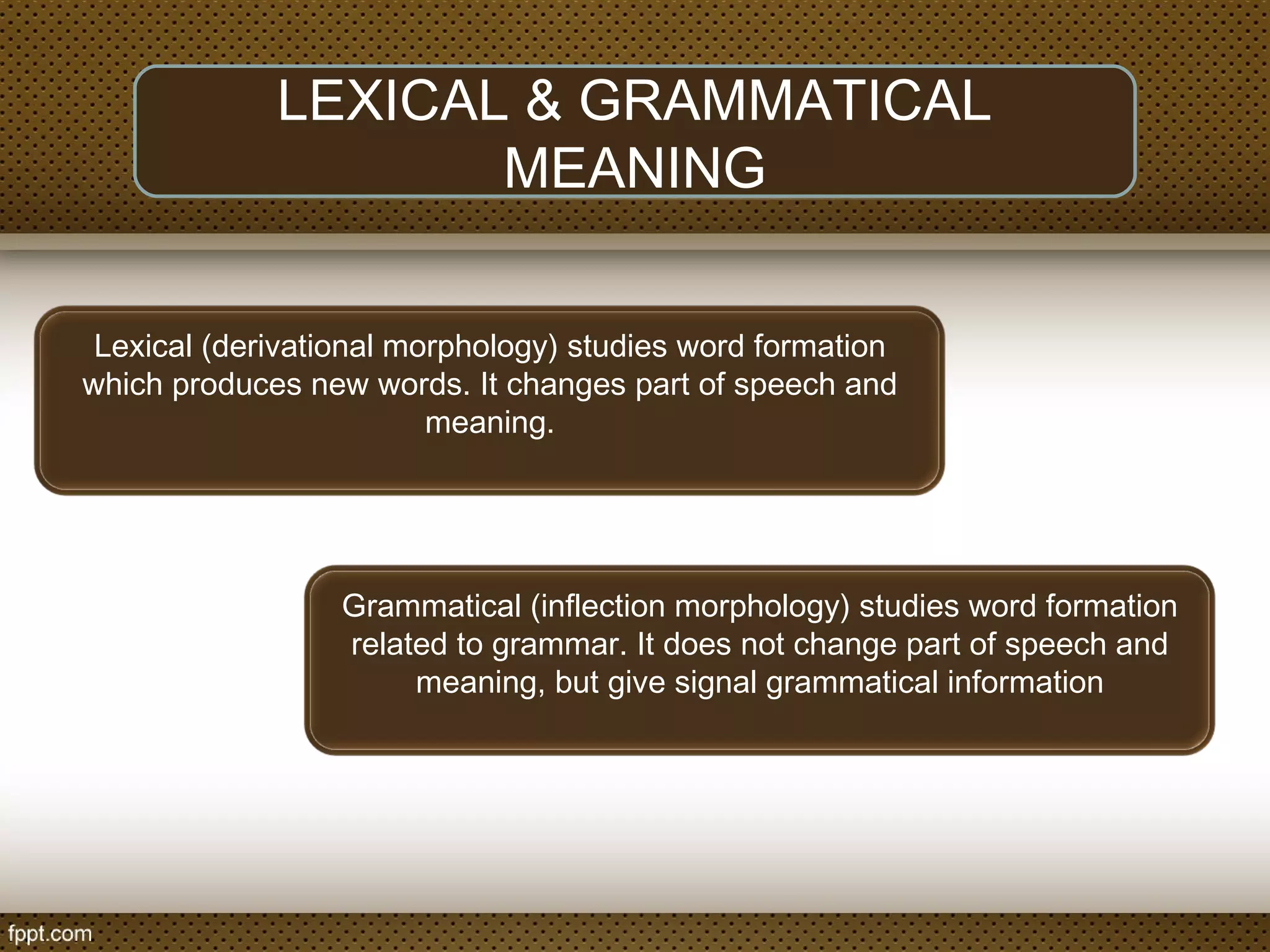
LEXICAL & GRAMMATICAL
MEANING
Lexical (derivational morphology) studies word formation
which produces new words. It changes part of speech and
meaning.
Grammatical (inflection morphology) studies word formation
related to grammar. It does not change part of speech and
meaning, but give signal grammatical information
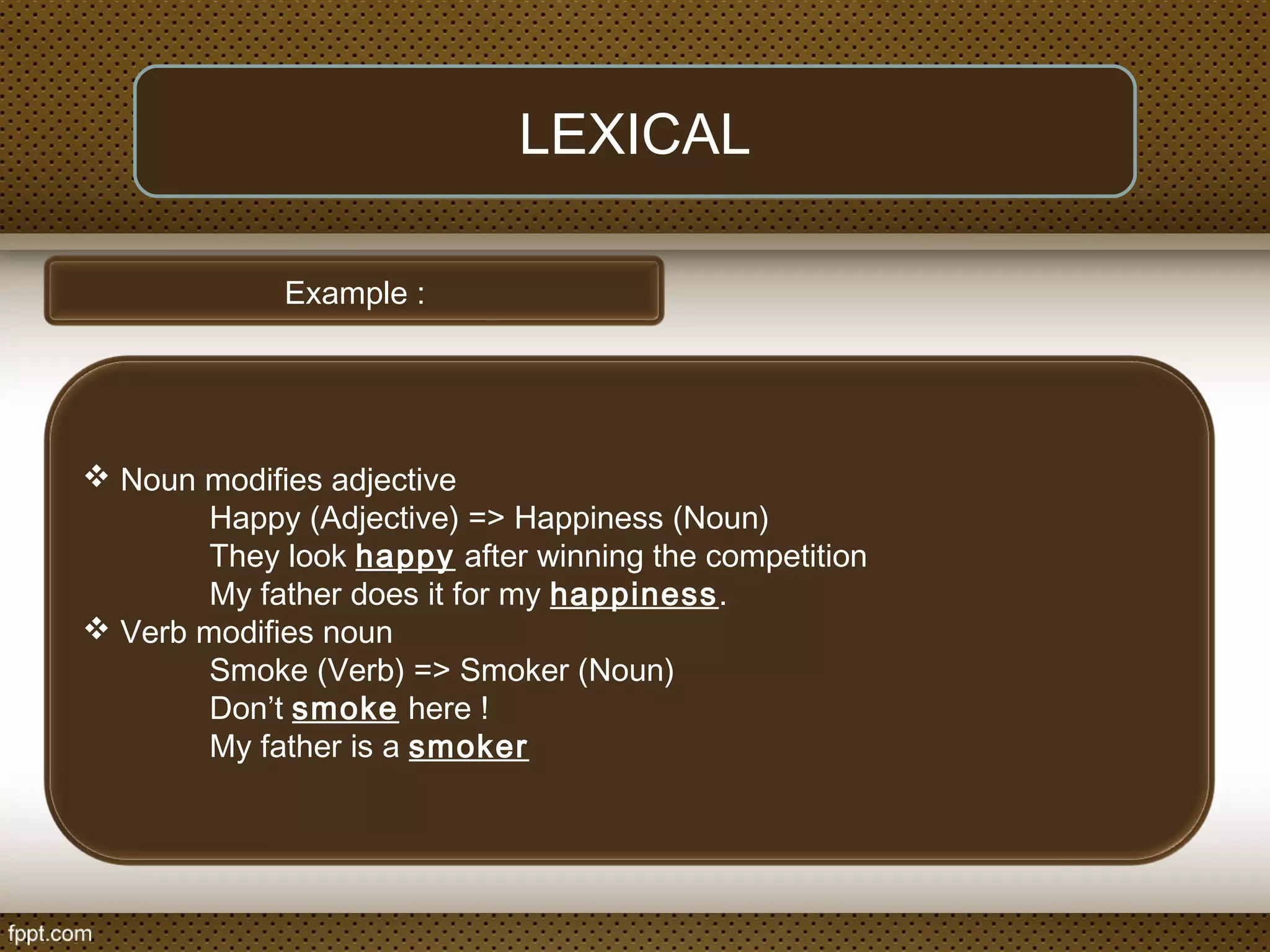
Example :
 Noun modifies adjective
Happy (Adjective) => Happiness (Noun)
They look happy after winning the competition
My father does it for my happiness.
 Verb modifies noun
Smoke (Verb) => Smoker (Noun)
Don’t smoke here !
My father is a smoker
LEXICAL
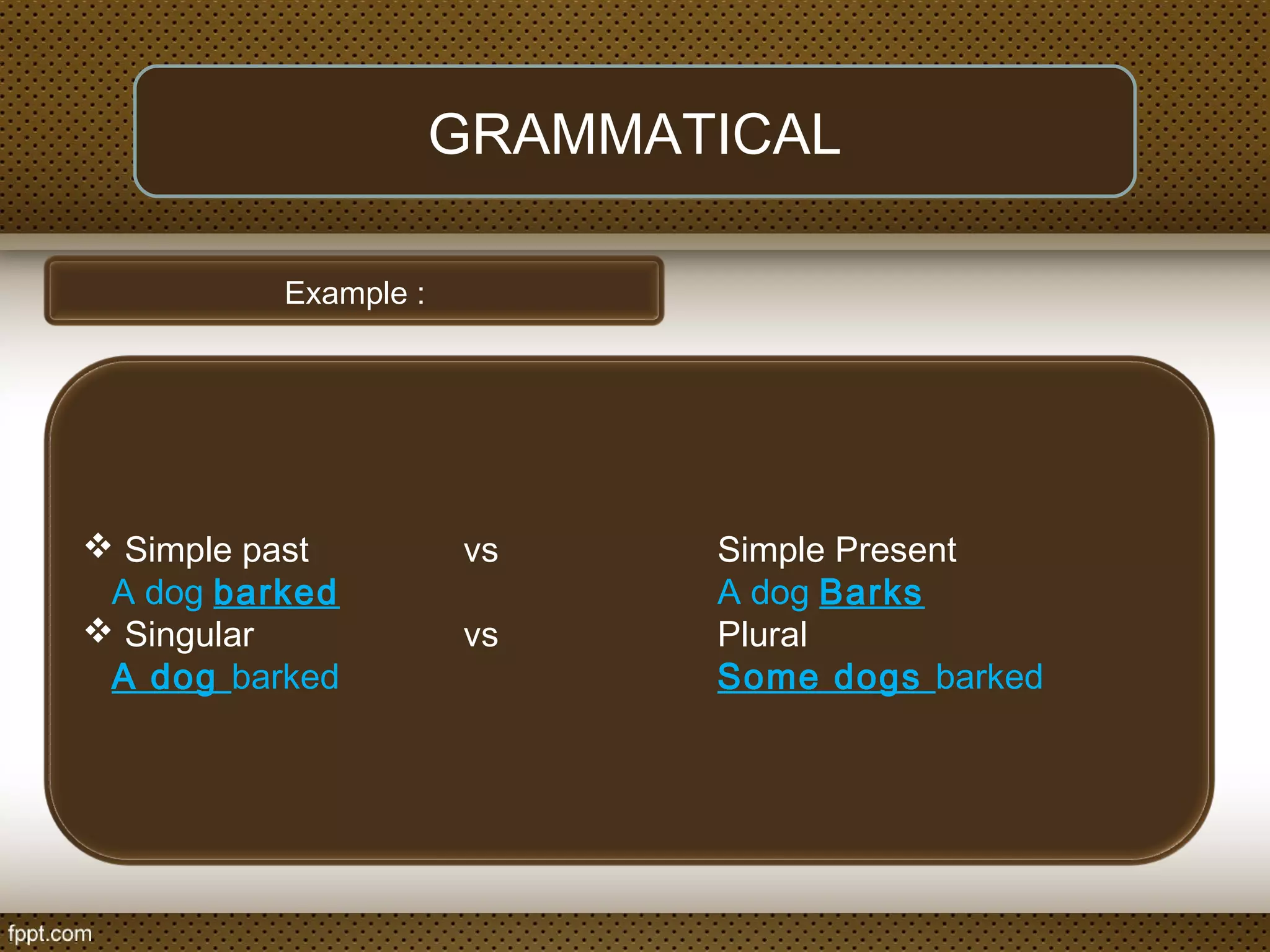
GRAMMATICAL
Example :
 Simple past vs Simple Present
A dog barked A dog Barks
 Singular vs Plural
A dog barked Some dogs barked
The Dimension of Meaning - Semantics

The Dimension of Meaning - Semantics

  • 1.
    SOFIYANA  Reference andDenotation  Connotation  Sense Relations  Lexical and Grammatical Meanings
  • 2.
    Reference Reference is therelation between a language expression such as this door, both doors, the dog, another dog and whatever the expression pertains to in a particular situation of language use, including what a speaker many imagine. Reference is the way speakers and hearers use an expression successfully. Example : My son is in the beech tree. Referent:person Referent:things Note : Referent of a part of language : things or people exist in the world even something or someone that not exist but we believe they are available.
  • 3.
    Kind of Reference:  The English Expression (Part of Language)  Thing/Person (Part of world)
  • 4.
    Triangle of meaningby Ogden and Richards
  • 5.
    Denotation is thestraight forward or common – sense meaning of a sign. Literally what is actually shown in an image . Denotation Example : A red rose is a flower – that is its straight forward meaning or denotation. An apple is a fruit we eat.
  • 7.
    Connotation Connotation is theemotional and imaginative association surrounding a word. Kinds of connotation :  Flavor or positive connotation : words that make people feel good.  Unfavorable or negative connotation : words that provoke a negative emotional response.  Neutral connotation : not good or bad ; indifferent ; used when the author doesn’t want to show strong emotions either way.
  • 8.
  • 9.
    Sense Relations Sense Relationis a paradigmatic relation between words or predicates Kinds of Sense Relations SYNONYM Synonym is a word that means exactly the same as or very nearly the same as, another world in the same language SYNONYM Synonym is a word that means exactly the same as or very nearly the same as, another world in the same language ANTONYM Antonym is a word which has opposite meaning. ANTONYM Antonym is a word which has opposite meaning. POLYSEMY Polysemi is a word that has many meaning, but it includes a central groove POLYSEMY Polysemi is a word that has many meaning, but it includes a central groove HYPONYM Hyponym is a word whose meaning is summarized in a broader sense. HYPONYM Hyponym is a word whose meaning is summarized in a broader sense.
  • 10.
    LEXICAL & GRAMMATICAL MEANING Lexical(derivational morphology) studies word formation which produces new words. It changes part of speech and meaning. Grammatical (inflection morphology) studies word formation related to grammar. It does not change part of speech and meaning, but give signal grammatical information
  • 11.
    Example :  Nounmodifies adjective Happy (Adjective) => Happiness (Noun) They look happy after winning the competition My father does it for my happiness.  Verb modifies noun Smoke (Verb) => Smoker (Noun) Don’t smoke here ! My father is a smoker LEXICAL
  • 12.
    GRAMMATICAL Example :  Simplepast vs Simple Present A dog barked A dog Barks  Singular vs Plural A dog barked Some dogs barked

Editor's Notes

  • #10 Hyponym : subordination is the meaning or extends (vertical) ex : Flower Co-Hyponym : is below or narrow meaning (horizontal) ex : roses, orchid, etc