UNIT 3
                      Part 1


REFERENCE AND SENSE
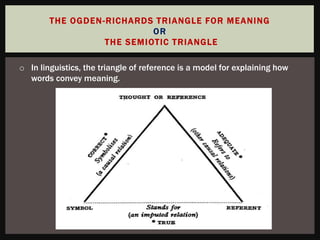
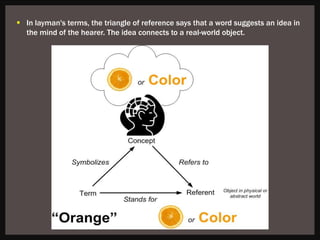
T H E O G D E N -RIC HA RDS T R I A NGLE FO R M E A NING
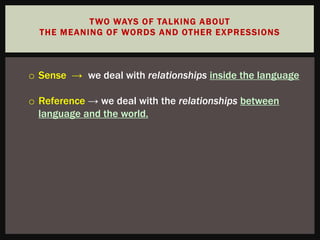
                                        OR
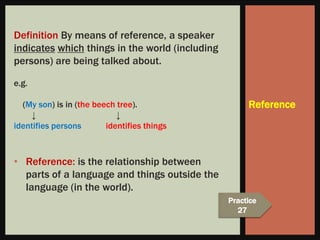
                         T H E S E M I OTIC T R I A NG LE

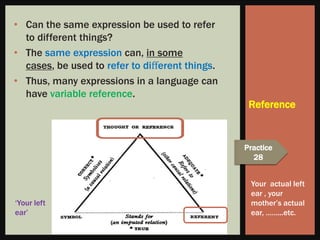
o In linguistics, the triangle of reference is a model for explaining how
  words convey meaning.
 In layman's terms, the triangle of reference says that a word suggests an idea in
  the mind of the hearer. The idea connects to a real-world object.
T WO WAYS O F TA L KI NG A B O UT
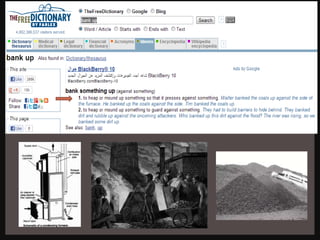
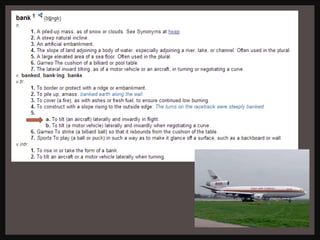
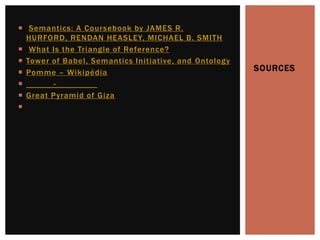
  T H E M E A NI NG O F WO R DS A N D OT H E R E X P RESSI ONS


o Sense → we deal with relationships inside the language

o Reference → we deal with the relationships between
  language and the world.
Definition By means of reference, a speaker
indicates which things in the world (including
persons) are being talked about.

e.g.

  (My son) is in (the beech tree).                    Reference
    ↓                       ↓
identifies persons       identifies things


• Reference: is the relationship between
  parts of a language and things outside the
  language (in the world).
                                                 Practice
                                                   27
• Can the same expression be used to refer
  to different things?
• The same expression can, in some
  cases, be used to refer to different things.
• Thus, many expressions in a language can
  have variable reference.
                                                 Reference


                                                Practice
                                                  28


                                                 Your actual left
                                                 ear , your
‘Your left                                       mother’s actual
ear’                                             ear, ……...etc.
• Are there expressions in normal everyday
  conversation that always refer to the same things?

• E.g.
• E.g.


• There are cases of expressions which in normal
  everyday conversation never refer to different
  things, i.e. in most everyday situations that one can   Reference
  envisage, have constant reference.

• However, there is very little constancy of reference
  in language. Almost all of the fixing of reference
  comes from the context in which expressions are
  used.
• Can two different expressions have the same
  referent?

• E.g.

                                                      •
                                                      •
                                                      •

• The classic example is the Morning Star and the         Reference
  Evening Star, both of which normally refer to the
  planet Venus.
The SENSE of an expression is its place in a
system of semantic relationships with other
expressions in the language.

Semantic relationships:
1. sameness of meaning

•   We will deal first with the senses of words   Sense
    in context.


•   Can we talk about the sense of longer
    expressions (phrases and sentences)?
• In some cases, the same word can have
  more than one sense.    (T/F)

• E.g.

                                          •
                                          •
                                          •
                                          •


                                          •

    Practice
      30
• We use the term ‘word’ in the sense of
  ‘word form’.

• (convenient to treat anything spelled with
  the same sequence of letters and
  pronounced with the same sequence of
  phonemes as being the same word).

• Some semanticists would regard ‘bank’ as
  several different words (different entries in
  dictionaries).
• Can one sentence have different senses ?
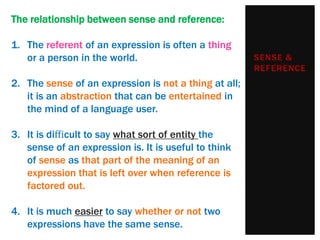
The relationship between sense and reference:

1. The referent of an expression is often a thing
   or a person in the world.                           SENSE &
                                                       REFERENCE
2. The sense of an expression is not a thing at all;
   it is an abstraction that can be entertained in
   the mind of a language user.

3. It is difficult to say what sort of entity the
   sense of an expression is. It is useful to think
   of sense as that part of the meaning of an
   expression that is left over when reference is
   factored out.

4. It is much easier to say whether or not two
   expressions have the same sense.
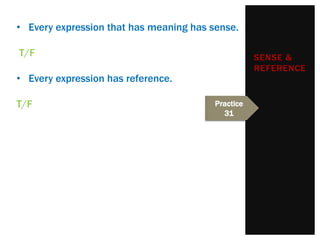
• Every expression that has meaning has sense.

T/F                                                 SENSE &
                                                    REFERENCE
• Every expression has reference.

T/F                                      Practice
                                           31
PART 2
Practice
     31


                                              SENSE &
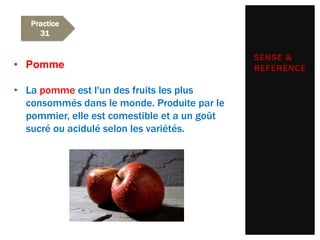
• Pomme                                       REFERENCE

• La pomme est l'un des fruits les plus
  consommés dans le monde. Produite par le
  pommier, elle est comestible et a un goût
  sucré ou acidulé selon les variétés.
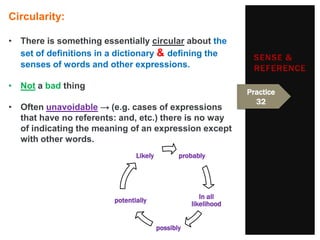
Circularity:

• There is something essentially circular about the
  set of definitions in a dictionary & defining the                SENSE &
  senses of words and other expressions.                         REFERENCE
• Not a bad thing
                                                                Practice
                                                                  32
• Often unavoidable → (e.g. cases of expressions
  that have no referents: and, etc.) there is no way
  of indicating the meaning of an expression except
  with other words.
                               Likely          probably


                                                      In all
                        potentially
                                                   likelihood


                                        possibly
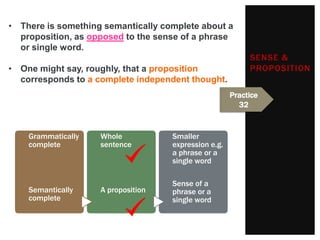
• There is something semantically complete about a
  proposition, as opposed to the sense of a phrase
  or single word.
                                                           SENSE &
• One might say, roughly, that a proposition               PROPOSITION
  corresponds to a complete independent thought.
                                                      Practice
                                                        32


    Grammatically   Whole           Smaller
    complete        sentence        expression e.g.
                                    a phrase or a
                                    single word

                                    Sense of a
    Semantically    A proposition   phrase or a
    complete                        single word
• Can the same sense to belong to expressions in
  different languages ??

• I woke up early yesterday.                              SENSE &
                                                      •   DIFFERENT
                                                          LANGUAGES
•    The Pyramid of Khufu is the oldest and largest of
    the three pyramids in the Giza. It is the only one
    of the Seven Wonders of the Ancient World to
    remain largely intact.
                                                            Practice
                                                      •       32
                                .

• To the extent that perfect translation between
  languages is possible (a very debatable
  point), essentially the same sense can be said to
  belong to expressions in different languages.
• The relationship between:

Sense & proposition → direct → similarity
Reference & utterance → not so direct → similarity         SENSE &
                                                           DIFFERENT
• Both referring and uttering are acts performed by        LANGUAGES
  particular speakers on particular occasions.

• Most utterances contain, or are accompanied
  by, one or more acts of referring.
                                                             Practice
• An act of referring is the picking out of a particular        3
  referent by a speaker in the course of a particular
  utterance.
• Although the concept of reference is fundamentally
  related to utterances, in that acts of reference
  only actually happen in the course of
  utterances.

• When talking about reference in connection with
  sentences, or parts of sentences, we are
  imagining a potential utterance of the sentence or
  expression in question.

• In everyday conversation, the words
  meaning, means, mean, meant, etc. are
  sometimes used to indicate reference and
  sometimes to indicate sense.                         Practice
                                                         34
REVIEW
PRACTICE
  P 30
 Semantics: A Cour sebook by JAMES R.
  HURFORD, RENDAN HEASLEY, MICHAEL B. SMITH
 What Is the Triangle of Reference?
 Tower of Babel, Semantics Initiative, and Ontology
 Pomme – Wikipédia                                    SOURCES
       -
 Great Pyramid of Giza


Unit 3 - Reference and Sense

  • 1.
    UNIT 3 Part 1 REFERENCE AND SENSE
  • 2.
    T H EO G D E N -RIC HA RDS T R I A NGLE FO R M E A NING OR T H E S E M I OTIC T R I A NG LE o In linguistics, the triangle of reference is a model for explaining how words convey meaning.
  • 3.
     In layman'sterms, the triangle of reference says that a word suggests an idea in the mind of the hearer. The idea connects to a real-world object.
  • 4.
    T WO WAYSO F TA L KI NG A B O UT T H E M E A NI NG O F WO R DS A N D OT H E R E X P RESSI ONS o Sense → we deal with relationships inside the language o Reference → we deal with the relationships between language and the world.
  • 5.
    Definition By meansof reference, a speaker indicates which things in the world (including persons) are being talked about. e.g. (My son) is in (the beech tree). Reference ↓ ↓ identifies persons identifies things • Reference: is the relationship between parts of a language and things outside the language (in the world). Practice 27
  • 6.
    • Can thesame expression be used to refer to different things? • The same expression can, in some cases, be used to refer to different things. • Thus, many expressions in a language can have variable reference. Reference Practice 28 Your actual left ear , your ‘Your left mother’s actual ear’ ear, ……...etc.
  • 7.
    • Are thereexpressions in normal everyday conversation that always refer to the same things? • E.g. • E.g. • There are cases of expressions which in normal everyday conversation never refer to different things, i.e. in most everyday situations that one can Reference envisage, have constant reference. • However, there is very little constancy of reference in language. Almost all of the fixing of reference comes from the context in which expressions are used.
  • 8.
    • Can twodifferent expressions have the same referent? • E.g. • • • • The classic example is the Morning Star and the Reference Evening Star, both of which normally refer to the planet Venus.
  • 9.
    The SENSE ofan expression is its place in a system of semantic relationships with other expressions in the language. Semantic relationships: 1. sameness of meaning • We will deal first with the senses of words Sense in context. • Can we talk about the sense of longer expressions (phrases and sentences)?
  • 10.
    • In somecases, the same word can have more than one sense. (T/F) • E.g. • • • • • Practice 30
  • 11.
    • We usethe term ‘word’ in the sense of ‘word form’. • (convenient to treat anything spelled with the same sequence of letters and pronounced with the same sequence of phonemes as being the same word). • Some semanticists would regard ‘bank’ as several different words (different entries in dictionaries).
  • 12.
    • Can onesentence have different senses ?
  • 13.
    The relationship betweensense and reference: 1. The referent of an expression is often a thing or a person in the world. SENSE & REFERENCE 2. The sense of an expression is not a thing at all; it is an abstraction that can be entertained in the mind of a language user. 3. It is difficult to say what sort of entity the sense of an expression is. It is useful to think of sense as that part of the meaning of an expression that is left over when reference is factored out. 4. It is much easier to say whether or not two expressions have the same sense.
  • 14.
    • Every expressionthat has meaning has sense. T/F SENSE & REFERENCE • Every expression has reference. T/F Practice 31
  • 15.
  • 16.
    Practice 31 SENSE & • Pomme REFERENCE • La pomme est l'un des fruits les plus consommés dans le monde. Produite par le pommier, elle est comestible et a un goût sucré ou acidulé selon les variétés.
  • 17.
    Circularity: • There issomething essentially circular about the set of definitions in a dictionary & defining the SENSE & senses of words and other expressions. REFERENCE • Not a bad thing Practice 32 • Often unavoidable → (e.g. cases of expressions that have no referents: and, etc.) there is no way of indicating the meaning of an expression except with other words. Likely probably In all potentially likelihood possibly
  • 18.
    • There issomething semantically complete about a proposition, as opposed to the sense of a phrase or single word. SENSE & • One might say, roughly, that a proposition PROPOSITION corresponds to a complete independent thought. Practice 32 Grammatically Whole Smaller complete sentence expression e.g. a phrase or a single word Sense of a Semantically A proposition phrase or a complete single word
  • 19.
    • Can thesame sense to belong to expressions in different languages ?? • I woke up early yesterday. SENSE & • DIFFERENT LANGUAGES • The Pyramid of Khufu is the oldest and largest of the three pyramids in the Giza. It is the only one of the Seven Wonders of the Ancient World to remain largely intact. Practice • 32 . • To the extent that perfect translation between languages is possible (a very debatable point), essentially the same sense can be said to belong to expressions in different languages.
  • 20.
    • The relationshipbetween: Sense & proposition → direct → similarity Reference & utterance → not so direct → similarity SENSE & DIFFERENT • Both referring and uttering are acts performed by LANGUAGES particular speakers on particular occasions. • Most utterances contain, or are accompanied by, one or more acts of referring. Practice • An act of referring is the picking out of a particular 3 referent by a speaker in the course of a particular utterance.
  • 21.
    • Although theconcept of reference is fundamentally related to utterances, in that acts of reference only actually happen in the course of utterances. • When talking about reference in connection with sentences, or parts of sentences, we are imagining a potential utterance of the sentence or expression in question. • In everyday conversation, the words meaning, means, mean, meant, etc. are sometimes used to indicate reference and sometimes to indicate sense. Practice 34
  • 22.
  • 25.
     Semantics: ACour sebook by JAMES R. HURFORD, RENDAN HEASLEY, MICHAEL B. SMITH  What Is the Triangle of Reference?  Tower of Babel, Semantics Initiative, and Ontology  Pomme – Wikipédia SOURCES  -  Great Pyramid of Giza 