Presenter: Melika Rajabi
Instructor: Dr. Estaji
The most characteristic features of ESP work is
materials writing.
ESP teachers spend most of their time writing materials,
because:
1. A teacher or institution may want to provide teaching
materials that will fit with specific subj area of
particular learners. But these materials may not be
available commercially.
2. When suitable materials are available, it may not be
possible to buy them because of currency or import
restrictions
3. ESP materials may be written for non-educational
reasons. Ex: for enhancing the reputation of an
instruction or an individual
The process of materials writing
may help to make teachers more
aware of what is involved in
teaching and writing.
a) materials provide a stimulus to learning, they
encourage learners to learn and do not teach. They
contain:
1. Interesting texts
2. Enjoyable activities
3. Opportunity for learner to use existing knowledge
4. Content that both teacher and learner can cope with.
b) Materials help to organize the teaching-learning
process by providing:
A path through the complex mass of lg to be learnt
Good materials provide a clear and coherent unit
structure (that guide teacher and learner to max the
chances of learning through various activities)
help the teacher in planning lessons & encourage a
sense of progress and achievement in the learner.
Materials model clear and systematic, flexible enough
to allow for creativity and variety
c) Materials include a view of the nature of lg
and learning
 materials should truly reflect what you think and
feel about learning process.
d) Materials reflect the nature of the learning task.
 Lg learning is a complex process
involving many different kinds and levels of
language
e) Materials can have a very useful function in
broadening the basis of teacher training by:
Introducing teachers new techniques
f) Materials provide models of correct and
appropriate lg use.
By which I said, now we can present a model that
we have used for writing our own materials.
Aim: provide a coherent framework for
integration of various aspects of learning
The model consist of 4 elements:
1. Input
2. Content focus
3. Lg focus
4. task
input
Content lg
task
Can be a text, dialogue, video-recording,
diagram or any piece of communication data.
It provides number of things:
1. Stimulus material for activities
2. New lg items
3. Correct models of lg use
4. A topic for communication
5. Opportunities for learners to use their inf
processing skills
6. Opportunities for learners to use their existing
knowledge both of the lg and the sub matter.
Lg is not an end in itself, it’s a means of
conveying inf and feelings about sth.
Aim: enable learners to use lg.
In lg focused learners have the chance to take
the lg to pieces, study how it works and
practice putting it back together.
The ultimate purpose of language learning is
LANGUAGE USE.
Materials should be designed to:
 lead towards a communicative task in which
learners use the content.
and
 language knowledge they have to built up
through the unit.
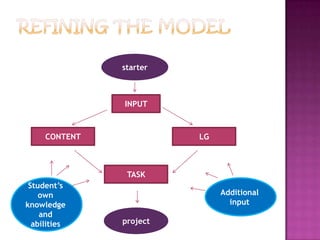
starter
INPUT
LGCONTENT
TASK
project
Additional
input
Student’s
own
knowledge
and
abilities
There are several syllabuses operating in any
course.
A model must be able to ensure adequate coverage
through the syllabus of all the features identified as
playing a role in the development of learning.
To having an internal coherence, each unit must
also relate effectively to the other units in the
Course.
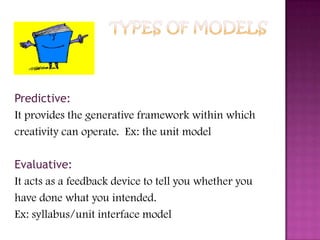
Predictive:
It provides the generative framework within which
creativity can operate. Ex: the unit model
Evaluative:
It acts as a feedback device to tell you whether you
have done what you intended.
Ex: syllabus/unit interface model
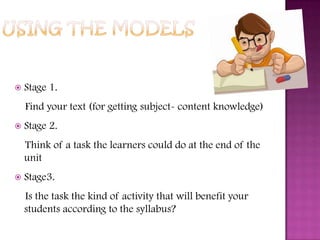
 Stage 1.
Find your text (for getting subject- content knowledge)
 Stage 2.
Think of a task the learners could do at the end of the
unit
 Stage3.
Is the task the kind of activity that will benefit your
students according to the syllabus?
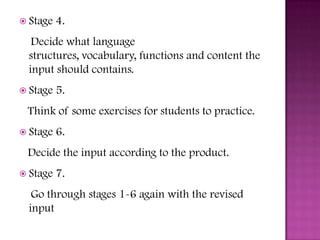
 Stage 4.
Decide what language
structures, vocabulary, functions and content the
input should contains.
 Stage 5.
Think of some exercises for students to practice.
 Stage 6.
Decide the input according to the product.
 Stage 7.
Go through stages 1-6 again with the revised
input
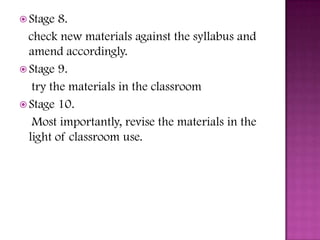
 Stage 8.
check new materials against the syllabus and
amend accordingly.
 Stage 9.
try the materials in the classroom
 Stage 10.
Most importantly, revise the materials in the
light of classroom use.
Thanks For Your
Patient Attention

Materials design hutchinson

  • 1.
  • 2.
    The most characteristicfeatures of ESP work is materials writing. ESP teachers spend most of their time writing materials, because: 1. A teacher or institution may want to provide teaching materials that will fit with specific subj area of particular learners. But these materials may not be available commercially. 2. When suitable materials are available, it may not be possible to buy them because of currency or import restrictions 3. ESP materials may be written for non-educational reasons. Ex: for enhancing the reputation of an instruction or an individual
  • 3.
    The process ofmaterials writing may help to make teachers more aware of what is involved in teaching and writing.
  • 4.
    a) materials providea stimulus to learning, they encourage learners to learn and do not teach. They contain: 1. Interesting texts 2. Enjoyable activities 3. Opportunity for learner to use existing knowledge 4. Content that both teacher and learner can cope with.
  • 5.
    b) Materials helpto organize the teaching-learning process by providing: A path through the complex mass of lg to be learnt Good materials provide a clear and coherent unit structure (that guide teacher and learner to max the chances of learning through various activities) help the teacher in planning lessons & encourage a sense of progress and achievement in the learner. Materials model clear and systematic, flexible enough to allow for creativity and variety
  • 6.
    c) Materials includea view of the nature of lg and learning  materials should truly reflect what you think and feel about learning process. d) Materials reflect the nature of the learning task.  Lg learning is a complex process involving many different kinds and levels of language
  • 7.
    e) Materials canhave a very useful function in broadening the basis of teacher training by: Introducing teachers new techniques f) Materials provide models of correct and appropriate lg use.
  • 8.
    By which Isaid, now we can present a model that we have used for writing our own materials. Aim: provide a coherent framework for integration of various aspects of learning The model consist of 4 elements: 1. Input 2. Content focus 3. Lg focus 4. task
  • 9.
  • 10.
    Can be atext, dialogue, video-recording, diagram or any piece of communication data. It provides number of things: 1. Stimulus material for activities 2. New lg items 3. Correct models of lg use 4. A topic for communication 5. Opportunities for learners to use their inf processing skills 6. Opportunities for learners to use their existing knowledge both of the lg and the sub matter.
  • 11.
    Lg is notan end in itself, it’s a means of conveying inf and feelings about sth.
  • 12.
    Aim: enable learnersto use lg. In lg focused learners have the chance to take the lg to pieces, study how it works and practice putting it back together.
  • 13.
    The ultimate purposeof language learning is LANGUAGE USE. Materials should be designed to:  lead towards a communicative task in which learners use the content. and  language knowledge they have to built up through the unit.
  • 14.
  • 15.
    There are severalsyllabuses operating in any course. A model must be able to ensure adequate coverage through the syllabus of all the features identified as playing a role in the development of learning. To having an internal coherence, each unit must also relate effectively to the other units in the Course.
  • 16.
    Predictive: It provides thegenerative framework within which creativity can operate. Ex: the unit model Evaluative: It acts as a feedback device to tell you whether you have done what you intended. Ex: syllabus/unit interface model
  • 17.
     Stage 1. Findyour text (for getting subject- content knowledge)  Stage 2. Think of a task the learners could do at the end of the unit  Stage3. Is the task the kind of activity that will benefit your students according to the syllabus?
  • 18.
     Stage 4. Decidewhat language structures, vocabulary, functions and content the input should contains.  Stage 5. Think of some exercises for students to practice.  Stage 6. Decide the input according to the product.  Stage 7. Go through stages 1-6 again with the revised input
  • 19.
     Stage 8. checknew materials against the syllabus and amend accordingly.  Stage 9. try the materials in the classroom  Stage 10. Most importantly, revise the materials in the light of classroom use.
  • 20.