Presenter
Memoona butt
 Systemic Functional Grammar is a
grammatical model developed by M.A.K
Halliday in early Sixties.
 According to Systemic theory, a clause can be
viewed as realizing several layers of meaning
into a single linguistic constituent.
 The most important way to classify these
layers is by referring to three metafunctions:
Ideational, Interpersonal andTextual.
 The ideational metafunction is
concerned with clause as
representations andTransitivity system
belongs to it.
 The interpersonal metafunction is
concerned with clause as exchange and
Mood system belongs to it
 The textual metafunction is concerned
with clause as message andTheme
system belongs to it.
 Halliday originally proposed that the
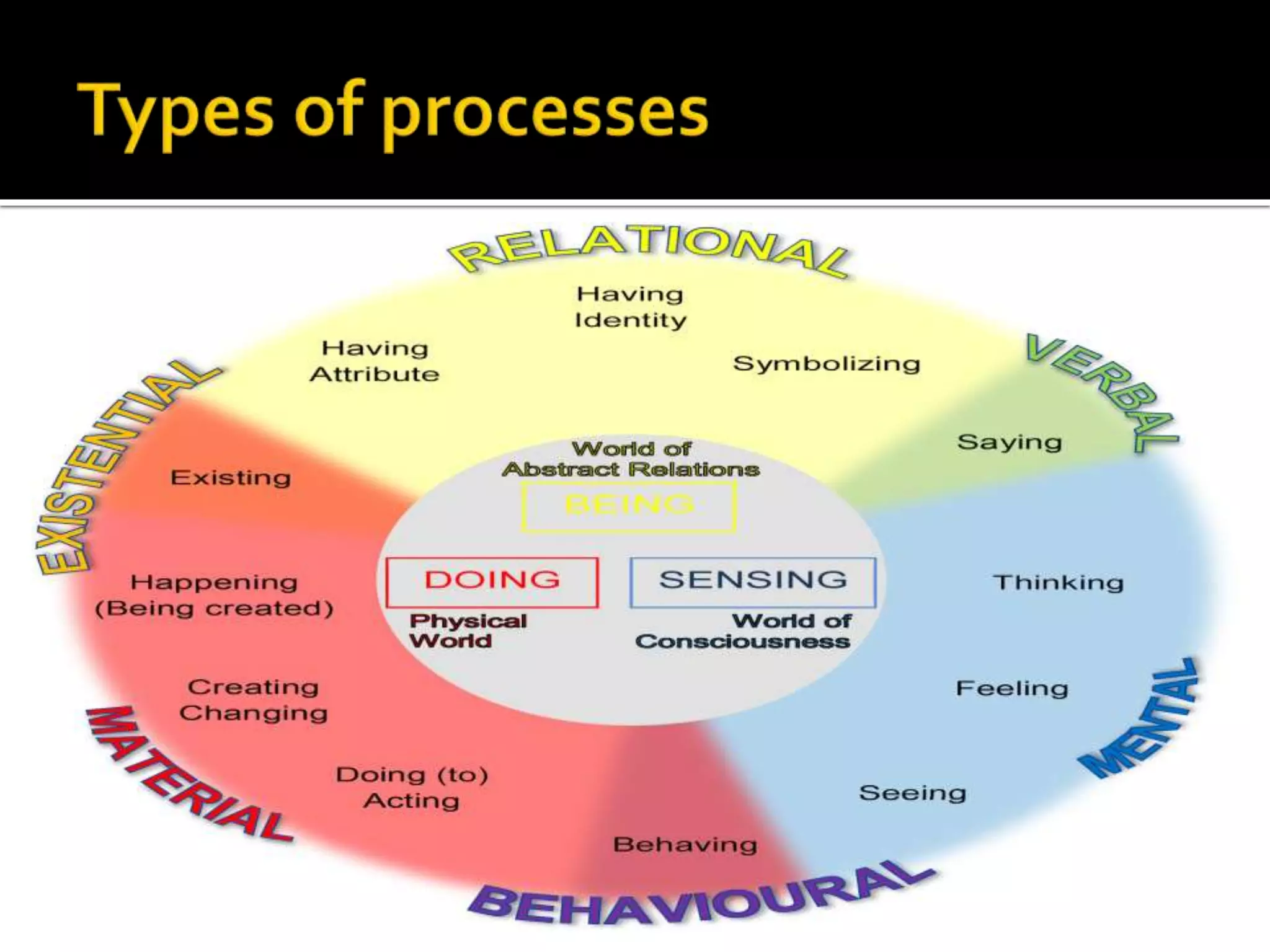
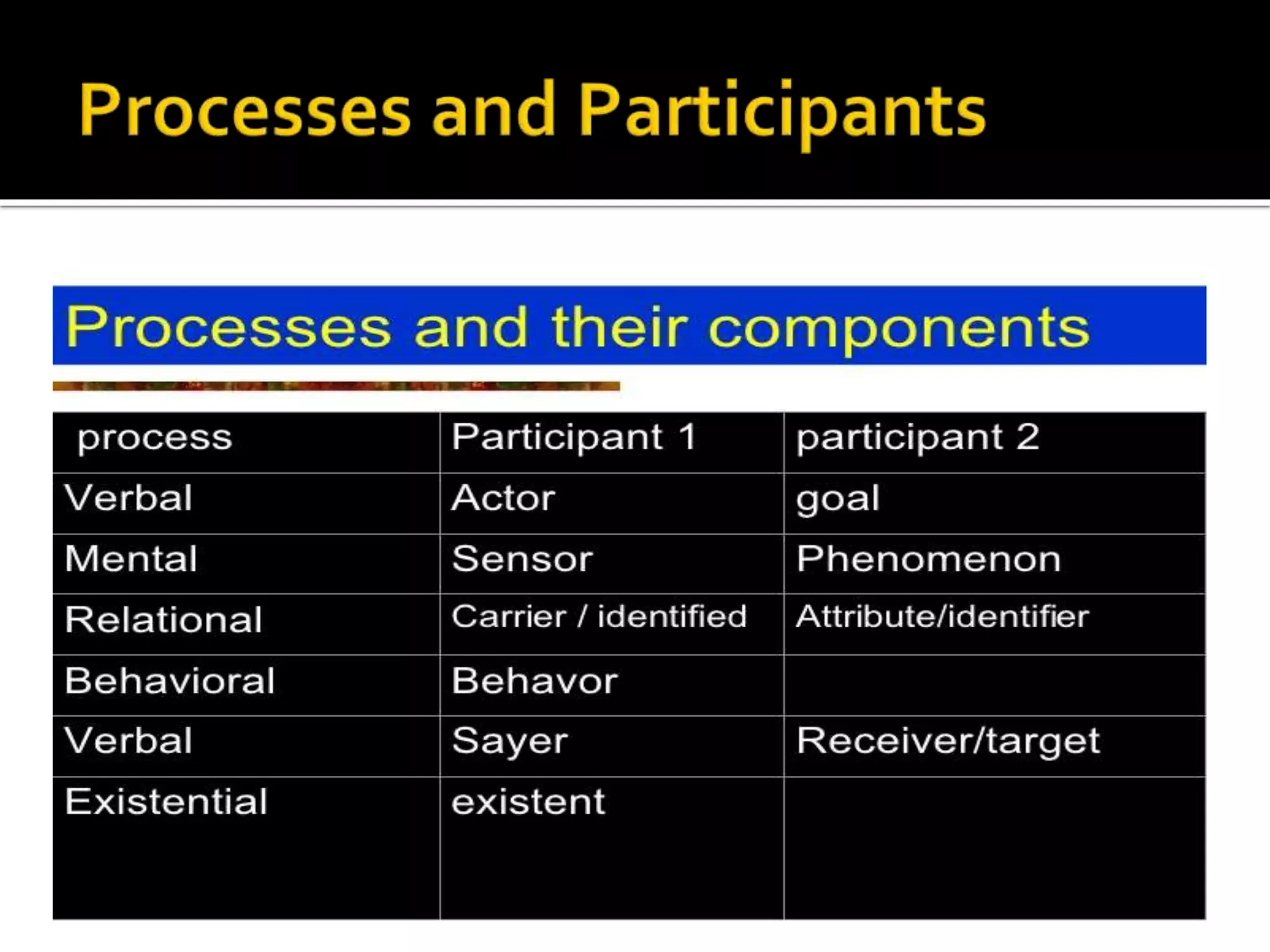
experiential(ideational) metafunction was
one of the three main metafunctions. It is
also called as clause as representation
because the clause represents the Content of
our experiences, answering the question
“who does what to whom”.
 This metafunction uses the grammatical
system of transitivity.
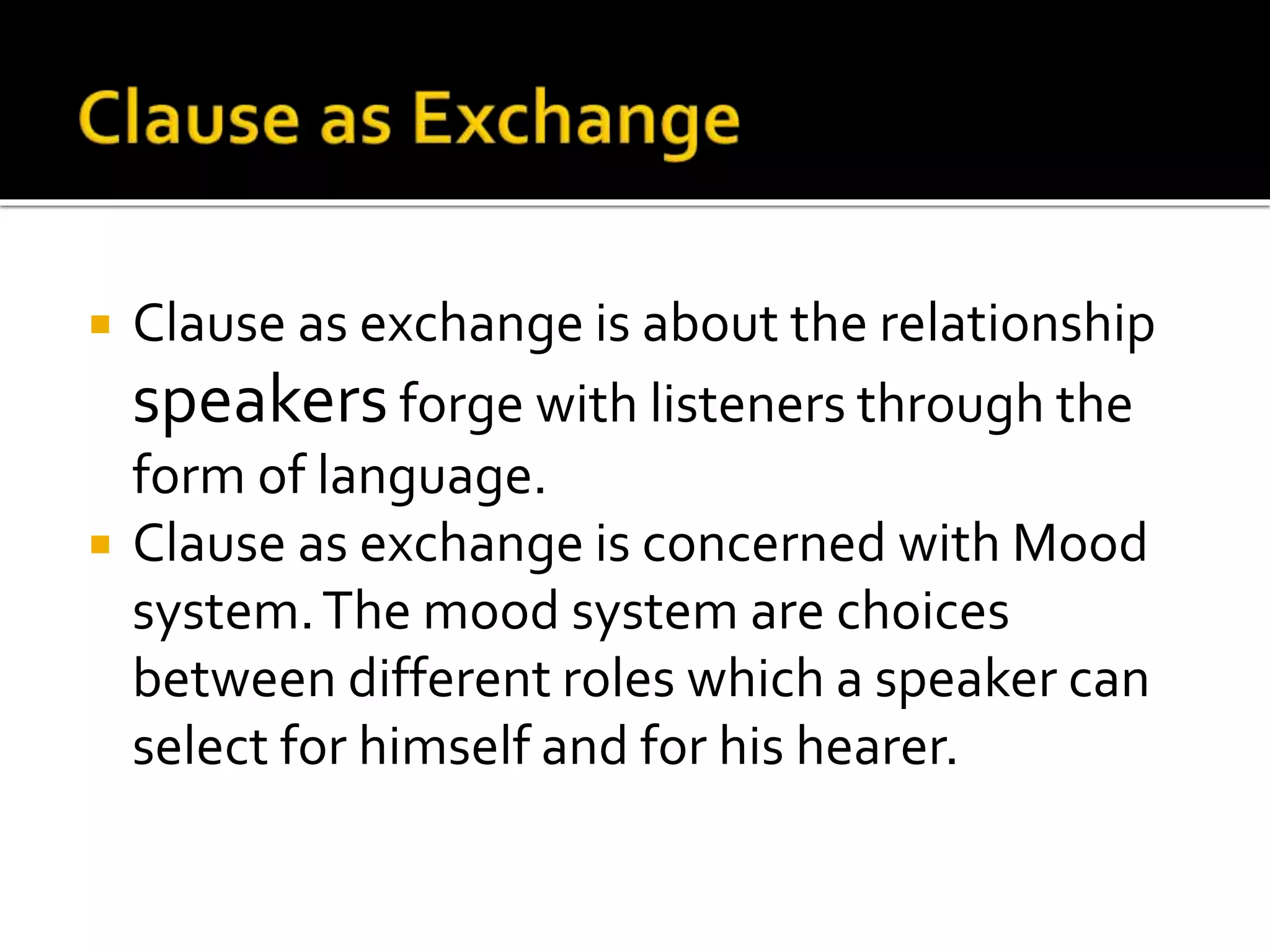
 Clause as exchange is about the relationship
speakers forge with listeners through the
form of language.
 Clause as exchange is concerned with Mood
system.The mood system are choices
between different roles which a speaker can
select for himself and for his hearer.
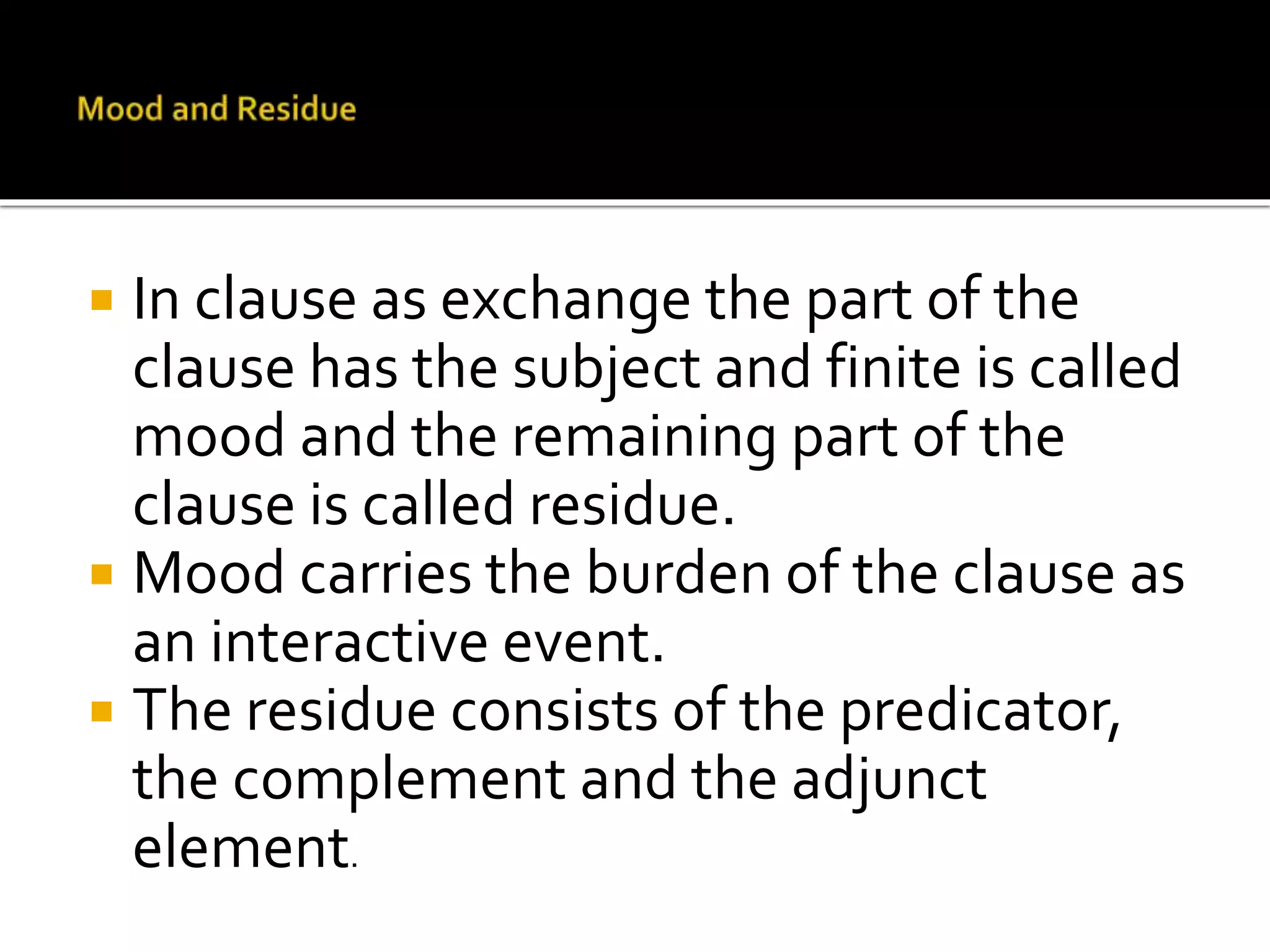
 In clause as exchange the part of the
clause has the subject and finite is called
mood and the remaining part of the
clause is called residue.
 Mood carries the burden of the clause as
an interactive event.
 The residue consists of the predicator,
the complement and the adjunct
element.
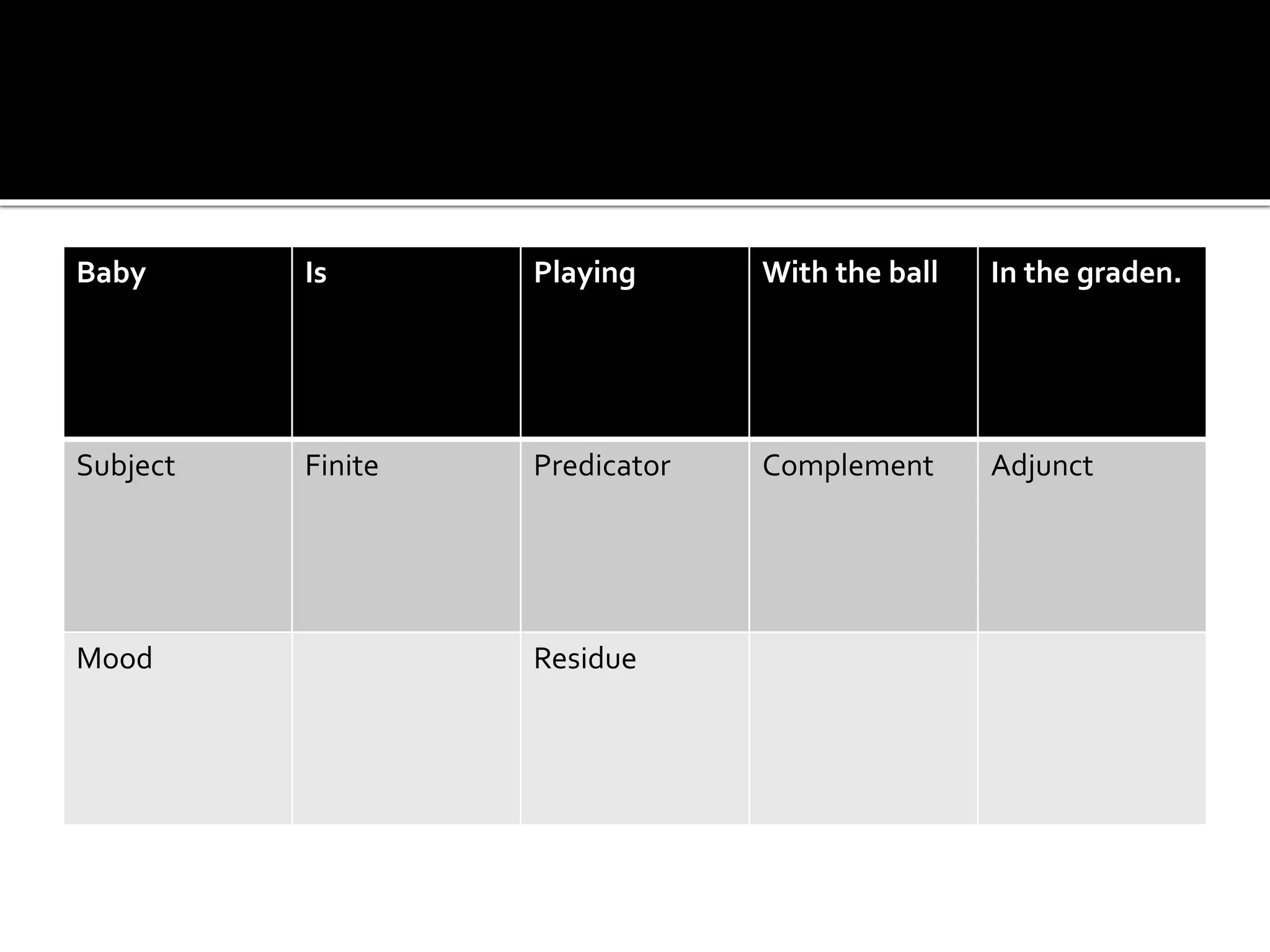
Baby Is Playing With the ball In the graden.
Subject Finite Predicator Complement Adjunct
Mood Residue
 The structure of a declarative clause.
Sana has finished the job.
subject finite predicator complement
Mood Residue
 The structure of an interrogative clause.
Has Sana finished the job.
Finite subject predicator complement
Mood Residue
 The structure of an imperative clause.
Finish your job.
predicator complement
Residue
 Thetextual metafunction is the flow of
information in a text, and is concerned with
clause as message.
 In it message is clearly related to theme system
which is concerned with the organization of
information within individual clauses and,
through this, with the organization of a larger
text.
 The clause as message is organized in
THEME+RHEME.
 Theme:Theme is the given
information serving as the point of
departure.
 Rheme: Rheme is the remainder
of the message in the clause
which theme is developed.
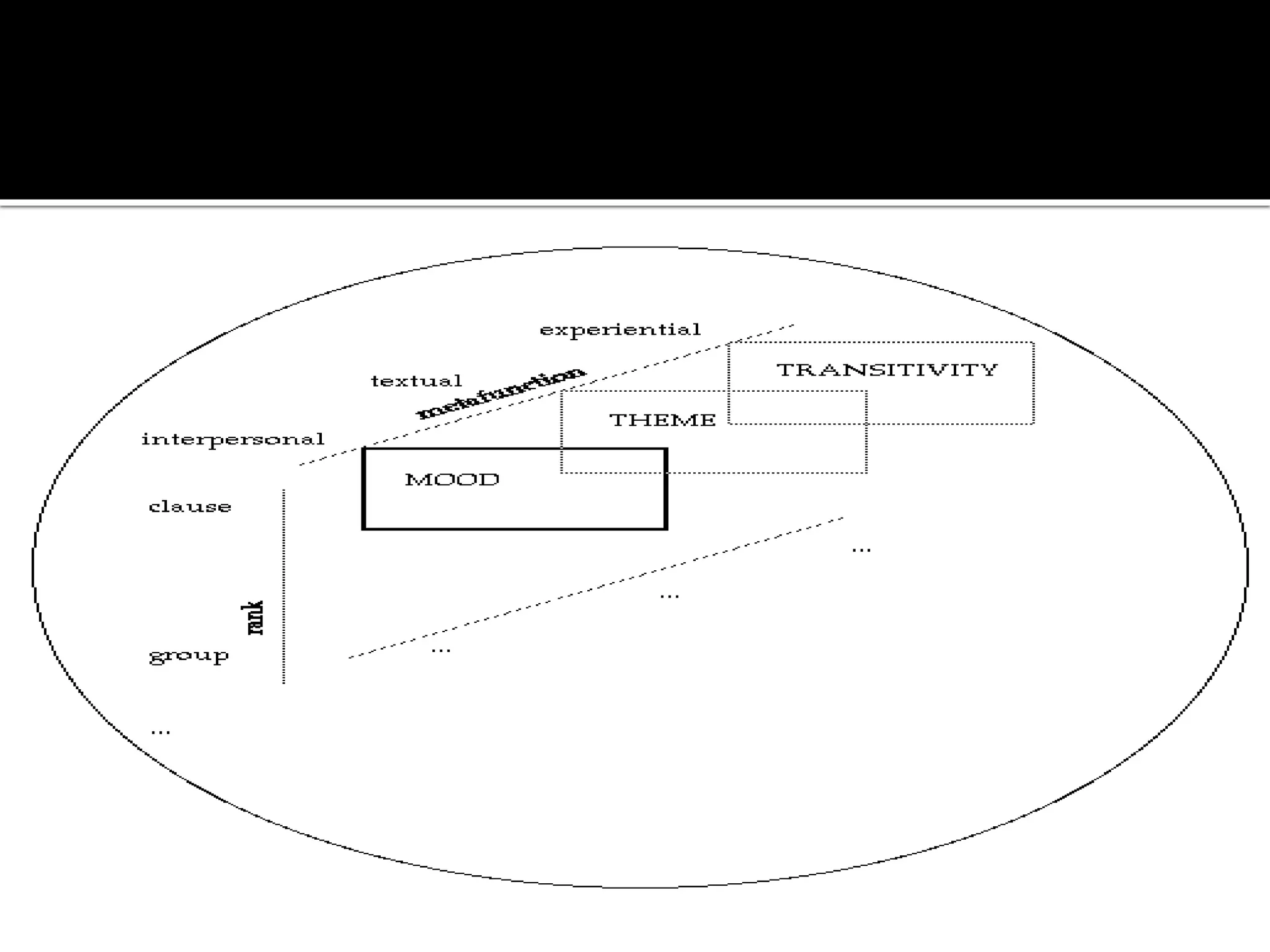
 The three metafunction act
simultaneously and systematically not
independently or distinctly in a text, in
other words,Transitivity (ideational)
,Mood (interpersonal) andTheme
(textual)function interdependently in
the language system.
 In clause as representation which
thing is most important?
 Is it necessary for the mood to
come only in the beginning of
the clause?
 Difference betweenTheme and
Rheme?
Clause as representation

Clause as representation

  • 2.
  • 3.
     Systemic FunctionalGrammar is a grammatical model developed by M.A.K Halliday in early Sixties.  According to Systemic theory, a clause can be viewed as realizing several layers of meaning into a single linguistic constituent.  The most important way to classify these layers is by referring to three metafunctions: Ideational, Interpersonal andTextual.
  • 4.
     The ideationalmetafunction is concerned with clause as representations andTransitivity system belongs to it.  The interpersonal metafunction is concerned with clause as exchange and Mood system belongs to it  The textual metafunction is concerned with clause as message andTheme system belongs to it.
  • 6.
     Halliday originallyproposed that the experiential(ideational) metafunction was one of the three main metafunctions. It is also called as clause as representation because the clause represents the Content of our experiences, answering the question “who does what to whom”.  This metafunction uses the grammatical system of transitivity.
  • 10.
     Clause asexchange is about the relationship speakers forge with listeners through the form of language.  Clause as exchange is concerned with Mood system.The mood system are choices between different roles which a speaker can select for himself and for his hearer.
  • 11.
     In clauseas exchange the part of the clause has the subject and finite is called mood and the remaining part of the clause is called residue.  Mood carries the burden of the clause as an interactive event.  The residue consists of the predicator, the complement and the adjunct element.
  • 12.
    Baby Is PlayingWith the ball In the graden. Subject Finite Predicator Complement Adjunct Mood Residue
  • 14.
     The structureof a declarative clause. Sana has finished the job. subject finite predicator complement Mood Residue  The structure of an interrogative clause. Has Sana finished the job. Finite subject predicator complement Mood Residue  The structure of an imperative clause. Finish your job. predicator complement Residue
  • 15.
     Thetextual metafunctionis the flow of information in a text, and is concerned with clause as message.  In it message is clearly related to theme system which is concerned with the organization of information within individual clauses and, through this, with the organization of a larger text.  The clause as message is organized in THEME+RHEME.
  • 16.
     Theme:Theme isthe given information serving as the point of departure.  Rheme: Rheme is the remainder of the message in the clause which theme is developed.
  • 18.
     The threemetafunction act simultaneously and systematically not independently or distinctly in a text, in other words,Transitivity (ideational) ,Mood (interpersonal) andTheme (textual)function interdependently in the language system.
  • 19.
     In clauseas representation which thing is most important?  Is it necessary for the mood to come only in the beginning of the clause?  Difference betweenTheme and Rheme?