 Review
 Principles of Perceptual Organization
 Role of Principle in Forming Health
Beliefs and Practices
◦ Health Belief Model
Individuals tend to organize environmental stimuli
into some meaningful patterns or whole according to
certain principles. Some of the important principles
are:
 Principles of Figure-Ground Relationship
 Principles of Closure
 Principles of Grouping
 Principles of Simplicity
 Principles of Contour
 Principle of Context
 Principle of Contrast
 Principle of Adaptability
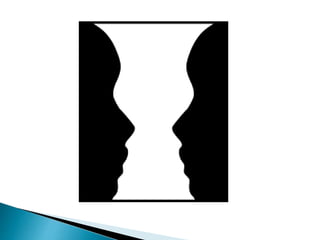
 According to figure ground relationship a figure is
perceived in relation to its background.
 The perception of the object or figure in terms of colour,
size, shape and intensity etc. depends upon the figure
ground relationship.
 We perceive a figure against a background or background
against a figure depending upon the characteristics of the
perceiver as well as the relative strength of the figure or
ground.
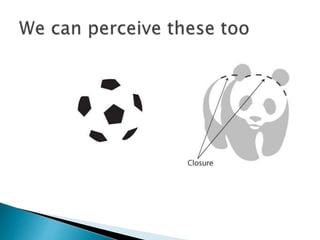
 According to principle of closure, while
confronting an incomplete pattern one
tends to complete or close the pattern to fill
in sensory gaps and perceive it as a
meaningful whole.
 This type of organization is helpful in
interpreting various incomplete objects,
patterns or stimuli present in our
environment.
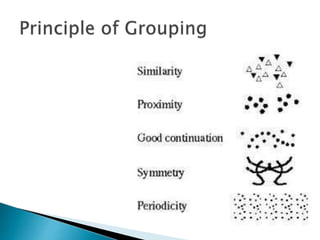
 It refers to a tendency to perceive stimuli in some
meaningful patterns by grouping them on some solid
basis like similarity, proximity, continuity etc.
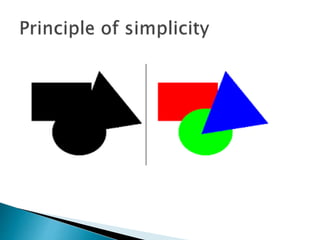
 We perceive the simplest possible pattern
because they enable the perceiver to
perceive the whole from some of its part.
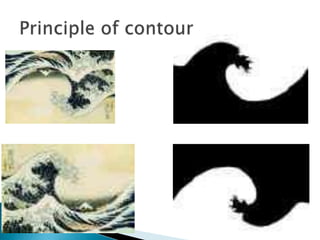
 The contour is said to be boundary between
the figure and its background.
 The degree of this contour separating the
figure from its ground is responsible for
enabling us to recognize stimuli or objects
into meaningful pattern.
 Perceptual organization is also governed by
the principle of context.
 E.g. an examiner may award higher marks to
the same answer sheet in a pleasant context
than in an unpleasant context.
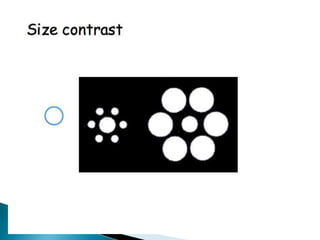
 Perceptual organization is very much affected
through contrast effects as the stimuli that
are in sharp contrast to nearby stimuli may
draw our maximum attention and carry
different perceptual affects.
 The perceptual organization for the
same stimuli depends upon the
adaptability of the perceiver to
perceive similar stimuli.
 An individual who adapts himself to
work before an intense bright light
will perceive normal sunlight as quite
dim.
 Health behaviours are those activities engaged in by people
who are basically healthy that have an impact upon their
health status.
◦ seeking information about health-related matters;
◦ going to the doctor, clinic, or dentist for check-ups,
◦ prophylaxis, or immunizations;
◦ engaging in exercise and good nutritional practices;
◦ wearing seat belts;
◦ practising 'safe sex';
◦ periodic self-examinations of breasts or testes; and
◦ moderate use of alcohol.
 smoking cigarettes;
 misusing drugs;
 drinking to excess; and
 sharing needlesetc.
 Health psychologists are particularly interested in
isolating the factors which might affect health
behaviours, not only so they might better understand
the processes involved, but also so that they might
change the behaviours in order to optimize health
status.
 Perception of person determines his/her health beliefs
and behavior.
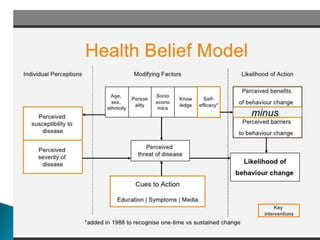
 The health belief model is
a psychological health behavior
change model developed to explain and
predict health-related behaviors, particularly
in regard to the uptake of health services.
 Developed by Irwin M. Rosenstock
 It was developed in the 1950s by a group of
U.S. Public Health Service social
psychologists who wanted to explain why
so few people were participating in
programs to prevent and detect disease.
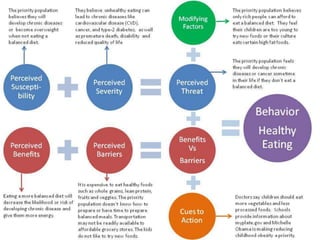
The health belief model proposes that a
person's health-related behavior
depends on the person's perception of
four critical areas:
◦ the severity of a potential illness,
◦ the person's susceptibility to that illness,
◦ the benefits of taking a preventive action,
and
◦ the barriers to taking that action.
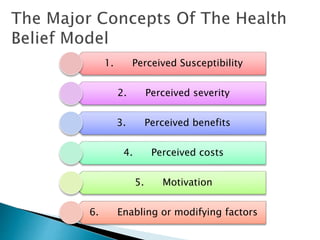
1. Perceived Susceptibility
2. Perceived severity
3. Perceived benefits
4. Perceived costs
5. Motivation
6. Enabling or modifying factors
 refers to a person’s perception that a health
problem is personally relevant or that a
diagnosis of illness is accurate.
 even when one recognizes personal
susceptibility, action will not occur
unless the individual perceives the
severity to be high enough to have
serious organic or social
complications.
 refers to the patient’s belief that a
given treatment will cure the illness or
help to prevent it.
 refers to the complexity, duration, and
accessibility and accessibility of the
treatment.
 includes the desire to comply with a
treatment and the belief that people
should do what.
 include personality variables, patient
satisfaction, and socio-demographic
factors.
Perception principle and application

Perception principle and application

  • 2.
     Review  Principlesof Perceptual Organization  Role of Principle in Forming Health Beliefs and Practices ◦ Health Belief Model
  • 3.
    Individuals tend toorganize environmental stimuli into some meaningful patterns or whole according to certain principles. Some of the important principles are:  Principles of Figure-Ground Relationship  Principles of Closure  Principles of Grouping  Principles of Simplicity  Principles of Contour  Principle of Context  Principle of Contrast  Principle of Adaptability
  • 4.
     According tofigure ground relationship a figure is perceived in relation to its background.  The perception of the object or figure in terms of colour, size, shape and intensity etc. depends upon the figure ground relationship.  We perceive a figure against a background or background against a figure depending upon the characteristics of the perceiver as well as the relative strength of the figure or ground.
  • 8.
     According toprinciple of closure, while confronting an incomplete pattern one tends to complete or close the pattern to fill in sensory gaps and perceive it as a meaningful whole.  This type of organization is helpful in interpreting various incomplete objects, patterns or stimuli present in our environment.
  • 10.
     It refersto a tendency to perceive stimuli in some meaningful patterns by grouping them on some solid basis like similarity, proximity, continuity etc.
  • 12.
     We perceivethe simplest possible pattern because they enable the perceiver to perceive the whole from some of its part.
  • 14.
     The contouris said to be boundary between the figure and its background.  The degree of this contour separating the figure from its ground is responsible for enabling us to recognize stimuli or objects into meaningful pattern.
  • 16.
     Perceptual organizationis also governed by the principle of context.  E.g. an examiner may award higher marks to the same answer sheet in a pleasant context than in an unpleasant context.
  • 17.
     Perceptual organizationis very much affected through contrast effects as the stimuli that are in sharp contrast to nearby stimuli may draw our maximum attention and carry different perceptual affects.
  • 19.
     The perceptualorganization for the same stimuli depends upon the adaptability of the perceiver to perceive similar stimuli.  An individual who adapts himself to work before an intense bright light will perceive normal sunlight as quite dim.
  • 21.
     Health behavioursare those activities engaged in by people who are basically healthy that have an impact upon their health status. ◦ seeking information about health-related matters; ◦ going to the doctor, clinic, or dentist for check-ups, ◦ prophylaxis, or immunizations; ◦ engaging in exercise and good nutritional practices; ◦ wearing seat belts; ◦ practising 'safe sex'; ◦ periodic self-examinations of breasts or testes; and ◦ moderate use of alcohol.
  • 22.
     smoking cigarettes; misusing drugs;  drinking to excess; and  sharing needlesetc.
  • 23.
     Health psychologistsare particularly interested in isolating the factors which might affect health behaviours, not only so they might better understand the processes involved, but also so that they might change the behaviours in order to optimize health status.  Perception of person determines his/her health beliefs and behavior.
  • 24.
     The healthbelief model is a psychological health behavior change model developed to explain and predict health-related behaviors, particularly in regard to the uptake of health services.  Developed by Irwin M. Rosenstock
  • 25.
     It wasdeveloped in the 1950s by a group of U.S. Public Health Service social psychologists who wanted to explain why so few people were participating in programs to prevent and detect disease.
  • 26.
    The health beliefmodel proposes that a person's health-related behavior depends on the person's perception of four critical areas: ◦ the severity of a potential illness, ◦ the person's susceptibility to that illness, ◦ the benefits of taking a preventive action, and ◦ the barriers to taking that action.
  • 27.
    1. Perceived Susceptibility 2.Perceived severity 3. Perceived benefits 4. Perceived costs 5. Motivation 6. Enabling or modifying factors
  • 28.
     refers toa person’s perception that a health problem is personally relevant or that a diagnosis of illness is accurate.
  • 29.
     even whenone recognizes personal susceptibility, action will not occur unless the individual perceives the severity to be high enough to have serious organic or social complications.
  • 30.
     refers tothe patient’s belief that a given treatment will cure the illness or help to prevent it.
  • 31.
     refers tothe complexity, duration, and accessibility and accessibility of the treatment.
  • 32.
     includes thedesire to comply with a treatment and the belief that people should do what.
  • 33.
     include personalityvariables, patient satisfaction, and socio-demographic factors.