Operations of Ca Rectum
and
video club on TME
Moderator
Dr. M Talukdar
Asso. Prof
Deptt of surgery , SMCH
Presenter
Dr. Biswajit Deka
3rd yr PGT
Weeks of Development
• 3rd : gut tube- foregut, midgut , hindgut
• 6th : cloaca- anterior urogenital and
post. anal & sphincter elements
• 10th : external anal sphincter- from
posterior cloaca
• 12th : internal anal sphincter from enlarged
circular muscles of rectum
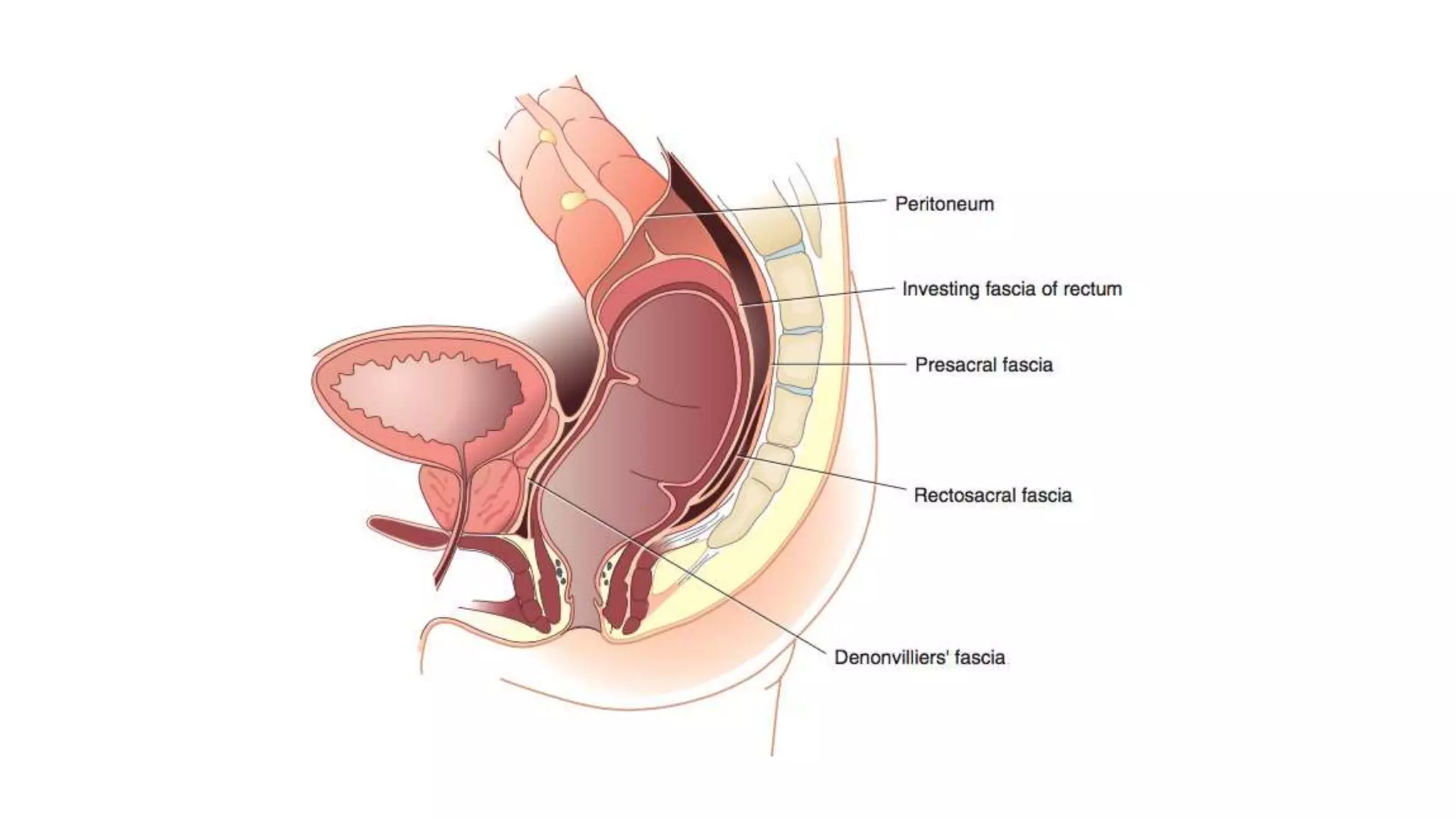
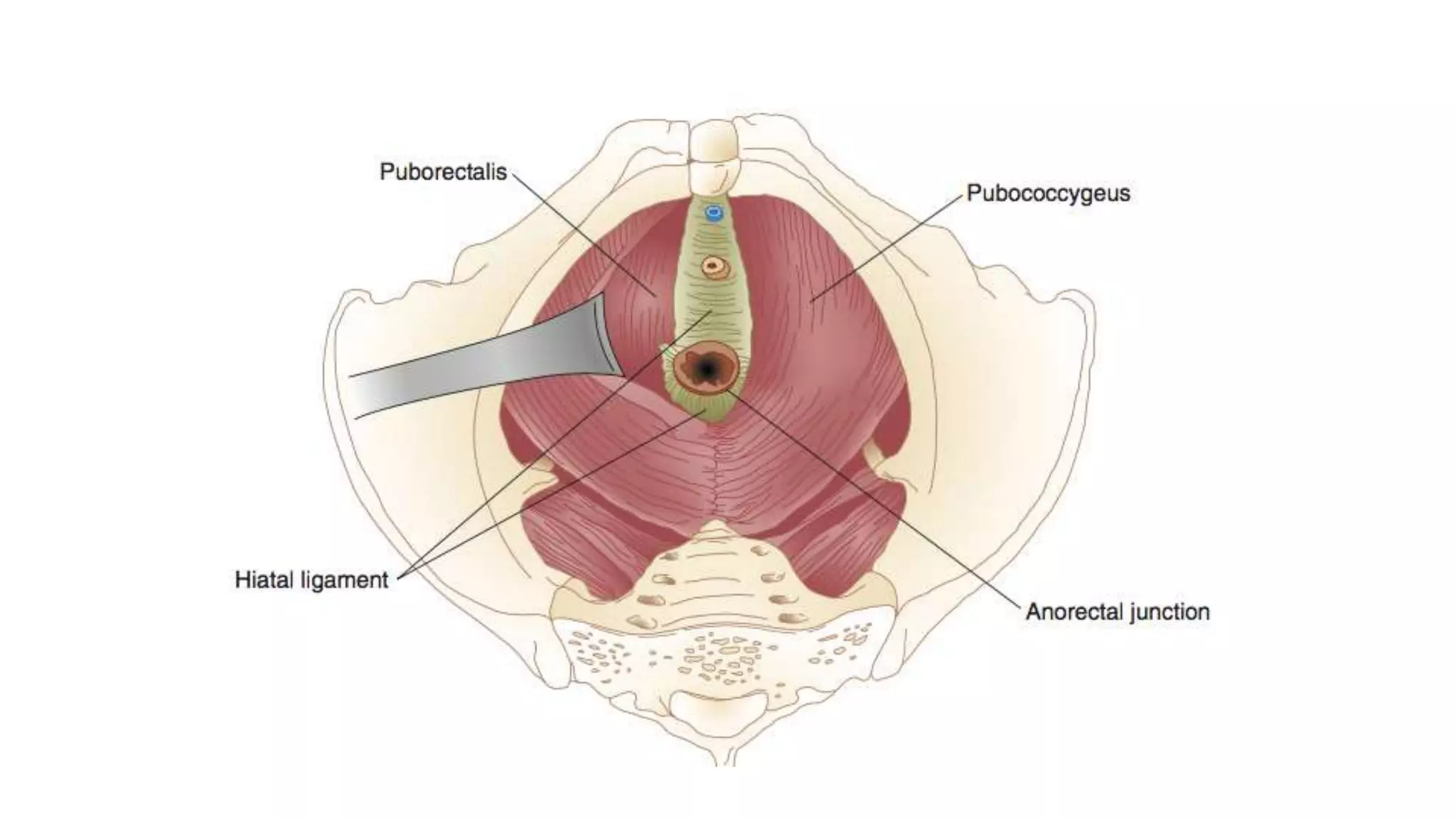
Rectum – grossly
• 12 – 15 cm in length
• Lacks taenia coli & epiploic appendices
• Posterior surface – extraperitoneal
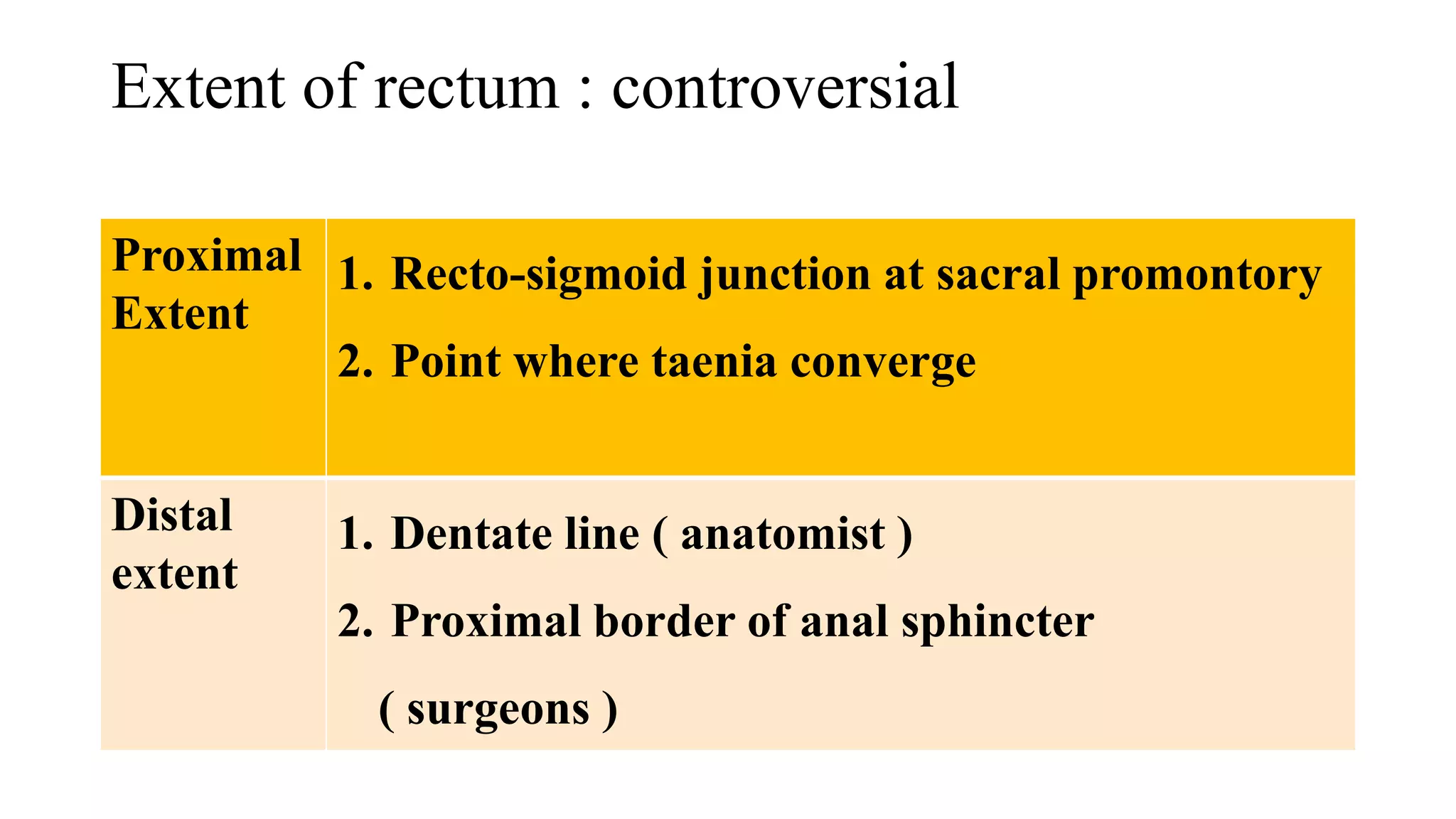
Extent of rectum : controversial
Proximal
Extent
1. Recto-sigmoid junction at sacral promontory
2. Point where taenia converge
Distal
extent
1. Dentate line ( anatomist )
2. Proximal border of anal sphincter
( surgeons )
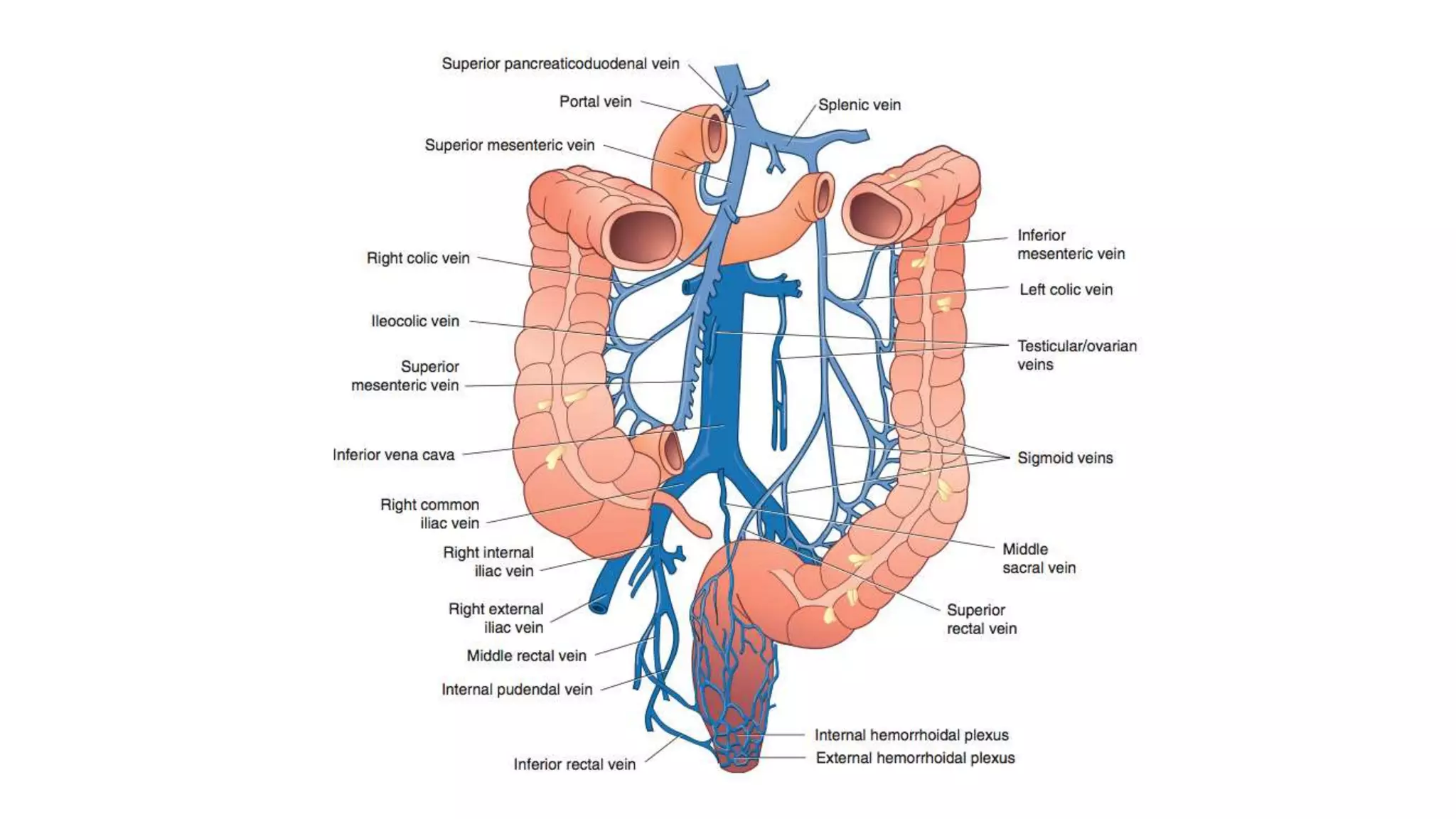
Blood supply
Lymph
nodes
position
Epicolic Along bowel wall and epoploic appendices
Para colic Adjacent to marginal artery
Internediate Along main br of large blood vessels
Primary On SMA / IMA
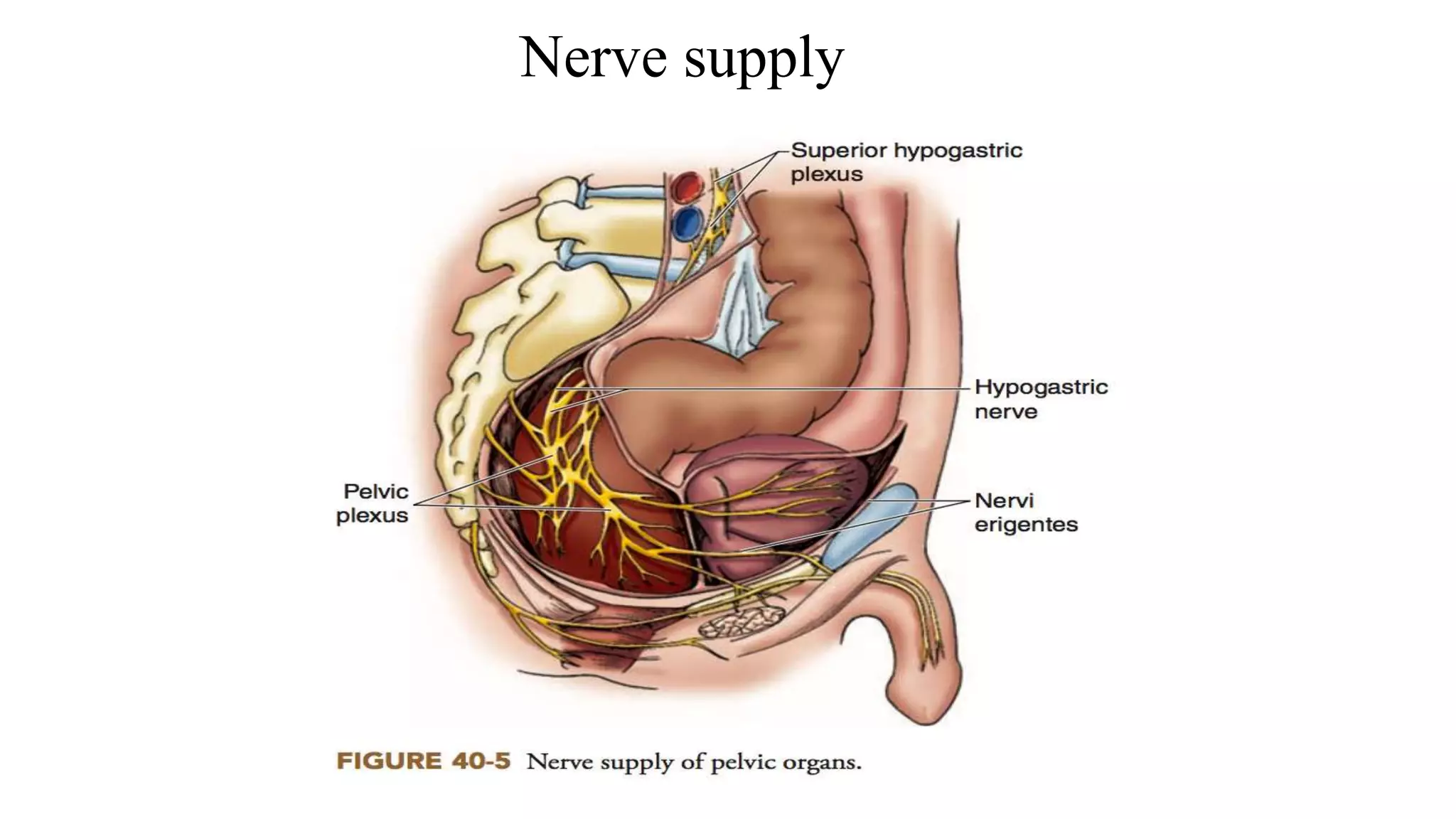
Nerve supply
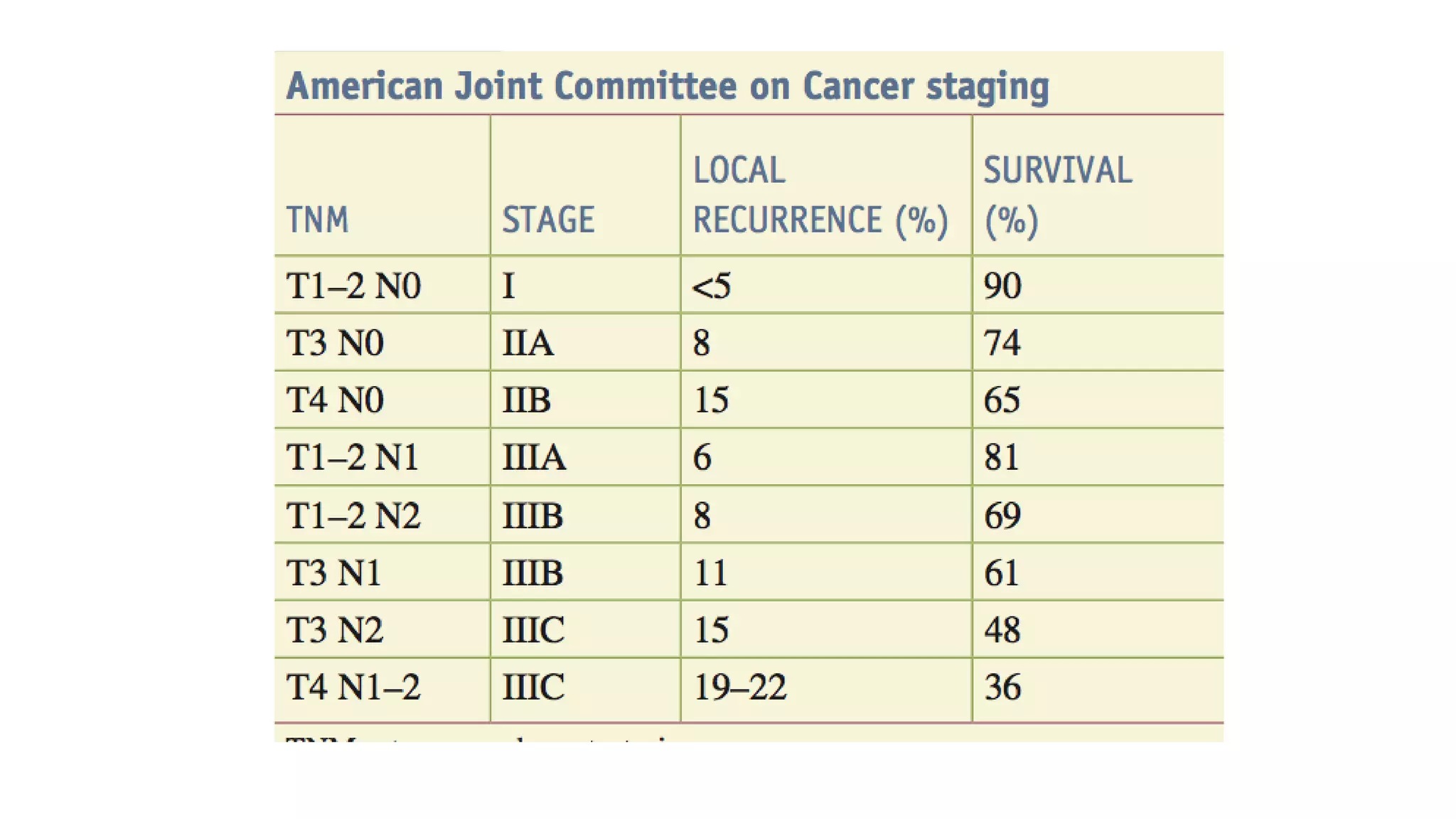
TNM classifiaction
APR : History
• Jean Amusat : introduced colostomy ( early 19th century)
• Early surgeons : 1st mini laparotomy to creat colostomy
several days later
Distal proctectomy through perineum
Limilations : 1. inability to remove mesorectum recurrence
2. high rate of perineal fistula
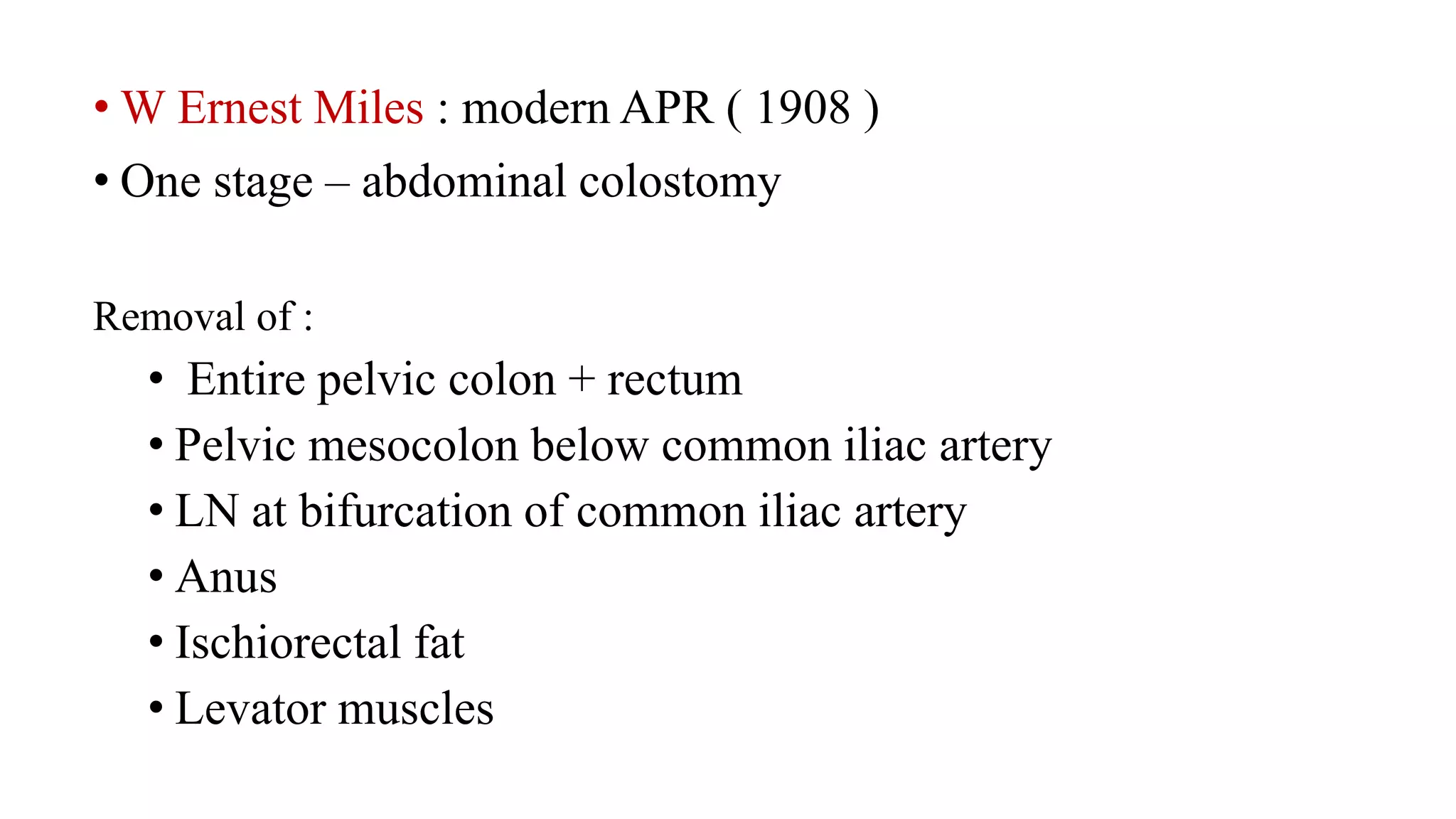
• W Ernest Miles : modern APR ( 1908 )
• One stage – abdominal colostomy
Removal of :
• Entire pelvic colon + rectum
• Pelvic mesocolon below common iliac artery
• LN at bifurcation of common iliac artery
• Anus
• Ischiorectal fat
• Levator muscles
Symptoms of ca Rectum
• Hematochezia
• Mucus discharge
• Tenesmus
• Change in bowel habits
D/D
• Ulcerative colitis
• Crohn’s proctocolitis
• Radiation proctitis
• Procidentia
• Colitis cystica profunda
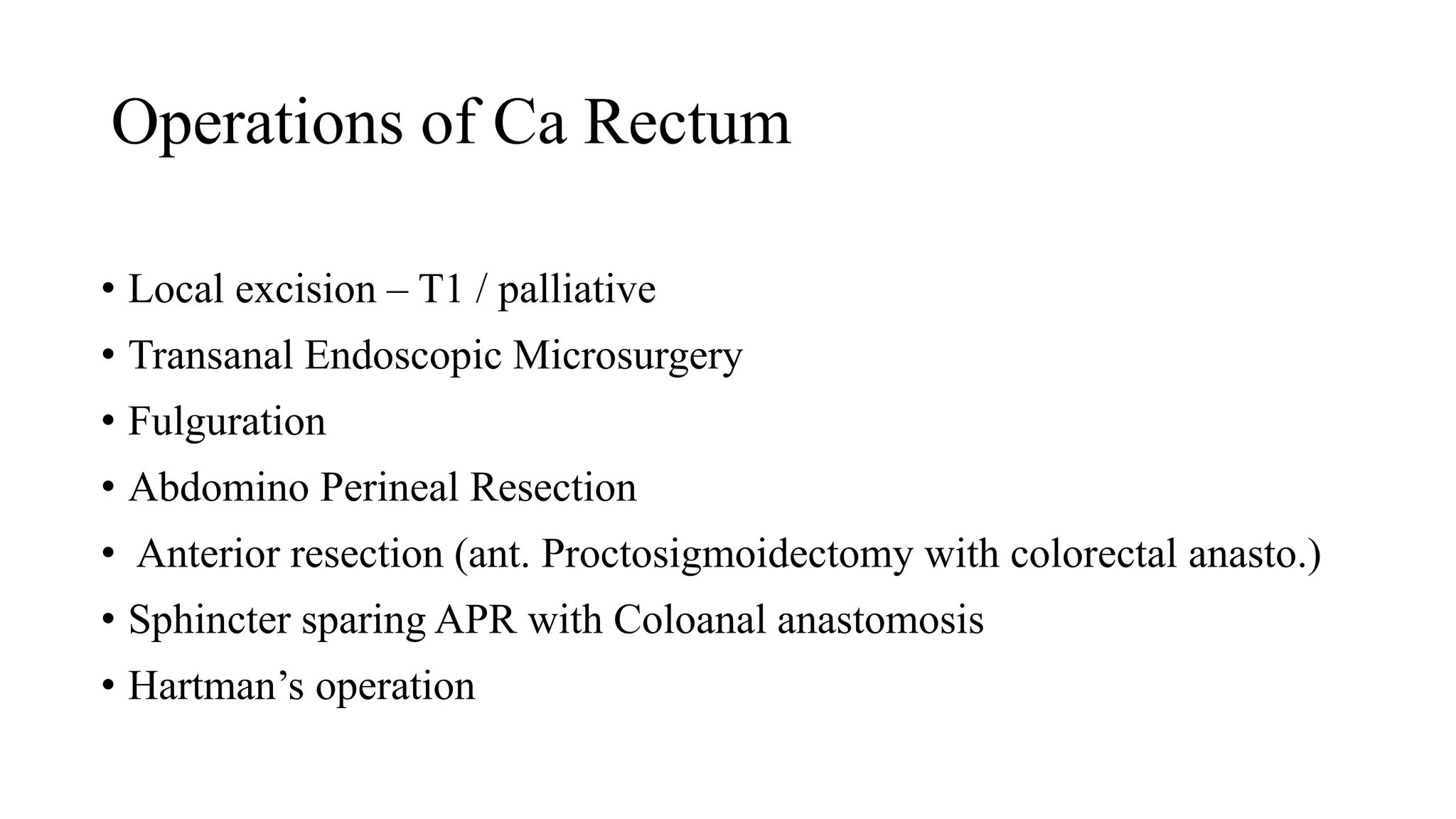
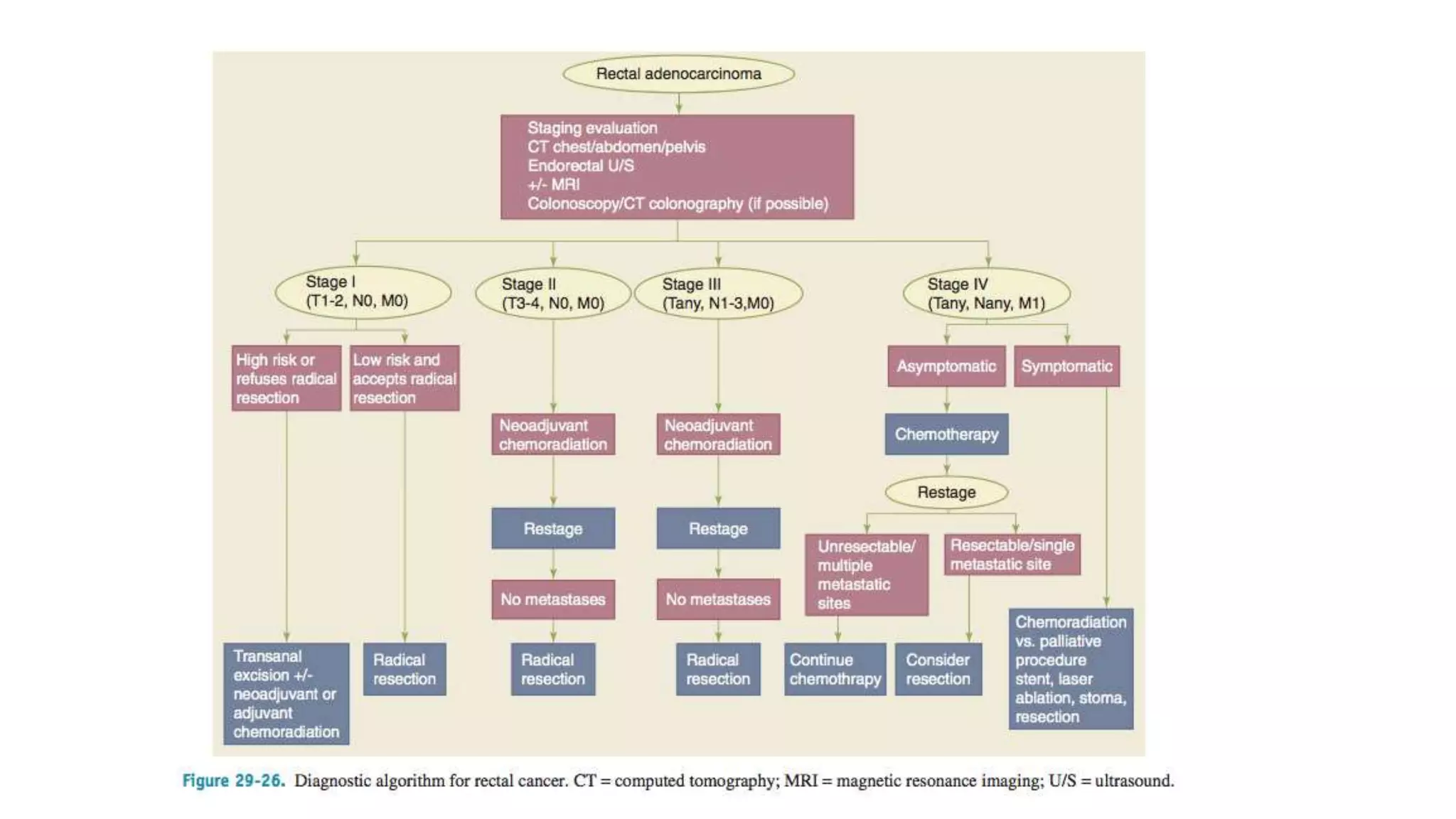
Operations of Ca Rectum
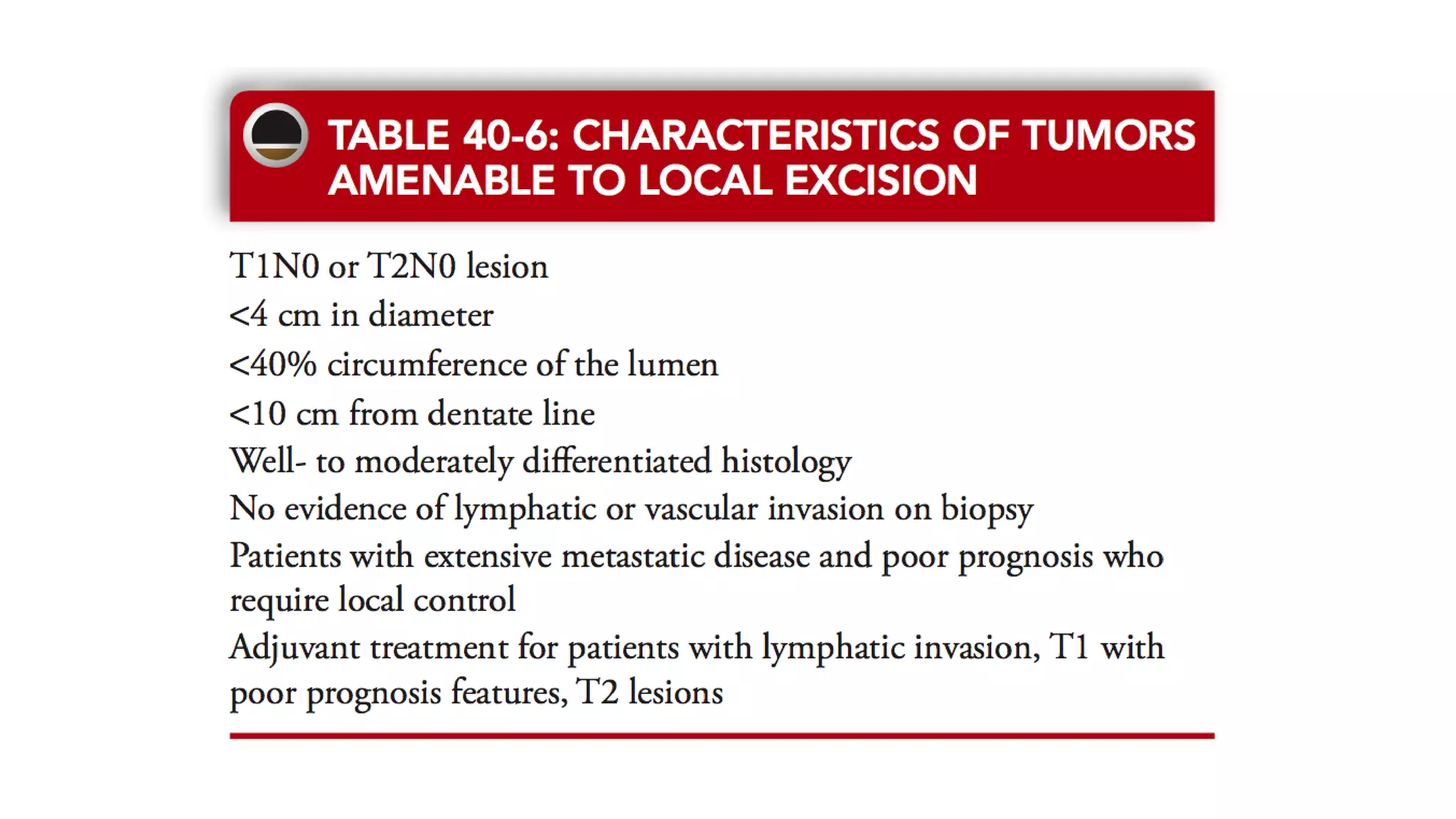
• Local excision – T1 / palliative
• Transanal Endoscopic Microsurgery
• Fulguration
• Abdomino Perineal Resection
• Anterior resection (ant. Proctosigmoidectomy with colorectal anasto.)
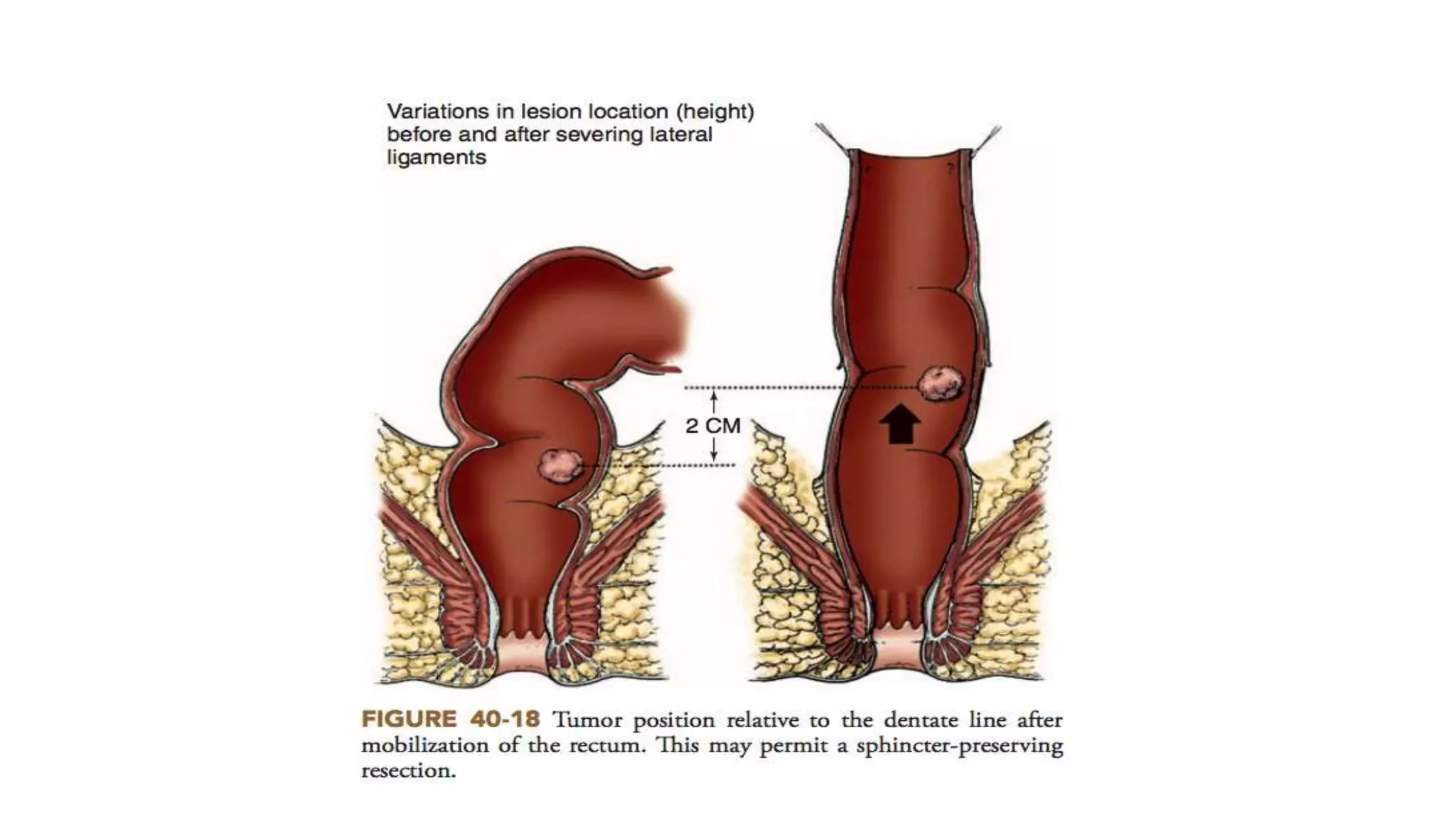
• Sphincter sparing APR with Coloanal anastomosis
• Hartman’s operation
Margins
• optimal distal resection margin : controversial
• Although the 1st line of spread is upward along the lymphatics, tumors
below the peritoneal refection can spread distally via intra- or
extramural lymphatic and vascular routes.
• APR : for low rectal cancers traditionally -- 5-cm distal margin
• Distal intramural spread limited to within 2cm unless poorly
differentiated or widely metastatic
• So, 2-cm distal margin is acceptable , although a 5-cm proximal margin
is still recommended.
• The circumferential radial margin (CRM) is more critical than the
proximal or distal margin for local control.
Patient Selection and choice of Operation
• Tumors < 3 cm from the dentate line , not invading the sphincters :
transanal procedure.
• 5 cm from the dentate line : transcoccygeal approach or transanal
endoscopic microsurgery (TEM).
• 7–10 cm from the dentate line : TEM or LAR.
• Tumors tethered to the mesorectum or pelvic floor , S/O transmural
involvement, are not amenable to local excision. Patients with such lesions
should undergo preoperative radiation followed by a radical resection.
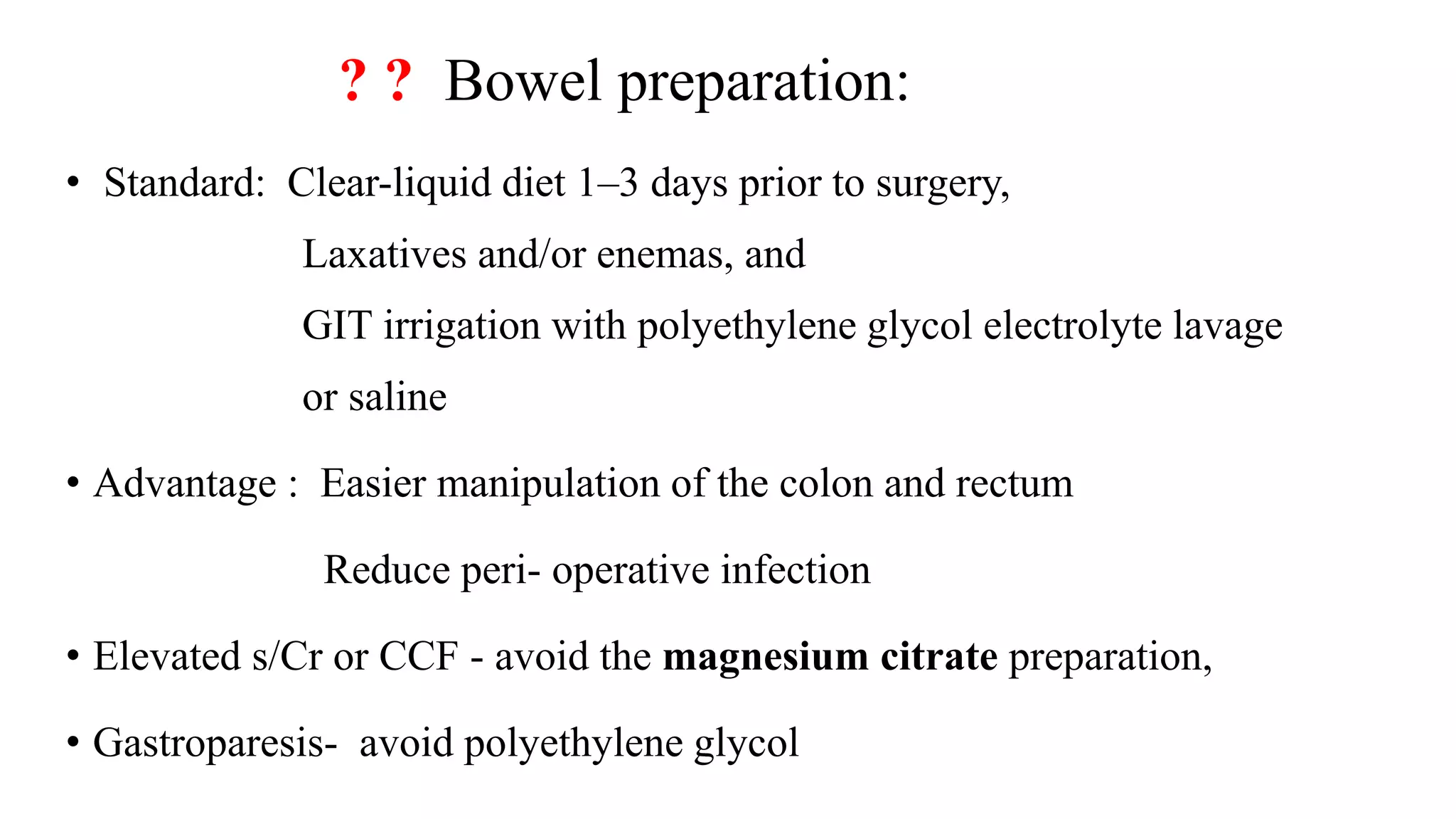
? ? Bowel preparation:
• Standard: Clear-liquid diet 1–3 days prior to surgery,
Laxatives and/or enemas, and
GIT irrigation with polyethylene glycol electrolyte lavage
or saline
• Advantage : Easier manipulation of the colon and rectum
Reduce peri- operative infection
• Elevated s/Cr or CCF - avoid the magnesium citrate preparation,
• Gastroparesis- avoid polyethylene glycol
• Oral antibiotics : decrease post-operative infectious
• MC regimen : Nichols/Condon preparation:
neomycin 1 g + erythromycin 1 g,
both non-absorbable antibiotics,
by mouth at 1 , 2 & 10:00 pm on the day prior to surgery
( Many substitute metronidazole 500 mg for the erythromycin )
APR
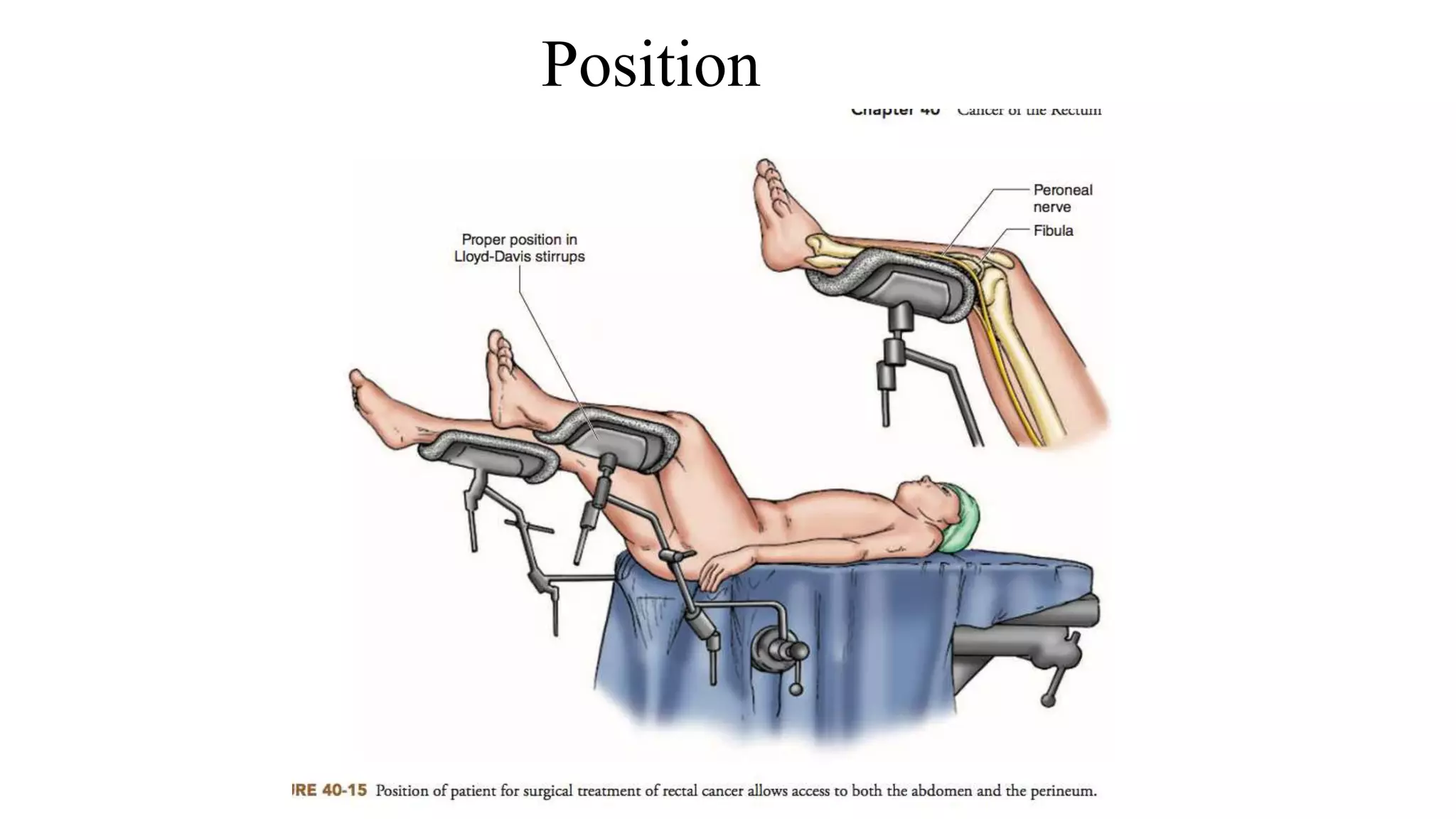
Position
Prone jackknife position
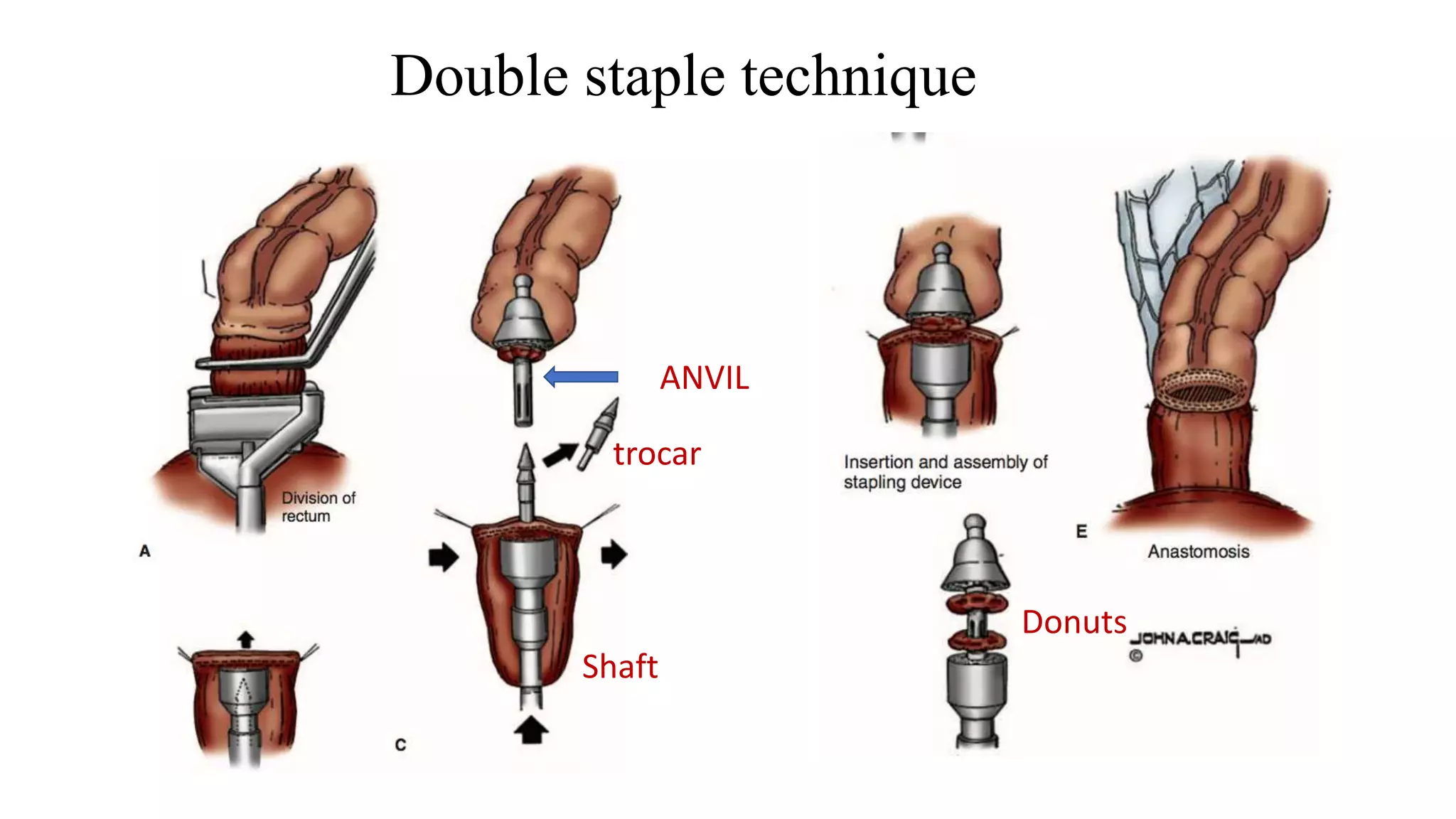
ANVIL
Double staple technique
trocar
Shaft
Donuts
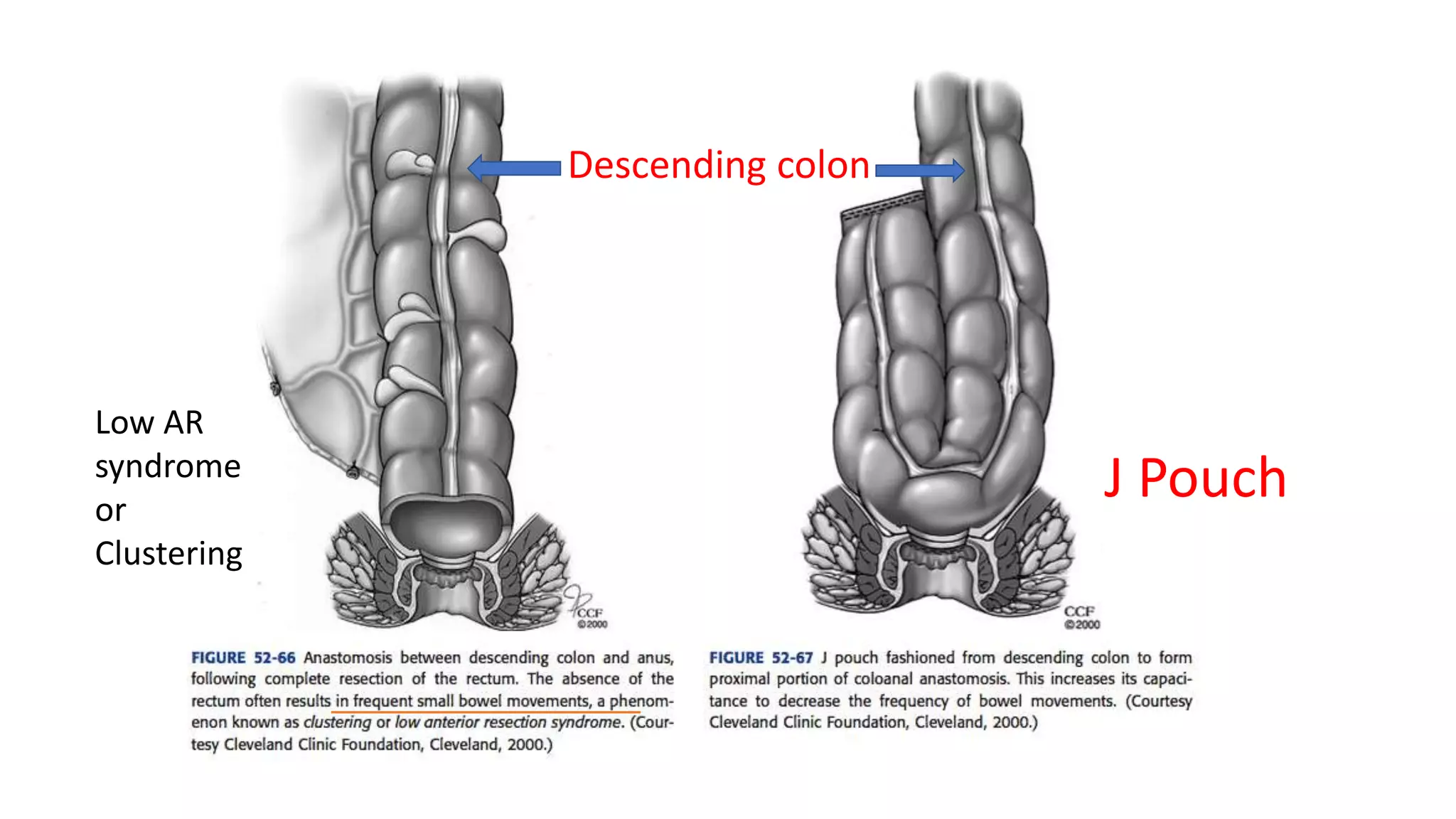
J Pouch
Descending colon
Low AR
syndrome
or
Clustering
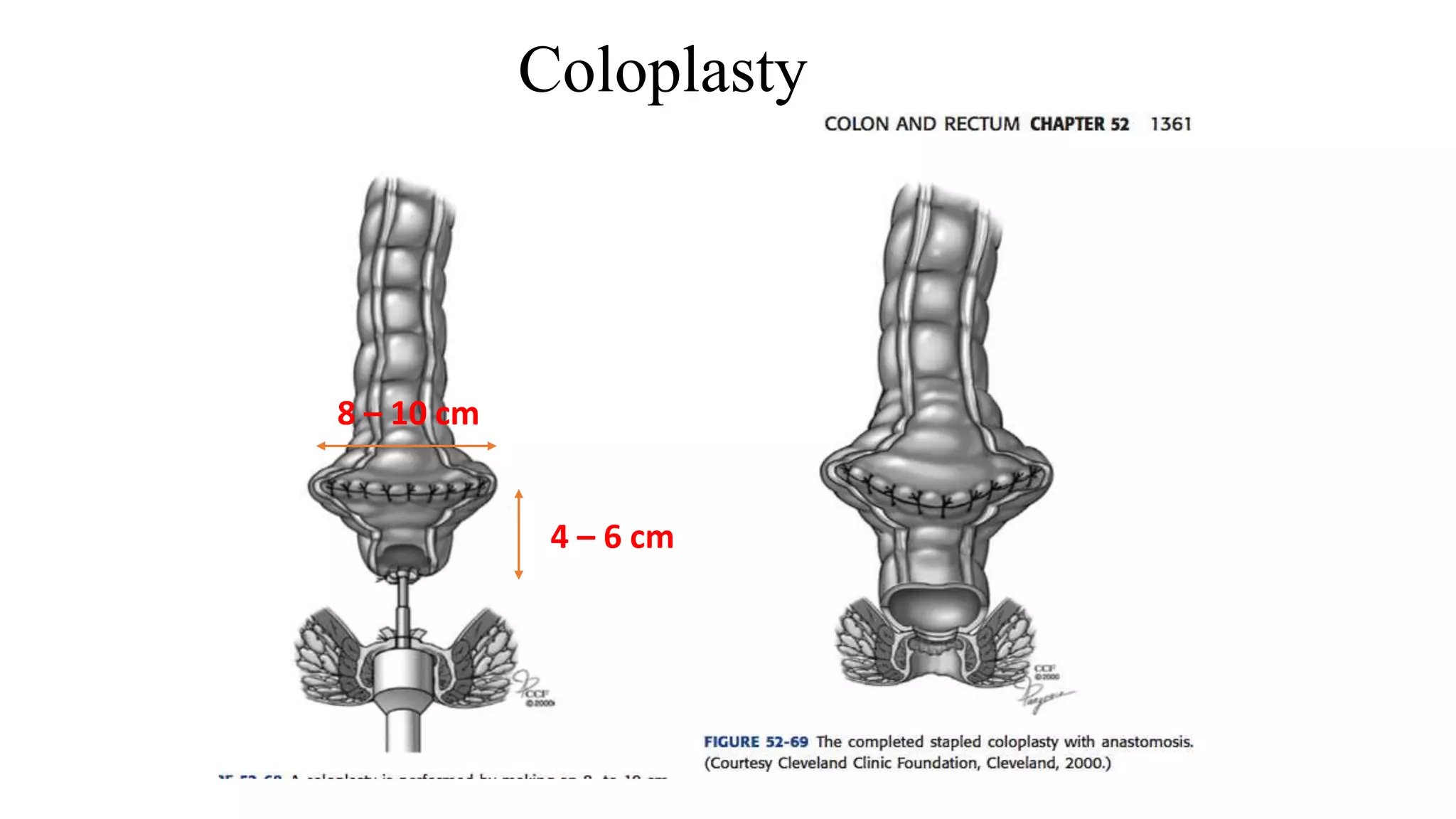
Coloplasty
8 – 10 cm
4 – 6 cm
Perineal dissection
2 cm
Anococcygeal
ligament
Levator ani
Loop ileostomy
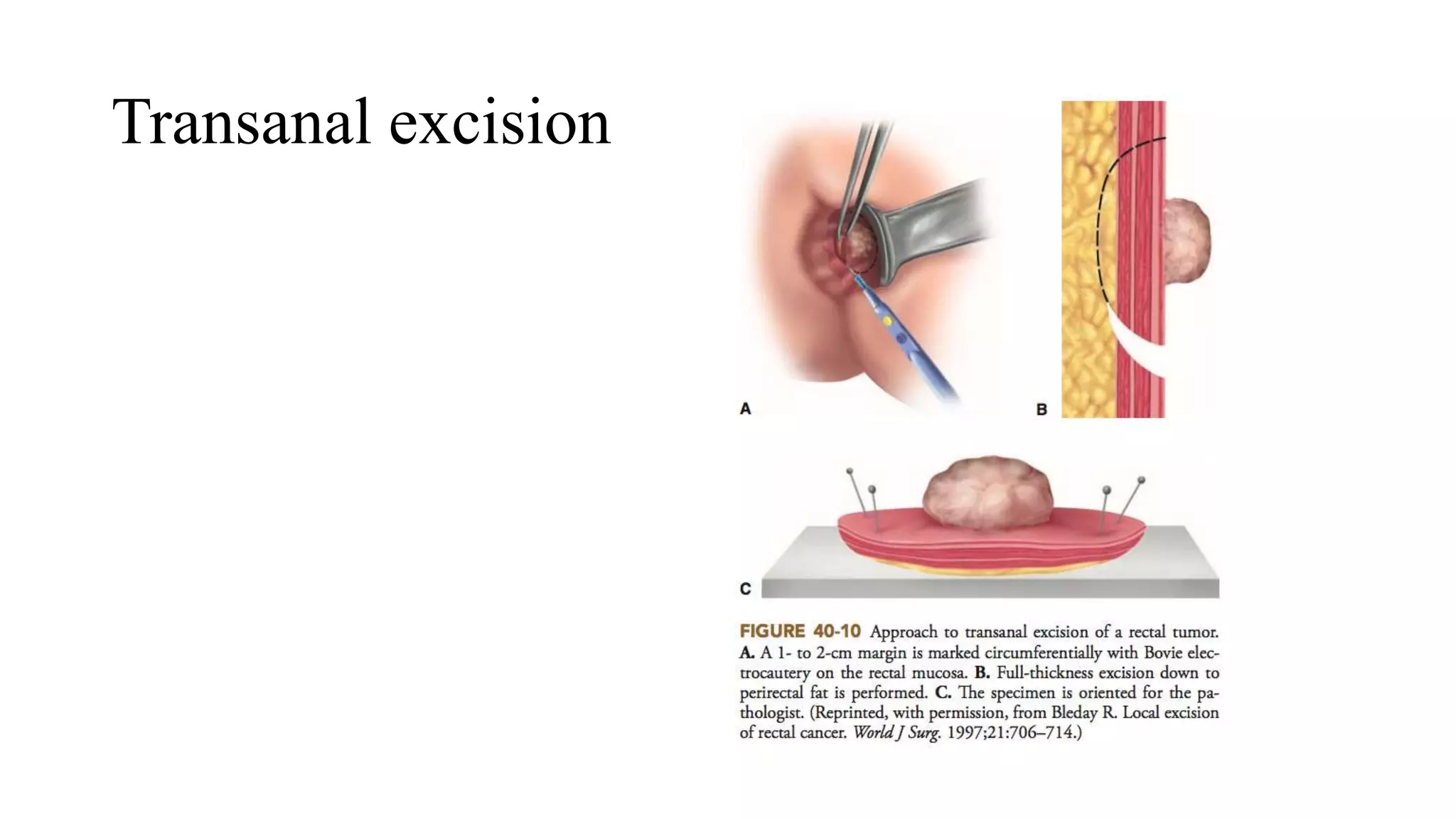
Transanal excision
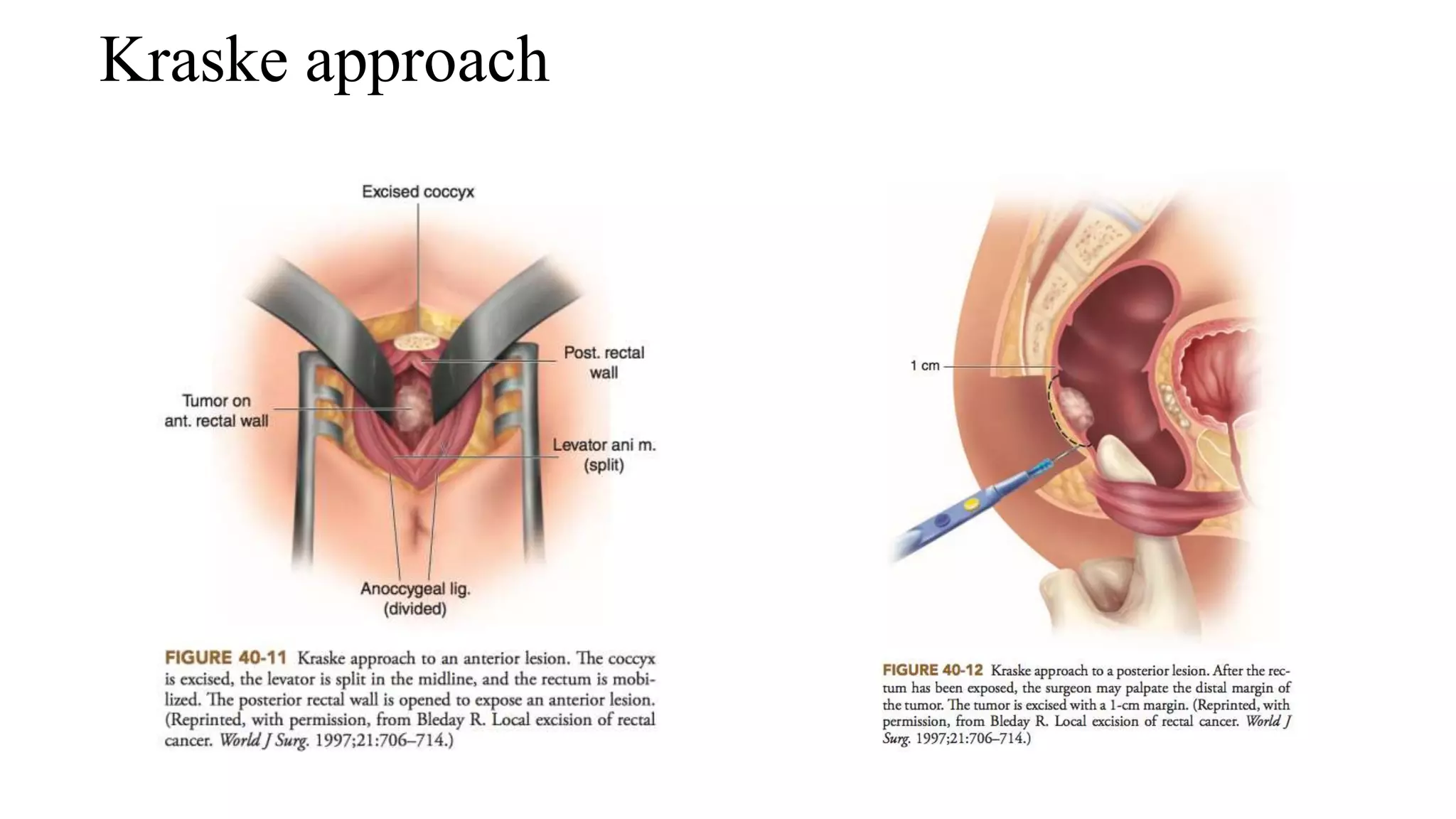
Kraske approach
Pelvic exenteration
Hartman’s operation
Complications
• Urinary complication
• Sexual dysfunction
• Infection
• Colostomy related complications
• Changes in lifestyle
Follow up
THANK YOU

operations of Carcinoma rectum

  • 1.
    Operations of CaRectum and video club on TME Moderator Dr. M Talukdar Asso. Prof Deptt of surgery , SMCH Presenter Dr. Biswajit Deka 3rd yr PGT
  • 2.
    Weeks of Development •3rd : gut tube- foregut, midgut , hindgut • 6th : cloaca- anterior urogenital and post. anal & sphincter elements • 10th : external anal sphincter- from posterior cloaca • 12th : internal anal sphincter from enlarged circular muscles of rectum
  • 4.
    Rectum – grossly •12 – 15 cm in length • Lacks taenia coli & epiploic appendices • Posterior surface – extraperitoneal
  • 5.
    Extent of rectum: controversial Proximal Extent 1. Recto-sigmoid junction at sacral promontory 2. Point where taenia converge Distal extent 1. Dentate line ( anatomist ) 2. Proximal border of anal sphincter ( surgeons )
  • 8.
  • 12.
    Lymph nodes position Epicolic Along bowelwall and epoploic appendices Para colic Adjacent to marginal artery Internediate Along main br of large blood vessels Primary On SMA / IMA
  • 13.
  • 15.
  • 20.
    APR : History •Jean Amusat : introduced colostomy ( early 19th century) • Early surgeons : 1st mini laparotomy to creat colostomy several days later Distal proctectomy through perineum Limilations : 1. inability to remove mesorectum recurrence 2. high rate of perineal fistula
  • 21.
    • W ErnestMiles : modern APR ( 1908 ) • One stage – abdominal colostomy Removal of : • Entire pelvic colon + rectum • Pelvic mesocolon below common iliac artery • LN at bifurcation of common iliac artery • Anus • Ischiorectal fat • Levator muscles
  • 22.
    Symptoms of caRectum • Hematochezia • Mucus discharge • Tenesmus • Change in bowel habits
  • 23.
    D/D • Ulcerative colitis •Crohn’s proctocolitis • Radiation proctitis • Procidentia • Colitis cystica profunda
  • 24.
    Operations of CaRectum • Local excision – T1 / palliative • Transanal Endoscopic Microsurgery • Fulguration • Abdomino Perineal Resection • Anterior resection (ant. Proctosigmoidectomy with colorectal anasto.) • Sphincter sparing APR with Coloanal anastomosis • Hartman’s operation
  • 25.
    Margins • optimal distalresection margin : controversial • Although the 1st line of spread is upward along the lymphatics, tumors below the peritoneal refection can spread distally via intra- or extramural lymphatic and vascular routes. • APR : for low rectal cancers traditionally -- 5-cm distal margin
  • 26.
    • Distal intramuralspread limited to within 2cm unless poorly differentiated or widely metastatic • So, 2-cm distal margin is acceptable , although a 5-cm proximal margin is still recommended. • The circumferential radial margin (CRM) is more critical than the proximal or distal margin for local control.
  • 28.
    Patient Selection andchoice of Operation • Tumors < 3 cm from the dentate line , not invading the sphincters : transanal procedure. • 5 cm from the dentate line : transcoccygeal approach or transanal endoscopic microsurgery (TEM). • 7–10 cm from the dentate line : TEM or LAR. • Tumors tethered to the mesorectum or pelvic floor , S/O transmural involvement, are not amenable to local excision. Patients with such lesions should undergo preoperative radiation followed by a radical resection.
  • 30.
    ? ? Bowelpreparation: • Standard: Clear-liquid diet 1–3 days prior to surgery, Laxatives and/or enemas, and GIT irrigation with polyethylene glycol electrolyte lavage or saline • Advantage : Easier manipulation of the colon and rectum Reduce peri- operative infection • Elevated s/Cr or CCF - avoid the magnesium citrate preparation, • Gastroparesis- avoid polyethylene glycol
  • 31.
    • Oral antibiotics: decrease post-operative infectious • MC regimen : Nichols/Condon preparation: neomycin 1 g + erythromycin 1 g, both non-absorbable antibiotics, by mouth at 1 , 2 & 10:00 pm on the day prior to surgery ( Many substitute metronidazole 500 mg for the erythromycin )
  • 32.
  • 33.
  • 34.
  • 39.
  • 40.
    J Pouch Descending colon LowAR syndrome or Clustering
  • 41.
    Coloplasty 8 – 10cm 4 – 6 cm
  • 42.
  • 43.
  • 44.
  • 45.
  • 47.
  • 50.
  • 51.
  • 52.
  • 53.
  • 54.
    Complications • Urinary complication •Sexual dysfunction • Infection • Colostomy related complications • Changes in lifestyle
  • 56.
  • 59.