 DR INDHU PRAKASH REDDY
 MEDICINE PG
 KURNOOL MEDICAL COLLEGE
 Disproportionate skeletal tissue and soft tissue
overgrowth
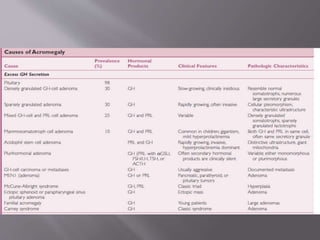
 Results from hyperplasia of pituitary
somatotroph cells and excessive growth
hormone production
 First described by Verga in 1864
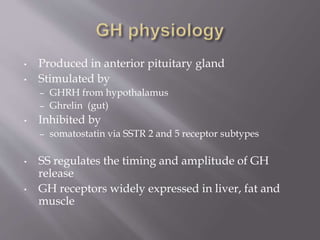
• Produced in anterior pituitary gland
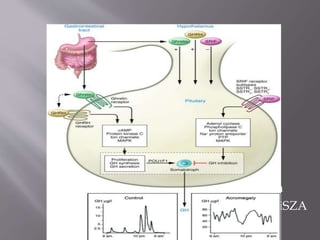
• Stimulated by
– GHRH from hypothalamus
– Ghrelin (gut)
• Inhibited by
– somatostatin via SSTR 2 and 5 receptor subtypes
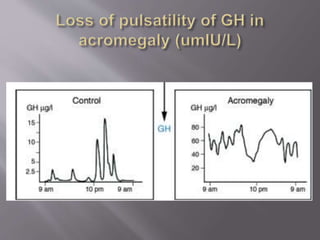
• SS regulates the timing and amplitude of GH
release
• GH receptors widely expressed in liver, fat and
muscle
Siti hamidah
Med student UniSZA
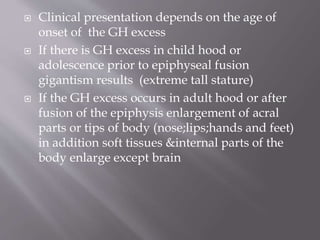
 Clinical presentation depends on the age of
onset of the GH excess
 If there is GH excess in child hood or
adolescence prior to epiphyseal fusion
gigantism results (extreme tall stature)
 If the GH excess occurs in adult hood or after
fusion of the epiphysis enlargement of acral
parts or tips of body (nose;lips;hands and feet)
in addition soft tissues &internal parts of the
body enlarge except brain
Typical
features:
Abnormally
large hands
and feet
Large,
prominent
facial
features
Enlarged
tongue
Abnormally
tall
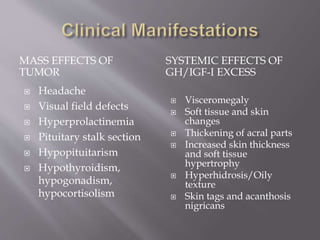
MASS EFFECTS OF
TUMOR
SYSTEMIC EFFECTS OF
GH/IGF-I EXCESS
 Headache
 Visual field defects
 Hyperprolactinemia
 Pituitary stalk section
 Hypopituitarism
 Hypothyroidism,
hypogonadism,
hypocortisolism
 Visceromegaly
 Soft tissue and skin
changes
 Thickening of acral parts
 Increased skin thickness
and soft tissue
hypertrophy
 Hyperhidrosis/Oily
texture
 Skin tags and acanthosis
nigricans
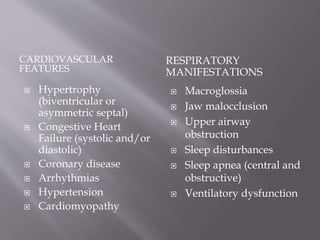
CARDIOVASCULAR
FEATURES
RESPIRATORY
MANIFESTATIONS
 Hypertrophy
(biventricular or
asymmetric septal)
 Congestive Heart
Failure (systolic and/or
diastolic)
 Coronary disease
 Arrhythmias
 Hypertension
 Cardiomyopathy
 Macroglossia
 Jaw malocclusion
 Upper airway
obstruction
 Sleep disturbances
 Sleep apnea (central and
obstructive)
 Ventilatory dysfunction
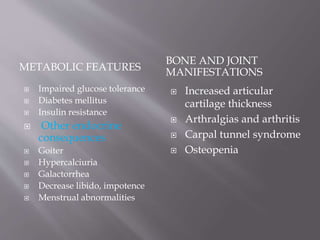
METABOLIC FEATURES
BONE AND JOINT
MANIFESTATIONS
 Impaired glucose tolerance
 Diabetes mellitus
 Insulin resistance
 Other endocrine
consequences
 Goiter
 Hypercalciuria
 Galactorrhea
 Decrease libido, impotence
 Menstrual abnormalities
 Increased articular
cartilage thickness
 Arthralgias and arthritis
 Carpal tunnel syndrome
 Osteopenia
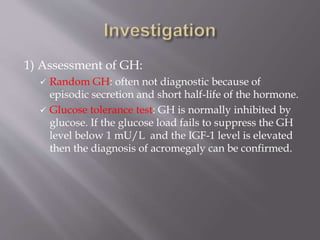
1) Assessment of GH:
 Random GH: often not diagnostic because of
episodic secretion and short half-life of the hormone.
 Glucose tolerance test: GH is normally inhibited by
glucose. If the glucose load fails to suppress the GH
level below 1 mU/L and the IGF-1 level is elevated
then the diagnosis of acromegaly can be confirmed.
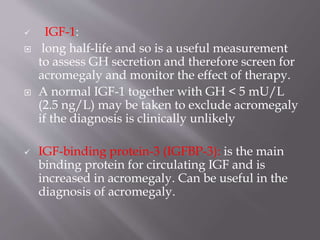
 IGF-1:
 long half-life and so is a useful measurement
to assess GH secretion and therefore screen for
acromegaly and monitor the effect of therapy.
 A normal IGF-1 together with GH < 5 mU/L
(2.5 ng/L) may be taken to exclude acromegaly
if the diagnosis is clinically unlikely
 IGF-binding protein-3 (IGFBP-3): is the main
binding protein for circulating IGF and is
increased in acromegaly. Can be useful in the
diagnosis of acromegaly.
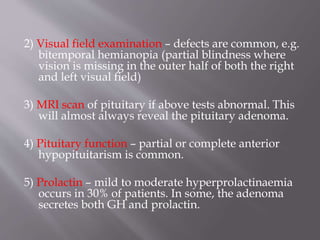
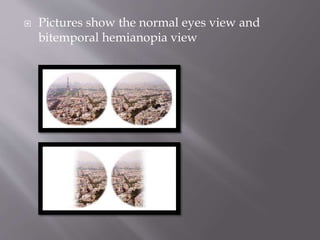
2) Visual field examination – defects are common, e.g.
bitemporal hemianopia (partial blindness where
vision is missing in the outer half of both the right
and left visual field)
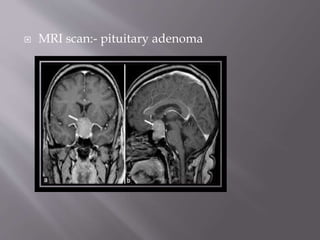
3) MRI scan of pituitary if above tests abnormal. This
will almost always reveal the pituitary adenoma.
4) Pituitary function – partial or complete anterior
hypopituitarism is common.
5) Prolactin – mild to moderate hyperprolactinaemia
occurs in 30% of patients. In some, the adenoma
secretes both GH and prolactin.
 Pictures show the normal eyes view and
bitemporal hemianopia view
 MRI scan:- pituitary adenoma
6) chest and abdominal radiology:
 to detect an ectopic source of growth hormone
 may detect cardiomegaly due to cardiomyopathy
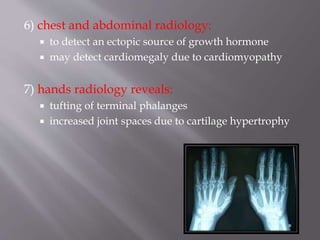
7) hands radiology reveals:
 tufting of terminal phalanges
 increased joint spaces due to cartilage hypertrophy
 Heart disease
 acromegaly increases the risk of ischemic heart
disease leading to a worsening of risk of heart
attacks and angina.
 Risk of heart failure also rises with enlargement
of the heart and imbalance between demands
of the body to the capacity of the heart to pump
blood.
 The risk of diabetes mellitus rises to a great
extent among those with acromegaly.
 Pregnant women with acromegalyhave a
heightened risk of developing gestational
diabetes and pregnancy induced hypertension.
This may raise the risk of preterm birth or still
birth.
 Those with acromegaly are at risk of arthritis
and joint pains as well. This is called
Acromegalic arthropathy and affects up to 70%
of patients. Both the axial and peripheral
skeleton may be affected. This involves the
spine as well as the joints of the limbs. Due to
compression of nerves of the hand, patient may
develop Carpal tunnel syndrome.
 Due to overgrowth of structures of the back of
the throat and tongue, there may be
development of obstructive sleep apnoea and
this leads to interrupted sleep.
 There is a high risk of development of colonic
polyps. These polyps, if not detected early and
removed, may go on to form adenocarcinoma
of the colon or bowel cancer. Those with
acromegaly thus require early and regular
screening for bowel cancer.
Aim= to achieve a mean growth
hormone level below
5 mU/L (or 2.5 ng/L)
Siti hamidah mahbud
030480
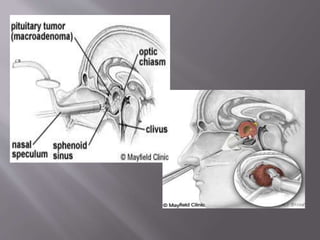
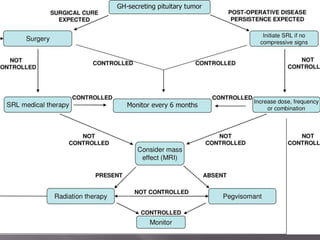
Trans-sphenoidal surgery is the appropriate first-
line therapy. It will result in clinical remission
in a majority of cases (60–90%) with pituitary
microadenoma.
Very high pre-operative GH and IGF-1 levels are
also poor prognostic markers of surgical cure.
Transfrontal surgery is rarely required except
for massive macroadenomas.
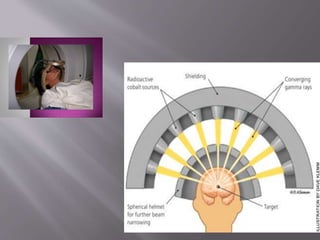
External radiotherapy is normally used after
pituitary surgery fails to normalize GH levels
oftencombined with medium-term treatment
with a somatostatin analogue or a dopamine
agonist because of the slow biochemical
response to radiotherapy.
Stereotactic radiotherapy is used insome centres.
 three receptor targets for the
treatment of acromegaly pituitary
somatostatin receptors, dopamine
(D2) receptors and growth hormone
receptors in the periphery.
 Somatostatin receptor agonists.
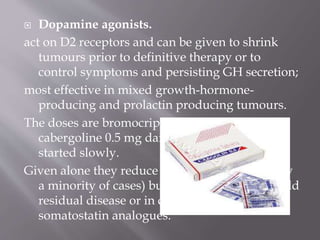
Octreotide and lanreotide are synthetic analogues
of somatostatin
used as a short-term treatment but now are
sometimes used as primary therapy. They
reduce GH and IGF levels in most patients.
Both drugs are typically administered as monthly
depot injections and are generally well
tolerated but are associated with an increased
incidence of gallstones
 Dopamine agonists.
act on D2 receptors and can be given to shrink
tumours prior to definitive therapy or to
control symptoms and persisting GH secretion;
most effective in mixed growth-hormone-
producing and prolactin producing tumours.
The doses are bromocriptine 10–60 mg daily or
cabergoline 0.5 mg daily which should be
started slowly.
Given alone they reduce GH to ‘safe’ levels (only
a minority of cases) but they are useful for mild
residual disease or in combination with
somatostatin analogues.
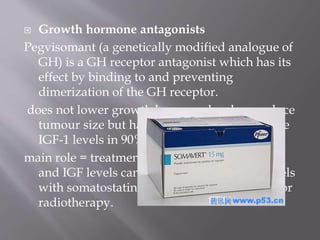
 Growth hormone antagonists
Pegvisomant (a genetically modified analogue of
GH) is a GH receptor antagonist which has its
effect by binding to and preventing
dimerization of the GH receptor.
does not lower growth hormone levels or reduce
tumour size but has been shown to normalize
IGF-1 levels in 90% of patients.
main role = treatment of patients in whom GH
and IGF levels cannot be reduced to safe levels
with somatostatin analogues alone, surgery or
radiotherapy.
THANK YOU

Seminar Acromegaly 140123035403-phpapp02

  • 1.
     DR INDHUPRAKASH REDDY  MEDICINE PG  KURNOOL MEDICAL COLLEGE
  • 2.
     Disproportionate skeletaltissue and soft tissue overgrowth  Results from hyperplasia of pituitary somatotroph cells and excessive growth hormone production  First described by Verga in 1864
  • 3.
    • Produced inanterior pituitary gland • Stimulated by – GHRH from hypothalamus – Ghrelin (gut) • Inhibited by – somatostatin via SSTR 2 and 5 receptor subtypes • SS regulates the timing and amplitude of GH release • GH receptors widely expressed in liver, fat and muscle
  • 5.
  • 8.
     Clinical presentationdepends on the age of onset of the GH excess  If there is GH excess in child hood or adolescence prior to epiphyseal fusion gigantism results (extreme tall stature)  If the GH excess occurs in adult hood or after fusion of the epiphysis enlargement of acral parts or tips of body (nose;lips;hands and feet) in addition soft tissues &internal parts of the body enlarge except brain
  • 9.
  • 10.
    MASS EFFECTS OF TUMOR SYSTEMICEFFECTS OF GH/IGF-I EXCESS  Headache  Visual field defects  Hyperprolactinemia  Pituitary stalk section  Hypopituitarism  Hypothyroidism, hypogonadism, hypocortisolism  Visceromegaly  Soft tissue and skin changes  Thickening of acral parts  Increased skin thickness and soft tissue hypertrophy  Hyperhidrosis/Oily texture  Skin tags and acanthosis nigricans
  • 12.
    CARDIOVASCULAR FEATURES RESPIRATORY MANIFESTATIONS  Hypertrophy (biventricular or asymmetricseptal)  Congestive Heart Failure (systolic and/or diastolic)  Coronary disease  Arrhythmias  Hypertension  Cardiomyopathy  Macroglossia  Jaw malocclusion  Upper airway obstruction  Sleep disturbances  Sleep apnea (central and obstructive)  Ventilatory dysfunction
  • 13.
    METABOLIC FEATURES BONE ANDJOINT MANIFESTATIONS  Impaired glucose tolerance  Diabetes mellitus  Insulin resistance  Other endocrine consequences  Goiter  Hypercalciuria  Galactorrhea  Decrease libido, impotence  Menstrual abnormalities  Increased articular cartilage thickness  Arthralgias and arthritis  Carpal tunnel syndrome  Osteopenia
  • 14.
    1) Assessment ofGH:  Random GH: often not diagnostic because of episodic secretion and short half-life of the hormone.  Glucose tolerance test: GH is normally inhibited by glucose. If the glucose load fails to suppress the GH level below 1 mU/L and the IGF-1 level is elevated then the diagnosis of acromegaly can be confirmed.
  • 15.
     IGF-1:  longhalf-life and so is a useful measurement to assess GH secretion and therefore screen for acromegaly and monitor the effect of therapy.  A normal IGF-1 together with GH < 5 mU/L (2.5 ng/L) may be taken to exclude acromegaly if the diagnosis is clinically unlikely  IGF-binding protein-3 (IGFBP-3): is the main binding protein for circulating IGF and is increased in acromegaly. Can be useful in the diagnosis of acromegaly.
  • 16.
    2) Visual fieldexamination – defects are common, e.g. bitemporal hemianopia (partial blindness where vision is missing in the outer half of both the right and left visual field) 3) MRI scan of pituitary if above tests abnormal. This will almost always reveal the pituitary adenoma. 4) Pituitary function – partial or complete anterior hypopituitarism is common. 5) Prolactin – mild to moderate hyperprolactinaemia occurs in 30% of patients. In some, the adenoma secretes both GH and prolactin.
  • 17.
     Pictures showthe normal eyes view and bitemporal hemianopia view
  • 18.
     MRI scan:-pituitary adenoma
  • 19.
    6) chest andabdominal radiology:  to detect an ectopic source of growth hormone  may detect cardiomegaly due to cardiomyopathy 7) hands radiology reveals:  tufting of terminal phalanges  increased joint spaces due to cartilage hypertrophy
  • 20.
     Heart disease acromegaly increases the risk of ischemic heart disease leading to a worsening of risk of heart attacks and angina.  Risk of heart failure also rises with enlargement of the heart and imbalance between demands of the body to the capacity of the heart to pump blood.
  • 21.
     The riskof diabetes mellitus rises to a great extent among those with acromegaly.  Pregnant women with acromegalyhave a heightened risk of developing gestational diabetes and pregnancy induced hypertension. This may raise the risk of preterm birth or still birth.
  • 22.
     Those withacromegaly are at risk of arthritis and joint pains as well. This is called Acromegalic arthropathy and affects up to 70% of patients. Both the axial and peripheral skeleton may be affected. This involves the spine as well as the joints of the limbs. Due to compression of nerves of the hand, patient may develop Carpal tunnel syndrome.
  • 23.
     Due toovergrowth of structures of the back of the throat and tongue, there may be development of obstructive sleep apnoea and this leads to interrupted sleep.  There is a high risk of development of colonic polyps. These polyps, if not detected early and removed, may go on to form adenocarcinoma of the colon or bowel cancer. Those with acromegaly thus require early and regular screening for bowel cancer.
  • 24.
    Aim= to achievea mean growth hormone level below 5 mU/L (or 2.5 ng/L) Siti hamidah mahbud 030480
  • 25.
    Trans-sphenoidal surgery isthe appropriate first- line therapy. It will result in clinical remission in a majority of cases (60–90%) with pituitary microadenoma. Very high pre-operative GH and IGF-1 levels are also poor prognostic markers of surgical cure. Transfrontal surgery is rarely required except for massive macroadenomas.
  • 27.
    External radiotherapy isnormally used after pituitary surgery fails to normalize GH levels oftencombined with medium-term treatment with a somatostatin analogue or a dopamine agonist because of the slow biochemical response to radiotherapy. Stereotactic radiotherapy is used insome centres.
  • 29.
     three receptortargets for the treatment of acromegaly pituitary somatostatin receptors, dopamine (D2) receptors and growth hormone receptors in the periphery.
  • 30.
     Somatostatin receptoragonists. Octreotide and lanreotide are synthetic analogues of somatostatin used as a short-term treatment but now are sometimes used as primary therapy. They reduce GH and IGF levels in most patients. Both drugs are typically administered as monthly depot injections and are generally well tolerated but are associated with an increased incidence of gallstones
  • 31.
     Dopamine agonists. acton D2 receptors and can be given to shrink tumours prior to definitive therapy or to control symptoms and persisting GH secretion; most effective in mixed growth-hormone- producing and prolactin producing tumours. The doses are bromocriptine 10–60 mg daily or cabergoline 0.5 mg daily which should be started slowly. Given alone they reduce GH to ‘safe’ levels (only a minority of cases) but they are useful for mild residual disease or in combination with somatostatin analogues.

  • 32.
     Growth hormoneantagonists Pegvisomant (a genetically modified analogue of GH) is a GH receptor antagonist which has its effect by binding to and preventing dimerization of the GH receptor. does not lower growth hormone levels or reduce tumour size but has been shown to normalize IGF-1 levels in 90% of patients. main role = treatment of patients in whom GH and IGF levels cannot be reduced to safe levels with somatostatin analogues alone, surgery or radiotherapy.
  • 34.