
Semantic Fields
we see that words can be classified into sets
according to their meaning. In a semantic
field, not all lexical items necessarily have the
same status.
words of a semantic field can have different
types of relationships to one another and to
other words in the lexicon, and we’ll classify
these relationships.
2. hammer, cloud, tractor,
eyeglasses, leaf, justice
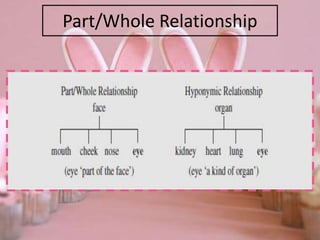
Part/Whole Relationship
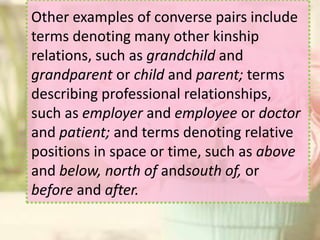
Other examples of converse pairs include
terms denoting many other kinship
relations, such as grandchild and
grandparent or child and parent; terms
describing professional relationships,
such as employer and employee or doctor
and patient; and terms denoting relative
positions in space or time, such as above
and below, north of andsouth of, or
before and after.
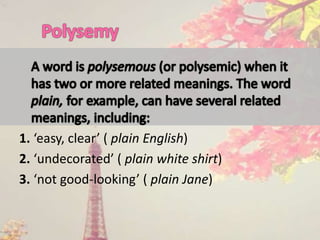
1. ‘easy, clear’ ( plain English)
2. ‘undecorated’ ( plain white shirt)
3. ‘not good-looking’ ( plain Jane)
Semantic Relations among Words

Semantic Relations among Words

  • 2.
    Semantic Fields we seethat words can be classified into sets according to their meaning. In a semantic field, not all lexical items necessarily have the same status. words of a semantic field can have different types of relationships to one another and to other words in the lexicon, and we’ll classify these relationships. 2. hammer, cloud, tractor, eyeglasses, leaf, justice
  • 5.
  • 6.
  • 11.
    Other examples ofconverse pairs include terms denoting many other kinship relations, such as grandchild and grandparent or child and parent; terms describing professional relationships, such as employer and employee or doctor and patient; and terms denoting relative positions in space or time, such as above and below, north of andsouth of, or before and after.
  • 12.
    1. ‘easy, clear’( plain English) 2. ‘undecorated’ ( plain white shirt) 3. ‘not good-looking’ ( plain Jane)