SELF-REGULATED
LEARNING
BY B A S M A E L S AY E D A B D U L FAT TA H
CONTENT
•Definition of self-regulated learning
•Characteristics & Importance of SRL
•Phases of SRL
•Implications of SRL
DEFINITION OF SELF REGULATION
Barry Zimmerman (2002) defines it as the process we use to
activate and sustain our thoughts, behaviors, and emotions in
order to reach our goals.
 Students can actively activate their cognition,
motivation, & behavior.
WHAT IS SELF REGULATION?
 Not a mental ability, like intelligence
 Not an academic skill
 It’s a self-directive process that learners can use to transform
their intrinsic mental abilities into academic skills.
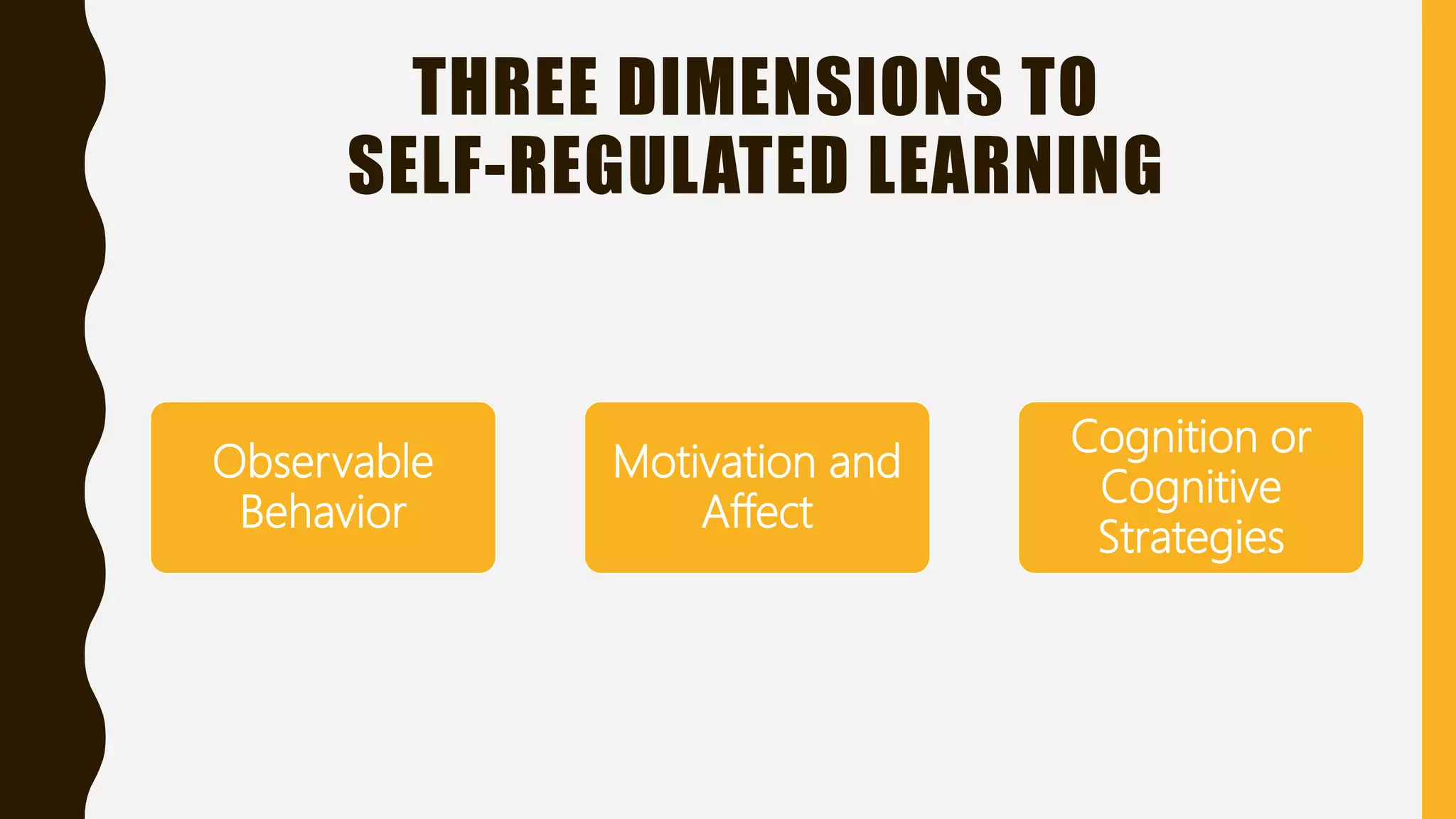
THREE DIMENSIONS TO
SELF-REGULATED LEARNING
Observable
Behavior
Motivation and
Affect
Cognition or
Cognitive
Strategies
TO BE CONT.,
SRL of Behavior
• Time, Study Environment, People, Resources
SRL of Motivation & Affect
• Controlling motivation beliefs and anxieties
SRL of Cognitive Strategies
• Rehearsal Strategies
• Elaboration Strategies
• Organization Strategies
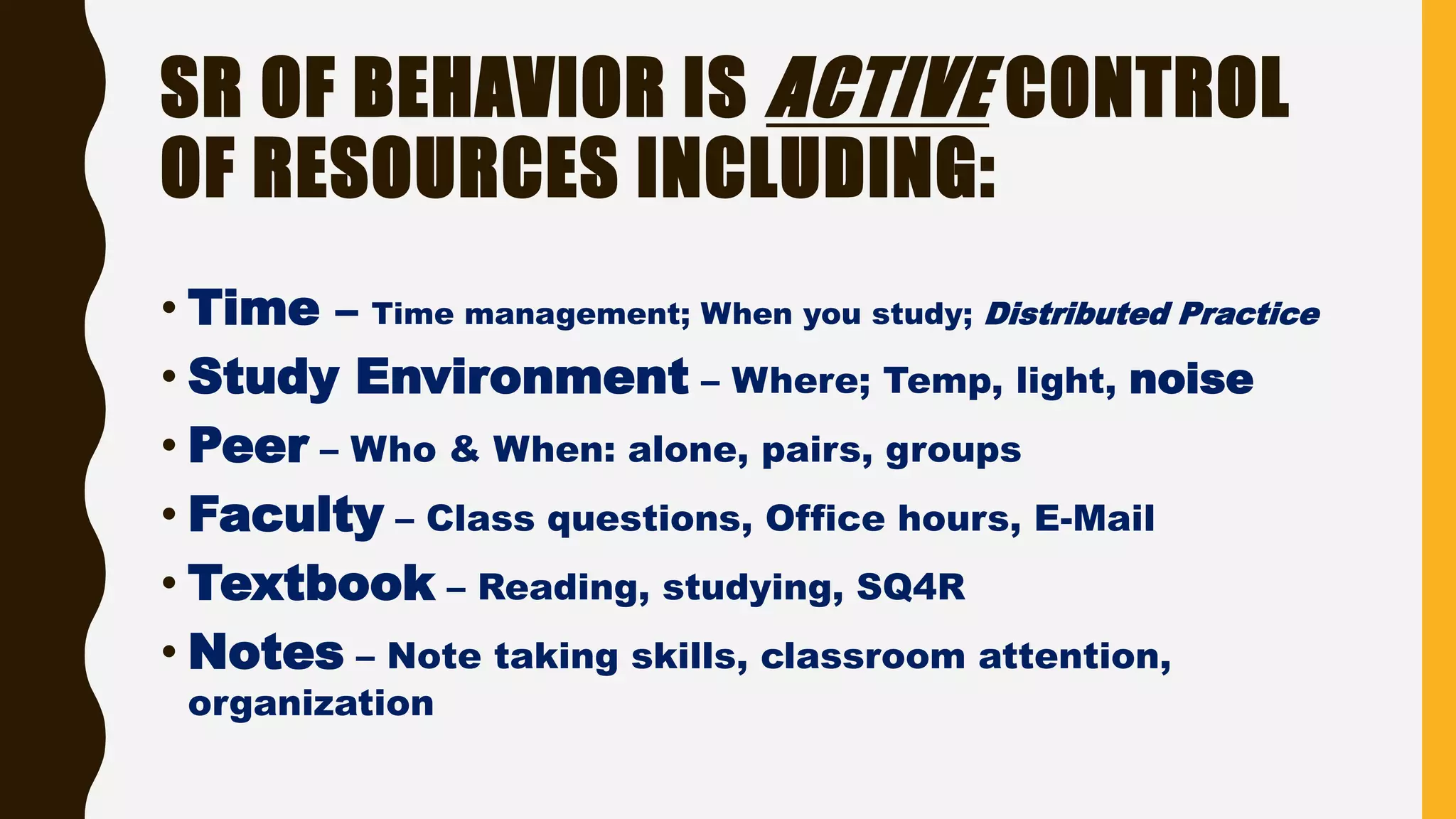
SR OF BEHAVIOR IS ACTIVE CONTROL
OF RESOURCES INCLUDING:
• Time – Time management; When you study; Distributed Practice
• Study Environment – Where; Temp, light, noise
• Peer – Who & When: alone, pairs, groups
• Faculty – Class questions, Office hours, E-Mail
• Textbook – Reading, studying, SQ4R
• Notes – Note taking skills, classroom attention,
organization
SR AFFECT &MOTIVATION
Will is our motivational
orientation
• Goals
• Values
• Expectancies
Skill is our use of the
appropriate resources.
• Resource
management
• Cognitive Strategies
• Reflection strategies
SELF MONITORING & ATTRIBUTIONS
Self-monitoring reveals & elicits beneficial attributional
pattern in success & failure:
• Success  If your success is due to effort & strategies
Increased self-efficacy & positive affect
• Failure  If your failure is due to lack of effort or poor strategies
Increases the chances for change
Self-monitoring should begin to help you control your
affect and motivation
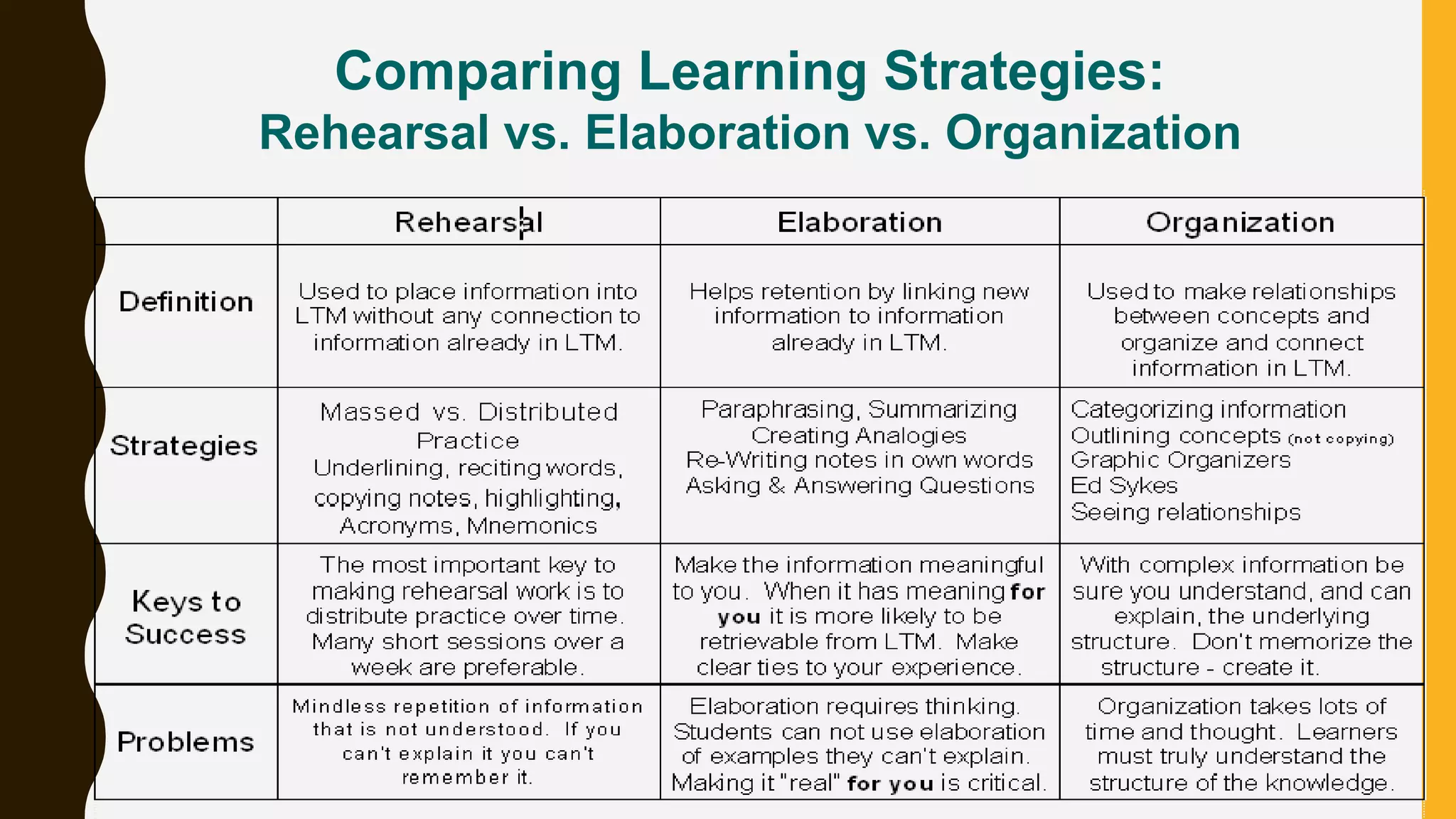
Comparing Learning Strategies:
Rehearsal vs. Elaboration vs. Organization
WHY SELF REGULATION?
• Helps all types of learners: adults, college students, youth learners,
disabled, elementary students
• Self-regulated learners are more likely to succeed academically and
view their futures optimistically.
• Learner-centered approach to teaching.
• Is important in the development of lifelong learning skills.
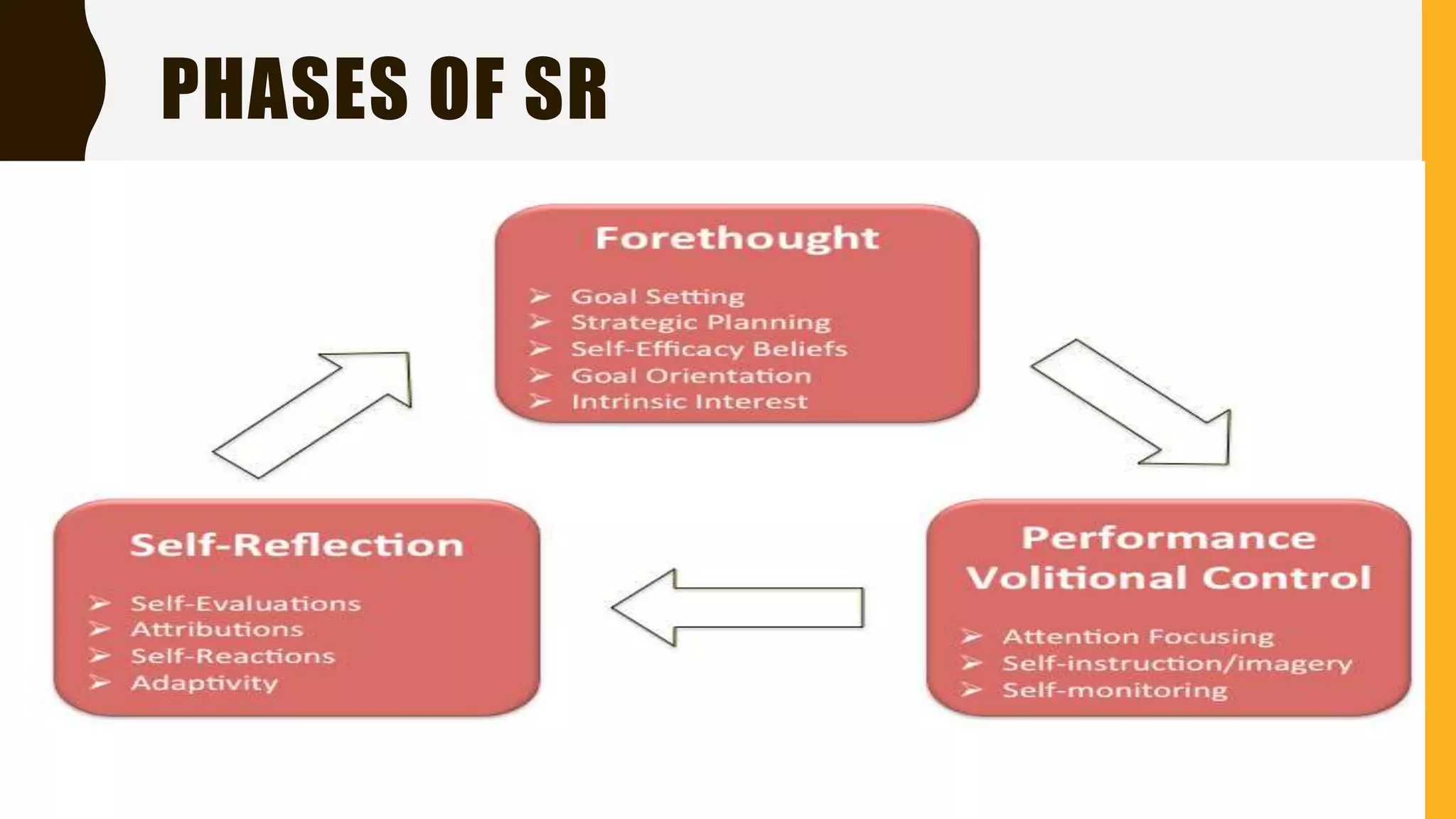
PHASES OF SR
SELF REGULATION PROCESSES
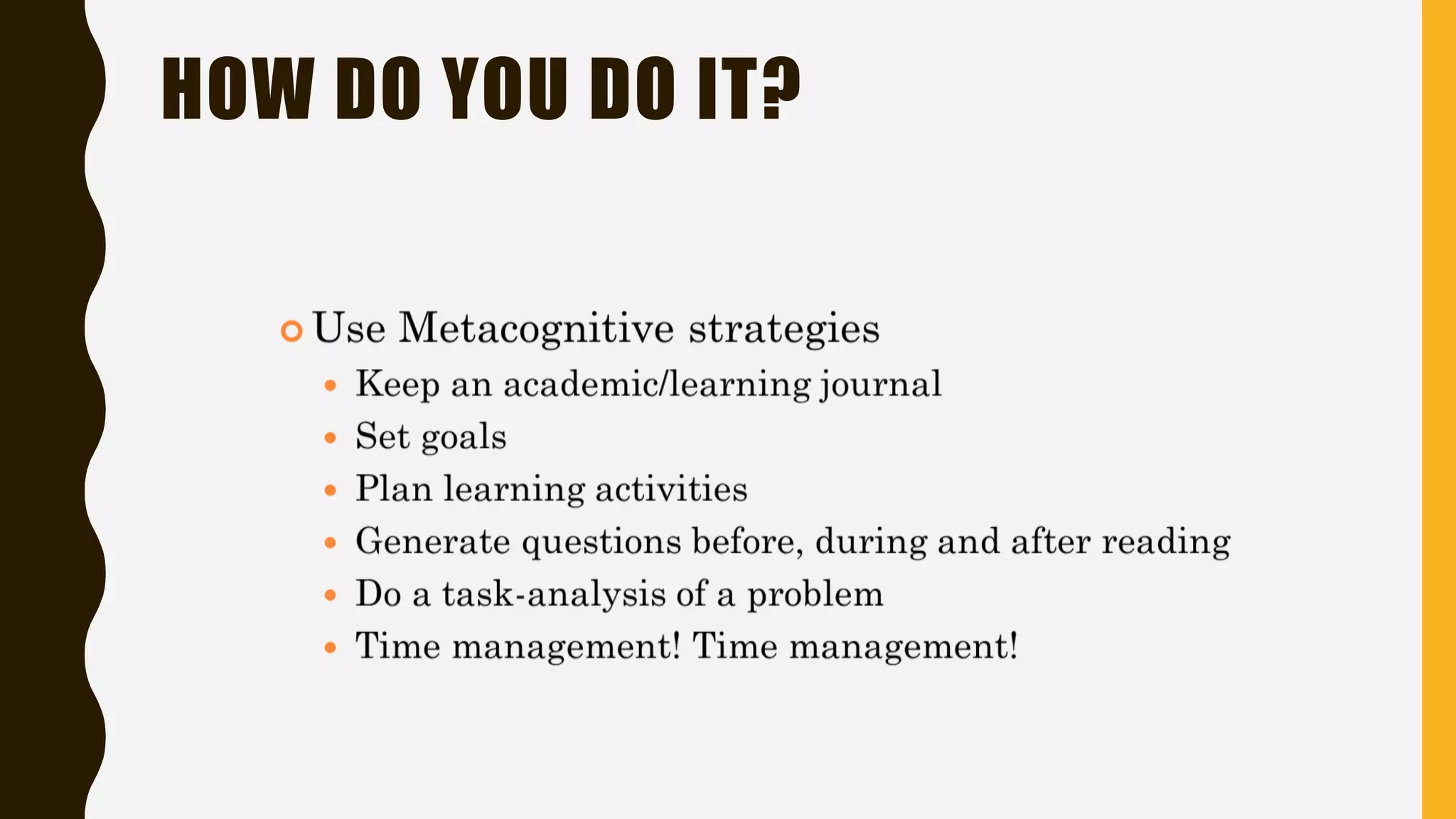
HOW DO YOU DO IT?
CONCLUSION
The key is to know yourself and keep your emotions
in check. The best way to do that is to plan far in
advance and use Distributed Practice.
If you don’t have the will, you won’t use the skill.

Self regulated learning

  • 1.
    SELF-REGULATED LEARNING BY B AS M A E L S AY E D A B D U L FAT TA H
  • 2.
    CONTENT •Definition of self-regulatedlearning •Characteristics & Importance of SRL •Phases of SRL •Implications of SRL
  • 3.
    DEFINITION OF SELFREGULATION Barry Zimmerman (2002) defines it as the process we use to activate and sustain our thoughts, behaviors, and emotions in order to reach our goals.  Students can actively activate their cognition, motivation, & behavior.
  • 4.
    WHAT IS SELFREGULATION?  Not a mental ability, like intelligence  Not an academic skill  It’s a self-directive process that learners can use to transform their intrinsic mental abilities into academic skills.
  • 5.
    THREE DIMENSIONS TO SELF-REGULATEDLEARNING Observable Behavior Motivation and Affect Cognition or Cognitive Strategies
  • 6.
    TO BE CONT., SRLof Behavior • Time, Study Environment, People, Resources SRL of Motivation & Affect • Controlling motivation beliefs and anxieties SRL of Cognitive Strategies • Rehearsal Strategies • Elaboration Strategies • Organization Strategies
  • 7.
    SR OF BEHAVIORIS ACTIVE CONTROL OF RESOURCES INCLUDING: • Time – Time management; When you study; Distributed Practice • Study Environment – Where; Temp, light, noise • Peer – Who & When: alone, pairs, groups • Faculty – Class questions, Office hours, E-Mail • Textbook – Reading, studying, SQ4R • Notes – Note taking skills, classroom attention, organization
  • 8.
    SR AFFECT &MOTIVATION Willis our motivational orientation • Goals • Values • Expectancies Skill is our use of the appropriate resources. • Resource management • Cognitive Strategies • Reflection strategies
  • 9.
    SELF MONITORING &ATTRIBUTIONS Self-monitoring reveals & elicits beneficial attributional pattern in success & failure: • Success  If your success is due to effort & strategies Increased self-efficacy & positive affect • Failure  If your failure is due to lack of effort or poor strategies Increases the chances for change Self-monitoring should begin to help you control your affect and motivation
  • 10.
    Comparing Learning Strategies: Rehearsalvs. Elaboration vs. Organization
  • 11.
    WHY SELF REGULATION? •Helps all types of learners: adults, college students, youth learners, disabled, elementary students • Self-regulated learners are more likely to succeed academically and view their futures optimistically. • Learner-centered approach to teaching. • Is important in the development of lifelong learning skills.
  • 12.
  • 13.
  • 14.
    HOW DO YOUDO IT?
  • 15.
    CONCLUSION The key isto know yourself and keep your emotions in check. The best way to do that is to plan far in advance and use Distributed Practice. If you don’t have the will, you won’t use the skill.