SELECTION
Points to be discussed in the Lecture Sessions.

 Concept and process of Selection.
The methods of Selection.
Application Forms.
Selection Tests.
Interviews.
The Interview Process.
Placement.
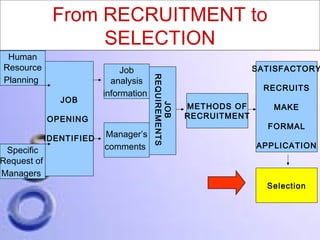
From RECRUITMENT to
SELECTION

Specific
Request of
Managers

JOB

Job
analysis
information

OPENING
IDENTIFIED

Manager’s
comments

SATISFACTORY

JOB
REQUIREMENTS

Human
Resource
Planning

RECRUITS
METHODS OF
RECRUITMENT

MAKE
FORMAL
APPLICATION

Selection
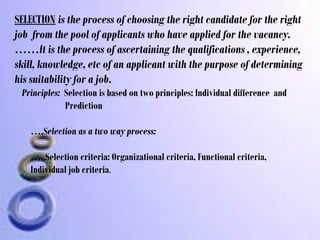
SELECTION is the process of choosing the right candidate for the right
job from the pool of applicants who have applied for the vacancy.
……It is the process of ascertaining the qualifications , experience,
skill, knowledge, etc of an applicant with the purpose of determining
his suitability for a job.
Principles: Selection is based on two principles: Individual difference and
Prediction
….Selection as a two way process:
…..Selection criteria: Organizational criteria, Functional criteria,
Individual job criteria.
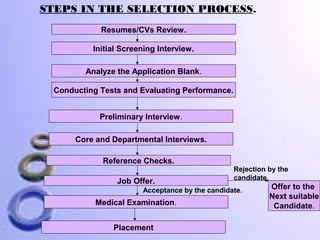
STEPS IN THE SELECTION PROCESS.
Resumes/CVs Review.
Initial Screening Interview.
Analyze the Application Blank.
Conducting Tests and Evaluating Performance.
Preliminary Interview.
Core and Departmental Interviews.
Reference Checks.
Job Offer.

Rejection by the
candidate.

Acceptance by the candidate.

Medical Examination.
Placement

Offer to the
Next suitable
Candidate.
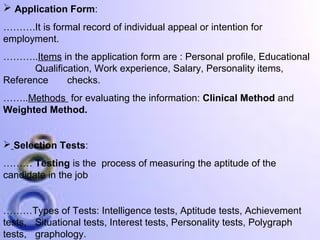
 Application Form:
……….It is formal record of individual appeal or intention for
employment.
………..Items in the application form are : Personal profile, Educational
Qualification, Work experience, Salary, Personality items,
Reference
checks.
……..Methods for evaluating the information: Clinical Method and
Weighted Method.

 Selection Tests:
……… Testing is the process of measuring the aptitude of the
candidate in the job

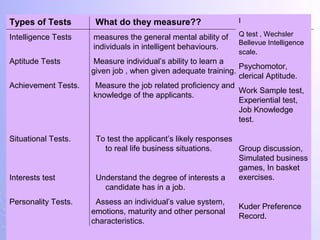
………Types of Tests: Intelligence tests, Aptitude tests, Achievement
tests, Situational tests, Interest tests, Personality tests, Polygraph
tests, graphology.
Types of Tests

What do they measure??

I

Intelligence Tests

measures the general mental ability of
individuals in intelligent behaviours.

Q test , Wechsler
Bellevue Intelligence
scale.

Aptitude Tests

Measure individual’s ability to learn a
Psychomotor,
given job , when given adequate training.
clerical Aptitude.
Measure the job related proficiency and
Work Sample test,
knowledge of the applicants.
Experiential test,
Job Knowledge
test.

Achievement Tests.

Situational Tests.

Interests test
Personality Tests.

To test the applicant’s likely responses
to real life business situations.
Group discussion,
Simulated business
games, In basket
exercises.
Understand the degree of interests a
candidate has in a job.
Assess an individual’s value system,
emotions, maturity and other personal
characteristics.

Kuder Preference
Record.
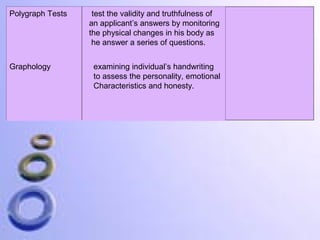
Polygraph Tests

Graphology

test the validity and truthfulness of
an applicant’s answers by monitoring
the physical changes in his body as
he answer a series of questions.
examining individual’s handwriting
to assess the personality, emotional
Characteristics and honesty.
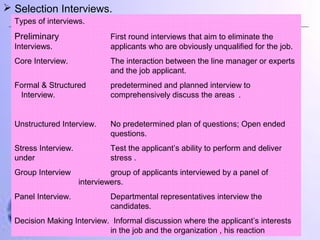
 Selection Interviews.
Types of interviews.

Preliminary

First round interviews that aim to eliminate the
applicants who are obviously unqualified for the job.

Interviews.
Core Interview.

The interaction between the line manager or experts
and the job applicant.

Formal & Structured
Interview.

predetermined and planned interview to
comprehensively discuss the areas .

Unstructured Interview.

No predetermined plan of questions; Open ended
questions.

Stress Interview.
under

Test the applicant’s ability to perform and deliver
stress .

Group Interview
Panel Interview.

group of applicants interviewed by a panel of
interviewers.
Departmental representatives interview the
candidates.

Decision Making Interview. Informal discussion where the applicant’s interests
in the job and the organization , his reaction
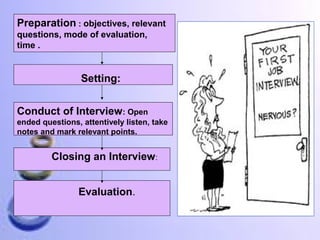
Preparation : objectives, relevant
questions, mode of evaluation,
time .

Setting:
Conduct of Interview: Open
ended questions, attentively listen, take
notes and mark relevant points.

Closing an Interview:
Evaluation.
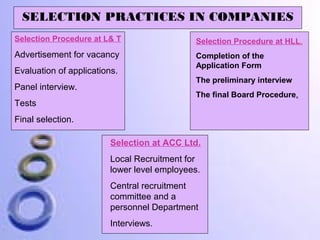
SELECTION PRACTICES IN COMPANIES
Selection Procedure at L& T

Selection Procedure at HLL.

Advertisement for vacancy

Completion of the
Application Form

Evaluation of applications.
Panel interview.

The preliminary interview
The final Board Procedure.

Tests
Final selection.

Selection at ACC Ltd.
Local Recruitment for
lower level employees.
Central recruitment
committee and a
personnel Department
Interviews.
R
H

T
.

E
L
A
Selection ch 7.

Selection ch 7.

  • 1.
    SELECTION Points to bediscussed in the Lecture Sessions.  Concept and process of Selection. The methods of Selection. Application Forms. Selection Tests. Interviews. The Interview Process. Placement.
  • 2.
    From RECRUITMENT to SELECTION Specific Requestof Managers JOB Job analysis information OPENING IDENTIFIED Manager’s comments SATISFACTORY JOB REQUIREMENTS Human Resource Planning RECRUITS METHODS OF RECRUITMENT MAKE FORMAL APPLICATION Selection
  • 3.
    SELECTION is theprocess of choosing the right candidate for the right job from the pool of applicants who have applied for the vacancy. ……It is the process of ascertaining the qualifications , experience, skill, knowledge, etc of an applicant with the purpose of determining his suitability for a job. Principles: Selection is based on two principles: Individual difference and Prediction ….Selection as a two way process: …..Selection criteria: Organizational criteria, Functional criteria, Individual job criteria.
  • 4.
    STEPS IN THESELECTION PROCESS. Resumes/CVs Review. Initial Screening Interview. Analyze the Application Blank. Conducting Tests and Evaluating Performance. Preliminary Interview. Core and Departmental Interviews. Reference Checks. Job Offer. Rejection by the candidate. Acceptance by the candidate. Medical Examination. Placement Offer to the Next suitable Candidate.
  • 5.
     Application Form: ……….Itis formal record of individual appeal or intention for employment. ………..Items in the application form are : Personal profile, Educational Qualification, Work experience, Salary, Personality items, Reference checks. ……..Methods for evaluating the information: Clinical Method and Weighted Method.  Selection Tests: ……… Testing is the process of measuring the aptitude of the candidate in the job ………Types of Tests: Intelligence tests, Aptitude tests, Achievement tests, Situational tests, Interest tests, Personality tests, Polygraph tests, graphology.
  • 6.
    Types of Tests Whatdo they measure?? I Intelligence Tests measures the general mental ability of individuals in intelligent behaviours. Q test , Wechsler Bellevue Intelligence scale. Aptitude Tests Measure individual’s ability to learn a Psychomotor, given job , when given adequate training. clerical Aptitude. Measure the job related proficiency and Work Sample test, knowledge of the applicants. Experiential test, Job Knowledge test. Achievement Tests. Situational Tests. Interests test Personality Tests. To test the applicant’s likely responses to real life business situations. Group discussion, Simulated business games, In basket exercises. Understand the degree of interests a candidate has in a job. Assess an individual’s value system, emotions, maturity and other personal characteristics. Kuder Preference Record.
  • 7.
    Polygraph Tests Graphology test thevalidity and truthfulness of an applicant’s answers by monitoring the physical changes in his body as he answer a series of questions. examining individual’s handwriting to assess the personality, emotional Characteristics and honesty.
  • 8.
     Selection Interviews. Typesof interviews. Preliminary First round interviews that aim to eliminate the applicants who are obviously unqualified for the job. Interviews. Core Interview. The interaction between the line manager or experts and the job applicant. Formal & Structured Interview. predetermined and planned interview to comprehensively discuss the areas . Unstructured Interview. No predetermined plan of questions; Open ended questions. Stress Interview. under Test the applicant’s ability to perform and deliver stress . Group Interview Panel Interview. group of applicants interviewed by a panel of interviewers. Departmental representatives interview the candidates. Decision Making Interview. Informal discussion where the applicant’s interests in the job and the organization , his reaction
  • 9.
    Preparation : objectives,relevant questions, mode of evaluation, time . Setting: Conduct of Interview: Open ended questions, attentively listen, take notes and mark relevant points. Closing an Interview: Evaluation.
  • 10.
    SELECTION PRACTICES INCOMPANIES Selection Procedure at L& T Selection Procedure at HLL. Advertisement for vacancy Completion of the Application Form Evaluation of applications. Panel interview. The preliminary interview The final Board Procedure. Tests Final selection. Selection at ACC Ltd. Local Recruitment for lower level employees. Central recruitment committee and a personnel Department Interviews.
  • 11.