Sanket Vijaykumar Jagare.
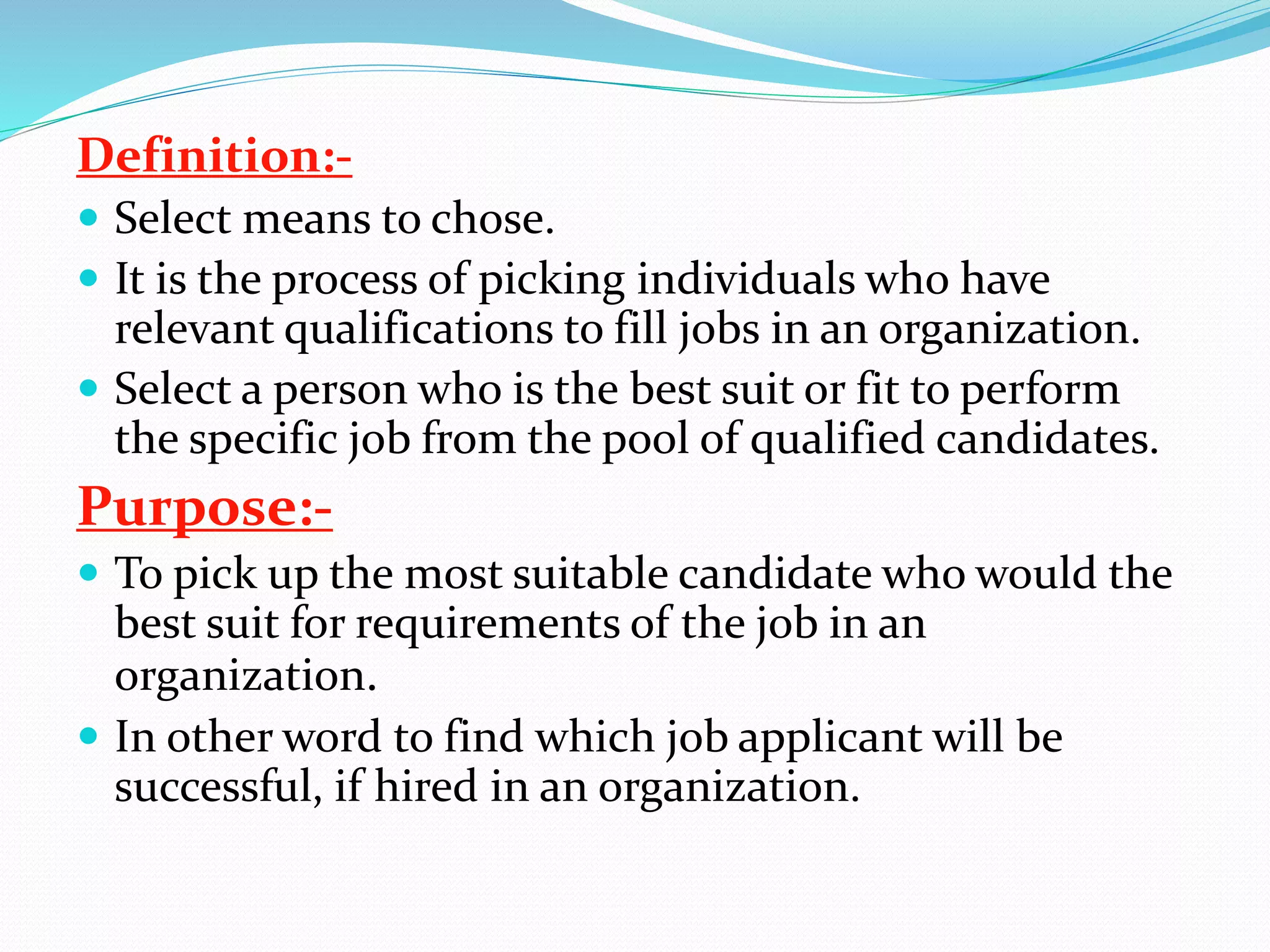
Definition:-
 Select means to chose.
 It is the process of picking individuals who have
relevant qualifications to fill jobs in an organization.
 Select a person who is the best suit or fit to perform
the specific job from the pool of qualified candidates.
Purpose:-
 To pick up the most suitable candidate who would the
best suit for requirements of the job in an
organization.
 In other word to find which job applicant will be
successful, if hired in an organization.
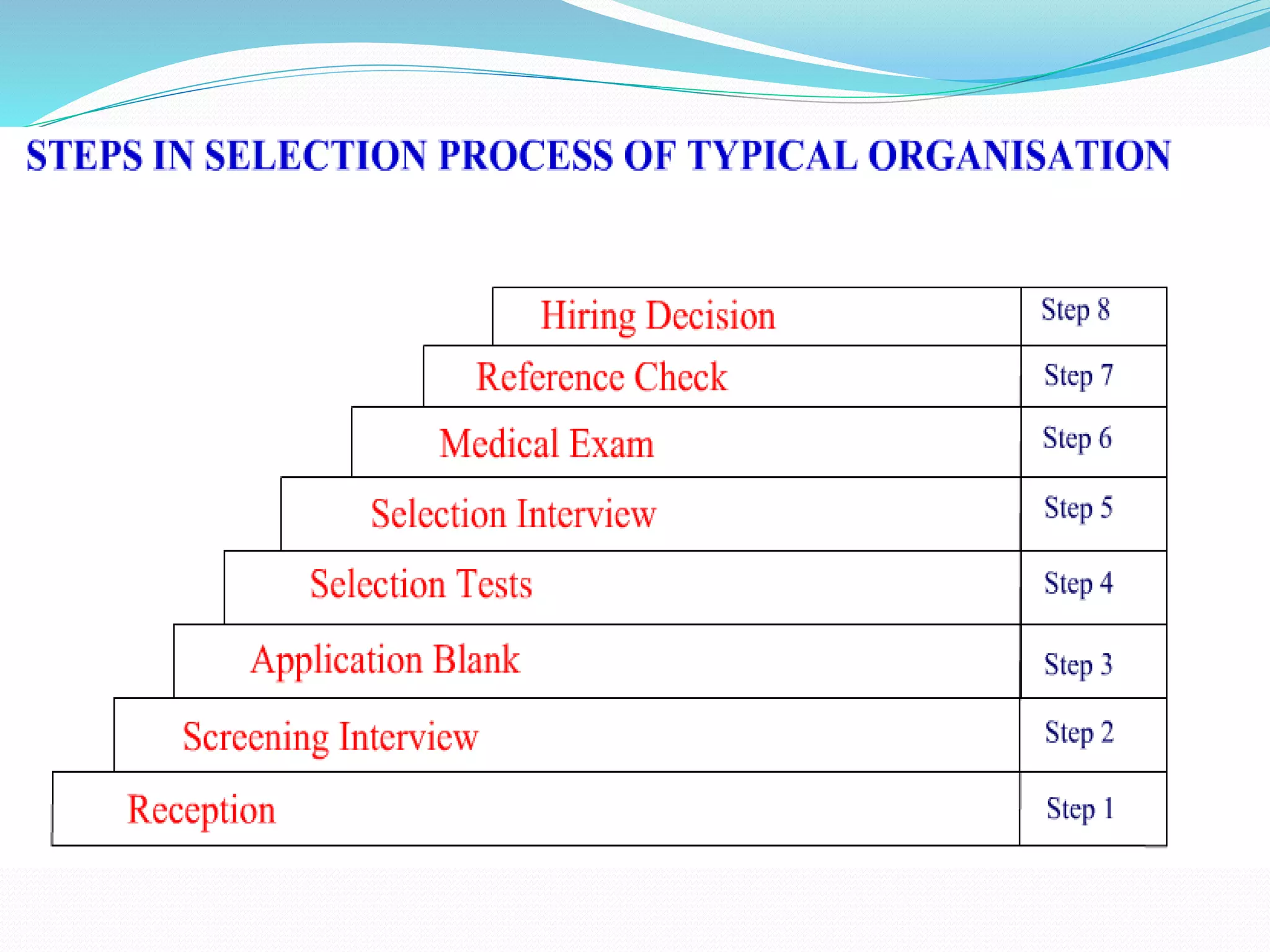
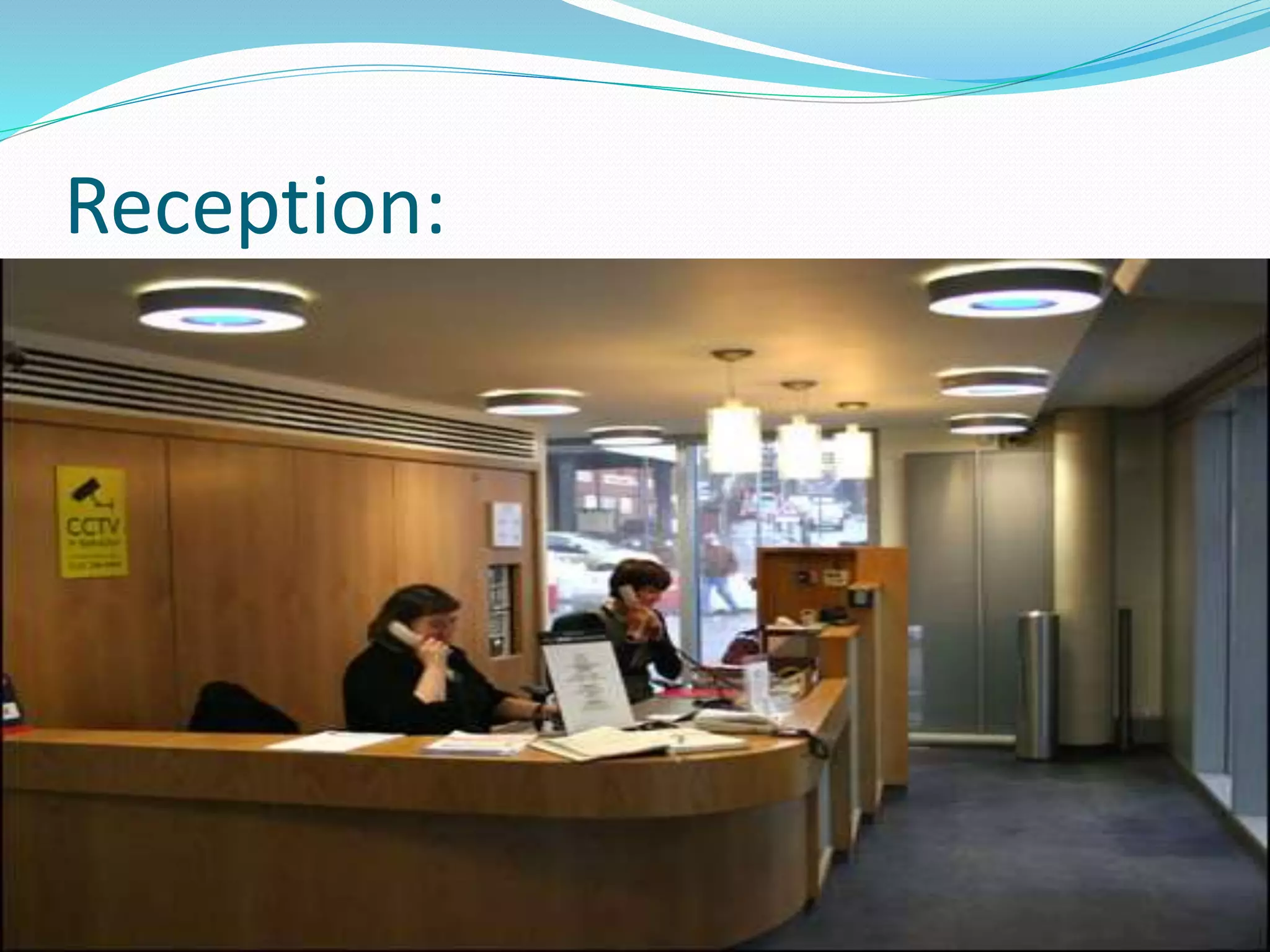
Reception:
Screening Interview.
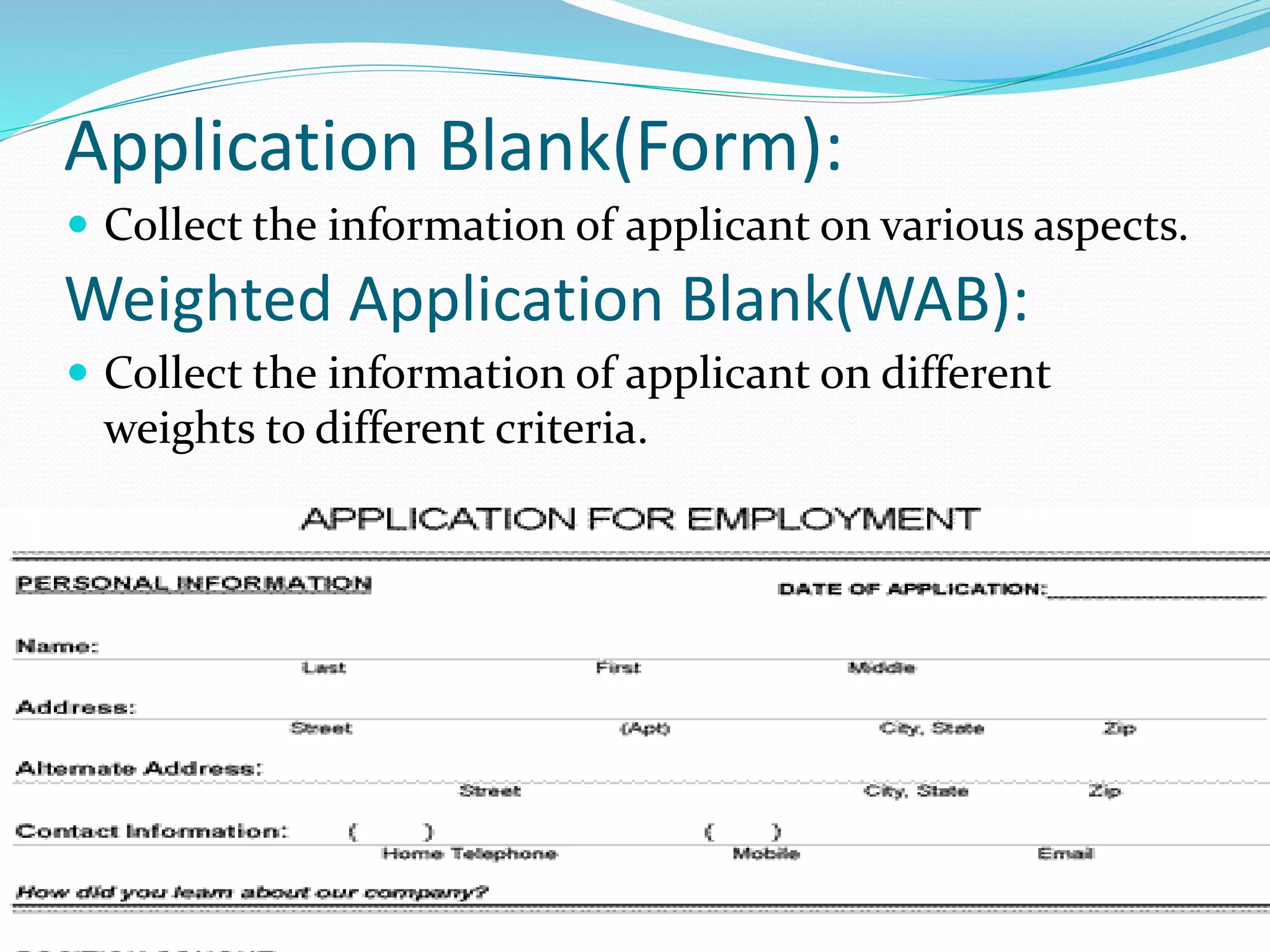
Application Blank(Form):
 Collect the information of applicant on various aspects.
Weighted Application Blank(WAB):
 Collect the information of applicant on different
weights to different criteria.
Selection Testing
Test is a standardize objective to measure a person’s
performance, behavior and attitude.
Standardize because its uniformly applied.
To measure individual’s differences in scientific way.
To check how well an applicant meets the job
requirements.
Employment Tests.
1) Intelligence Test.
 Mental Ability Test.
 Learning Ability.
 Ability to understand instructions.
 Ability to make judgments.
 Pick up employee who is alert and quick in learning.
2) Aptitude Test.
 Potential to certain skills.
 Ability to learn given job quickly and effectively.
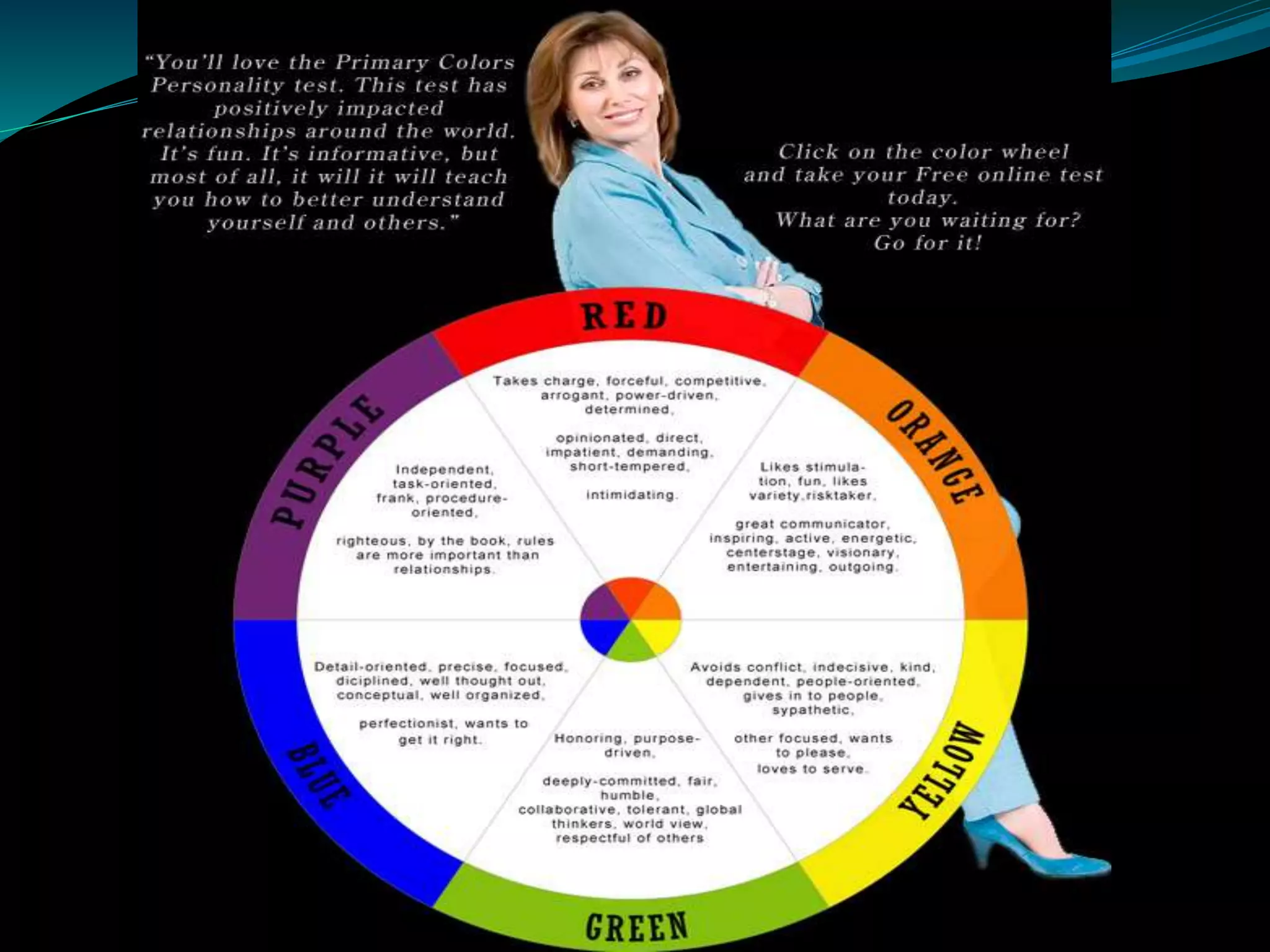
3) Personality Test.
Measuring Personality factors.
Basic aspects of personality such as motivation,
emotional balance, self confidence, interpersonal
behavior, introversion etc.
Three types of personality test
(a) Projective Tests.
(b) Interest Tests.
(c) Preference Tests
3) Achievement Tests.
 What applicant can do on a job currently.
 Proficiency tests = work sampling tests.
 Work sampling = a small portion of job is tested.
4) Simulation Tests.
 Test duplicates many of the activities and
problems an employee faces while at work.
 Such exercise is generally used for hiring
managers at various levels in an organization.
 Is done to access potential of candidate for
managerial position.
4) Assessment center
 The performance in situational exercise us observed and
evaluated by a team of 6 to 8 trained assessors.
 Simulated exercises:-
a) The in-basket
b) The leaderless group discussion (LGD)
c) Business games
d) Individual presentations
e) Structured interview
Evaluation of Assessment Center Technique
 Graphology Tests
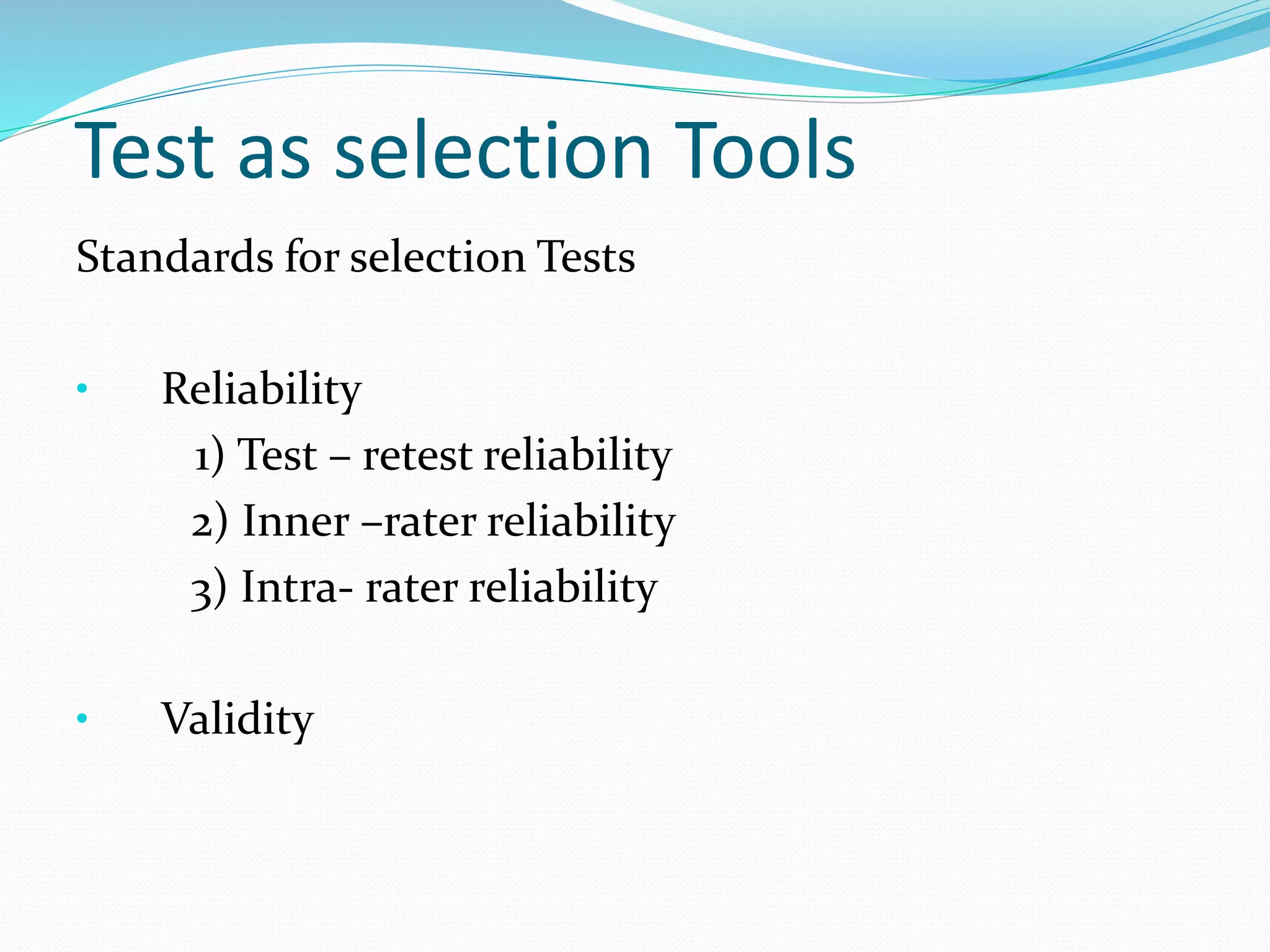
 Polygraph (lie-detector) Tests
 Integrity Tests
a) Have u ever told a lie
b) Do u carry office stationery back to your home
c) Do u mark attendance for your colleagues also
Test as selection Tools
Standards for selection Tests
• Reliability
1) Test – retest reliability
2) Inner –rater reliability
3) Intra- rater reliability
• Validity
 Qualified people: Test require a high level of
professional skills in their administration &
interpretation.
 Preparation: Test should be well prepared.
 Usefulness: Excusive reliance on any single test should
be avoided, since the results in such a case are likely to
be criticized.
Selection Interview
 Size up the interviewee’s agreeableness
 Ask questions that are not covered in tests
 Obtain as much pertinent information as possible
 Make judgements on interviewee’s enthusiasm &
intelligence;
 Assess subjective aspects of candidate
Type of Interviews
 The non- directive interview
 The directive or structured interview
 The situational interview
 The behavioural interview
 Stress interview
 Panel interview
The interview process
a) Preparation
b) Reception
c) Information Exchange
d) Termination
e) Evaluation
 Medical Examination
 Reference Checks
 Hiring Decision
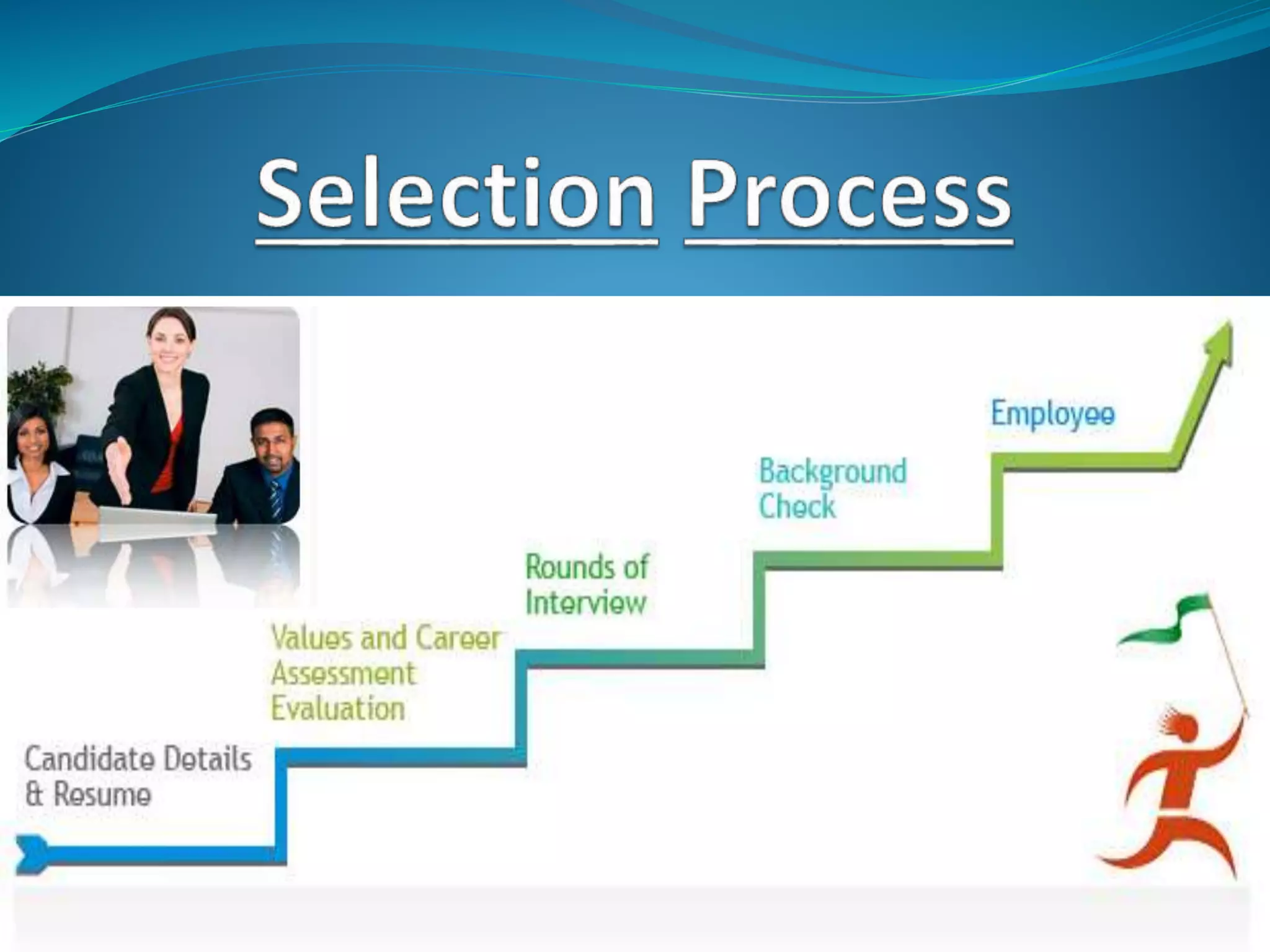
Selection process final

Selection process final

  • 2.
  • 3.
    Definition:-  Select meansto chose.  It is the process of picking individuals who have relevant qualifications to fill jobs in an organization.  Select a person who is the best suit or fit to perform the specific job from the pool of qualified candidates. Purpose:-  To pick up the most suitable candidate who would the best suit for requirements of the job in an organization.  In other word to find which job applicant will be successful, if hired in an organization.
  • 5.
  • 6.
  • 7.
    Application Blank(Form):  Collectthe information of applicant on various aspects. Weighted Application Blank(WAB):  Collect the information of applicant on different weights to different criteria.
  • 8.
    Selection Testing Test isa standardize objective to measure a person’s performance, behavior and attitude. Standardize because its uniformly applied. To measure individual’s differences in scientific way. To check how well an applicant meets the job requirements.
  • 9.
    Employment Tests. 1) IntelligenceTest.  Mental Ability Test.  Learning Ability.  Ability to understand instructions.  Ability to make judgments.  Pick up employee who is alert and quick in learning. 2) Aptitude Test.  Potential to certain skills.  Ability to learn given job quickly and effectively.
  • 10.
    3) Personality Test. MeasuringPersonality factors. Basic aspects of personality such as motivation, emotional balance, self confidence, interpersonal behavior, introversion etc. Three types of personality test (a) Projective Tests. (b) Interest Tests. (c) Preference Tests
  • 12.
    3) Achievement Tests. What applicant can do on a job currently.  Proficiency tests = work sampling tests.  Work sampling = a small portion of job is tested. 4) Simulation Tests.  Test duplicates many of the activities and problems an employee faces while at work.  Such exercise is generally used for hiring managers at various levels in an organization.  Is done to access potential of candidate for managerial position.
  • 13.
    4) Assessment center The performance in situational exercise us observed and evaluated by a team of 6 to 8 trained assessors.  Simulated exercises:- a) The in-basket b) The leaderless group discussion (LGD) c) Business games d) Individual presentations e) Structured interview
  • 14.
    Evaluation of AssessmentCenter Technique  Graphology Tests  Polygraph (lie-detector) Tests  Integrity Tests a) Have u ever told a lie b) Do u carry office stationery back to your home c) Do u mark attendance for your colleagues also
  • 15.
    Test as selectionTools Standards for selection Tests • Reliability 1) Test – retest reliability 2) Inner –rater reliability 3) Intra- rater reliability • Validity
  • 16.
     Qualified people:Test require a high level of professional skills in their administration & interpretation.  Preparation: Test should be well prepared.  Usefulness: Excusive reliance on any single test should be avoided, since the results in such a case are likely to be criticized.
  • 17.
    Selection Interview  Sizeup the interviewee’s agreeableness  Ask questions that are not covered in tests  Obtain as much pertinent information as possible  Make judgements on interviewee’s enthusiasm & intelligence;  Assess subjective aspects of candidate
  • 18.
    Type of Interviews The non- directive interview  The directive or structured interview  The situational interview  The behavioural interview  Stress interview  Panel interview
  • 19.
    The interview process a)Preparation b) Reception c) Information Exchange d) Termination e) Evaluation
  • 20.
     Medical Examination Reference Checks  Hiring Decision