Recruitment Prof. Rupesh Pais
Learning Objectives Concept of Recruitment Factors Affecting Recruitment Recruitment Policy Sources of Recruitment Need for Flexible and Proactive Recruitment Policy Evaluation of a Recruitment Program
Recruitment  Recruitment is the process of searching for prospective employees and stimulating them to apply for jobs in the organizations. Selection starts  where recruitment ends
Human resource planning Identify HR requirements surplus Retrench/layoffs demand Determine numbers, levels & Criticality of vacancies Choose the resources &  Methods of Recruitment Analyze the cost & time involved Organizational  Recruitment policy Job analysis Start implementing the  Recruitment program Select and hire Evaluate the Program Process of recruitment
Constraints & Challenges Poor Image Unattractive job Conservative internal policies Limited budgetary support Restrictive policies of Government
Factors affecting Recruitment Organizational / internal factors Environmental / external factors Political  Economical Social  Technological
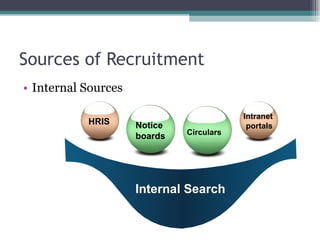
Sources of Recruitment Internal Sources Internal Search HRIS Intranet portals Notice  boards Circulars
Sources of Recruitment Internal Sources Merits Demerits Economical Limited Choice Suitable Inbreeding Reliable Inefficiency Satisfying Bone of contention
Sources of Recruitment External Sources External Search Advertise- ments Employee  referrals Educational  institutions Interested  applications Employment  agencies
Sources of Recruitment External Sources Merits Demerits Wide choice Expensive Injection of fresh blood Time consuming Motivational force Demotivating Long term benefits Uncertainty
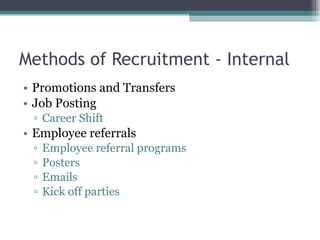
Methods of Recruitment - Internal Promotions and Transfers Job Posting Career Shift Employee referrals Employee referral programs Posters Emails Kick off parties
Methods of Recruitment - Direct Campus Recruitment Guidelines for Campus Short list campuses Choose recruitment team carefully Pay smartly, not highly Present a clear image Do not oversell yourself Get in early
Methods of Recruitment - Indirect Advertisements Newspaper Magazines
Methods of Recruitment – Third Party Private employment search firms Employment Exchanges Gate hiring /Contractors Unsolicited Applicants / Walk ins Internet recruiting Naukri.com, monster.com
A good recruitment policy Complies with government policies Provides job security Provides employee development opportunities Flexible to accommodate changes Ensures its employees long-term employment opportunities Cost effective for the organization
Evaluation of Recruitment Program The recruitment policies, sources & methods have to be evaluated from time to time Successful recruitment program shows Yield Ratio No. of successful placements No. of offers made No. of applicants Cost involved Time Lapse Data (TLD) Time taken for filling up the position
It is easier to go down a hill than up, but the view Is best from the top. Arnold Bennet
Thank You  Questions ???
Selection Prof. Rupesh Pais
How crucial is selection process?
Its better not to select  then selecting a bad candidate
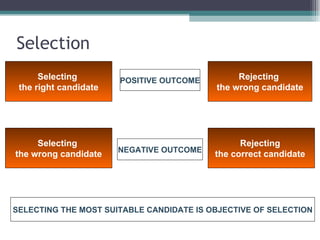
Selection Selecting  the right candidate Rejecting  the wrong candidate Selecting  the wrong candidate Rejecting  the correct candidate   POSITIVE OUTCOME NEGATIVE OUTCOME SELECTING THE MOST SUITABLE CANDIDATE IS OBJECTIVE OF SELECTION
THE SELECTION PROCESS Resumes/CVs Review Analyze the Application Blank Conducting Tests and  Evaluating performance Preliminary Interview Reference checks  Job Offer Initial Screening Interview Medical Examination Placement  Core and Departmental Interviews ACCEPT REJECTION Offer to the next suitable candidate
EVALUATION OF APPLICATION FORMS Clinical method: In this method, all the information furnished by the applicant in the application form is analyzed and inferences are made about applicant's personality. Weighted method: In this method, certain points or weights are assigned to each item in the application form.
SELECTION TESTS Intelligence tests Achievement tests Interest tests Aptitude tests Situational tests Polygraph tests Personality tests Graphology
Selection Testing Intelligence Test It measures learning ability Aptitude Test It measures ability to learn skills Personality Test Measures basic aspects of individuals like, motivation, emotional balance, self-confidence etc. Achievement Test It measures the proficiency
Selection Testing Simulation Test Graphology Test Studying handwriting of candidate to know the person’s personality Polygraph Test Lie detector Integrity test
Selection Testing Assessment Center The in-basket The leaderless group discussion Business games Individual presentations Structured interviews
Selection Method Standard  Reliability Reliability can be measured by using: The repeat or test-retest approach Inner-rater Intra-rater Validity Criterion validity Predicts the important criteria  Content validity Predicts actual work situation Construct validity  Predicts essential traits
Types Interviews Interviews Preliminary Interview  Selection  Interview  Decision-making Interview  Formal & Structured  Interview Unstructured Interview Stress  Interview Situational  Interview Panel  Interview In-depth Interview
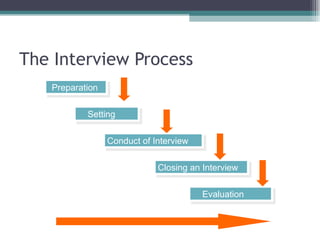
The Interview Process Preparation  Setting  Conduct of Interview Closing an Interview Evaluation
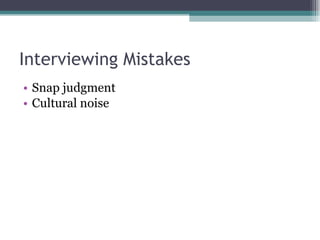
Interviewing Mistakes Snap judgment Cultural noise
Great interviews requires smart skills
Questions? Thank You

Recruitment selection

  • 1.
  • 2.
    Learning Objectives Conceptof Recruitment Factors Affecting Recruitment Recruitment Policy Sources of Recruitment Need for Flexible and Proactive Recruitment Policy Evaluation of a Recruitment Program
  • 3.
    Recruitment Recruitmentis the process of searching for prospective employees and stimulating them to apply for jobs in the organizations. Selection starts where recruitment ends
  • 4.
    Human resource planningIdentify HR requirements surplus Retrench/layoffs demand Determine numbers, levels & Criticality of vacancies Choose the resources & Methods of Recruitment Analyze the cost & time involved Organizational Recruitment policy Job analysis Start implementing the Recruitment program Select and hire Evaluate the Program Process of recruitment
  • 5.
    Constraints & ChallengesPoor Image Unattractive job Conservative internal policies Limited budgetary support Restrictive policies of Government
  • 6.
    Factors affecting RecruitmentOrganizational / internal factors Environmental / external factors Political Economical Social Technological
  • 7.
    Sources of RecruitmentInternal Sources Internal Search HRIS Intranet portals Notice boards Circulars
  • 8.
    Sources of RecruitmentInternal Sources Merits Demerits Economical Limited Choice Suitable Inbreeding Reliable Inefficiency Satisfying Bone of contention
  • 9.
    Sources of RecruitmentExternal Sources External Search Advertise- ments Employee referrals Educational institutions Interested applications Employment agencies
  • 10.
    Sources of RecruitmentExternal Sources Merits Demerits Wide choice Expensive Injection of fresh blood Time consuming Motivational force Demotivating Long term benefits Uncertainty
  • 11.
    Methods of Recruitment- Internal Promotions and Transfers Job Posting Career Shift Employee referrals Employee referral programs Posters Emails Kick off parties
  • 12.
    Methods of Recruitment- Direct Campus Recruitment Guidelines for Campus Short list campuses Choose recruitment team carefully Pay smartly, not highly Present a clear image Do not oversell yourself Get in early
  • 13.
    Methods of Recruitment- Indirect Advertisements Newspaper Magazines
  • 14.
    Methods of Recruitment– Third Party Private employment search firms Employment Exchanges Gate hiring /Contractors Unsolicited Applicants / Walk ins Internet recruiting Naukri.com, monster.com
  • 15.
    A good recruitmentpolicy Complies with government policies Provides job security Provides employee development opportunities Flexible to accommodate changes Ensures its employees long-term employment opportunities Cost effective for the organization
  • 16.
    Evaluation of RecruitmentProgram The recruitment policies, sources & methods have to be evaluated from time to time Successful recruitment program shows Yield Ratio No. of successful placements No. of offers made No. of applicants Cost involved Time Lapse Data (TLD) Time taken for filling up the position
  • 17.
    It is easierto go down a hill than up, but the view Is best from the top. Arnold Bennet
  • 18.
    Thank You Questions ???
  • 19.
  • 20.
    How crucial isselection process?
  • 21.
    Its better notto select then selecting a bad candidate
  • 22.
    Selection Selecting the right candidate Rejecting the wrong candidate Selecting the wrong candidate Rejecting the correct candidate POSITIVE OUTCOME NEGATIVE OUTCOME SELECTING THE MOST SUITABLE CANDIDATE IS OBJECTIVE OF SELECTION
  • 23.
    THE SELECTION PROCESSResumes/CVs Review Analyze the Application Blank Conducting Tests and Evaluating performance Preliminary Interview Reference checks Job Offer Initial Screening Interview Medical Examination Placement Core and Departmental Interviews ACCEPT REJECTION Offer to the next suitable candidate
  • 24.
    EVALUATION OF APPLICATIONFORMS Clinical method: In this method, all the information furnished by the applicant in the application form is analyzed and inferences are made about applicant's personality. Weighted method: In this method, certain points or weights are assigned to each item in the application form.
  • 25.
    SELECTION TESTS Intelligencetests Achievement tests Interest tests Aptitude tests Situational tests Polygraph tests Personality tests Graphology
  • 26.
    Selection Testing IntelligenceTest It measures learning ability Aptitude Test It measures ability to learn skills Personality Test Measures basic aspects of individuals like, motivation, emotional balance, self-confidence etc. Achievement Test It measures the proficiency
  • 27.
    Selection Testing SimulationTest Graphology Test Studying handwriting of candidate to know the person’s personality Polygraph Test Lie detector Integrity test
  • 28.
    Selection Testing AssessmentCenter The in-basket The leaderless group discussion Business games Individual presentations Structured interviews
  • 29.
    Selection Method Standard Reliability Reliability can be measured by using: The repeat or test-retest approach Inner-rater Intra-rater Validity Criterion validity Predicts the important criteria Content validity Predicts actual work situation Construct validity Predicts essential traits
  • 30.
    Types Interviews InterviewsPreliminary Interview Selection Interview Decision-making Interview Formal & Structured Interview Unstructured Interview Stress Interview Situational Interview Panel Interview In-depth Interview
  • 31.
    The Interview ProcessPreparation Setting Conduct of Interview Closing an Interview Evaluation
  • 32.
    Interviewing Mistakes Snapjudgment Cultural noise
  • 33.
  • 34.

Editor's Notes

  • #34 Your candidates might not jump for joy, nor will their interview be televised nationally, but they should have a great interviewing experience. Tips for conducting great interviews: -Be prepared (if you fail to plan, you plan to fail). Remember, YOU are in control. -Give a warm greeting and show sincere interest -Listen, summarize, demonstrate that you understand -Provide information and answer questions -End the interview with set expectations. What’s next? What’s the time frame? Who should they call with questions? Also, if you know you are not interested in a candidate, it is your choice if you would like to tell them in person. The situation can be awkward, so if you’re not comfortable doing that, here is a way to handle it: “We are talking to quite a few applicants this week. Once we get through the first round of interviewing, we will contact you and let you know if you are still being considered.” We can then send a regrets letter to inform him/her that we have chosen another candidate. AVOID: -Leading candidates on. -Making the applicant feel unwelcomed by cutting the interview drastically short. All candidates should leave with a positive experience, even if they were not right for the job.