BY
B.LAKSHMI
5TH PHARM-D
Drug overview:
Generic name: ertugliflozin/Metformin
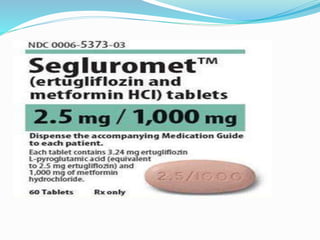
Brand name: segluromet
Dose:2.5mg/500mg,2.5mg/1000mg
7.5mg/500mg,7.5mg/1000mg
Dosage Forms: Tablet
Approval date: December 19, 2017
DESCRIPTION OF SEGRULOMET:
segluromet contains a combination of
ertugliflozin and Metformin helps control blood sugar
levels. Ertugliflozin works by helping the kidneys get rid
of glucose from your bloodstream. Metformin works by
helping your liver release lower amounts of sugar into
your blood.
Segluromet is used together with diet and exercise to
improve blood sugar control in adults with type 2
diabetes mellitus
Mechanism of Action
Ertugliflozin: Selective sodium-glucose transporter-2 (SGLT2)
inhibitor; lowers the renal glucose threshold (ie, the plasma
glucose concentration which exceed the maximum glucose
reabsorption capacity of the kidney); lowering the renal glucose
threshold results in increased urinary glucose excretion
Metformin: Decreases hepatic glucose production, decreases
intestinal absorption of glucose, and improves insulin sensitivity by
increasing peripheral glucose uptake and utilization; improves
glucose tolerance by lowering both basal and postprandial plasma
glucose
Absorption
Ertugliflozin
Peak plasma time: 1 hr (fasting); 2 hr (high-fat, high-caloric meal)
Peak plasma concentration, steady-state: 81.3 ng/ml (5 mg
qDay); 268 ng/ml (15 mg qDay)
AUC, steady-state: 398 ng∙hr/ml (5 mg qDay); 1,193 ng∙hr/ml(15
mg qDay)
Steady-state reached after 4-6 days
Bioavailability, 15-mg dose: ~100%
Metformin
Steady-state reached after 24-48 hr
Bioavailability, 500-mg dose: 50-60%
Food decreases extent of and slightly delays absorption
Distribution
Ertugliflozin
Vd: 85.5 L
Protein binding: 93.6%
Blood-to-plasma concentration ratio of
ertugliflozin: 0.66
Metformin
Vd: 654 L
Protein binding: Negligible
Metabolism
Ertugliflozin
Major metabolic pathway for ertugliflozin is UGT1A9 and
UGT2B7-mediated O-glucorunide conjugation
(pharmacologically inactive at clinically relevant
concentrations)
CYP-mediated (oxidative) metabolism of ertugliflozin is
minimal (12%)
Metformin
Does not undergo hepatic nor biliary metabolism
Excretion
Ertugliflozin
Half-life: 16.6 hr
Clearance: 11.2 L/hr
Excretion: unchanged ertugliflozin: Feces (33.8%); urine
(1.5%)
Metformin
Half-life: 17.6 hr (blood); 6.2 hr (plasma)
Excretion: ~90% urine (unchanged)
Ertugliflozin
.Urinary tract infections (4-4.1%)
.Headache (2.9-3.5%)
.Vaginal pruritus (2.4-2.8%)
.Increased urination (2.4-2.7%)
.Nasopharyngitis (2-2.5%)
.Back pain (1.7-2.5%)
.Renal adverse effects (1.3-2.5%)
.Weight decreased (1.2-2.4%)
.Thirst (1.4-2.7%)
METFORMIN
Initiating drug
Diarrhea
Nausea
Vomiting
Flatulence
Abdominal discomfort
Indigestion
Asthenia
Headache
CONTRA-INDICATION:
It is contraindicated in pregnant women and
lactating women's
patient counselling points:
limit carbohydrate servings
.Restrict protein in the presence of renal dysfunction
.Lose weight.
Limit sodium.
Hypertension increases the risk for heart attack and stroke as well
as nephropathy in people with diabetes. Limiting sodium can help
decrease blood pressure.
.Limit alcohol consumption.
.Limit saturated fats and dietary cholesterol.
.During this step the pharmacist explain about the his/her medications
Monitoring your blood sugar
Depending on your treatment plan, you may need to check and
record your blood sugar level every now and then or, if you're on
insulin, multiple times a day. Ask your doctor how often he or she
wants you to check your blood sugar.
Segru

Segru

  • 1.
  • 2.
    Drug overview: Generic name:ertugliflozin/Metformin Brand name: segluromet Dose:2.5mg/500mg,2.5mg/1000mg 7.5mg/500mg,7.5mg/1000mg Dosage Forms: Tablet Approval date: December 19, 2017
  • 3.
    DESCRIPTION OF SEGRULOMET: seglurometcontains a combination of ertugliflozin and Metformin helps control blood sugar levels. Ertugliflozin works by helping the kidneys get rid of glucose from your bloodstream. Metformin works by helping your liver release lower amounts of sugar into your blood. Segluromet is used together with diet and exercise to improve blood sugar control in adults with type 2 diabetes mellitus
  • 5.
    Mechanism of Action Ertugliflozin:Selective sodium-glucose transporter-2 (SGLT2) inhibitor; lowers the renal glucose threshold (ie, the plasma glucose concentration which exceed the maximum glucose reabsorption capacity of the kidney); lowering the renal glucose threshold results in increased urinary glucose excretion Metformin: Decreases hepatic glucose production, decreases intestinal absorption of glucose, and improves insulin sensitivity by increasing peripheral glucose uptake and utilization; improves glucose tolerance by lowering both basal and postprandial plasma glucose
  • 6.
    Absorption Ertugliflozin Peak plasma time:1 hr (fasting); 2 hr (high-fat, high-caloric meal) Peak plasma concentration, steady-state: 81.3 ng/ml (5 mg qDay); 268 ng/ml (15 mg qDay) AUC, steady-state: 398 ng∙hr/ml (5 mg qDay); 1,193 ng∙hr/ml(15 mg qDay) Steady-state reached after 4-6 days Bioavailability, 15-mg dose: ~100% Metformin Steady-state reached after 24-48 hr Bioavailability, 500-mg dose: 50-60% Food decreases extent of and slightly delays absorption
  • 7.
    Distribution Ertugliflozin Vd: 85.5 L Proteinbinding: 93.6% Blood-to-plasma concentration ratio of ertugliflozin: 0.66 Metformin Vd: 654 L Protein binding: Negligible
  • 8.
    Metabolism Ertugliflozin Major metabolic pathwayfor ertugliflozin is UGT1A9 and UGT2B7-mediated O-glucorunide conjugation (pharmacologically inactive at clinically relevant concentrations) CYP-mediated (oxidative) metabolism of ertugliflozin is minimal (12%) Metformin Does not undergo hepatic nor biliary metabolism
  • 9.
    Excretion Ertugliflozin Half-life: 16.6 hr Clearance:11.2 L/hr Excretion: unchanged ertugliflozin: Feces (33.8%); urine (1.5%) Metformin Half-life: 17.6 hr (blood); 6.2 hr (plasma) Excretion: ~90% urine (unchanged)
  • 10.
    Ertugliflozin .Urinary tract infections(4-4.1%) .Headache (2.9-3.5%) .Vaginal pruritus (2.4-2.8%) .Increased urination (2.4-2.7%) .Nasopharyngitis (2-2.5%) .Back pain (1.7-2.5%) .Renal adverse effects (1.3-2.5%) .Weight decreased (1.2-2.4%) .Thirst (1.4-2.7%)
  • 11.
  • 12.
    CONTRA-INDICATION: It is contraindicatedin pregnant women and lactating women's
  • 13.
    patient counselling points: limitcarbohydrate servings .Restrict protein in the presence of renal dysfunction .Lose weight. Limit sodium. Hypertension increases the risk for heart attack and stroke as well as nephropathy in people with diabetes. Limiting sodium can help decrease blood pressure. .Limit alcohol consumption. .Limit saturated fats and dietary cholesterol. .During this step the pharmacist explain about the his/her medications
  • 14.
    Monitoring your bloodsugar Depending on your treatment plan, you may need to check and record your blood sugar level every now and then or, if you're on insulin, multiple times a day. Ask your doctor how often he or she wants you to check your blood sugar.