INTRODUCTION
TOPIC
INTRODUCTION
•GGT catalyzes the transfer of Gamma glutamyl group from
peptides or peptide like compounds to an acceptor peptide
molecule
•GGT acts on peptide or peptide like compunds containing
a terminal glutamate residue joinedto the remained
combined through the terminal gamma-carboxy.
•Hepatobiliary type enzyme.
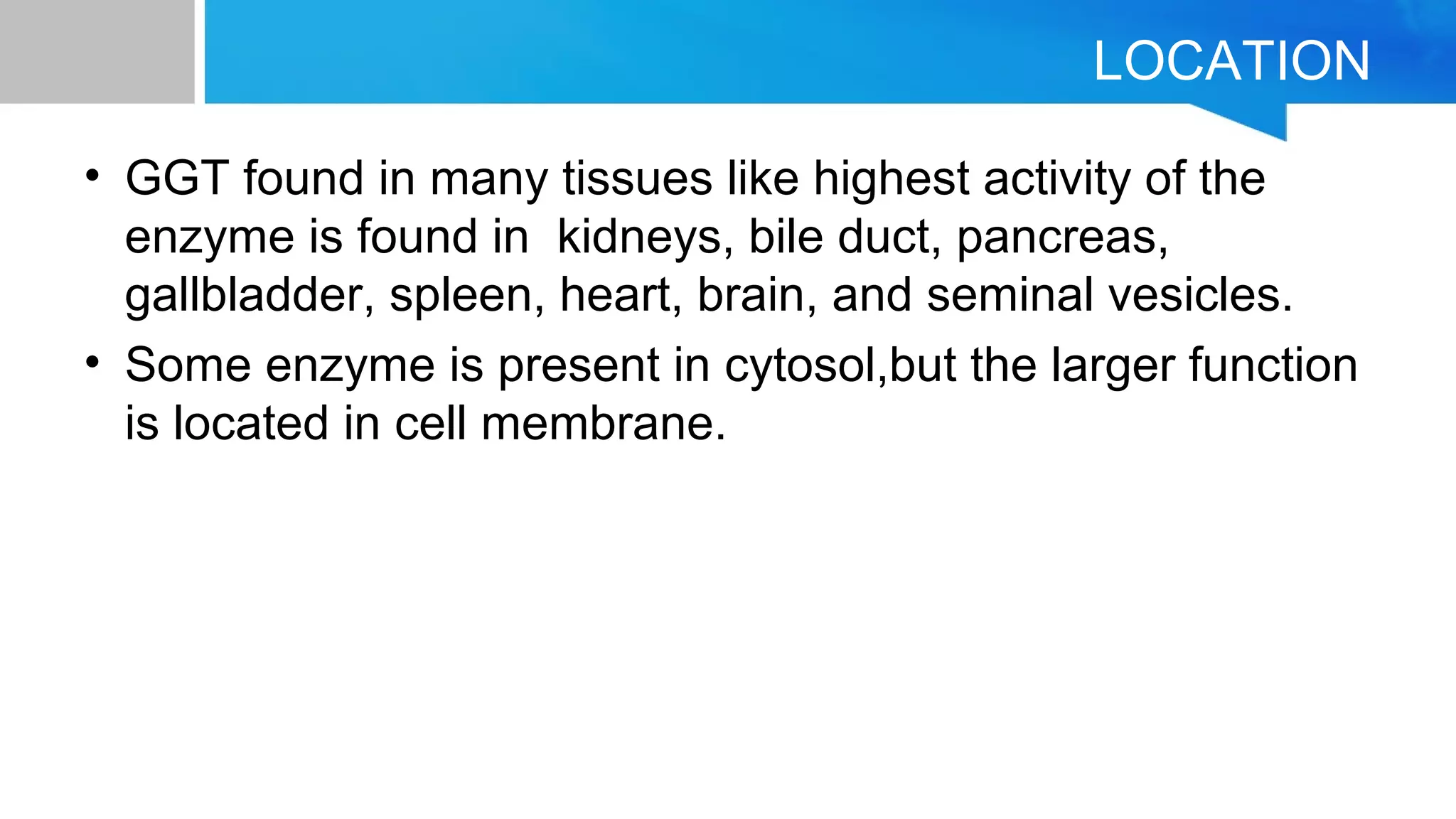
LOCATION
• GGT found in many tissues like highest activity of the
enzyme is found in kidneys, bile duct, pancreas,
gallbladder, spleen, heart, brain, and seminal vesicles.
• Some enzyme is present in cytosol,but the larger function
is located in cell membrane.
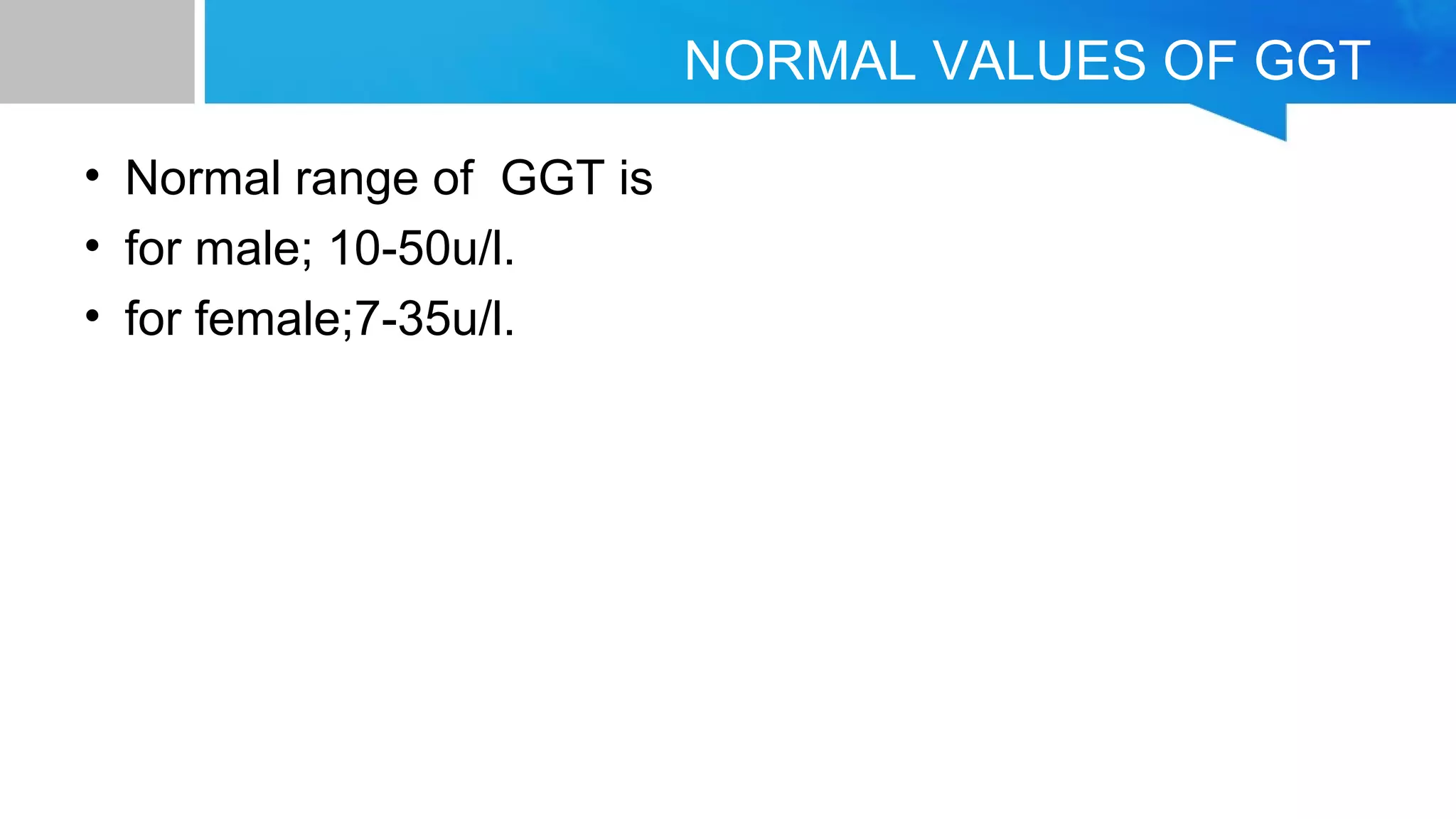
NORMAL VALUES OF GGT
• Normal range of GGT is
• for male; 10-50u/l.
• for female;7-35u/l.
FUNCTIONS OF LDH
•GGT plays a major role in glutathione metabolism.
•Leukotriene synthesis.
•Drug
•Xenobiotic detoxification.
•Resorption of amino acids from glomerular filterate and
from the intestinal lumen.
•It is involved in the transfer of amino acids across the cell
membrane.
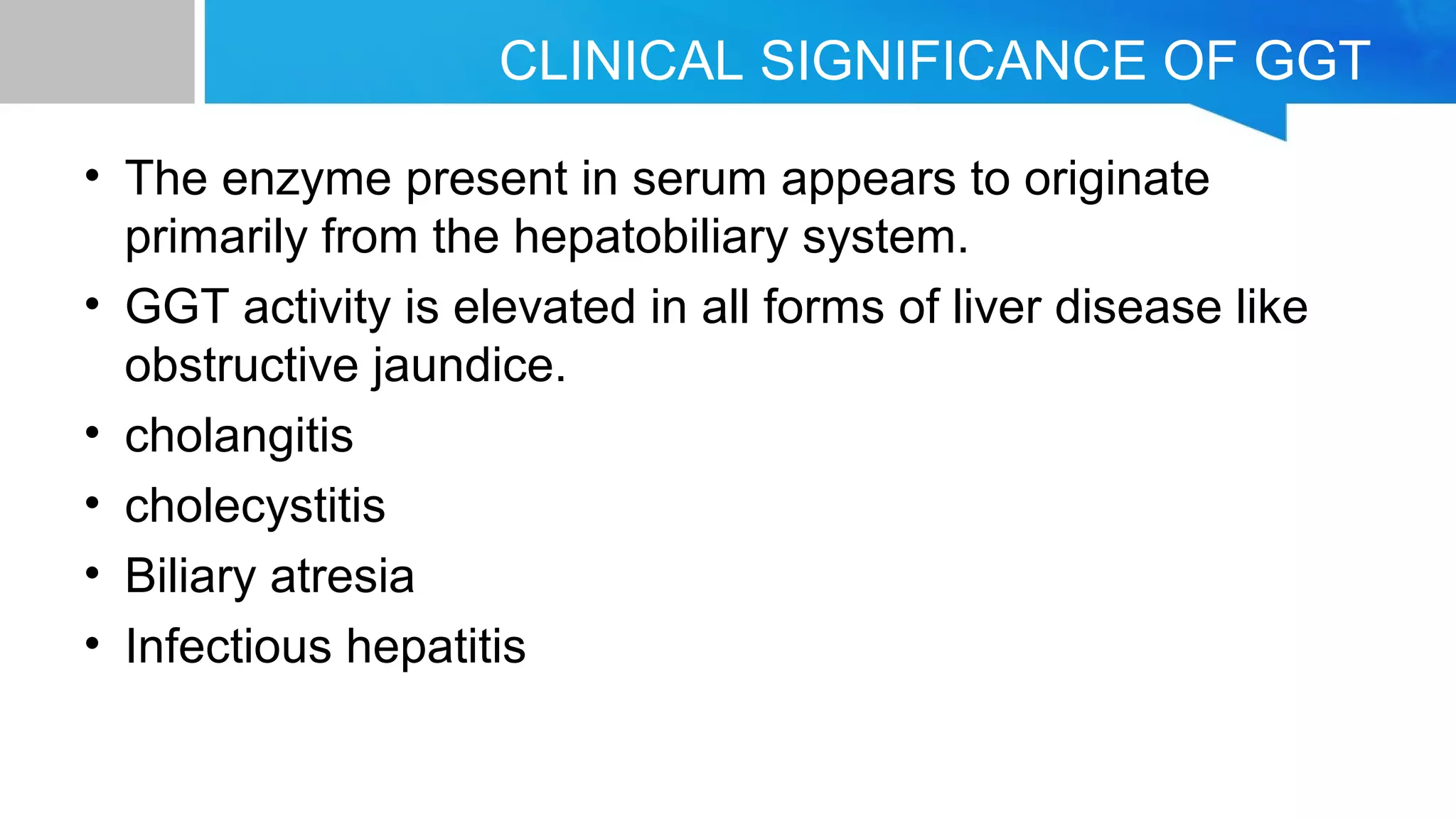
CLINICAL SIGNIFICANCE OF GGT
• The enzyme present in serum appears to originate
primarily from the hepatobiliary system.
• GGT activity is elevated in all forms of liver disease like
obstructive jaundice.
• cholangitis
• cholecystitis
• Biliary atresia
• Infectious hepatitis
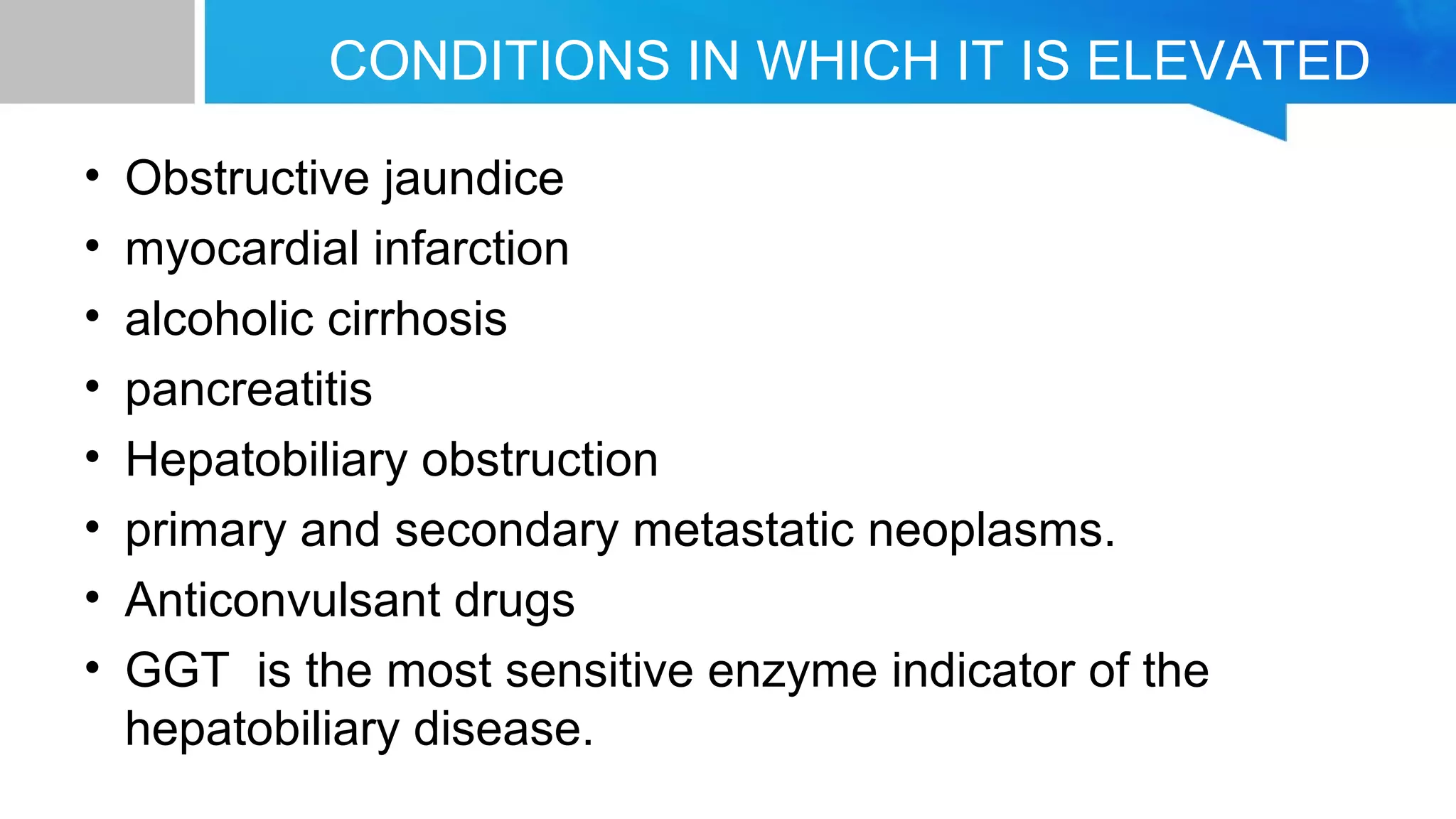
CONDITIONS IN WHICH IT IS ELEVATED
• Obstructive jaundice
• myocardial infarction
• alcoholic cirrhosis
• pancreatitis
• Hepatobiliary obstruction
• primary and secondary metastatic neoplasms.
• Anticonvulsant drugs
• GGT is the most sensitive enzyme indicator of the
hepatobiliary disease.
CONDITIONS IN WHICH IT IS ELEVATED
• Obstructive jaundice
• myocardial infarction
• alcoholic cirrhosis
• pancreatitis
• Hepatobiliary obstruction
• primary and secondary metastatic neoplasms.
• Anticonvulsant drugs
• GGT is the most sensitive enzyme indicator of the
hepatobiliary disease.

gamma GT

  • 2.
  • 3.
  • 4.
    INTRODUCTION •GGT catalyzes thetransfer of Gamma glutamyl group from peptides or peptide like compounds to an acceptor peptide molecule •GGT acts on peptide or peptide like compunds containing a terminal glutamate residue joinedto the remained combined through the terminal gamma-carboxy. •Hepatobiliary type enzyme.
  • 5.
    LOCATION • GGT foundin many tissues like highest activity of the enzyme is found in kidneys, bile duct, pancreas, gallbladder, spleen, heart, brain, and seminal vesicles. • Some enzyme is present in cytosol,but the larger function is located in cell membrane.
  • 6.
    NORMAL VALUES OFGGT • Normal range of GGT is • for male; 10-50u/l. • for female;7-35u/l.
  • 7.
    FUNCTIONS OF LDH •GGTplays a major role in glutathione metabolism. •Leukotriene synthesis. •Drug •Xenobiotic detoxification. •Resorption of amino acids from glomerular filterate and from the intestinal lumen. •It is involved in the transfer of amino acids across the cell membrane.
  • 8.
    CLINICAL SIGNIFICANCE OFGGT • The enzyme present in serum appears to originate primarily from the hepatobiliary system. • GGT activity is elevated in all forms of liver disease like obstructive jaundice. • cholangitis • cholecystitis • Biliary atresia • Infectious hepatitis
  • 9.
    CONDITIONS IN WHICHIT IS ELEVATED • Obstructive jaundice • myocardial infarction • alcoholic cirrhosis • pancreatitis • Hepatobiliary obstruction • primary and secondary metastatic neoplasms. • Anticonvulsant drugs • GGT is the most sensitive enzyme indicator of the hepatobiliary disease.
  • 10.
    CONDITIONS IN WHICHIT IS ELEVATED • Obstructive jaundice • myocardial infarction • alcoholic cirrhosis • pancreatitis • Hepatobiliary obstruction • primary and secondary metastatic neoplasms. • Anticonvulsant drugs • GGT is the most sensitive enzyme indicator of the hepatobiliary disease.