B.LAKSHMI
PHARMD INTERN
15EAITOOO7
DEFINATION
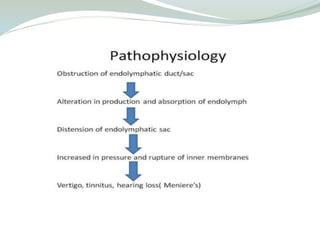
 Meniere's disease is a disorder of the inner ear that can
lead to dizzy spells (vertigo) and hearing loss. In most
cases, Meniere's disease affects only one ear.
CAUSES
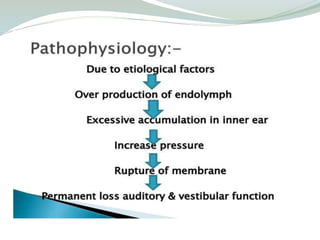
 Although there is no exact cause of Meniere's,
 Abnormal fluid in the inner ear.
Potential causes or triggers of Meniere's disease include:
 Head injury
 Infection to the inner or middle ear
 Allergies
 Alcohol use
 Stress
 Side effects of certain medications
 Smoking
 Stress or anxiety
 Fatigue
 Family history of the disease
 Respiratory infection
 Recent viral illness
 Abnormal immune response
SIGNS AND SYMPTOMS
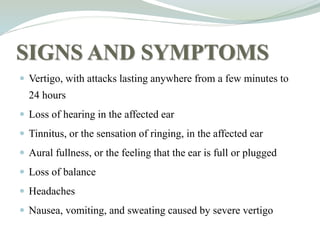
 Vertigo, with attacks lasting anywhere from a few minutes to
24 hours
 Loss of hearing in the affected ear
 Tinnitus, or the sensation of ringing, in the affected ear
 Aural fullness, or the feeling that the ear is full or plugged
 Loss of balance
 Headaches
 Nausea, vomiting, and sweating caused by severe vertigo
STAGES OF MENIERE'S DISEASE AND DIAGNOSIS
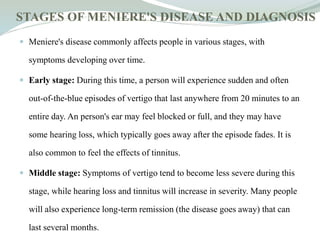
 Meniere's disease commonly affects people in various stages, with
symptoms developing over time.
 Early stage: During this time, a person will experience sudden and often
out-of-the-blue episodes of vertigo that last anywhere from 20 minutes to an
entire day. An person's ear may feel blocked or full, and they may have
some hearing loss, which typically goes away after the episode fades. It is
also common to feel the effects of tinnitus.
 Middle stage: Symptoms of vertigo tend to become less severe during this
stage, while hearing loss and tinnitus will increase in severity. Many people
will also experience long-term remission (the disease goes away) that can
last several months.
 Late stage: During the late stages of Meniere's disease, patients will not
suffer from vertigo as often, and some people will be relieved from it
forever. However, tinnitus and hearing loss will likely get progressively
worse, and people will likely experience unsteady balance regularly. Most
people at this stage feel unstable in dark conditions,
COMPLICATIONS
 Anxiety regarding symptoms.
 Accidents due to vertigo spells.
 Disability due to unpredictable vertigo.
 Progressive imbalance and deafness.
 Intractable tinnitus
DIAGNOSIS
 Signs symptoms and medical history.
A series of diagnostic tests can check your balance and hearing.
These might include:
 Hearing assessment
 Balance assessment -videonystagmography (VNG), rotary-chair
testing. Video head impulse test (vhit).
 Electronystagmogram: an eng evaluates your balance. You will be placed in
a darkened room and have your eye movements measured as cool and warm
air blows through your ear canal.
 Electrocochleography: this measures fluid pressure in your inner ear.
 Additional imaging tests: an MRI or CT scan
Treatment
 No cure exists for Meniere's disease. Treatment can help reduce the severity
and frequency of vertigo episodes. But, unfortunately, there aren't any
treatments for the hearing loss.
Medications for vertigo
 Motion sickness medications, such as meclizine or diazepam (Valium),
may reduce the spinning sensation and help control nausea and vomiting.
 Anti-nausea medications, such as promethazine, might control nausea and
vomiting during an episode of vertigo.
Long-term medication use
 Diuretic
Middle ear injections
 Medications injected into the middle ear, and then absorbed into the inner
ear, may improve vertigo symptoms.
 Gentamicin, an antibiotic that's toxic to your inner ear, reduces the
balancing function of ear, and your other ear assumes responsibility for
balance. There is a risk, however, of further hearing loss.
 Steroids, such as dexamethasone, also may help control vertigo attacks in
some people. Although dexamethasone may be slightly less effective than
gentamicin, it's less likely than gentamicin to cause further hearing loss
SURGERY
 If vertigo attacks associated with Meniere's disease are severe and debilitating and
other treatments don't help, surgery might be an option. Procedures include:
 Endolymphatic sac procedure. The endolymphatic sac plays a role in regulating
inner ear fluid levels. During the procedure, the endolymphatic sac is
decompressed, which can alleviate excess fluid levels. In some cases, this
procedure is coupled with the placement of a shunt, a tube that drains excess fluid
from inner ear.
 Labyrinthectomy. With this procedure, the surgeon removes the balance portion
of the inner ear, thereby removing both balance and hearing function from the
affected ear. This procedure is performed only if you already have near-total or
total hearing loss in your affected ear.
 Vestibular nerve section. This procedure involves cutting the nerve that connects
balance and movement sensors in your inner ear to the brain (vestibular nerve).
LIFE STYLE CHANGES
 Sit or lie down when you feel dizzy. During an episode of vertigo, avoid things
that can make signs and symptoms worse, such as sudden movement, bright lights,
watching television or reading.
 Rest during and after attacks. Don't rush to return to normal activities.
 Be aware you might lose your balance. Falling could lead to serious injury. Use
good lighting if you get up in the night. A cane for walking might help with stability
if you have chronic balance problems.
To avoid triggering a vertigo attack, try the following.
 Limit salt. Consuming foods and beverages high in salt can increase fluid
retention. For overall health, aim for less than 2,300 milligrams of sodium each day.
 Limit caffeine, alcohol and tobacco. These substances can affect the fluid balance
REFERENCE
 https://www.mayoclinic.org/diseases-conditions/menieres-
disease/symptoms-causes/syc-20374910
 https://www.healthline.com/health/menieres-disease
 https://www.dizziness-and
balance.com/disorders/menieres/menieres.html#whatis
 https://www.webmd.com/brain/what-is-meniere-disease1

Seminar is on

  • 1.
  • 2.
    DEFINATION  Meniere's diseaseis a disorder of the inner ear that can lead to dizzy spells (vertigo) and hearing loss. In most cases, Meniere's disease affects only one ear.
  • 3.
    CAUSES  Although thereis no exact cause of Meniere's,  Abnormal fluid in the inner ear. Potential causes or triggers of Meniere's disease include:  Head injury  Infection to the inner or middle ear  Allergies  Alcohol use  Stress  Side effects of certain medications  Smoking  Stress or anxiety  Fatigue
  • 4.
     Family historyof the disease  Respiratory infection  Recent viral illness  Abnormal immune response
  • 7.
    SIGNS AND SYMPTOMS Vertigo, with attacks lasting anywhere from a few minutes to 24 hours  Loss of hearing in the affected ear  Tinnitus, or the sensation of ringing, in the affected ear  Aural fullness, or the feeling that the ear is full or plugged  Loss of balance  Headaches  Nausea, vomiting, and sweating caused by severe vertigo
  • 8.
    STAGES OF MENIERE'SDISEASE AND DIAGNOSIS  Meniere's disease commonly affects people in various stages, with symptoms developing over time.  Early stage: During this time, a person will experience sudden and often out-of-the-blue episodes of vertigo that last anywhere from 20 minutes to an entire day. An person's ear may feel blocked or full, and they may have some hearing loss, which typically goes away after the episode fades. It is also common to feel the effects of tinnitus.  Middle stage: Symptoms of vertigo tend to become less severe during this stage, while hearing loss and tinnitus will increase in severity. Many people will also experience long-term remission (the disease goes away) that can last several months.
  • 9.
     Late stage:During the late stages of Meniere's disease, patients will not suffer from vertigo as often, and some people will be relieved from it forever. However, tinnitus and hearing loss will likely get progressively worse, and people will likely experience unsteady balance regularly. Most people at this stage feel unstable in dark conditions,
  • 10.
    COMPLICATIONS  Anxiety regardingsymptoms.  Accidents due to vertigo spells.  Disability due to unpredictable vertigo.  Progressive imbalance and deafness.  Intractable tinnitus
  • 11.
    DIAGNOSIS  Signs symptomsand medical history. A series of diagnostic tests can check your balance and hearing. These might include:  Hearing assessment  Balance assessment -videonystagmography (VNG), rotary-chair testing. Video head impulse test (vhit).  Electronystagmogram: an eng evaluates your balance. You will be placed in a darkened room and have your eye movements measured as cool and warm air blows through your ear canal.  Electrocochleography: this measures fluid pressure in your inner ear.  Additional imaging tests: an MRI or CT scan
  • 12.
    Treatment  No cureexists for Meniere's disease. Treatment can help reduce the severity and frequency of vertigo episodes. But, unfortunately, there aren't any treatments for the hearing loss. Medications for vertigo  Motion sickness medications, such as meclizine or diazepam (Valium), may reduce the spinning sensation and help control nausea and vomiting.  Anti-nausea medications, such as promethazine, might control nausea and vomiting during an episode of vertigo. Long-term medication use  Diuretic
  • 13.
    Middle ear injections Medications injected into the middle ear, and then absorbed into the inner ear, may improve vertigo symptoms.  Gentamicin, an antibiotic that's toxic to your inner ear, reduces the balancing function of ear, and your other ear assumes responsibility for balance. There is a risk, however, of further hearing loss.  Steroids, such as dexamethasone, also may help control vertigo attacks in some people. Although dexamethasone may be slightly less effective than gentamicin, it's less likely than gentamicin to cause further hearing loss
  • 14.
    SURGERY  If vertigoattacks associated with Meniere's disease are severe and debilitating and other treatments don't help, surgery might be an option. Procedures include:  Endolymphatic sac procedure. The endolymphatic sac plays a role in regulating inner ear fluid levels. During the procedure, the endolymphatic sac is decompressed, which can alleviate excess fluid levels. In some cases, this procedure is coupled with the placement of a shunt, a tube that drains excess fluid from inner ear.  Labyrinthectomy. With this procedure, the surgeon removes the balance portion of the inner ear, thereby removing both balance and hearing function from the affected ear. This procedure is performed only if you already have near-total or total hearing loss in your affected ear.  Vestibular nerve section. This procedure involves cutting the nerve that connects balance and movement sensors in your inner ear to the brain (vestibular nerve).
  • 16.
    LIFE STYLE CHANGES Sit or lie down when you feel dizzy. During an episode of vertigo, avoid things that can make signs and symptoms worse, such as sudden movement, bright lights, watching television or reading.  Rest during and after attacks. Don't rush to return to normal activities.  Be aware you might lose your balance. Falling could lead to serious injury. Use good lighting if you get up in the night. A cane for walking might help with stability if you have chronic balance problems. To avoid triggering a vertigo attack, try the following.  Limit salt. Consuming foods and beverages high in salt can increase fluid retention. For overall health, aim for less than 2,300 milligrams of sodium each day.  Limit caffeine, alcohol and tobacco. These substances can affect the fluid balance
  • 17.
    REFERENCE  https://www.mayoclinic.org/diseases-conditions/menieres- disease/symptoms-causes/syc-20374910  https://www.healthline.com/health/menieres-disease https://www.dizziness-and balance.com/disorders/menieres/menieres.html#whatis  https://www.webmd.com/brain/what-is-meniere-disease1