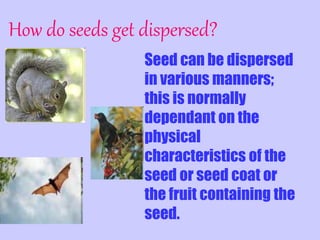
How do seeds get dispersed?
Seed can be dispersed
in various manners;
this is normally
dependant on the
physical
characteristics of the
seed or seed coat or
the fruit containing the
seed.
Flowering plants have different
adaptations to enable their seeds to be
dispersed as far away as possible.
The different methods of seed dispersal
are…
by wind
by animals
by water
by splitting open forcefully
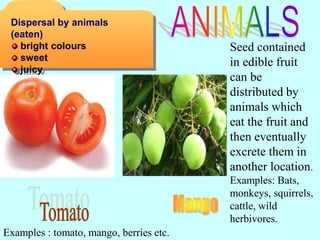
Seed contained
in edible fruit
can be
distributed by
animals which
eat the fruit and
then eventually
excrete them in
another location.
Examples: Bats,
monkeys, squirrels,
cattle, wild
herbivores.
Examples : tomato, mango, berries etc.
Dispersal by animals
(eaten)
bright colours
sweet
juicy
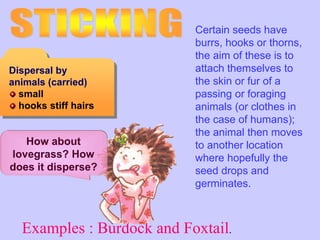
Certain seeds have
burrs, hooks or thorns,
the aim of these is to
attach themselves to
the skin or fur of a
passing or foraging
animals (or clothes in
the case of humans);
the animal then moves
to another location
where hopefully the
seed drops and
germinates.
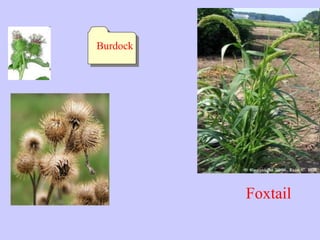
Examples : Burdock and Foxtail.
Dispersal by
animals (carried)
small
hooks stiff hairs
How about
lovegrass? How
does it disperse?
Foxtail
Burdock
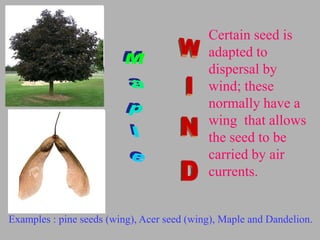
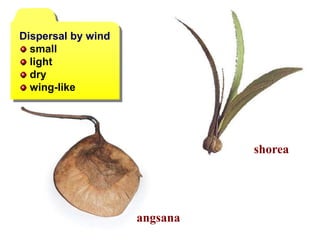
Certain seed is
adapted to
dispersal by
wind; these
normally have a
wing that allows
the seed to be
carried by air
currents.
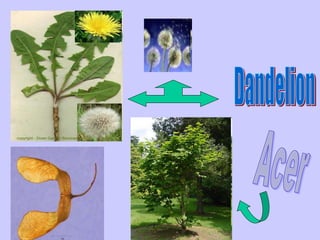
Examples : pine seeds (wing), Acer seed (wing), Maple and Dandelion.
Dispersal by wind
small
light
dry
wing-like
angsana
shorea
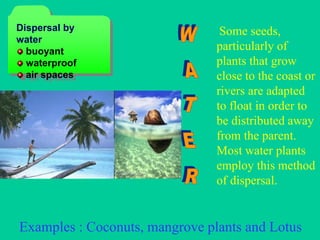
Some seeds,
particularly of
plants that grow
close to the coast or
rivers are adapted
to float in order to
be distributed away
from the parent.
Most water plants
employ this method
of dispersal.
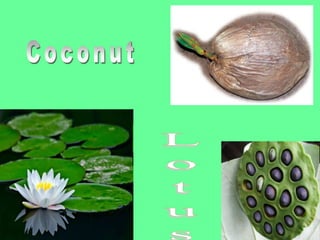
Examples : Coconuts, mangrove plants and Lotus
Dispersal by
water
buoyant
waterproof
air spaces
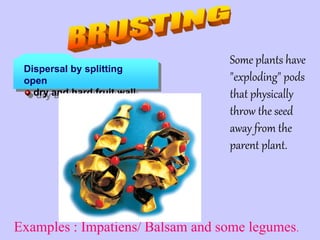
Some plants have
"exploding" pods
that physically
throw the seed
away from the
parent plant.
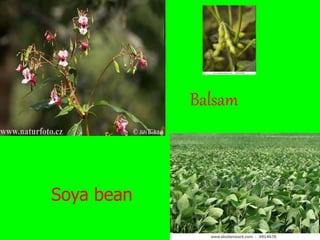
Examples : Impatiens/ Balsam and some legumes.
Dispersal by splitting
open
dry and hard fruit wall
Balsam
Soya bean
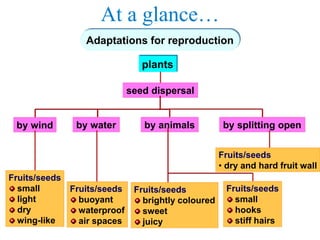
At a glance…
Adaptations for reproduction
plants
seed dispersal
by wind by water by splitting openby animals
Fruits/seeds
small
light
dry
wing-like
Fruits/seeds
buoyant
waterproof
air spaces
Fruits/seeds
brightly coloured
sweet
juicy
Fruits/seeds
small
hooks
stiff hairs
Fruits/seeds
• dry and hard fruit wall
1.To move plants to new locations.
2.Reduces overpopulation and competition for
resources in the same location.
3.Extends the physical range of the plants into new
ecological regions.
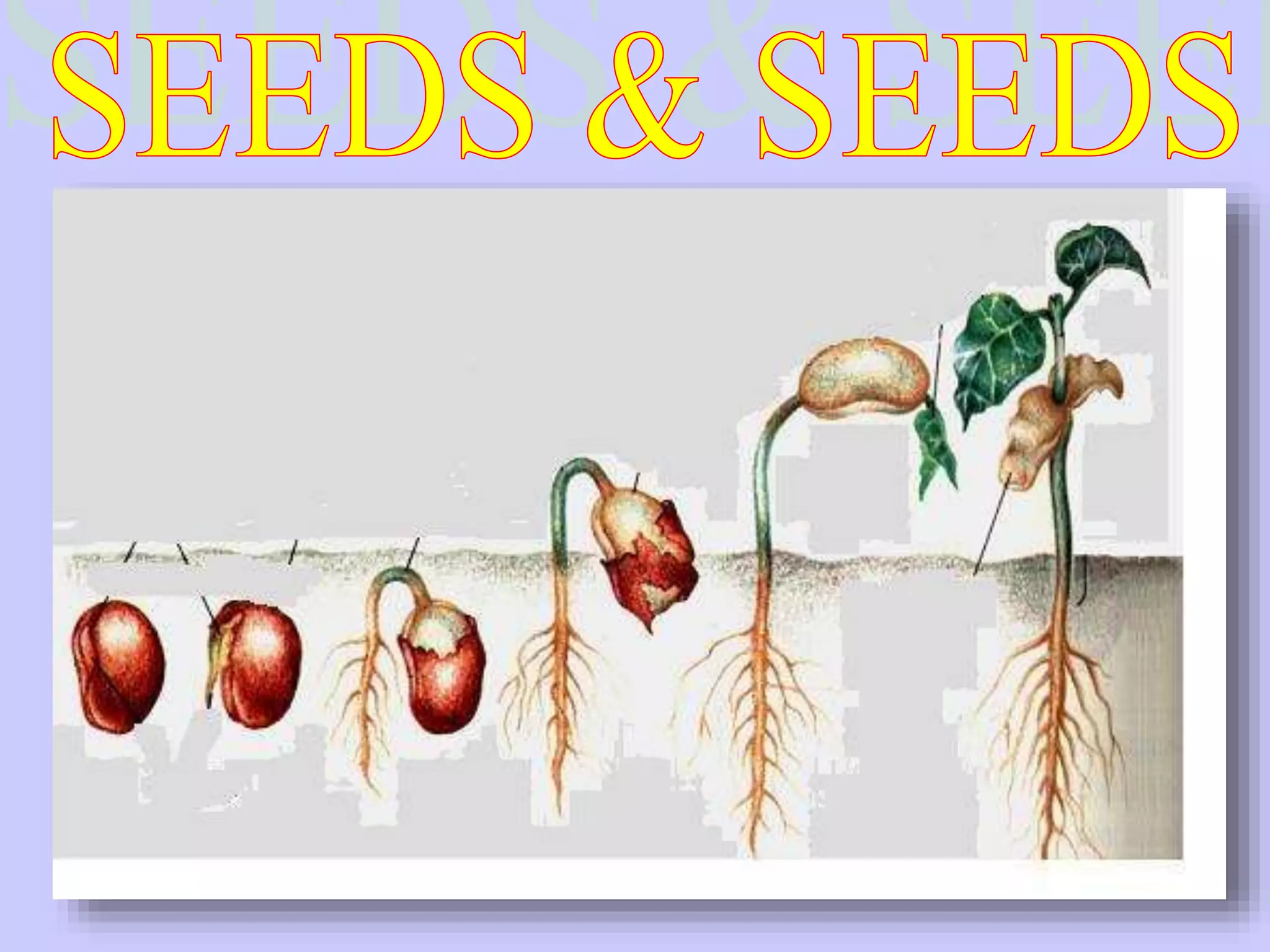
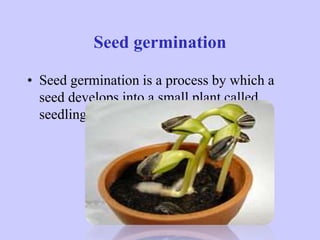
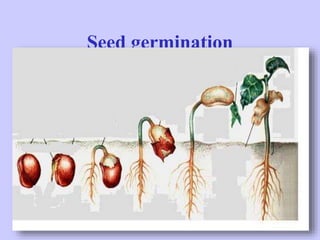
Seed germination
• Seed germination is a process by which a
seed develops into a small plant called
seedling.
Seed germination
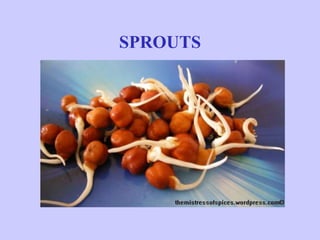
SPROUTS
Edible seedS
• Many seeds are edible and the majority of food
comes from seeds, especially from cereals, pulses
and nuts
• Seeds also provide most cooking oils, many
beverages and spices.
• Seeds are also eaten by animals, and are fed to
cattle. Many seeds are used as birdseed.
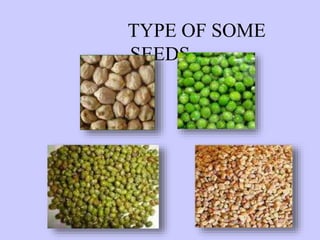
TYPE OF SOME
SEEDS
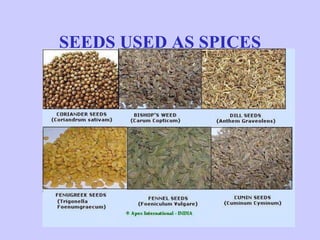
SEEDS USED AS SPICES
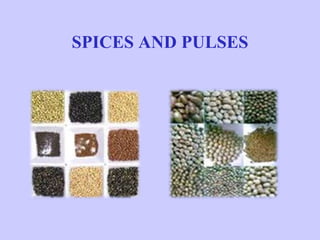
SPICES AND PULSES
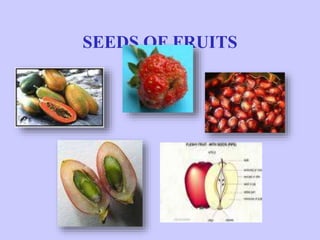
SEEDS OF FRUITS
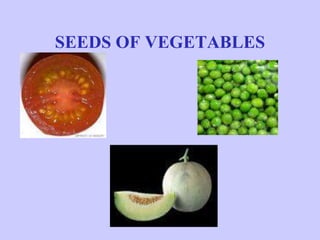
SEEDS OF VEGETABLES
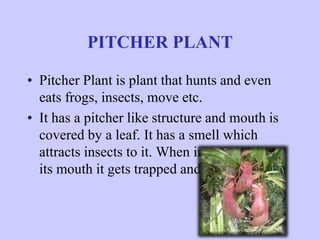
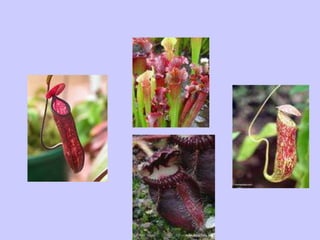
PITCHER PLANT
• Pitcher Plant is plant that hunts and even
eats frogs, insects, move etc.
• It has a pitcher like structure and mouth is
covered by a leaf. It has a smell which
attracts insects to it. When insects lands on
its mouth it gets trapped and can’t get out.
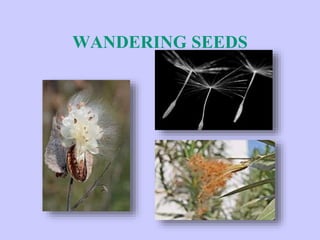
WANDERING SEEDS
Seeds desperal

Seeds desperal

  • 2.
    How do seedsget dispersed? Seed can be dispersed in various manners; this is normally dependant on the physical characteristics of the seed or seed coat or the fruit containing the seed.
  • 3.
    Flowering plants havedifferent adaptations to enable their seeds to be dispersed as far away as possible. The different methods of seed dispersal are… by wind by animals by water by splitting open forcefully
  • 4.
    Seed contained in ediblefruit can be distributed by animals which eat the fruit and then eventually excrete them in another location. Examples: Bats, monkeys, squirrels, cattle, wild herbivores. Examples : tomato, mango, berries etc. Dispersal by animals (eaten) bright colours sweet juicy
  • 5.
    Certain seeds have burrs,hooks or thorns, the aim of these is to attach themselves to the skin or fur of a passing or foraging animals (or clothes in the case of humans); the animal then moves to another location where hopefully the seed drops and germinates. Examples : Burdock and Foxtail. Dispersal by animals (carried) small hooks stiff hairs How about lovegrass? How does it disperse?
  • 6.
  • 7.
    Certain seed is adaptedto dispersal by wind; these normally have a wing that allows the seed to be carried by air currents. Examples : pine seeds (wing), Acer seed (wing), Maple and Dandelion.
  • 9.
  • 10.
    Some seeds, particularly of plantsthat grow close to the coast or rivers are adapted to float in order to be distributed away from the parent. Most water plants employ this method of dispersal. Examples : Coconuts, mangrove plants and Lotus Dispersal by water buoyant waterproof air spaces
  • 12.
    Some plants have "exploding"pods that physically throw the seed away from the parent plant. Examples : Impatiens/ Balsam and some legumes. Dispersal by splitting open dry and hard fruit wall
  • 13.
  • 14.
    At a glance… Adaptationsfor reproduction plants seed dispersal by wind by water by splitting openby animals Fruits/seeds small light dry wing-like Fruits/seeds buoyant waterproof air spaces Fruits/seeds brightly coloured sweet juicy Fruits/seeds small hooks stiff hairs Fruits/seeds • dry and hard fruit wall
  • 15.
    1.To move plantsto new locations. 2.Reduces overpopulation and competition for resources in the same location. 3.Extends the physical range of the plants into new ecological regions.
  • 16.
    Seed germination • Seedgermination is a process by which a seed develops into a small plant called seedling.
  • 17.
  • 18.
  • 19.
    Edible seedS • Manyseeds are edible and the majority of food comes from seeds, especially from cereals, pulses and nuts • Seeds also provide most cooking oils, many beverages and spices. • Seeds are also eaten by animals, and are fed to cattle. Many seeds are used as birdseed.
  • 20.
  • 21.
  • 22.
  • 23.
  • 24.
  • 25.
    PITCHER PLANT • PitcherPlant is plant that hunts and even eats frogs, insects, move etc. • It has a pitcher like structure and mouth is covered by a leaf. It has a smell which attracts insects to it. When insects lands on its mouth it gets trapped and can’t get out.
  • 27.