Plant and animal adaptationsScience 6Mrs. Marlene Torres
An adaptation is… a change in an organism that help it survive and reproduce in its environment.This changes are produce as a response to changes in the environment and occur at cellular level.Adaptations
AdaptationsTropism… is the response of an organism toward or away from a stimulus.Remember:Stimulus is something that produce a response of an organism.
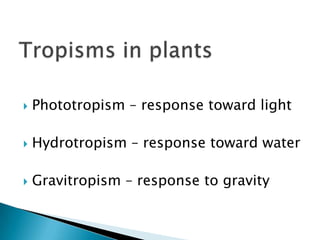
Tropisms in plantsPhototropism – response toward lightHydrotropism – response toward waterGravitropism – response to gravity
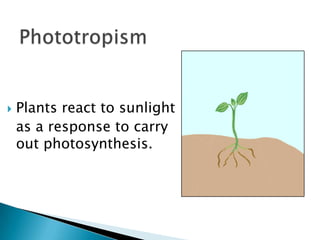
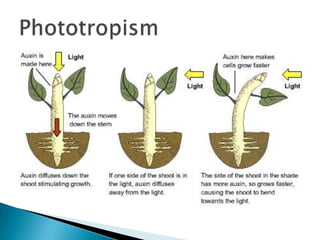
PhototropismPlants react to sunlight   as a response to carry out photosynthesis.
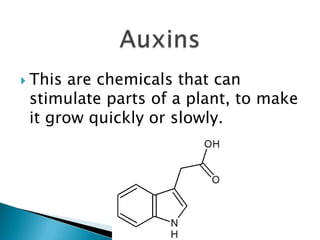
AuxinsThis are chemicals that can stimulate parts of a plant, to make it grow quickly or slowly.
Phototropism
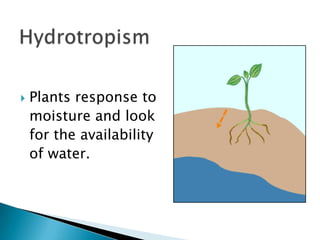
HydrotropismPlants response to   moisture and look   for the availability   of water.
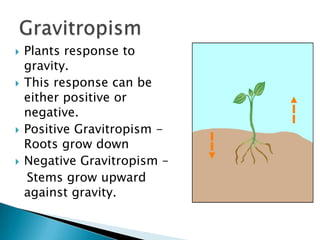
Plants response to gravity.This response can be either positive or negative.Positive Gravitropism -Roots grow down Negative Gravitropism –   Stems grow upward against gravity.Gravitropism
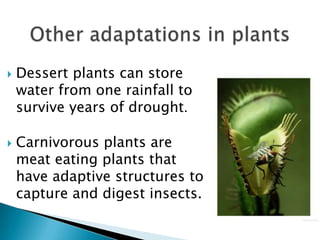
Other adaptations in plantsDessert plants can store water from one rainfall to survive years of drought.Carnivorous plants are meat eating plants that have adaptive structures to capture and digest insects.
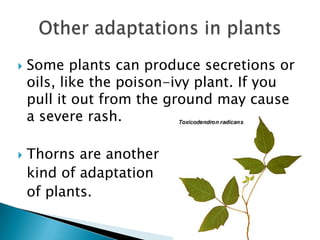
Some plants can produce secretions or oils, like the poison-ivy plant. If you pull it out from the ground may cause a severe rash.Thorns are another   kind of adaptation   of plants.Other adaptations in plants
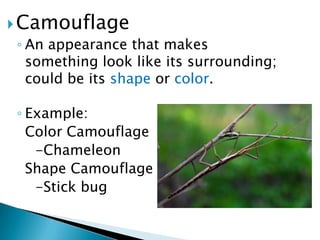
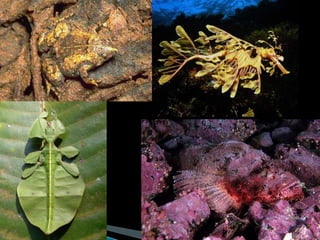
CamouflageAn appearance that makes something look like its surrounding; could be its shape or color.Example:	Color Camouflage 		-Chameleon	Shape Camouflage 		-Stick bug
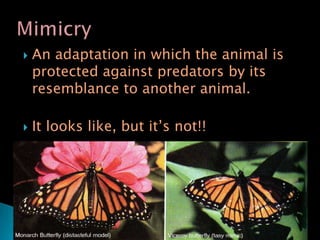
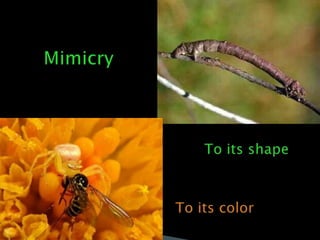
Mimicry An adaptation in which the animal is protected against predators by its resemblance to another animal. It looks like, but it’s not!!
MimicryTo its shapeTo its color
Adaptations to colder climatesInsulation – refers to a material that does not conduct heat well.Examples:Birds – feathersWhales – blubberSome mammals - fur
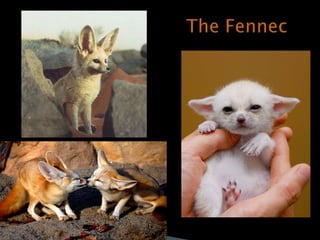
Animals must be able to get rid of excess heat.In desserts we can found:Fennec – have huge ears that provide a large surface area from which heat can escape.Camels – Their humps are made of fat, so they can live off this stored fat when food is scarce.*Other animals dig themselves to escape the heat     of summer or the cold winter in the dessert.Adaptations to Hot Climates
The Fennec
Animals can respond by instinct or with the help of a learned behavior.An instinct… is an inherited behavior that is done automatically.An instinct can not be learned.Examples: Feed, built nests, attract mates, defend themselves.Behaviors and Migration
Everything that we done because we learned it, observing or assisted by someone else.Examples :In humans			In other animals:Share				     HuntingBe organizeCooperateLearned behavior
MigrationMeans to move from one place to another.Reasons:Availability of foodChanges in climateMating Give birth
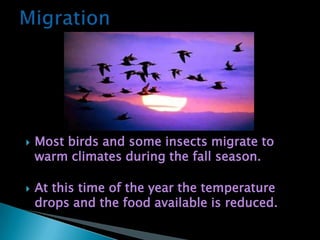
MigrationMost birds and some insects migrate to warm climates during the fall season. At this time of the year the temperature drops and the food available is reduced.

Plant And Animal Adaptation

  • 1.
    Plant and animaladaptationsScience 6Mrs. Marlene Torres
  • 2.
    An adaptation is…a change in an organism that help it survive and reproduce in its environment.This changes are produce as a response to changes in the environment and occur at cellular level.Adaptations
  • 3.
    AdaptationsTropism… is theresponse of an organism toward or away from a stimulus.Remember:Stimulus is something that produce a response of an organism.
  • 4.
    Tropisms in plantsPhototropism– response toward lightHydrotropism – response toward waterGravitropism – response to gravity
  • 5.
    PhototropismPlants react tosunlight as a response to carry out photosynthesis.
  • 6.
    AuxinsThis are chemicalsthat can stimulate parts of a plant, to make it grow quickly or slowly.
  • 7.
  • 8.
    HydrotropismPlants response to moisture and look for the availability of water.
  • 9.
    Plants response togravity.This response can be either positive or negative.Positive Gravitropism -Roots grow down Negative Gravitropism – Stems grow upward against gravity.Gravitropism
  • 10.
    Other adaptations inplantsDessert plants can store water from one rainfall to survive years of drought.Carnivorous plants are meat eating plants that have adaptive structures to capture and digest insects.
  • 11.
    Some plants canproduce secretions or oils, like the poison-ivy plant. If you pull it out from the ground may cause a severe rash.Thorns are another kind of adaptation of plants.Other adaptations in plants
  • 12.
    CamouflageAn appearance thatmakes something look like its surrounding; could be its shape or color.Example: Color Camouflage -Chameleon Shape Camouflage -Stick bug
  • 14.
    Mimicry An adaptationin which the animal is protected against predators by its resemblance to another animal. It looks like, but it’s not!!
  • 15.
  • 16.
    Adaptations to colderclimatesInsulation – refers to a material that does not conduct heat well.Examples:Birds – feathersWhales – blubberSome mammals - fur
  • 17.
    Animals must beable to get rid of excess heat.In desserts we can found:Fennec – have huge ears that provide a large surface area from which heat can escape.Camels – Their humps are made of fat, so they can live off this stored fat when food is scarce.*Other animals dig themselves to escape the heat of summer or the cold winter in the dessert.Adaptations to Hot Climates
  • 18.
  • 19.
    Animals can respondby instinct or with the help of a learned behavior.An instinct… is an inherited behavior that is done automatically.An instinct can not be learned.Examples: Feed, built nests, attract mates, defend themselves.Behaviors and Migration
  • 20.
    Everything that wedone because we learned it, observing or assisted by someone else.Examples :In humans In other animals:Share  HuntingBe organizeCooperateLearned behavior
  • 21.
    MigrationMeans to movefrom one place to another.Reasons:Availability of foodChanges in climateMating Give birth
  • 22.
    MigrationMost birds andsome insects migrate to warm climates during the fall season. At this time of the year the temperature drops and the food available is reduced.