SECURITY IN
BLUETOOTH, CDMA AND
       UMTS


MOTILAL NEHRU NATIONAL INSTITUTE OF TECHNOLOGY
                  ALLAHABAD
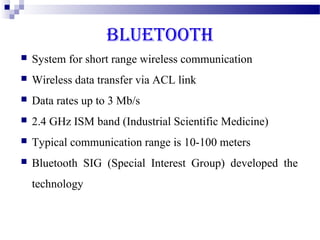
BLUETOOTH
   System for short range wireless communication
   Wireless data transfer via ACL link
   Data rates up to 3 Mb/s
   2.4 GHz ISM band (Industrial Scientific Medicine)
   Typical communication range is 10-100 meters
   Bluetooth SIG (Special Interest Group) developed the
    technology
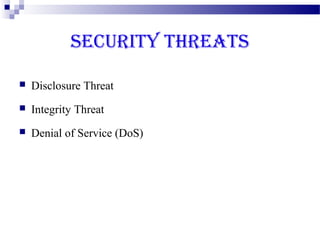
SECURITY THREATS

   Disclosure Threat
   Integrity Threat
   Denial of Service (DoS)
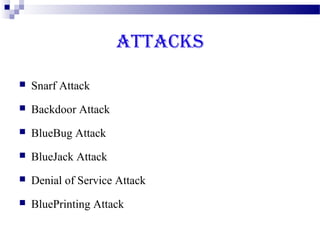
ATTACKS

   Snarf Attack
   Backdoor Attack
   BlueBug Attack
   BlueJack Attack
   Denial of Service Attack
   BluePrinting Attack
SECURITY LEVELS AND MODES
Security Levels:
   Silent
   Private
   Public
Security Modes:
   Non Secure
   Service Level Enforced Security
   Link Level Enforced Security
AUTHENTICATION,
AUTHORIZATION , ENCRYPTION

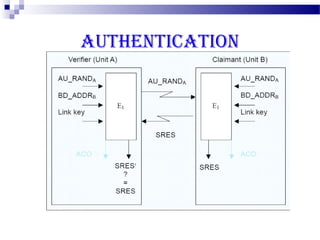
   Authentication is the process of proving the identity of
    one piconet member to another
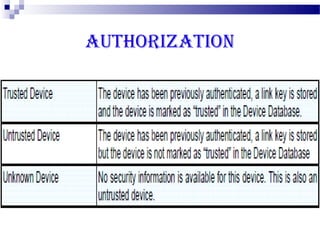
   Authorization determines whether the user is authorized
    to have access to the services provided
   Encryption is the process of encoding the information so
    that no eavesdropper can read it
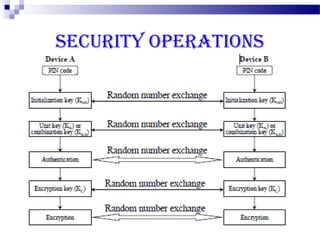
SECURITY OPERATIONS
AUTHENTICATION
AUTHORIZATION
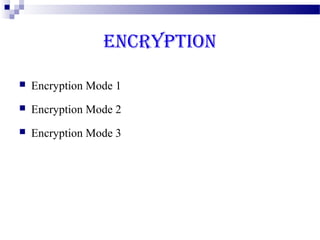
ENCRYPTION

   Encryption Mode 1
   Encryption Mode 2
   Encryption Mode 3
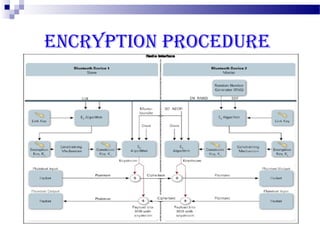
ENCRYPTION PROCEDURE
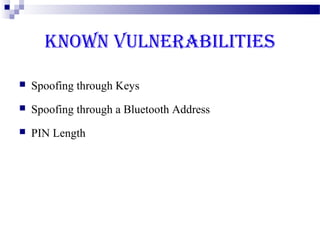
KNOWN VULNERABILITIES

   Spoofing through Keys
   Spoofing through a Bluetooth Address
   PIN Length
COUNTERMEASURES
   Know your Environment
   Be Invisible
   Abstinence is best
   Use   only     long   PIN    codes   (16   case   sensitive
    alphanumerical characters)
   Requiring Authentication for every L2CAP request
   Using additional security at software level and an
    additional password to physically protect the Bluetooth
    devices
COUNTERMEASURES CONTD…
   Requiring re authentication always prior to access of a
    sensitive information / service
   To prevent Man-in-the-middle attack, approach is to
    make it difficult for an attacker to lock onto the
    frequency   used    for   communication.   Making   the
    frequency hopping intervals and patterns reasonably
    unpredictable might help to prevent an attacker from
    locking onto the devices signal.
PROPOSED SOLUTION FOR DOS
            ATTACK
   When the pairing message is sent by one device
   When the attacker is sending the message with the
    address, which is already connected to Bluetooth device
   When the pairing message sent by more than one device
   When the attacker is changing the Bluetooth address of
    itself with another Bluetooth address
UMTS security
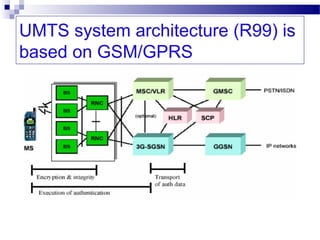
UMTS system architecture (R99) is
based on GSM/GPRS
POSSIBLE ATTACKS ON UMTS

 Denial of service
    Identity catching
    Impersonation of the network
   Impersonation of the user
3G SECURITY FEATURES
   „ Mutual Authentication
       The mobile user and the serving network authenticate
    each other
   „ Data Integrity
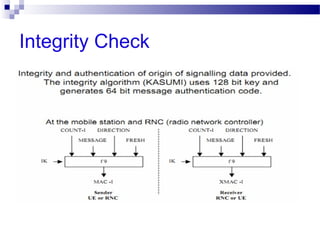
     Signaling messages between the mobile station and RNC
     protected by integrity code
    Network to Network Security
     Secure communication between serving networks. IPsec
    suggested
     Secure IMSI (International Mobile Subscriber
    Identity) Usage
       The user is assigned a temporary IMSI by the serving
    network
3G SECURITY FEATURES
              CONTD…
   „ User – Mobile Station Authentication
     The user and the mobile station share a secret key, PIN
   „ Secure Services
     Protect against misuse of services provided by the home
    network and the serving network
   „ Secure Applications
     Provide security for applications resident on mobile
    station
AUTHENTICATION AND KEY
             AGREEMENT
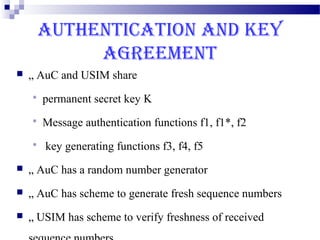
   „ AuC and USIM share
       permanent secret key K
       Message authentication functions f1, f1*, f2
       key generating functions f3, f4, f5
   „ AuC has a random number generator
   „ AuC has scheme to generate fresh sequence numbers
   „ USIM has scheme to verify freshness of received
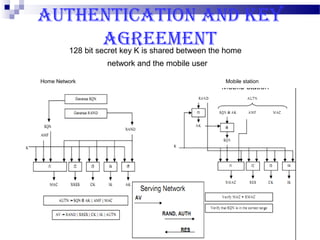
AUTHENTICATION AND KEY
            AGREEMENT home
  128 bit secret key K is shared between the
               network and the mobile user

Home Network                                 Mobile station
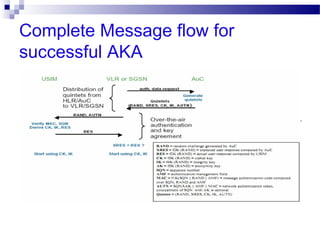
Complete Message flow for
successful AKA
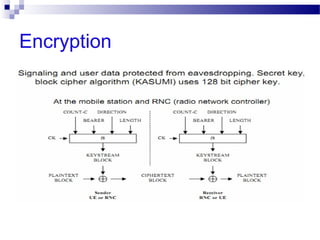
Encryption
Integrity Check
NETWORK DOMAIN SECURITY
   IPSec
      IP traffic between networks can be protected with
       IPSEC between security gateways

   Encapsulating Security Payload (ESP) is used for
    protection of packets
   ESP is always used in tunnel mode
   Advance Encryption Standard (AES)
CDMA
CODE DIVISION MULTIPLE ACCESS
            (CDMA)
   Channel    access   method     used   by   various   radio
    communication technology
   Employs spread spectrum technology and a special
    coding scheme
   Attacks are very difficult and rare
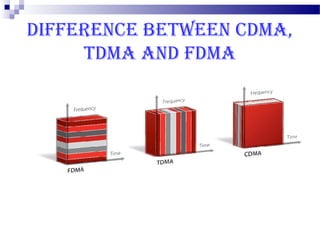
DIFFERENCE BETWEEN CDMA,
     TDMA AND FDMA
TYPES OF CDMA

   Frequency Hopping Spread Spectrum CDMA
   Direct Sequence Spread Spectrum CDMA
SECURITY

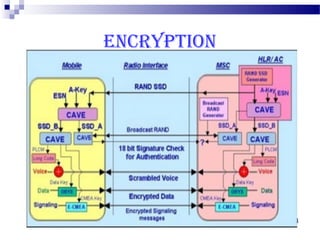
   By design, CDMA technology makes eavesdropping very
    difficult
   42-bit PN (Pseudo Random Noise) sequence
   64-bit authentication key (A-Key)
   Electronic Serial Number (ESN) of the mobile
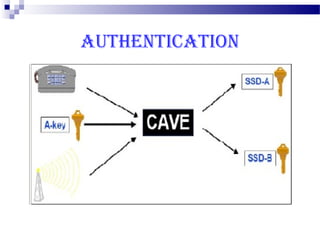
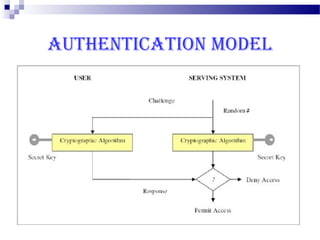
AUTHENTICATION
AUTHENTICATION MODEL
ENCRYPTION
Thank You!!!!!

Security in bluetooth, cdma and umts

  • 1.
    SECURITY IN BLUETOOTH, CDMAAND UMTS MOTILAL NEHRU NATIONAL INSTITUTE OF TECHNOLOGY ALLAHABAD
  • 2.
    BLUETOOTH  System for short range wireless communication  Wireless data transfer via ACL link  Data rates up to 3 Mb/s  2.4 GHz ISM band (Industrial Scientific Medicine)  Typical communication range is 10-100 meters  Bluetooth SIG (Special Interest Group) developed the technology
  • 3.
    SECURITY THREATS  Disclosure Threat  Integrity Threat  Denial of Service (DoS)
  • 4.
    ATTACKS  Snarf Attack  Backdoor Attack  BlueBug Attack  BlueJack Attack  Denial of Service Attack  BluePrinting Attack
  • 5.
    SECURITY LEVELS ANDMODES Security Levels:  Silent  Private  Public Security Modes:  Non Secure  Service Level Enforced Security  Link Level Enforced Security
  • 6.
    AUTHENTICATION, AUTHORIZATION , ENCRYPTION  Authentication is the process of proving the identity of one piconet member to another  Authorization determines whether the user is authorized to have access to the services provided  Encryption is the process of encoding the information so that no eavesdropper can read it
  • 7.
  • 8.
  • 9.
  • 10.
    ENCRYPTION  Encryption Mode 1  Encryption Mode 2  Encryption Mode 3
  • 11.
  • 12.
    KNOWN VULNERABILITIES  Spoofing through Keys  Spoofing through a Bluetooth Address  PIN Length
  • 13.
    COUNTERMEASURES  Know your Environment  Be Invisible  Abstinence is best  Use only long PIN codes (16 case sensitive alphanumerical characters)  Requiring Authentication for every L2CAP request  Using additional security at software level and an additional password to physically protect the Bluetooth devices
  • 14.
    COUNTERMEASURES CONTD…  Requiring re authentication always prior to access of a sensitive information / service  To prevent Man-in-the-middle attack, approach is to make it difficult for an attacker to lock onto the frequency used for communication. Making the frequency hopping intervals and patterns reasonably unpredictable might help to prevent an attacker from locking onto the devices signal.
  • 15.
    PROPOSED SOLUTION FORDOS ATTACK  When the pairing message is sent by one device  When the attacker is sending the message with the address, which is already connected to Bluetooth device  When the pairing message sent by more than one device  When the attacker is changing the Bluetooth address of itself with another Bluetooth address
  • 16.
  • 17.
    UMTS system architecture(R99) is based on GSM/GPRS
  • 18.
    POSSIBLE ATTACKS ONUMTS  Denial of service  Identity catching  Impersonation of the network  Impersonation of the user
  • 19.
    3G SECURITY FEATURES  „ Mutual Authentication The mobile user and the serving network authenticate each other  „ Data Integrity Signaling messages between the mobile station and RNC protected by integrity code  Network to Network Security Secure communication between serving networks. IPsec suggested  Secure IMSI (International Mobile Subscriber Identity) Usage The user is assigned a temporary IMSI by the serving network
  • 20.
    3G SECURITY FEATURES CONTD…  „ User – Mobile Station Authentication The user and the mobile station share a secret key, PIN  „ Secure Services Protect against misuse of services provided by the home network and the serving network  „ Secure Applications Provide security for applications resident on mobile station
  • 21.
    AUTHENTICATION AND KEY AGREEMENT  „ AuC and USIM share  permanent secret key K  Message authentication functions f1, f1*, f2  key generating functions f3, f4, f5  „ AuC has a random number generator  „ AuC has scheme to generate fresh sequence numbers  „ USIM has scheme to verify freshness of received
  • 22.
    AUTHENTICATION AND KEY AGREEMENT home 128 bit secret key K is shared between the network and the mobile user Home Network Mobile station
  • 23.
    Complete Message flowfor successful AKA
  • 24.
  • 25.
  • 26.
    NETWORK DOMAIN SECURITY  IPSec  IP traffic between networks can be protected with IPSEC between security gateways  Encapsulating Security Payload (ESP) is used for protection of packets  ESP is always used in tunnel mode  Advance Encryption Standard (AES)
  • 27.
  • 28.
    CODE DIVISION MULTIPLEACCESS (CDMA)  Channel access method used by various radio communication technology  Employs spread spectrum technology and a special coding scheme  Attacks are very difficult and rare
  • 29.
  • 30.
    TYPES OF CDMA  Frequency Hopping Spread Spectrum CDMA  Direct Sequence Spread Spectrum CDMA
  • 31.
    SECURITY  By design, CDMA technology makes eavesdropping very difficult  42-bit PN (Pseudo Random Noise) sequence  64-bit authentication key (A-Key)  Electronic Serial Number (ESN) of the mobile
  • 32.
  • 33.
  • 34.
  • 35.