Prepared by:
Mrs.Shirley P. Valera
SY 2014-2015
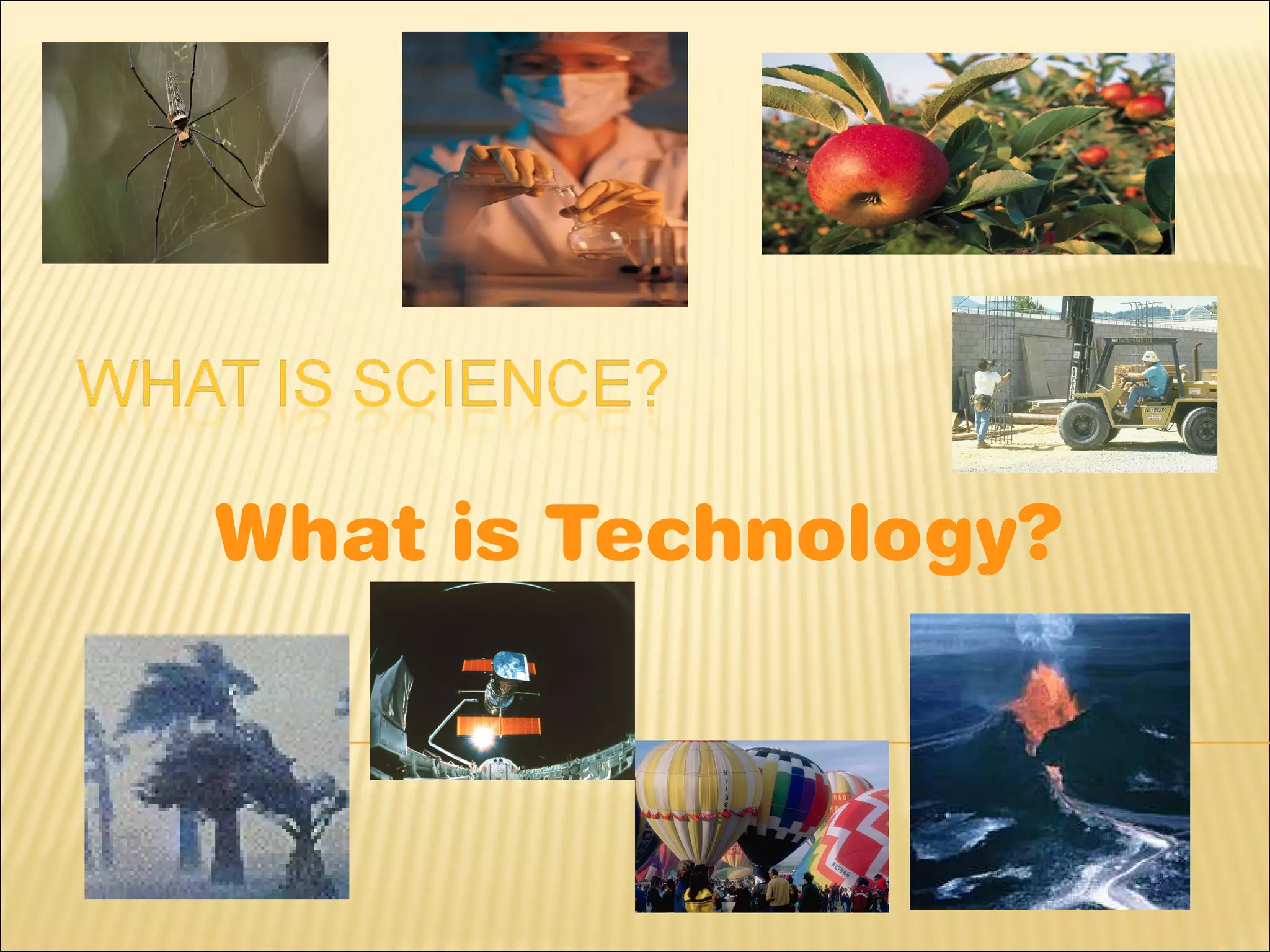
What is Technology?
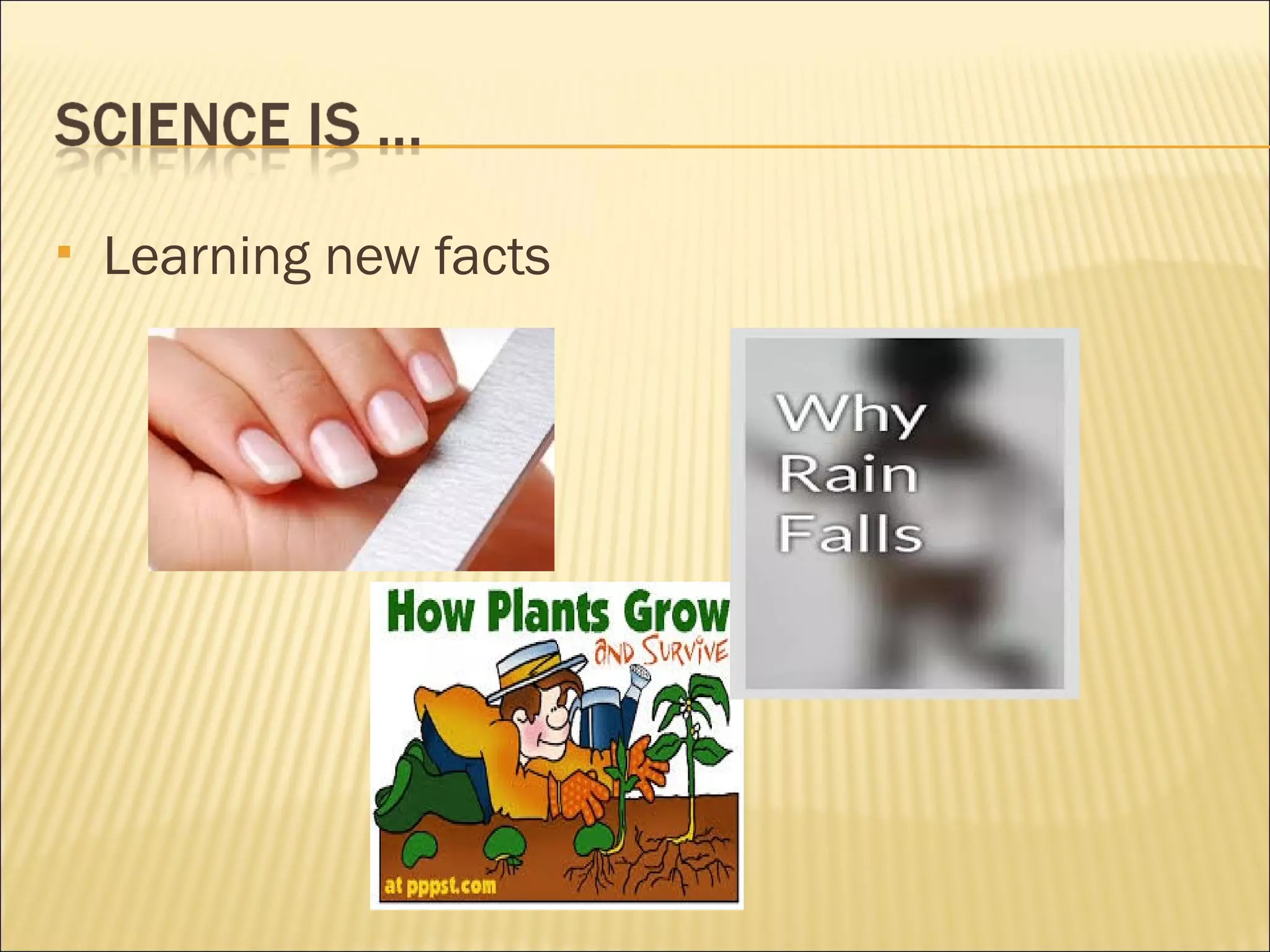
 Learning new facts
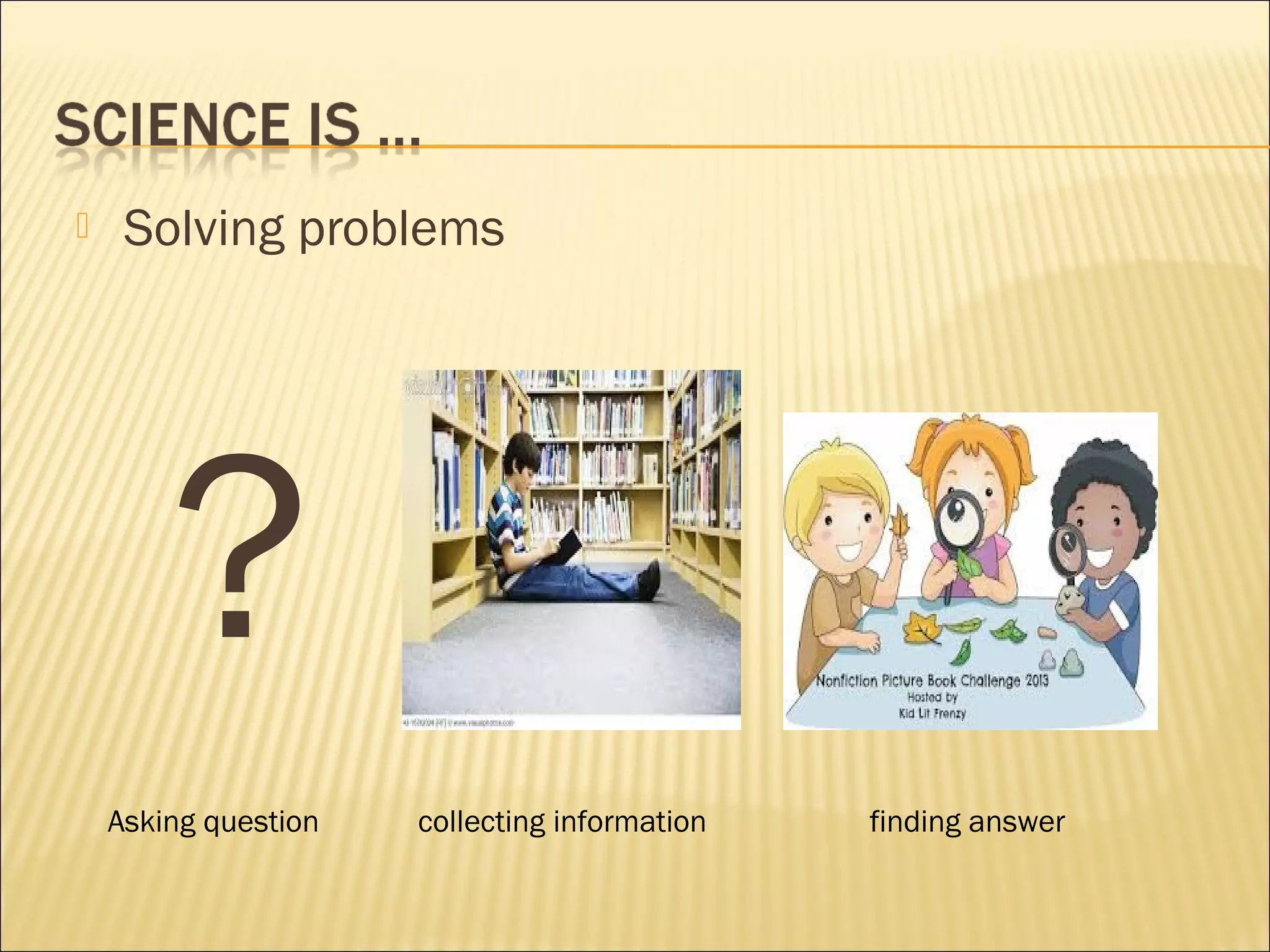
 Solving problems
?
Asking question collecting information finding answer
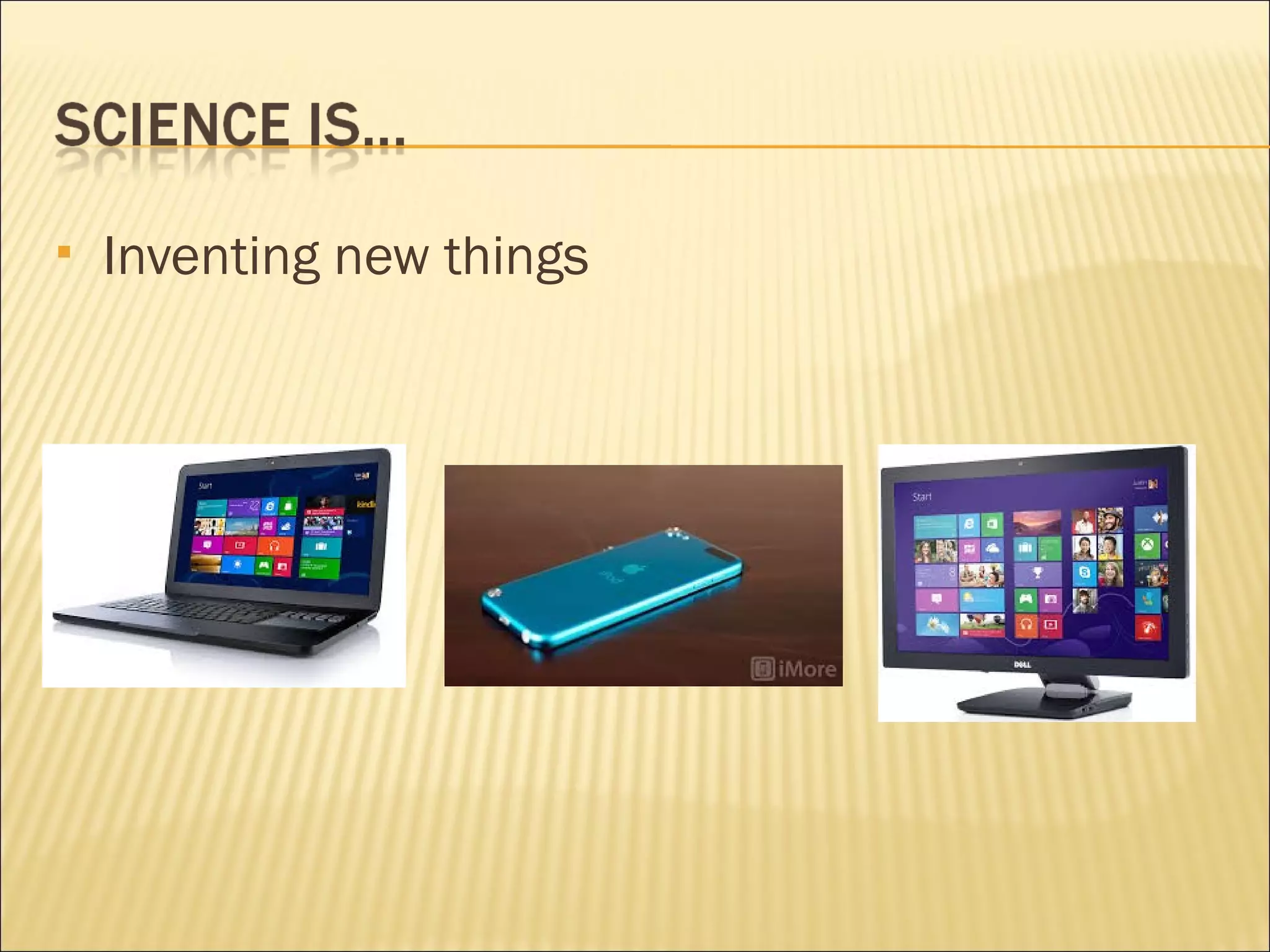
 Inventing new things
 It is the innovation, change, or modification
of the natural environment in order to satisfy
perceived human wants and needs.
 The goal of technology is to make
modifications in the world to meet human
needs.
 Technology is the process by which humans
modify nature to meet their needs and
wants.
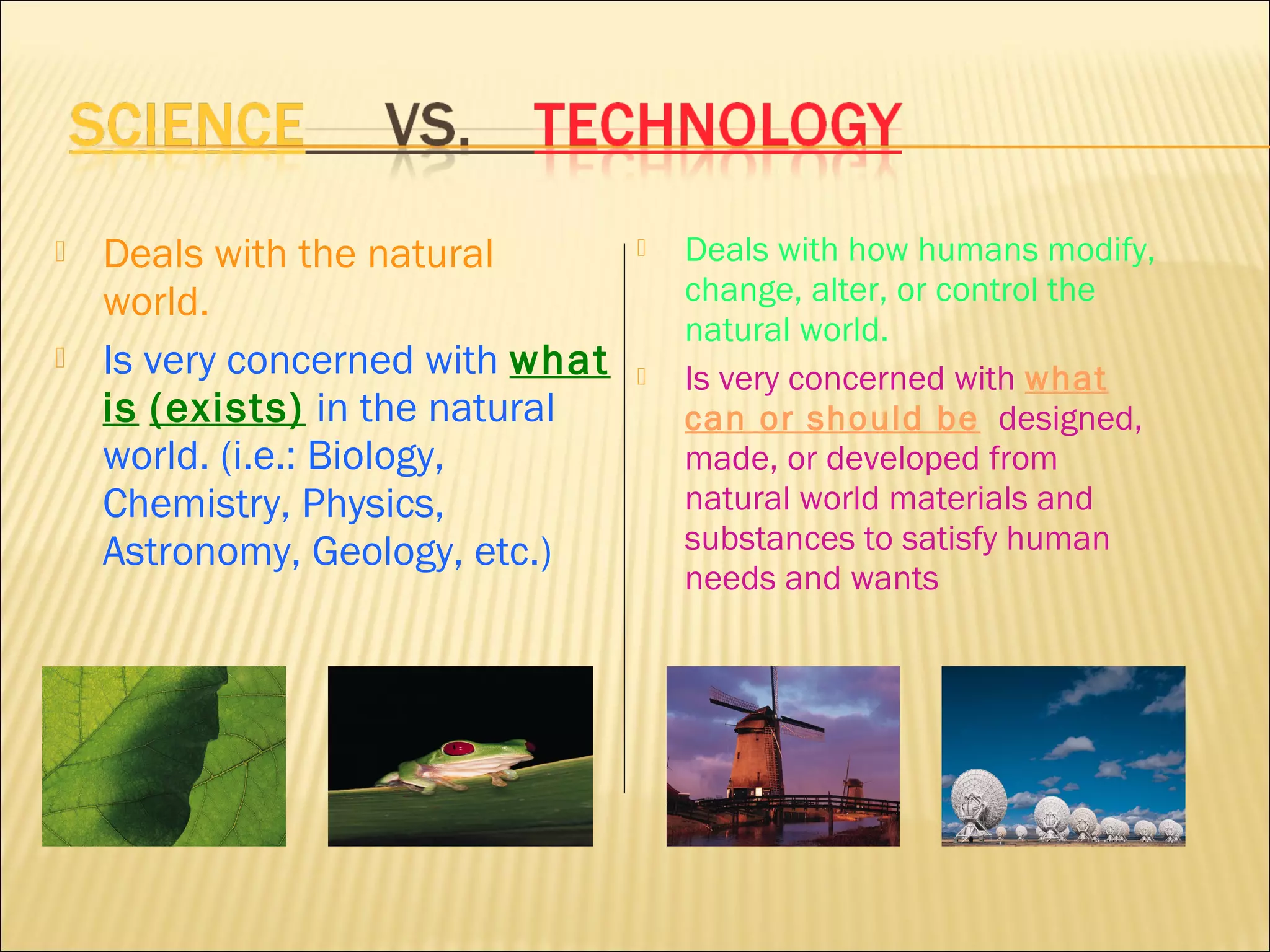
 Deals with the natural
world.
 Is very concerned with what
is (exists) in the natural
world. (i.e.: Biology,
Chemistry, Physics,
Astronomy, Geology, etc.)
 Deals with how humans modify,
change, alter, or control the
natural world.
 Is very concerned with what
can or should be designed,
made, or developed from
natural world materials and
substances to satisfy human
needs and wants
 Is concerned with
processes that seek out
the meaning of the
natural world by
“inquiry”,
“discovering what
is”, “exploring”, and
using “the Scientific
Method”.
 Is concerned with such
processes that we use to
alter/change the natural
world such as
“Invention”,
Innovation”,
Practical Problem
Solving, and Design.
Technology is not any more “applied science” than science is
“applied technology”.
The power and promise of
technology can be further
enhanced through the study
of technology to assure that
all people are technologically
literate in the future.
 Biology
- is the study of living things. A scientist who is
an expert in the study of biology is called a
biologist
 Botany
- is the study of plants. A scientist who is an expert in
the study of botany is called botanist
 Zoology
- is the study of animals. A scientist who is an
expert in the study of animals is called a
zoologist
 Chemistry
- is the science of the composition structure,
properties, and reaction of matter. A scientist
who is an expert in the study of chemistry is
called chemist
 Physics
- is the science of matter and energy and the
interaction between them. An expert in the
study of physics is called a physicist
 Ecology
- is the study of how organisms interact with
each other. An expert in the study of ecology
is called ecologist
 Geology
- is the study of the structure of the earth’s
surface. An expert in the study of geology is
called geologist
 Meteorology
- is the study of weather and climate. An
expert in the field of meteorology is called
meteorologist
 Astronomy
- is the study of the heavenly bodies . A scientist
who is an expert in the study of astronomy is
called astronomer.
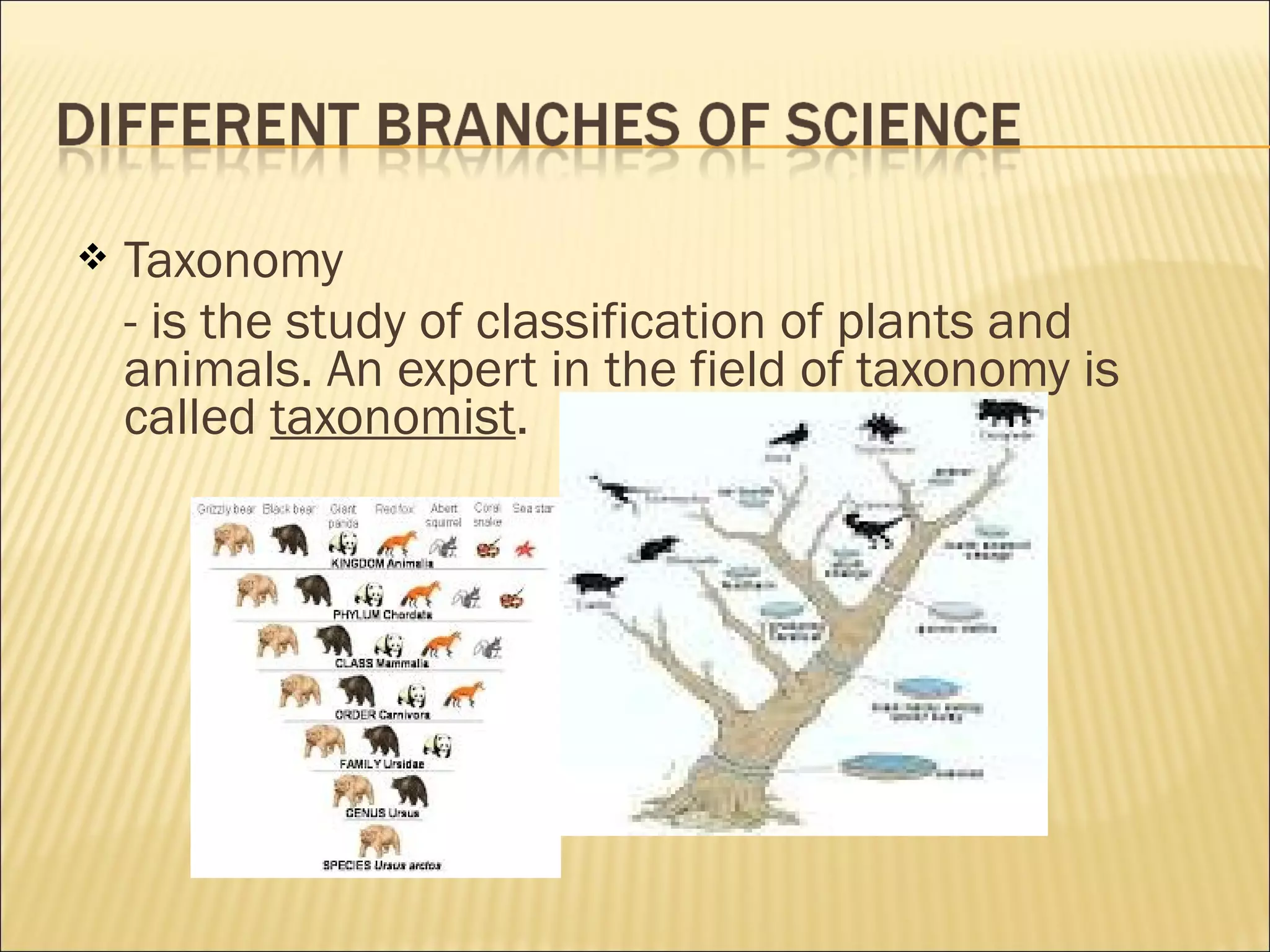
 Taxonomy
- is the study of classification of plants and
animals. An expert in the field of taxonomy is
called taxonomist.
The Scientist
o Louis Pasteur
- a French
scientist who is
famous for
working on
fermentation
and decay,
pasteurization
The Scientist
o Dorothy Hodgkin
- a British who was
awarded a Nobel Prize in
chemistry in 1964.
- she determined the
structure of biochemical
compounds essential in
fighting pernicious
anemia
The Scientist
o Arturo Alcalaz
- considered as the “Father of
philippine Geothermal Energy
Development”
- he is credited for making the
Philippines the world’s
second largest producer of
geothermal energy
- won the Magsaysay Award in
1982
The Scientist
o Dr. Luis Ma. Guerero
- a bacteriologist , peditrician
and renowned medical
specialist
- first physicians to become
a specialist in this field
- his contribution to the
knowledge of beriberi and
leprosy led the prevention of
death caused this disease in
both infants and adults
 Observing
- we need to observe very well to know the
characteristics and properties of things. We
use our senses
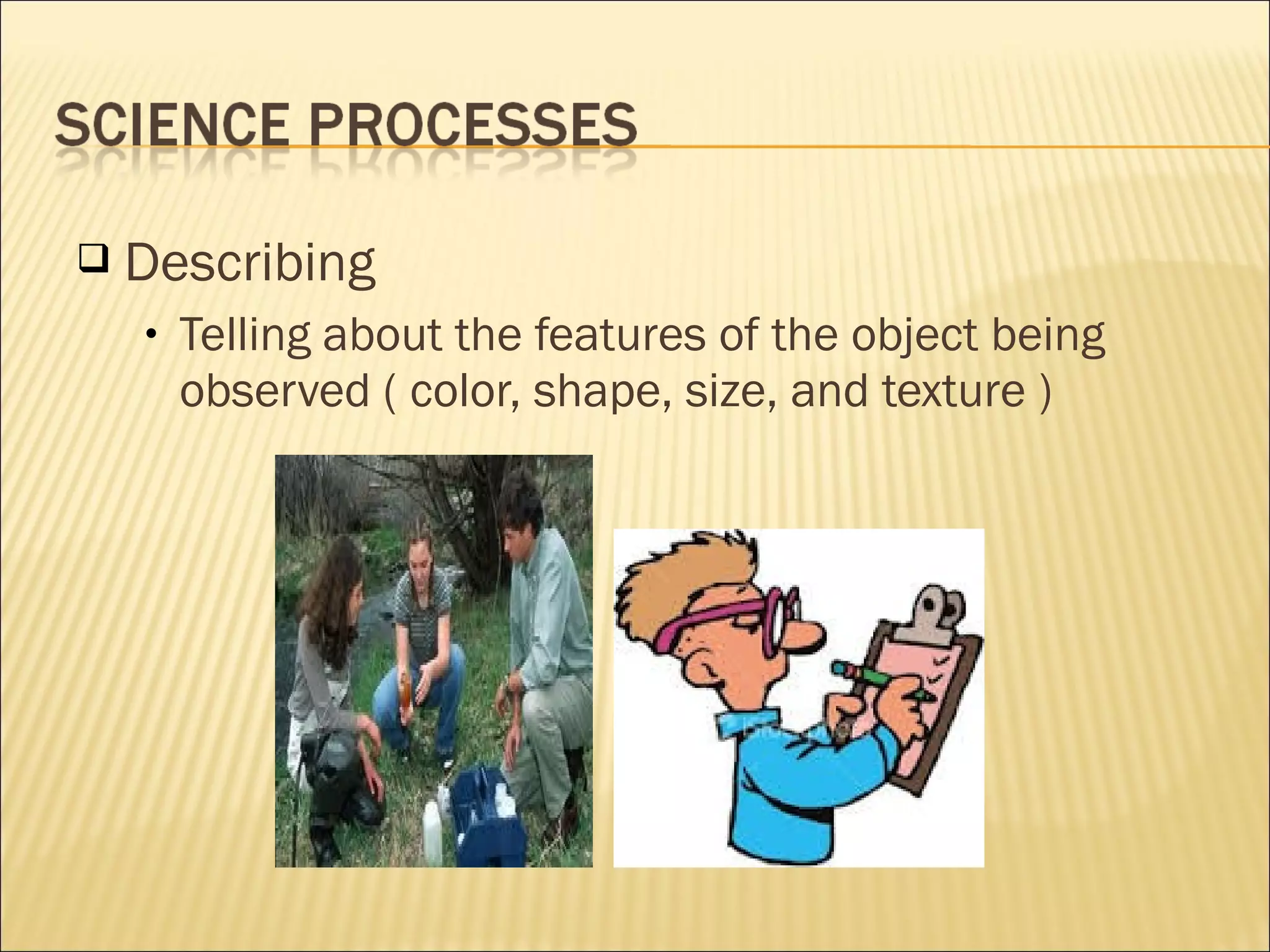
 Describing
• Telling about the features of the object being
observed ( color, shape, size, and texture )
 Comparing
- telling their similarities or differences
 Classifying
- grouping objects according to their
common characteristics or properties
 Measuring
- using some measuring tools such as thermometer= used to measure
temperature( measured in units called degrees)
- use ruler, meterstick or a tape measure to measure length ( express
in units called meter)
- use weighing scale , platform balance or spring balance to measure
the mass of an objects ( gram and kilogram are used to measure the
mass)
- stopwatch or clock is use to express time
 Making Inferences
-making good and accurate observation or
making an explanation
Science Laboratory Tools
• Microscope – is an optical instrument that
enlarges images of very small objects that
cannot be seen by the eyes.
Science Laboratory Tools
• Magnifying glass – is an instrument used for
observing tiny objects
Science Laboratory Tools
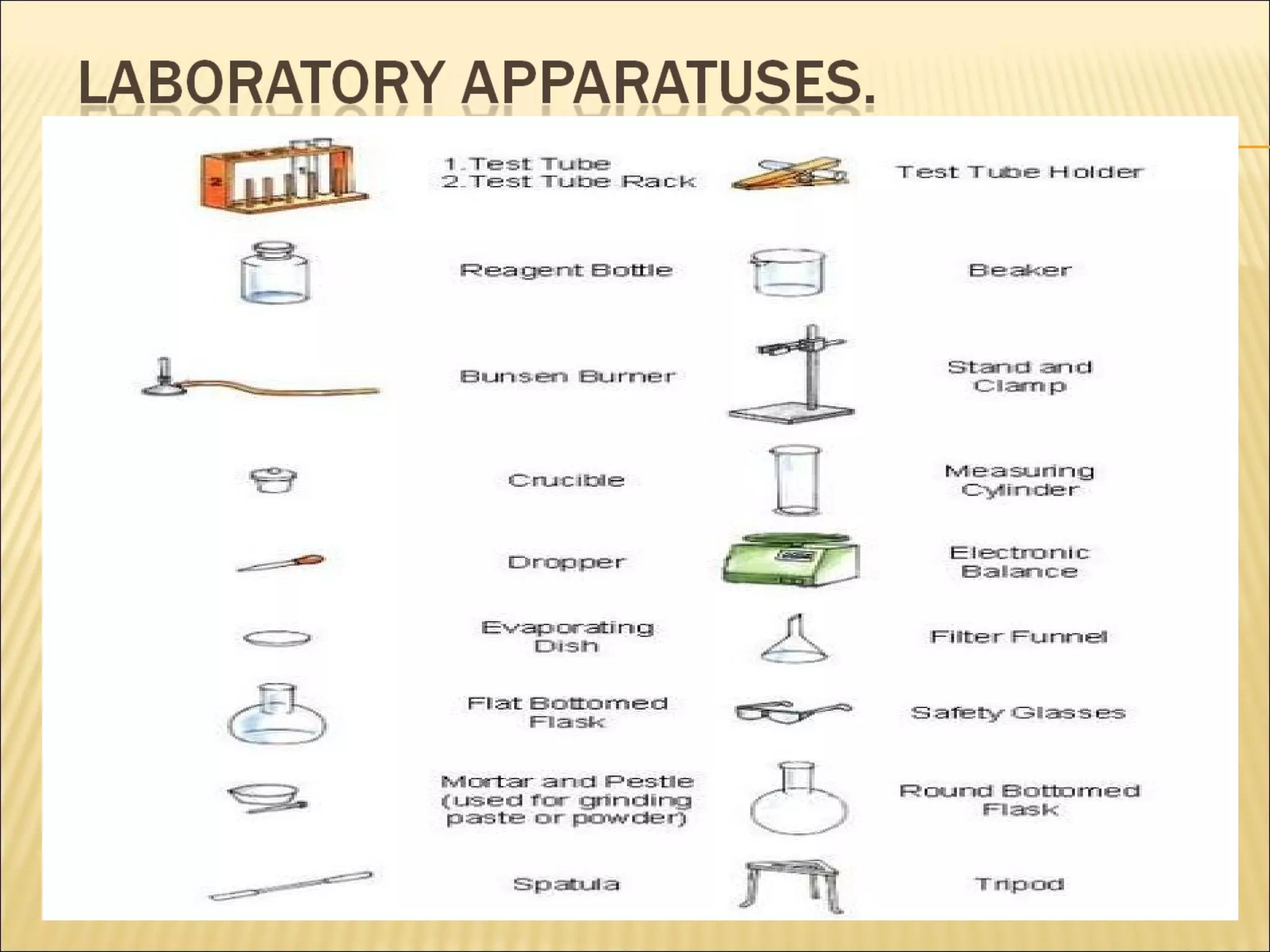
• Test tube – is used for heating small amounts
of liquid
Science Laboratory Tools
• Test tube holder – is a metallic device used to
hold a test tube
Science Laboratory Tools
• Graduated cylinder – is used for measuring
volume of liquids like water, oil, and other
solutions
Science Laboratory Tools
• Alcohol lamp – is used for heating materials
Science Laboratory Tools
• Evaporating dish – is a porcelain dish used in
evaporating a chemical solution
Science Laboratory Tools
• Beaker – is a thin glass vessel used as
container for fluids, it has graduation or masks
for the measurement of volume
Science Laboratory Tools
• Thermometer – is used for measuring
temperature
Science Laboratory Tools
• Funnel – is a device used when pouring liquids
or fine particles to a small-mouthed container
Science Laboratory Tools
Extra care must be observed when using
laboratory tools and materials .Always clean
and keep them properly after use.
Science and technology a

Science and technology a

  • 1.
    Prepared by: Mrs.Shirley P.Valera SY 2014-2015
  • 2.
  • 3.
  • 4.
     Solving problems ? Askingquestion collecting information finding answer
  • 5.
  • 6.
     It isthe innovation, change, or modification of the natural environment in order to satisfy perceived human wants and needs.  The goal of technology is to make modifications in the world to meet human needs.  Technology is the process by which humans modify nature to meet their needs and wants.
  • 7.
     Deals withthe natural world.  Is very concerned with what is (exists) in the natural world. (i.e.: Biology, Chemistry, Physics, Astronomy, Geology, etc.)  Deals with how humans modify, change, alter, or control the natural world.  Is very concerned with what can or should be designed, made, or developed from natural world materials and substances to satisfy human needs and wants
  • 8.
     Is concernedwith processes that seek out the meaning of the natural world by “inquiry”, “discovering what is”, “exploring”, and using “the Scientific Method”.  Is concerned with such processes that we use to alter/change the natural world such as “Invention”, Innovation”, Practical Problem Solving, and Design.
  • 9.
    Technology is notany more “applied science” than science is “applied technology”.
  • 10.
    The power andpromise of technology can be further enhanced through the study of technology to assure that all people are technologically literate in the future.
  • 11.
     Biology - isthe study of living things. A scientist who is an expert in the study of biology is called a biologist
  • 12.
     Botany - isthe study of plants. A scientist who is an expert in the study of botany is called botanist
  • 13.
     Zoology - isthe study of animals. A scientist who is an expert in the study of animals is called a zoologist
  • 15.
     Chemistry - isthe science of the composition structure, properties, and reaction of matter. A scientist who is an expert in the study of chemistry is called chemist
  • 16.
     Physics - isthe science of matter and energy and the interaction between them. An expert in the study of physics is called a physicist
  • 17.
     Ecology - isthe study of how organisms interact with each other. An expert in the study of ecology is called ecologist
  • 18.
     Geology - isthe study of the structure of the earth’s surface. An expert in the study of geology is called geologist
  • 19.
     Meteorology - isthe study of weather and climate. An expert in the field of meteorology is called meteorologist
  • 20.
     Astronomy - isthe study of the heavenly bodies . A scientist who is an expert in the study of astronomy is called astronomer.
  • 21.
     Taxonomy - isthe study of classification of plants and animals. An expert in the field of taxonomy is called taxonomist.
  • 22.
    The Scientist o LouisPasteur - a French scientist who is famous for working on fermentation and decay, pasteurization
  • 23.
    The Scientist o DorothyHodgkin - a British who was awarded a Nobel Prize in chemistry in 1964. - she determined the structure of biochemical compounds essential in fighting pernicious anemia
  • 24.
    The Scientist o ArturoAlcalaz - considered as the “Father of philippine Geothermal Energy Development” - he is credited for making the Philippines the world’s second largest producer of geothermal energy - won the Magsaysay Award in 1982
  • 25.
    The Scientist o Dr.Luis Ma. Guerero - a bacteriologist , peditrician and renowned medical specialist - first physicians to become a specialist in this field - his contribution to the knowledge of beriberi and leprosy led the prevention of death caused this disease in both infants and adults
  • 27.
     Observing - weneed to observe very well to know the characteristics and properties of things. We use our senses
  • 28.
     Describing • Tellingabout the features of the object being observed ( color, shape, size, and texture )
  • 29.
     Comparing - tellingtheir similarities or differences
  • 30.
     Classifying - groupingobjects according to their common characteristics or properties
  • 31.
     Measuring - usingsome measuring tools such as thermometer= used to measure temperature( measured in units called degrees) - use ruler, meterstick or a tape measure to measure length ( express in units called meter) - use weighing scale , platform balance or spring balance to measure the mass of an objects ( gram and kilogram are used to measure the mass) - stopwatch or clock is use to express time
  • 32.
     Making Inferences -makinggood and accurate observation or making an explanation
  • 33.
    Science Laboratory Tools •Microscope – is an optical instrument that enlarges images of very small objects that cannot be seen by the eyes.
  • 34.
    Science Laboratory Tools •Magnifying glass – is an instrument used for observing tiny objects
  • 35.
    Science Laboratory Tools •Test tube – is used for heating small amounts of liquid
  • 36.
    Science Laboratory Tools •Test tube holder – is a metallic device used to hold a test tube
  • 37.
    Science Laboratory Tools •Graduated cylinder – is used for measuring volume of liquids like water, oil, and other solutions
  • 38.
    Science Laboratory Tools •Alcohol lamp – is used for heating materials
  • 39.
    Science Laboratory Tools •Evaporating dish – is a porcelain dish used in evaporating a chemical solution
  • 40.
    Science Laboratory Tools •Beaker – is a thin glass vessel used as container for fluids, it has graduation or masks for the measurement of volume
  • 41.
    Science Laboratory Tools •Thermometer – is used for measuring temperature
  • 42.
    Science Laboratory Tools •Funnel – is a device used when pouring liquids or fine particles to a small-mouthed container
  • 43.
    Science Laboratory Tools Extracare must be observed when using laboratory tools and materials .Always clean and keep them properly after use.