

Making Specials ClassesSpecial for ALL LearnersOffice of Special Education and Supports 2010-2011
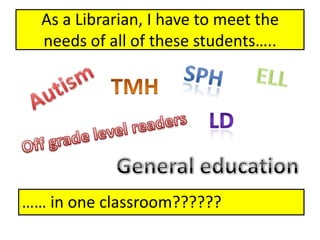
As a Librarian, I have to meet the needs of all of these students…..SPHELLAutism TMH LD General education …… in one classroom??????
How can I do that??
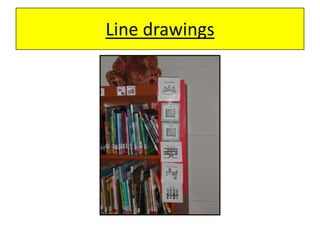
1. Provide/use schedulesA schedule can be written words, pictures, words with line drawings, or photographs. A schedule provides information about what is going to occur during class.A schedule helps the child process what is expected and what is coming next.A schedule can help establish consistency and a routine.
Line drawings
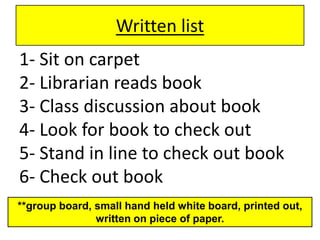
Written list1- Sit on carpet  2- Librarian reads book3- Class discussion about book4- Look for book to check out5- Stand in line to check out book6- Check out book**group board, small hand held white board, printed out, written on piece of paper.
2. Provide/Use visual cuesVisual cues assist with comprehension.Visual supports can be used to highlight relevant information.Visual cues are permanent and allow additional time for the students to process information.Visual supports capture the attention of students.
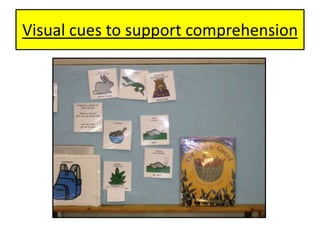
Visual cues to support comprehension
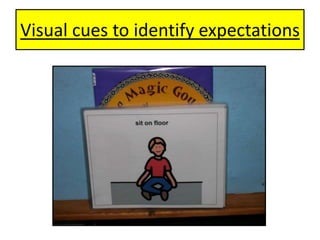
Visual cues to identify expectations
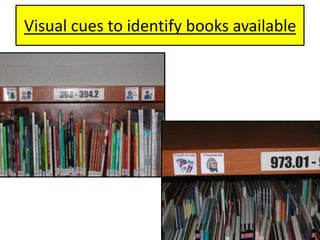
Visual cues to identify books available
3. Expect communication from and communicate with all studentsA student’s expressive language skills does not mirror his/her level of comprehension.Communicate directly with students.Use clear and concise language.Allow extended wait time for students to process what was communicated and to  respond.
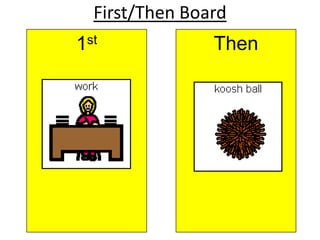
4. Provide reinforcementReinforcement can be embedded within the schedule.Utilize the reinforcers determined to be rewarding and effective by the classroom teacher.Some students require reinforcement more frequently than others. Use “first _____, then ______” language.
First/Then Board1stThen
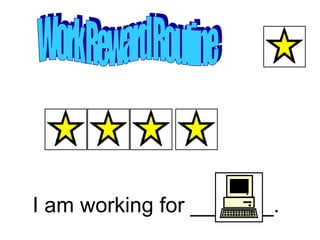
Work Reward RoutineI am working for _______.
5. Provide Opportunities to Make ChoicesMaking a choice is a form of expressive communication. Some students may be able to make choices out of a field of 2 while others may be able to choose from a larger field. Present choices visually (e.g., a choice board).Choice-making enables the student to spontaneously request preferred items/activities.
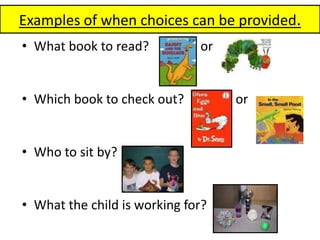
Examples of when choices can be provided.What book to read?                orWhich book to check out?                orWho to sit by?What the child is working for?
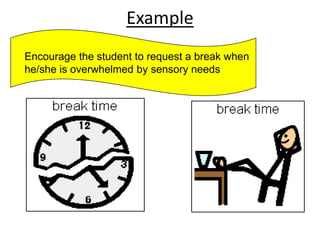
6. Address Sensory ConcernsStudents may demonstrate an unusual response to sensory input (e.g., under or overly sensitive)Students may have difficulty sitting and attending for extended periods of time without a break from the activity (movement breaks may be necessary)Make efforts to increase the student’s ability to process information by minimizing auditory and visual distractions
ExampleEncourage the student to request a break when he/she is overwhelmed by sensory needs
7. Use of Paraprofessional Support Many students may require additional prompting from another adult.
A paraprofessional may also be used to provide additional visual supports or other accommodations and modifications in the IEP.
A paraprofessional can also monitor social situations and assist with interpreting them and providing support.
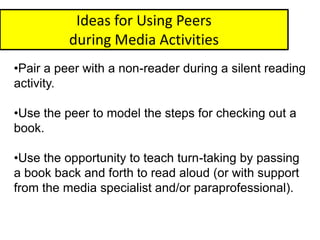
Paraprofessionals do not act as the teacher for the student, but rather as a support to encourage the child to access the curriculum.8. Use of Peer SupportStudents may demonstrate deficits that limit their ability to make friends or initiate and reciprocate a conversation.
Peers can be used to model the desired, socially appropriate behavior (e.g., sitting in a chair reading a book).
The time in the related arts class may be the students’ only opportunity for interactions with his/her same aged, typically developing peers.   Identifying a Peer Patner    PEER PARTNERSConsistent attendance
Same age as the student
Useful at all grade levels
Good social skills and ability to deflect teasing by others
Follows adult instructions  consistentlyAbility to attend to task
WILLINGNESS TO  PARTICIPATE!!!

School libraries serving special needs students

  • 1.
    Making Specials ClassesSpecialfor ALL LearnersOffice of Special Education and Supports 2010-2011
  • 2.
    As a Librarian,I have to meet the needs of all of these students…..SPHELLAutism TMH LD General education …… in one classroom??????
  • 3.
    How can Ido that??
  • 4.
    1. Provide/use schedulesAschedule can be written words, pictures, words with line drawings, or photographs. A schedule provides information about what is going to occur during class.A schedule helps the child process what is expected and what is coming next.A schedule can help establish consistency and a routine.
  • 5.
  • 6.
    Written list1- Siton carpet 2- Librarian reads book3- Class discussion about book4- Look for book to check out5- Stand in line to check out book6- Check out book**group board, small hand held white board, printed out, written on piece of paper.
  • 7.
    2. Provide/Use visualcuesVisual cues assist with comprehension.Visual supports can be used to highlight relevant information.Visual cues are permanent and allow additional time for the students to process information.Visual supports capture the attention of students.
  • 8.
    Visual cues tosupport comprehension
  • 9.
    Visual cues toidentify expectations
  • 10.
    Visual cues toidentify books available
  • 11.
    3. Expect communicationfrom and communicate with all studentsA student’s expressive language skills does not mirror his/her level of comprehension.Communicate directly with students.Use clear and concise language.Allow extended wait time for students to process what was communicated and to respond.
  • 12.
    4. Provide reinforcementReinforcementcan be embedded within the schedule.Utilize the reinforcers determined to be rewarding and effective by the classroom teacher.Some students require reinforcement more frequently than others. Use “first _____, then ______” language.
  • 13.
  • 14.
    Work Reward RoutineIam working for _______.
  • 15.
    5. Provide Opportunitiesto Make ChoicesMaking a choice is a form of expressive communication. Some students may be able to make choices out of a field of 2 while others may be able to choose from a larger field. Present choices visually (e.g., a choice board).Choice-making enables the student to spontaneously request preferred items/activities.
  • 16.
    Examples of whenchoices can be provided.What book to read? orWhich book to check out? orWho to sit by?What the child is working for?
  • 17.
    6. Address SensoryConcernsStudents may demonstrate an unusual response to sensory input (e.g., under or overly sensitive)Students may have difficulty sitting and attending for extended periods of time without a break from the activity (movement breaks may be necessary)Make efforts to increase the student’s ability to process information by minimizing auditory and visual distractions
  • 18.
    ExampleEncourage the studentto request a break when he/she is overwhelmed by sensory needs
  • 19.
    7. Use ofParaprofessional Support Many students may require additional prompting from another adult.
  • 20.
    A paraprofessional mayalso be used to provide additional visual supports or other accommodations and modifications in the IEP.
  • 21.
    A paraprofessional canalso monitor social situations and assist with interpreting them and providing support.
  • 22.
    Paraprofessionals do notact as the teacher for the student, but rather as a support to encourage the child to access the curriculum.8. Use of Peer SupportStudents may demonstrate deficits that limit their ability to make friends or initiate and reciprocate a conversation.
  • 23.
    Peers can beused to model the desired, socially appropriate behavior (e.g., sitting in a chair reading a book).
  • 24.
    The time inthe related arts class may be the students’ only opportunity for interactions with his/her same aged, typically developing peers. Identifying a Peer Patner PEER PARTNERSConsistent attendance
  • 25.
    Same age asthe student
  • 26.
    Useful at allgrade levels
  • 27.
    Good social skillsand ability to deflect teasing by others
  • 28.
    Follows adult instructions consistentlyAbility to attend to task
  • 29.
    WILLINGNESS TO PARTICIPATE!!!