VIDYAKIRANA COLLEGE OF NURSING
BANGLORE
SUB.- MENTAL HEALTH NURSING
TOPIC- SCHIZOPHRENIA
PRESENTTED BY – MRS. SULEKHA DESHMUKH
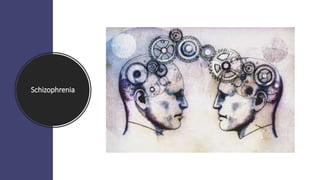
Schizophrenia
Introduction
• Schizophrenia is a serious mental illness that has an effect on how a
person feel, behaves and thinks
• It is a brain disorder
• Its introduce by Eugen Bleuler in 1908
Definition
• Schizophrenia is a mental disorder characterized by
disruption in though processes, perception, emotional
responsiveness and social interaction, it affect a person’s
ability to think, feel and behave clearly
• Schizophrenia is severe mental disorder that have in
common symptoms such as hallucination, delusions, blunted
emotions, disorganized thinking and withdrawal from
reality.
Incidence
• Schizophrenia occurs equally in male and female, the peak
ages of onset are 20-28 year for male and 26-32 year in
females.
• Around 1% of population is affected. diagnosis is based on
the patient’s self reported
• No laboratory test for schizophrenia currently
• Common in urban areas with those who are unemployed,
poor, and homeless
Causes of schizophrenia
• The exact causes of schizophrenia are unknown, research
suggested some causes
• A. biological factors
• brain chemical imbalance
• Genetics
• Neurological development
Psychological factors
• Impaired ego function
• Mother child relationship
• low intelligent people
• Oversensitive people
Social factors
• Social isolation
• Disorganization of family
• Low socio- economic level
• Feeling of hopelessness
[ex. I have no future.
I will never be happy again
No one can help me]
• Stressful life events
Environmental factors
• Maternal influenza[stillbirth]
• Malnutrition before birth
• Viral infection
Types of schizophrenia
• There are five type of schizophrenia, each based on the kind of
symptoms the person has at the time of assessment
• Paranoid schizophrenia
• Disorganized schizophrenia
• Catatonic schizophrenia
• Undifferentiated schizophrenia
• Residual schizophrenia
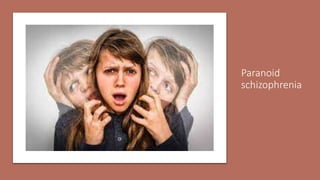
Paranoid
schizophrenia
• Paranoid type schizophrenia is characterized by delusions
and auditory hallucination but emotion and speech will not
affected. The delusion can often be being some other
person who is famous.
• At the workplace he has the false believe that co workers talk
about behind his back and laugh quietly as he passes by
Disorganized
schizophrenia
/hebephrenic
Disorganized type schizophrenia is
characterized by speech and behavior
that are disorganized or difficult to
understand and flattening or
inappropriate emotions.
people with disorganized type
schizophrenia may laugh at the changing
color of a traffic light or at something
not closely related to what they are
saying or doing .
Their disorganized behavior may disrupt
normal activities such as showering,
dressing, and preparing meals.
Catatonic
schizophrenia
Catatonic type schizophrenia is
characterized by disturbance of
movement, people with catatonic
type of schizophrenia may keep
themselves completely immobile
or move all over the place.
They may not say anything for
hours, or they may repeat
anything you say or do senselessly
Undifferentiated
schizophrenia
• Undifferentiated type of schizophrenia is characterized by
episodes of two or more of following symptoms delusion
hallucination, disorganized speech or behavior, catatonic
behavior or negative symptoms but the individual does not
qualify for a diagnosis of paranoid, disorganized or catatonic
type of schizophrenia.
Residual
schizophrenia
• Residual type of schizophrenia is characterized by a past
history of at least one episode of schizophrenia but the
person currently has no positive symptoms (delusion,
hallucination, disorganized speech or behavior)
Sign and symptoms
• Positive symptoms
• Delusion – false beliefs that are not based in reality
• Hallucination – involving seeing or hearing things that don’t
exit
• Disorganized speech and thinking- effective communication
can be impaired and questions may be partially or
completely unrelated.
• Catatonia- purposeless abnormal motor activity or
aggressive behaviour
Negative symptoms
• Flat effect – reduced expression of emotion via facial
expression voice tone
• Alogia – reduce speech
• Avolition- inability to begin and sustain activities
• A sociality – withdrawal from social contacts
Cognitive symptoms
Poor executive
functioning – inability to
understand information
to make decisions.
Poor working memory -
inability to use
information immediately
after learning.
Diagnostic
evaluation
• History collection
• Physical examination
• Neurological
examination
• Mental status
examination
• Blood investigation
• CT and MRI scan
Treatment
modalities
Non-
pharmacotherapy
• Group therapy
• Behavior
therapy
• Social skill
training
• Family therapy
• ECT
Pharmacological
treatment
• Typical antipsychotic [1950] ex.- haloperidol
• Atypical antipsychotic[1990] ex.- risperidone
•Nursing
responsibility
schizophrenia.pptx

schizophrenia.pptx

  • 1.
    VIDYAKIRANA COLLEGE OFNURSING BANGLORE SUB.- MENTAL HEALTH NURSING TOPIC- SCHIZOPHRENIA PRESENTTED BY – MRS. SULEKHA DESHMUKH
  • 2.
  • 3.
    Introduction • Schizophrenia isa serious mental illness that has an effect on how a person feel, behaves and thinks • It is a brain disorder • Its introduce by Eugen Bleuler in 1908
  • 4.
    Definition • Schizophrenia isa mental disorder characterized by disruption in though processes, perception, emotional responsiveness and social interaction, it affect a person’s ability to think, feel and behave clearly • Schizophrenia is severe mental disorder that have in common symptoms such as hallucination, delusions, blunted emotions, disorganized thinking and withdrawal from reality.
  • 5.
    Incidence • Schizophrenia occursequally in male and female, the peak ages of onset are 20-28 year for male and 26-32 year in females. • Around 1% of population is affected. diagnosis is based on the patient’s self reported • No laboratory test for schizophrenia currently • Common in urban areas with those who are unemployed, poor, and homeless
  • 6.
    Causes of schizophrenia •The exact causes of schizophrenia are unknown, research suggested some causes • A. biological factors • brain chemical imbalance
  • 7.
  • 8.
  • 9.
    Psychological factors • Impairedego function • Mother child relationship • low intelligent people • Oversensitive people
  • 10.
    Social factors • Socialisolation • Disorganization of family • Low socio- economic level • Feeling of hopelessness [ex. I have no future. I will never be happy again No one can help me] • Stressful life events
  • 11.
    Environmental factors • Maternalinfluenza[stillbirth] • Malnutrition before birth • Viral infection
  • 12.
    Types of schizophrenia •There are five type of schizophrenia, each based on the kind of symptoms the person has at the time of assessment • Paranoid schizophrenia • Disorganized schizophrenia • Catatonic schizophrenia • Undifferentiated schizophrenia • Residual schizophrenia
  • 13.
  • 14.
    • Paranoid typeschizophrenia is characterized by delusions and auditory hallucination but emotion and speech will not affected. The delusion can often be being some other person who is famous. • At the workplace he has the false believe that co workers talk about behind his back and laugh quietly as he passes by
  • 15.
  • 16.
    Disorganized type schizophreniais characterized by speech and behavior that are disorganized or difficult to understand and flattening or inappropriate emotions. people with disorganized type schizophrenia may laugh at the changing color of a traffic light or at something not closely related to what they are saying or doing . Their disorganized behavior may disrupt normal activities such as showering, dressing, and preparing meals.
  • 17.
    Catatonic schizophrenia Catatonic type schizophreniais characterized by disturbance of movement, people with catatonic type of schizophrenia may keep themselves completely immobile or move all over the place. They may not say anything for hours, or they may repeat anything you say or do senselessly
  • 18.
  • 19.
    • Undifferentiated typeof schizophrenia is characterized by episodes of two or more of following symptoms delusion hallucination, disorganized speech or behavior, catatonic behavior or negative symptoms but the individual does not qualify for a diagnosis of paranoid, disorganized or catatonic type of schizophrenia.
  • 20.
  • 21.
    • Residual typeof schizophrenia is characterized by a past history of at least one episode of schizophrenia but the person currently has no positive symptoms (delusion, hallucination, disorganized speech or behavior)
  • 22.
    Sign and symptoms •Positive symptoms • Delusion – false beliefs that are not based in reality • Hallucination – involving seeing or hearing things that don’t exit • Disorganized speech and thinking- effective communication can be impaired and questions may be partially or completely unrelated. • Catatonia- purposeless abnormal motor activity or aggressive behaviour
  • 23.
    Negative symptoms • Flateffect – reduced expression of emotion via facial expression voice tone • Alogia – reduce speech • Avolition- inability to begin and sustain activities • A sociality – withdrawal from social contacts
  • 24.
    Cognitive symptoms Poor executive functioning– inability to understand information to make decisions. Poor working memory - inability to use information immediately after learning.
  • 25.
    Diagnostic evaluation • History collection •Physical examination • Neurological examination • Mental status examination • Blood investigation • CT and MRI scan
  • 26.
  • 27.
    Non- pharmacotherapy • Group therapy •Behavior therapy • Social skill training • Family therapy • ECT
  • 28.
  • 29.
    • Typical antipsychotic[1950] ex.- haloperidol • Atypical antipsychotic[1990] ex.- risperidone
  • 30.