By: Cindy Marfo-Sarpong
NORMAL & ABNORMALITY
• What is normal and abnormal is different in various
cultures and society
• Normal: conform to common behavior in society
• Abnormal: bizarre behavior and deviance
SCHIZOPHRENIA
• The fifth and recent edition
of the DSM defines
schizophrenia as having
delusions, hallucinations,
disorganized speech, grossly
disorganized or catatonic
behavior, negative symptoms
with two or more of these
present in a significant
portion within a month
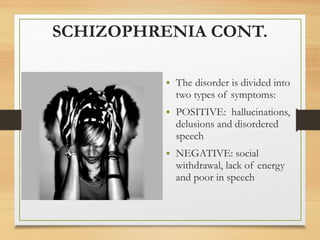
SCHIZOPHRENIA CONT.
• The disorder is divided into
two types of symptoms:
• POSITIVE: hallucinations,
delusions and disordered
speech
• NEGATIVE: social
withdrawal, lack of energy
and poor in speech
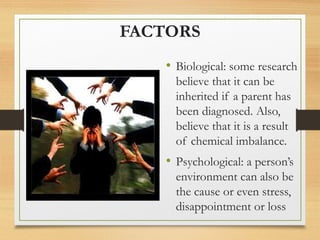
FACTORS
• Biological: some research
believe that it can be
inherited if a parent has
been diagnosed. Also,
believe that it is a result
of chemical imbalance.
• Psychological: a person’s
environment can also be
the cause or even stress,
disappointment or loss
CURE? TREATMENT?
• People believe that
people with
schizophrenia have no
chance of recovery or
improvement, the reality
is different.
• The disorder can be
treated and managed with
medication and
supportive therapies.
CURE? TREATMENT? CONT.
• Treatment options for schizophrenia are available,
and the outlook for the disorder continues to
improve
• individuals with the disorder can continue to work
toward their goals, learning to manage their
symptoms, developing the support they need, and
creating a satisfying life
• Recovery from schizophrenia is a lifelong process
CONCLUSION
• Schizophrenia can definitely change the quality of a person’s life
(going out with friends, relationship with family, finding work,
etc…)
• With new research and expanding knowledge for the causes of
schizophrenia, the outlook for those living with schizophrenia
continues to improve

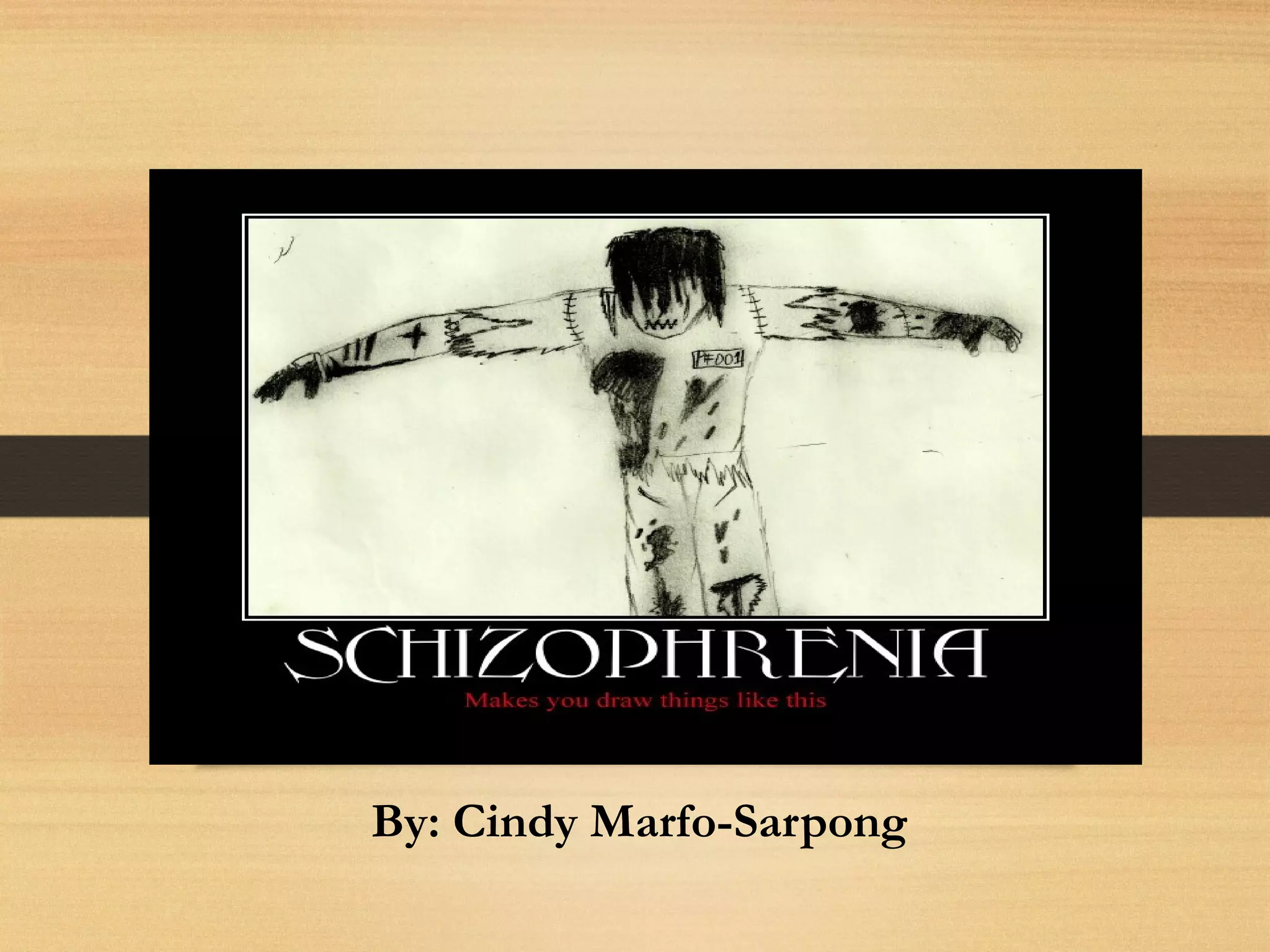
Schizophrenia

  • 1.
  • 2.
    NORMAL & ABNORMALITY •What is normal and abnormal is different in various cultures and society • Normal: conform to common behavior in society • Abnormal: bizarre behavior and deviance
  • 3.
    SCHIZOPHRENIA • The fifthand recent edition of the DSM defines schizophrenia as having delusions, hallucinations, disorganized speech, grossly disorganized or catatonic behavior, negative symptoms with two or more of these present in a significant portion within a month
  • 4.
    SCHIZOPHRENIA CONT. • Thedisorder is divided into two types of symptoms: • POSITIVE: hallucinations, delusions and disordered speech • NEGATIVE: social withdrawal, lack of energy and poor in speech
  • 5.
    FACTORS • Biological: someresearch believe that it can be inherited if a parent has been diagnosed. Also, believe that it is a result of chemical imbalance. • Psychological: a person’s environment can also be the cause or even stress, disappointment or loss
  • 6.
    CURE? TREATMENT? • Peoplebelieve that people with schizophrenia have no chance of recovery or improvement, the reality is different. • The disorder can be treated and managed with medication and supportive therapies.
  • 7.
    CURE? TREATMENT? CONT. •Treatment options for schizophrenia are available, and the outlook for the disorder continues to improve • individuals with the disorder can continue to work toward their goals, learning to manage their symptoms, developing the support they need, and creating a satisfying life • Recovery from schizophrenia is a lifelong process
  • 8.
    CONCLUSION • Schizophrenia candefinitely change the quality of a person’s life (going out with friends, relationship with family, finding work, etc…) • With new research and expanding knowledge for the causes of schizophrenia, the outlook for those living with schizophrenia continues to improve