08/11/2024
SCHIZOAFFECTIVE
DISORDER
YASIN KHATRI (MD, MUHAS 2025)
@med.tutor.tz/@health.gramm on Instagram
08/11/2024
What is Schizoaffective Disorder?
 Schizo  schizophrenia
 Affect expression of mood
 A combination of schizophrenia and a mood
disorder (manic/depressive)
 Either of the component can come first,
variable temporal relationship
08/11/2024
Epidemiology
 0.3x as schizophrenia
 Lifetime prevalence = 0.3%
 Age of onset later in females
 For bipolar subtype, M=F and more likely to
present in young than old individuals
 For depressive subtype, F>M and more likely to
present in old than young individuals
08/11/2024
Etiology and Risk Factors
 Same as schizophrenia, as per the
biopsychosocial model.
 Genetically, if the first degree relative has
schizophrenia/bipolar than the client is at risk
due to involvement of DISC1 gene in
chromosome 1q42 (also affected in
schizophrenia and bipolar).
08/11/2024
Diagnostic Criteria (DSM-5 TR)
 A. An uninterrupted period of illness during
which there is a major mood episode (major
depressive or manic) concurrent with Criterion A
of schizophrenia.
Note: The major depressive episode must include
Criterion A1: Depressed mood.
08/11/2024
Diagnostic Criteria (DSM-5 TR)
 B. Delusions or hallucinations for 2 or more weeks in
the absence of a major mood episode (depressive
or manic) during the lifetime duration of the illness.
 C. Symptoms that meet criteria for a major mood
episode are present for the majority of the total
duration of the active and residual portions of the
illness.
08/11/2024
Diagnostic Criteria (DSM-5 TR)
D. The disturbance is not attributable to
the effects of a substance (e.g., a drug of
abuse, a medication) or another medical
condition.
08/11/2024
Diagnostic Criteria (DSM-5 TR)
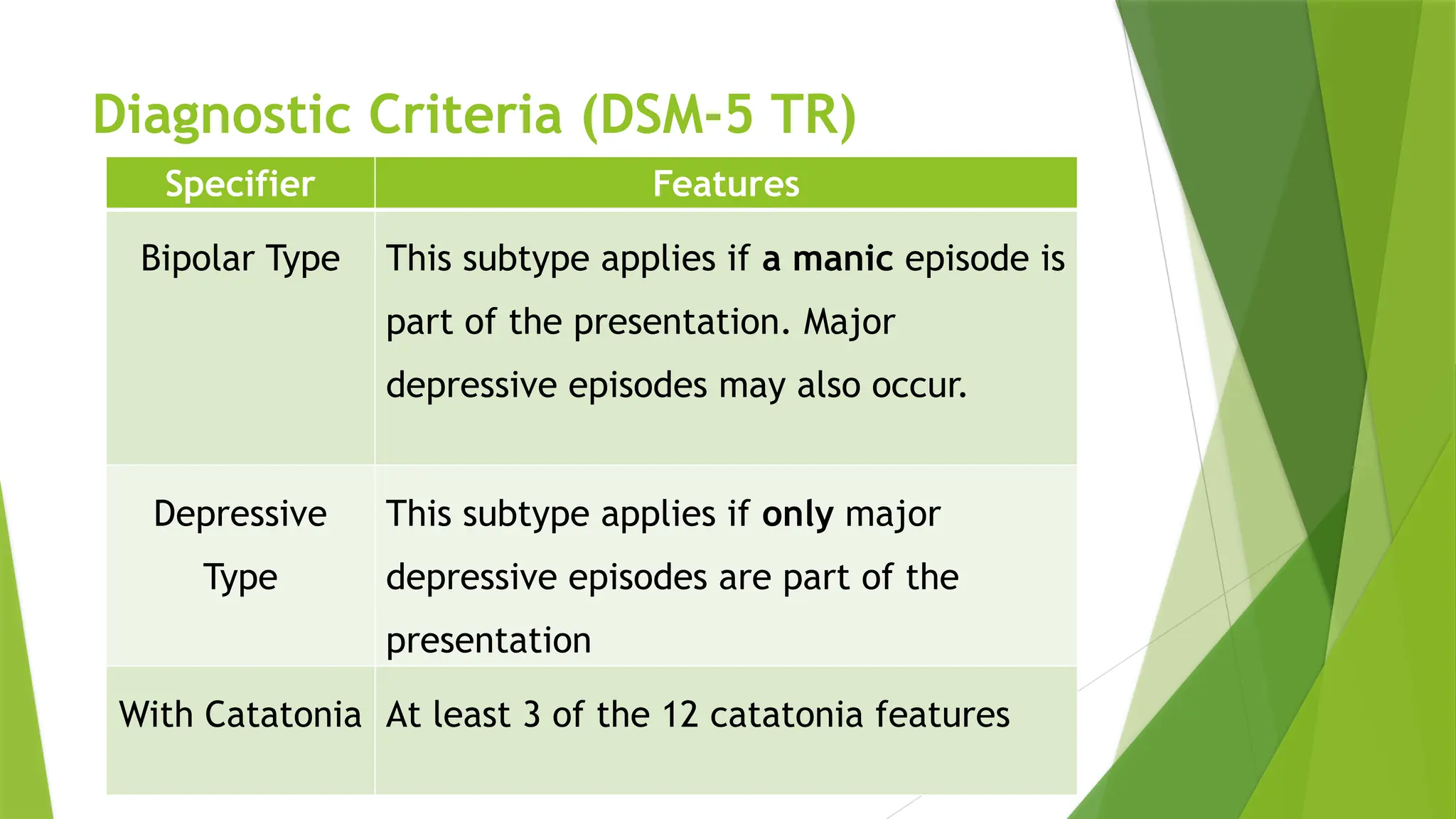
Specifier Features
Bipolar Type This subtype applies if a manic episode is
part of the presentation. Major
depressive episodes may also occur.
Depressive
Type
This subtype applies if only major
depressive episodes are part of the
presentation
With Catatonia At least 3 of the 12 catatonia features
08/11/2024
Diagnostic Criteria (DSM-5 TR)
 Other specifiers (require at least 1y duration):
-First episode/multiple episodes/continuous
currently in acute episode/partial remission/full
remission
 Unspecified
 Severity
08/11/2024
Associated Features
 Antisocial behavior
 Difficulties with self-care
 Though have less severe and less persistent negative
symptoms, and less anosognosia (poor insight) than
schizophrenia
 ± Substance related disorders
 Suicide risk (5% especially if depressive episodes)
 Social and occupational dysfunction
08/11/2024
Investigations
R/O Organic
Causes
-RFT, LFT
-RPR, HIV test
-UDS, UPT
-CT head, MRI
brain
-EEG
Baseline
-CBC
-RBG
-Lipid panel
-TFT, TSH
08/11/2024
Management
A. Biological
i. Antipsychotics
ii. Mood stabilizers
-If bipolar type
-E.g Carbamazepine
iii. Antidepressants
-If depressive type
08/11/2024
Management
-SSRI are safe to use, but can opt for TCA if
associated with agitation/insomnia
iv. ECT
-As indicated
08/11/2024
Prognosis
B. Psychological
i. Family Therapy
-Reduction of expressed emotion, criticism, hostility,
overprotection
ii. Behavioral Therapy (social skills training)
iii. Cognitive Rehabilitation
-Restoring lost cognitive skills such as memory retraining,
attention training, problem solving exercises
08/11/2024
Prognosis
 Poor indicators:
-Poor premorbid hx
-Insidious onset
-Absence of precipitating
factors
-Predominant psychosis
-Negative symptoms
-Early onset
-Unremitting course
-Family hx of
schizophrenia/bipolar
08/11/2024
Prognosis
 Good indicators similar to schizophrenia
 Difficult to predict the overall outcome, previous
studies suggest the final prognosis closely
resembles schizophrenia than a mood disorder
with psychotic features.
08/11/2024
References
1. Sadock, B. J., Sadock, V. A., & Ruiz, P. (2015). Kaplan and
Sadock's synopsis of psychiatry: Behavioral sciences/clinical
psychiatry (11th ed.). Wolters Kluwer Health.
2. American Psychiatric Association. Diagnostic and Statistical
Manual of Mental Disorders. 5th ed., Text Revision, American
Psychiatric Publishing, 2022,
https://doi.org/10.1176/appi.books.9780890425787.
3. Schizoaffective Disorder: Practice Essentials, Background, Pa

SCHIZOAFFECTIVE DISORDER (A detailed Overview).pptx

  • 1.
    08/11/2024 SCHIZOAFFECTIVE DISORDER YASIN KHATRI (MD,MUHAS 2025) @med.tutor.tz/@health.gramm on Instagram
  • 2.
    08/11/2024 What is SchizoaffectiveDisorder?  Schizo  schizophrenia  Affect expression of mood  A combination of schizophrenia and a mood disorder (manic/depressive)  Either of the component can come first, variable temporal relationship
  • 3.
    08/11/2024 Epidemiology  0.3x asschizophrenia  Lifetime prevalence = 0.3%  Age of onset later in females  For bipolar subtype, M=F and more likely to present in young than old individuals  For depressive subtype, F>M and more likely to present in old than young individuals
  • 4.
    08/11/2024 Etiology and RiskFactors  Same as schizophrenia, as per the biopsychosocial model.  Genetically, if the first degree relative has schizophrenia/bipolar than the client is at risk due to involvement of DISC1 gene in chromosome 1q42 (also affected in schizophrenia and bipolar).
  • 5.
    08/11/2024 Diagnostic Criteria (DSM-5TR)  A. An uninterrupted period of illness during which there is a major mood episode (major depressive or manic) concurrent with Criterion A of schizophrenia. Note: The major depressive episode must include Criterion A1: Depressed mood.
  • 6.
    08/11/2024 Diagnostic Criteria (DSM-5TR)  B. Delusions or hallucinations for 2 or more weeks in the absence of a major mood episode (depressive or manic) during the lifetime duration of the illness.  C. Symptoms that meet criteria for a major mood episode are present for the majority of the total duration of the active and residual portions of the illness.
  • 7.
    08/11/2024 Diagnostic Criteria (DSM-5TR) D. The disturbance is not attributable to the effects of a substance (e.g., a drug of abuse, a medication) or another medical condition.
  • 8.
    08/11/2024 Diagnostic Criteria (DSM-5TR) Specifier Features Bipolar Type This subtype applies if a manic episode is part of the presentation. Major depressive episodes may also occur. Depressive Type This subtype applies if only major depressive episodes are part of the presentation With Catatonia At least 3 of the 12 catatonia features
  • 9.
    08/11/2024 Diagnostic Criteria (DSM-5TR)  Other specifiers (require at least 1y duration): -First episode/multiple episodes/continuous currently in acute episode/partial remission/full remission  Unspecified  Severity
  • 10.
    08/11/2024 Associated Features  Antisocialbehavior  Difficulties with self-care  Though have less severe and less persistent negative symptoms, and less anosognosia (poor insight) than schizophrenia  ± Substance related disorders  Suicide risk (5% especially if depressive episodes)  Social and occupational dysfunction
  • 11.
    08/11/2024 Investigations R/O Organic Causes -RFT, LFT -RPR,HIV test -UDS, UPT -CT head, MRI brain -EEG Baseline -CBC -RBG -Lipid panel -TFT, TSH
  • 12.
    08/11/2024 Management A. Biological i. Antipsychotics ii.Mood stabilizers -If bipolar type -E.g Carbamazepine iii. Antidepressants -If depressive type
  • 13.
    08/11/2024 Management -SSRI are safeto use, but can opt for TCA if associated with agitation/insomnia iv. ECT -As indicated
  • 14.
    08/11/2024 Prognosis B. Psychological i. FamilyTherapy -Reduction of expressed emotion, criticism, hostility, overprotection ii. Behavioral Therapy (social skills training) iii. Cognitive Rehabilitation -Restoring lost cognitive skills such as memory retraining, attention training, problem solving exercises
  • 15.
    08/11/2024 Prognosis  Poor indicators: -Poorpremorbid hx -Insidious onset -Absence of precipitating factors -Predominant psychosis -Negative symptoms -Early onset -Unremitting course -Family hx of schizophrenia/bipolar
  • 16.
    08/11/2024 Prognosis  Good indicatorssimilar to schizophrenia  Difficult to predict the overall outcome, previous studies suggest the final prognosis closely resembles schizophrenia than a mood disorder with psychotic features.
  • 17.
    08/11/2024 References 1. Sadock, B.J., Sadock, V. A., & Ruiz, P. (2015). Kaplan and Sadock's synopsis of psychiatry: Behavioral sciences/clinical psychiatry (11th ed.). Wolters Kluwer Health. 2. American Psychiatric Association. Diagnostic and Statistical Manual of Mental Disorders. 5th ed., Text Revision, American Psychiatric Publishing, 2022, https://doi.org/10.1176/appi.books.9780890425787. 3. Schizoaffective Disorder: Practice Essentials, Background, Pa