Prof Dr Kamran Ashraf
Shifa-ul-haq
Biology
Schistosomes are blood flukes and belong to the
• Class Trematode
• Order Digenea
• Family Schistosomatidae
Family Schistosomatidae
 Bilharziella

 Ornithobilharzia
 Schistosoma
 Trichobilharzia

Minor Genra
 Austrobilharzia
 Dendrobilharzia
 Gigantobilharzia

 Heterobilharzia
 Microbilharzia
 Schistosomatium
Genus Schistosoma
 S mansoni
 S hematobium
 S japonicum
 S intercalatum
 S mekongi

Currently, 21 species of this genus have been recognized
Host Range
 Digenetic
 Wide host range in case of S. japonicum
 S. bovis
 S. mattheei
 S. rodhaini
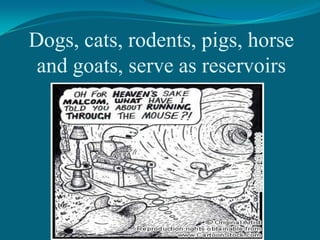
Dogs, cats, rodents, pigs, horse
and goats, serve as reservoirs
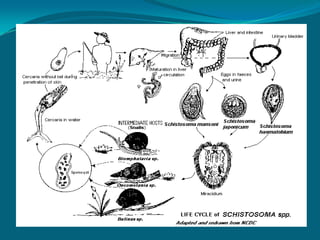
Intermediate Hosts
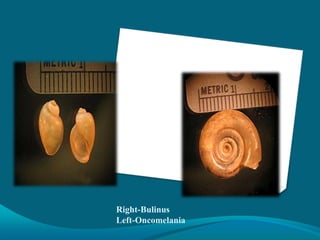
 S. hematobium and S. intercalatum by Bulinus
 S. mansoni by Biomphalaria
 S. japonicum by Oncomelania
 S. mekongi by Neotricula
Right-Bulinus
Left-Oncomelania
Flash Video of Life Cycle about
2.30 Seconds
?
?
Period of communicability
 Life span 5-10 years( up to 30), so infected human can
excrete eggs up to 10 years.
 An infected snail can release cercariae from several
weeks to 3 months of its life.

 An infected snail can lay eggs 300-3000/day
Schistosomiasis
 Bilhaziasis
 Snail Fever
 Urinary Schistosomiasis
 Katayama Fever (Acute Type)
 Swimmer’s Itch or Orientobilharziasis (Orientobilharzia,
Trichobilharzia , Schistosoma spindale )
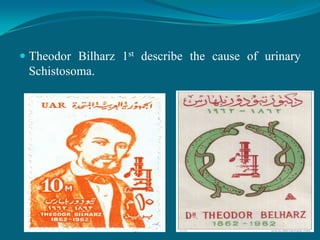
 Theodor Bilharz 1st describe the cause of urinary
Schistosoma.
 In ancient Egyptian Papyri symptoms of chronic
haematobium was described as a “Dripping Penis
Disease”
 Schistosoma eggs have been recovered from Egyptian

and Chinese mummies
Distribution
 2nd most prevalent parasitic disease in the world, only
behind the Malaria
 More than 250 million people are infected (WHO, 2013)
 120 million people are symptomatic.
 Another 700 million people are at risk of infection.
Geographic Distribution
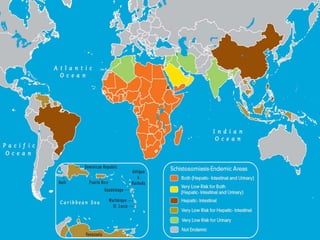
 78 countries
 The endemic areas Africa, the Caribbean
South America, East Asia, and the Middle East
 200 000 mortality
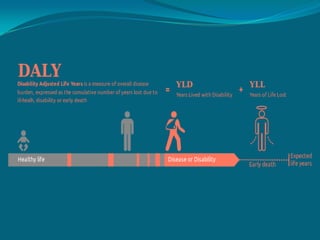
 1.7-4.5 million DALYs
 DALY (Disability Adjusted Life Years)?
 One lost year of "healthy" life.
What, if it’s a huge problem
Vaccination
 The administration of radiation-attenuated cercariae
 Antigens from Schistosomules by P-I Lille, France
 Schistosoma paramyosin
 Target the fecundity of the female Schistosomes
Treatment
 Praziquantel
 Somehow Artemether
 At least 243 million people required treatment for
Schistosomiasis in 2011 (WHO)
 The number of people reported to have been treated
for Schistosomiasis in 2011 was 28.1 million
 Reasons
 Shortage of medicine

 High cost of Praziquantel
 No other proven alternative
 Patent competition
Concluding
 More than 250 million affected
 700 million at risk
 No vaccine possibility in near future
 243 million required treatment, but only 28 million
got it
 But the problem not halted here
Global Warming
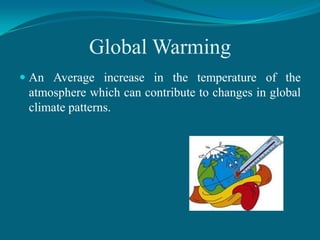
 An Average increase in the temperature of the
atmosphere which can contribute to changes in global
climate patterns.
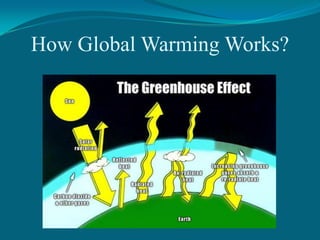
How Global Warming Works?
Causes of Global Warming
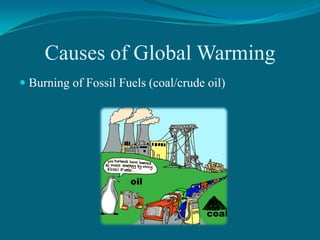
 Burning of Fossil Fuels (coal/crude oil)
Causes of Global Warming
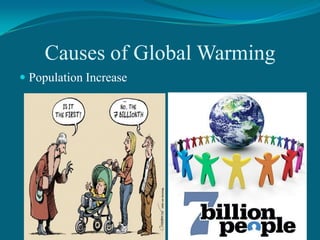
 Population Increase
Causes of Global Warming
 Deforestation
Causes of Global Warming
 Transportation- Fuels (LPG, Kerosine, Fuel, Jet Oil)
Causes of Global Warming
 Industrial Process, manufacturing of steel, cement
Causes of Global Warming
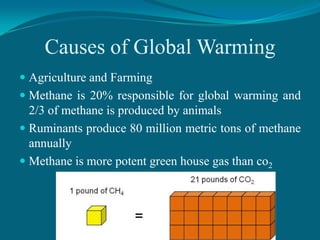
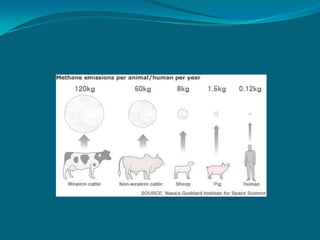
 Agriculture and Farming
 Methane is 20% responsible for global warming and
2/3 of methane is produced by animals
 Ruminants produce 80 million metric tons of methane
annually
 Methane is more potent green house gas than co2
 Interestingly Ciliate Protozoa are more responsible for
methane production (Isotricha, Eudiplodinium,
Epidinium + Entodinium)
Causes of Global Warming
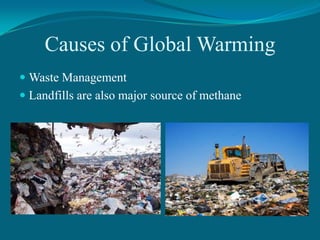
 Waste Management
 Landfills are also major source of methane
Causes of Global Warming
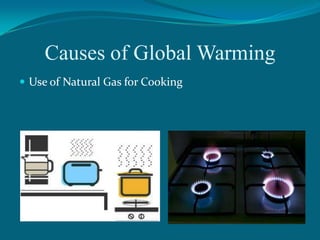
 Use of Natural Gas for Cooking
Environmental and Human
Effects of Global Warming
 Increase in average temperature : More extreme heat
waves, less cold spell of winter
 Increase in frequency of extreme events: tornados,

floods, heat waves, snow fall
 Rising in temperature and variable precipitation:
decrease production of staple food: Increase in
Malnutrition
Environmental and Human
Effects of Global Warming
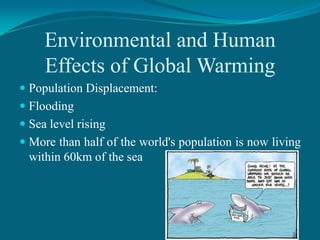
 Population Displacement:
 Flooding
 Sea level rising

 More than half of the world's population is now living
within 60km of the sea
Environmental and Human
Effects of Global Warming
• UV Exposure
• Skin Cancer
• Premature Aging
• Cataracts
• Suppression of Immunity
Environmental and Human
Effects of Global Warming
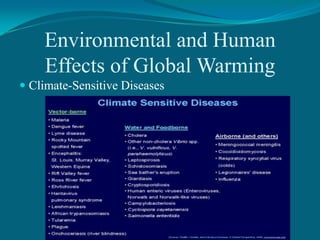
 Climate-Sensitive Diseases
 Development of cold-blooded animals is positively
related to temperature.
 Development will arrest when temp. drops below
acritical threshold

 Lowest developing temp. or “biological zero”
 The higher the temperature, the higher
 the possibility that the host snail will shed cercariae of

S. japonicum
 According to available temperature data for 1960 and
2000, the median January temperature, averaged
across the 193 observing stations in China, increased
by 0.9 C.

 The mean temperature will continue to rise; indeed at
an accelerated pace with predicted increases by 2030
and 2050 of 1.7 and 2.2 C, respectively
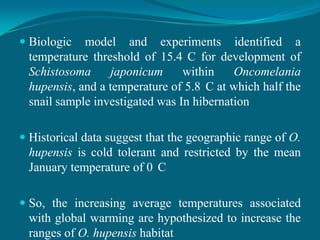
 Biologic model and experiments identified a
temperature threshold of 15.4 C for development of
Schistosoma
japonicum
within
Oncomelania

hupensis, and a temperature of 5.8 C at which half the
snail sample investigated was In hibernation
 Historical data suggest that the geographic range of O.
hupensis is cold tolerant and restricted by the mean
January temperature of 0 C
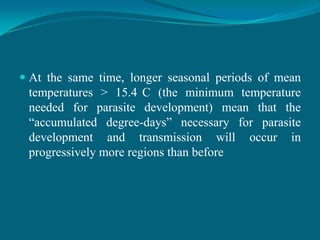
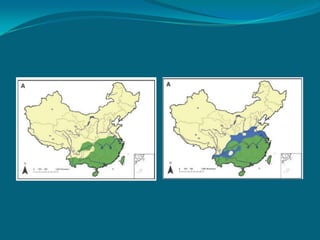
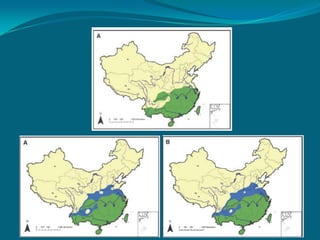
 So, the increasing average temperatures associated
with global warming are hypothesized to increase the
ranges of O. hupensis habitat
 At the same time, longer seasonal periods of mean
temperatures > 15.4 C (the minimum temperature
needed for parasite development) mean that the
“accumulated degree-days” necessary for parasite

development and transmission will
progressively more regions than before

occur

in
 Ultimately, as global warming progresses, more areas
currently deemed as marginal for snail and
schistosome habitat are expected to become
recognized transmission zones

Schistosoma and Global Warming

  • 1.
    Prof Dr KamranAshraf Shifa-ul-haq
  • 2.
    Biology Schistosomes are bloodflukes and belong to the • Class Trematode • Order Digenea • Family Schistosomatidae
  • 3.
    Family Schistosomatidae  Bilharziella Ornithobilharzia  Schistosoma  Trichobilharzia Minor Genra  Austrobilharzia  Dendrobilharzia  Gigantobilharzia  Heterobilharzia  Microbilharzia  Schistosomatium
  • 4.
    Genus Schistosoma  Smansoni  S hematobium  S japonicum  S intercalatum  S mekongi Currently, 21 species of this genus have been recognized
  • 5.
    Host Range  Digenetic Wide host range in case of S. japonicum  S. bovis  S. mattheei  S. rodhaini
  • 6.
    Dogs, cats, rodents,pigs, horse and goats, serve as reservoirs
  • 7.
    Intermediate Hosts  S.hematobium and S. intercalatum by Bulinus  S. mansoni by Biomphalaria  S. japonicum by Oncomelania  S. mekongi by Neotricula
  • 8.
  • 10.
    Flash Video ofLife Cycle about 2.30 Seconds ? ?
  • 11.
    Period of communicability Life span 5-10 years( up to 30), so infected human can excrete eggs up to 10 years.  An infected snail can release cercariae from several weeks to 3 months of its life.  An infected snail can lay eggs 300-3000/day
  • 12.
    Schistosomiasis  Bilhaziasis  SnailFever  Urinary Schistosomiasis  Katayama Fever (Acute Type)  Swimmer’s Itch or Orientobilharziasis (Orientobilharzia, Trichobilharzia , Schistosoma spindale )
  • 13.
     Theodor Bilharz1st describe the cause of urinary Schistosoma.
  • 14.
     In ancientEgyptian Papyri symptoms of chronic haematobium was described as a “Dripping Penis Disease”  Schistosoma eggs have been recovered from Egyptian and Chinese mummies
  • 15.
    Distribution  2nd mostprevalent parasitic disease in the world, only behind the Malaria
  • 16.
     More than250 million people are infected (WHO, 2013)  120 million people are symptomatic.  Another 700 million people are at risk of infection.
  • 17.
    Geographic Distribution  78countries  The endemic areas Africa, the Caribbean South America, East Asia, and the Middle East
  • 19.
     200 000mortality  1.7-4.5 million DALYs  DALY (Disability Adjusted Life Years)?  One lost year of "healthy" life.
  • 21.
    What, if it’sa huge problem
  • 22.
    Vaccination  The administrationof radiation-attenuated cercariae  Antigens from Schistosomules by P-I Lille, France  Schistosoma paramyosin  Target the fecundity of the female Schistosomes
  • 24.
  • 25.
     At least243 million people required treatment for Schistosomiasis in 2011 (WHO)
  • 26.
     The numberof people reported to have been treated for Schistosomiasis in 2011 was 28.1 million  Reasons  Shortage of medicine  High cost of Praziquantel  No other proven alternative  Patent competition
  • 28.
    Concluding  More than250 million affected  700 million at risk  No vaccine possibility in near future  243 million required treatment, but only 28 million got it  But the problem not halted here
  • 30.
    Global Warming  AnAverage increase in the temperature of the atmosphere which can contribute to changes in global climate patterns.
  • 31.
  • 32.
    Causes of GlobalWarming  Burning of Fossil Fuels (coal/crude oil)
  • 33.
    Causes of GlobalWarming  Population Increase
  • 34.
    Causes of GlobalWarming  Deforestation
  • 35.
    Causes of GlobalWarming  Transportation- Fuels (LPG, Kerosine, Fuel, Jet Oil)
  • 36.
    Causes of GlobalWarming  Industrial Process, manufacturing of steel, cement
  • 37.
    Causes of GlobalWarming  Agriculture and Farming  Methane is 20% responsible for global warming and 2/3 of methane is produced by animals  Ruminants produce 80 million metric tons of methane annually  Methane is more potent green house gas than co2
  • 39.
     Interestingly CiliateProtozoa are more responsible for methane production (Isotricha, Eudiplodinium, Epidinium + Entodinium)
  • 40.
    Causes of GlobalWarming  Waste Management  Landfills are also major source of methane
  • 41.
    Causes of GlobalWarming  Use of Natural Gas for Cooking
  • 42.
    Environmental and Human Effectsof Global Warming  Increase in average temperature : More extreme heat waves, less cold spell of winter  Increase in frequency of extreme events: tornados, floods, heat waves, snow fall  Rising in temperature and variable precipitation: decrease production of staple food: Increase in Malnutrition
  • 43.
    Environmental and Human Effectsof Global Warming  Population Displacement:  Flooding  Sea level rising  More than half of the world's population is now living within 60km of the sea
  • 44.
    Environmental and Human Effectsof Global Warming • UV Exposure • Skin Cancer • Premature Aging • Cataracts • Suppression of Immunity
  • 45.
    Environmental and Human Effectsof Global Warming  Climate-Sensitive Diseases
  • 46.
     Development ofcold-blooded animals is positively related to temperature.  Development will arrest when temp. drops below acritical threshold  Lowest developing temp. or “biological zero”  The higher the temperature, the higher  the possibility that the host snail will shed cercariae of S. japonicum
  • 47.
     According toavailable temperature data for 1960 and 2000, the median January temperature, averaged across the 193 observing stations in China, increased by 0.9 C.  The mean temperature will continue to rise; indeed at an accelerated pace with predicted increases by 2030 and 2050 of 1.7 and 2.2 C, respectively
  • 48.
     Biologic modeland experiments identified a temperature threshold of 15.4 C for development of Schistosoma japonicum within Oncomelania hupensis, and a temperature of 5.8 C at which half the snail sample investigated was In hibernation  Historical data suggest that the geographic range of O. hupensis is cold tolerant and restricted by the mean January temperature of 0 C  So, the increasing average temperatures associated with global warming are hypothesized to increase the ranges of O. hupensis habitat
  • 49.
     At thesame time, longer seasonal periods of mean temperatures > 15.4 C (the minimum temperature needed for parasite development) mean that the “accumulated degree-days” necessary for parasite development and transmission will progressively more regions than before occur in
  • 52.
     Ultimately, asglobal warming progresses, more areas currently deemed as marginal for snail and schistosome habitat are expected to become recognized transmission zones