Downloaded 1,947 times

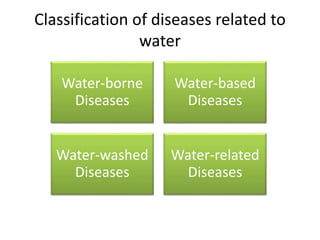
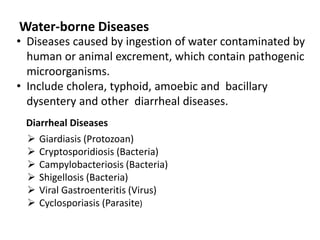
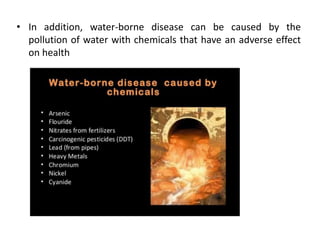
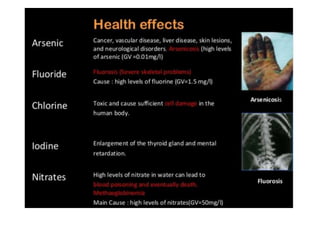
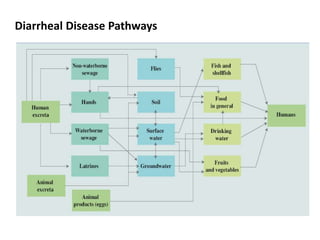
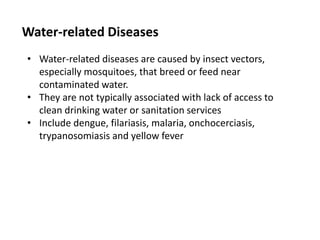

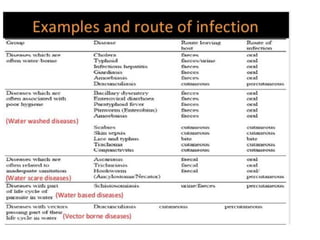
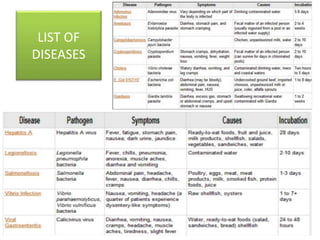
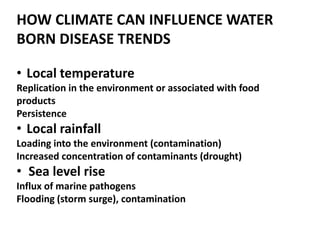
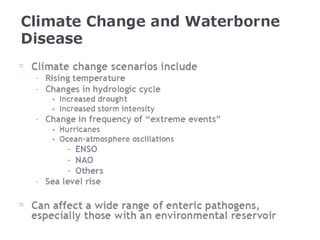
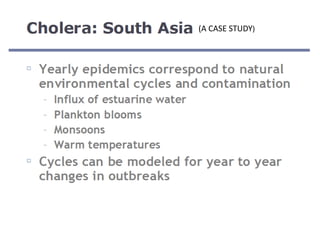
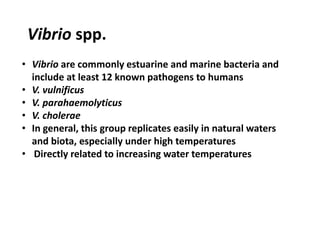
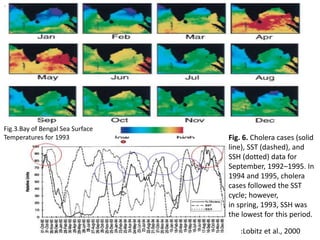
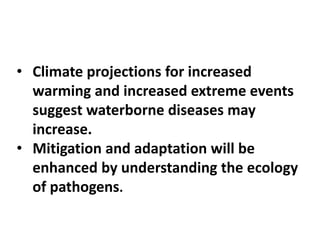
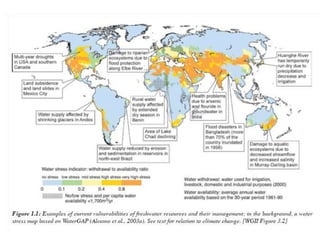
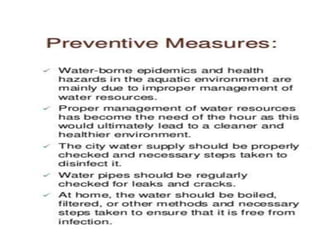
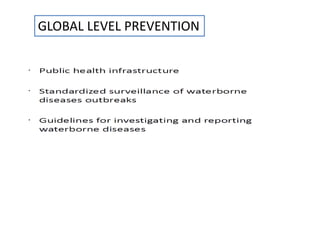
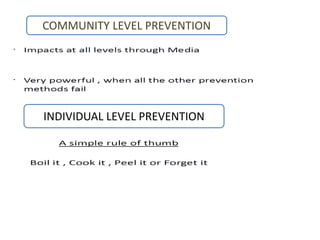


Waterborne diseases are illnesses resulting from drinking water contaminated with pathogens, primarily from human or animal feces, and include diseases like cholera, typhoid, and various diarrheal illnesses. Additionally, water-related diseases arise from insect vectors near contaminated water, while water-washed diseases stem from poor hygiene practices. The document discusses how climate change, particularly rising temperatures and extreme weather events, can lead to an increase in waterborne diseases, highlighting the importance of understanding pathogen ecology for effective prevention strategies.


