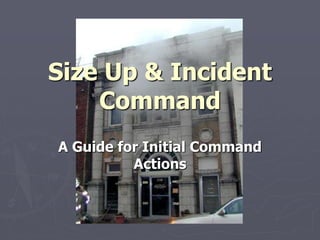
Size Up & Incident
Command
A Guide for Initial Command
Actions
Not A Soap
Box
D.I.M.W.I.T.
Does it matter what I’m transmitting?
Fireground Priorities
Life safety
Incident stabilization
Property conservation
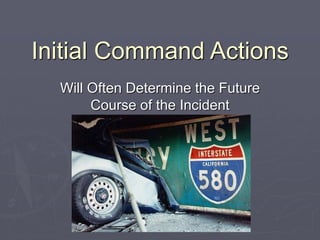
Initial Command Actions
Will Often Determine the Future
Course of the Incident
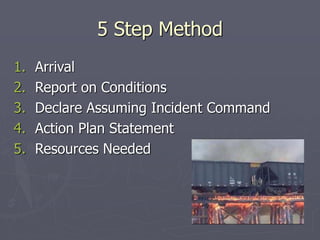
5 Step Method
1. Arrival
2. Report on Conditions
3. Declare Assuming Incident Command
4. Action Plan Statement
5. Resources Needed
1. ARRIVAL
►A Brief Statement That You Are At Scene
“Camino, ____(your I.D.), At Scene”
► Confirm Address or Location of Incident
“2345 ______ Road”
2. Report On Conditions
►A Brief Description of the Incident
 (What do you see?… paint a picture for Dispatch & for those listening)
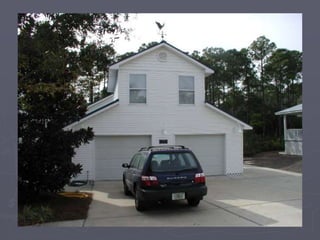
 Describe Occupancy Use, Building Type, or Construction
►Key Phrases Are Useful
 Some Typical Key Phrases for Structure Fires:
►“Nothing Showing”
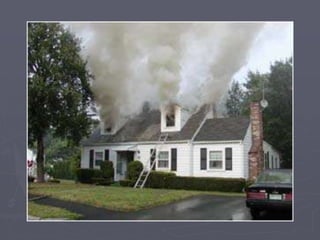
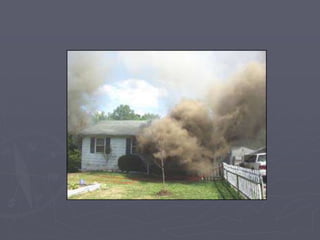
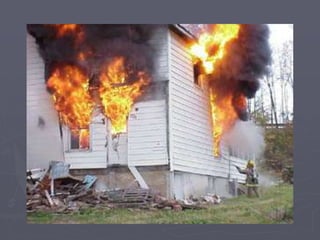
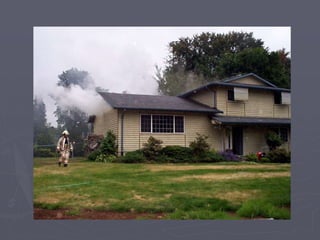
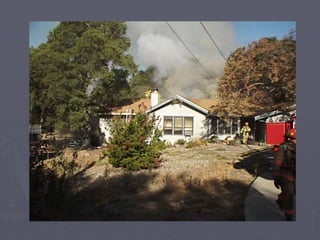
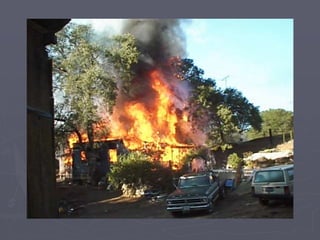
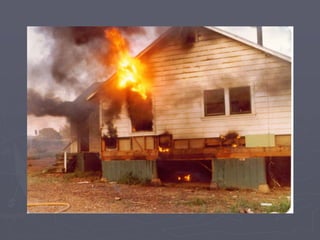
►“Smoke Showing” or “Fire & Smoke Showing”
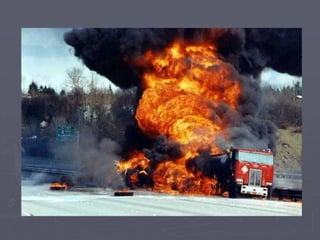
►“Fully Involved” or % or “Room & Contents”
►“Building Evacuated”
Report on Conditions
Continued
►Key Phrases for Wildland Incidents:
 Size: “____Acres”
 Rate of Spread: “Slow, Moderate, Rapid”
 Fuel Type: “Grass, Brush,Timber”
 Direction of Spread: “Topographical or
N,S,E,W”
►Note: Indicate if Threat to Structures
3. Declare Assumption of
Incident Command
►ECC Assigns Incident Name and Tactical
Frequency / Channel
►Declare Assuming Command
►Confirm the Incident Name, On the Air:
 “I Will Be _____ (Name) I.C. on Tac 9
► Identify Location of ICP
 “ICP is Located at _______”
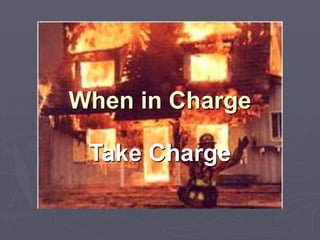
When in Charge
Take Charge
Assuming Command vs.
Passing Command
►Tactical Priority Requires You Take Action
Rather Than Assume Command
►Life Rescue
►Time Factors in Operations
►Limitations on Passing Command
►See District S.O.P. 201, Section IV
4. Action Plan
►An Initial Statement of Objectives
►Command Texts Often Refer to “Modes”
►Key Action Phrases:
 “Inside to Investigate”
 “Interior Attack Line with Rescue”
 “Offensive”
 “Defensive”
Action Plan
continued
►Assigning Other Units In Your Plan
 “Engine __, Establish Water Supply”
 “Take Ventilation”
 “Take the Left Flank”
 “Protect Exposures”
 “Set Up Traffic Control”
►Note: Think of RECEO
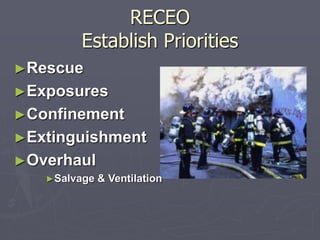
RECEO
Establish Priorities
►Rescue
►Exposures
►Confinement
►Extinguishment
►Overhaul
►Salvage & Ventilation
5. Resources Needed
►Do you have Enough Resources?
 If so, then transmit:
“Can Handle with Units At Scene”
Do you have Authority to Order:
Additional Company’s ? Alarms?
Remember: When in Charge, Take Charge
Staging Resources
►If You Can’t Find the Incident, Consider
Staging Your Incoming Units
 “Have All Units Hold Present Location”
►Useful Technique: Staging Area
►Note: If You Must Create a Staging Area
 Assign a Staging Area Manager (STAM)
Canceling Resources
►If Not Needed, Canceling is a Valid Option
►Better to Order Too Much Than Not Enough
►Never Too Late to Cancel Resources
►You Can Always Send Them Home
►Asserting a Cancellation is a Function of
Command
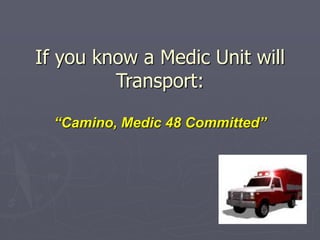
If you know a Medic Unit will
Transport:
“Camino, Medic 48 Committed”
All Risk Considerations
►Mass Casualty Incidents
 Declare an MCI
►Haz Mat
 Isolate, Identify, Deny Entry & Notify (S.I.N.)
►Law Enforcement
 Traffic Control, Road Closure, Early Warning
►Structural Collapse
 Need to Evacuate from Structure, RIC
Other “Nuggets”
►F.A.T.S.
 Fireground Accountability Tracking System
►L.C.E.S. (Wildland and “All Risk”)
►Interface Fires with Threat to Structures:
 Immediate Threat to Life & Property
Use of Checklists & Guides
►The 10 & the 18
►D.O.T Guide
►F.O.G.
►ICS 201 and Other Forms
►Incident Response Pocket Guide
 NFES #1077, January 2004 (See page 12)
 Lots of Reference Resources for you!
Volunteer & Off Duty Response in P.O.V.
►Professionalism
►Cell Phone with ECC’s Phone Number
►Radio
►How to I.D. Self and Pass Information
►What Is Appropriate vs. What Isn’t
SUMMARY
►It All Starts With Attitude
►Preparation
►Commitment
 Your Sense of Professional Courtesy
 Seek Information
 The Next Incident will be “Come as you are”
►Practice (and opportunity to practice
►Are you ready?
Scene Size up & Incident Command Power point

Scene Size up & Incident Command Power point

  • 1.
    Size Up &Incident Command A Guide for Initial Command Actions
  • 2.
  • 3.
    D.I.M.W.I.T. Does it matterwhat I’m transmitting?
  • 4.
    Fireground Priorities Life safety Incidentstabilization Property conservation
  • 5.
    Initial Command Actions WillOften Determine the Future Course of the Incident
  • 6.
    5 Step Method 1.Arrival 2. Report on Conditions 3. Declare Assuming Incident Command 4. Action Plan Statement 5. Resources Needed
  • 7.
    1. ARRIVAL ►A BriefStatement That You Are At Scene “Camino, ____(your I.D.), At Scene” ► Confirm Address or Location of Incident “2345 ______ Road”
  • 8.
    2. Report OnConditions ►A Brief Description of the Incident  (What do you see?… paint a picture for Dispatch & for those listening)  Describe Occupancy Use, Building Type, or Construction ►Key Phrases Are Useful  Some Typical Key Phrases for Structure Fires: ►“Nothing Showing” ►“Smoke Showing” or “Fire & Smoke Showing” ►“Fully Involved” or % or “Room & Contents” ►“Building Evacuated”
  • 9.
    Report on Conditions Continued ►KeyPhrases for Wildland Incidents:  Size: “____Acres”  Rate of Spread: “Slow, Moderate, Rapid”  Fuel Type: “Grass, Brush,Timber”  Direction of Spread: “Topographical or N,S,E,W” ►Note: Indicate if Threat to Structures
  • 10.
    3. Declare Assumptionof Incident Command ►ECC Assigns Incident Name and Tactical Frequency / Channel ►Declare Assuming Command ►Confirm the Incident Name, On the Air:  “I Will Be _____ (Name) I.C. on Tac 9 ► Identify Location of ICP  “ICP is Located at _______”
  • 11.
  • 12.
    Assuming Command vs. PassingCommand ►Tactical Priority Requires You Take Action Rather Than Assume Command ►Life Rescue ►Time Factors in Operations ►Limitations on Passing Command ►See District S.O.P. 201, Section IV
  • 13.
    4. Action Plan ►AnInitial Statement of Objectives ►Command Texts Often Refer to “Modes” ►Key Action Phrases:  “Inside to Investigate”  “Interior Attack Line with Rescue”  “Offensive”  “Defensive”
  • 14.
    Action Plan continued ►Assigning OtherUnits In Your Plan  “Engine __, Establish Water Supply”  “Take Ventilation”  “Take the Left Flank”  “Protect Exposures”  “Set Up Traffic Control” ►Note: Think of RECEO
  • 15.
  • 16.
    5. Resources Needed ►Doyou have Enough Resources?  If so, then transmit: “Can Handle with Units At Scene” Do you have Authority to Order: Additional Company’s ? Alarms? Remember: When in Charge, Take Charge
  • 17.
    Staging Resources ►If YouCan’t Find the Incident, Consider Staging Your Incoming Units  “Have All Units Hold Present Location” ►Useful Technique: Staging Area ►Note: If You Must Create a Staging Area  Assign a Staging Area Manager (STAM)
  • 18.
    Canceling Resources ►If NotNeeded, Canceling is a Valid Option ►Better to Order Too Much Than Not Enough ►Never Too Late to Cancel Resources ►You Can Always Send Them Home ►Asserting a Cancellation is a Function of Command
  • 19.
    If you knowa Medic Unit will Transport: “Camino, Medic 48 Committed”
  • 20.
    All Risk Considerations ►MassCasualty Incidents  Declare an MCI ►Haz Mat  Isolate, Identify, Deny Entry & Notify (S.I.N.) ►Law Enforcement  Traffic Control, Road Closure, Early Warning ►Structural Collapse  Need to Evacuate from Structure, RIC
  • 21.
    Other “Nuggets” ►F.A.T.S.  FiregroundAccountability Tracking System ►L.C.E.S. (Wildland and “All Risk”) ►Interface Fires with Threat to Structures:  Immediate Threat to Life & Property
  • 22.
    Use of Checklists& Guides ►The 10 & the 18 ►D.O.T Guide ►F.O.G. ►ICS 201 and Other Forms ►Incident Response Pocket Guide  NFES #1077, January 2004 (See page 12)  Lots of Reference Resources for you!
  • 23.
    Volunteer & OffDuty Response in P.O.V. ►Professionalism ►Cell Phone with ECC’s Phone Number ►Radio ►How to I.D. Self and Pass Information ►What Is Appropriate vs. What Isn’t
  • 24.
    SUMMARY ►It All StartsWith Attitude ►Preparation ►Commitment  Your Sense of Professional Courtesy  Seek Information  The Next Incident will be “Come as you are” ►Practice (and opportunity to practice ►Are you ready?

Editor's Notes

  • #3 The radio is not medium to express one's frustration or other emotions. The radio is not a soap box. Communications need to be kept clear, concise and professional. What you say and do on the radio is not about you but reflects the department as a whole.
  • #4 All firefighter should have a radio but not everybody should talk on the radio. At an incident where risk to health or life is present, all firefighter must be able to revive or transmit any communication. Communication is vital at these incidences and is key to fireground success. Think before you speak. Ask yourself “does it matter what I’m transmitting.” D.I.M.W.I.T. Radio discipline leaves radio channels available for necessary transmissions.
  • #5 In order to be better communicators we must first understand our goals and priorities. These priorities are taught in all of our basic firefighter classes and firefighter 1 & 2 but are quickly forgotten. Our first priority in all incidences is life safety and under life safety we focus of three components; I, Us, Them. Life safety: “I” is us as an individual. We must ensure our own safety, not free lance, and preform in a safe manner. if we do not, we become part of the problem and not the solution. After “I” is us, We must remember that, although we are all individuals, we are a team and must function as a team in order to complete our mission. Then there is them, them refers to the people that called us to solve their issues and requested help. Life preservation is our ultimate goal. Building and material things can be replaced but people cannot. The second priority is incident stabilization Incident stabilization: Once any life safety issues have be mitigated, we must ensure that the incident is stabilized and attempt to stop it from progressing. Our goal at this point is to stop and stabilize the incident from progressing further to prevent any further issues. Out third priority is property conversation. Once we have mitigated any life safety issues and stabilized the incident, we shift our focus onto property conversation and prevent further loss. An important concept to remember is not emergency situation is static. They are constantly changing, and our priorities must constantly shift with the change. A mayday is a perfect example of this concept. While we may have progress to property conservation, a firefighter may find themselves in a mayday situation and then our priorities shift back to life safety. All other operations are halted or modified to mitigate the life safety issues.
  • #6 The initial radio report from dispatch, to the first unit arriving on scene, and transmitting the initial scene size up can set the pace and attitude for the rest of the incident. The initial actions can set the tone for the entire incident.