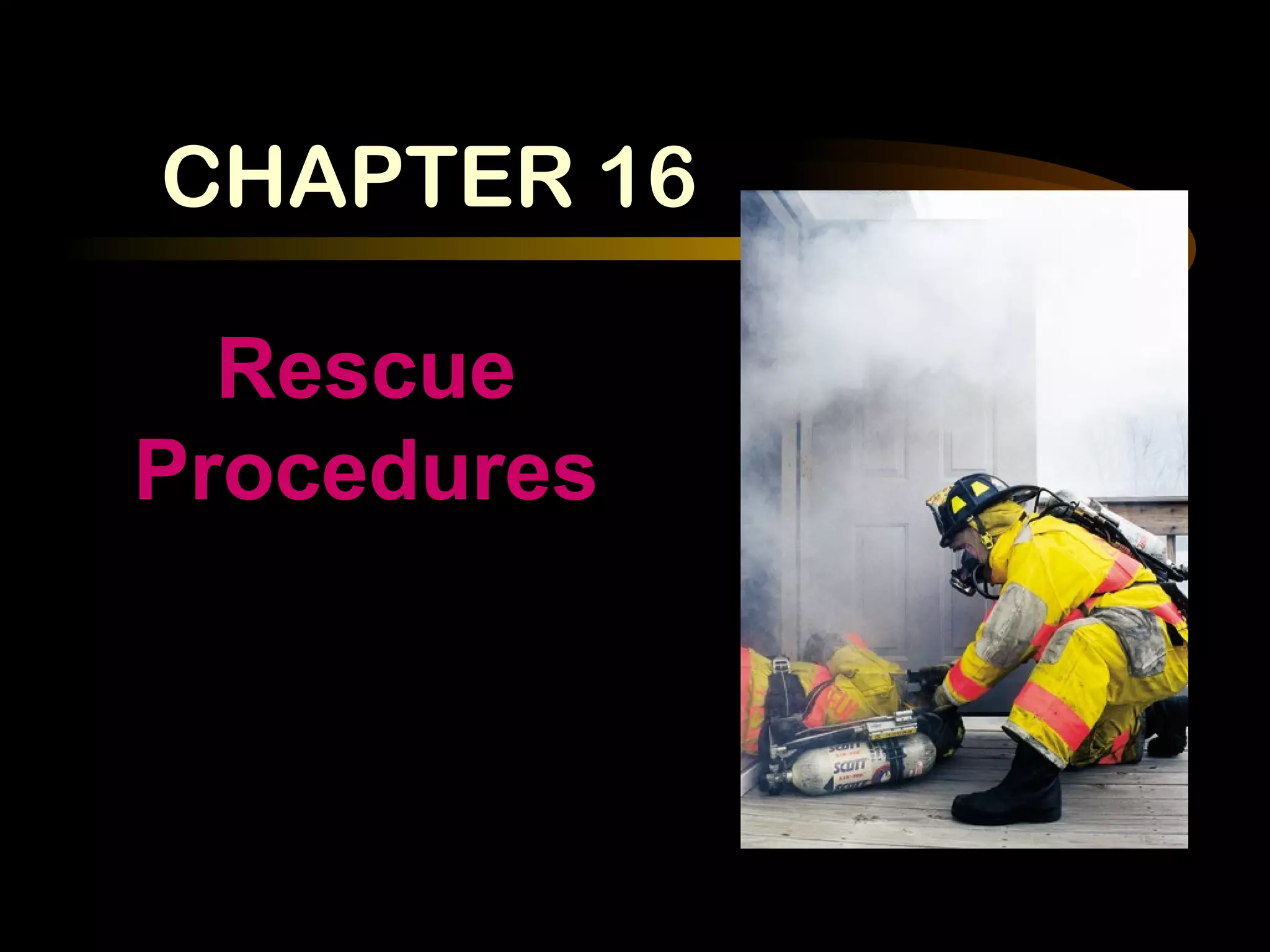
Rescue Procedures CHAPTER 16
Objectives  (1 of 2) Recognize the hazards associated with various rescue operations. Describe the differences between primary and secondary searches. Identify the need for rapid intervention teams. Demonstrate the proper procedures for victim drags and carries. Define proper terminology utilized during motor vehicle extrication operations.
Objectives  (2 of 2) Demonstrate proper and safe operation of vehicle extrication tools and equipment. Explain the various types of specialized rescue situations presented and the hazards associated with them. Identify specialized equipment used during technical rescue operations.
Introduction Rescues are defined as actions that trained firefighters perform at emergency scenes to remove someone from immediate danger, or to extricate them if they are already trapped. This lesson is designed to provide an awareness level of rescue situations. Teamwork and safety are the key points to remember.
Hazards Associated with Rescue Operations Every rescue operation has hazards. Tunnel vision is a big hazard. It is easy to get tunnel vision in a complex and lengthy rescue. Tunnel vision can keep rescuers from seeing obvious solutions and impending danger.
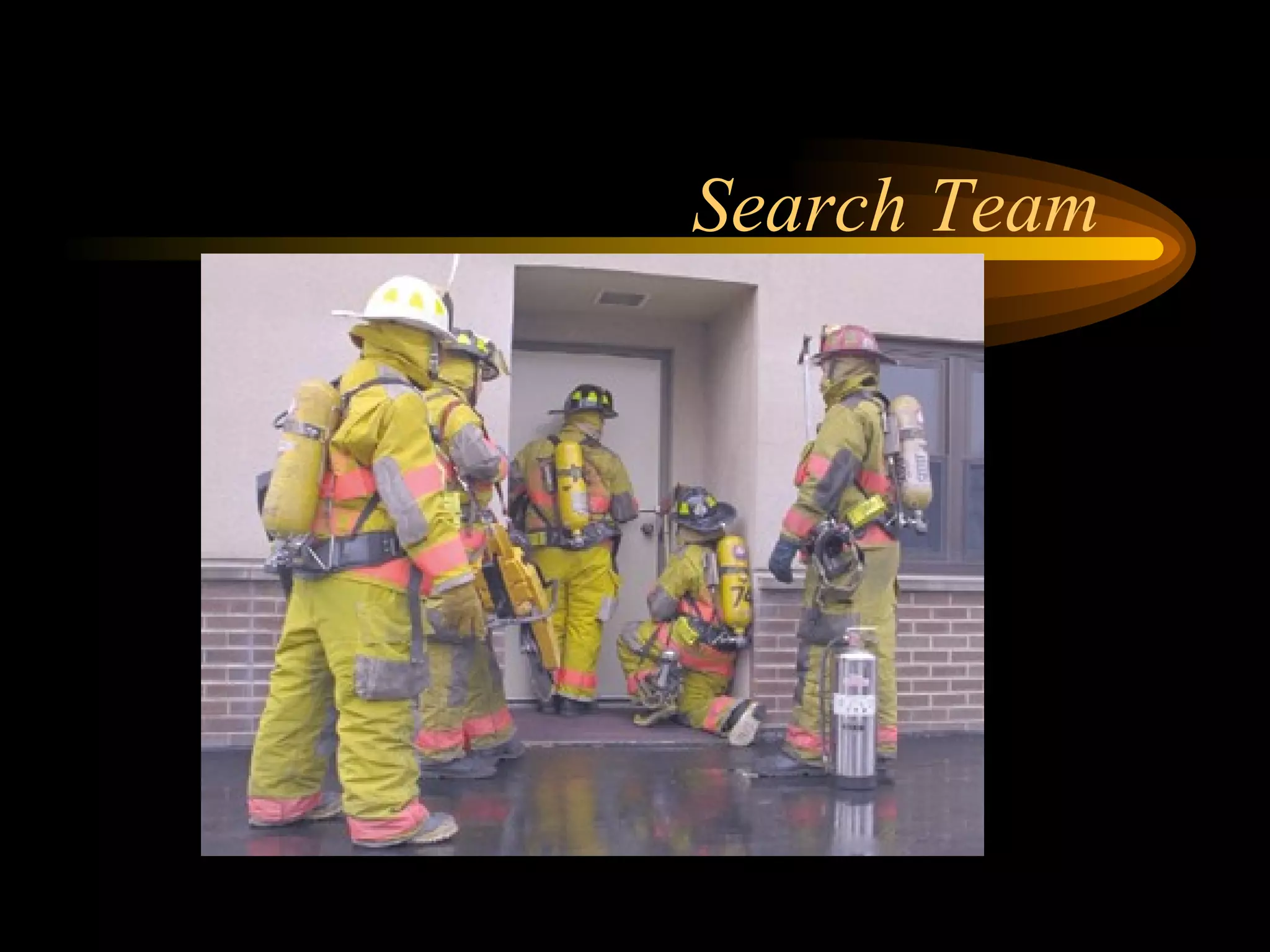
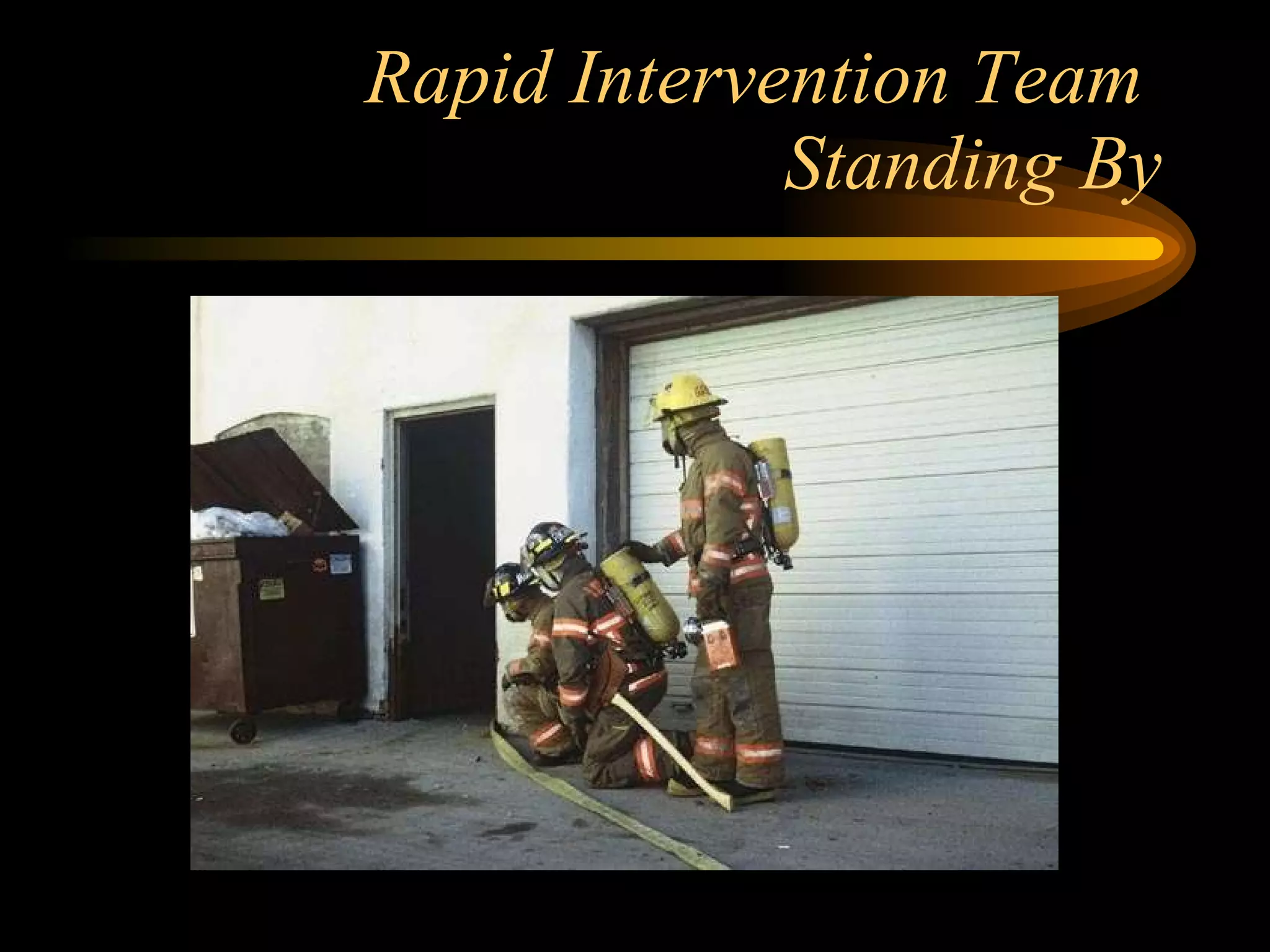
Search of Burning  Structures  (1 of 3) This is one of the most dangerous rescue situations. Training, practicing, and planning are the best ways to reduce danger. Always enter in teams of two or more. Two firefighters in full gear and a charged line should be ready to go in, if needed. Known as two-in/two-out rule
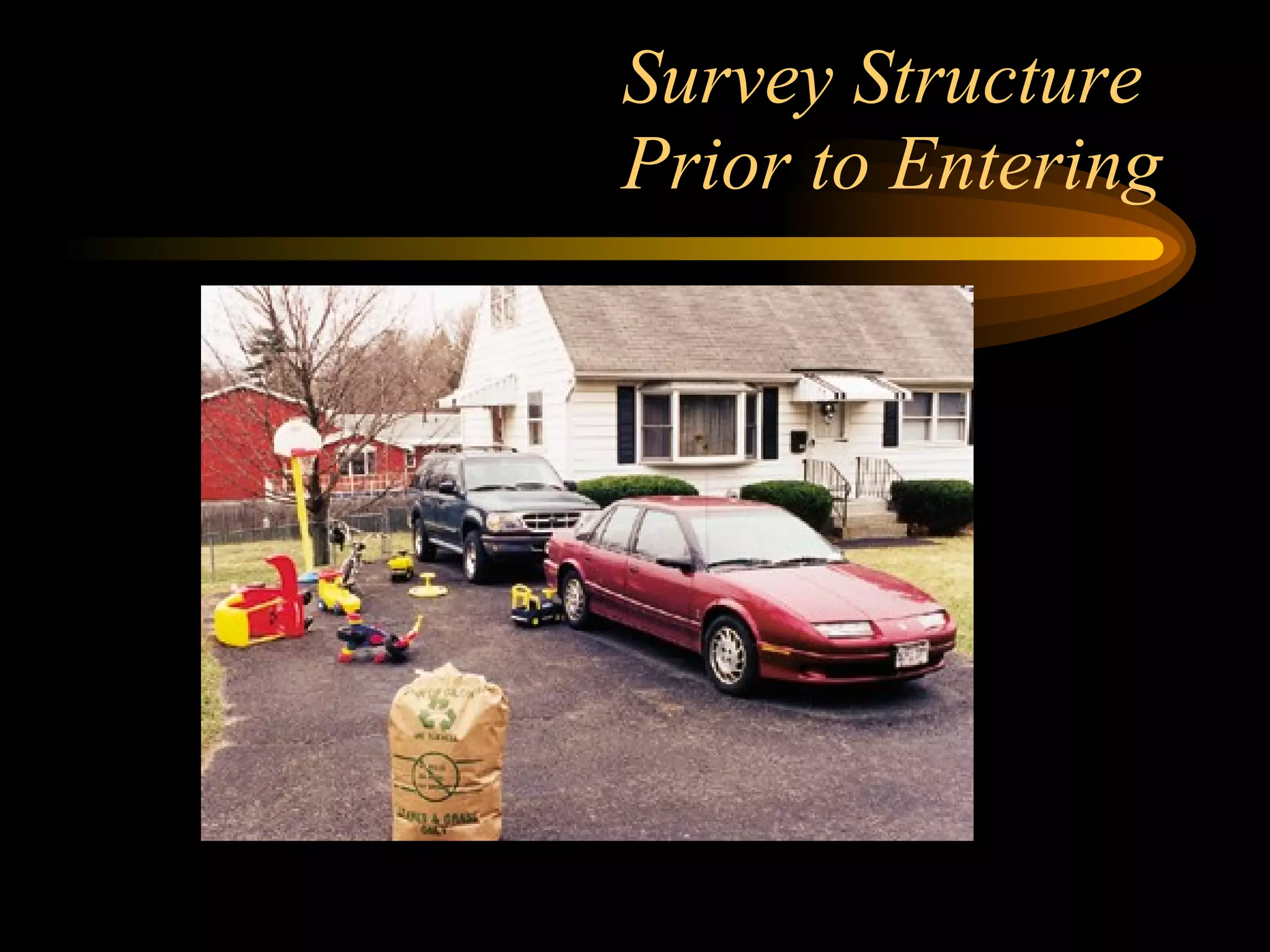
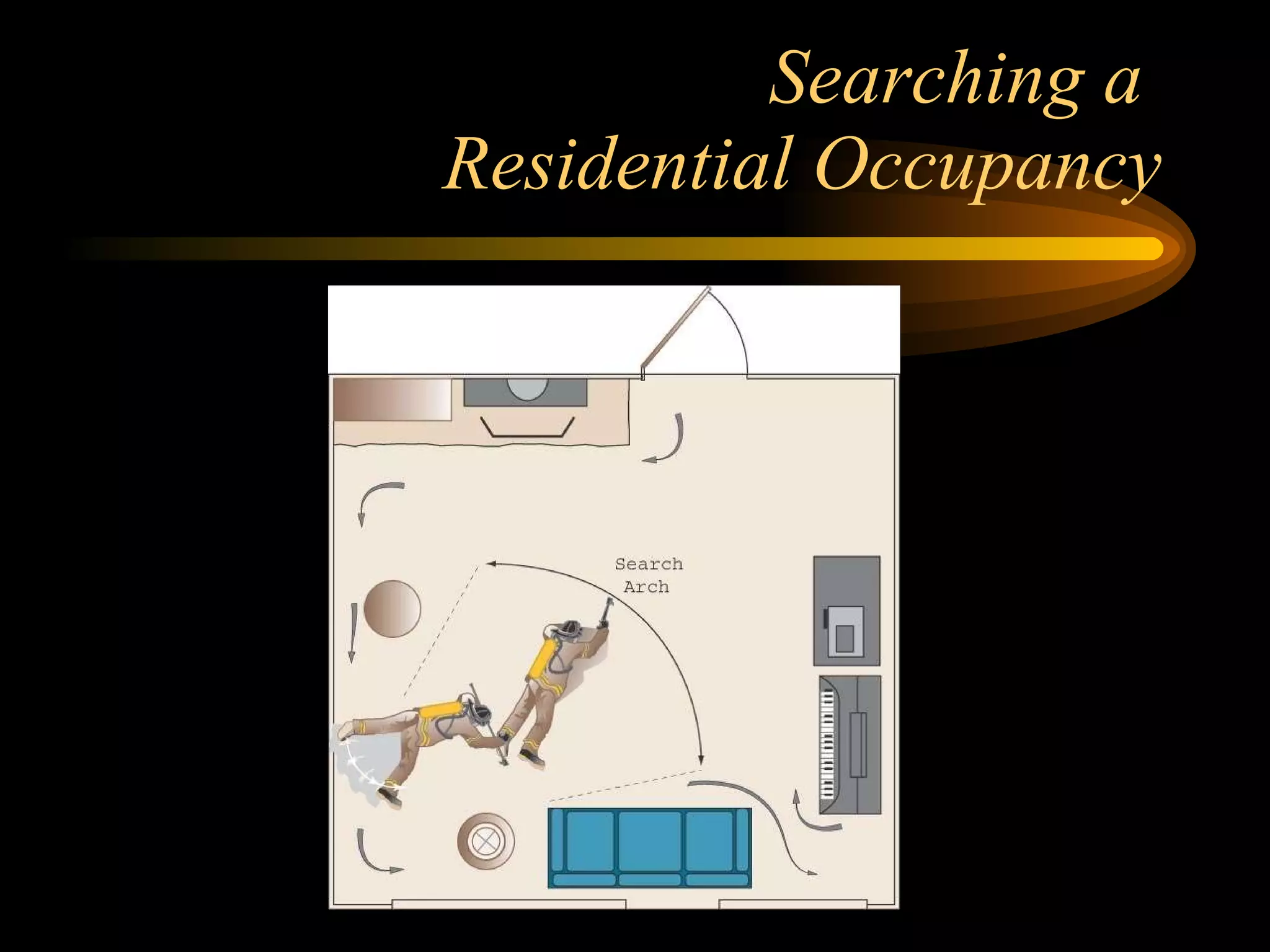
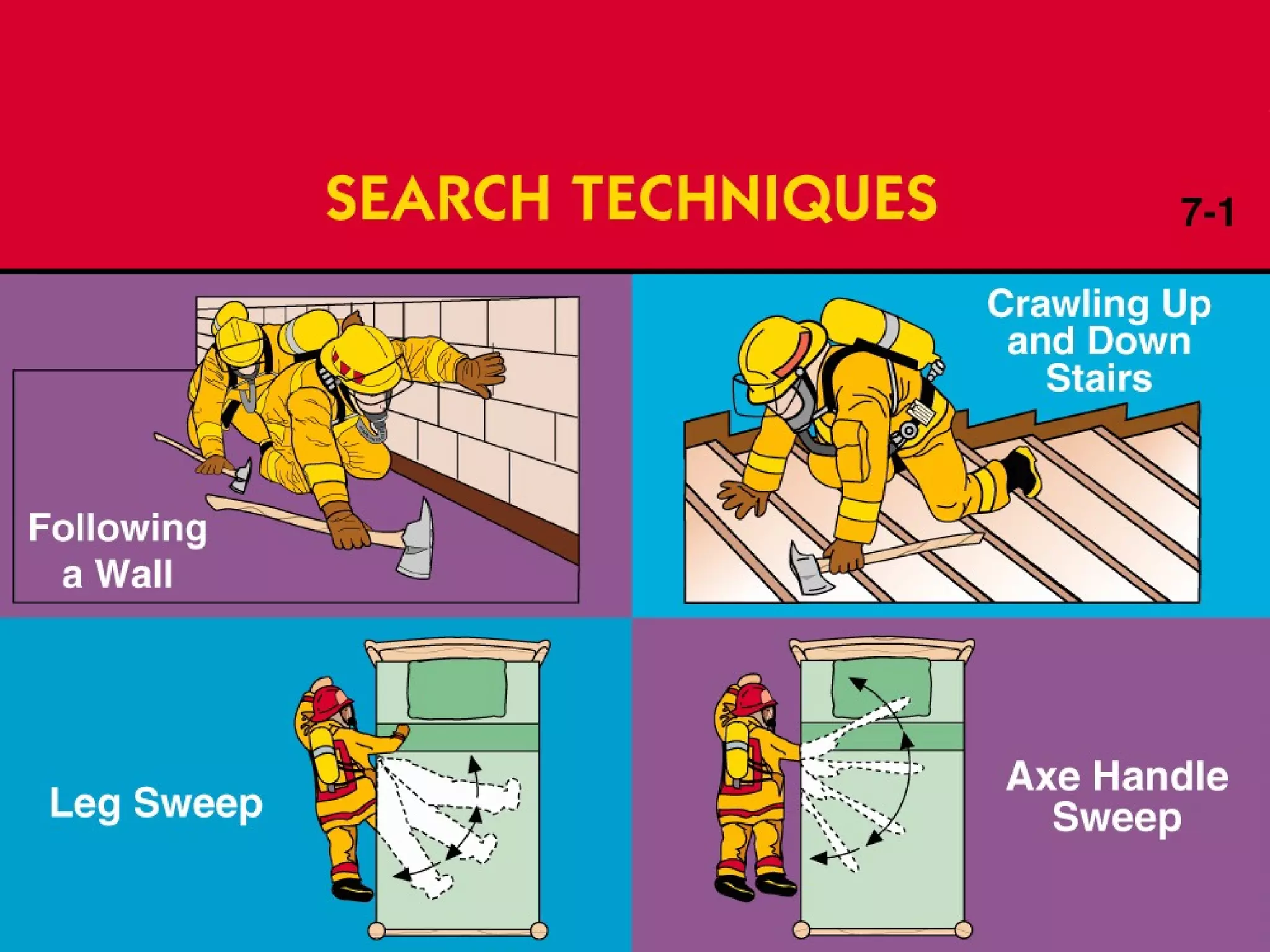
Search of Burning  Structures  (2 of 3) Perform a quick survey of structure and surroundings. Always carry a tool, flashlight, and radio when searching. Thermal imagers may help “see” through smoke. Search single-family structures using wall as reference. Known as “right-handed” or “left-handed” search
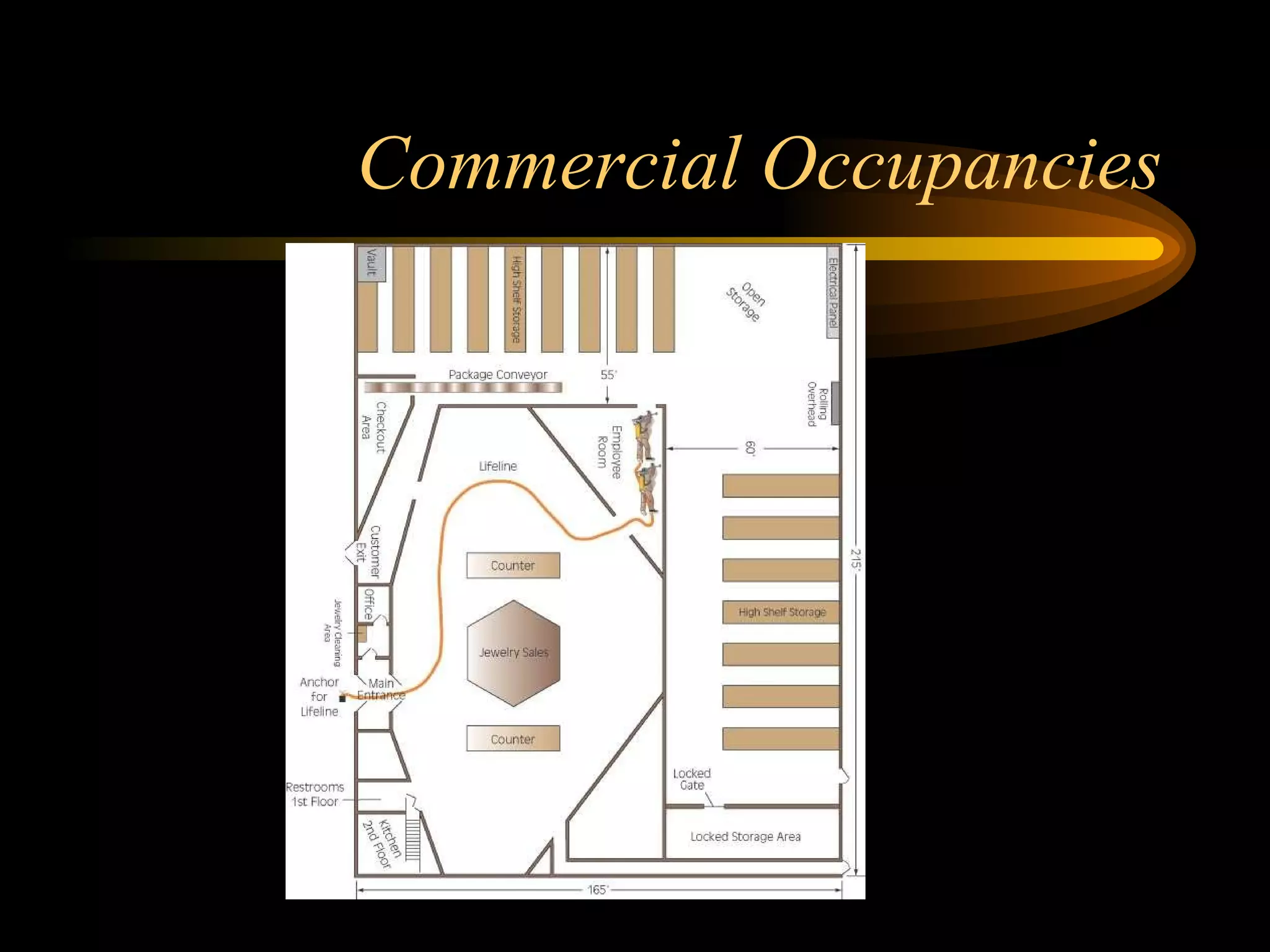
Search of Burning  Structures  (3 of 3) Commercial or industrial structures require use of lifeline or guideline. There are two operations to searching a building. Primary search Secondary search
Search Team
Rapid Intervention Team  Standing By
Survey Structure  Prior to Entering
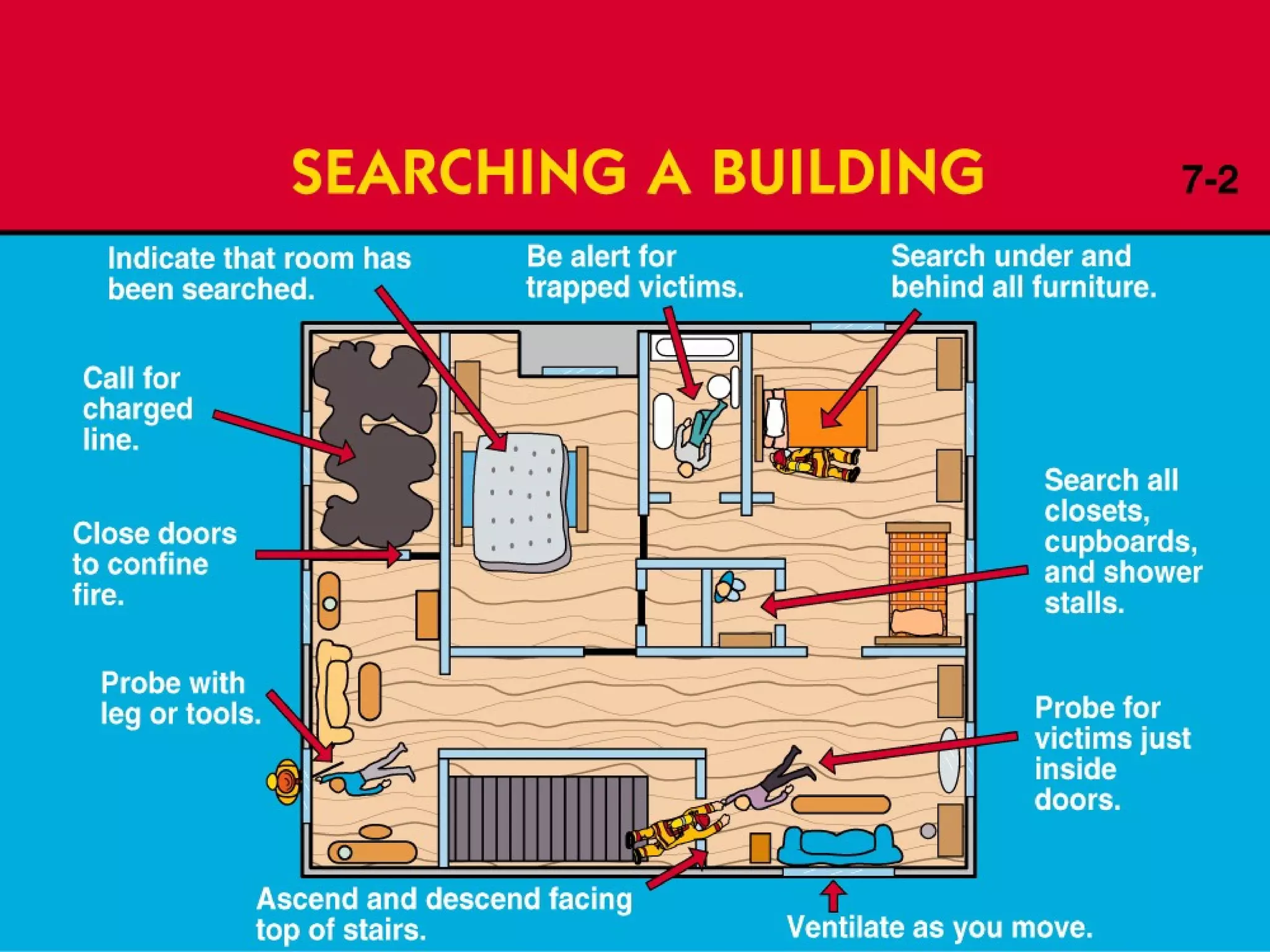
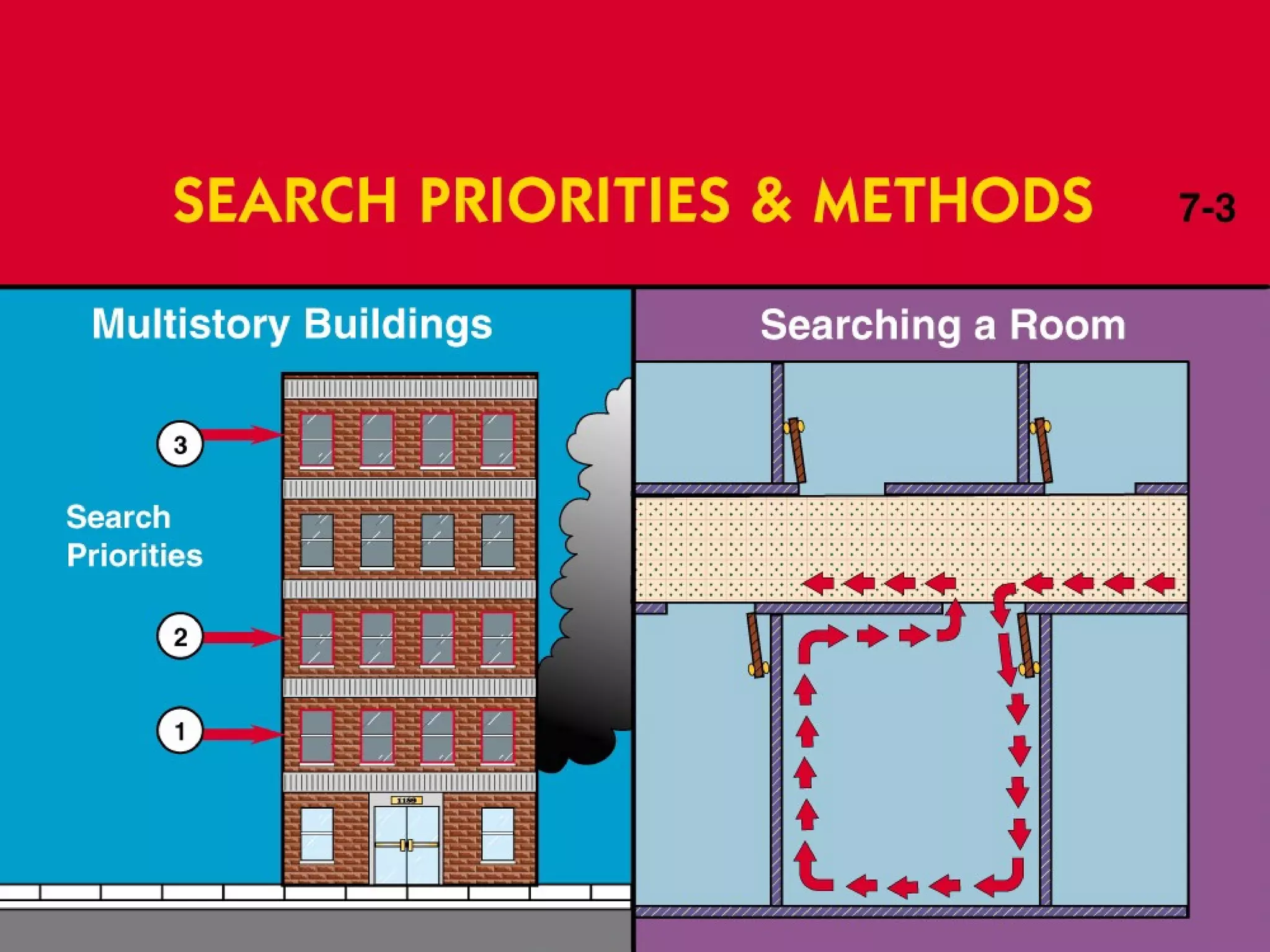
Searching a  Residential Occupancy
Commercial Occupancies
 
 
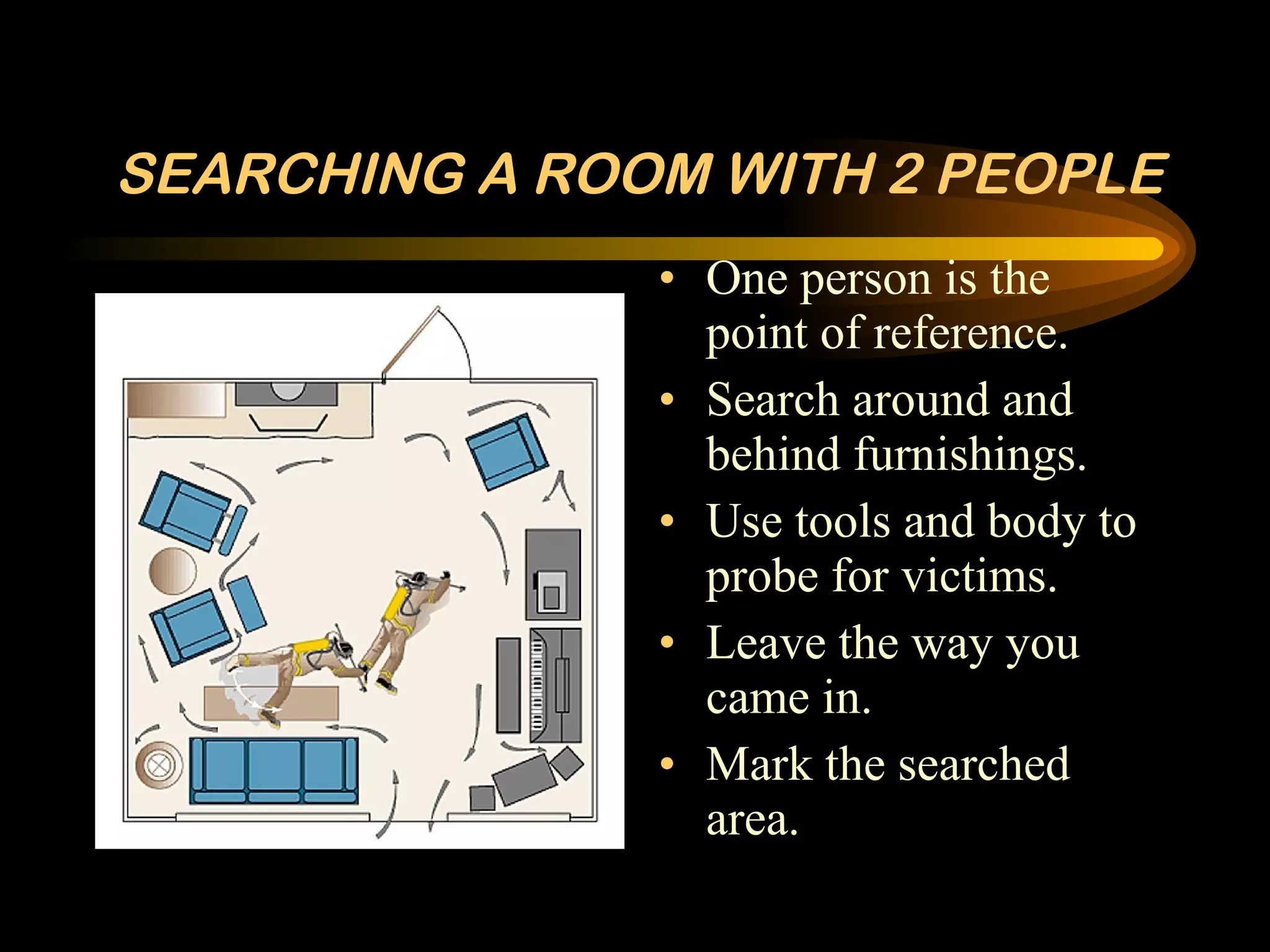
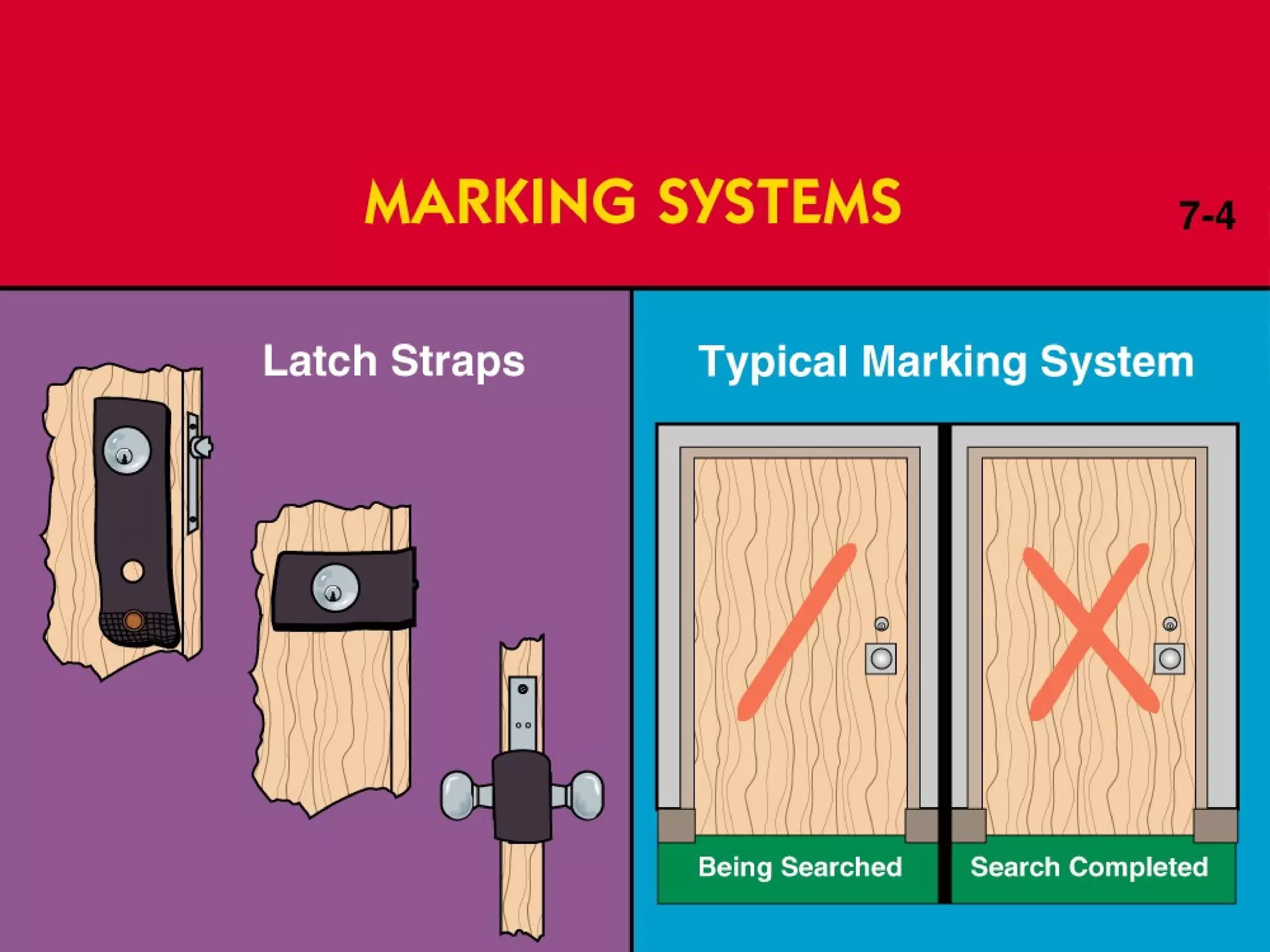
SEARCHING A ROOM WITH 2 PEOPLE One person is the point of reference. Search around and behind furnishings. Use tools and body to probe for victims. Leave the way you came in. Mark the searched area.
 
 
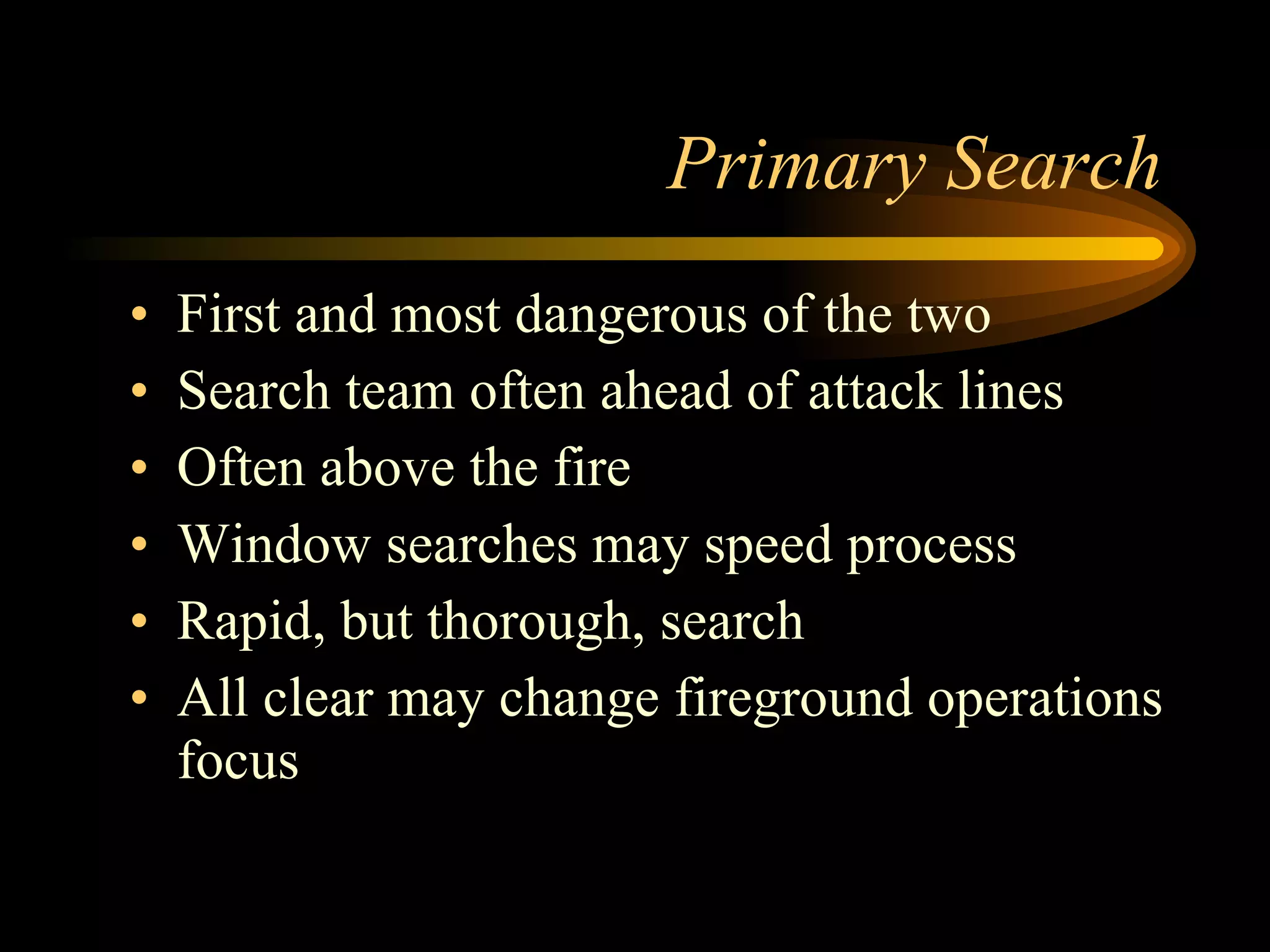
Primary Search First and most dangerous of the two Search team often ahead of attack lines Often above the fire Window searches may speed process Rapid, but thorough, search All clear may change fireground operations focus
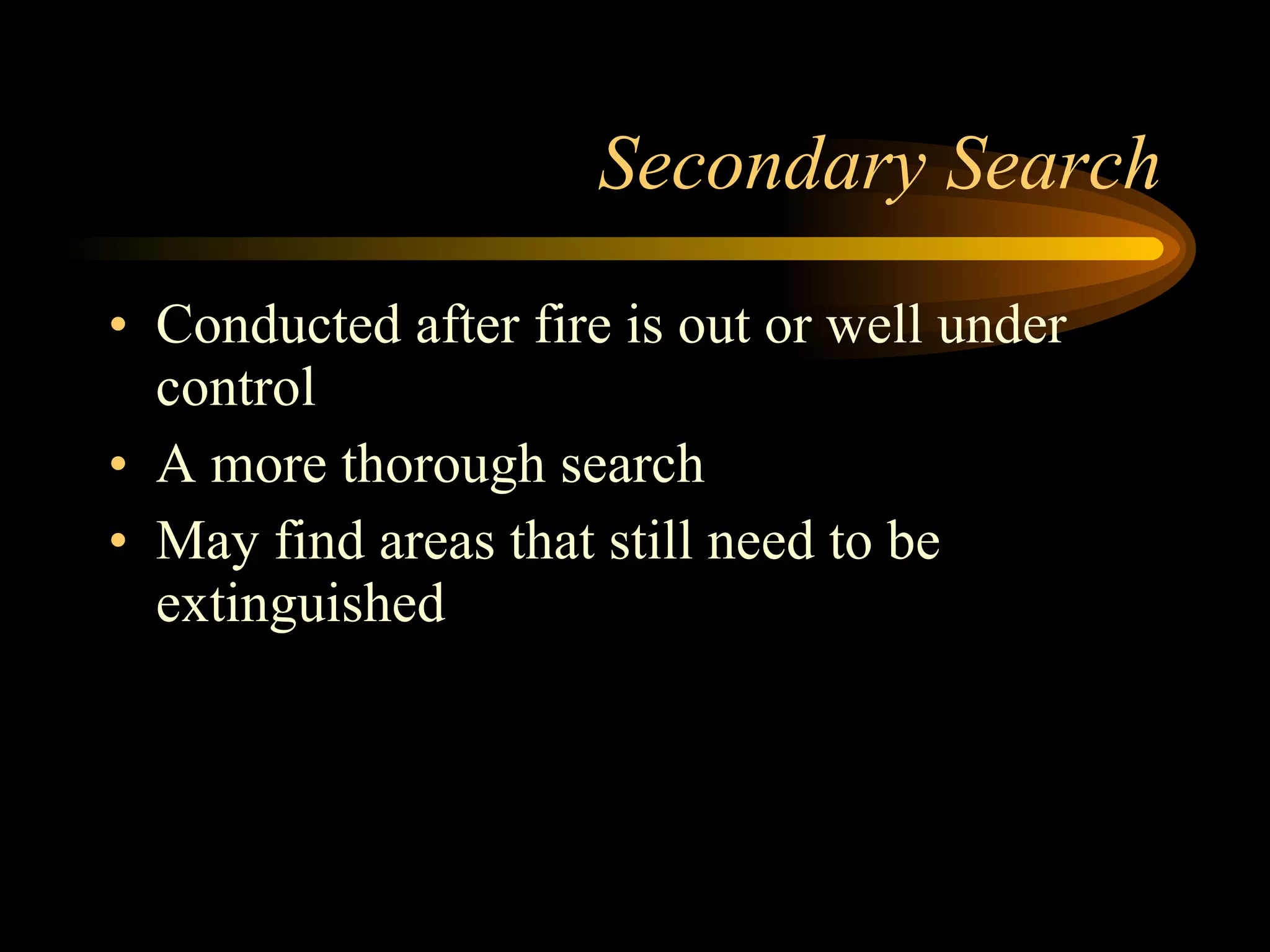
Secondary Search Conducted after fire is out or well under control A more thorough search May find areas that still need to be extinguished
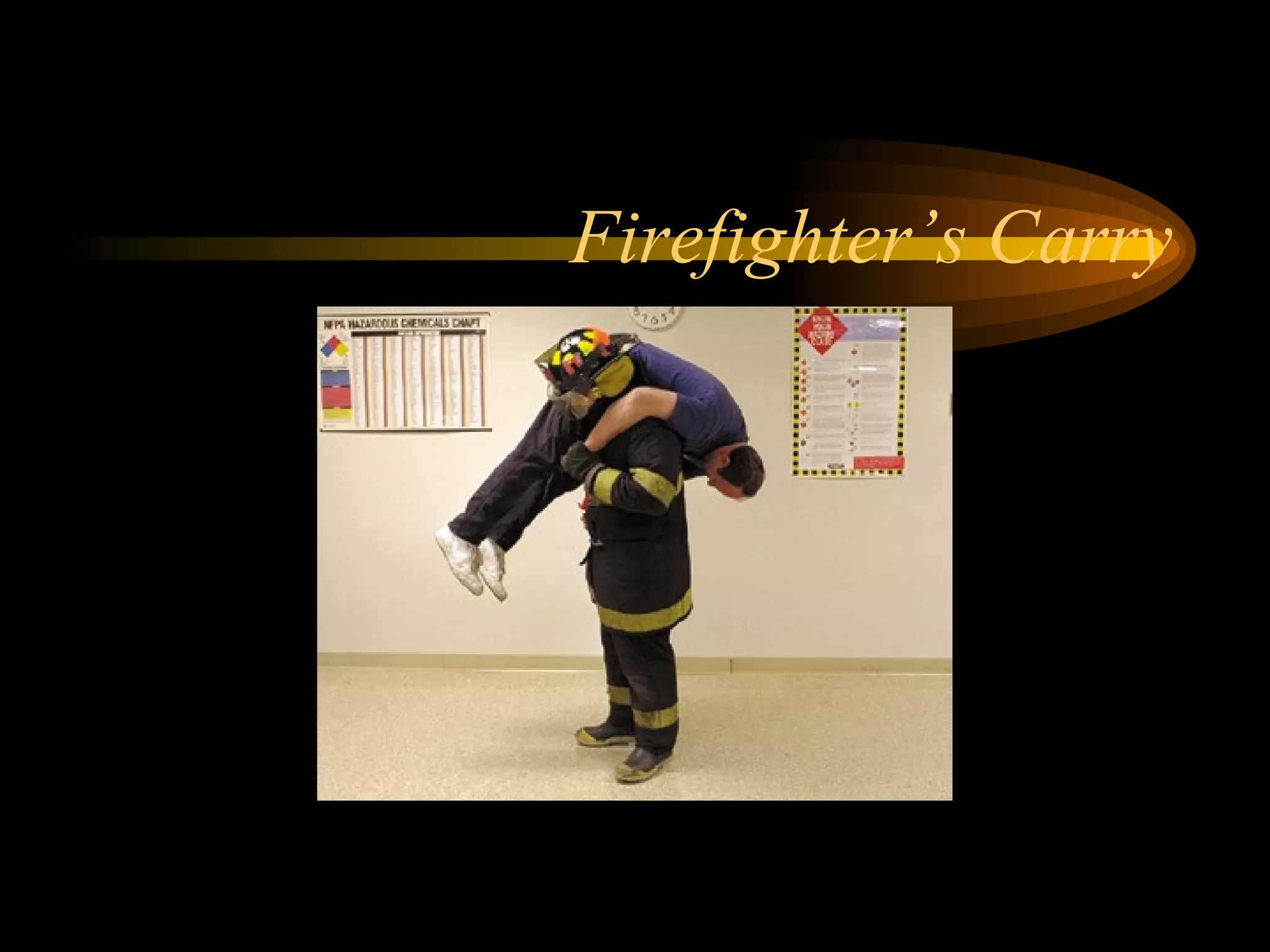
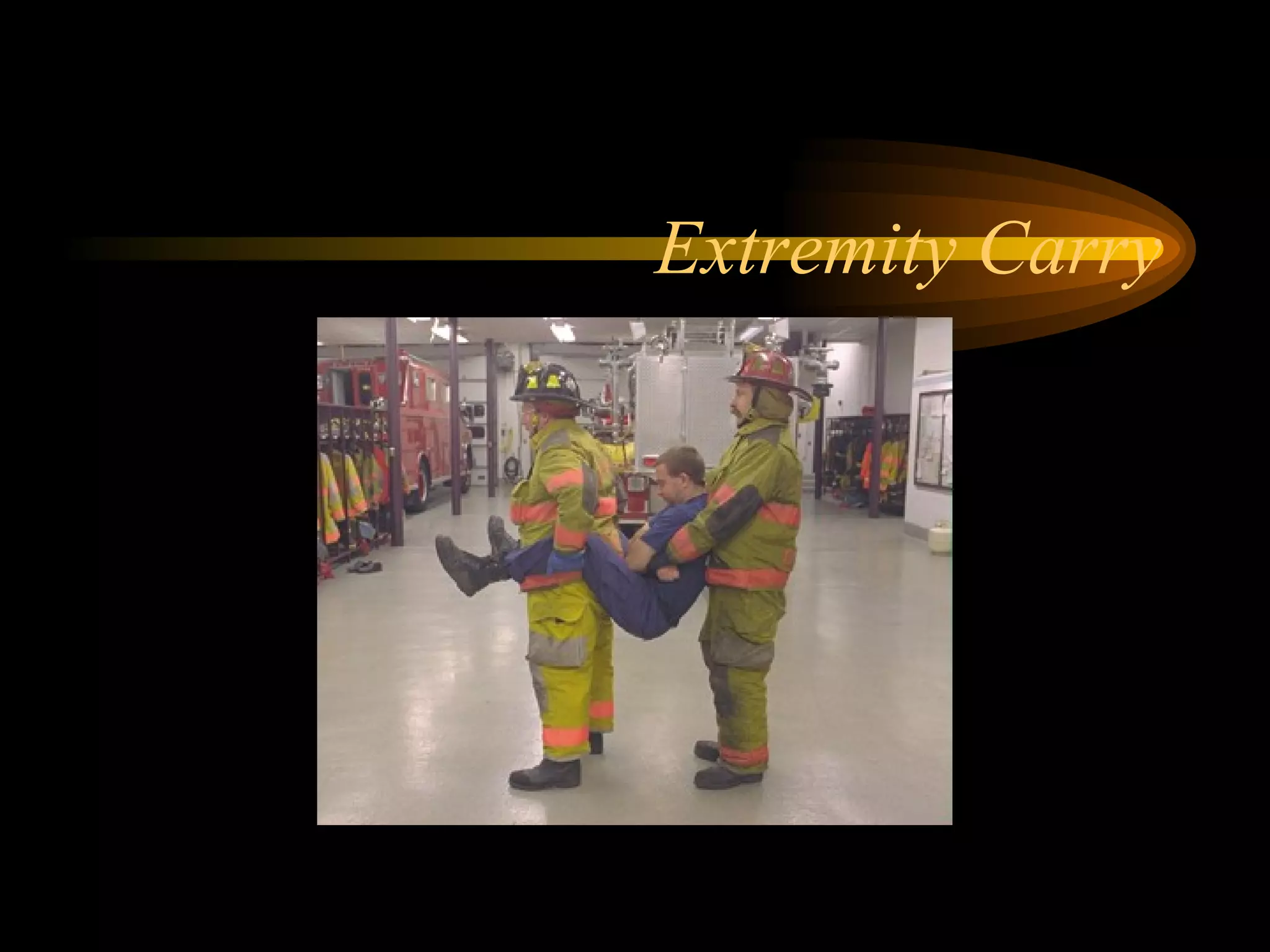
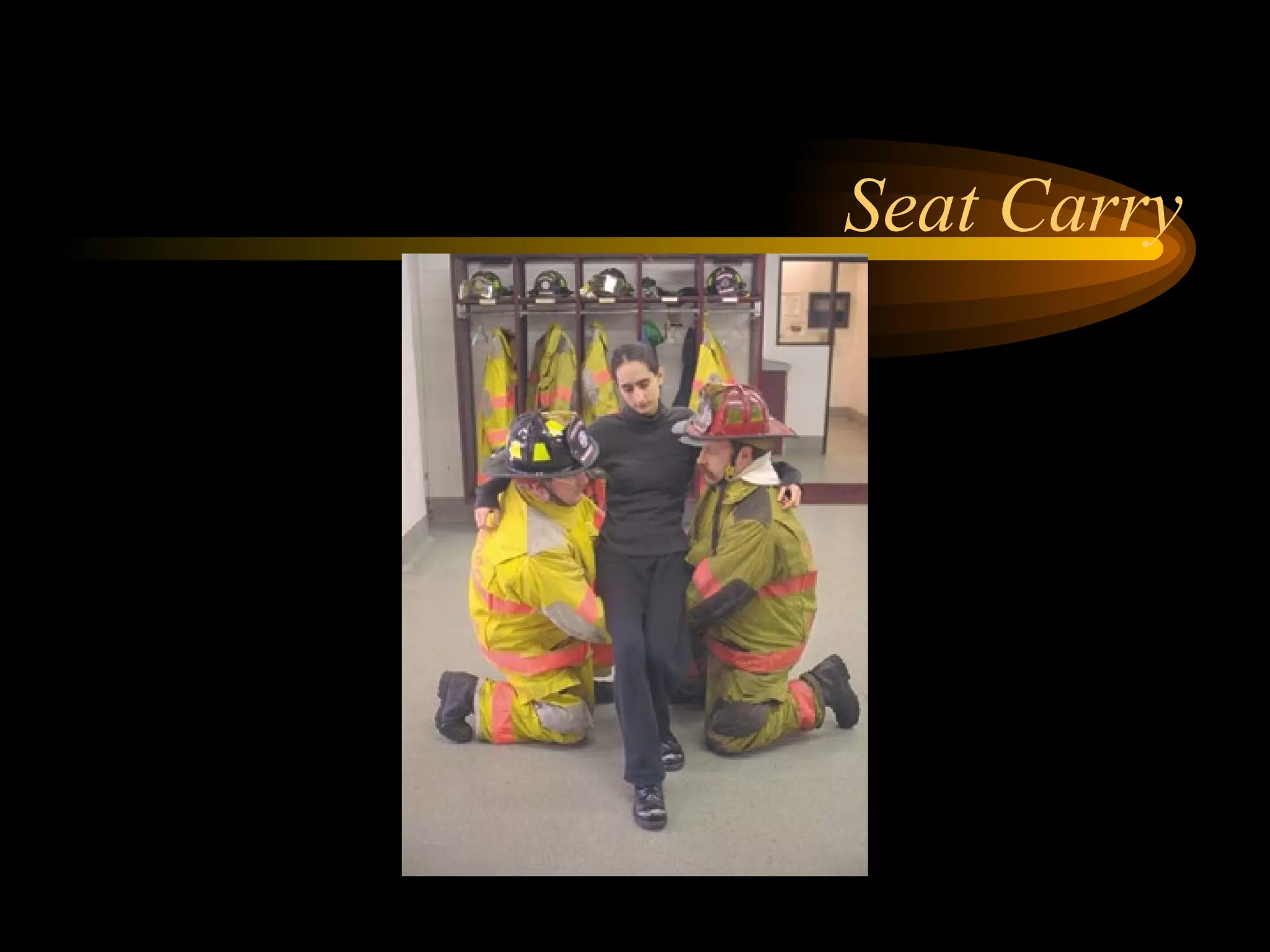
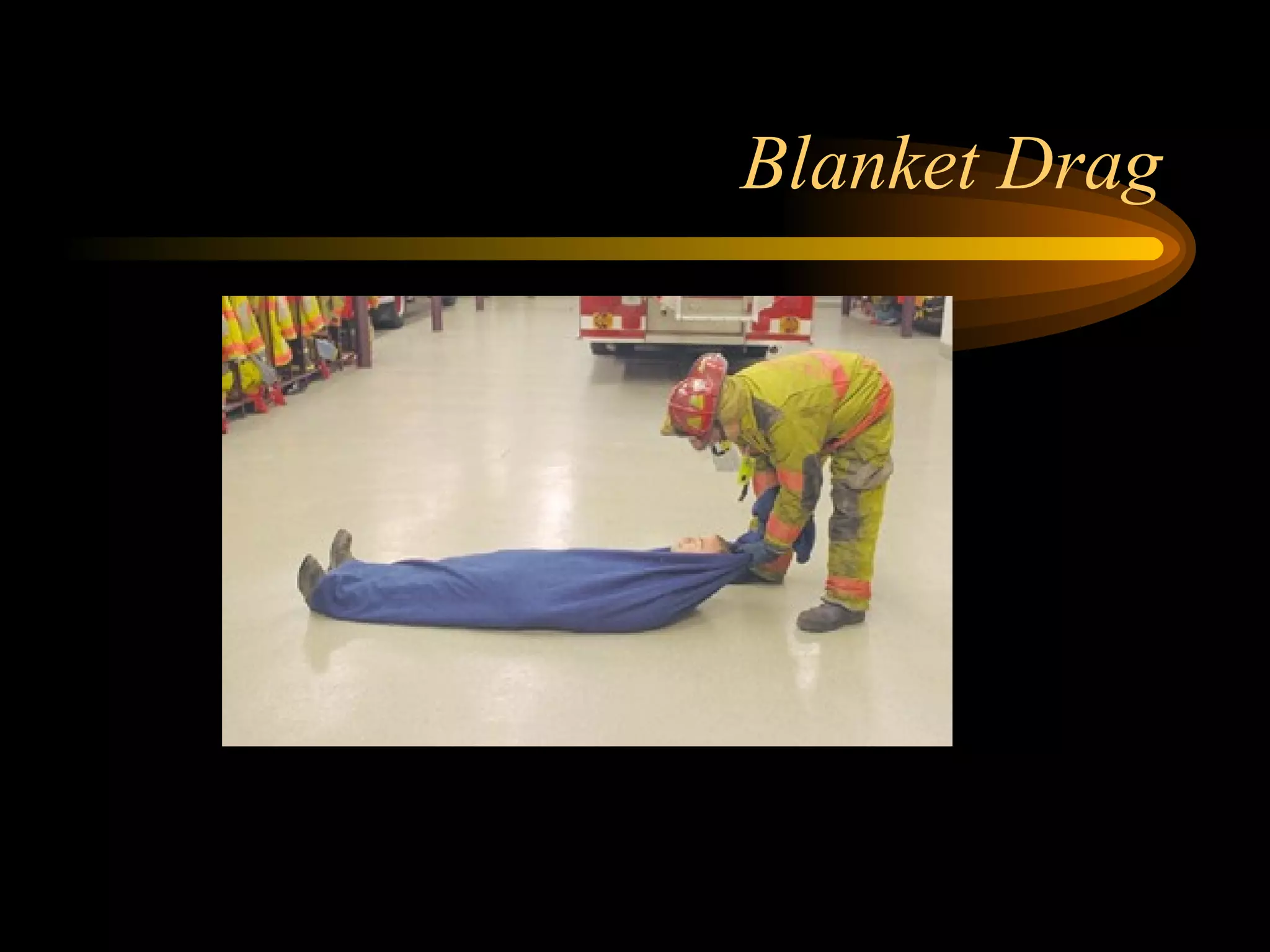
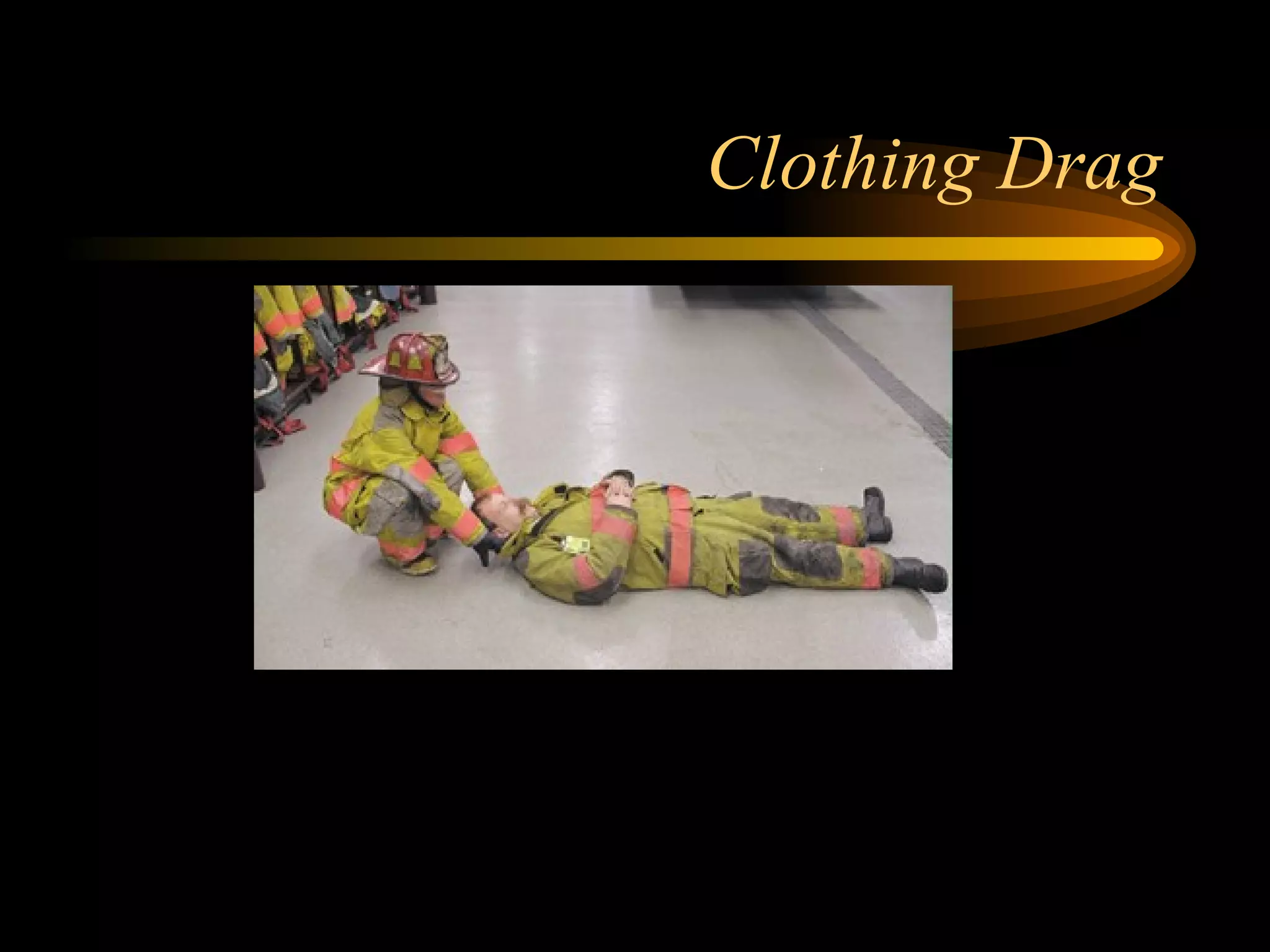
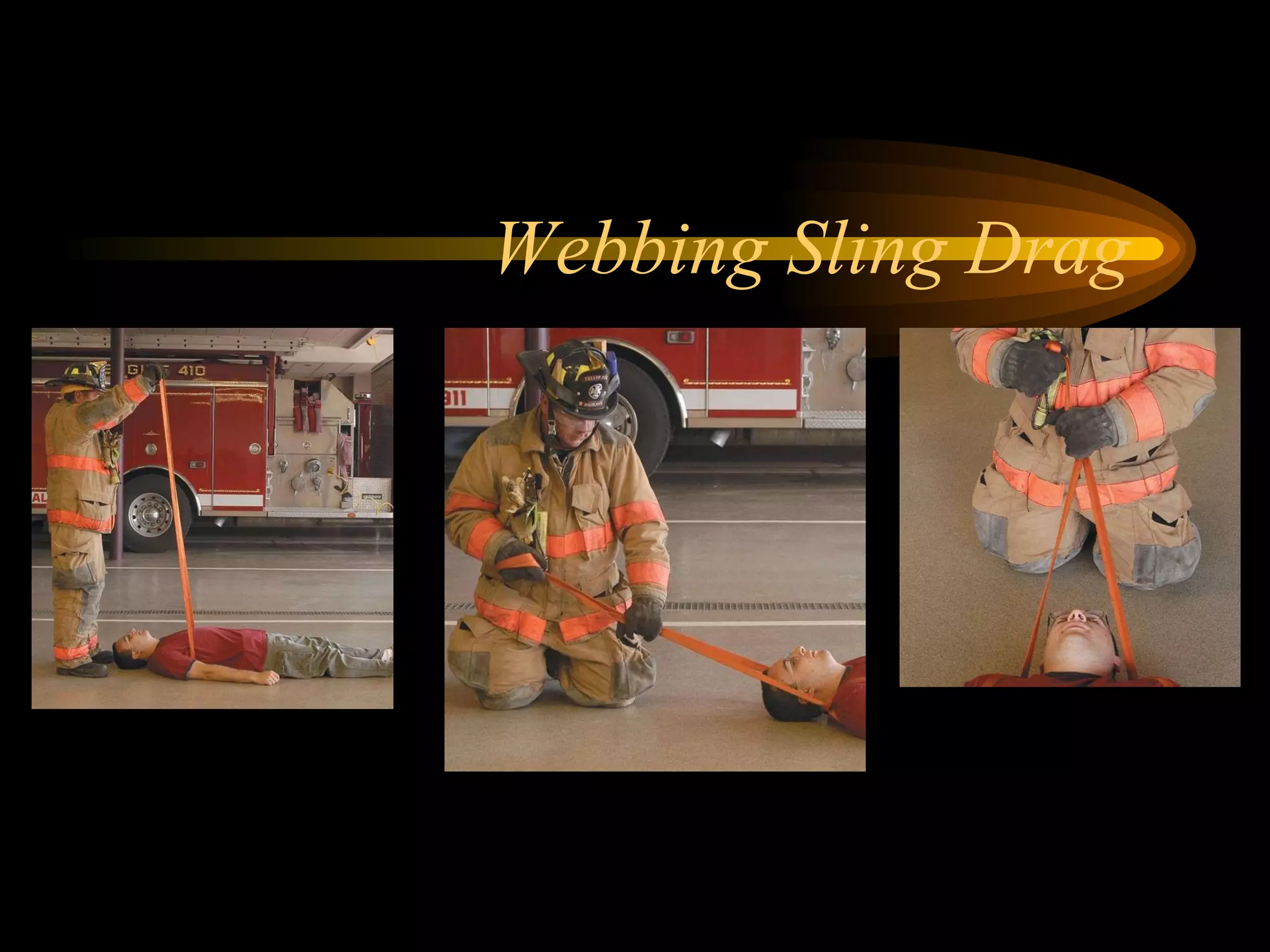
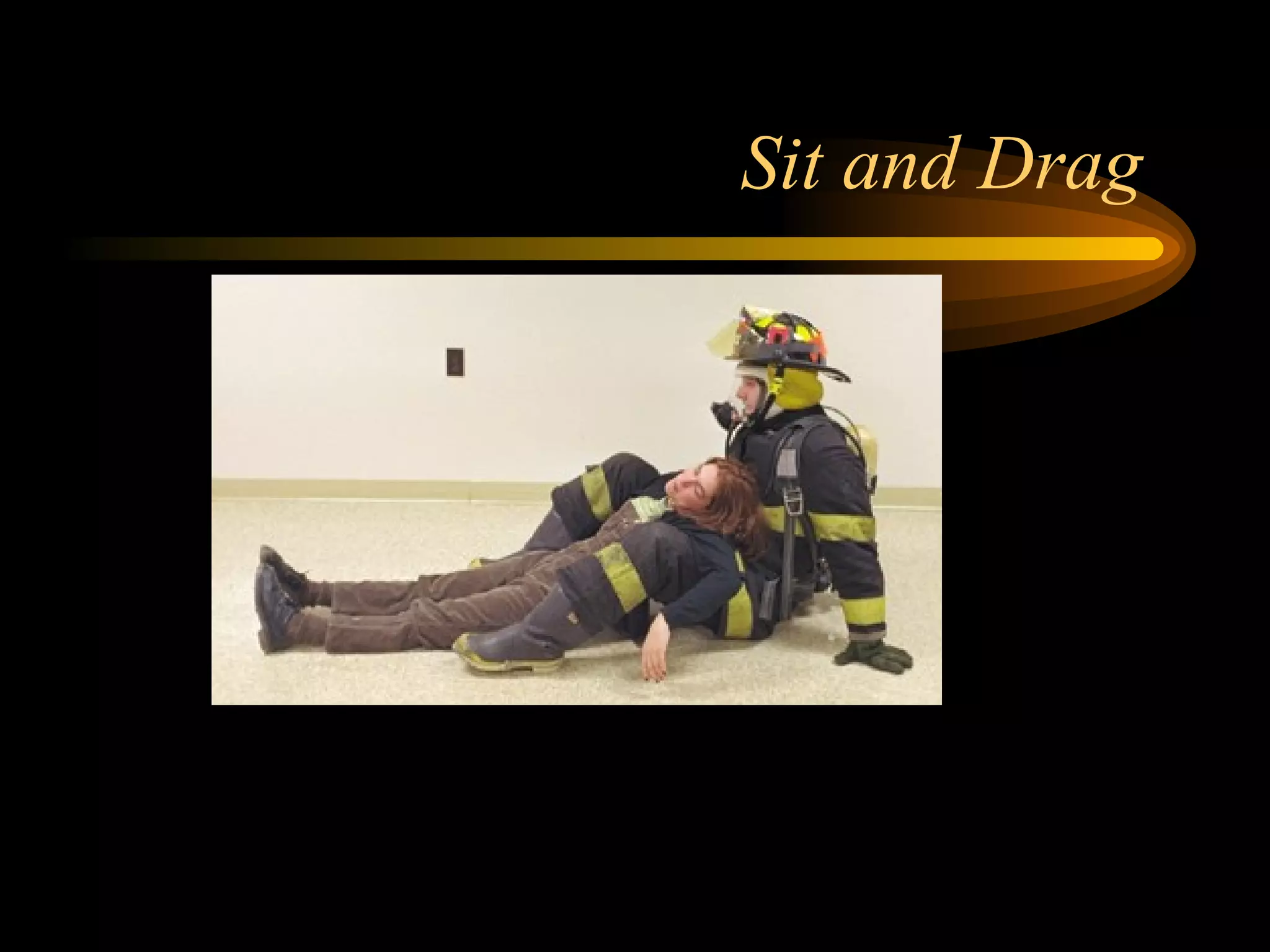
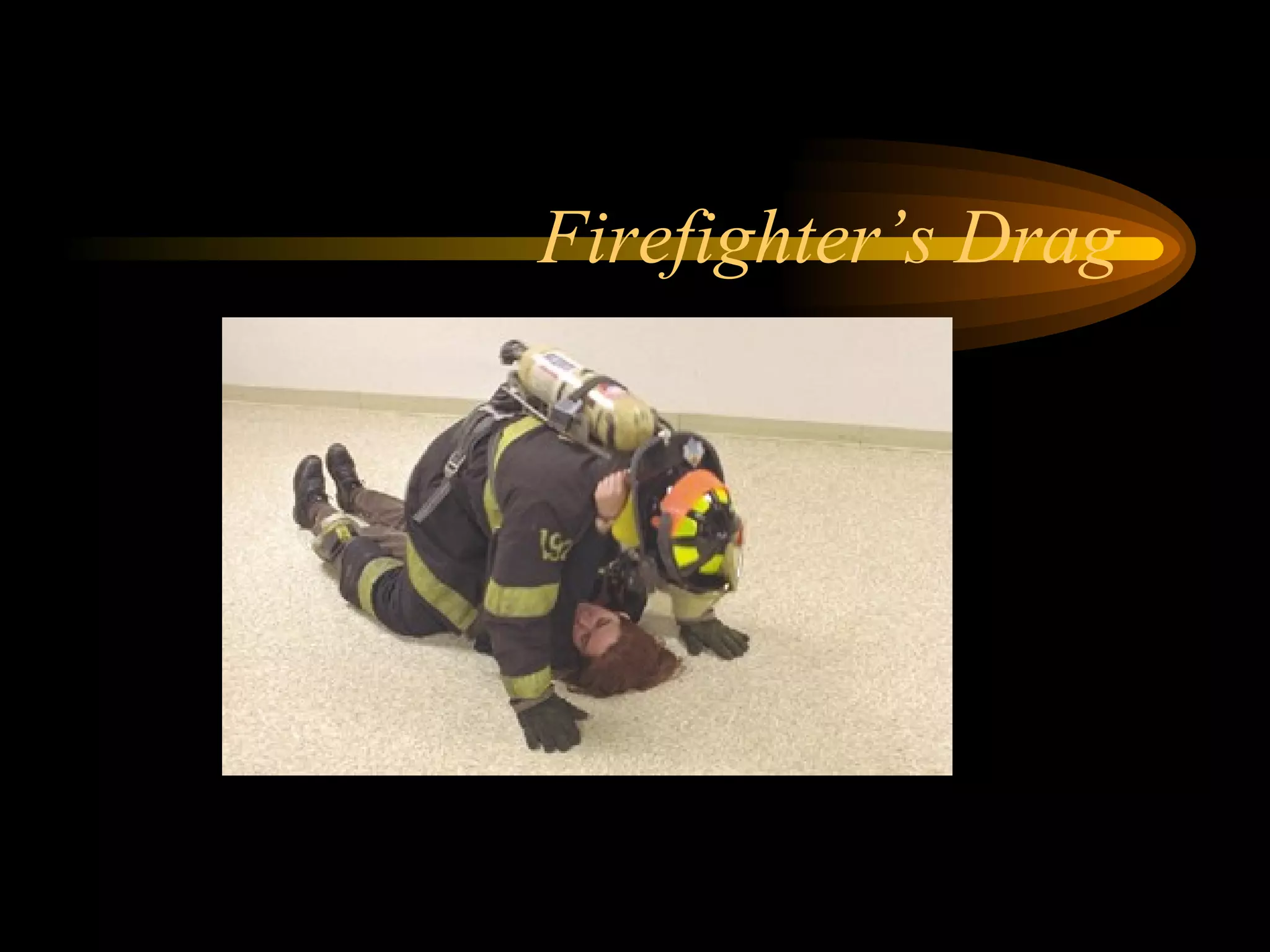
Victim Removal, Drags,  and Carries Victims must be removed carefully and expeditiously. Try to not cause further injury or aggravate existing injury. You may not be able to give care due to hazardous or hostile environment. Use “tight core” to create power and reduce injury.
Firefighter’s Carry
Extremity Carry
Seat Carry
Blanket Drag
Clothing Drag
Webbing Sling Drag
Sit and Drag
Firefighter’s Drag
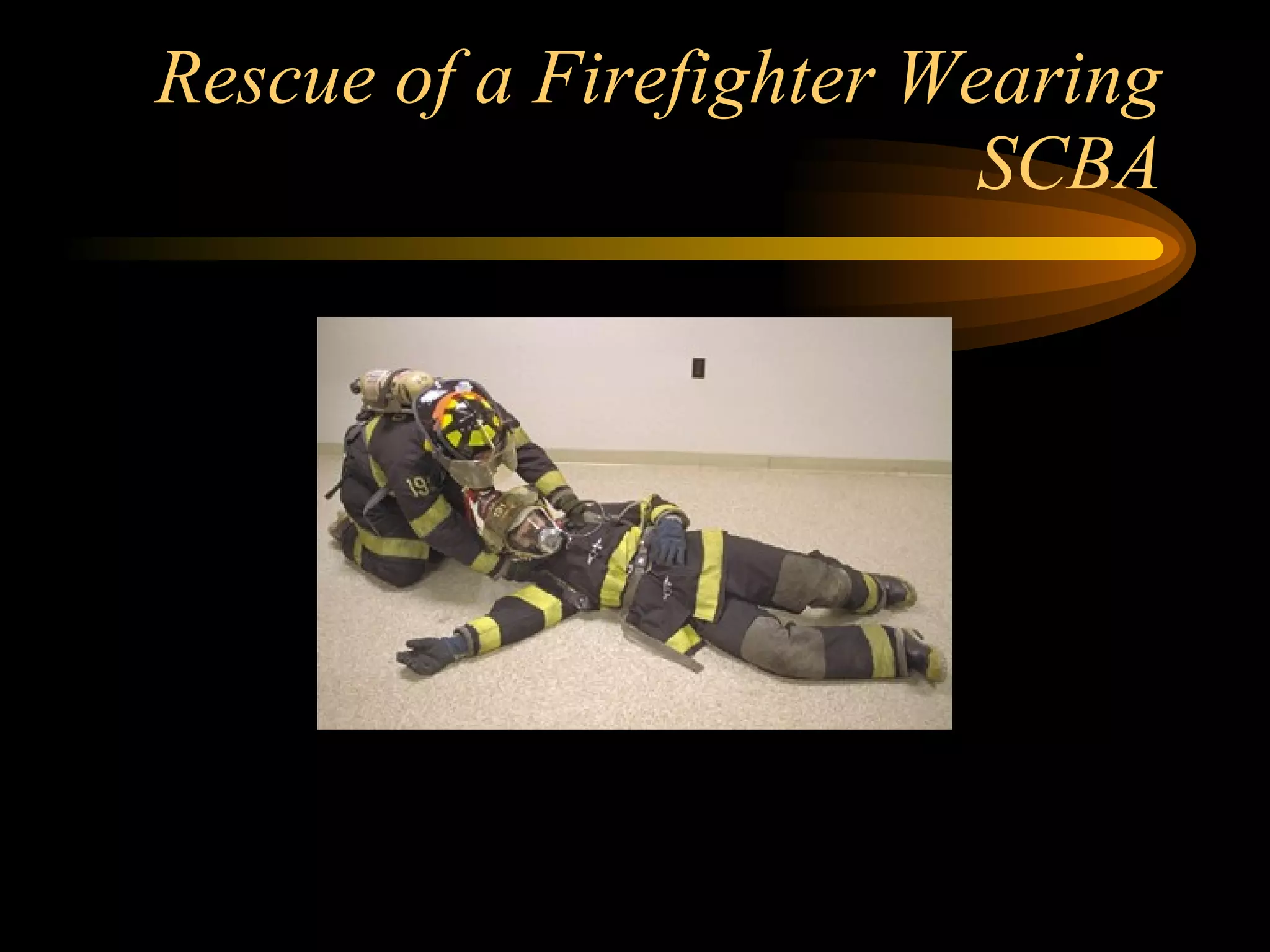
Rescue of a Firefighter Wearing SCBA
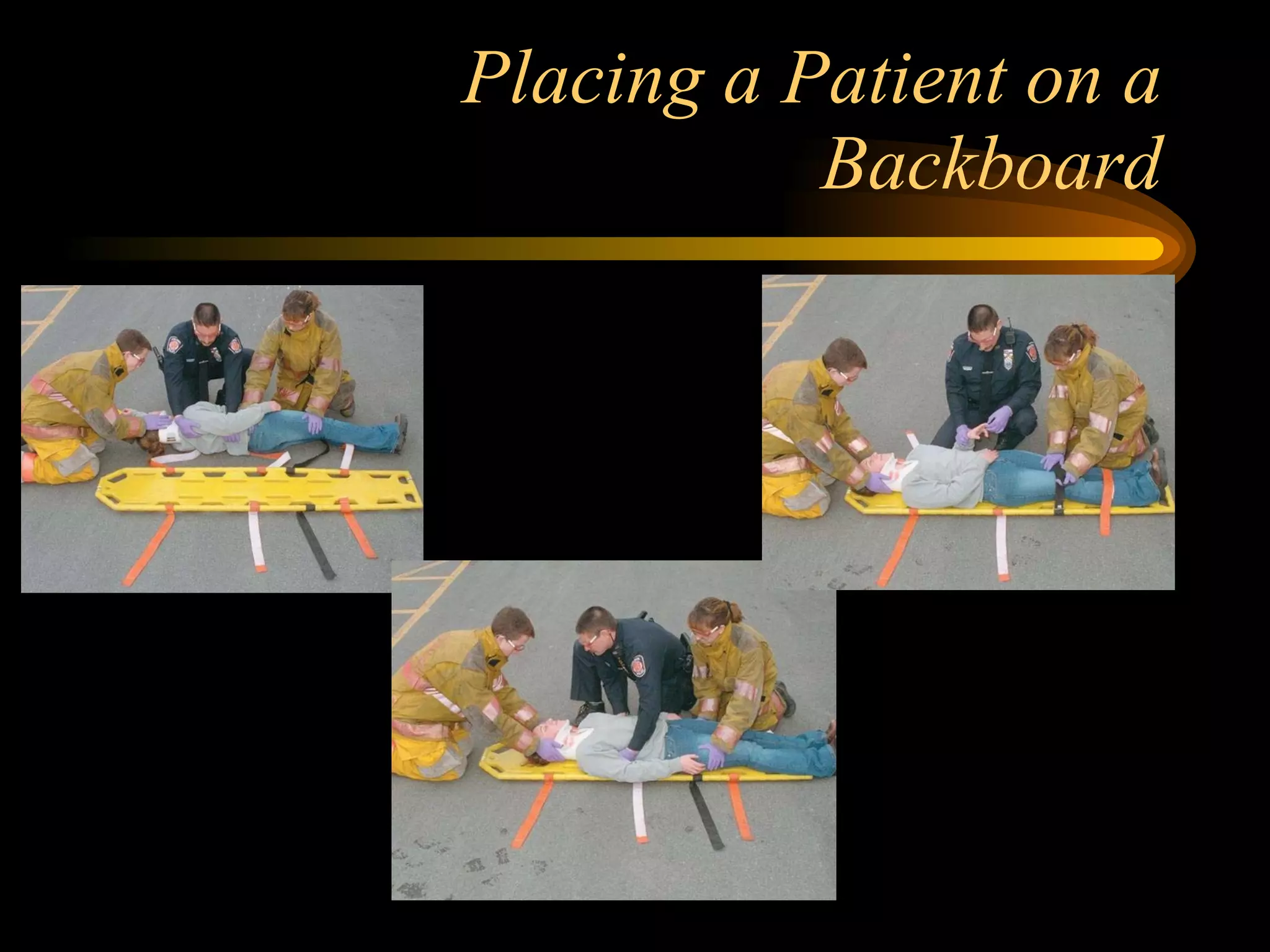
Placing a Patient on a Backboard
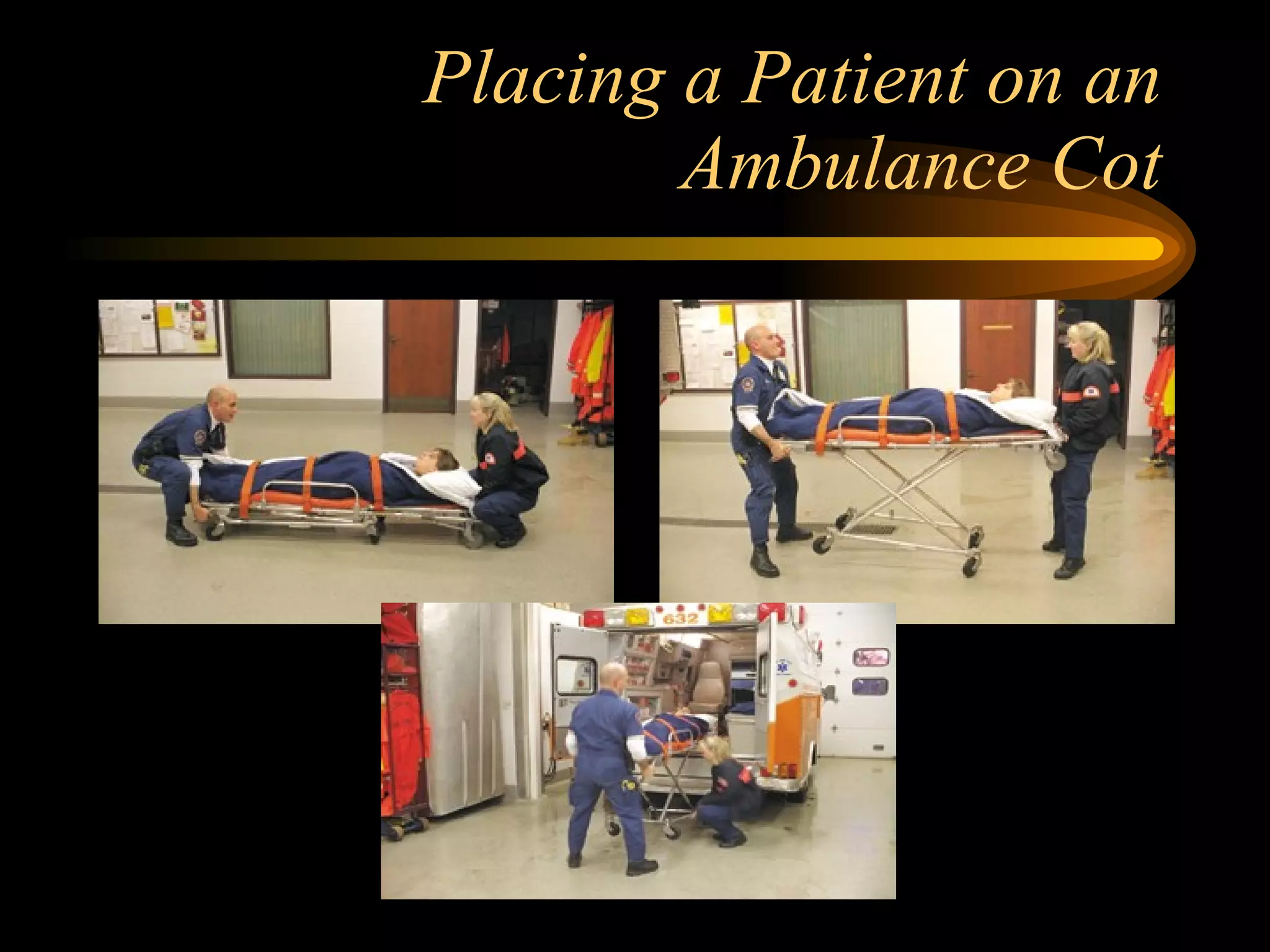
Placing a Patient on an Ambulance Cot
Extrication From Motor Vehicle Motor vehicle crashes are common rescue situations. Knowledge, experience, and skill are most valuable tools. Extrication means to free, release, or disentangle a patient from entrapment. Operations may be simple or complex. Operations at an extrication incident should follow a pre-determined sequence of events.
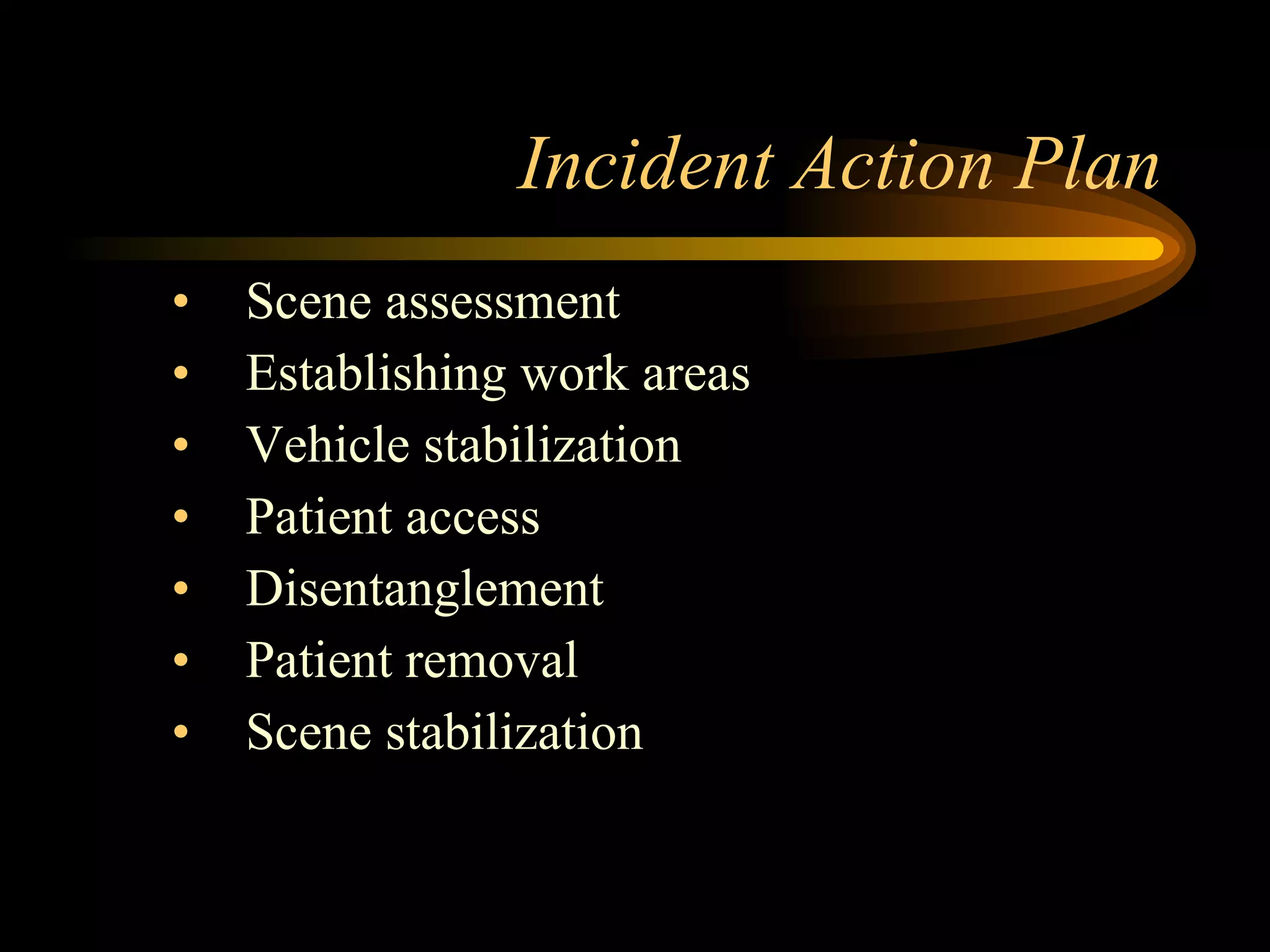
Incident Action Plan Scene assessment Establishing work areas Vehicle stabilization Patient access Disentanglement Patient removal Scene stabilization
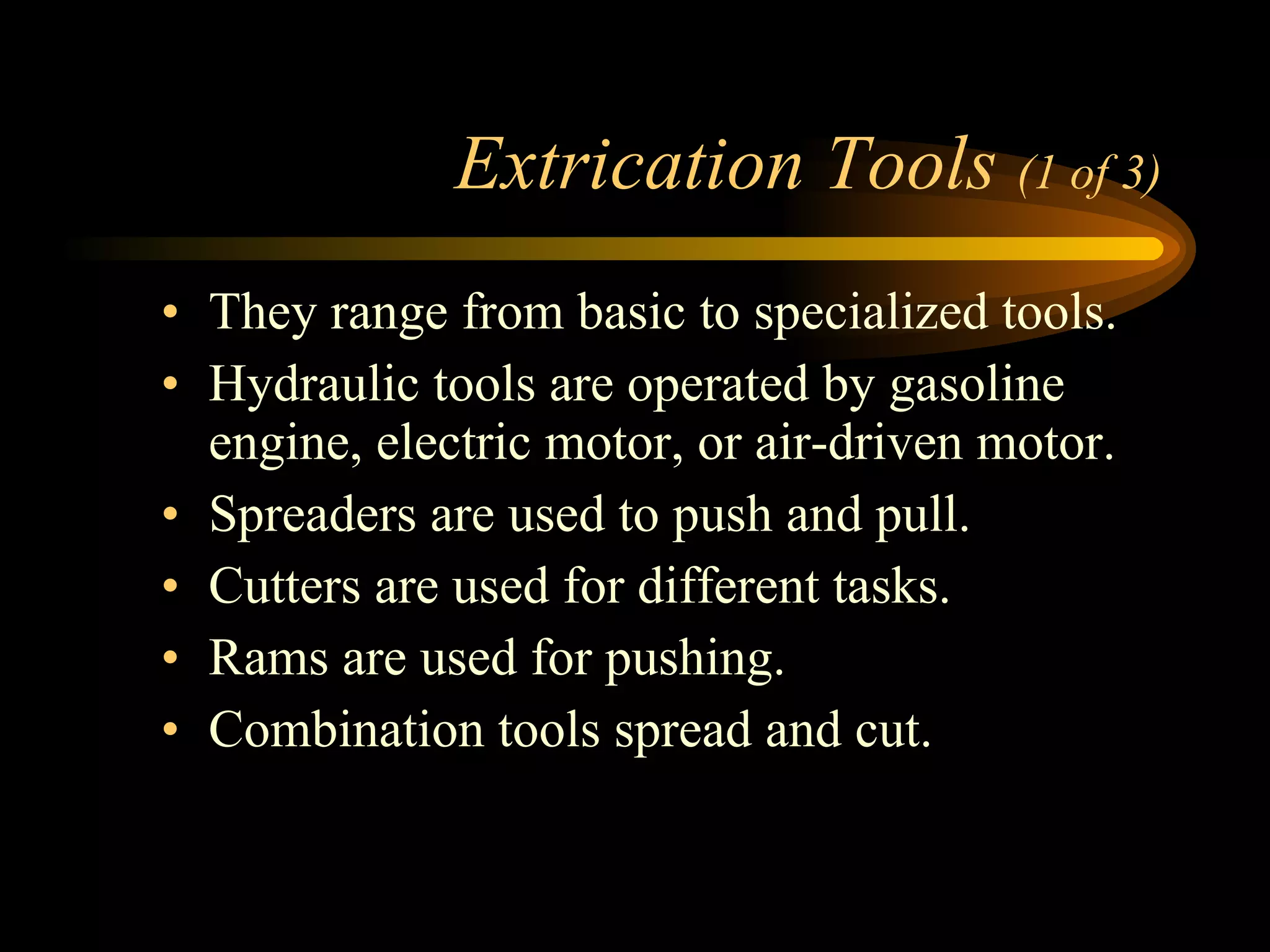
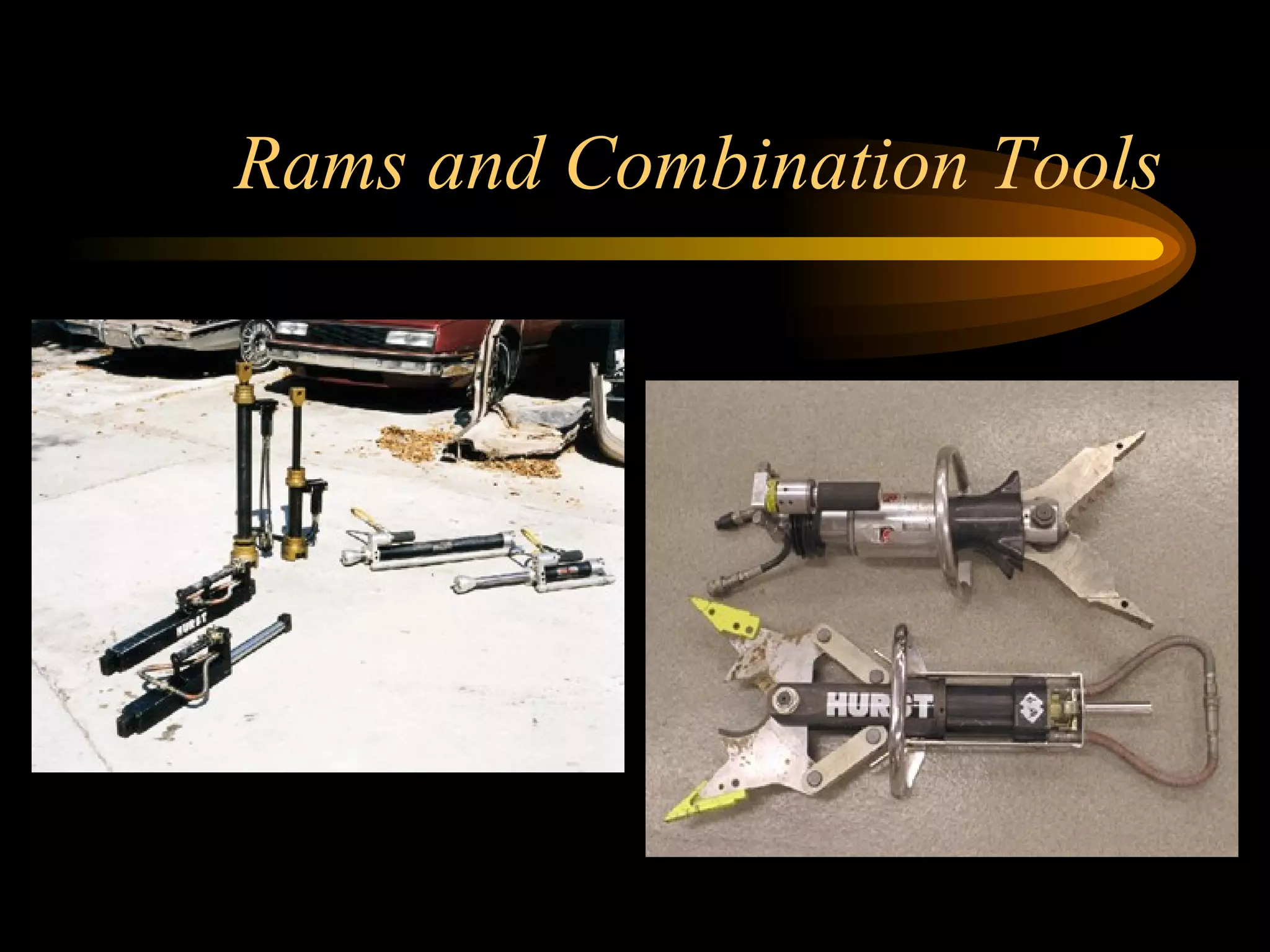
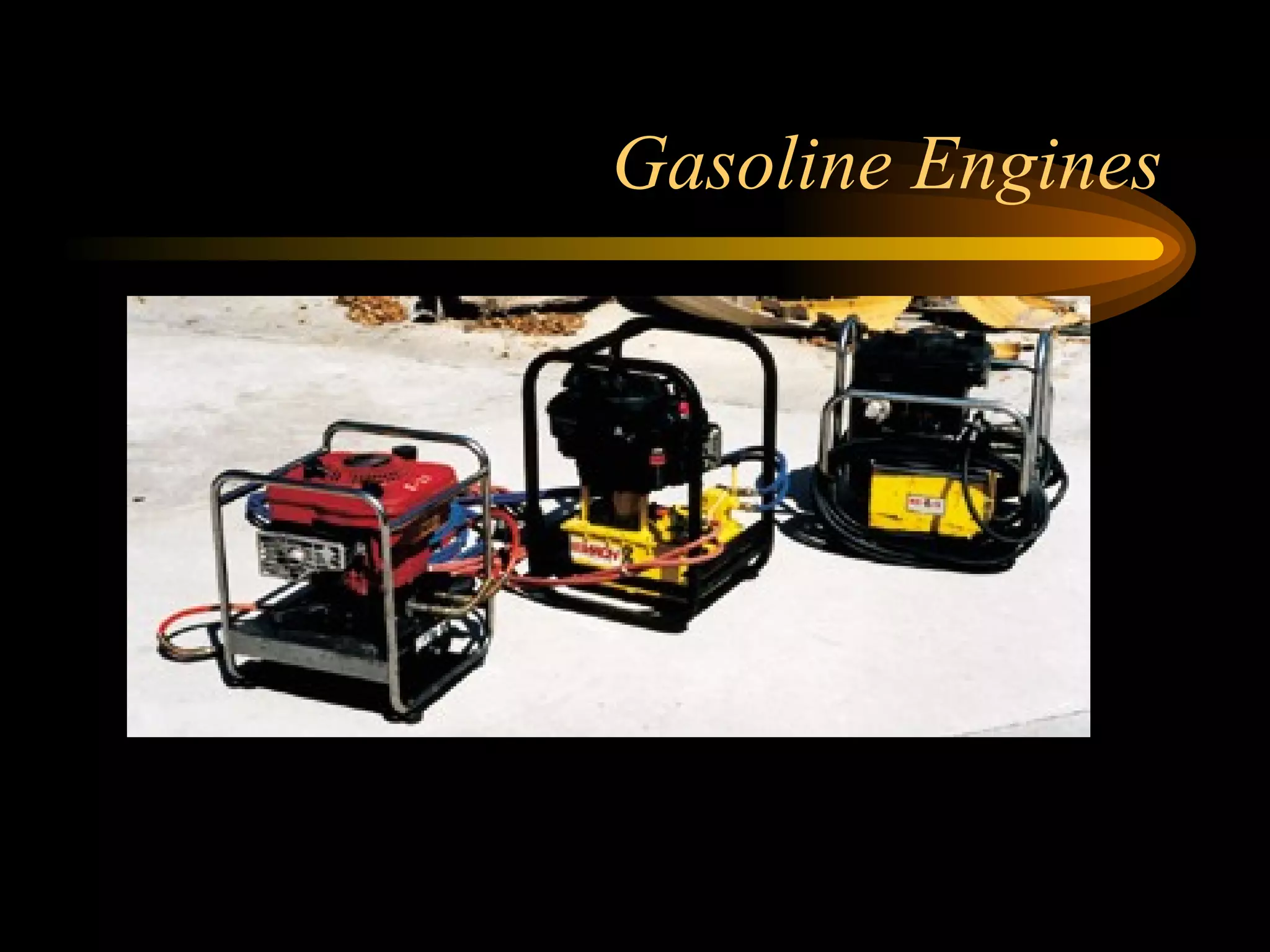
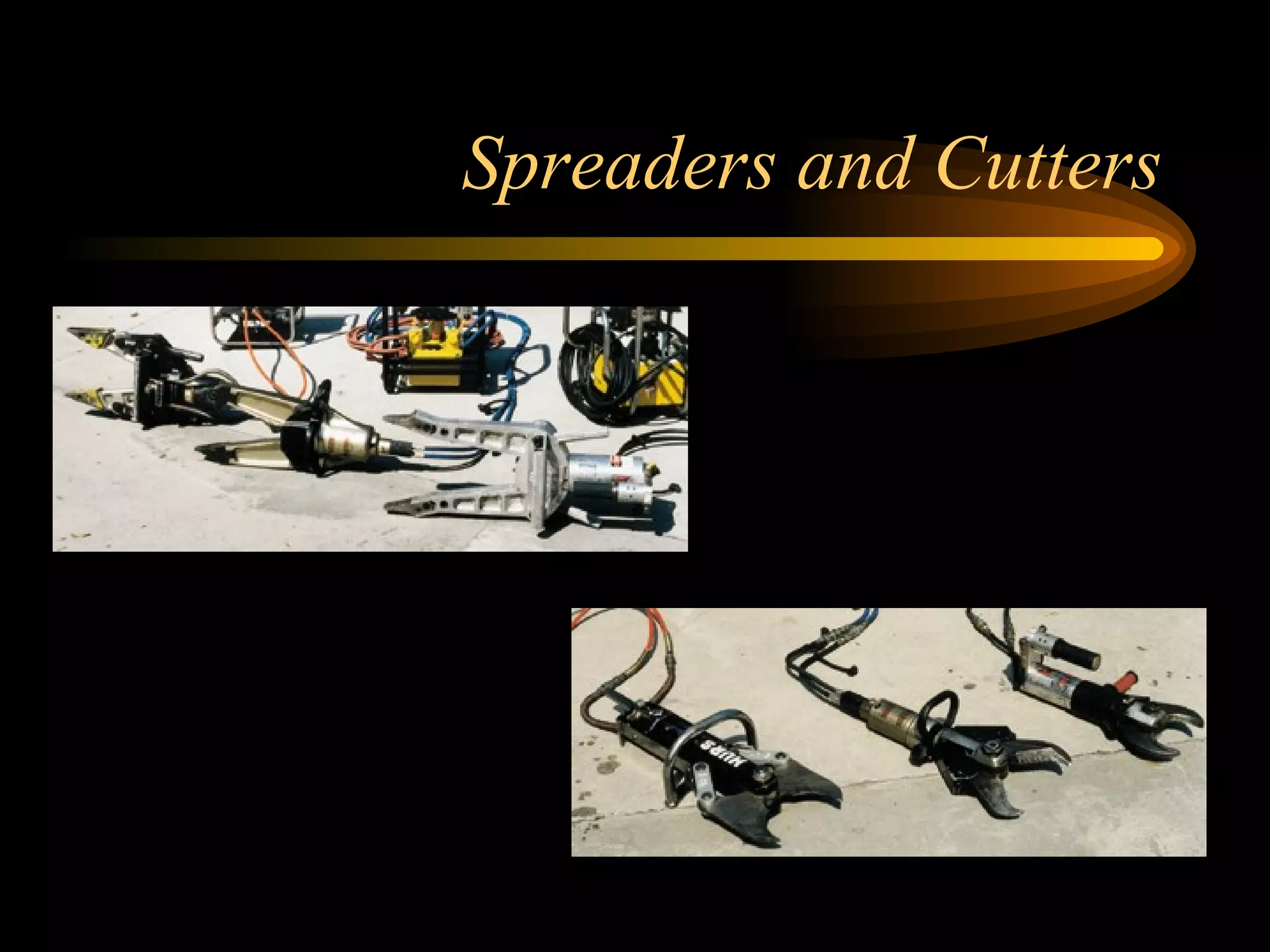
Extrication Tools  (1 of 3) They range from basic to specialized tools. Hydraulic tools are operated by gasoline engine, electric motor, or air-driven motor. Spreaders are used to push and pull. Cutters are used for different tasks. Rams are used for pushing. Combination tools spread and cut.
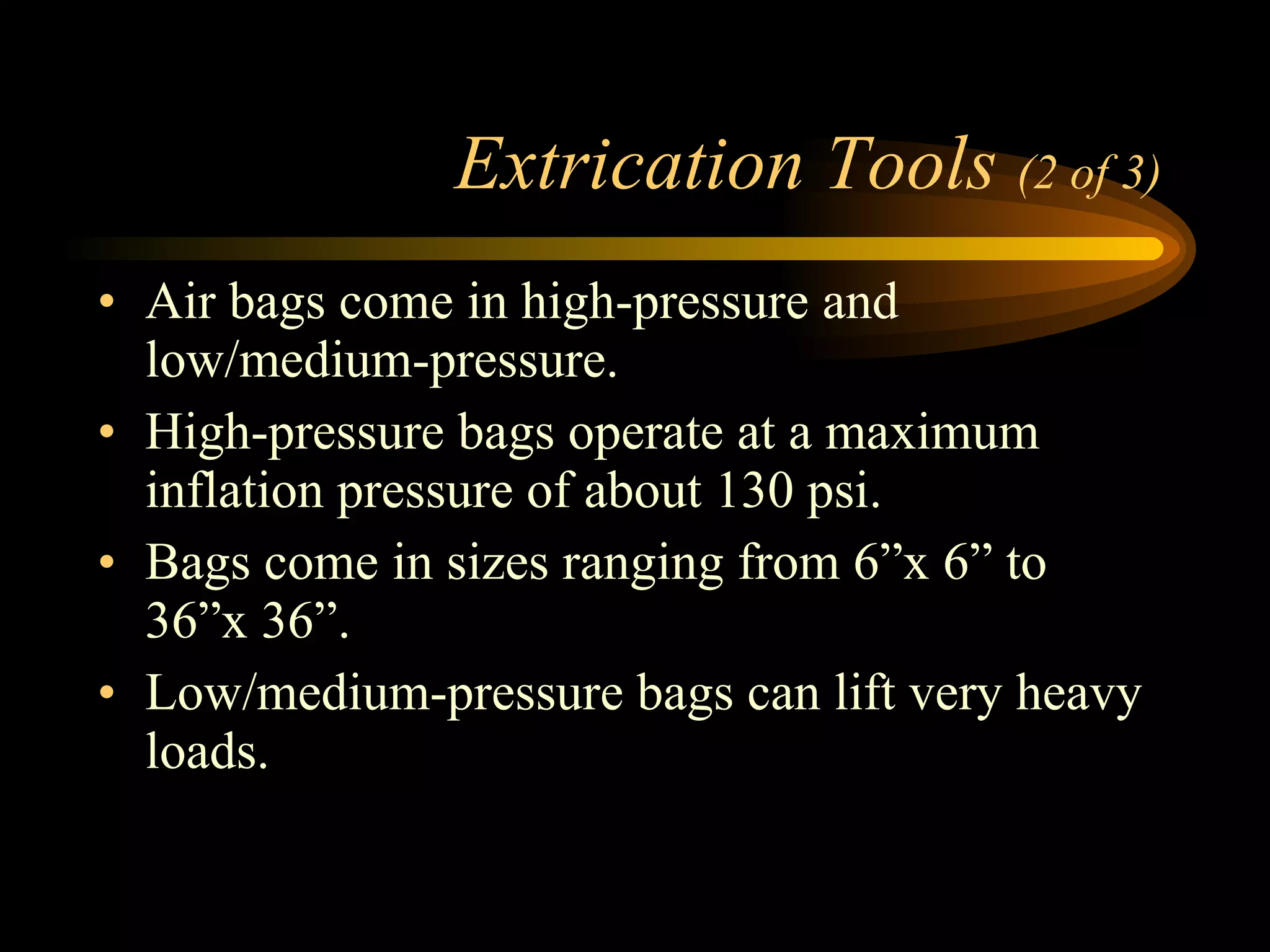
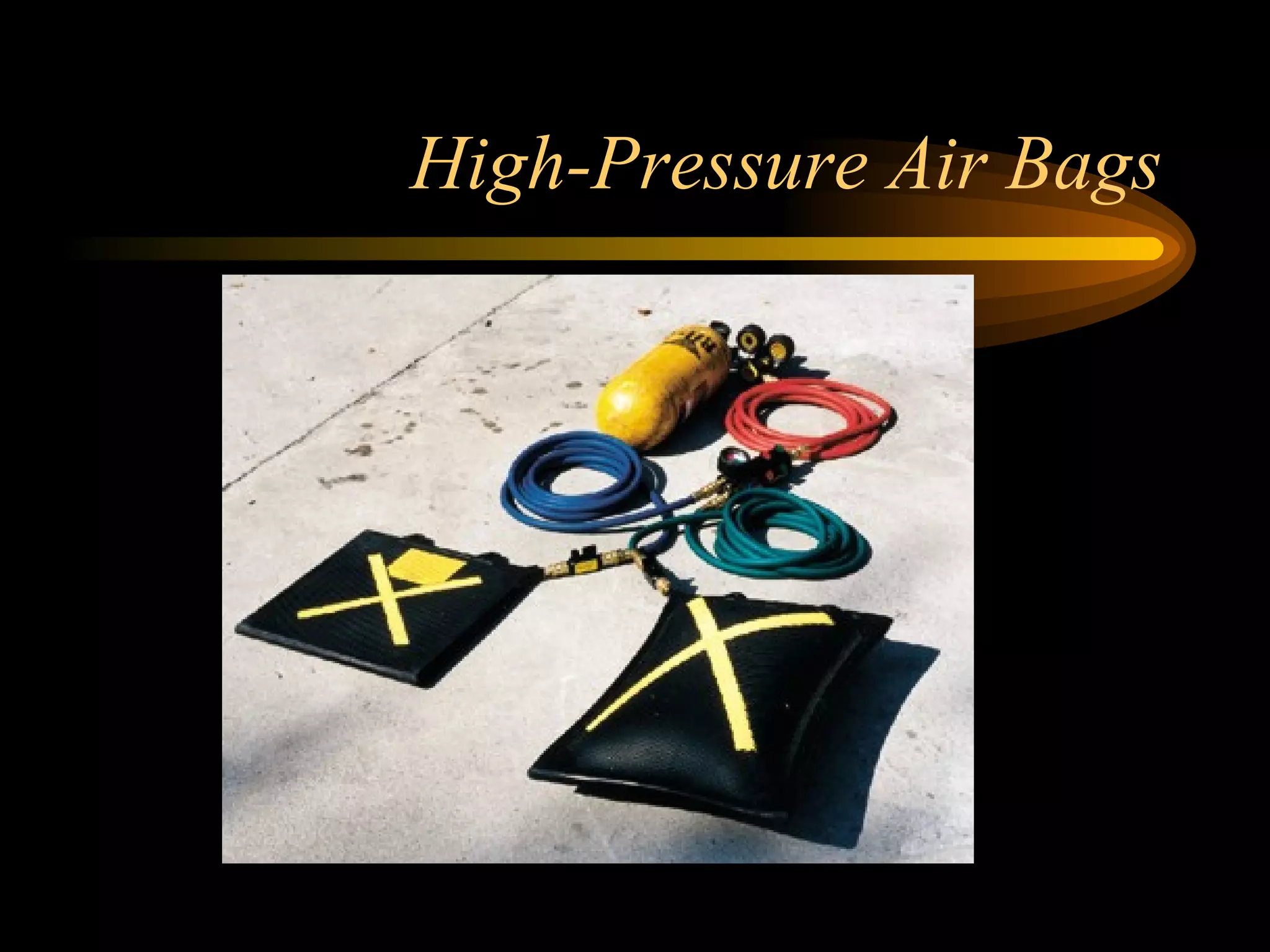
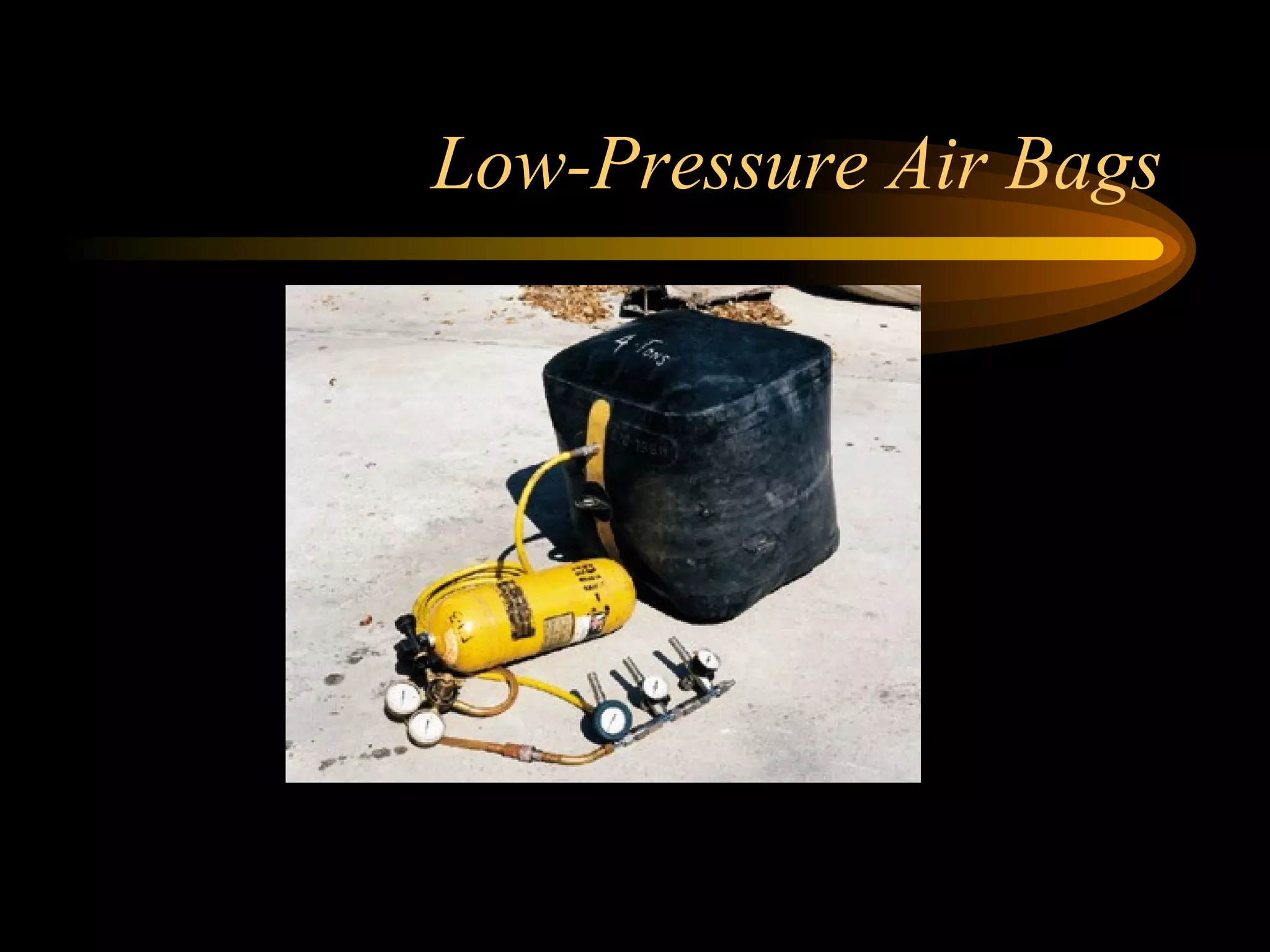
Extrication Tools  (2 of 3) Air bags come in high-pressure and low/medium-pressure. High-pressure bags operate at a maximum inflation pressure of about 130 psi. Bags come in sizes ranging from 6”x 6” to 36”x 36”. Low/medium-pressure bags can lift very heavy loads.
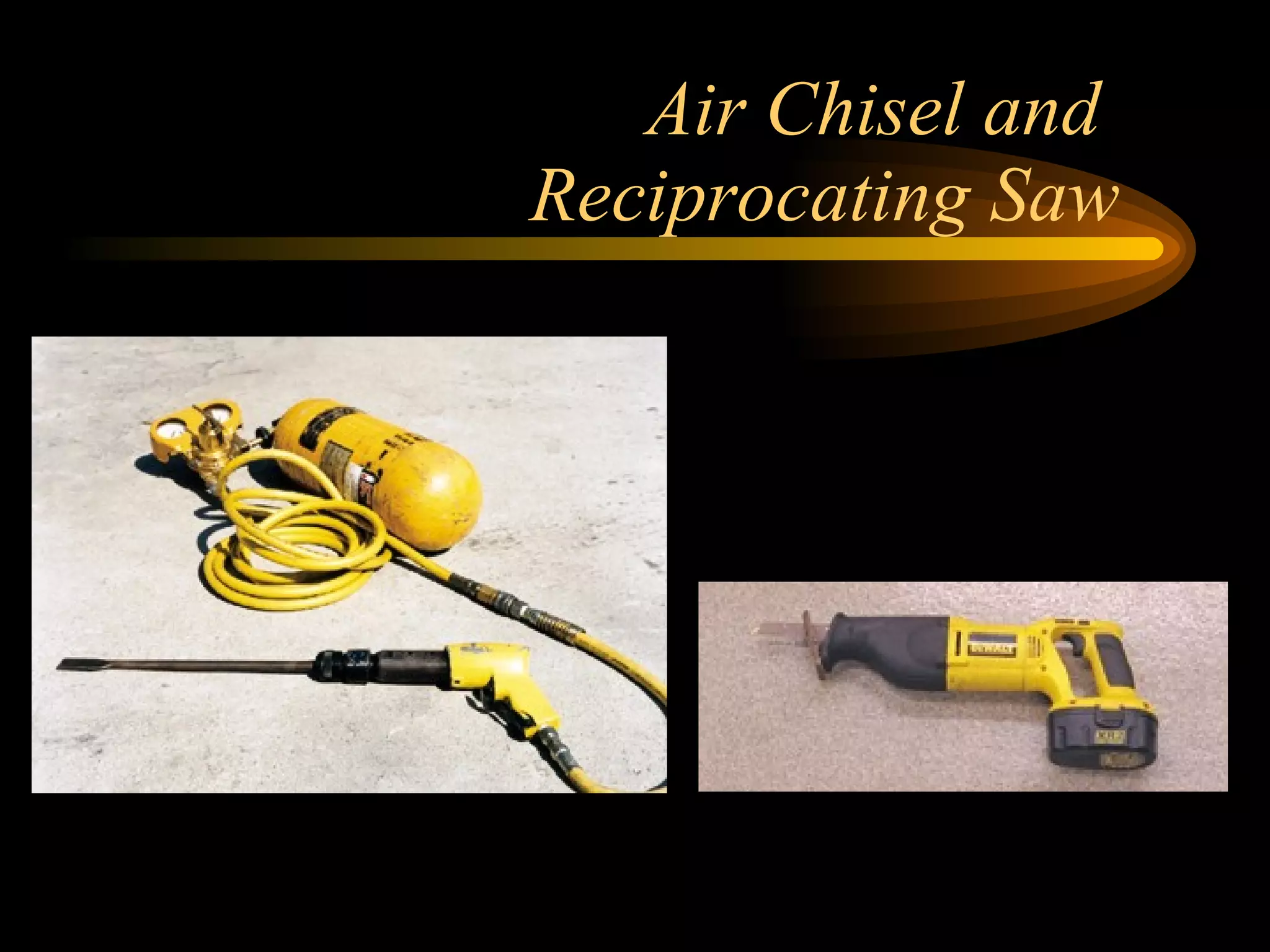
Extrication Tools  (3 of 3) Air chisels are valuable tools for rescue operations. Reciprocating saws are also gaining popularity.
Gasoline Engines
Spreaders and Cutters
Rams and Combination Tools
High-Pressure Air Bags
Low-Pressure Air Bags
Air Chisel and  Reciprocating Saw
Crash Scene Assessment Traffic Number and types of vehicles involved Number and apparent extent of injuries Disentanglement requirements Other associated hazards
Additional Resources  Additional ambulances Specialized extrication equipment Additional law enforcement Specialized technical rescue equipment
Establish Work Areas Use of cones Natural barriers Law enforcement
Vehicle Stabilization It may be simple or complex. Determine the type necessary. You may use cribbing. You may need additional tools.
Patient Access It is necessary to care for the patient. Patient may need care prior to removal. It may be as simple as opening a door. You may need additional tools.
Disentanglement Disassembly Distortion Displacement Severance
Patient Removal Careful of sharp metal and edges Tools removed from egress path Tools retrieved and fire hazard monitored
Scene Stabilization Secure unresolved hazards. Remove tools and cribbing that may create hazards. Remain at the scene until the vehicle is removed. Tow cable risks. Fluid and vehicle debris. Remove barriers.
Specialized Rescue  Situations and Tools There are a variety of other rescues a firefighter may face. Specialized training beyond this course is needed. This is designed as a familiarization.
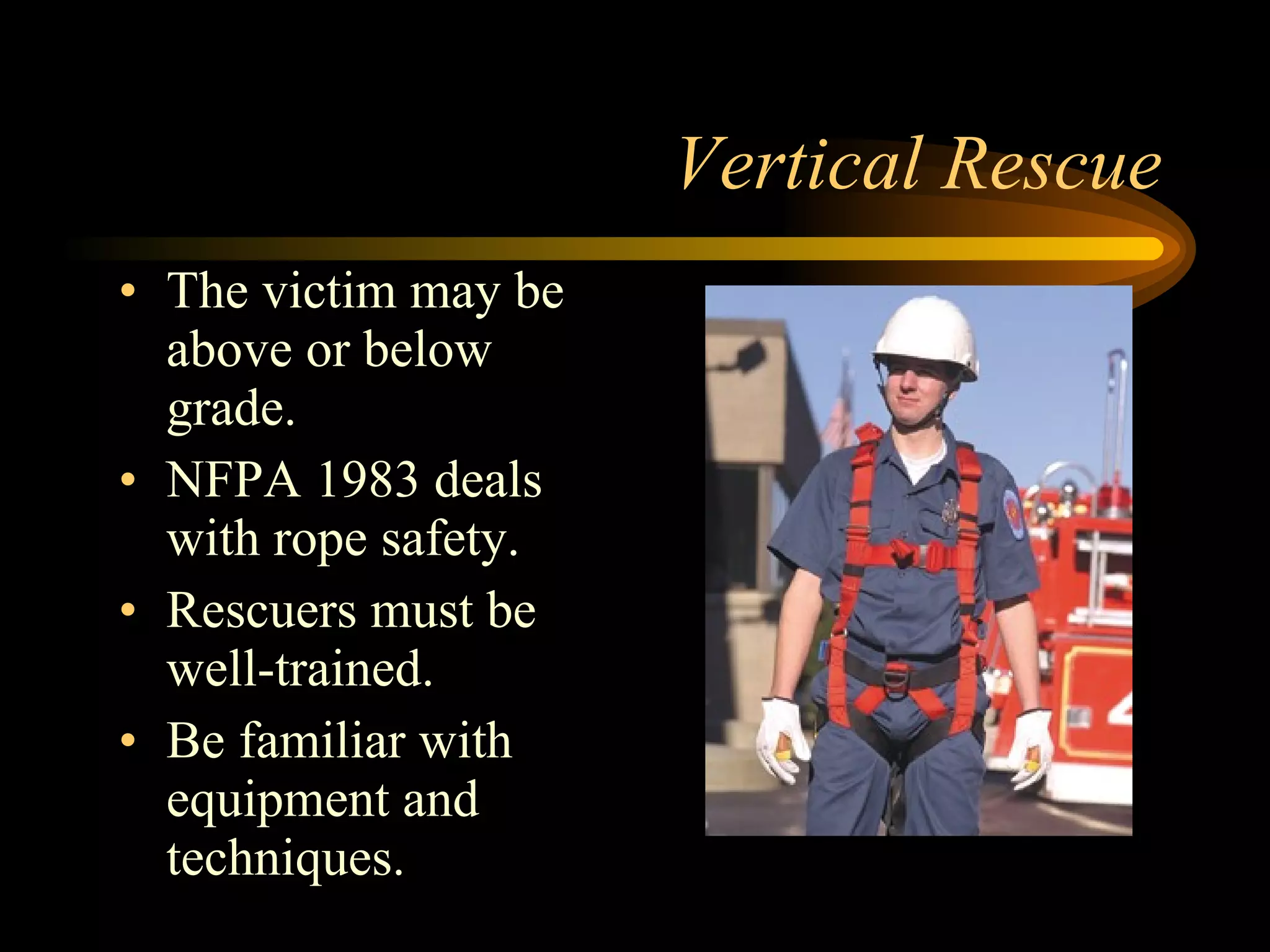
Vertical Rescue The victim may be above or below grade. NFPA 1983 deals with rope safety. Rescuers must be well-trained.  Be familiar with equipment and techniques.
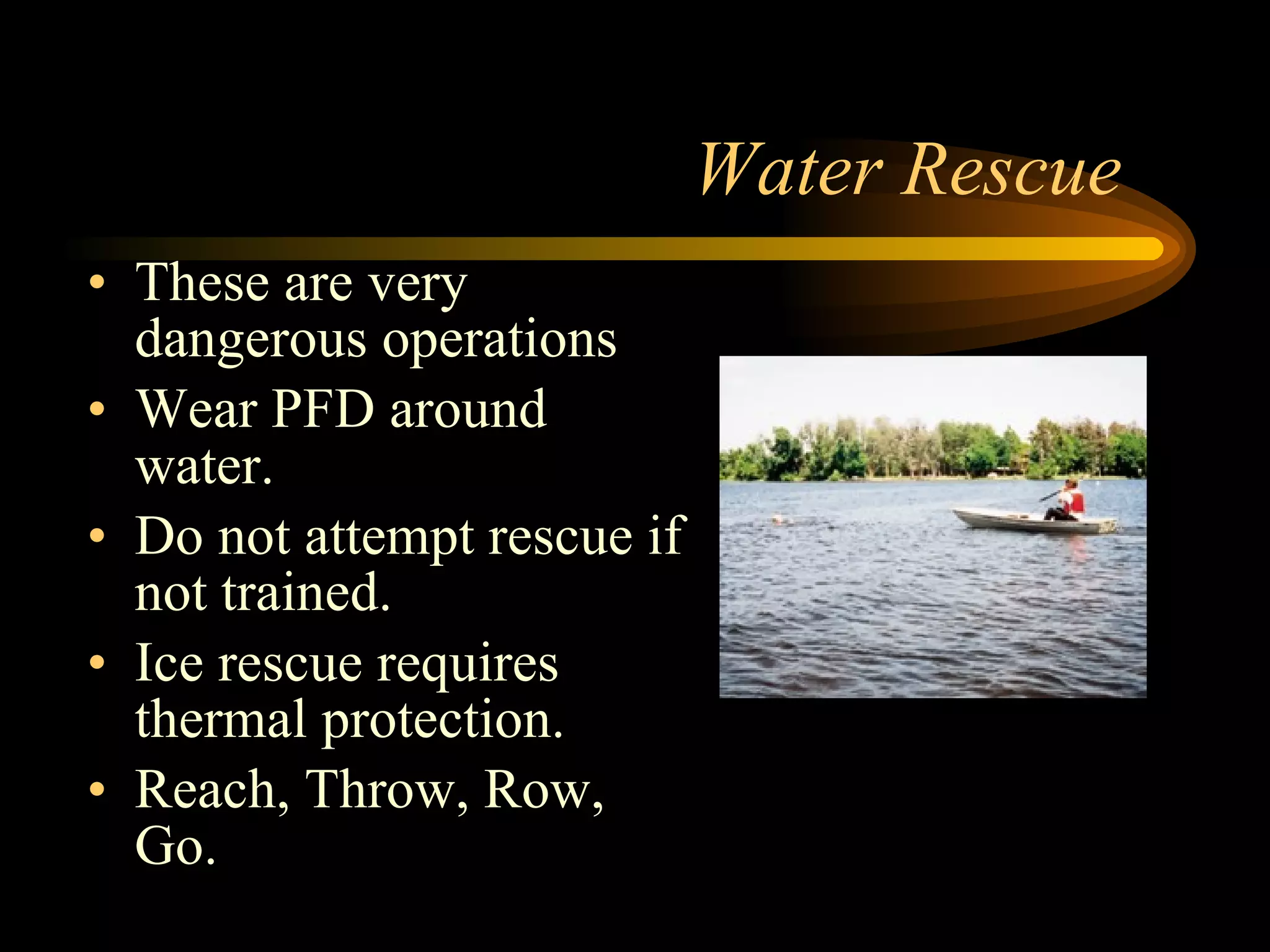
Water Rescue These are very dangerous operations Wear PFD around water. Do not attempt rescue if not trained. Ice rescue requires thermal protection. Reach, Throw, Row, Go.
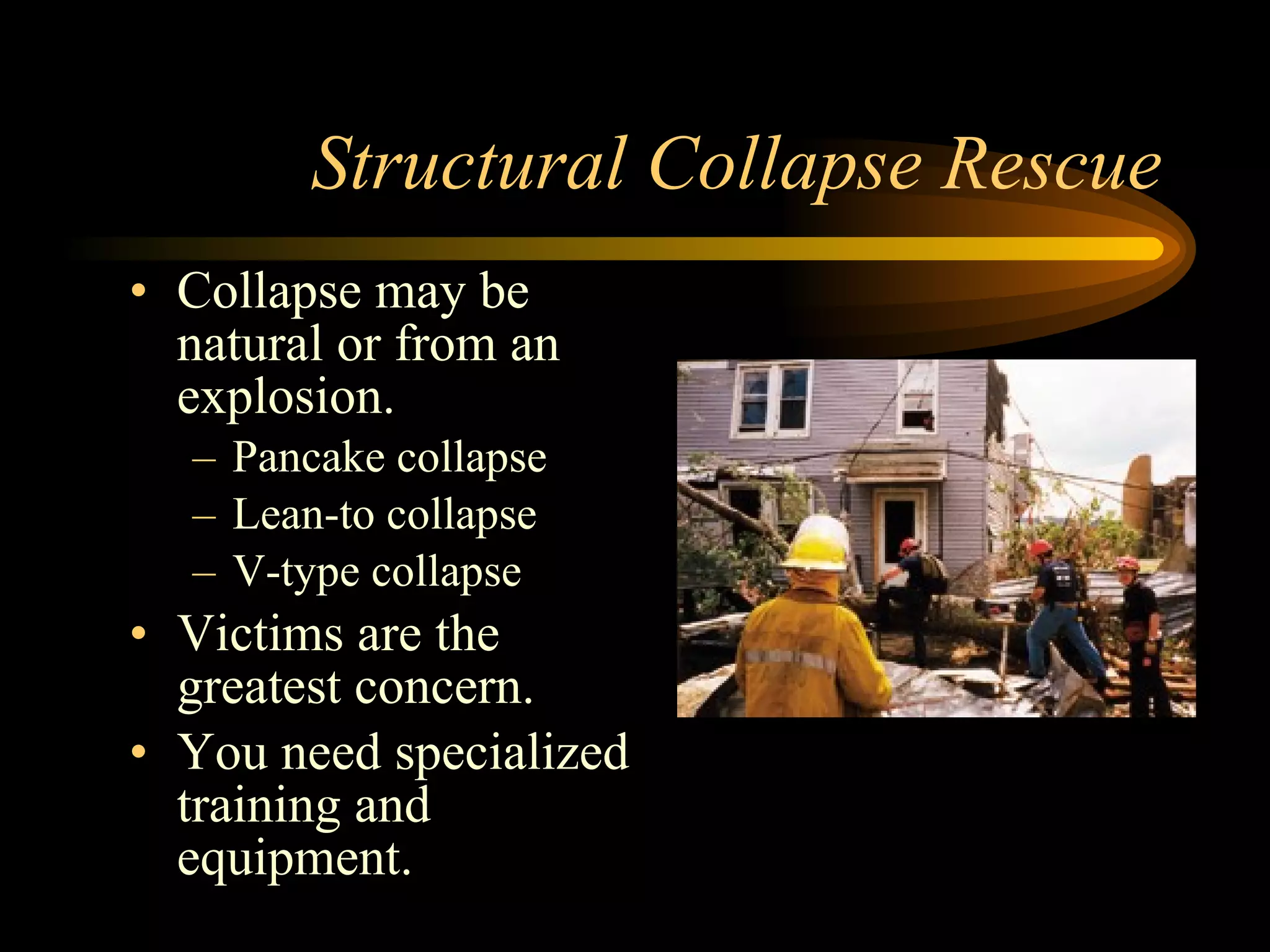
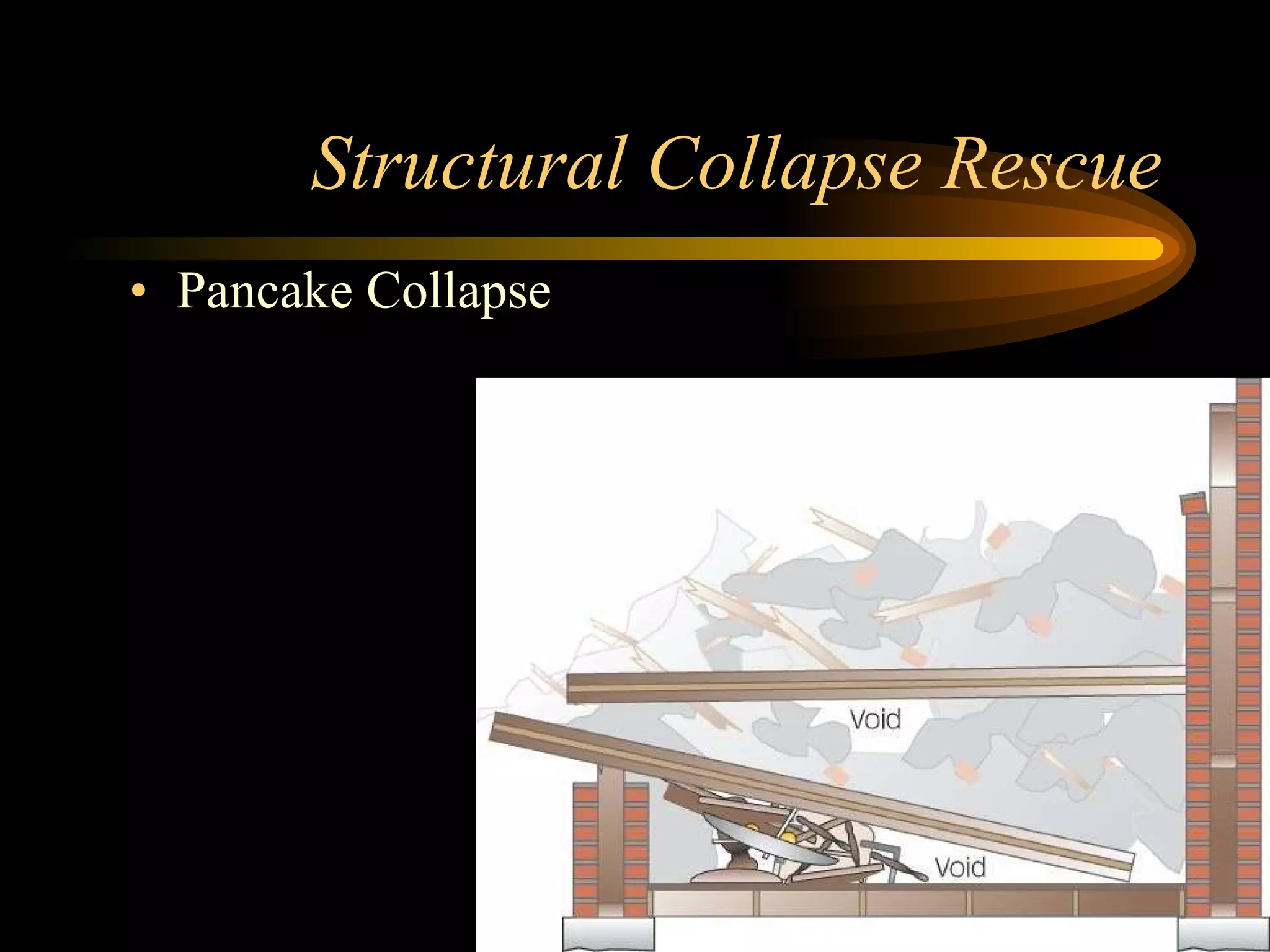
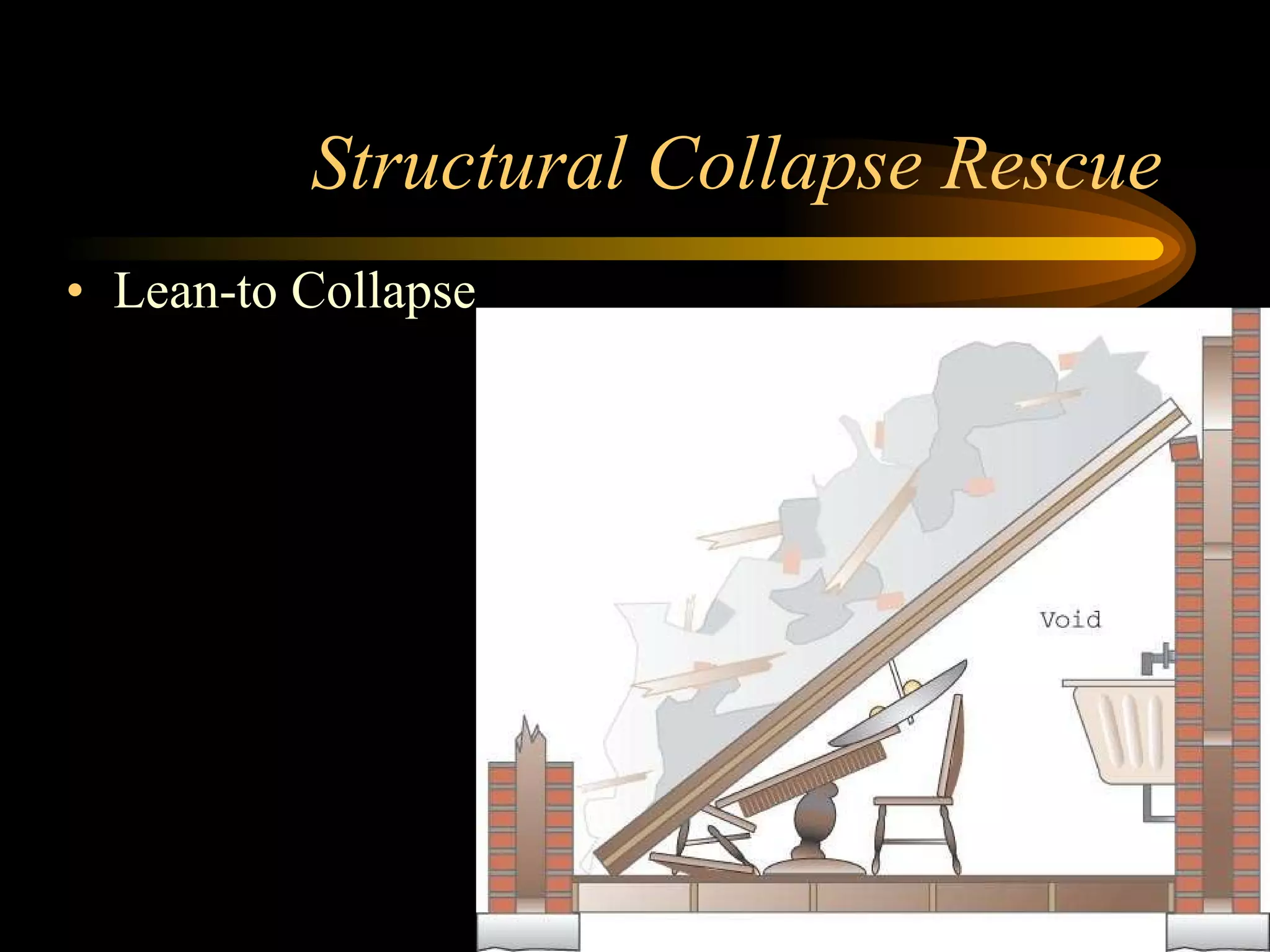
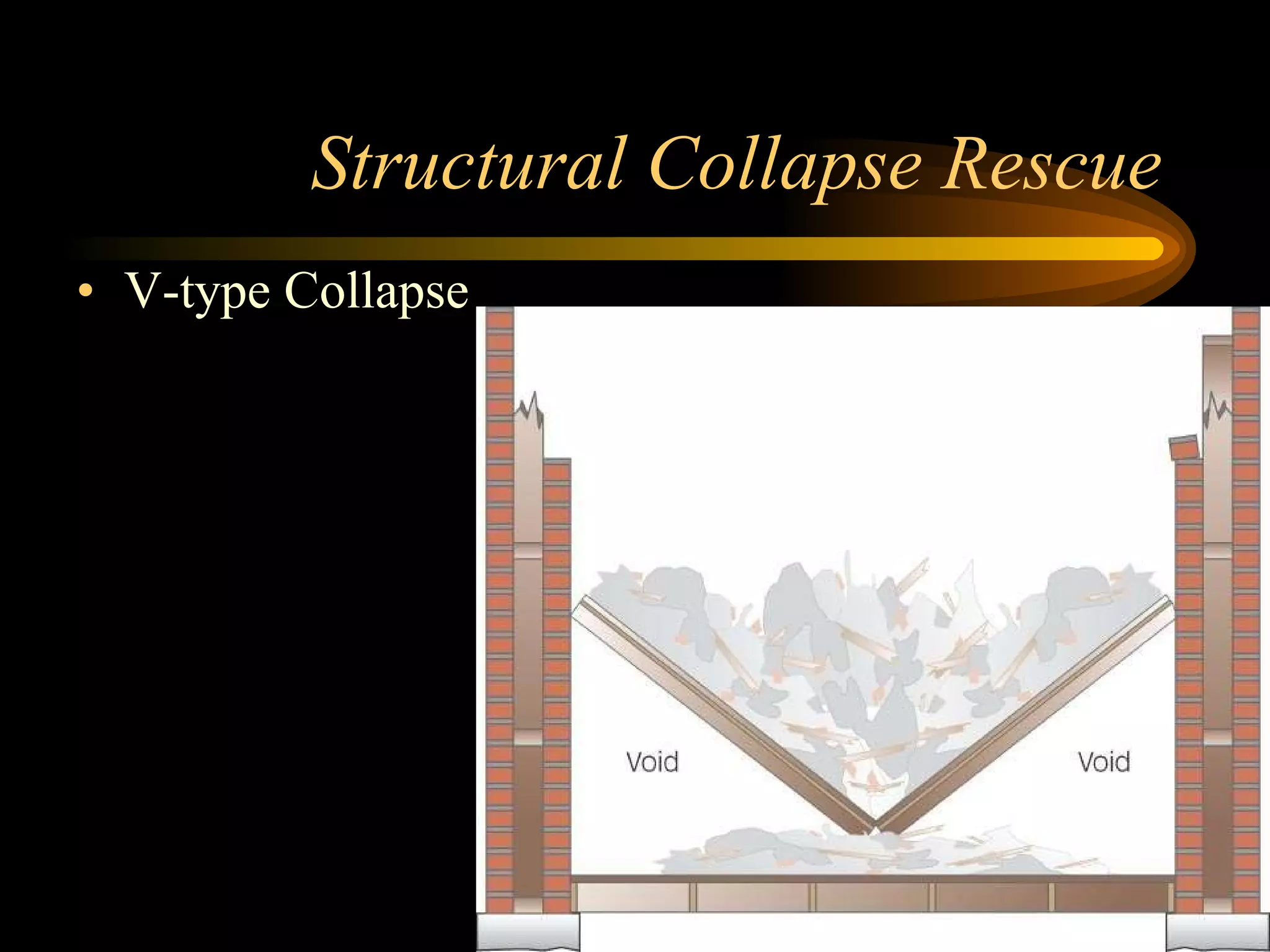
Structural Collapse Rescue Collapse may be natural or from an explosion. Pancake collapse Lean-to collapse V-type collapse Victims are the greatest concern. You need specialized training and equipment.
Structural Collapse Rescue Pancake Collapse
Structural Collapse Rescue Lean-to Collapse
Structural Collapse Rescue V-type Collapse
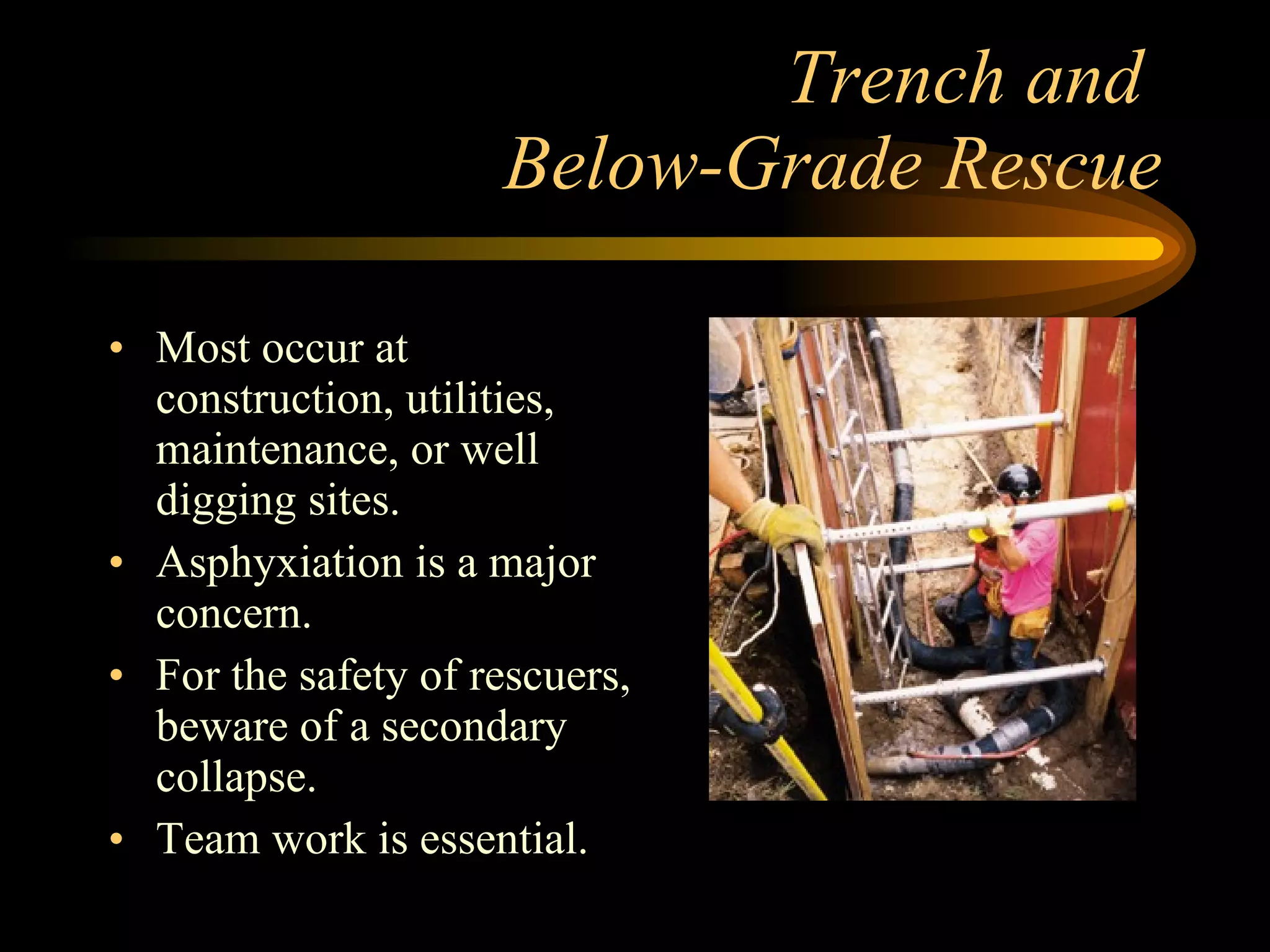
Trench and  Below-Grade Rescue Most occur at construction, utilities, maintenance, or well digging sites. Asphyxiation is a major concern. For the safety of rescuers, beware of a secondary collapse. Team work is essential.
Confined Space Rescue Definition A space large enough to enter Not designed for worker occupancy Limited egress or access Many different forms Concern of oxygen-deficient atmosphere Space constantly monitored Need proper PPE and equipment Back-up crew ready
Other Rescue Situations Rescue from electrical situations Energy concerns Industrial entrapment rescue Unusual entrapments Elevator and escalator rescue Secure elevator and call for assistance Farm equipment rescue Specialized training needs
Summary Address common rescue situations you may have to face. Specialized training is required. Goal was to present broad spectrum of situations and some concepts to deal with them. Never attempt a complex rescue without proper training. Identify possible hazards in your district. Know where to get specialized resources.

Chapter 16 rescue procedures 6 07

  • 1.
  • 2.
    Objectives (1of 2) Recognize the hazards associated with various rescue operations. Describe the differences between primary and secondary searches. Identify the need for rapid intervention teams. Demonstrate the proper procedures for victim drags and carries. Define proper terminology utilized during motor vehicle extrication operations.
  • 3.
    Objectives (2of 2) Demonstrate proper and safe operation of vehicle extrication tools and equipment. Explain the various types of specialized rescue situations presented and the hazards associated with them. Identify specialized equipment used during technical rescue operations.
  • 4.
    Introduction Rescues aredefined as actions that trained firefighters perform at emergency scenes to remove someone from immediate danger, or to extricate them if they are already trapped. This lesson is designed to provide an awareness level of rescue situations. Teamwork and safety are the key points to remember.
  • 5.
    Hazards Associated withRescue Operations Every rescue operation has hazards. Tunnel vision is a big hazard. It is easy to get tunnel vision in a complex and lengthy rescue. Tunnel vision can keep rescuers from seeing obvious solutions and impending danger.
  • 6.
    Search of Burning Structures (1 of 3) This is one of the most dangerous rescue situations. Training, practicing, and planning are the best ways to reduce danger. Always enter in teams of two or more. Two firefighters in full gear and a charged line should be ready to go in, if needed. Known as two-in/two-out rule
  • 7.
    Search of Burning Structures (2 of 3) Perform a quick survey of structure and surroundings. Always carry a tool, flashlight, and radio when searching. Thermal imagers may help “see” through smoke. Search single-family structures using wall as reference. Known as “right-handed” or “left-handed” search
  • 8.
    Search of Burning Structures (3 of 3) Commercial or industrial structures require use of lifeline or guideline. There are two operations to searching a building. Primary search Secondary search
  • 9.
  • 10.
  • 11.
    Survey Structure Prior to Entering
  • 12.
    Searching a Residential Occupancy
  • 13.
  • 14.
  • 15.
  • 16.
    SEARCHING A ROOMWITH 2 PEOPLE One person is the point of reference. Search around and behind furnishings. Use tools and body to probe for victims. Leave the way you came in. Mark the searched area.
  • 17.
  • 18.
  • 19.
    Primary Search Firstand most dangerous of the two Search team often ahead of attack lines Often above the fire Window searches may speed process Rapid, but thorough, search All clear may change fireground operations focus
  • 20.
    Secondary Search Conductedafter fire is out or well under control A more thorough search May find areas that still need to be extinguished
  • 21.
    Victim Removal, Drags, and Carries Victims must be removed carefully and expeditiously. Try to not cause further injury or aggravate existing injury. You may not be able to give care due to hazardous or hostile environment. Use “tight core” to create power and reduce injury.
  • 22.
  • 23.
  • 24.
  • 25.
  • 26.
  • 27.
  • 28.
  • 29.
  • 30.
    Rescue of aFirefighter Wearing SCBA
  • 31.
    Placing a Patienton a Backboard
  • 32.
    Placing a Patienton an Ambulance Cot
  • 33.
    Extrication From MotorVehicle Motor vehicle crashes are common rescue situations. Knowledge, experience, and skill are most valuable tools. Extrication means to free, release, or disentangle a patient from entrapment. Operations may be simple or complex. Operations at an extrication incident should follow a pre-determined sequence of events.
  • 34.
    Incident Action PlanScene assessment Establishing work areas Vehicle stabilization Patient access Disentanglement Patient removal Scene stabilization
  • 35.
    Extrication Tools (1 of 3) They range from basic to specialized tools. Hydraulic tools are operated by gasoline engine, electric motor, or air-driven motor. Spreaders are used to push and pull. Cutters are used for different tasks. Rams are used for pushing. Combination tools spread and cut.
  • 36.
    Extrication Tools (2 of 3) Air bags come in high-pressure and low/medium-pressure. High-pressure bags operate at a maximum inflation pressure of about 130 psi. Bags come in sizes ranging from 6”x 6” to 36”x 36”. Low/medium-pressure bags can lift very heavy loads.
  • 37.
    Extrication Tools (3 of 3) Air chisels are valuable tools for rescue operations. Reciprocating saws are also gaining popularity.
  • 38.
  • 39.
  • 40.
  • 41.
  • 42.
  • 43.
    Air Chisel and Reciprocating Saw
  • 44.
    Crash Scene AssessmentTraffic Number and types of vehicles involved Number and apparent extent of injuries Disentanglement requirements Other associated hazards
  • 45.
    Additional Resources Additional ambulances Specialized extrication equipment Additional law enforcement Specialized technical rescue equipment
  • 46.
    Establish Work AreasUse of cones Natural barriers Law enforcement
  • 47.
    Vehicle Stabilization Itmay be simple or complex. Determine the type necessary. You may use cribbing. You may need additional tools.
  • 48.
    Patient Access Itis necessary to care for the patient. Patient may need care prior to removal. It may be as simple as opening a door. You may need additional tools.
  • 49.
  • 50.
    Patient Removal Carefulof sharp metal and edges Tools removed from egress path Tools retrieved and fire hazard monitored
  • 51.
    Scene Stabilization Secureunresolved hazards. Remove tools and cribbing that may create hazards. Remain at the scene until the vehicle is removed. Tow cable risks. Fluid and vehicle debris. Remove barriers.
  • 52.
    Specialized Rescue Situations and Tools There are a variety of other rescues a firefighter may face. Specialized training beyond this course is needed. This is designed as a familiarization.
  • 53.
    Vertical Rescue Thevictim may be above or below grade. NFPA 1983 deals with rope safety. Rescuers must be well-trained. Be familiar with equipment and techniques.
  • 54.
    Water Rescue Theseare very dangerous operations Wear PFD around water. Do not attempt rescue if not trained. Ice rescue requires thermal protection. Reach, Throw, Row, Go.
  • 55.
    Structural Collapse RescueCollapse may be natural or from an explosion. Pancake collapse Lean-to collapse V-type collapse Victims are the greatest concern. You need specialized training and equipment.
  • 56.
  • 57.
  • 58.
  • 59.
    Trench and Below-Grade Rescue Most occur at construction, utilities, maintenance, or well digging sites. Asphyxiation is a major concern. For the safety of rescuers, beware of a secondary collapse. Team work is essential.
  • 60.
    Confined Space RescueDefinition A space large enough to enter Not designed for worker occupancy Limited egress or access Many different forms Concern of oxygen-deficient atmosphere Space constantly monitored Need proper PPE and equipment Back-up crew ready
  • 61.
    Other Rescue SituationsRescue from electrical situations Energy concerns Industrial entrapment rescue Unusual entrapments Elevator and escalator rescue Secure elevator and call for assistance Farm equipment rescue Specialized training needs
  • 62.
    Summary Address commonrescue situations you may have to face. Specialized training is required. Goal was to present broad spectrum of situations and some concepts to deal with them. Never attempt a complex rescue without proper training. Identify possible hazards in your district. Know where to get specialized resources.