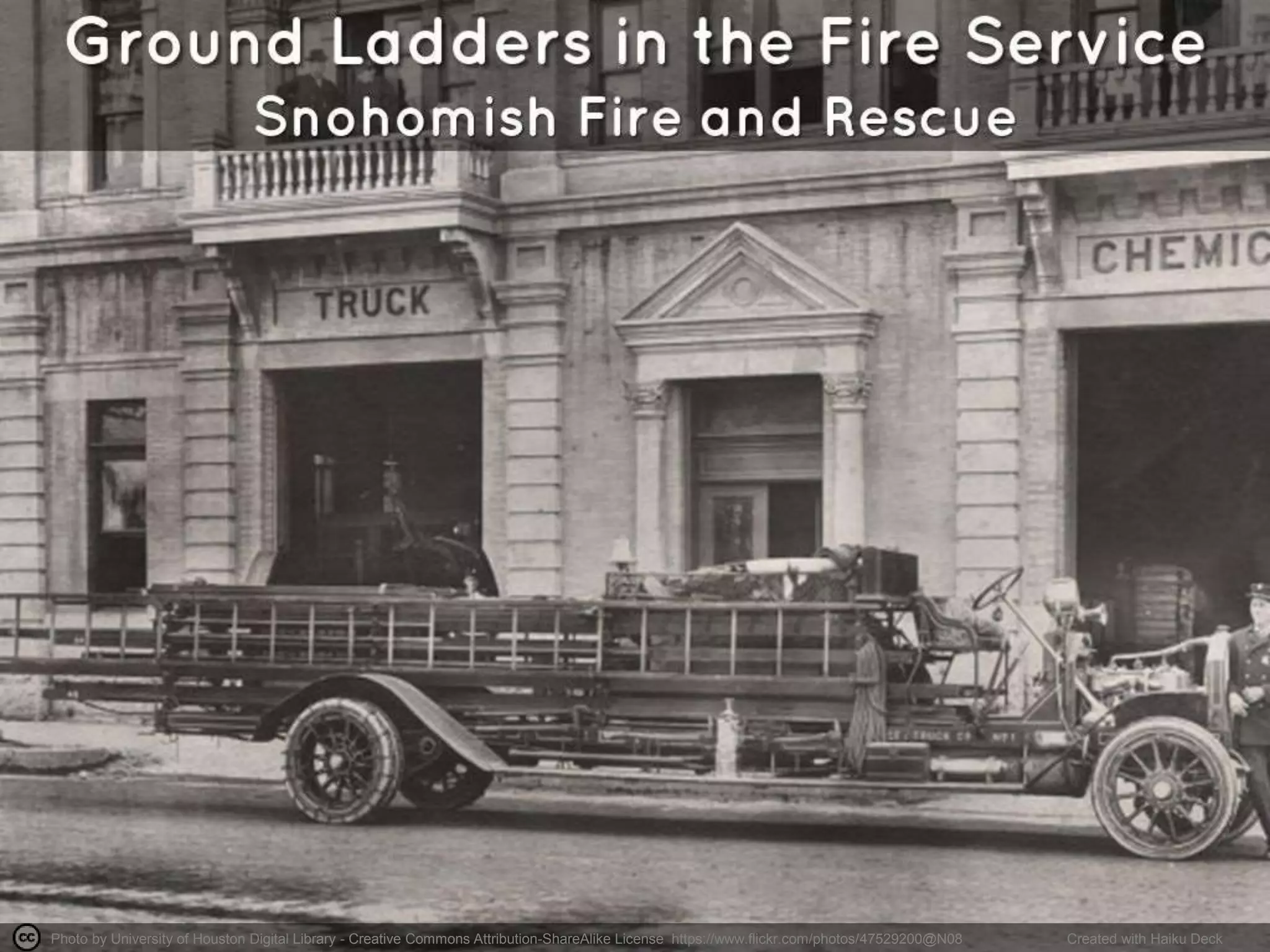
Photo by University of Houston Digital Library - Creative Commons Attribution-ShareAlike License https://www.flickr.com/photos/47529200@N08 Created with Haiku Deck
After completing this lesson, the student
will have a knowledge base for selecting,
carrying, raising, and working safely from
ladders following department standard
operating procedures.
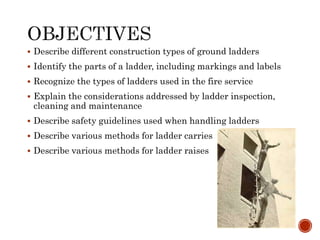
 Describe different construction types of ground ladders
 Identify the parts of a ladder, including markings and labels
 Recognize the types of ladders used in the fire service
 Explain the considerations addressed by ladder inspection,
cleaning and maintenance
 Describe safety guidelines used when handling ladders
 Describe various methods for ladder carries
 Describe various methods for ladder raises
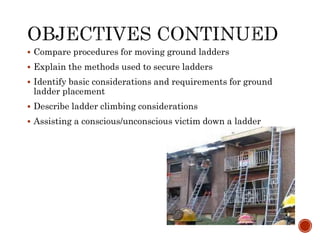
 Compare procedures for moving ground ladders
 Explain the methods used to secure ladders
 Identify basic considerations and requirements for ground
ladder placement
 Describe ladder climbing considerations
 Assisting a conscious/unconscious victim down a ladder
 Metal
 Wood
 Fiberglass
 Similar construction, shape and design as private industry and
general use ladders
 Must be capable of supporting heavier loads than general use
ladders
 Must meet NFPA 1931, Standard for Manufacturer’s Design of
Fire Department Ground Ladders
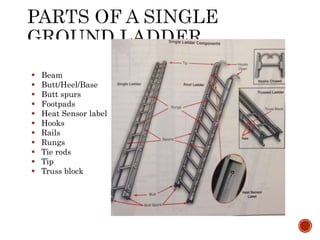
 Beam
 Butt/Heel/Base
 Butt spurs
 Footpads
 Heat Sensor label
 Hooks
 Rails
 Rungs
 Tie rods
 Tip
 Truss block
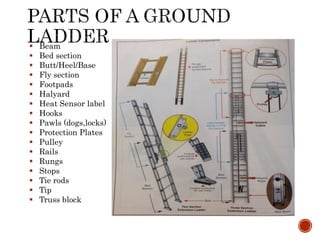
 Beam
 Bed section
 Butt/Heel/Base
 Fly section
 Footpads
 Halyard
 Heat Sensor label
 Hooks
 Pawls (dogs,locks)
 Protection Plates
 Pulley
 Rails
 Rungs
 Stops
 Tie rods
 Tip
 Truss block
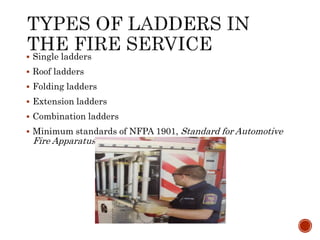
 Single ladders
 Roof ladders
 Folding ladders
 Extension ladders
 Combination ladders
 Minimum standards of NFPA 1901, Standard for Automotive
Fire Apparatus
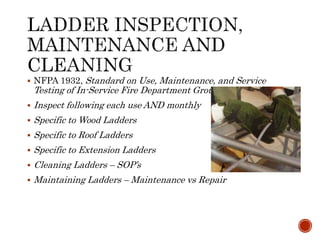
 NFPA 1932, Standard on Use, Maintenance, and Service
Testing of In-Service Fire Department Ground Ladders
 Inspect following each use AND monthly
 Specific to Wood Ladders
 Specific to Roof Ladders
 Specific to Extension Ladders
 Cleaning Ladders – SOP’s
 Maintaining Ladders – Maintenance vs Repair
 file:///C:UsersahammerVideoswatch-v=e1ioz21VqYk.url
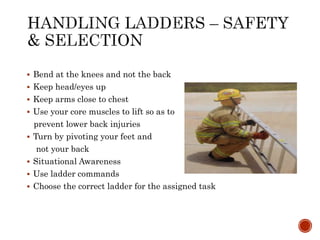
 Bend at the knees and not the back
 Keep head/eyes up
 Keep arms close to chest
 Use your core muscles to lift so as to
prevent lower back injuries
 Turn by pivoting your feet and
not your back
 Situational Awareness
 Use ladder commands
 Choose the correct ladder for the assigned task
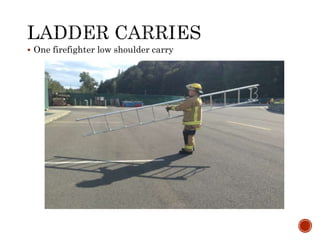
 One firefighter low shoulder carry
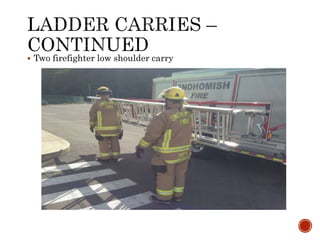
 Two firefighter low shoulder carry
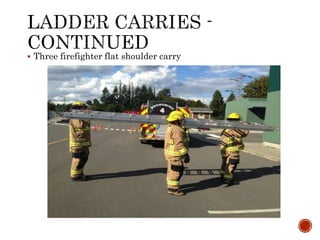
 Three firefighter flat shoulder carry
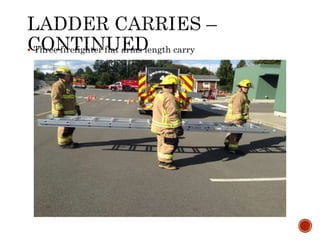
 Three firefighter flat arms length carry
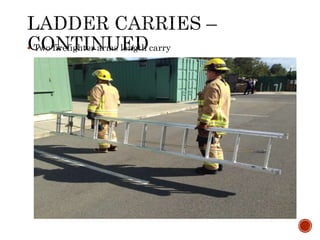
 Two firefighter arms length carry
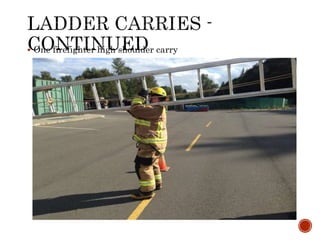
 One firefighter high shoulder carry
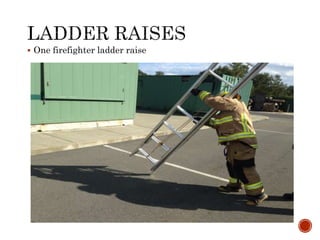
 One firefighter ladder raise
 Ladder training involving single firefighter 24' extension
ladder raises - YouTube
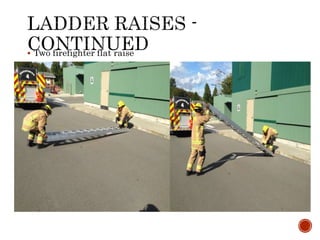
 Two firefighter flat raise
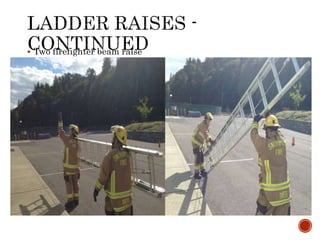
 Two firefighter beam raise
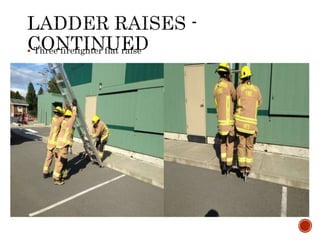
 Three firefighter flat raise
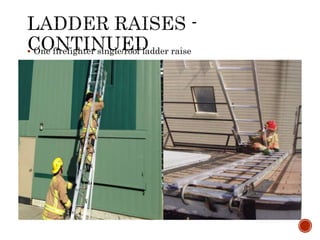
 One firefighter single/roof ladder raise
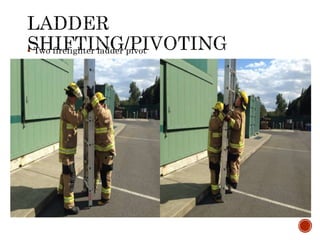
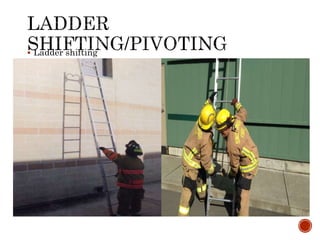
 Two firefighter ladder pivot
 Ladder shifting
 Ladder rolling
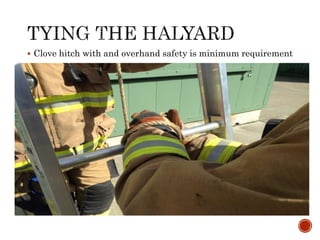
 Clove hitch with and overhand safety is minimum requirement
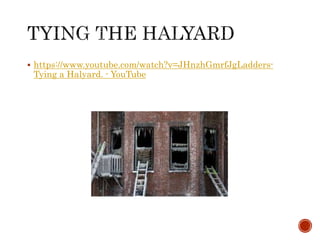
 https://www.youtube.com/watch?v=JHnzhGmrfJgLadders-
Tying a Halyard. - YouTube
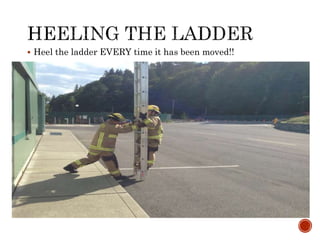
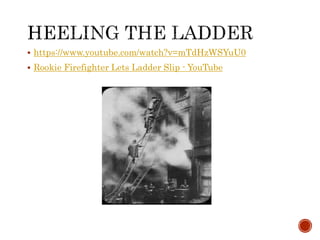
 Heel the ladder EVERY time it has been moved!!
 https://www.youtube.com/watch?v=mTdHzWSYuU0
 Rookie Firefighter Lets Ladder Slip - YouTube
 Tying off the tip of the ladder with hose strap
clove hitch with an overhand safety knot or Dept SOP’s
 Tying off the base of the ladder with utility rope Dept SOP’s
 Securing objects to the ladder with hose strap
clove hitch with an overhand safety knot or Dept SOP’s
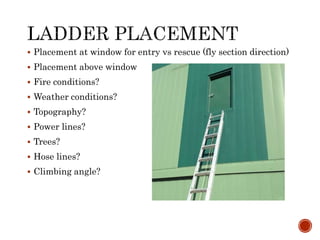
 Placement at window for entry vs rescue (fly section direction)
 Placement above window
 Fire conditions?
 Weather conditions?
 Topography?
 Power lines?
 Trees?
 Hose lines?
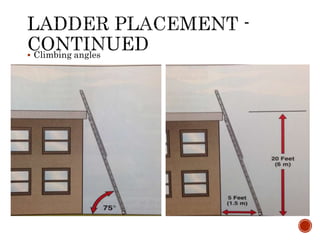
 Climbing angle?
 Climbing angles
 Electrical hazards
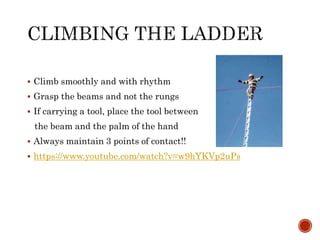
 Climb smoothly and with rhythm
 Grasp the beams and not the rungs
 If carrying a tool, place the tool between
the beam and the palm of the hand
 Always maintain 3 points of contact!!
 https://www.youtube.com/watch?v=w9hYKVp2uPs
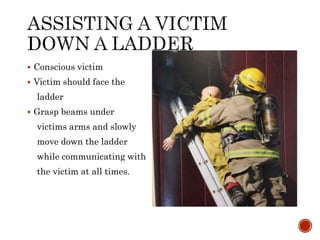
 Conscious victim
 Victim should face the
ladder
 Grasp beams under
victims arms and slowly
move down the ladder
while communicating with
the victim at all times.
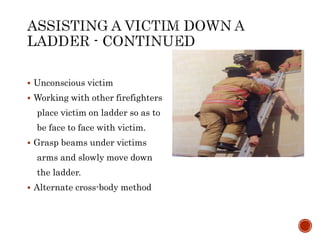
 Unconscious victim
 Working with other firefighters
place victim on ladder so as to
be face to face with victim.
 Grasp beams under victims
arms and slowly move down
the ladder.
 Alternate cross-body method
 Denver ladder skills video
That’s all folks!!
Enjoy your training and be
safe!!
 Essentials of Fire Fighting 6th Edition – IFSTA 1st Printing
January 2013
 Youtube
 Snohomish Fire and Rescue personnel
 Snohomish Fire and Rescue RLB Training Facility
 Prepared by A. Hammer – SCFD #4

2014_q4_ladders-in-the-fire-service.pptx

  • 1.
    Photo by Universityof Houston Digital Library - Creative Commons Attribution-ShareAlike License https://www.flickr.com/photos/47529200@N08 Created with Haiku Deck
  • 2.
    After completing thislesson, the student will have a knowledge base for selecting, carrying, raising, and working safely from ladders following department standard operating procedures.
  • 3.
     Describe differentconstruction types of ground ladders  Identify the parts of a ladder, including markings and labels  Recognize the types of ladders used in the fire service  Explain the considerations addressed by ladder inspection, cleaning and maintenance  Describe safety guidelines used when handling ladders  Describe various methods for ladder carries  Describe various methods for ladder raises
  • 4.
     Compare proceduresfor moving ground ladders  Explain the methods used to secure ladders  Identify basic considerations and requirements for ground ladder placement  Describe ladder climbing considerations  Assisting a conscious/unconscious victim down a ladder
  • 5.
     Metal  Wood Fiberglass  Similar construction, shape and design as private industry and general use ladders  Must be capable of supporting heavier loads than general use ladders  Must meet NFPA 1931, Standard for Manufacturer’s Design of Fire Department Ground Ladders
  • 6.
     Beam  Butt/Heel/Base Butt spurs  Footpads  Heat Sensor label  Hooks  Rails  Rungs  Tie rods  Tip  Truss block
  • 7.
     Beam  Bedsection  Butt/Heel/Base  Fly section  Footpads  Halyard  Heat Sensor label  Hooks  Pawls (dogs,locks)  Protection Plates  Pulley  Rails  Rungs  Stops  Tie rods  Tip  Truss block
  • 8.
     Single ladders Roof ladders  Folding ladders  Extension ladders  Combination ladders  Minimum standards of NFPA 1901, Standard for Automotive Fire Apparatus
  • 9.
     NFPA 1932,Standard on Use, Maintenance, and Service Testing of In-Service Fire Department Ground Ladders  Inspect following each use AND monthly  Specific to Wood Ladders  Specific to Roof Ladders  Specific to Extension Ladders  Cleaning Ladders – SOP’s  Maintaining Ladders – Maintenance vs Repair
  • 10.
  • 11.
     Bend atthe knees and not the back  Keep head/eyes up  Keep arms close to chest  Use your core muscles to lift so as to prevent lower back injuries  Turn by pivoting your feet and not your back  Situational Awareness  Use ladder commands  Choose the correct ladder for the assigned task
  • 12.
     One firefighterlow shoulder carry
  • 13.
     Two firefighterlow shoulder carry
  • 14.
     Three firefighterflat shoulder carry
  • 15.
     Three firefighterflat arms length carry
  • 16.
     Two firefighterarms length carry
  • 17.
     One firefighterhigh shoulder carry
  • 18.
     One firefighterladder raise
  • 19.
     Ladder traininginvolving single firefighter 24' extension ladder raises - YouTube
  • 20.
  • 21.
  • 22.
  • 23.
     One firefightersingle/roof ladder raise
  • 24.
     Two firefighterladder pivot
  • 25.
  • 26.
  • 27.
     Clove hitchwith and overhand safety is minimum requirement
  • 28.
  • 29.
     Heel theladder EVERY time it has been moved!!
  • 30.
     https://www.youtube.com/watch?v=mTdHzWSYuU0  RookieFirefighter Lets Ladder Slip - YouTube
  • 31.
     Tying offthe tip of the ladder with hose strap clove hitch with an overhand safety knot or Dept SOP’s  Tying off the base of the ladder with utility rope Dept SOP’s  Securing objects to the ladder with hose strap clove hitch with an overhand safety knot or Dept SOP’s
  • 32.
     Placement atwindow for entry vs rescue (fly section direction)  Placement above window  Fire conditions?  Weather conditions?  Topography?  Power lines?  Trees?  Hose lines?  Climbing angle?
  • 33.
  • 34.
  • 35.
     Climb smoothlyand with rhythm  Grasp the beams and not the rungs  If carrying a tool, place the tool between the beam and the palm of the hand  Always maintain 3 points of contact!!  https://www.youtube.com/watch?v=w9hYKVp2uPs
  • 36.
     Conscious victim Victim should face the ladder  Grasp beams under victims arms and slowly move down the ladder while communicating with the victim at all times.
  • 37.
     Unconscious victim Working with other firefighters place victim on ladder so as to be face to face with victim.  Grasp beams under victims arms and slowly move down the ladder.  Alternate cross-body method
  • 38.
     Denver ladderskills video
  • 39.
    That’s all folks!! Enjoyyour training and be safe!!
  • 40.
     Essentials ofFire Fighting 6th Edition – IFSTA 1st Printing January 2013  Youtube  Snohomish Fire and Rescue personnel  Snohomish Fire and Rescue RLB Training Facility  Prepared by A. Hammer – SCFD #4