Course Overview
Strategic and Tactical
Considerations on the Fireground
4th Edition
Course Description
‣ This course will provide students with a basic understanding of
factors involved in coping with a fire emergency and determining
the best use of available resources in protecting lives and
property. The course emphasizes the changing nature of an
emergency situation and the ways in which the fire officer can
evaluate the effectiveness of their proposed incident action plan.
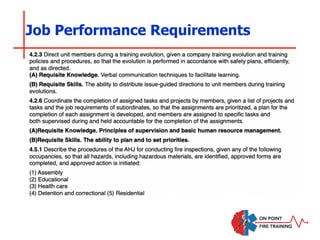
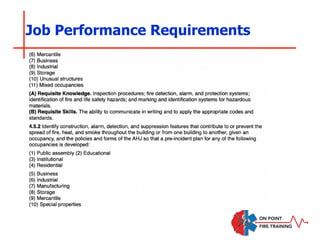
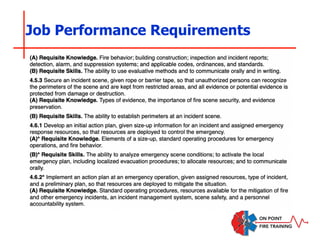
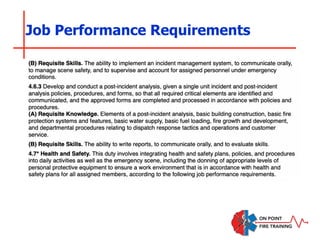
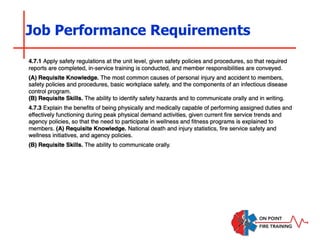
Job Performance Requirements
‣ Given information from discussion and reading
materials, the student will satisfy the Job Performance
Requirements (JPR) of the applicable National Fire
Protection Association (NFPA) standards, any
applicable skill sheets, and the applicable Fire and Life
Safety Initiatives of the National Fallen Firefighters
Foundation Everyone Goes Home program.
‣ NFPA, Standard for Fire and Emergency Service
Instructor Professional Qualifications, 2019 Edition
Job Performance Requirements
Chapter 1
‣ Discuss the behavior of fire.
‣ Understand the benefits of training for the firefighter, company
officer, and the fire department.
‣ Discuss the benefits of preplanning.
‣ Understand how to calculate needed fire flow.
‣ Recognize the duties of both company and chief officers.
‣ Identify the traits of a person with command presence.
‣ Identify and discuss the 16 Firefighter Life Safety Initiatives.
‣ Understand the safe operation of fire department apparatus.
Learning Objective
Chapter 2
‣Understand the origin of the incident command system.
‣Understand the implementation of the National Incident Management
System.
‣Understand the positions of an incident management system.
‣Discuss the position of Command.
‣Know the different types of status reports and the information required in
each type of report.
Learning Objective
Chapter 3
‣ Describe an Incident Action Plan.
‣ Understand the difference between cue-based and classical decision
making.
‣ Identify and discuss the 13 points of size-up.
‣ Discuss strategy, tactics, and tasks found in the classical decision making
process.
‣ Discuss the modes of fire attack.
Learning Objective
Chapter 4
‣Discuss engine company duties.
‣Discuss hose-line placement considerations.
‣Discuss sprinkler and standpipe operations.
‣Discuss truck company duties.
Learning Objective
Chapter 5
‣ Identify and discuss the five basic types of building construction.
‣ Discuss the benefits and safety concerns with fires involving timber
trusses.
‣ Discuss the benefits and safety concerns of lightweight building
components.
Learning Objective
Chapter 6
‣ Describe building collapse indicators.
‣ Describe a plan to address search at a building collapse.
‣ Discuss the role and responsibilities of an incident scene Safety Officer.
Learning Objective
Chapter 7
‣Understand the special occupancies discussed and the types of fires that
may confront firefighters.
‣Identify pertinent characteristics of these occupancies.
‣Recognize the 13 points of size-up that pertain to these special
occupancies.
‣Recognize the strategic considerations for these special occupancies.
‣Understand the incident management considerations of special
occupancies.
Learning Objective
Chapter 8
‣ Understand the special occupancies discussed and the types of fires that
may confront firefighters.
‣ Identify pertinent characteristics of special occupancies.
‣ Recognize the 13 points of size-up that pertain to special occupancies.
‣ Recognize the strategic considerations for special occupancies.
‣ Understand the incident management considerations of special
occupancies.
Learning Objective
Chapter 9
‣ Understand the occupancies discussed and the types of fires that may confront
firefighters.
‣ Identify pertinent characteristics of these occupancies.
‣ Recognize the 13 points of size-up that pertain to these occupancies.
‣ Recognize the strategic considerations for these occupancies.
‣ Understand the incident management considerations of these occupancies.
‣ Be able to identify the basic components needed in an operational guideline for
high-rise fires.
‣ Have a basic understanding of high-rise building systems.
‣ Identify the specific components of a high-rise command system.
Learning Objective
Chapter 10
‣ Discuss the initial concerns at a hazardous materials incident.
‣ Set up initial exclusion zones at a suspected hazardous materials
incident.
‣ Identify the difference between evacuation and protecting in place.
‣ Discuss types of storage tanks at tank farms and refineries.
‣ Discuss fire extinguishment concerns at tank farms and refineries.
‣ Discuss boilover, slopover, and frothover at a burning storage tank.
‣ Discuss weapons of terrorism.
‣ Discuss the actions of the first-arriving officer at a suspected terrorism
event.
Learning Objective
Chapter 10 Cont.
‣ Understand the stages of response at a suspected or confirmed
terrorism event.
‣ Discuss strategic considerations if confronted with a dirty bomb
incident.
‣ Describe the protection provided by a firefighter’s personal protective
gear at a suspected dirty bomb incident.
‣ Discuss radiation exposure considerations for firefighters at dirty
bomb incidents.
‣ Discuss strategic considerations at an incident involving a clandestine
drug lab.
‣ Discuss the problems associated with natural disasters.
‣ Discuss the strategic considerations needed for a natural disaster
incident.
Learning Objective
Chapter 11
‣ Recognize the signs and symptoms of incident stress.
‣ Recognize the benefit of both formal and informal critiques.
‣ Understand how to perform a self-critique.
Learning Objective

1810 Course overview JPR

  • 1.
    Course Overview Strategic andTactical Considerations on the Fireground 4th Edition
  • 2.
    Course Description ‣ Thiscourse will provide students with a basic understanding of factors involved in coping with a fire emergency and determining the best use of available resources in protecting lives and property. The course emphasizes the changing nature of an emergency situation and the ways in which the fire officer can evaluate the effectiveness of their proposed incident action plan.
  • 3.
    Job Performance Requirements ‣Given information from discussion and reading materials, the student will satisfy the Job Performance Requirements (JPR) of the applicable National Fire Protection Association (NFPA) standards, any applicable skill sheets, and the applicable Fire and Life Safety Initiatives of the National Fallen Firefighters Foundation Everyone Goes Home program. ‣ NFPA, Standard for Fire and Emergency Service Instructor Professional Qualifications, 2019 Edition
  • 4.
  • 5.
  • 6.
  • 7.
  • 8.
  • 9.
  • 10.
    Chapter 1 ‣ Discussthe behavior of fire. ‣ Understand the benefits of training for the firefighter, company officer, and the fire department. ‣ Discuss the benefits of preplanning. ‣ Understand how to calculate needed fire flow. ‣ Recognize the duties of both company and chief officers. ‣ Identify the traits of a person with command presence. ‣ Identify and discuss the 16 Firefighter Life Safety Initiatives. ‣ Understand the safe operation of fire department apparatus. Learning Objective
  • 11.
    Chapter 2 ‣Understand theorigin of the incident command system. ‣Understand the implementation of the National Incident Management System. ‣Understand the positions of an incident management system. ‣Discuss the position of Command. ‣Know the different types of status reports and the information required in each type of report. Learning Objective
  • 12.
    Chapter 3 ‣ Describean Incident Action Plan. ‣ Understand the difference between cue-based and classical decision making. ‣ Identify and discuss the 13 points of size-up. ‣ Discuss strategy, tactics, and tasks found in the classical decision making process. ‣ Discuss the modes of fire attack. Learning Objective
  • 13.
    Chapter 4 ‣Discuss enginecompany duties. ‣Discuss hose-line placement considerations. ‣Discuss sprinkler and standpipe operations. ‣Discuss truck company duties. Learning Objective
  • 14.
    Chapter 5 ‣ Identifyand discuss the five basic types of building construction. ‣ Discuss the benefits and safety concerns with fires involving timber trusses. ‣ Discuss the benefits and safety concerns of lightweight building components. Learning Objective
  • 15.
    Chapter 6 ‣ Describebuilding collapse indicators. ‣ Describe a plan to address search at a building collapse. ‣ Discuss the role and responsibilities of an incident scene Safety Officer. Learning Objective
  • 16.
    Chapter 7 ‣Understand thespecial occupancies discussed and the types of fires that may confront firefighters. ‣Identify pertinent characteristics of these occupancies. ‣Recognize the 13 points of size-up that pertain to these special occupancies. ‣Recognize the strategic considerations for these special occupancies. ‣Understand the incident management considerations of special occupancies. Learning Objective
  • 17.
    Chapter 8 ‣ Understandthe special occupancies discussed and the types of fires that may confront firefighters. ‣ Identify pertinent characteristics of special occupancies. ‣ Recognize the 13 points of size-up that pertain to special occupancies. ‣ Recognize the strategic considerations for special occupancies. ‣ Understand the incident management considerations of special occupancies. Learning Objective
  • 18.
    Chapter 9 ‣ Understandthe occupancies discussed and the types of fires that may confront firefighters. ‣ Identify pertinent characteristics of these occupancies. ‣ Recognize the 13 points of size-up that pertain to these occupancies. ‣ Recognize the strategic considerations for these occupancies. ‣ Understand the incident management considerations of these occupancies. ‣ Be able to identify the basic components needed in an operational guideline for high-rise fires. ‣ Have a basic understanding of high-rise building systems. ‣ Identify the specific components of a high-rise command system. Learning Objective
  • 19.
    Chapter 10 ‣ Discussthe initial concerns at a hazardous materials incident. ‣ Set up initial exclusion zones at a suspected hazardous materials incident. ‣ Identify the difference between evacuation and protecting in place. ‣ Discuss types of storage tanks at tank farms and refineries. ‣ Discuss fire extinguishment concerns at tank farms and refineries. ‣ Discuss boilover, slopover, and frothover at a burning storage tank. ‣ Discuss weapons of terrorism. ‣ Discuss the actions of the first-arriving officer at a suspected terrorism event. Learning Objective
  • 20.
    Chapter 10 Cont. ‣Understand the stages of response at a suspected or confirmed terrorism event. ‣ Discuss strategic considerations if confronted with a dirty bomb incident. ‣ Describe the protection provided by a firefighter’s personal protective gear at a suspected dirty bomb incident. ‣ Discuss radiation exposure considerations for firefighters at dirty bomb incidents. ‣ Discuss strategic considerations at an incident involving a clandestine drug lab. ‣ Discuss the problems associated with natural disasters. ‣ Discuss the strategic considerations needed for a natural disaster incident. Learning Objective
  • 21.
    Chapter 11 ‣ Recognizethe signs and symptoms of incident stress. ‣ Recognize the benefit of both formal and informal critiques. ‣ Understand how to perform a self-critique. Learning Objective