Positioning Apparatus 
Chapter 5
Positioning Apparatus 
 The primary function of a fire 
department pumper is to provide 
water for fire fighting operations. 
 The pumper may provide water 
directly to fire streams or it may 
supply water to other pumpers or 
aerial apparatus.
Fire Attack Pumpers 
 There is no one set rule for 
positioning pumpers supplying 
attack lines on the fireground. 
 Standard operating procedures and 
the judgment of the responsible 
officer or driver/operator should be 
the deciding factors when 
committing the apparatus
Fire Attack Pumpers 
 Determining the proper positioning 
for the attack pumper begins with 
sizing up the incident. 
 If the apparatus arrives at the 
location where no fire conditions are 
evident, it is generally advisable to 
park near the main entrance to the 
occupancy.
Fire Attack Pumpers 
 When fire conditions are evident 
upon approaching the scene, look 
for the best tactical position in which 
to place the apparatus.
Considerations For 
Apparatus Placement 
 Department SOP’s – Many departments 
have procedures for the placement of 
each initial apparatus. 
 Rescue situations – Rescue is always the 
first tactical priority and if there is an 
obvious rescue situation then the 
apparatus should be parked in order to 
facilitate the timely deployment of 
ground ladders or aerial device
Considerations For 
Apparatus Placement 
 Water supply – IF an external water 
supply is required then this must be 
considered before parking in the 
final position.
Considerations For 
Apparatus Placement 
 Method of Attack – Positioning 
depends on the method of attack;if 
pre-connected hoselines are to be 
used, the apparatus must be close 
enough for them to reach. 
 If the deck gun is going to be used, 
the apparatus must be positioned so 
the fire stream will reach its 
intended target.
Considerations For 
Apparatus Placement 
 Exposures – If the fire has the 
potential to threaten exposures, the 
apparatus must be parked in a 
position that allows fire streams to 
protect those exposures. 
 Wind direction – Whenever possible, 
attempt to park the apparatus 
upwind of the incident.
Considerations For 
Apparatus Placement 
 Terrain – Given a choice, always 
choose a paved surface over an 
unpaved surface. 
 It is also desirable to be uphill from 
the incident whenever possible
Considerations For 
Apparatus Placement 
 Relocation potential – Always leave 
yourself an out. Never position the 
apparatus in a location that does not 
allow an easy retreat should 
conditions warrant. 
 Make sure that fire hose is laid to 
the side of the street if at all 
possible.
Considerations For 
Apparatus Placement 
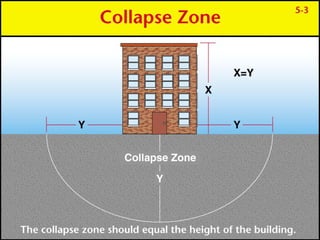
 Apparatus should be parked far 
enough away so that they are not in 
the collapse zone should one occur. 
 Try not to park beneath power or 
utility lines , particularly if there is 
any chance that the fire will cause 
the lines to fall.
Positioning to Support 
Aerial Apparatus 
 Driver/Operators of pumping 
apparatus must not only seek a 
good tactical location for the rig they 
are driving, but they must also keep 
in mind the needs of aerial 
apparatus that will soon arrive on 
the scene.
Positioning to Support 
Aerial Apparatus 
 It is best to give the aerial 
apparatus the most optimum 
operating position and to locate the 
pumping apparatus a little further 
away. 
 The aerial apparatus has a fixed 
length while the engine has in 
excess of 1000 feet of hose.
Positioning to Support 
Aerial Apparatus 
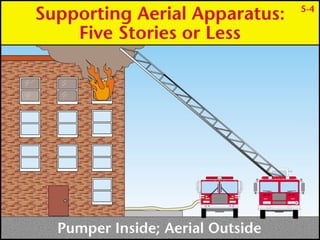
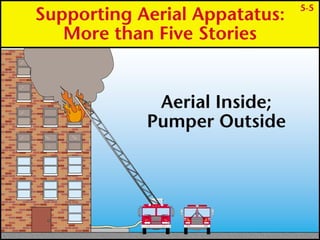
 In order to facilitate the proper 
placement of pumpers and aerial 
apparatus, some departments 
choose to use the “inside/outside” 
method of apparatus placement.
Staging 
 An apparatus staging procedure 
facilitates the orderly positioning of 
apparatus and allows the Incident 
Commander to fully utilize the 
potential of each unit and crew. 
 An apparatus staging procedure in 
two levels has been developed that 
can be used for any multi-company 
response.
Level I Staging 
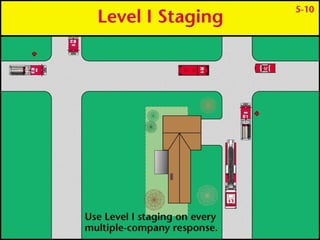
 Level I staging is used on every 
emergency response when two companies 
performing like functions are dispatched. 
 The first due engine ,truck, rescue or 
squad, and command officer proceed 
directly to the scene. Later arriving 
companies stage at least one block away 
from the scene in their direction of travel.
Level II Staging 
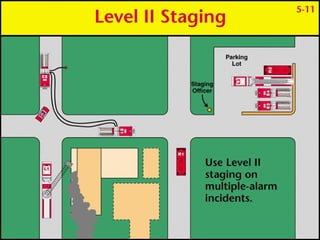
 Level II staging is used in greater 
alarm situations where a large 
number of emergency vehicles are 
responding to an incident. Level II 
staging must be initiated by the 
incident commander. 
 Companies are informed of the 
staging area location when they are 
dispatched and respond directly to 
that location.
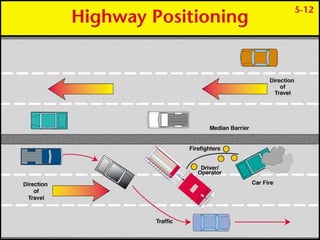
Operations on Highways 
 At least one lane next to the incident 
lane should be closed. Additional or 
all traffic lanes may have to be 
closed it the extra lane does not 
provide a safe barrier. 
 Fire apparatus should be place 
between the flow of traffic and the 
firefighters working on the incident 
to act as a shield.
Chapter. 5 positioning apparatus

Chapter. 5 positioning apparatus

  • 1.
  • 2.
    Positioning Apparatus The primary function of a fire department pumper is to provide water for fire fighting operations.  The pumper may provide water directly to fire streams or it may supply water to other pumpers or aerial apparatus.
  • 3.
    Fire Attack Pumpers  There is no one set rule for positioning pumpers supplying attack lines on the fireground.  Standard operating procedures and the judgment of the responsible officer or driver/operator should be the deciding factors when committing the apparatus
  • 4.
    Fire Attack Pumpers  Determining the proper positioning for the attack pumper begins with sizing up the incident.  If the apparatus arrives at the location where no fire conditions are evident, it is generally advisable to park near the main entrance to the occupancy.
  • 5.
    Fire Attack Pumpers  When fire conditions are evident upon approaching the scene, look for the best tactical position in which to place the apparatus.
  • 6.
    Considerations For ApparatusPlacement  Department SOP’s – Many departments have procedures for the placement of each initial apparatus.  Rescue situations – Rescue is always the first tactical priority and if there is an obvious rescue situation then the apparatus should be parked in order to facilitate the timely deployment of ground ladders or aerial device
  • 7.
    Considerations For ApparatusPlacement  Water supply – IF an external water supply is required then this must be considered before parking in the final position.
  • 8.
    Considerations For ApparatusPlacement  Method of Attack – Positioning depends on the method of attack;if pre-connected hoselines are to be used, the apparatus must be close enough for them to reach.  If the deck gun is going to be used, the apparatus must be positioned so the fire stream will reach its intended target.
  • 9.
    Considerations For ApparatusPlacement  Exposures – If the fire has the potential to threaten exposures, the apparatus must be parked in a position that allows fire streams to protect those exposures.  Wind direction – Whenever possible, attempt to park the apparatus upwind of the incident.
  • 10.
    Considerations For ApparatusPlacement  Terrain – Given a choice, always choose a paved surface over an unpaved surface.  It is also desirable to be uphill from the incident whenever possible
  • 11.
    Considerations For ApparatusPlacement  Relocation potential – Always leave yourself an out. Never position the apparatus in a location that does not allow an easy retreat should conditions warrant.  Make sure that fire hose is laid to the side of the street if at all possible.
  • 12.
    Considerations For ApparatusPlacement  Apparatus should be parked far enough away so that they are not in the collapse zone should one occur.  Try not to park beneath power or utility lines , particularly if there is any chance that the fire will cause the lines to fall.
  • 14.
    Positioning to Support Aerial Apparatus  Driver/Operators of pumping apparatus must not only seek a good tactical location for the rig they are driving, but they must also keep in mind the needs of aerial apparatus that will soon arrive on the scene.
  • 15.
    Positioning to Support Aerial Apparatus  It is best to give the aerial apparatus the most optimum operating position and to locate the pumping apparatus a little further away.  The aerial apparatus has a fixed length while the engine has in excess of 1000 feet of hose.
  • 16.
    Positioning to Support Aerial Apparatus  In order to facilitate the proper placement of pumpers and aerial apparatus, some departments choose to use the “inside/outside” method of apparatus placement.
  • 19.
    Staging  Anapparatus staging procedure facilitates the orderly positioning of apparatus and allows the Incident Commander to fully utilize the potential of each unit and crew.  An apparatus staging procedure in two levels has been developed that can be used for any multi-company response.
  • 20.
    Level I Staging  Level I staging is used on every emergency response when two companies performing like functions are dispatched.  The first due engine ,truck, rescue or squad, and command officer proceed directly to the scene. Later arriving companies stage at least one block away from the scene in their direction of travel.
  • 22.
    Level II Staging  Level II staging is used in greater alarm situations where a large number of emergency vehicles are responding to an incident. Level II staging must be initiated by the incident commander.  Companies are informed of the staging area location when they are dispatched and respond directly to that location.
  • 24.
    Operations on Highways  At least one lane next to the incident lane should be closed. Additional or all traffic lanes may have to be closed it the extra lane does not provide a safe barrier.  Fire apparatus should be place between the flow of traffic and the firefighters working on the incident to act as a shield.

Editor's Notes

  • #5 Approaching the scene, the driver and officer should observe the incident conditions to determine the best place to park the apparatus. This allows the fire company to enter the structure and investigate the situation. The driver should remain with the apparatus and prepare to make connections to the water supply or FDC or pull attack hoselines if needed. There are a variety of considerations that influence this decision.
  • #6 Approaching the scene, the driver and officer should observe the incident conditions to determine the best place to park the apparatus. This allows the fire company to enter the structure and investigate the situation. The driver should remain with the apparatus and prepare to make connections to the water supply or FDC or pull attack hoselines if needed. There are a variety of considerations that influence this decision.
  • #8 1) If the apparatus is located in a position that is difficult for other apparatus to access, a supply line should be laid into the scene as the apparatus moves into position, such as up a narrow lane or driveway.
  • #9 1) If the apparatus is located in a position that is difficult for other apparatus to access, a supply line should be laid into the scene as the apparatus moves into position, such as up a narrow lane or driveway.
  • #10 Avoid parking the apparatus in a location that subjects it to high levels of radiant heat, falling embers, or other products of combustion. Any position which requires wetting the apparatus to prevent damage is not a good position. This negates the need for the driver to wear an SCBA while operating the pump. It also reduces the chance of the apparatus becoming an exposure. Lastly if haz-mat is involved in the fire, parking upwind will lessen the chance of contaminating the vehicle and personnel assigned to it. This eliminates the chance of the apparatus getting stuck. Parking uphill eliminates having to overcome elevation pressure, thus reducing wear on the pump. Parking uphill from a haz-mat eliminates the chance of the product flowing underneath the truck. Position uphill from a vehicle fire in case the burning fuel begins leaking from the vehicle. The exception to the uphill rule is when positioning at a wildland fire. Wildland fires move faster uphill than on even terrain.
  • #11 Avoid parking the apparatus in a location that subjects it to high levels of radiant heat, falling embers, or other products of combustion. Any position which requires wetting the apparatus to prevent damage is not a good position. This negates the need for the driver to wear an SCBA while operating the pump. It also reduces the chance of the apparatus becoming an exposure. Lastly if haz-mat is involved in the fire, parking upwind will lessen the chance of contaminating the vehicle and personnel assigned to it. This eliminates the chance of the apparatus getting stuck. Parking uphill eliminates having to overcome elevation pressure, thus reducing wear on the pump. Parking uphill from a haz-mat eliminates the chance of the product flowing underneath the truck. Position uphill from a vehicle fire in case the burning fuel begins leaking from the vehicle. The exception to the uphill rule is when positioning at a wildland fire. Wildland fires move faster uphill than on even terrain.
  • #18 The philosophy here is that the building is low enough to be reached by the aerial device even if it has to go over the closer engines.
  • #19 This allows for the aerials’ maximum reach ability.
  • #21 The incident commander can then use the staged unit as necessary. (Lay additional lines, send crew only to the scene, proceed to the scene and set up, chase sparks,etc.)
  • #24 A parking lot or open field can serve as a staging area. Generally, the company officer of the first company to arrive at the staging area becomes the staging officer. Company officers should report to the staging officer as they arrive and park.
  • #25 Problems associated with simply accessing the scene can be a challenge to emergency responders. (Long distances between exits and entrance ramps).
  • #26 The apparatus should be parked on an angle so that the operator is protected from traffic by the tailboard. Front wheels should be turned away from the firefighters working highway incidents so that the apparatus will not be driven into them if struck form behind.