Paper 1 Textual Analysis SCASI and SPECS SLIMS - two mnemonics for analysis
SCASI - best for prose and drama Setting Character Action Style Ideas
Setting As an extract within a larger text, how/where does this fit in the text? The physical location and time How does this effect your reading of it?
Characterisation How are characters represented by the author? Their speech, actions, reactions from others
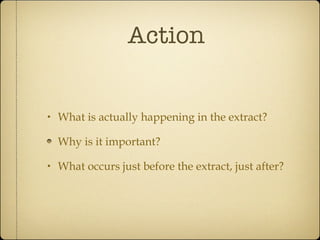
Action What is actually happening in the extract? Why is it important? What occurs just before the extract, just after?
Style All of the language and literary devices Narrative voice Structure
Ideas Overall theme, the message What is the author trying to achieve? How effective are they?
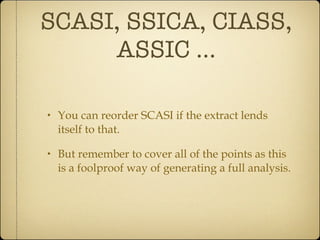
SCASI, SSICA, CIASS, ASSIC ... You can reorder SCASI if the extract lends itself to that. But remember to cover all of the points as this is a foolproof way of generating a full analysis.
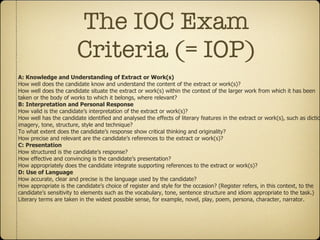
The IOC Exam Criteria (= IOP) A: Knowledge and Understanding of Extract or Work(s) How well does the candidate know and understand the content of the extract or work(s)? How well does the candidate situate the extract or work(s) within the context of the larger work from which it has been taken or the body of works to which it belongs, where relevant? B:   Interpretation and Personal Response How valid is the candidate’s interpretation of the extract or work(s)? How well has the candidate identified and analysed the effects of literary features in the extract or work(s), such as diction, imagery, tone, structure, style and technique? To what extent does the candidate’s response show critical thinking and originality? How precise and relevant are the candidate’s references to the extract or work(s)?  C: Presentation How structured is the candidate’s response? How effective and convincing is the candidate’s presentation? How appropriately does the candidate integrate supporting references to the extract or work(s)? D: Use of Language How accurate, clear and precise is the language used by the candidate? How appropriate is the candidate’s choice of register and style for the occasion? (Register refers, in this context, to the candidate’s sensitivity to elements such as the vocabulary, tone, sentence structure and idiom appropriate to the task.) Literary terms are taken in the widest possible sense, for example, novel, play, poem, persona, character, narrator.
Now, apply these ideas to the extract! Setting Characterisation Action Style Ideas
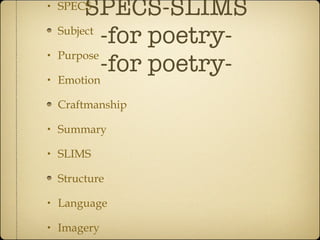
SPECS-SLIMS -for poetry- -for poetry- SPECS Subject Purpose Emotion Craftmanship Summary SLIMS Structure Language Imagery Mood Sensory imagery
 

Scasi Specs Slims

  • 1.
    Paper 1 TextualAnalysis SCASI and SPECS SLIMS - two mnemonics for analysis
  • 2.
    SCASI - bestfor prose and drama Setting Character Action Style Ideas
  • 3.
    Setting As anextract within a larger text, how/where does this fit in the text? The physical location and time How does this effect your reading of it?
  • 4.
    Characterisation How arecharacters represented by the author? Their speech, actions, reactions from others
  • 5.
    Action What isactually happening in the extract? Why is it important? What occurs just before the extract, just after?
  • 6.
    Style All ofthe language and literary devices Narrative voice Structure
  • 7.
    Ideas Overall theme,the message What is the author trying to achieve? How effective are they?
  • 8.
    SCASI, SSICA, CIASS,ASSIC ... You can reorder SCASI if the extract lends itself to that. But remember to cover all of the points as this is a foolproof way of generating a full analysis.
  • 9.
    The IOC ExamCriteria (= IOP) A: Knowledge and Understanding of Extract or Work(s) How well does the candidate know and understand the content of the extract or work(s)? How well does the candidate situate the extract or work(s) within the context of the larger work from which it has been taken or the body of works to which it belongs, where relevant? B: Interpretation and Personal Response How valid is the candidate’s interpretation of the extract or work(s)? How well has the candidate identified and analysed the effects of literary features in the extract or work(s), such as diction, imagery, tone, structure, style and technique? To what extent does the candidate’s response show critical thinking and originality? How precise and relevant are the candidate’s references to the extract or work(s)? C: Presentation How structured is the candidate’s response? How effective and convincing is the candidate’s presentation? How appropriately does the candidate integrate supporting references to the extract or work(s)? D: Use of Language How accurate, clear and precise is the language used by the candidate? How appropriate is the candidate’s choice of register and style for the occasion? (Register refers, in this context, to the candidate’s sensitivity to elements such as the vocabulary, tone, sentence structure and idiom appropriate to the task.) Literary terms are taken in the widest possible sense, for example, novel, play, poem, persona, character, narrator.
  • 10.
    Now, apply theseideas to the extract! Setting Characterisation Action Style Ideas
  • 11.
    SPECS-SLIMS -for poetry--for poetry- SPECS Subject Purpose Emotion Craftmanship Summary SLIMS Structure Language Imagery Mood Sensory imagery
  • 12.