Downloaded 40 times


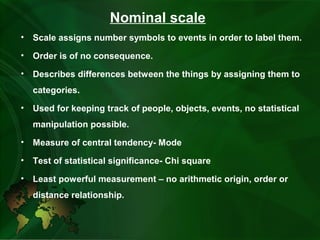
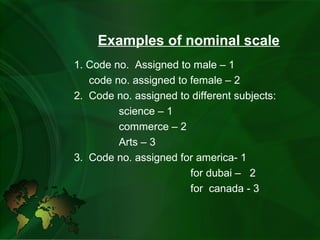
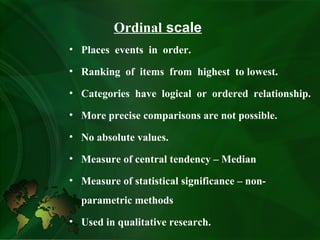
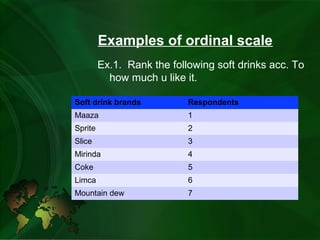
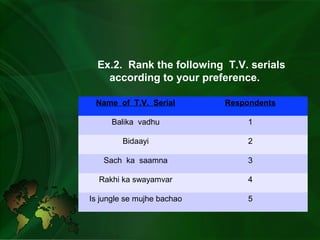


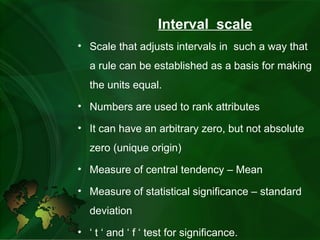
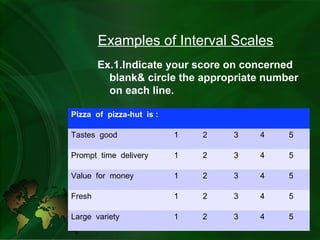
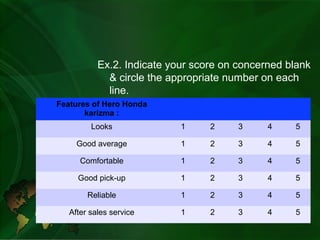

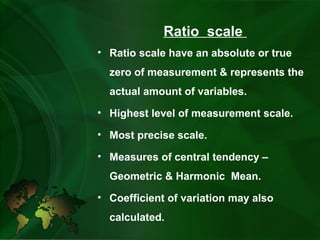
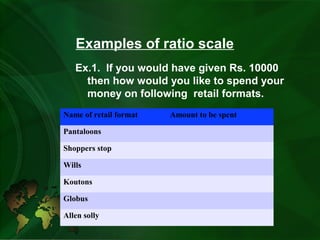




This document discusses different types of measurement scales used in scaling techniques: - Nominal scale assigns labels or categories with no order or ranking. Examples include coding gender or subjects. - Ordinal scale ranks items in logical order but does not specify differences between ranks. Examples include ranking preferences. - Interval scale assigns equal intervals between units but with an arbitrary zero point. Examples include scoring attributes on a 1-5 scale. - Ratio scale has a true absolute zero point and represents actual amounts, allowing for more precise measurements like percentages. Examples include allocating amounts of money.


![[DSC Europe 25] Bojan Djuricic - Predictive Design Process.pdf](https://cdn.slidesharecdn.com/ss_thumbnails/5awdrbedqdek3gqu2ezy-4-the-predictive-design-bojan-djuricic-260120105856-6c399e9b-thumbnail.jpg?width=640&height=640&fit=bounds)
![[DSC Europe 25] Elena Menshikova - AI-Powered Operational Excellence: Revolut...](https://cdn.slidesharecdn.com/ss_thumbnails/es6nholbqy3zaao2c2yd-2-elena-menshikova-data-ai-in-decision-making-260115093812-4fba8b38-thumbnail.jpg?width=640&height=640&fit=bounds)


![[DSC Europe 25] Andrzej Kowalczyk - AI - how to start small and grow in the f...](https://cdn.slidesharecdn.com/ss_thumbnails/oy1zmo94qv6vpcqjvno2-andrzej-kowalczyk-ai-how-to-start-small-and-grow-in-the-future-1-260119121559-cf093b23-thumbnail.jpg?width=640&height=640&fit=bounds)