



Presented by-Munesh Kumar Singh
PGICE-136323
Dinesh Kumar PGICE-136318
 What is SCADA and History of SCADA.
 Definition
 Working Of SCADA and Various Applications.
 How important SCADA in Power Plant.
Supervisory
Control
AND
DATA
Acquisition
 SCADA (supervisory control and data
acquisition) is a type of industrial control
system (ICS).
 Industrial control systems are computer-
controlled systems that monitor and control
industrial processes that exist in the physical
world.
 SCADA is a system which collect the data
from the system A and control that system A.
 SCADA is used to monitor and control plant
or equipments in Industries such as-
a-Telecommunication
b- Energy, Oil & Gas refining
c-Transportation
d-Water and Wastewater monitoring and
control
 SCADA (supervisory control and data acquisition) has
been around as long as there have been control
systems.
 The first ‘SCADA’ systems utilized data acquisition by
means
 of panels of meters, lights and strip chart recorders.
 The operator manually operating various control
knobs exercised supervisory control.
 These devices were and still are used to do
supervisory control and data acquisition on plants,
factories and power generating facilities. The
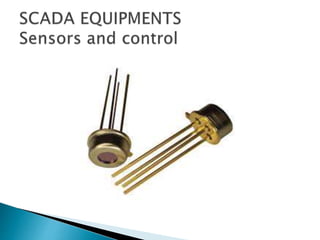
following figure shows a sensor to panel system.
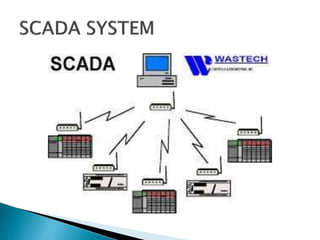
 The term SCADA usually refers to centralized systems
which monitor and control entire sites, or complexes
of systems spread out over large areas (anything
from an industrial plant to a nation).
 Most control actions are performed automatically by
RTUs or by PLCs. Host control functions are usually
restricted to basic overriding or supervisory level
intervention.
 For example, a PLC may control the flow of cooling
water through part of an industrial process, but the
SCADA system may allow operators to change the set
points for the flow, and enable alarm conditions, such
as loss of flow and high temperature, to be displayed
and recorded.
 SCADA refers to the combination of telemetry and data
acquisition.
 SCADA encompasses the collecting of the information,
transferring it back to the central site , carrying out any
necessary analysis and control and then displaying that
information on a number of operator screens or displays. The
required control actions are then conveyed back to the
process.
 In the early days of data acquisition, relay logic was used to
control production and plant systems. With the advent of the
CPU and other electronic devices, manufacturers incorporated
digital electronics into relay logic equipment.
 The PLC or programmable logic controller is still one of the
most widely used control systems in industry.
 As need to monitor and control more devices in the plant
grew, the PLCs were distributed and the
 systems became more intelligent and smaller in size
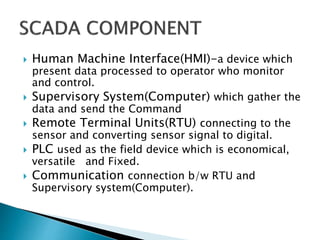
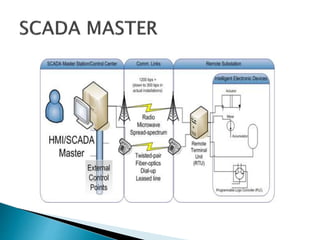
 Human Machine Interface(HMI)-a device which
present data processed to operator who monitor
and control.
 Supervisory System(Computer) which gather the
data and send the Command
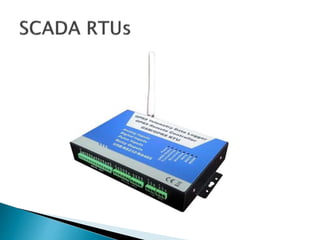
 Remote Terminal Units(RTU) connecting to the
sensor and converting sensor signal to digital.
 PLC used as the field device which is economical,
versatile and Fixed.
 Communication connection b/w RTU and
Supervisory system(Computer).
 DATA ACQUISITION
 DATA COMMUNICATION
 DATA PRESENTATION
 CONTROL
 An automation increase the efficiency of Plant
 The plant increment efficiency reduce the
cost.
 Easily programmed or reprogrammed
 Easy maintained (self diagnostic).
 Capability to do arithmetic function.
 The ability to communicate with other
controller or a master host computer.
 PLCs. were able to move past simple on/off
control to more complex schemes as PID
control.
 Industrial processes include those of manufacturing,
production, power generation, fabrication, and
refining, and may run in continuous, batch, repetitive,
or discrete modes.
 Infrastructure processes may be public or private, and
include water treatment and distribution, wastewater
collection and treatment, oil and gas
pipelines, electrical power transmission and
distribution, wind farms, civil defense siren systems,
and large communication systems.
 Facility processes occur both in public facilities and
private ones, including buildings, airports, ships,
and space stations. They monitor and
control heating, ventilation, and air conditioning
systems (HVAC), access, and energy consumption.
 SCADA plays an important role in industrial
application. We can monitor the working
process from a chamber and control the
functioning of machines through the SCADA
system.
 SCADA increase the efficiency and reduce the
maintenance cost.
 The hydro power plant maintenance is
determined by the magnitude of damage in
whole equipment, operating schedule,
forecasting power demand and generating
company energy production planning.
 The maintenance can be damage oriented ,
time oriented or condition oriented.
 Estimate the maintenance cost and impact on
the production cost
 An effectiveness maintenance depend on the
quantity acquire data that’s why SCADA in
hydropower plant cascade somes and cris
represent a real aspect for reduction of
maintenance cost.
 The new telemetric system expands the
capabilities of the existing electrical,
hydraulically and mechanical equipment by
remote measurement and control and data
acquisition facilities, and provides the
integration of modern computing systems
and electronic processing devices.
 The telemetric system is basically
structured on four main levels:
 Local level-Hydroelectric transducers ,
actuators connect to power generation,
hydraulic, mechanical units.
 Process level-Power plant automation by RTU
and PLCs.
 Process computer/workstation level- the data
connection and communication by serially
using RS485 .this provide the data(record ,
graph), to HMI.
 Central dispatching unit level – the
informatics system implemented at the
dispatching unit of the hydro power company
headquarter, based on computing systems
connected to all power plants by multiport
interfaces, routers and data communication
equipment that implement the specific
cascade WAN.
 The Hydro Power Plant SCADA System integrates
the maintenance workstation installed in the
hydro power plant operation room.
 When the trigger signal is detected by the
process
 server, an alarm signal is sent to the operator.
 It communicates with the central dispatching
maintenance workstation on dialup telephone
line.
 The equipments used for the maintenance of
data acquisition are: a disturbance recorder,
electronic protection relays and
 PLCs RTUs from SCADA structure.
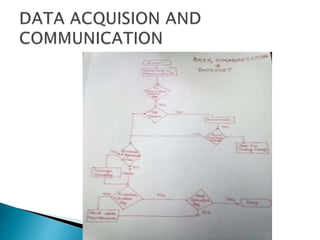
 After the analysis of such a mechanism, we
identified the following function to be fulfilled:
 Remote monitoring and supervision system
compatibility with the Internet
 Compatibility with multiple communication
platforms
 Modern access mechanisms to remote or local
programming, for dynamic configurations
 Extended memory for database
 Easy adaptation to a protocol standard family, for
future interfacing
 Using the real time capabilities offered by the
SCADA systems
 implemented in the hydro power plants, it is
possible to improve the maintenance strategy,
integrate and synchronize
 the information from disparate systems in a
global interface to support the operators in
different conditions.
 The database created by SCADA system and the
knowledge based component created during the
exploitation and overall equipment maintenance
will offer the possibility to establish the future
maintenance strategies
 Wikipedia
 Handbook of SCADA (Supervisory Control and
Data Acquisition)
 HAND BOOK of practical of SCADA.
 IEEE paper on SCADA System-Support in
maintenance of hydropower plant.
Thank you
for your
attention

Scada in hydropower plant

  • 1.
    Presented by-Munesh KumarSingh PGICE-136323 Dinesh Kumar PGICE-136318
  • 2.
     What isSCADA and History of SCADA.  Definition  Working Of SCADA and Various Applications.  How important SCADA in Power Plant.
  • 3.
  • 4.
     SCADA (supervisorycontrol and data acquisition) is a type of industrial control system (ICS).  Industrial control systems are computer- controlled systems that monitor and control industrial processes that exist in the physical world.
  • 5.
     SCADA isa system which collect the data from the system A and control that system A.  SCADA is used to monitor and control plant or equipments in Industries such as- a-Telecommunication b- Energy, Oil & Gas refining c-Transportation d-Water and Wastewater monitoring and control
  • 6.
     SCADA (supervisorycontrol and data acquisition) has been around as long as there have been control systems.  The first ‘SCADA’ systems utilized data acquisition by means  of panels of meters, lights and strip chart recorders.  The operator manually operating various control knobs exercised supervisory control.  These devices were and still are used to do supervisory control and data acquisition on plants, factories and power generating facilities. The following figure shows a sensor to panel system.
  • 7.
     The termSCADA usually refers to centralized systems which monitor and control entire sites, or complexes of systems spread out over large areas (anything from an industrial plant to a nation).  Most control actions are performed automatically by RTUs or by PLCs. Host control functions are usually restricted to basic overriding or supervisory level intervention.  For example, a PLC may control the flow of cooling water through part of an industrial process, but the SCADA system may allow operators to change the set points for the flow, and enable alarm conditions, such as loss of flow and high temperature, to be displayed and recorded.
  • 8.
     SCADA refersto the combination of telemetry and data acquisition.  SCADA encompasses the collecting of the information, transferring it back to the central site , carrying out any necessary analysis and control and then displaying that information on a number of operator screens or displays. The required control actions are then conveyed back to the process.  In the early days of data acquisition, relay logic was used to control production and plant systems. With the advent of the CPU and other electronic devices, manufacturers incorporated digital electronics into relay logic equipment.  The PLC or programmable logic controller is still one of the most widely used control systems in industry.  As need to monitor and control more devices in the plant grew, the PLCs were distributed and the  systems became more intelligent and smaller in size
  • 9.
     Human MachineInterface(HMI)-a device which present data processed to operator who monitor and control.  Supervisory System(Computer) which gather the data and send the Command  Remote Terminal Units(RTU) connecting to the sensor and converting sensor signal to digital.  PLC used as the field device which is economical, versatile and Fixed.  Communication connection b/w RTU and Supervisory system(Computer).
  • 11.
     DATA ACQUISITION DATA COMMUNICATION  DATA PRESENTATION  CONTROL
  • 16.
     An automationincrease the efficiency of Plant  The plant increment efficiency reduce the cost.  Easily programmed or reprogrammed  Easy maintained (self diagnostic).  Capability to do arithmetic function.  The ability to communicate with other controller or a master host computer.  PLCs. were able to move past simple on/off control to more complex schemes as PID control.
  • 17.
     Industrial processesinclude those of manufacturing, production, power generation, fabrication, and refining, and may run in continuous, batch, repetitive, or discrete modes.  Infrastructure processes may be public or private, and include water treatment and distribution, wastewater collection and treatment, oil and gas pipelines, electrical power transmission and distribution, wind farms, civil defense siren systems, and large communication systems.  Facility processes occur both in public facilities and private ones, including buildings, airports, ships, and space stations. They monitor and control heating, ventilation, and air conditioning systems (HVAC), access, and energy consumption.
  • 19.
     SCADA playsan important role in industrial application. We can monitor the working process from a chamber and control the functioning of machines through the SCADA system.  SCADA increase the efficiency and reduce the maintenance cost.
  • 20.
     The hydropower plant maintenance is determined by the magnitude of damage in whole equipment, operating schedule, forecasting power demand and generating company energy production planning.  The maintenance can be damage oriented , time oriented or condition oriented.  Estimate the maintenance cost and impact on the production cost
  • 21.
     An effectivenessmaintenance depend on the quantity acquire data that’s why SCADA in hydropower plant cascade somes and cris represent a real aspect for reduction of maintenance cost.
  • 22.
     The newtelemetric system expands the capabilities of the existing electrical, hydraulically and mechanical equipment by remote measurement and control and data acquisition facilities, and provides the integration of modern computing systems and electronic processing devices.  The telemetric system is basically structured on four main levels:
  • 23.
     Local level-Hydroelectrictransducers , actuators connect to power generation, hydraulic, mechanical units.  Process level-Power plant automation by RTU and PLCs.  Process computer/workstation level- the data connection and communication by serially using RS485 .this provide the data(record , graph), to HMI.
  • 24.
     Central dispatchingunit level – the informatics system implemented at the dispatching unit of the hydro power company headquarter, based on computing systems connected to all power plants by multiport interfaces, routers and data communication equipment that implement the specific cascade WAN.
  • 25.
     The HydroPower Plant SCADA System integrates the maintenance workstation installed in the hydro power plant operation room.  When the trigger signal is detected by the process  server, an alarm signal is sent to the operator.  It communicates with the central dispatching maintenance workstation on dialup telephone line.  The equipments used for the maintenance of data acquisition are: a disturbance recorder, electronic protection relays and  PLCs RTUs from SCADA structure.
  • 27.
     After theanalysis of such a mechanism, we identified the following function to be fulfilled:  Remote monitoring and supervision system compatibility with the Internet  Compatibility with multiple communication platforms  Modern access mechanisms to remote or local programming, for dynamic configurations  Extended memory for database  Easy adaptation to a protocol standard family, for future interfacing
  • 28.
     Using thereal time capabilities offered by the SCADA systems  implemented in the hydro power plants, it is possible to improve the maintenance strategy, integrate and synchronize  the information from disparate systems in a global interface to support the operators in different conditions.  The database created by SCADA system and the knowledge based component created during the exploitation and overall equipment maintenance will offer the possibility to establish the future maintenance strategies
  • 29.
     Wikipedia  Handbookof SCADA (Supervisory Control and Data Acquisition)  HAND BOOK of practical of SCADA.  IEEE paper on SCADA System-Support in maintenance of hydropower plant.
  • 30.