1. Introduction 
2. Evolution 
3. Realization in Industry 
4. Requirement for SCADA 
5. SCADA Functions 
6. SCADA Operations 
7. Systems using SCADA 
8. Working with SCADA 
9. Conclusion
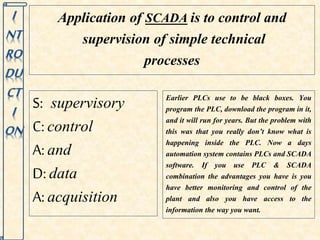
Application of SCADA is to control and 
supervision of simple technical 
processes 
S: supervisory 
C: control 
A: and 
D: data 
A: acquisition 
Earlier PLCs use to be black boxes. You 
program the PLC, download the program in it, 
and it will run for years. But the problem with 
this was that you really don’t know what is 
happening inside the PLC. Now a days 
automation system contains PLCs and SCADA 
software. If you use PLC & SCADA 
combination the advantages you have is you 
have better monitoring and control of the 
plant and also you have access to the 
information the way you want.
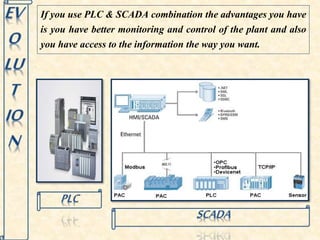
If you use PLC & SCADA combination the advantages you have 
is you have better monitoring and control of the plant and also 
you have access to the information the way you want.
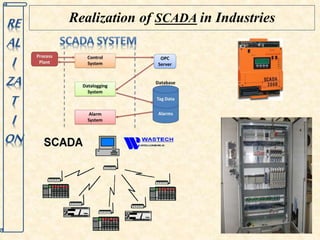
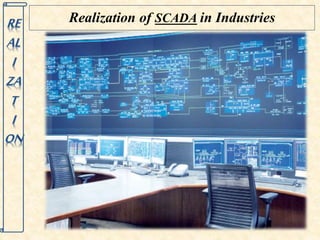
Realization of SCADA in Industries
Requirements for SCADA Functioning 
1. Software (SCADA - FIX 7) 
2. The operator is logged in. 
3. The system is real time system. 
4. Actors: 
Field Devices 
Local Control Center (LCC) 
Remote Telemetry Units (RTU) 
Master / Central Control Terminal Unit (MTU) 
Operator 
Supervisor
SCADA Functions 
A SCADA system performs four functions: 
1. Data acquisition 
2. Networked data communication 
3. Data presentation 
4. Control 
These functions are performed by four kinds of SCADA components: 
1. Sensors: (either digital or analogue) and control relays that directly interface 
with the managed system. 
2. Remote telemetry units (RTUs): These are small computerized units deployed in 
the field at specific sites and locations. RTUs serve as local collection points for 
gathering reports from sensors and delivering commands to control relays. 
3. SCADA master units: These are larger computer consoles that serve as the 
central processor for the SCADA system. Master units provide a human 
interface to the system and automatically regulate the managed system in 
response to sensor inputs. 
4. Communications networks: that connects the SCADA master unit to the RTUs 
in the field.
SCADA performs following operations 
1. System Shut Down / Startup 
2. Gather Field Information 
3. Perform Local Control 
4. Transfer Field Information 
5. Manage Field Information 
6. Perform Remote Control 
7. Analyze System State 
8. Schedule Task 
9. Balance Load 
10. Adjust Settings 
11. Check Status 
12. Manage Logging
SCADA SYSTEMS 
Water Distribution 
Metro Train Control 
Manufacturing 
Oil and Gas Industries 
Waste Water Treatment Plant, etc.
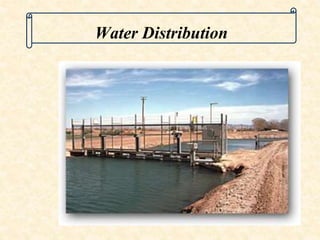
Water Distribution
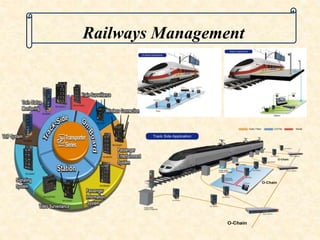
Railways Management
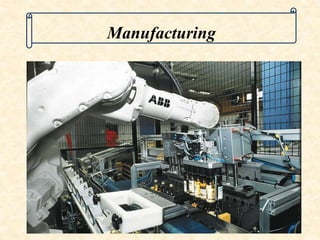
Manufacturing
Oil and Gas Industries
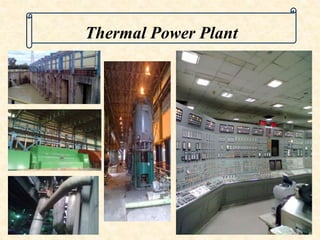
Thermal Power Plant
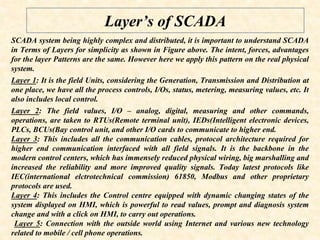
Layer’s of SCADA 
SCADA system being highly complex and distributed, it is important to understand SCADA 
in Terms of Layers for simplicity as shown in Figure above. The intent, forces, advantages 
for the layer Patterns are the same. However here we apply this pattern on the real physical 
system. 
Layer 1: It is the field Units, considering the Generation, Transmission and Distribution at 
one place, we have all the process controls, I/Os, status, metering, measuring values, etc. It 
also includes local control. 
Layer 2: The field values, I/O – analog, digital, measuring and other commands, 
operations, are taken to RTUs(Remote terminal unit), IEDs(Intelligent electronic devices, 
PLCs, BCUs(Bay control unit, and other I/O cards to communicate to higher end. 
Layer 3: This includes all the communication cables, protocol architecture required for 
higher end communication interfaced with all field signals. It is the backbone in the 
modern control centers, which has immensely reduced physical wiring, big marshalling and 
increased the reliability and more improved quality signals. Today latest protocols like 
IEC(international elctrotechnical commission) 61850, Modbus and other proprietary 
protocols are used. 
Layer 4: This includes the Control centre equipped with dynamic changing states of the 
system displayed on HMI, which is powerful to read values, prompt and diagnosis system 
change and with a click on HMI, to carry out operations. 
Layer 5: Connection with the outside world using Internet and various new technology 
related to mobile / cell phone operations.
Working with SCADA 
http://www.youtube.com/watch?v=ZSFdOjxB-1I
Benefit & Drawback 
Advantages of SCADA system include Wide area connective and 
pervasive ; routable ; parallel polling ; redundancy and hot stand by ; 
large addressing ranges; integration of I.T to automation and 
monitoring net works ; standardization ; reduce down time ; limit the 
frequency of accidents; helpful in improving & Accumulating record. 
Disadvantages of SCADA Technology include IP performance over 
head; web enabled SCADA hosts users to remotely monitor, control 
remote sites via a web browser; security concerns.
Amit Shrivastava(010) 
F– 1(7 Semester) 
2014 
Prepared By :- 
th

SCADA

  • 2.
    1. Introduction 2.Evolution 3. Realization in Industry 4. Requirement for SCADA 5. SCADA Functions 6. SCADA Operations 7. Systems using SCADA 8. Working with SCADA 9. Conclusion
  • 3.
    Application of SCADAis to control and supervision of simple technical processes S: supervisory C: control A: and D: data A: acquisition Earlier PLCs use to be black boxes. You program the PLC, download the program in it, and it will run for years. But the problem with this was that you really don’t know what is happening inside the PLC. Now a days automation system contains PLCs and SCADA software. If you use PLC & SCADA combination the advantages you have is you have better monitoring and control of the plant and also you have access to the information the way you want.
  • 4.
    If you usePLC & SCADA combination the advantages you have is you have better monitoring and control of the plant and also you have access to the information the way you want.
  • 5.
    Realization of SCADAin Industries
  • 6.
    Realization of SCADAin Industries
  • 7.
    Requirements for SCADAFunctioning 1. Software (SCADA - FIX 7) 2. The operator is logged in. 3. The system is real time system. 4. Actors: Field Devices Local Control Center (LCC) Remote Telemetry Units (RTU) Master / Central Control Terminal Unit (MTU) Operator Supervisor
  • 8.
    SCADA Functions ASCADA system performs four functions: 1. Data acquisition 2. Networked data communication 3. Data presentation 4. Control These functions are performed by four kinds of SCADA components: 1. Sensors: (either digital or analogue) and control relays that directly interface with the managed system. 2. Remote telemetry units (RTUs): These are small computerized units deployed in the field at specific sites and locations. RTUs serve as local collection points for gathering reports from sensors and delivering commands to control relays. 3. SCADA master units: These are larger computer consoles that serve as the central processor for the SCADA system. Master units provide a human interface to the system and automatically regulate the managed system in response to sensor inputs. 4. Communications networks: that connects the SCADA master unit to the RTUs in the field.
  • 9.
    SCADA performs followingoperations 1. System Shut Down / Startup 2. Gather Field Information 3. Perform Local Control 4. Transfer Field Information 5. Manage Field Information 6. Perform Remote Control 7. Analyze System State 8. Schedule Task 9. Balance Load 10. Adjust Settings 11. Check Status 12. Manage Logging
  • 10.
    SCADA SYSTEMS WaterDistribution Metro Train Control Manufacturing Oil and Gas Industries Waste Water Treatment Plant, etc.
  • 11.
  • 12.
  • 13.
  • 14.
    Oil and GasIndustries
  • 15.
  • 16.
    Layer’s of SCADA SCADA system being highly complex and distributed, it is important to understand SCADA in Terms of Layers for simplicity as shown in Figure above. The intent, forces, advantages for the layer Patterns are the same. However here we apply this pattern on the real physical system. Layer 1: It is the field Units, considering the Generation, Transmission and Distribution at one place, we have all the process controls, I/Os, status, metering, measuring values, etc. It also includes local control. Layer 2: The field values, I/O – analog, digital, measuring and other commands, operations, are taken to RTUs(Remote terminal unit), IEDs(Intelligent electronic devices, PLCs, BCUs(Bay control unit, and other I/O cards to communicate to higher end. Layer 3: This includes all the communication cables, protocol architecture required for higher end communication interfaced with all field signals. It is the backbone in the modern control centers, which has immensely reduced physical wiring, big marshalling and increased the reliability and more improved quality signals. Today latest protocols like IEC(international elctrotechnical commission) 61850, Modbus and other proprietary protocols are used. Layer 4: This includes the Control centre equipped with dynamic changing states of the system displayed on HMI, which is powerful to read values, prompt and diagnosis system change and with a click on HMI, to carry out operations. Layer 5: Connection with the outside world using Internet and various new technology related to mobile / cell phone operations.
  • 17.
    Working with SCADA http://www.youtube.com/watch?v=ZSFdOjxB-1I
  • 18.
    Benefit & Drawback Advantages of SCADA system include Wide area connective and pervasive ; routable ; parallel polling ; redundancy and hot stand by ; large addressing ranges; integration of I.T to automation and monitoring net works ; standardization ; reduce down time ; limit the frequency of accidents; helpful in improving & Accumulating record. Disadvantages of SCADA Technology include IP performance over head; web enabled SCADA hosts users to remotely monitor, control remote sites via a web browser; security concerns.
  • 19.
    Amit Shrivastava(010) F–1(7 Semester) 2014 Prepared By :- th