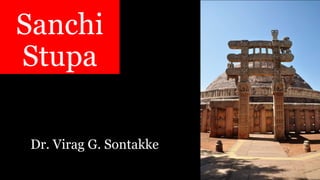
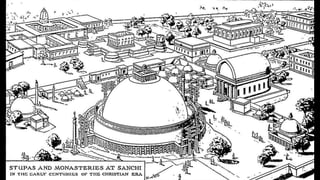
Sanchi
Stupa
Dr. Virag G. Sontakke
Introduction
• One of the complete surviving stupa
• Ancient Name: Vedisagiri, Chetiyagiri, Kakanava, Kakanadabota
• Bears the long history of architecture
• Represents the classic example of Buddhist architecture
• Finest example of developed version of Stupa architecture
• Bears the depiction of social, economic and religious conditions of
ancient India
• Represents the artistic achievements of ancients artisans
• Owing to its importance Sanchi is declared as World Heritage
monuments by UNESCO in 1989.
Location
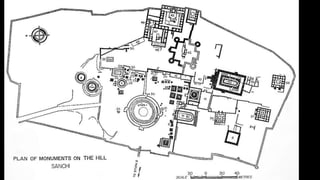
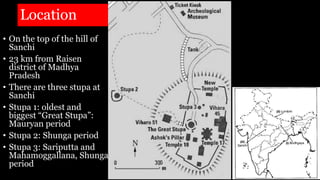
• On the top of the hill of
Sanchi
• 23 km from Raisen
district of Madhya
Pradesh
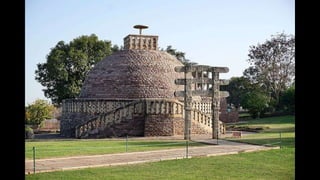
• There are three stupa at
Sanchi
• Stupa 1: oldest and
biggest “Great Stupa”:
Mauryan period
• Stupa 2: Shunga period
• Stupa 3: Sariputta and
Mahamoggallana, Shunga
period
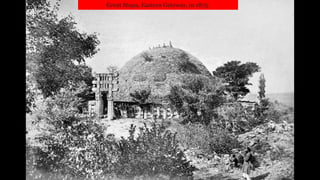
Great Stupa, Eastern Gateway, in 1875.
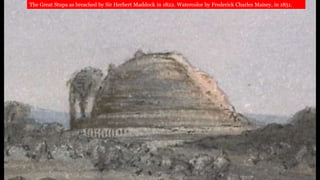
The Great Stupa as breached by Sir Herbert Maddock in 1822. Watercolor by Frederick Charles Maisey, in 1851.
Historical Account at Sanchi
• Originally associated with the Asoka
• He was appointed a governor of central India (Ujjain)
• His wife Devi belongs to the Vidisha
• Asoka constructed the stupa with bricks over the relics of Buddha
• In Shunga period the size of Mahastupa enlarged
• During Satavahana period Beautiful Toran (Gateways) added
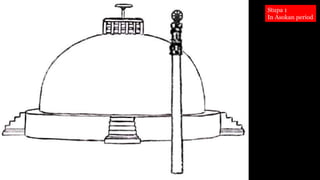
Stupa 1: Great Stupa: 1st Phase
• Originally it was a small stupa during Mauryan period
• It was constructed by burnt bricks
• He also constructed a railing encircling the stupa
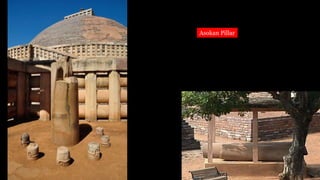
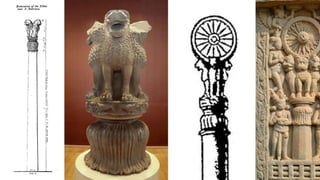
• Asoka also constructed a pillars near the Torana
• The stone was Chunar Sanstone
• Very much similar to Sarnath pillar
Stupa 1
In Asokan period
Asokan Pillar
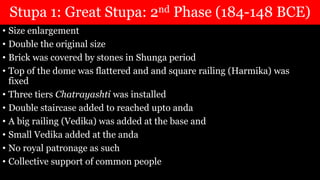
Stupa 1: Great Stupa: 2nd Phase (184-148 BCE)
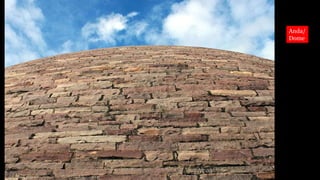
• Size enlargement
• Double the original size
• Brick was covered by stones in Shunga period
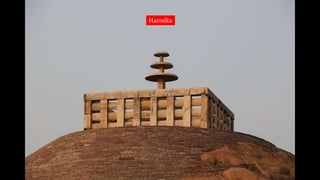
• Top of the dome was flattered and and square railing (Harmika) was
fixed
• Three tiers Chatrayashti was installed
• Double staircase added to reached upto anda
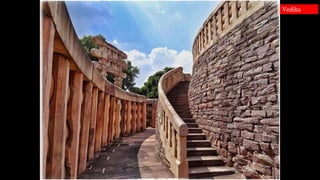
• A big railing (Vedika) was added at the base and
• Small Vedika added at the anda
• No royal patronage as such
• Collective support of common people
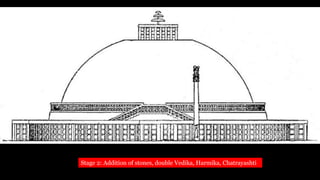
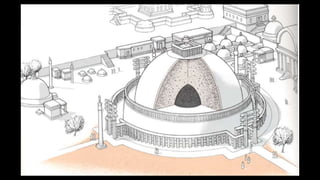
Stage 2: Addition of stones, double Vedika, Harmika, Chatrayashti
Harmika
Vedika
Anda/
Dome
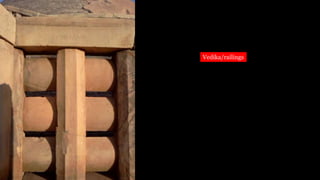
Vedika/railings
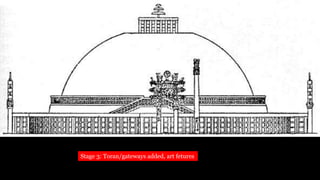
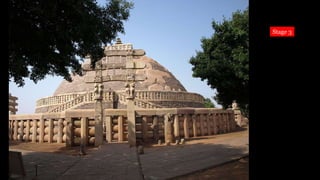
Stupa 1: Great Stupa: 3rd Phase (50 BCE)
• Satavahana occupied the central India
• Gateways (Toran dwar) added in this period
• Traders, merchants and layman also sponsored
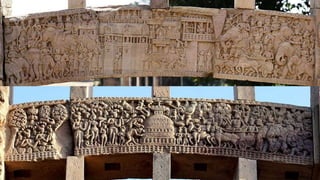
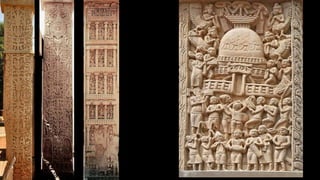
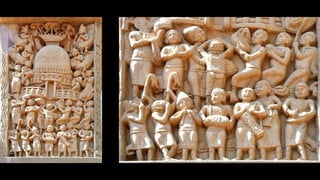
• These gateways are Highly decorated
• Shows the wooden prototype/ ivory makers
• Covered with Buddhist narratives and Jataka tales
• No Buddha image displayed
• He shown only in special attributes related to important events of his
life
Stage 3: Toran/gateways added, art fetures
Stage 3
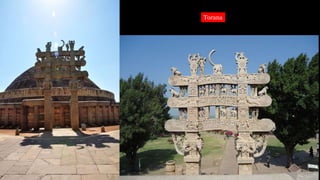
Torana
Stupa 1: Great Stupa: 4th Phase (450 CE)
• No architectural additions
• Four image of Buddha were placed at four corners
• Probably a little renovation/repair could have been made
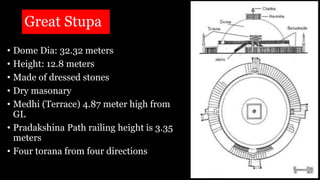
Great Stupa
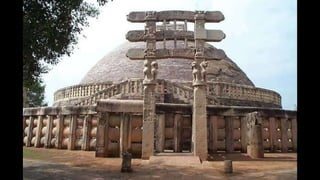
• Dome Dia: 32.32 meters
• Height: 12.8 meters
• Made of dressed stones
• Dry masonary
• Medhi (Terrace) 4.87 meter high from
GL
• Pradakshina Path railing height is 3.35
meters
• Four torana from four directions
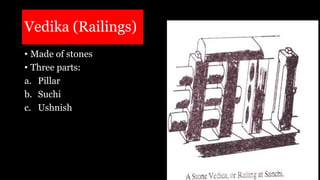
Vedika (Railings)
• Made of stones
• Three parts:
a. Pillar
b. Suchi
c. Ushnish
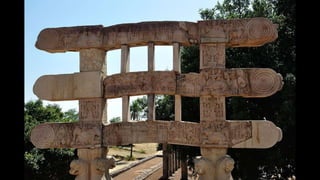
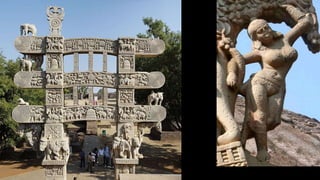
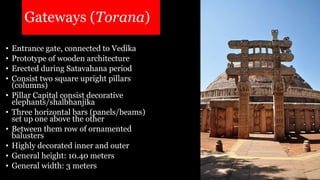
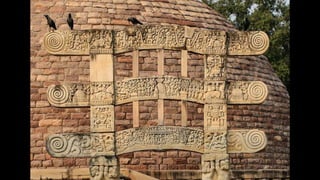
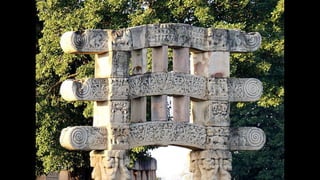
Gateways (Torana)
• Entrance gate, connected to Vedika
• Prototype of wooden architecture
• Erected during Satavahana period
• Consist two square upright pillars
(columns)
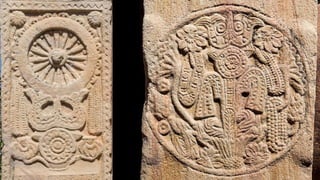
• Pillar Capital consist decorative
elephants/shalbhanjika
• Three horizontal bars (panels/beams)
set up one above the other
• Between them row of ornamented
balusters
• Highly decorated inner and outer
• General height: 10.40 meters
• General width: 3 meters
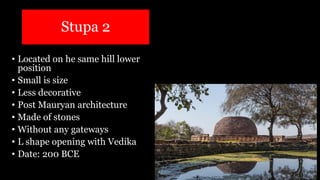
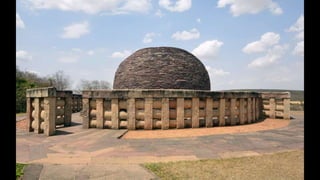
Stupa 2
• Located on he same hill lower
position
• Small is size
• Less decorative
• Post Mauryan architecture
• Made of stones
• Without any gateways
• L shape opening with Vedika
• Date: 200 BCE
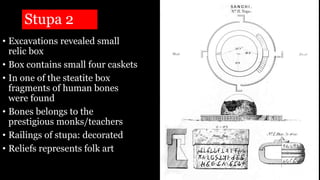
Stupa 2
• Excavations revealed small
relic box
• Box contains small four caskets
• In one of the steatite box
fragments of human bones
were found
• Bones belongs to the
prestigious monks/teachers
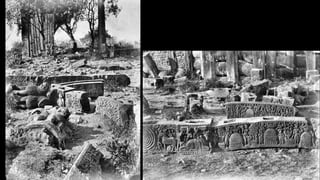
• Railings of stupa: decorated
• Reliefs represents folk art
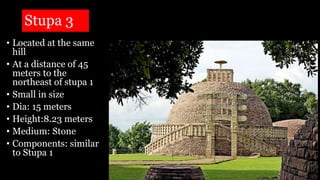
Stupa 3
• Located at the same
hill
• At a distance of 45
meters to the
northeast of stupa 1
• Small in size
• Dia: 15 meters
• Height:8.23 meters
• Medium: Stone
• Components: similar
to Stupa 1
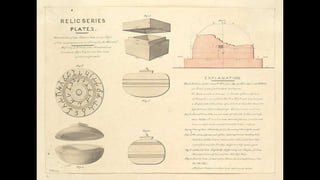
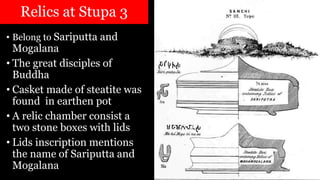
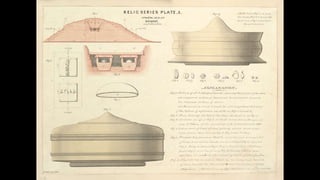
Relics at Stupa 3
• Belong to Sariputta and
Mogalana
• The great disciples of
Buddha
• Casket made of steatite was
found in earthen pot
• A relic chamber consist a
two stone boxes with lids
• Lids inscription mentions
the name of Sariputta and
Mogalana
Conclusion
• Oldest stone structure in India
• Showing wooden prototype
• Stupa I oldest monument of Sanchi
• Constructed during the Maurya, shunga and Satavahana period
• Royal as well as local patronage
• Size of great stupa expanded over the time
• Extra beautification added
• Initial bricks were covered with stones
• Great stupa has upper and lower pradakshinapath
• The Sanchi was flourished from 300 BCE to 1200 CE

Sanchi Stupa .pptx

  • 1.
  • 2.
    Introduction • One ofthe complete surviving stupa • Ancient Name: Vedisagiri, Chetiyagiri, Kakanava, Kakanadabota • Bears the long history of architecture • Represents the classic example of Buddhist architecture • Finest example of developed version of Stupa architecture • Bears the depiction of social, economic and religious conditions of ancient India • Represents the artistic achievements of ancients artisans • Owing to its importance Sanchi is declared as World Heritage monuments by UNESCO in 1989.
  • 4.
    Location • On thetop of the hill of Sanchi • 23 km from Raisen district of Madhya Pradesh • There are three stupa at Sanchi • Stupa 1: oldest and biggest “Great Stupa”: Mauryan period • Stupa 2: Shunga period • Stupa 3: Sariputta and Mahamoggallana, Shunga period
  • 6.
    Great Stupa, EasternGateway, in 1875.
  • 7.
    The Great Stupaas breached by Sir Herbert Maddock in 1822. Watercolor by Frederick Charles Maisey, in 1851.
  • 9.
    Historical Account atSanchi • Originally associated with the Asoka • He was appointed a governor of central India (Ujjain) • His wife Devi belongs to the Vidisha • Asoka constructed the stupa with bricks over the relics of Buddha • In Shunga period the size of Mahastupa enlarged • During Satavahana period Beautiful Toran (Gateways) added
  • 10.
    Stupa 1: GreatStupa: 1st Phase • Originally it was a small stupa during Mauryan period • It was constructed by burnt bricks • He also constructed a railing encircling the stupa • Asoka also constructed a pillars near the Torana • The stone was Chunar Sanstone • Very much similar to Sarnath pillar
  • 11.
  • 12.
  • 14.
    Stupa 1: GreatStupa: 2nd Phase (184-148 BCE) • Size enlargement • Double the original size • Brick was covered by stones in Shunga period • Top of the dome was flattered and and square railing (Harmika) was fixed • Three tiers Chatrayashti was installed • Double staircase added to reached upto anda • A big railing (Vedika) was added at the base and • Small Vedika added at the anda • No royal patronage as such • Collective support of common people
  • 15.
    Stage 2: Additionof stones, double Vedika, Harmika, Chatrayashti
  • 16.
  • 17.
  • 18.
  • 19.
  • 20.
    Stupa 1: GreatStupa: 3rd Phase (50 BCE) • Satavahana occupied the central India • Gateways (Toran dwar) added in this period • Traders, merchants and layman also sponsored • These gateways are Highly decorated • Shows the wooden prototype/ ivory makers • Covered with Buddhist narratives and Jataka tales • No Buddha image displayed • He shown only in special attributes related to important events of his life
  • 21.
    Stage 3: Toran/gatewaysadded, art fetures
  • 22.
  • 23.
  • 29.
    Stupa 1: GreatStupa: 4th Phase (450 CE) • No architectural additions • Four image of Buddha were placed at four corners • Probably a little renovation/repair could have been made
  • 30.
    Great Stupa • DomeDia: 32.32 meters • Height: 12.8 meters • Made of dressed stones • Dry masonary • Medhi (Terrace) 4.87 meter high from GL • Pradakshina Path railing height is 3.35 meters • Four torana from four directions
  • 31.
    Vedika (Railings) • Madeof stones • Three parts: a. Pillar b. Suchi c. Ushnish
  • 32.
    Gateways (Torana) • Entrancegate, connected to Vedika • Prototype of wooden architecture • Erected during Satavahana period • Consist two square upright pillars (columns) • Pillar Capital consist decorative elephants/shalbhanjika • Three horizontal bars (panels/beams) set up one above the other • Between them row of ornamented balusters • Highly decorated inner and outer • General height: 10.40 meters • General width: 3 meters
  • 34.
    Stupa 2 • Locatedon he same hill lower position • Small is size • Less decorative • Post Mauryan architecture • Made of stones • Without any gateways • L shape opening with Vedika • Date: 200 BCE
  • 36.
    Stupa 2 • Excavationsrevealed small relic box • Box contains small four caskets • In one of the steatite box fragments of human bones were found • Bones belongs to the prestigious monks/teachers • Railings of stupa: decorated • Reliefs represents folk art
  • 38.
    Stupa 3 • Locatedat the same hill • At a distance of 45 meters to the northeast of stupa 1 • Small in size • Dia: 15 meters • Height:8.23 meters • Medium: Stone • Components: similar to Stupa 1
  • 39.
    Relics at Stupa3 • Belong to Sariputta and Mogalana • The great disciples of Buddha • Casket made of steatite was found in earthen pot • A relic chamber consist a two stone boxes with lids • Lids inscription mentions the name of Sariputta and Mogalana
  • 46.
    Conclusion • Oldest stonestructure in India • Showing wooden prototype • Stupa I oldest monument of Sanchi • Constructed during the Maurya, shunga and Satavahana period • Royal as well as local patronage • Size of great stupa expanded over the time • Extra beautification added • Initial bricks were covered with stones • Great stupa has upper and lower pradakshinapath • The Sanchi was flourished from 300 BCE to 1200 CE