Downloaded 20 times
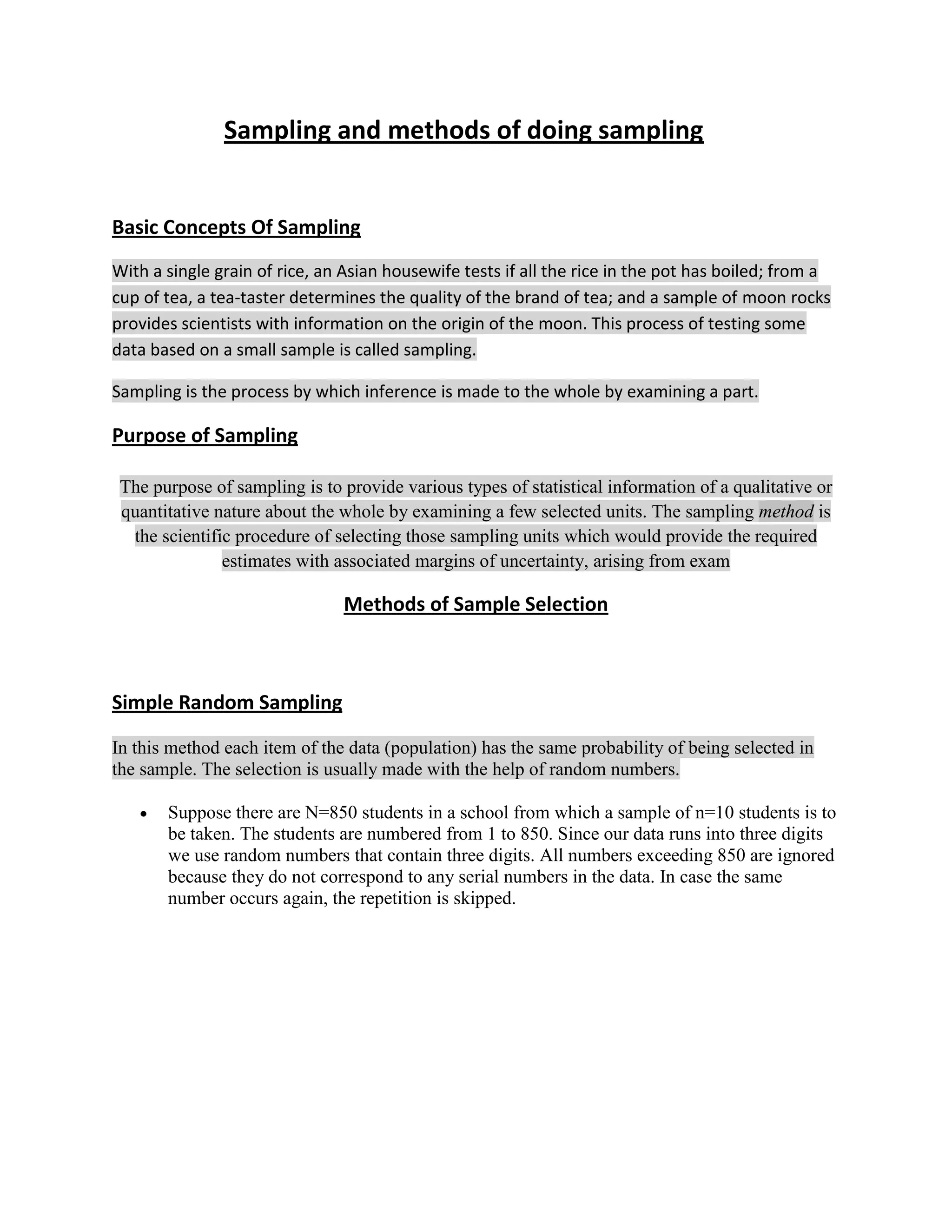
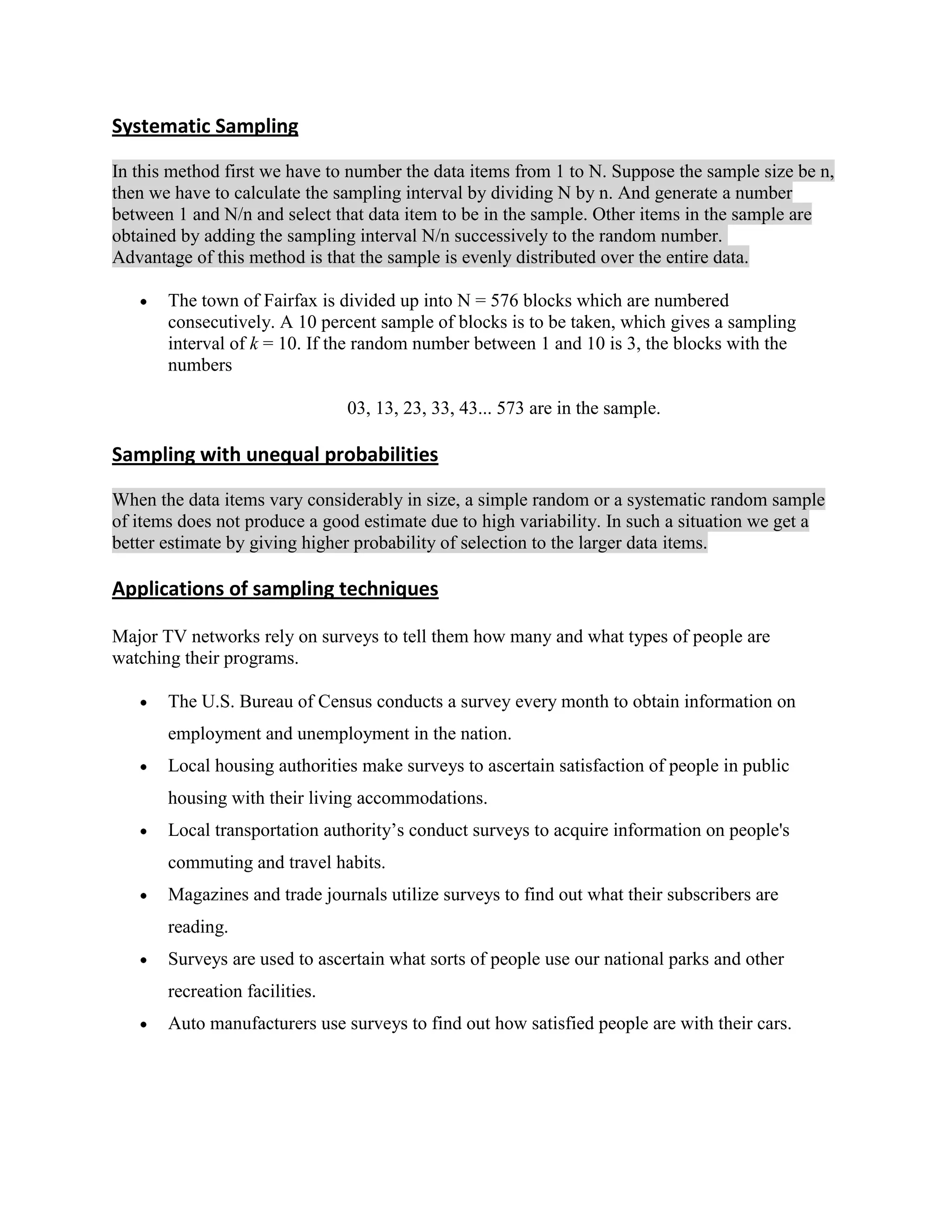


This document discusses different methods of sampling, including simple random sampling, systematic sampling, and sampling with unequal probabilities. It provides examples to illustrate each method. The purpose of sampling is to make inferences about a whole population by examining a small sample. Sampling provides statistical information about a population more efficiently and quickly than a complete census. While sampling has advantages in cost, time, and scope compared to a full survey, it also has limitations such as potential for high errors with small samples or when very high accuracy is required.


