Laboratory Safety Measures
Rajesh Kumar Gupta
BMLT (IOM), M.Sc. Clinical Biochemistry (IOM)
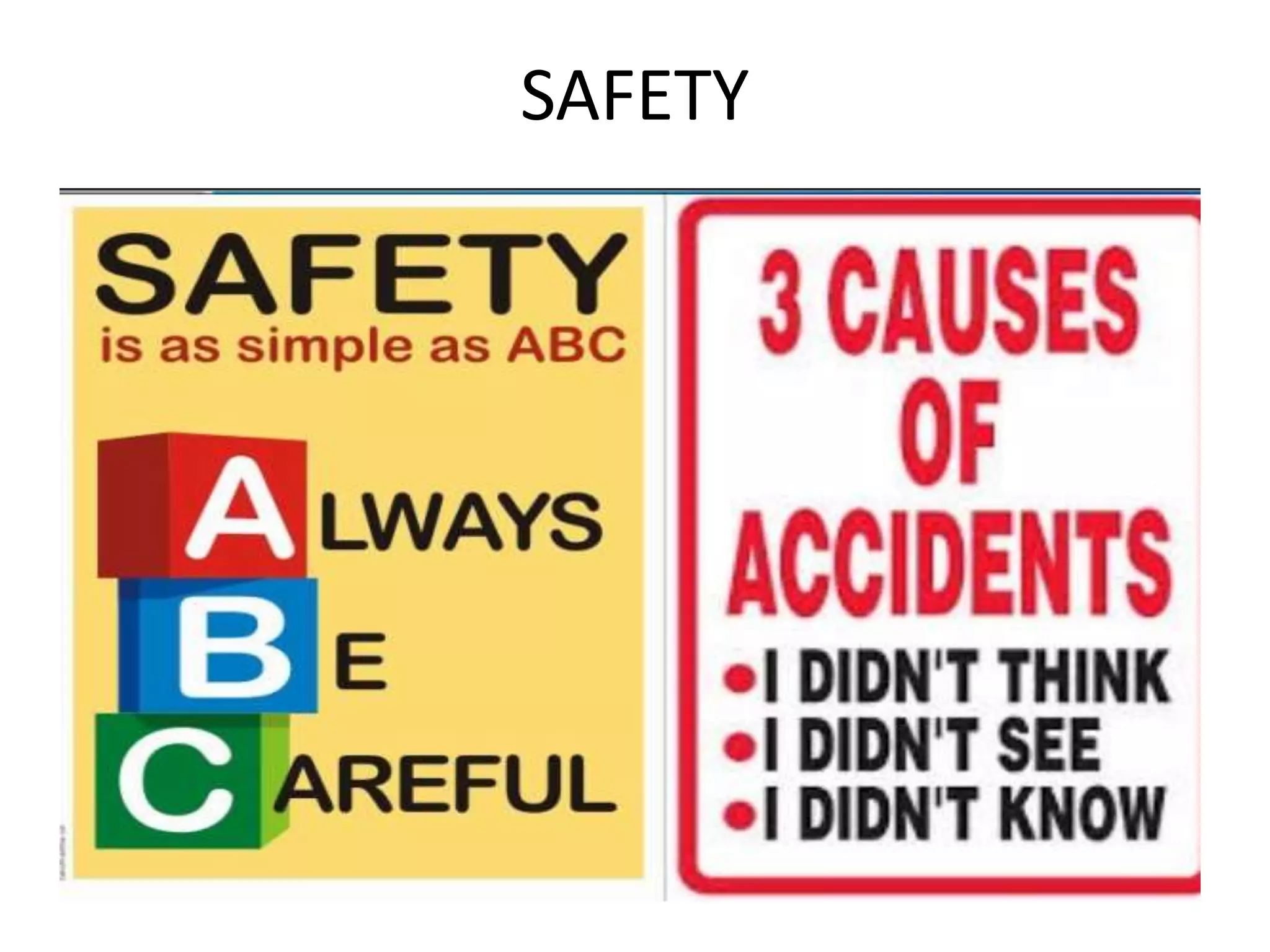
SAFETY
Universal or Standard Precautions
Every specimen should
be treated as though
it is infectious
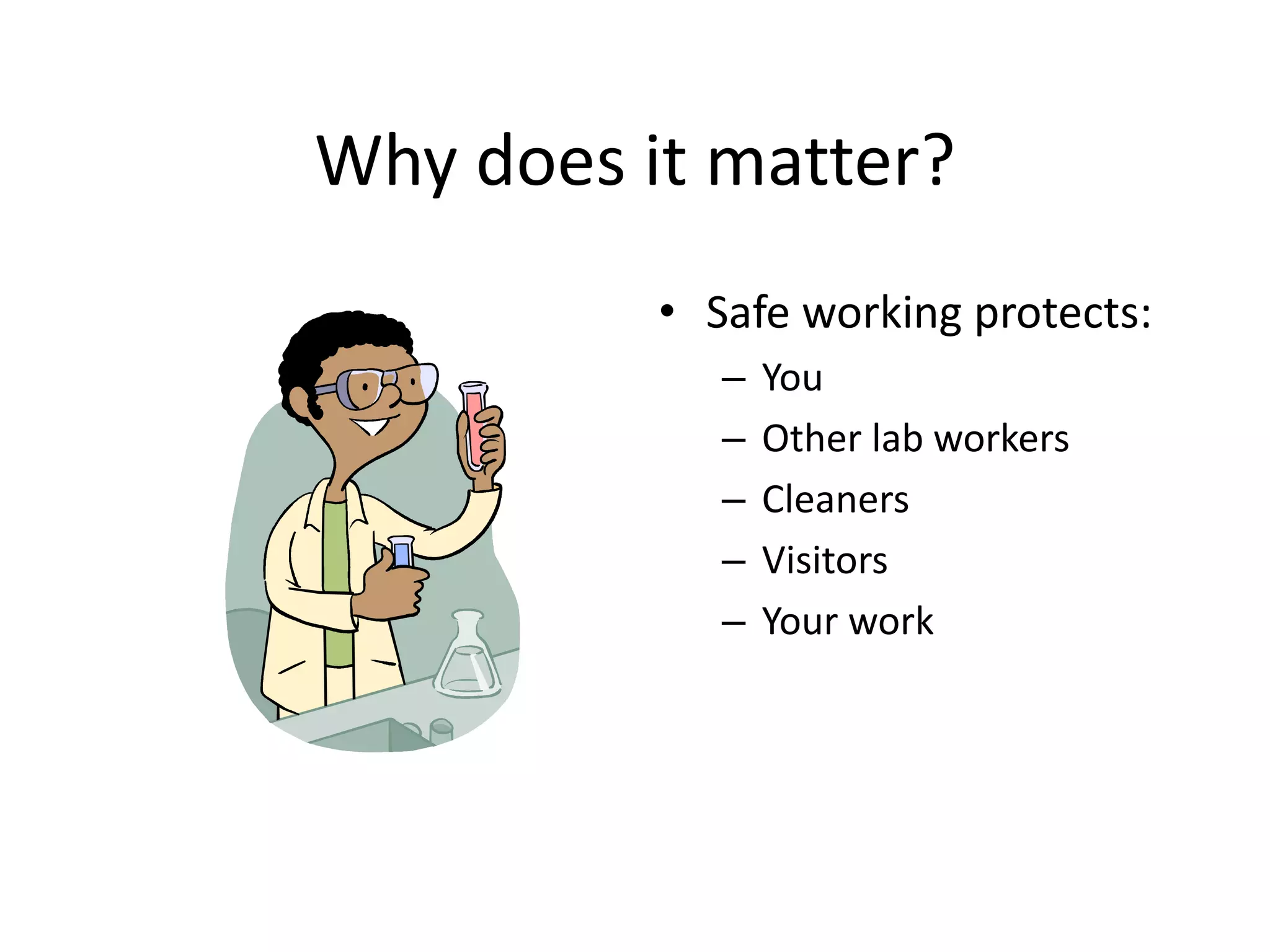
Why does it matter?
• Safe working protects:
– You
– Other lab workers
– Cleaners
– Visitors
– Your work
What does the law say? (1)
• Health Safety at Work etc Act
1974
– You must work safely
– You must not endanger others
– You must not misuse safety
equipment
• Penalty – up to 2 year in prison
&/or an unlimited fine
What does the law say? (2)
• The Management of
Health and Safety at
Work Regs 1999
• Control of Substances
Hazardous to Health
Regs 2004
• You must perform RISK
ASSESSMENTS
How to do a Risk Assessment?
• Determine hazards and evaluate risks
• Use all relevant available data
• Determine controls needed to
minimise those risks
• Document the assessment
• Agree it with your supervisor
• Use those control measures
Apply Safety Practices Throughout the
Testing Process
• Before Testing (Pre-analytical)
– Specimen collection
– Specimen preparation
– Specimen transport
• Testing (Analytical)
– Testing
• After Testing (Post-analytical)
– Disposal
Biological Safety Cabinets
• Class 1
– Some protection to user &
environment
– No protection to work
• Class 2
– Good protection to user, the
environment and the work
• Class 3
– Total enclosure
• You must choose the correct safety
cabinet for the job you are doing. Seek
advice from your Biological Safety
Officer
Classification of infective microorganisms
based on Hazards
1. Risk Group 1 (no or low individual and community risk)
A microorganism that is unlikely to cause human disease.
Example: Bacillus subtilis, common moulds, Yeasts
2. Risk Group 2 (moderate individual risk, low community
risk)
A pathogen that can cause human disease and may be a
hazard to lab workers; effective treatment and preventive
measures are available.
Example: Staphylococcus, Streptococcus, Shigella, Vibrio,
Poliovirus, Hepatitis virus etc.
3. Risk Group 3 (high individual risk, low community risk)
• A pathogen that usually causes serious human disease and
present a serious hazard to the laboratory workers
• May pose a risk of spread in the community
• Effective treatment and preventive measures are available.
• Example: Bacillus anthracis, Mycobacterium tuberculosis,
Brucella, Histoplasma, Rickettsia.
4. Risk Group 4 (high individual and community risk)
• A pathogen that usually causes serious human disease and that
can be readily transmitted from one individual to another, directly
or indirectly. No vaccine & chemotherapy available.
• Includes all viruses, which are of high risk of Laboratory workers &
• community.
• Effective treatment and preventive measures are not usually
• available. Example: SARS, Ebola, Lassa, Marburg
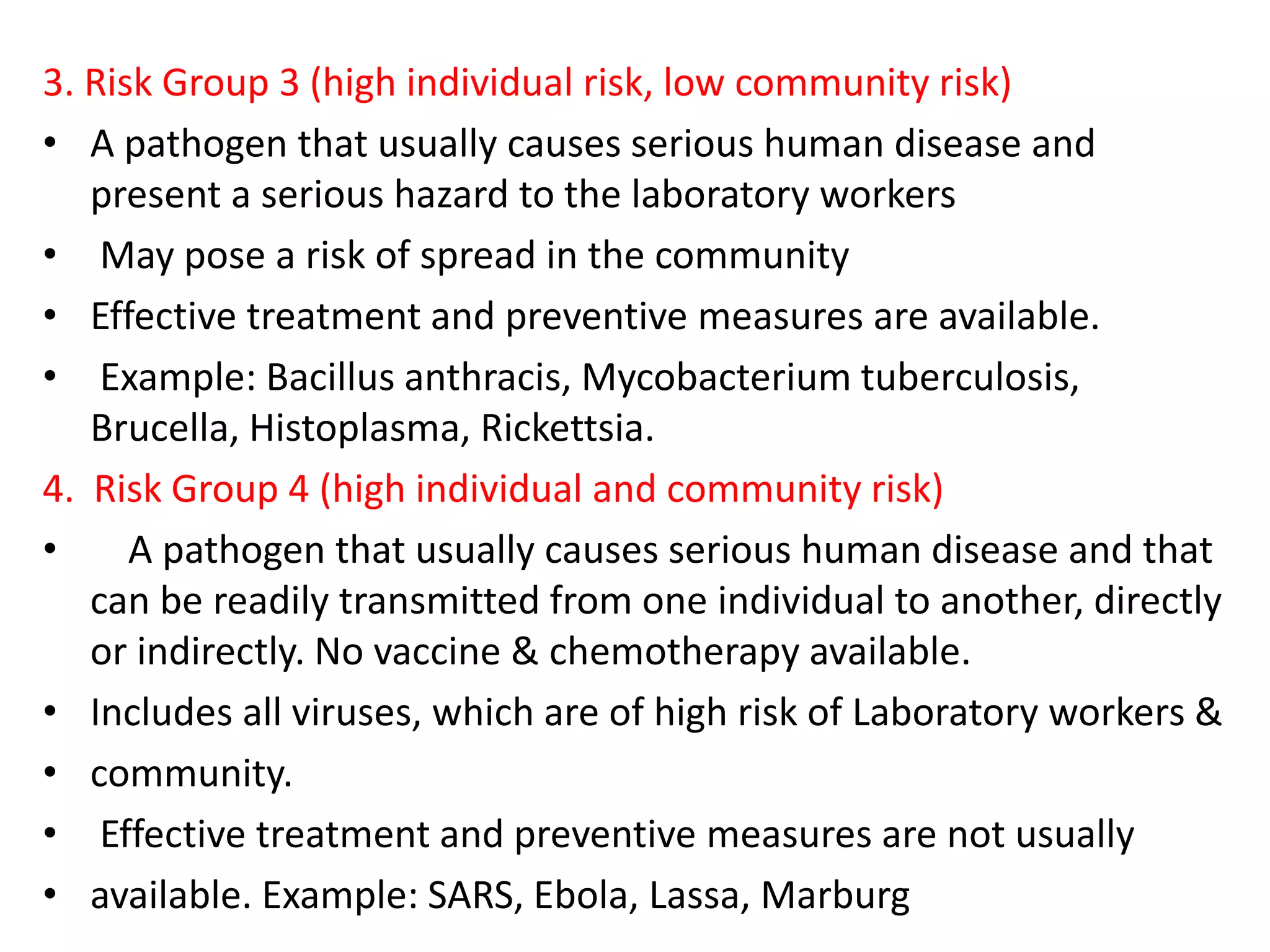
PPE (Personal Protective Equipment)
PPE
(Personal
Protective
Equipment)
Gloves Masks
Googles Apron
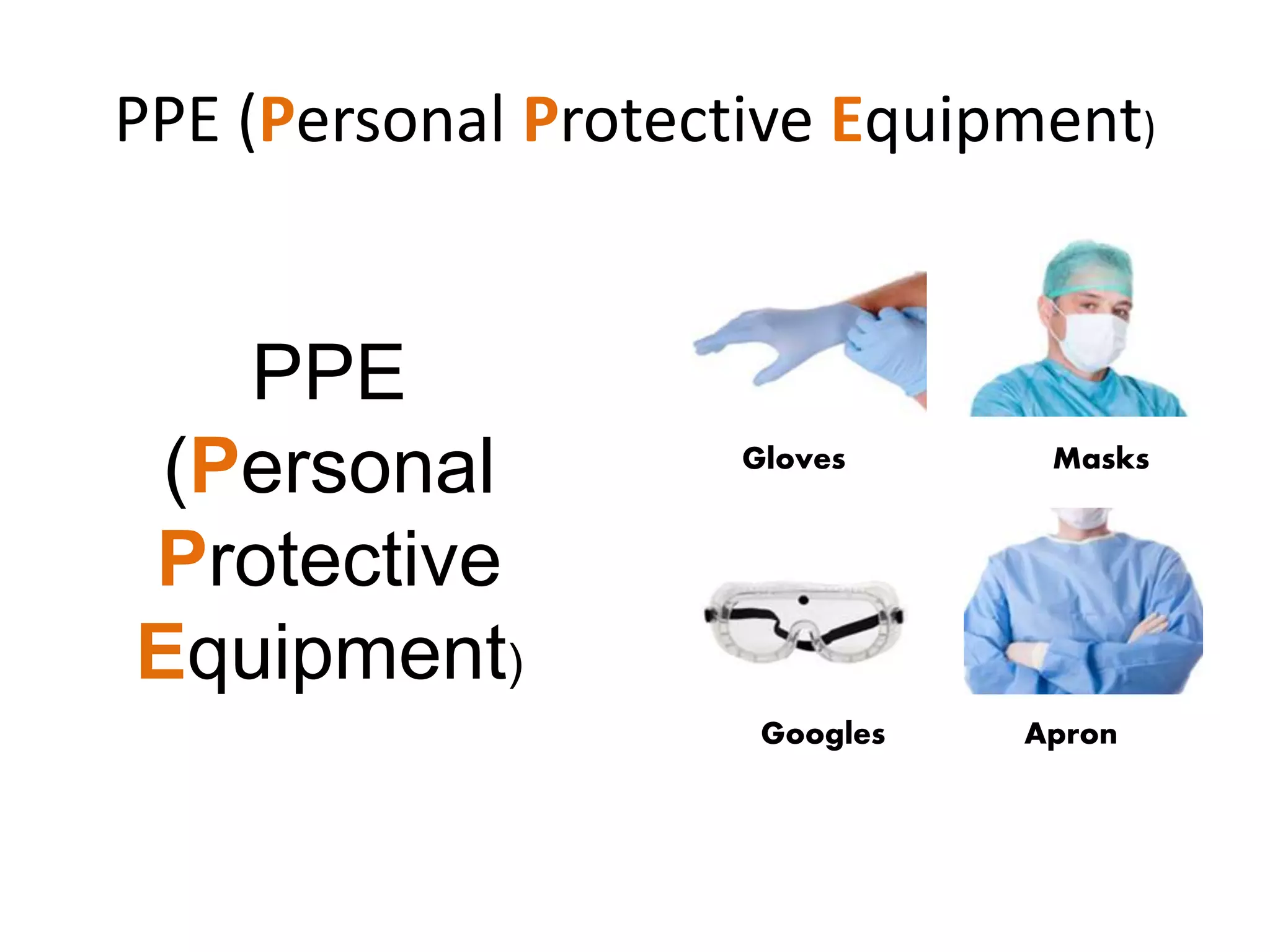
Develop Personal Safe Work Habits
• Wash hands before and
after testing each patient
• Wear a fresh pair of
gloves with each patient
• Wear lab coat or apron
• Dispose of contaminated
sharps and waste
immediately after testing
Develop Personal Safe Work Habits (Cont’d)
• Pipetting by mouth is
strictly forbidden
• Never eat, drink or
smoke at the test site
• Keep food out of the
laboratory/testing site
refrigerator
Maintain Clean & Orderly
Work Space
• Keep work areas
uncluttered and clean
• Disinfect work surfaces daily
• Restrict or limit access
when working
• Keep supplies locked in a
safe and secure area
• Keep emergency eye wash
units in working order and
within expiry date
Biohazard
Take Precautions to Avoid Needle Stick
Injury
What can cause needle stick injury?
• Lack of concentration
• Inexperience
• Lack of concern for others
• Improper disposal of sharps
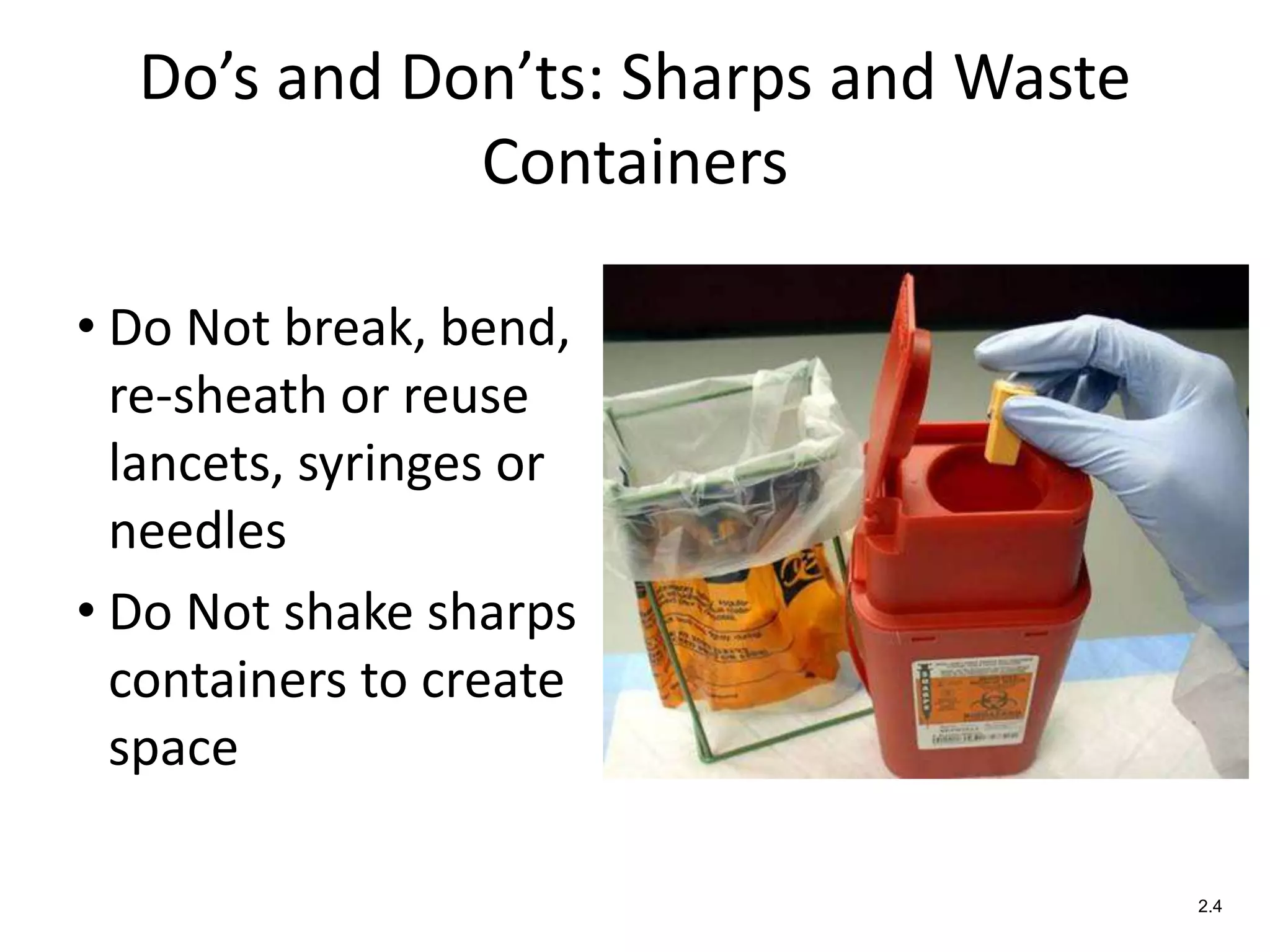
Drop Used Sharps in
Special Containers
WASTE
Do’s and Don’ts: Sharps and Waste
Containers
• Do Not break, bend,
re-sheath or reuse
lancets, syringes or
needles
• Do Not shake sharps
containers to create
space
2.4
Do’s and Don’ts: Sharps and Waste
Containers
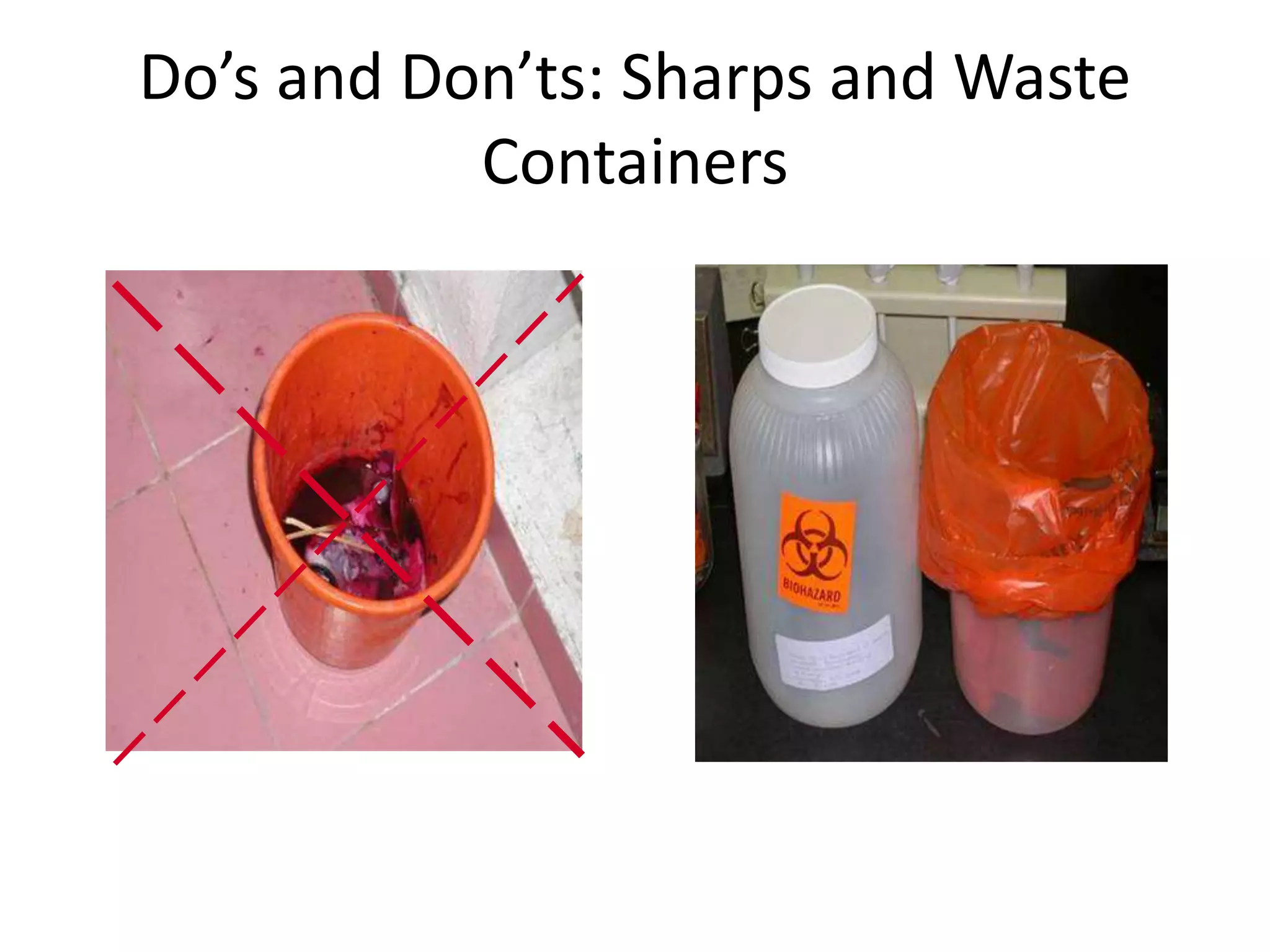
What’s wrong with this picture?
Never Place Needles or Sharps in
Office Waste Containers
2.4
Sharps Containers Must Be:
Placed near workspace
Closed when not in use
Sealed when ¾ full
Policy for Handling Sharps
 User responsible for disposal of sharps
 Must dispose of sharps after each test
 Must place sharps in sharps boxes
 Do not drop sharps on the floor or in the
office waste bin
 Place sharps container near your workspace
 Seal and remove when box is ¾ full
 Incinerate all waste
Disinfect Work Areas with Bleach
Disinfection
• Kills germs and pathogens
• Keeps work surface clean
• Prevents cross-
contamination
• Reduces risks of infection
Different Cleaning Jobs Require
Different Bleach Solutions*
General lab use - Hypochlorite Solutions
Spills
General
Disinfection
10%
(1 part + 9 parts)
1%
(1 part + 99 parts)
You should have 10% bleach readily available at your test site.
* WHO Laboratory Biosafety Manual
In Case of a Spill or Splash
 Wear clean disposable gloves
 Immediately and thoroughly wash any skin
splashed with blood
• Large spills- Cover with paper towels and soak
with 10% household bleach and allow to
stand for at least 5 minutes
• Small spill - Wipe with paper towel soaked in
10% bleach
 Discard contaminated towels in infectious
waste containers
In Case of an Accident
 What types of accidents can happen?
– Potential Injury, i.e., needlesticks, falls
– Environmental, i.e., splashes or spills
– Equipment damage
 What should you do?
– Report to supervisor immediately
– Assess & take action
– Record using form
– Monitor situation
Action Plan for Implementing
Safety Practices
• Identify hazards
• Establish and implement safety polices and
procedures
• Conduct safety specific training
– Must be a priority
– Communication is key
• Perform regular audits or assessments
What are the general hazards in a
laboratory?
• Fire
• Breakage of glassware
• Sharps
• Spillages
• Pressure equipment & gas
cylinders
• Extremes of heat & cold
• Chemical hazards
• Biological hazards
• Radiation
And many more!
Avoiding Fires
• Flammable substances
– Use minimum quantity
– Store in special storage
cabinet
– Use temperature-
controlled heating sources
(eg water-bath rather than
hot-plate)
Fire Safety
• Make sure that you know
what to do:
– If you have a fire
– If you hear a fire alarm
• If you are a member of staff
you must attend fire
training annually. Post
graduates should also
seriously consider doing so.
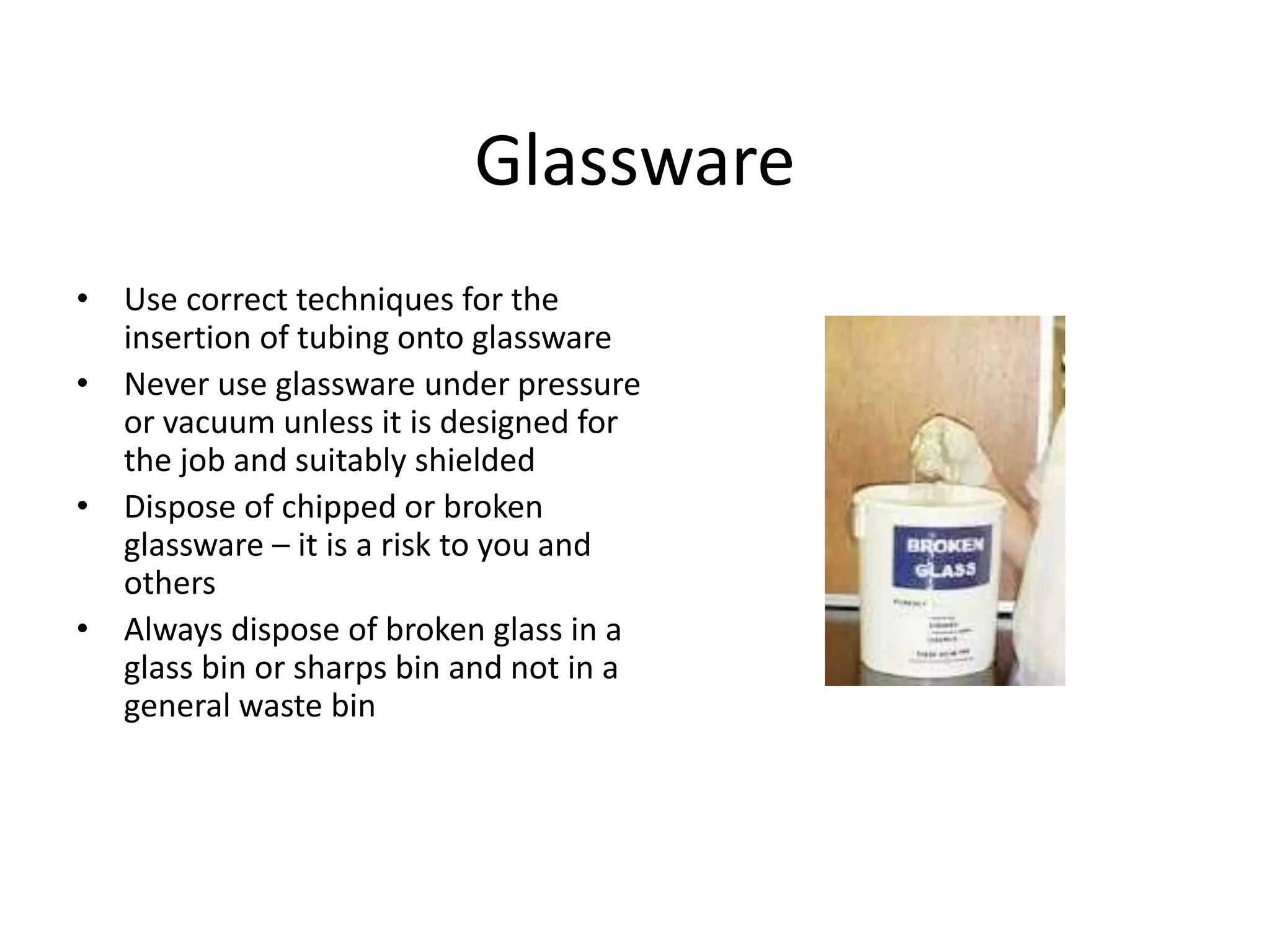
Glassware
• Use correct techniques for the
insertion of tubing onto glassware
• Never use glassware under pressure
or vacuum unless it is designed for
the job and suitably shielded
• Dispose of chipped or broken
glassware – it is a risk to you and
others
• Always dispose of broken glass in a
glass bin or sharps bin and not in a
general waste bin
Spillages
• Clear up spillage promptly
• You will already have
determined how to do this as
part of your risk assessment
• Dispose of any hazardous
material as toxic waste
Messy workers are usually poor
workers!!
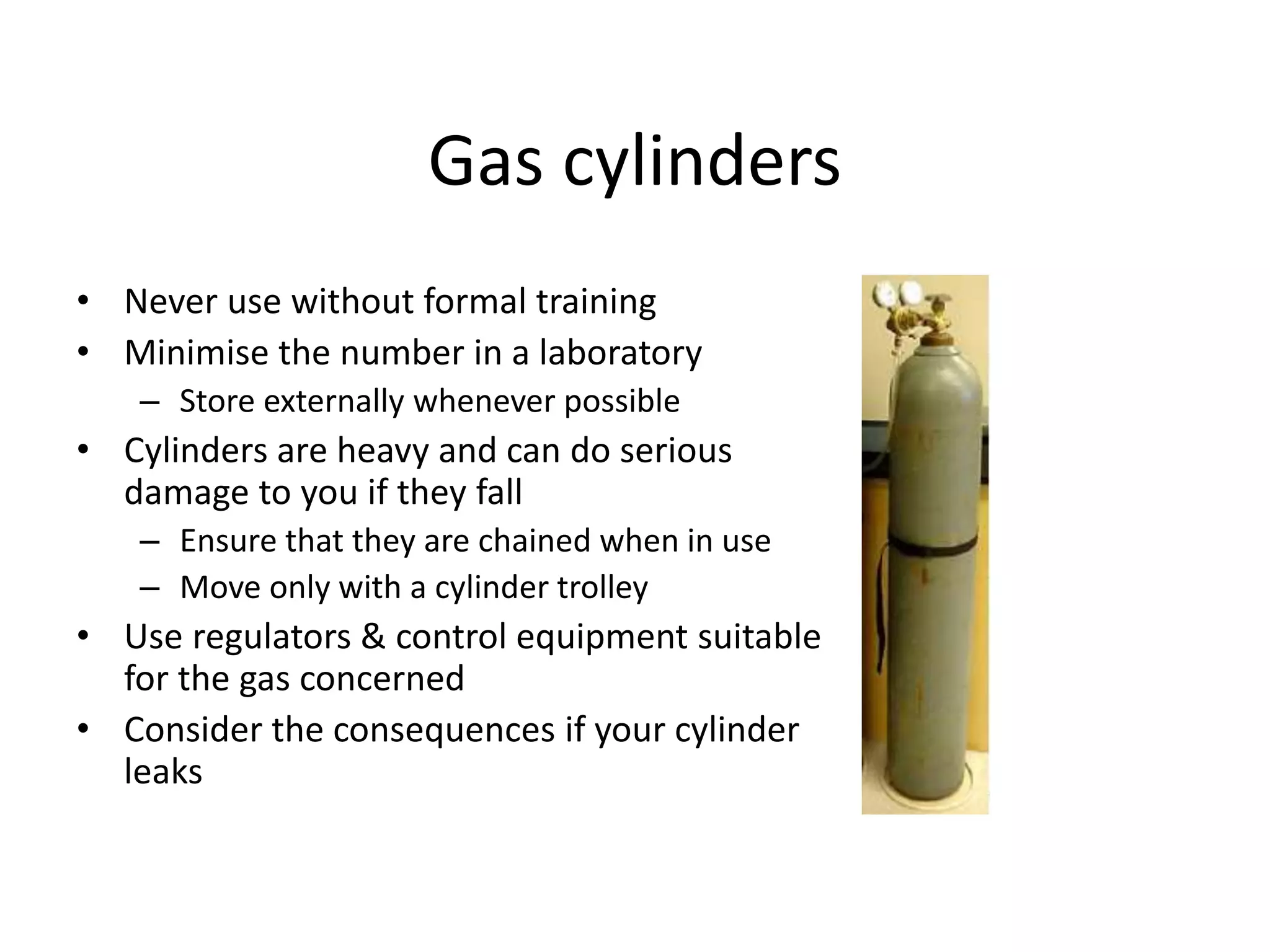
Gas cylinders
• Never use without formal training
• Minimise the number in a laboratory
– Store externally whenever possible
• Cylinders are heavy and can do serious
damage to you if they fall
– Ensure that they are chained when in use
– Move only with a cylinder trolley
• Use regulators & control equipment suitable
for the gas concerned
• Consider the consequences if your cylinder
leaks
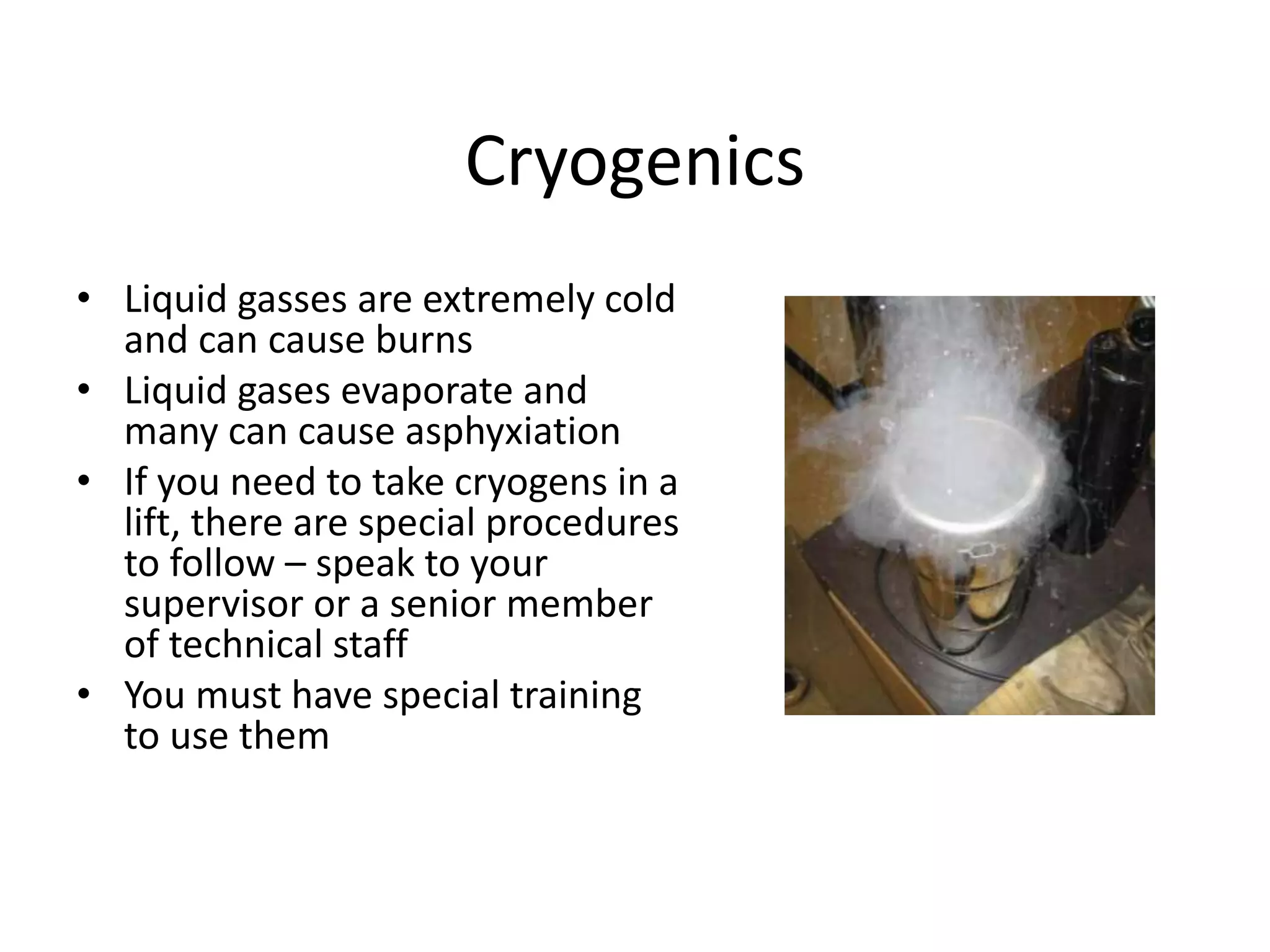
Cryogenics
• Liquid gasses are extremely cold
and can cause burns
• Liquid gases evaporate and
many can cause asphyxiation
• If you need to take cryogens in a
lift, there are special procedures
to follow – speak to your
supervisor or a senior member
of technical staff
• You must have special training
to use them
Electrical Equipment
• Always do a visual check on
electrical equipment before
use, looking for obvious
wear or defects
• All portable electrical
equipment must have a
current “PAT test” sticker
• NEVER use defective
equipment
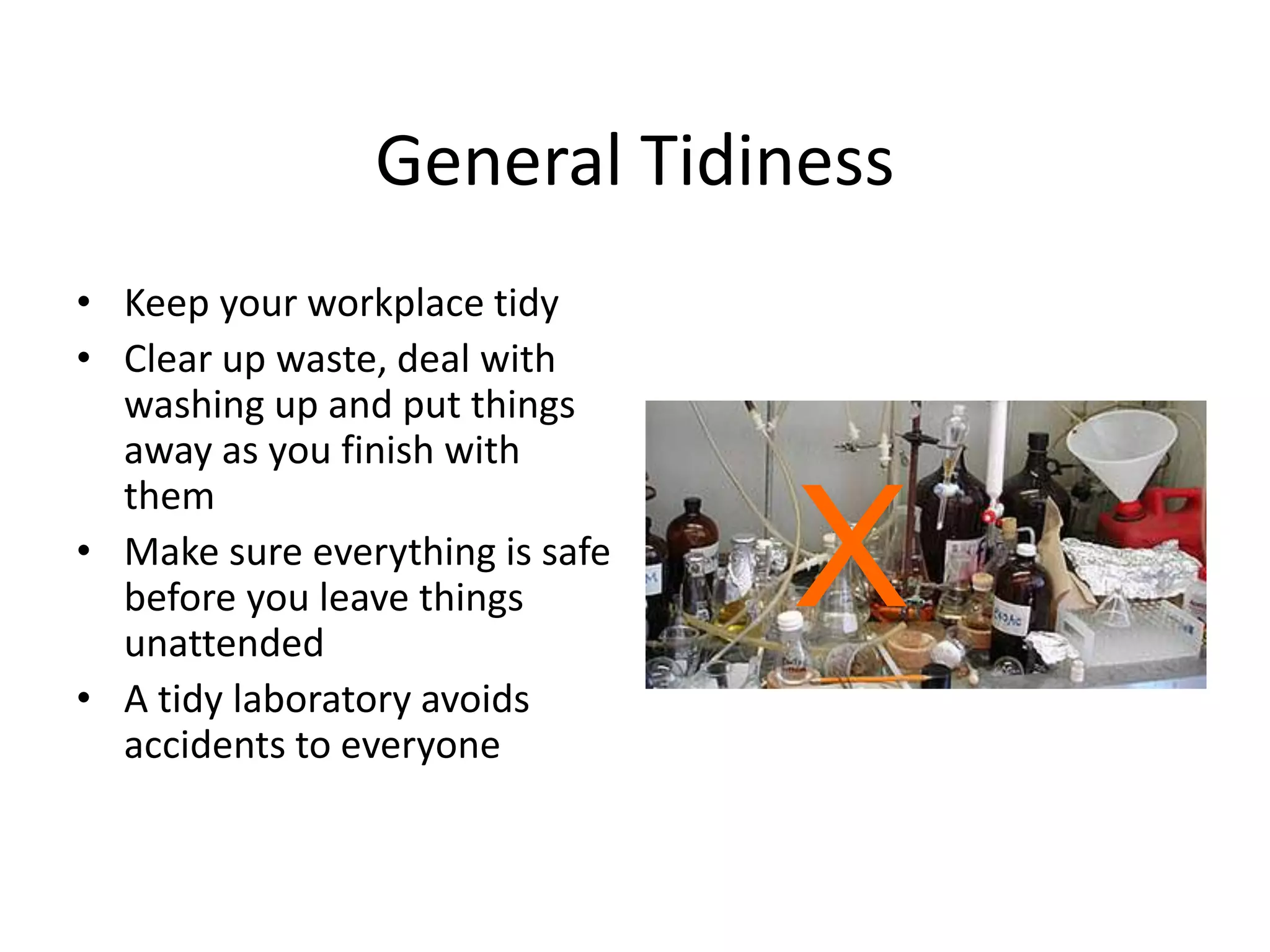
General Tidiness
• Keep your workplace tidy
• Clear up waste, deal with
washing up and put things
away as you finish with
them
• Make sure everything is safe
before you leave things
unattended
• A tidy laboratory avoids
accidents to everyone
X
Laboratory Equipment
• Never use any
laboratory equipment
unless you are trained &
have been authorised
to do so
• As well as injuring
yourself you may cause
very costly damage
First Aid
• All laboratory workers should
undergo simple first aid
training
– For ALL chemical splashes, wash
with plenty of water for 10
minutes
– Control bleeding with direct
pressure, avoiding any foreign
bodies such as glass
• Report all accidents to your
supervisor or departmental
safety officer
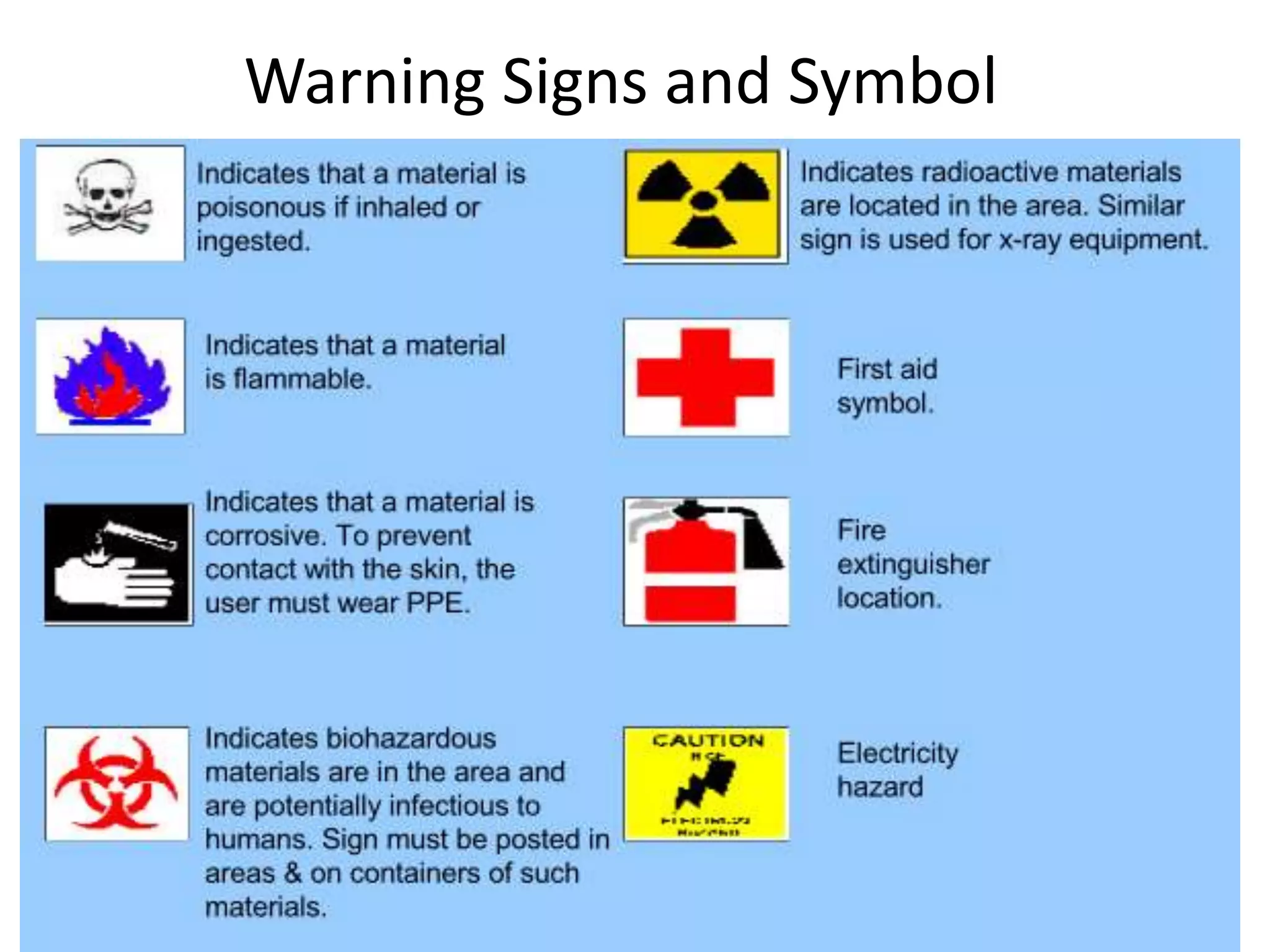
Warning Signs and Symbol
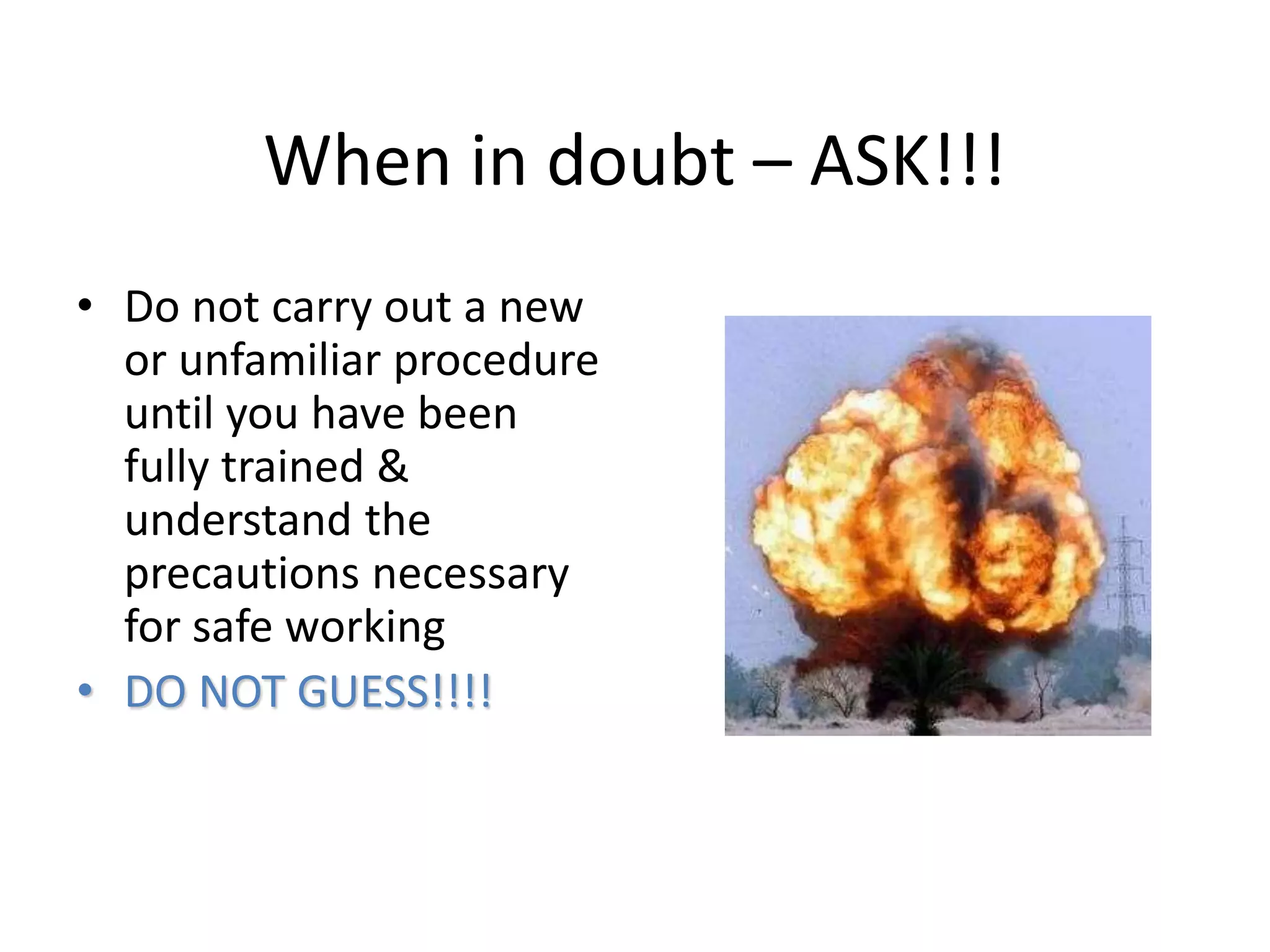
When in doubt – ASK!!!
• Do not carry out a new
or unfamiliar procedure
until you have been
fully trained &
understand the
precautions necessary
for safe working
• DO NOT GUESS!!!!
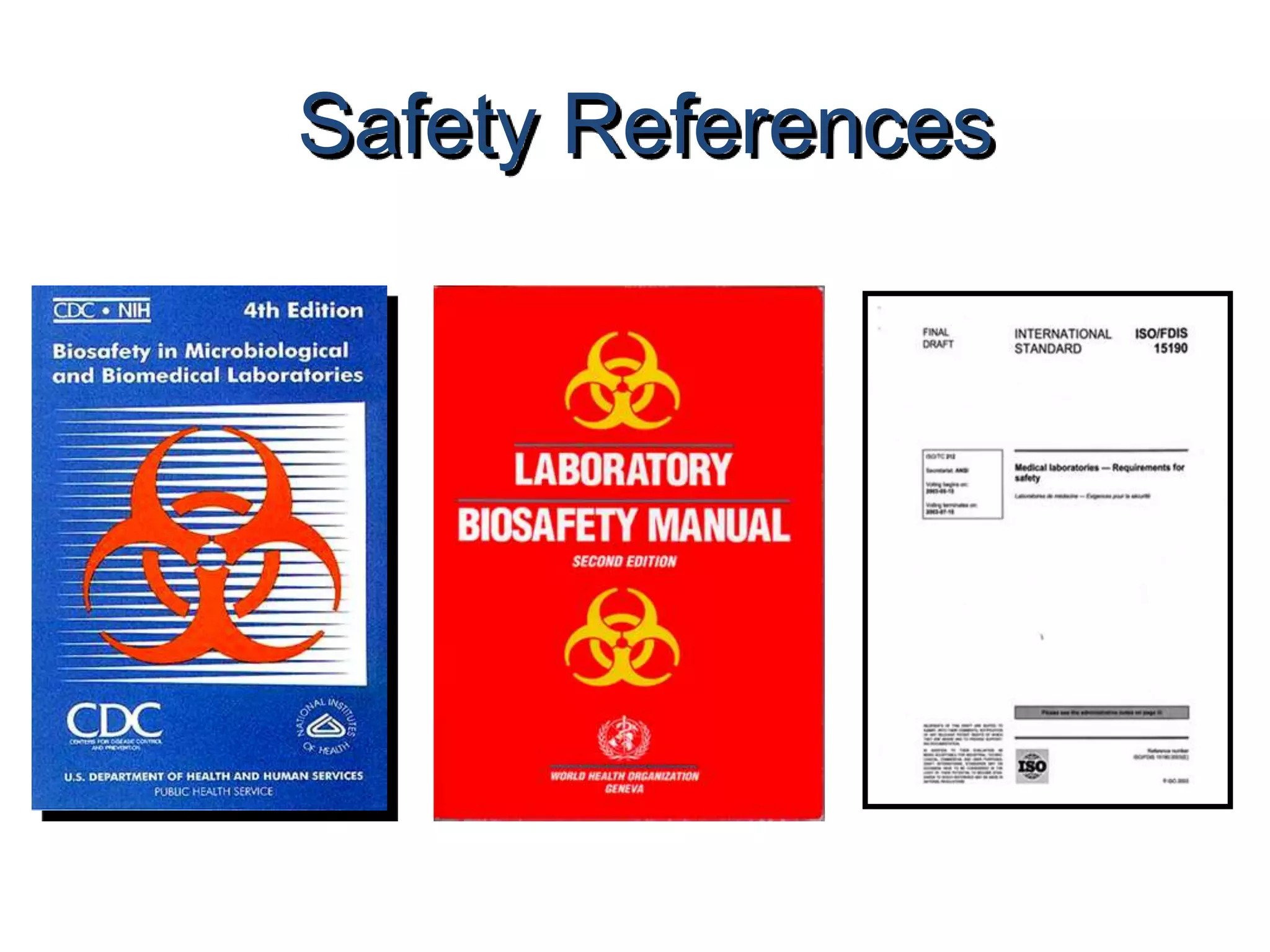
Safety References
THANK YOU

Lab safety measures

  • 1.
    Laboratory Safety Measures RajeshKumar Gupta BMLT (IOM), M.Sc. Clinical Biochemistry (IOM)
  • 2.
  • 3.
    Universal or StandardPrecautions Every specimen should be treated as though it is infectious
  • 4.
    Why does itmatter? • Safe working protects: – You – Other lab workers – Cleaners – Visitors – Your work
  • 5.
    What does thelaw say? (1) • Health Safety at Work etc Act 1974 – You must work safely – You must not endanger others – You must not misuse safety equipment • Penalty – up to 2 year in prison &/or an unlimited fine
  • 6.
    What does thelaw say? (2) • The Management of Health and Safety at Work Regs 1999 • Control of Substances Hazardous to Health Regs 2004 • You must perform RISK ASSESSMENTS
  • 7.
    How to doa Risk Assessment? • Determine hazards and evaluate risks • Use all relevant available data • Determine controls needed to minimise those risks • Document the assessment • Agree it with your supervisor • Use those control measures
  • 8.
    Apply Safety PracticesThroughout the Testing Process • Before Testing (Pre-analytical) – Specimen collection – Specimen preparation – Specimen transport • Testing (Analytical) – Testing • After Testing (Post-analytical) – Disposal
  • 9.
    Biological Safety Cabinets •Class 1 – Some protection to user & environment – No protection to work • Class 2 – Good protection to user, the environment and the work • Class 3 – Total enclosure • You must choose the correct safety cabinet for the job you are doing. Seek advice from your Biological Safety Officer
  • 10.
    Classification of infectivemicroorganisms based on Hazards 1. Risk Group 1 (no or low individual and community risk) A microorganism that is unlikely to cause human disease. Example: Bacillus subtilis, common moulds, Yeasts 2. Risk Group 2 (moderate individual risk, low community risk) A pathogen that can cause human disease and may be a hazard to lab workers; effective treatment and preventive measures are available. Example: Staphylococcus, Streptococcus, Shigella, Vibrio, Poliovirus, Hepatitis virus etc.
  • 11.
    3. Risk Group3 (high individual risk, low community risk) • A pathogen that usually causes serious human disease and present a serious hazard to the laboratory workers • May pose a risk of spread in the community • Effective treatment and preventive measures are available. • Example: Bacillus anthracis, Mycobacterium tuberculosis, Brucella, Histoplasma, Rickettsia. 4. Risk Group 4 (high individual and community risk) • A pathogen that usually causes serious human disease and that can be readily transmitted from one individual to another, directly or indirectly. No vaccine & chemotherapy available. • Includes all viruses, which are of high risk of Laboratory workers & • community. • Effective treatment and preventive measures are not usually • available. Example: SARS, Ebola, Lassa, Marburg
  • 12.
    PPE (Personal ProtectiveEquipment) PPE (Personal Protective Equipment) Gloves Masks Googles Apron
  • 13.
    Develop Personal SafeWork Habits • Wash hands before and after testing each patient • Wear a fresh pair of gloves with each patient • Wear lab coat or apron • Dispose of contaminated sharps and waste immediately after testing
  • 14.
    Develop Personal SafeWork Habits (Cont’d) • Pipetting by mouth is strictly forbidden • Never eat, drink or smoke at the test site • Keep food out of the laboratory/testing site refrigerator
  • 15.
    Maintain Clean &Orderly Work Space • Keep work areas uncluttered and clean • Disinfect work surfaces daily • Restrict or limit access when working • Keep supplies locked in a safe and secure area • Keep emergency eye wash units in working order and within expiry date Biohazard
  • 16.
    Take Precautions toAvoid Needle Stick Injury What can cause needle stick injury? • Lack of concentration • Inexperience • Lack of concern for others • Improper disposal of sharps
  • 17.
    Drop Used Sharpsin Special Containers WASTE
  • 18.
    Do’s and Don’ts:Sharps and Waste Containers • Do Not break, bend, re-sheath or reuse lancets, syringes or needles • Do Not shake sharps containers to create space 2.4
  • 19.
    Do’s and Don’ts:Sharps and Waste Containers What’s wrong with this picture?
  • 20.
    Never Place Needlesor Sharps in Office Waste Containers 2.4
  • 21.
    Sharps Containers MustBe: Placed near workspace Closed when not in use Sealed when ¾ full
  • 22.
    Policy for HandlingSharps  User responsible for disposal of sharps  Must dispose of sharps after each test  Must place sharps in sharps boxes  Do not drop sharps on the floor or in the office waste bin  Place sharps container near your workspace  Seal and remove when box is ¾ full  Incinerate all waste
  • 23.
    Disinfect Work Areaswith Bleach Disinfection • Kills germs and pathogens • Keeps work surface clean • Prevents cross- contamination • Reduces risks of infection
  • 24.
    Different Cleaning JobsRequire Different Bleach Solutions* General lab use - Hypochlorite Solutions Spills General Disinfection 10% (1 part + 9 parts) 1% (1 part + 99 parts) You should have 10% bleach readily available at your test site. * WHO Laboratory Biosafety Manual
  • 25.
    In Case ofa Spill or Splash  Wear clean disposable gloves  Immediately and thoroughly wash any skin splashed with blood • Large spills- Cover with paper towels and soak with 10% household bleach and allow to stand for at least 5 minutes • Small spill - Wipe with paper towel soaked in 10% bleach  Discard contaminated towels in infectious waste containers
  • 26.
    In Case ofan Accident  What types of accidents can happen? – Potential Injury, i.e., needlesticks, falls – Environmental, i.e., splashes or spills – Equipment damage  What should you do? – Report to supervisor immediately – Assess & take action – Record using form – Monitor situation
  • 27.
    Action Plan forImplementing Safety Practices • Identify hazards • Establish and implement safety polices and procedures • Conduct safety specific training – Must be a priority – Communication is key • Perform regular audits or assessments
  • 28.
    What are thegeneral hazards in a laboratory? • Fire • Breakage of glassware • Sharps • Spillages • Pressure equipment & gas cylinders • Extremes of heat & cold • Chemical hazards • Biological hazards • Radiation And many more!
  • 29.
    Avoiding Fires • Flammablesubstances – Use minimum quantity – Store in special storage cabinet – Use temperature- controlled heating sources (eg water-bath rather than hot-plate)
  • 30.
    Fire Safety • Makesure that you know what to do: – If you have a fire – If you hear a fire alarm • If you are a member of staff you must attend fire training annually. Post graduates should also seriously consider doing so.
  • 31.
    Glassware • Use correcttechniques for the insertion of tubing onto glassware • Never use glassware under pressure or vacuum unless it is designed for the job and suitably shielded • Dispose of chipped or broken glassware – it is a risk to you and others • Always dispose of broken glass in a glass bin or sharps bin and not in a general waste bin
  • 32.
    Spillages • Clear upspillage promptly • You will already have determined how to do this as part of your risk assessment • Dispose of any hazardous material as toxic waste Messy workers are usually poor workers!!
  • 33.
    Gas cylinders • Neveruse without formal training • Minimise the number in a laboratory – Store externally whenever possible • Cylinders are heavy and can do serious damage to you if they fall – Ensure that they are chained when in use – Move only with a cylinder trolley • Use regulators & control equipment suitable for the gas concerned • Consider the consequences if your cylinder leaks
  • 34.
    Cryogenics • Liquid gassesare extremely cold and can cause burns • Liquid gases evaporate and many can cause asphyxiation • If you need to take cryogens in a lift, there are special procedures to follow – speak to your supervisor or a senior member of technical staff • You must have special training to use them
  • 35.
    Electrical Equipment • Alwaysdo a visual check on electrical equipment before use, looking for obvious wear or defects • All portable electrical equipment must have a current “PAT test” sticker • NEVER use defective equipment
  • 36.
    General Tidiness • Keepyour workplace tidy • Clear up waste, deal with washing up and put things away as you finish with them • Make sure everything is safe before you leave things unattended • A tidy laboratory avoids accidents to everyone X
  • 37.
    Laboratory Equipment • Neveruse any laboratory equipment unless you are trained & have been authorised to do so • As well as injuring yourself you may cause very costly damage
  • 39.
    First Aid • Alllaboratory workers should undergo simple first aid training – For ALL chemical splashes, wash with plenty of water for 10 minutes – Control bleeding with direct pressure, avoiding any foreign bodies such as glass • Report all accidents to your supervisor or departmental safety officer
  • 40.
  • 41.
    When in doubt– ASK!!! • Do not carry out a new or unfamiliar procedure until you have been fully trained & understand the precautions necessary for safe working • DO NOT GUESS!!!!
  • 42.
  • 43.