Laboratory Safety 
Protocol 
Zari Esa M.Saleh 
MSc. Medical Science 
2014-2015
School of Medicine 
• 1st Semester 2.5% 
• 1 Quiz + 1.5 Lab book 
• Mid Year Exam 10% 
• 2nd Semester 2.5% 
• 1 Quiz + 1.5 Lab book 
• Final Year Exam 20%
Introduction 
• Laboratory safety rules are a major aspect of 
every microbiology lab. 
• Each student in microbiology laboratory must 
follow specific safety rules and procedures. 
The safety rules in this lecture are intended as 
guidelines and an overview of laboratory 
safety
Hazards of Clinical Laboratory work 
 Clinical laboratory personnel and employees are 
subjected to the risk of the followings: 
1. Biological hazards (infection-infectious agents). 
2. Chemical hazards. 
3. Physical hazards. 
 In response to these hazards, certain guidelines have 
been developed to protect workers and student in 
microbiological and medical labs through a 
combination of safety rules.
Biosafety levels. 
• Based on the degree of hazard posed by the infectious 
agents, labs are divided into four biosafety levels. 
• Biosafety Level 1: Agents are not known to cause 
disease in healthy adults, however some organisms 
may cause disease in immunocompromised 
individuals. 
• Agents include Bacillus subtilis, infectious canine 
hepatitis virus, non-pathogenic E. coli species 
• Standard practices are required for laboratory work at 
this level and work may be done on an open bench top.
Biosafety levels. 
• Biosafety level 2: Agents associated with human 
disease, generally required for any human-derived 
blood, bodily fluids, tissues in which infectious agent 
may be unknown. 
• Agents include measles virus, Salmonella species, 
pathogenic Toxoplasma, Clostridium botulinum, 
hepatitis B virus 
• Biosafety cabinets or other approved containment 
devices autoclave for glassware proper disposal of 
needles and sharp objects.
Biosafety levels. 
Safety cabinet 
Autoclave 
Needle disposal container
Biosafety levels. 
• Biosafety level 3: Agents with 
potential for respiratory (aerosol) 
transmission and may cause 
serious and potentially lethal 
infection. 
• Agents include Mycobacterium 
tuberculosis, brucellae, and a 
wide variety of viruses including 
immunodeficiency viruses. 
• Standard practice required along 
with a strict controlled access to 
the lab, special clothing and 
decontaminating all waste.
Biosafety levels. 
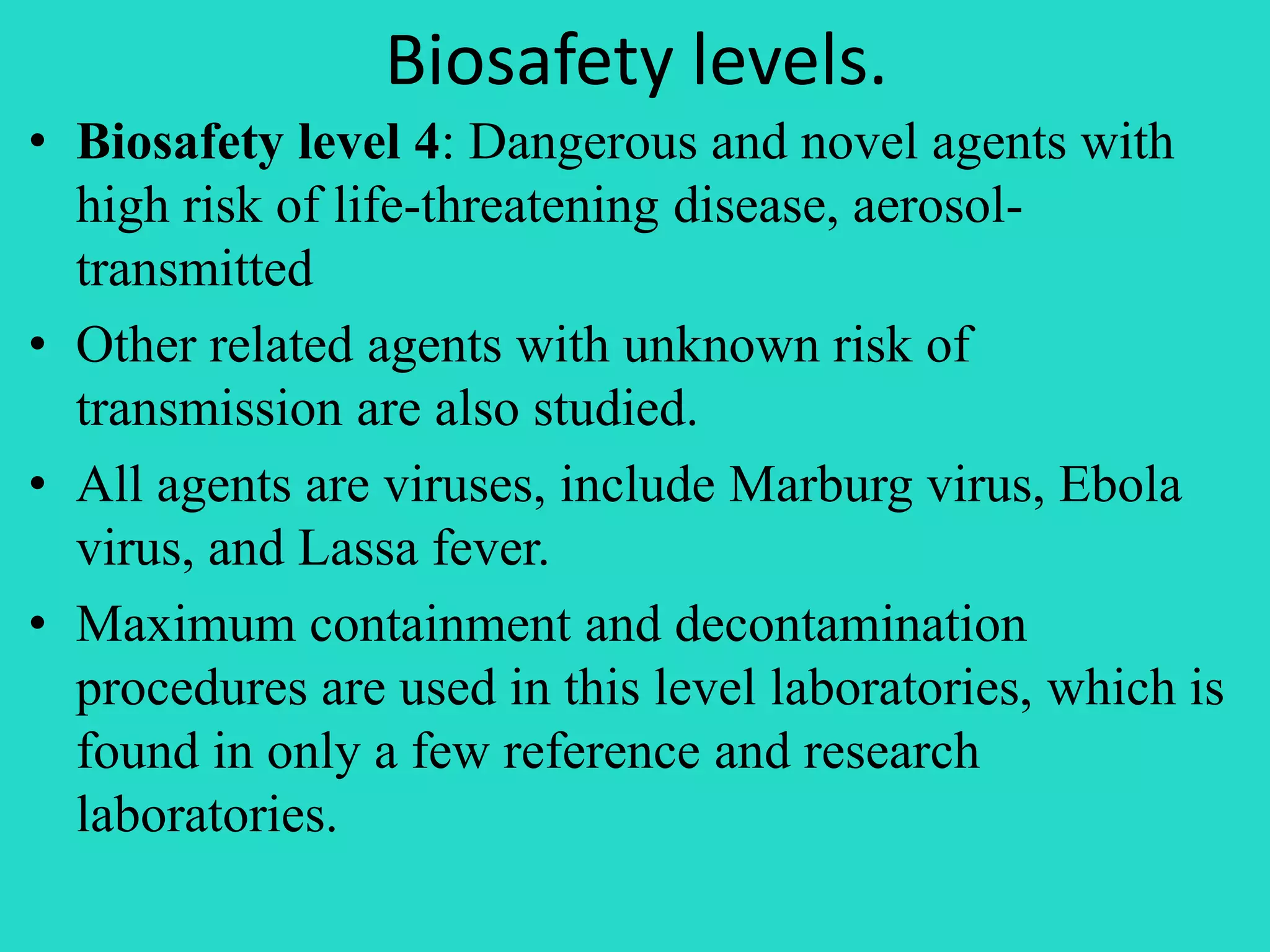
• Biosafety level 4: Dangerous and novel agents with 
high risk of life-threatening disease, aerosol-transmitted 
• Other related agents with unknown risk of 
transmission are also studied. 
• All agents are viruses, include Marburg virus, Ebola 
virus, and Lassa fever. 
• Maximum containment and decontamination 
procedures are used in this level laboratories, which is 
found in only a few reference and research 
laboratories.
Biosafety levels.
Basic safety requirements in microbiology 
laboratory 
1. The laboratory must 
be kept neat, orderly, 
clean and the bench 
tops should be free 
of non-essential 
material
Basic safety requirement in 
microbiology laboratory 
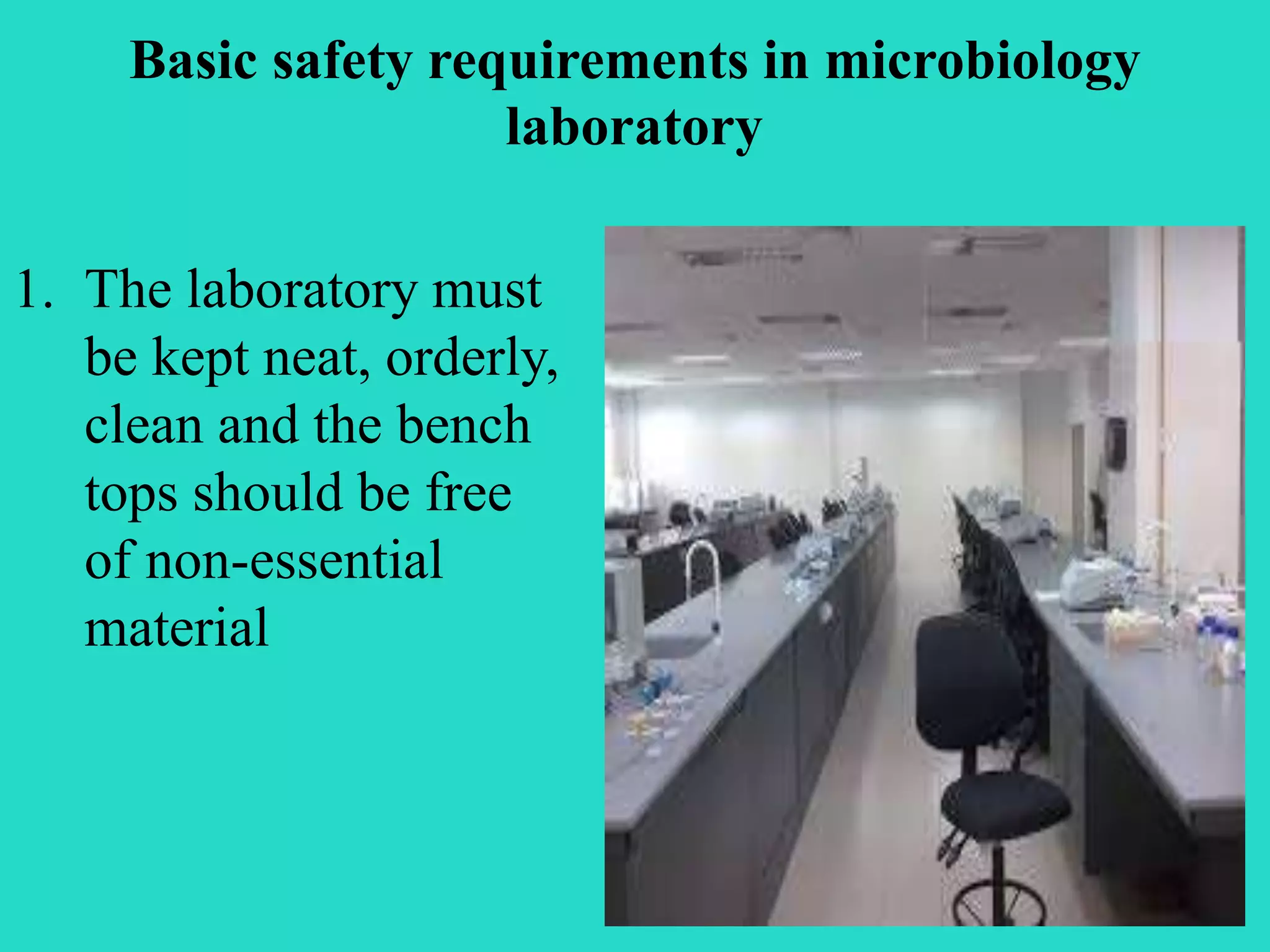
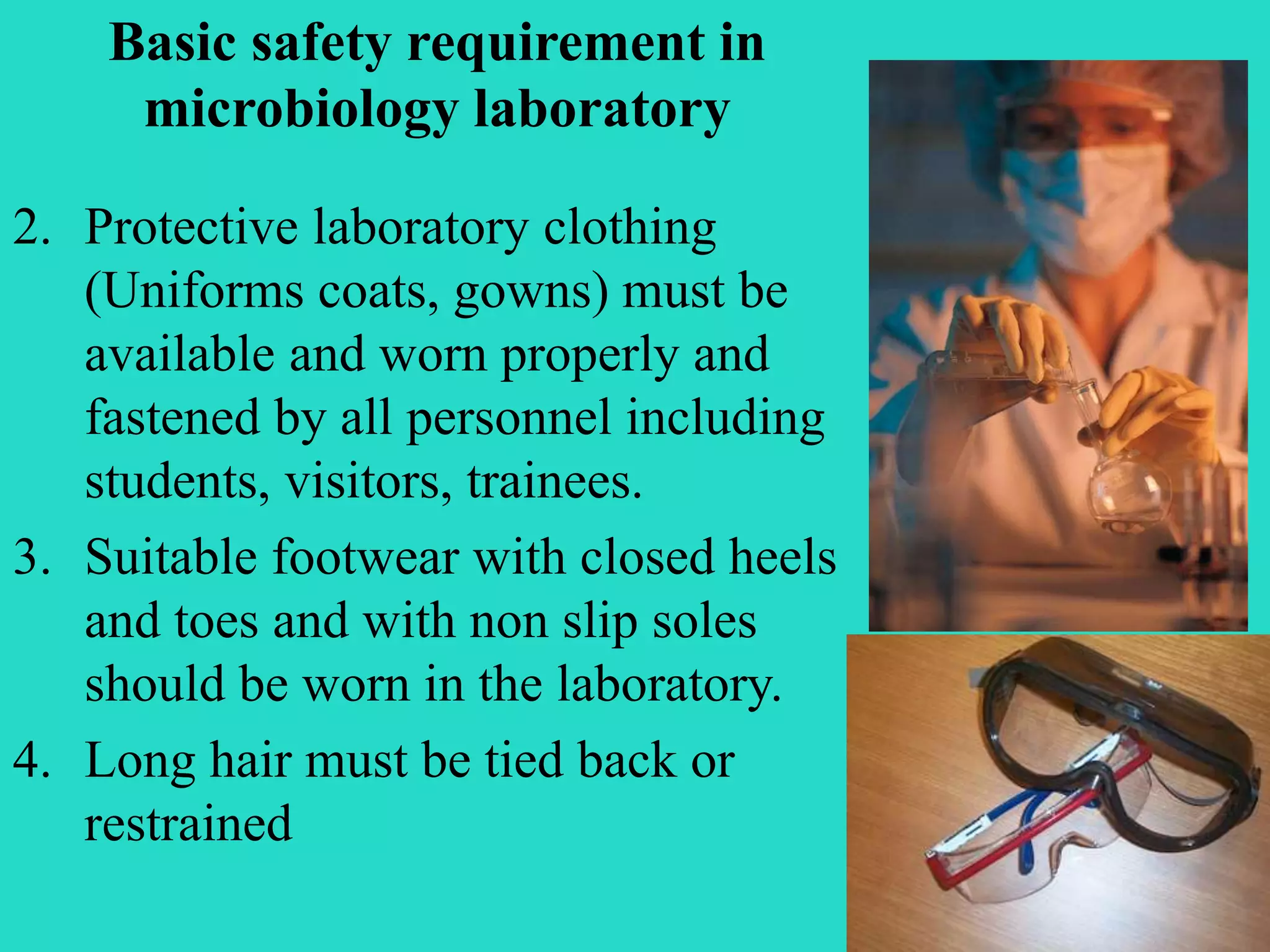
2. Protective laboratory clothing 
(Uniforms coats, gowns) must be 
available and worn properly and 
fastened by all personnel including 
students, visitors, trainees. 
3. Suitable footwear with closed heels 
and toes and with non slip soles 
should be worn in the laboratory. 
4. Long hair must be tied back or 
restrained
Basic safety requirements in microbiology 
laboratory 
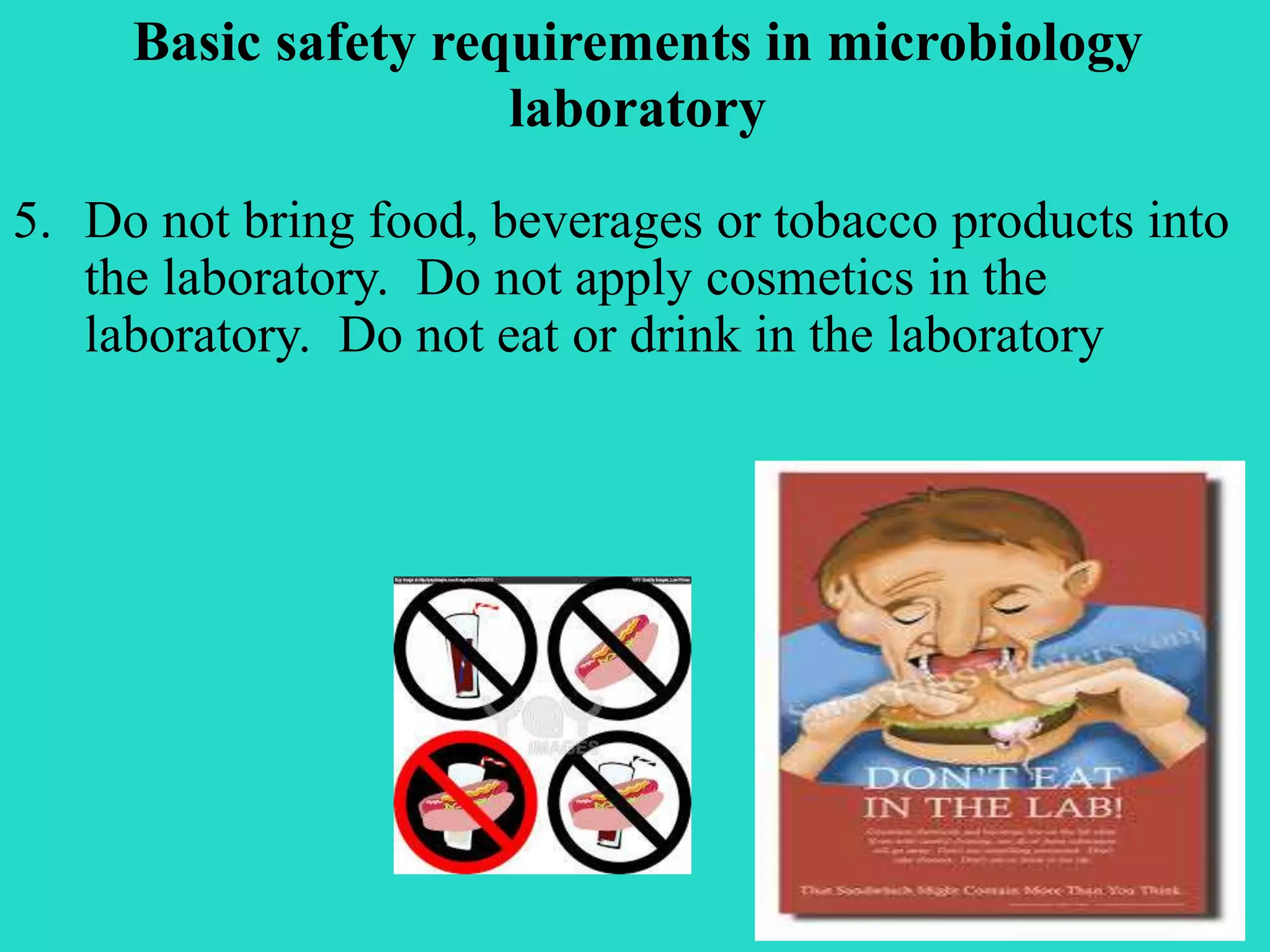
5. Do not bring food, beverages or tobacco products into 
the laboratory. Do not apply cosmetics in the 
laboratory. Do not eat or drink in the laboratory
Basic safety requirements in microbiology 
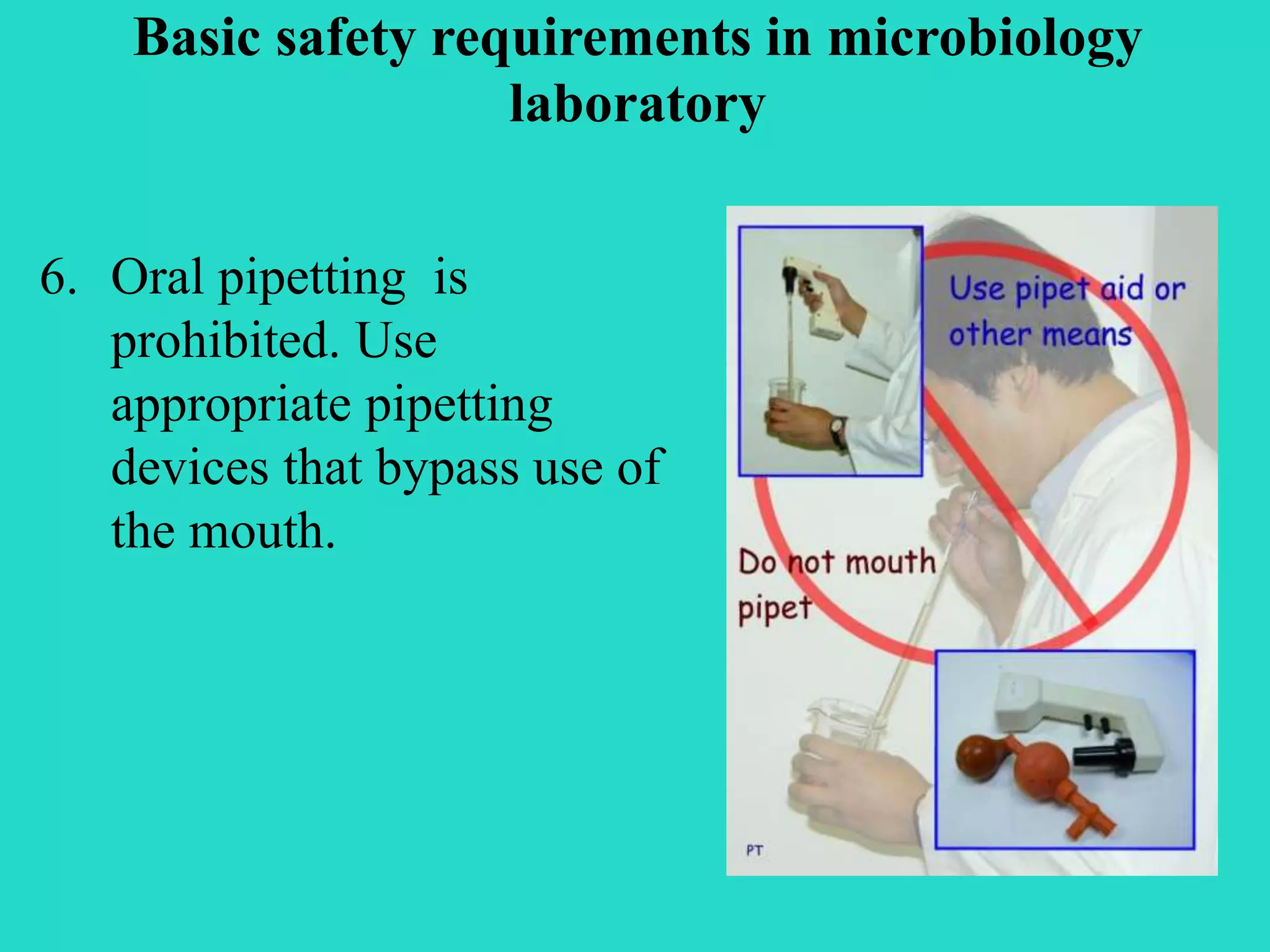
6. Oral pipetting is 
laboratory 
prohibited. Use 
appropriate pipetting 
devices that bypass use of 
the mouth.
Basic safety requirements in microbiology 
laboratory 
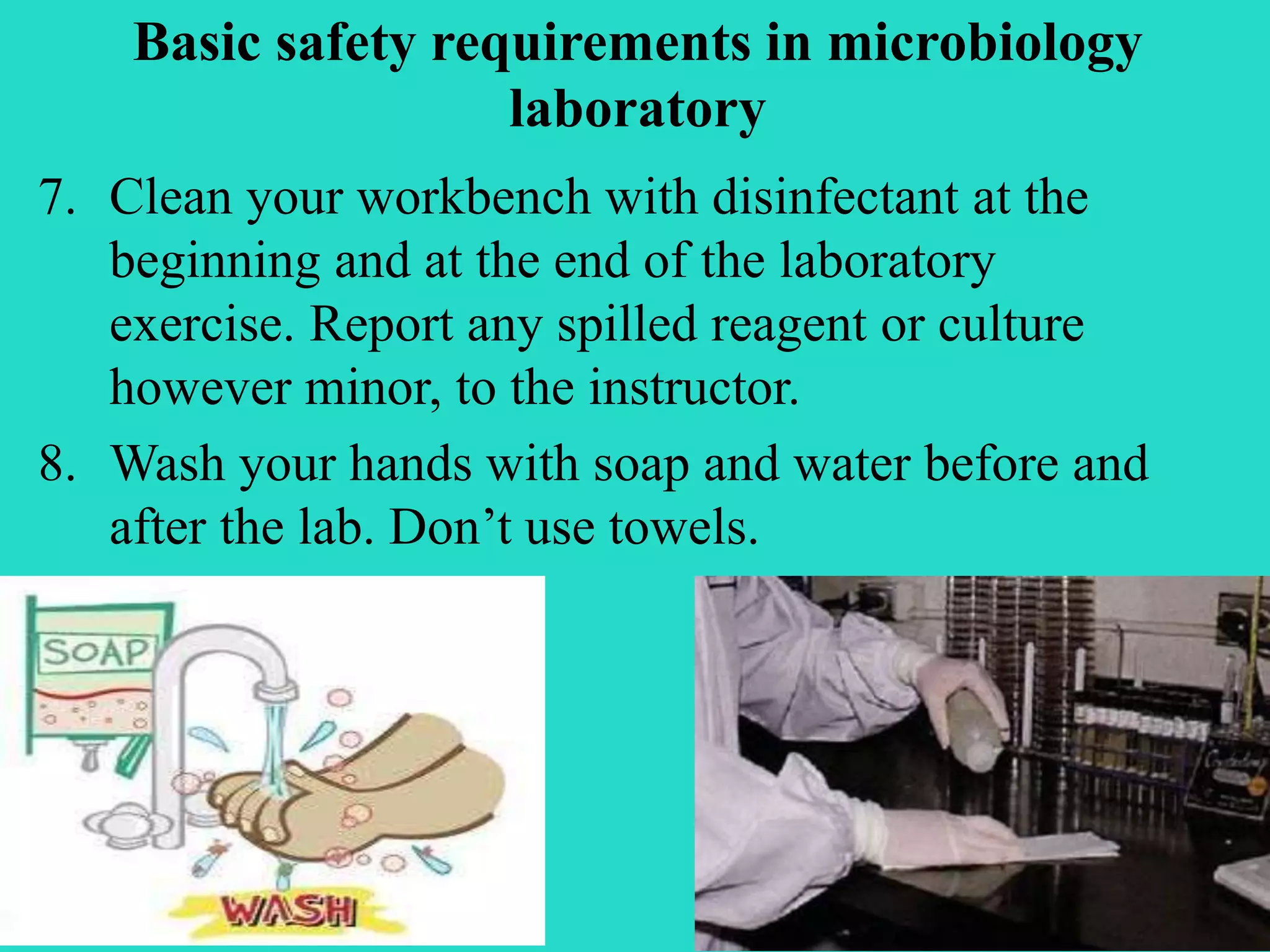
7. Clean your workbench with disinfectant at the 
beginning and at the end of the laboratory 
exercise. Report any spilled reagent or culture 
however minor, to the instructor. 
8. Wash your hands with soap and water before and 
after the lab. Don’t use towels.
Basic safety requirements in microbiology 
laboratory 
9. Never remove cultures, reagents, or other 
materials from the laboratory unless you 
have been granted specific permission. 
10.Inoculated media placed in the incubator must be 
properly labeled with your name, date, and 
nature of the specimen. 
11.All reagents and equipment must be returned to 
their proper place at the end of the lab.
Basic safety requirements in microbiology 
laboratory 
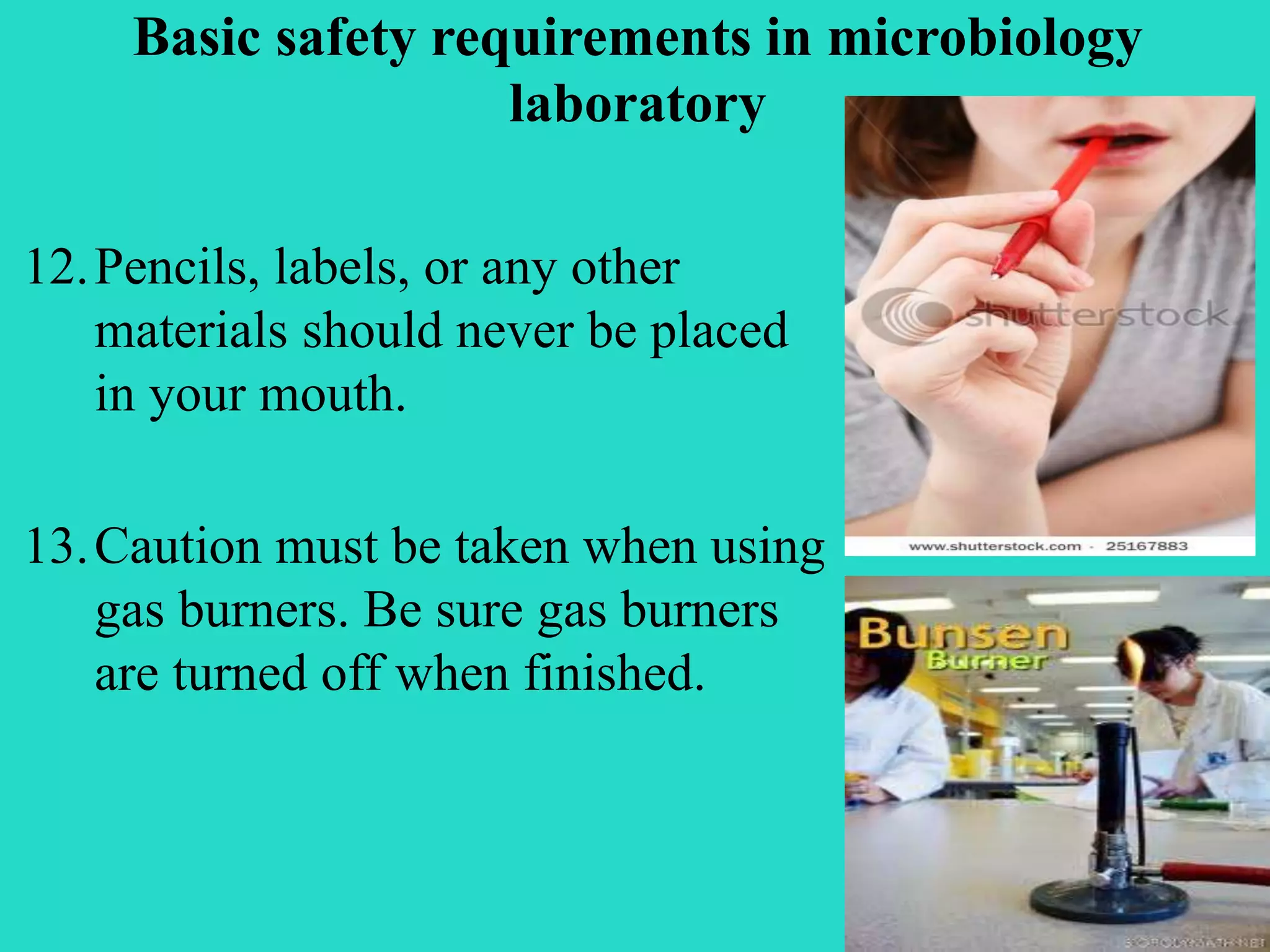
12.Pencils, labels, or any other 
materials should never be placed 
in your mouth. 
13.Caution must be taken when using 
gas burners. Be sure gas burners 
are turned off when finished.
Basic safety requirements in microbiology 
laboratory 
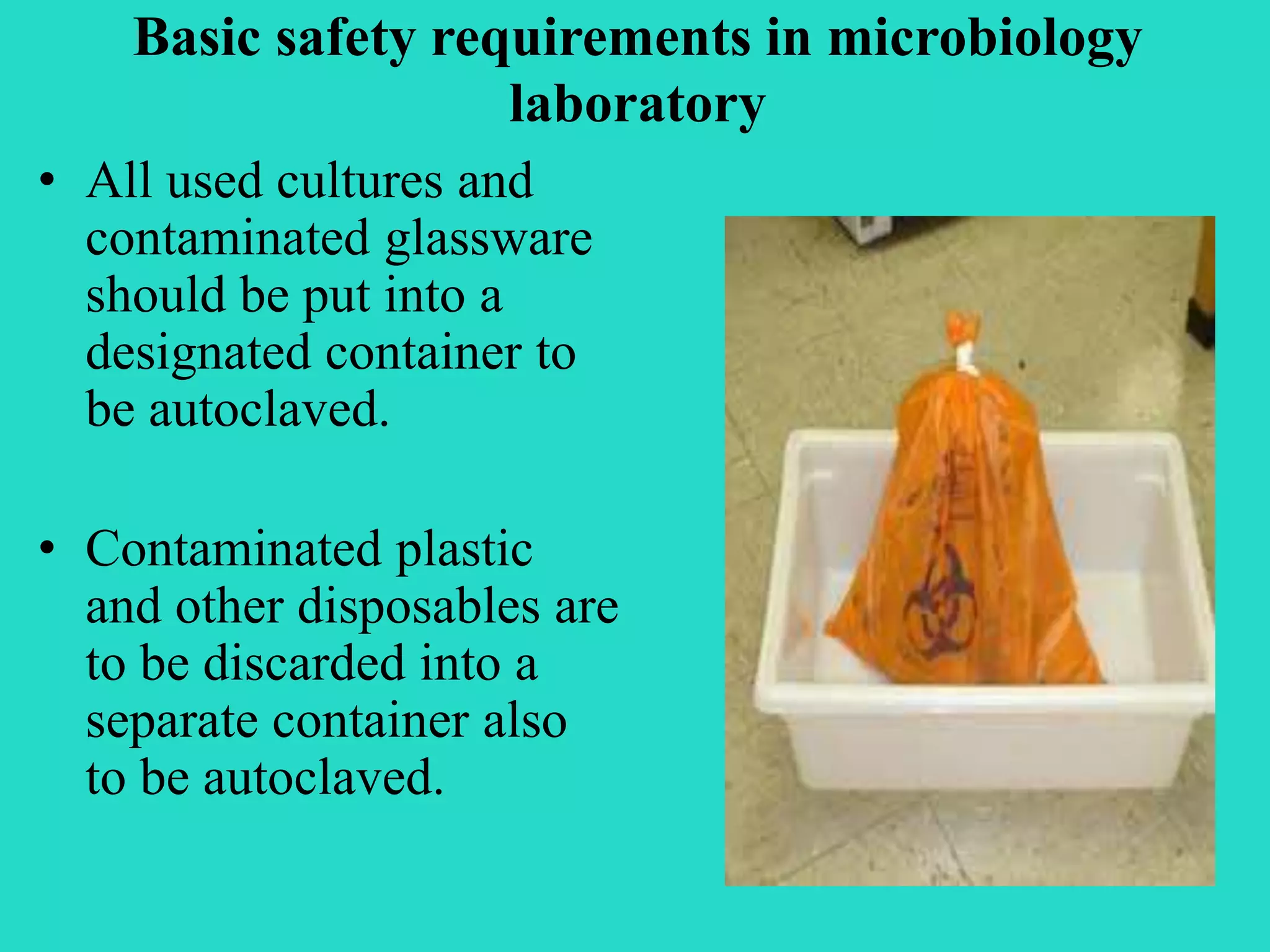
• All used cultures and 
contaminated glassware 
should be put into a 
designated container to 
be autoclaved. 
• Contaminated plastic 
and other disposables are 
to be discarded into a 
separate container also 
to be autoclaved.
1. laboratory safety  protocol

1. laboratory safety protocol

  • 1.
    Laboratory Safety Protocol Zari Esa M.Saleh MSc. Medical Science 2014-2015
  • 2.
    School of Medicine • 1st Semester 2.5% • 1 Quiz + 1.5 Lab book • Mid Year Exam 10% • 2nd Semester 2.5% • 1 Quiz + 1.5 Lab book • Final Year Exam 20%
  • 3.
    Introduction • Laboratorysafety rules are a major aspect of every microbiology lab. • Each student in microbiology laboratory must follow specific safety rules and procedures. The safety rules in this lecture are intended as guidelines and an overview of laboratory safety
  • 4.
    Hazards of ClinicalLaboratory work  Clinical laboratory personnel and employees are subjected to the risk of the followings: 1. Biological hazards (infection-infectious agents). 2. Chemical hazards. 3. Physical hazards.  In response to these hazards, certain guidelines have been developed to protect workers and student in microbiological and medical labs through a combination of safety rules.
  • 5.
    Biosafety levels. •Based on the degree of hazard posed by the infectious agents, labs are divided into four biosafety levels. • Biosafety Level 1: Agents are not known to cause disease in healthy adults, however some organisms may cause disease in immunocompromised individuals. • Agents include Bacillus subtilis, infectious canine hepatitis virus, non-pathogenic E. coli species • Standard practices are required for laboratory work at this level and work may be done on an open bench top.
  • 6.
    Biosafety levels. •Biosafety level 2: Agents associated with human disease, generally required for any human-derived blood, bodily fluids, tissues in which infectious agent may be unknown. • Agents include measles virus, Salmonella species, pathogenic Toxoplasma, Clostridium botulinum, hepatitis B virus • Biosafety cabinets or other approved containment devices autoclave for glassware proper disposal of needles and sharp objects.
  • 7.
    Biosafety levels. Safetycabinet Autoclave Needle disposal container
  • 8.
    Biosafety levels. •Biosafety level 3: Agents with potential for respiratory (aerosol) transmission and may cause serious and potentially lethal infection. • Agents include Mycobacterium tuberculosis, brucellae, and a wide variety of viruses including immunodeficiency viruses. • Standard practice required along with a strict controlled access to the lab, special clothing and decontaminating all waste.
  • 9.
    Biosafety levels. •Biosafety level 4: Dangerous and novel agents with high risk of life-threatening disease, aerosol-transmitted • Other related agents with unknown risk of transmission are also studied. • All agents are viruses, include Marburg virus, Ebola virus, and Lassa fever. • Maximum containment and decontamination procedures are used in this level laboratories, which is found in only a few reference and research laboratories.
  • 10.
  • 11.
    Basic safety requirementsin microbiology laboratory 1. The laboratory must be kept neat, orderly, clean and the bench tops should be free of non-essential material
  • 12.
    Basic safety requirementin microbiology laboratory 2. Protective laboratory clothing (Uniforms coats, gowns) must be available and worn properly and fastened by all personnel including students, visitors, trainees. 3. Suitable footwear with closed heels and toes and with non slip soles should be worn in the laboratory. 4. Long hair must be tied back or restrained
  • 13.
    Basic safety requirementsin microbiology laboratory 5. Do not bring food, beverages or tobacco products into the laboratory. Do not apply cosmetics in the laboratory. Do not eat or drink in the laboratory
  • 14.
    Basic safety requirementsin microbiology 6. Oral pipetting is laboratory prohibited. Use appropriate pipetting devices that bypass use of the mouth.
  • 15.
    Basic safety requirementsin microbiology laboratory 7. Clean your workbench with disinfectant at the beginning and at the end of the laboratory exercise. Report any spilled reagent or culture however minor, to the instructor. 8. Wash your hands with soap and water before and after the lab. Don’t use towels.
  • 16.
    Basic safety requirementsin microbiology laboratory 9. Never remove cultures, reagents, or other materials from the laboratory unless you have been granted specific permission. 10.Inoculated media placed in the incubator must be properly labeled with your name, date, and nature of the specimen. 11.All reagents and equipment must be returned to their proper place at the end of the lab.
  • 17.
    Basic safety requirementsin microbiology laboratory 12.Pencils, labels, or any other materials should never be placed in your mouth. 13.Caution must be taken when using gas burners. Be sure gas burners are turned off when finished.
  • 18.
    Basic safety requirementsin microbiology laboratory • All used cultures and contaminated glassware should be put into a designated container to be autoclaved. • Contaminated plastic and other disposables are to be discarded into a separate container also to be autoclaved.

Editor's Notes

  • #6 labs work with the least dangerous agents and require the fewest precautions; Biosafety Level 4 labs have the strictest methods for handling organisms because they deal with agents that are most dangerous to human health.