


PresentationTOPIC
RYTHEMECITYANDAUTOMATECITYOFHEART
Presented By:
1) Romeen Yasmeen
2) Safi Ullah
3) Rooh Niaz
Submitted To : Ms. Naila Gul
Presenter #01
ROMEEN YASMEEN
DEF.
• Rhythmicity is the ability of heart to beat regularly
• Automaticity is the ability of heart to generate impulses without
external stimuli
• Autorhythmicity is the ability of cardiac ms to generate impulses
without external stimuli at regular rate
•Origin
• Myogenic not neurogenic.
• The nerves control the rate but do not initiate the beat
Evidences:
a) Local anesthetics
e.g. cocaine block the nerve but not stop the
heart
B) Transplanted heart
(No nerve supply) continues to beat.
C) heart of human fetus start to beat before development of nerves
• Nature:
• Most cardiac fibers have the ability of self excitation especially nodal and conducting
fibers
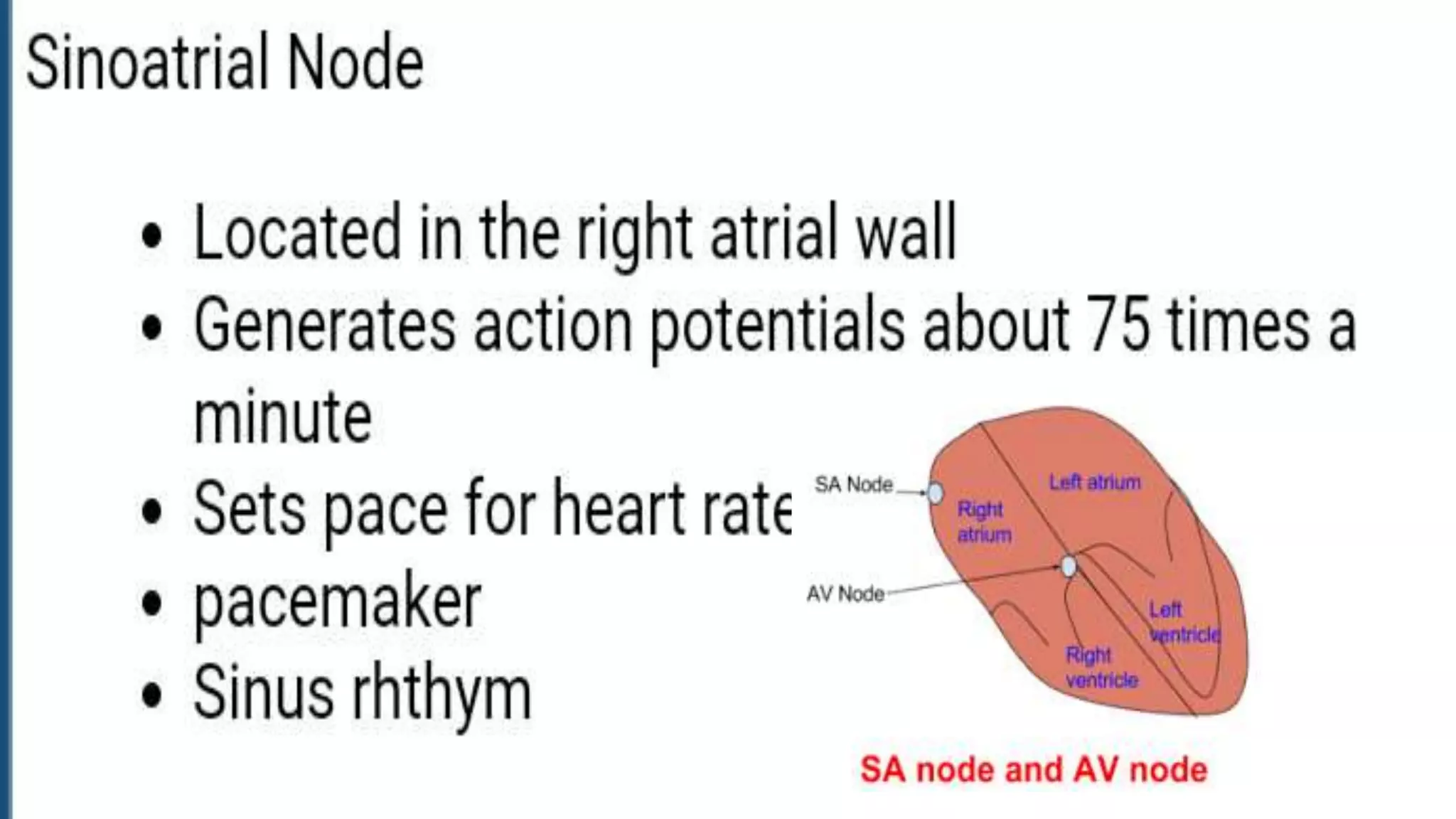
• SAN has the greatest rhythm, so it is called "pace maker of the
heart
MECHANISM OF AUTORHYTHMICITY OF SAN:
•RMP of SAN is low about -55mv to -60 mv.
•This is due to natural leakiness to Na ions
Action Potential (AP):
1. Prepotential or pacemaker
potential (phase 4)
2. Upstroke (phase 0)
3. Repolarization (phase 3)
It is a gradual rise of membrane potential from the resting level of -55
mv to the firing level or the threshold voltage of -40 mv
Mechanism:
1. Na influx through funny (slow) Na
channels
2. Ca influx through T (=transient) -type Ca
channel
3. Decreased K+ efflux
It occurs during diastole, so it is also called the diastolic
depolarization (DD)
Importance of Pacemaker potential:
1. It is the cause of Rhythmicity.
2. The rate of slope of the prepotential determines the heart
rate. The more rapid is the slope, the more will be the heart
rate.
2. UPSTROKE (PHASE 0):
Mechanism:
• Inward Ca++ current through L (long lasting )
Ca++ channels
•From membrane potential (– 40 m.v) to (+ 10 m.v)
3. Repolarization (phase 3):
Mechanism:
• increase K+ efflux
•From membrane potential (+10 m.v) to (-60 m.v)
Presenter #02
Safi ullah
-60
-40
-
20
-
10
0
+10
Phase 0
Phase 3
Na+
ca++
mv
R.M.P
Na+
m
Na+
Na+
Na+Na+
Na+
h
K+
ca++
K+
K+K+
ca++ca++
K+K+K+
Depolarization
Phase 4
(only in
pacemaker cells
Repolarization
ca++
ca++ca++
ca++
ca++ca++ca++
FACTORS AFFECTING
RHYTHMICITY
FACTORS AFFECTING RHYTHMICITY
• CHRONOTROPISM MEANS AN INFLUENCE ON THE HEART RATE
• +VE CHRONOTROPIC → ↑ HEART RATE
• -VE CHRONOTROPIC → ↓ HEART RATE
Dra abdelaziz Hussein, Mansoura Faculty of Medicine
Factor
s
Nervous
Factors
sympat
hetic
Parasy
mpath
etic
Physical
Warming
and
cooling
Chemical
Drug
s
Gases Ions
Toxin
s
AUTONOMIC N. SYSTEM
SYMPATHETIC STIMULATION:
• HAS A +VE CHRONOTROPIC EFFECT
Figure 14-17: Modulation of heart rate by the nervous system
•Release noradrenalin → increases fiber membrane
permeability to Na+ & Ca++→ rapid slope of
Prepotential → threshold is reached rapidly →
increase Rhythmicity
AUTONOMIC N. SYSTEM
PARASYMPATHETIC STIMULATION:
• HAS A -VE CHRONOTROPIC EFFECT
Figure 14-17: Modulation of heart rate by the nervous system
•Acetylcholine released at the vagal endings
→increase the permeability of fiber membrane to
K+ → rapid K+ efflux → hyperpolarization→
decrease Rhythmicity
PHYSICAL FACTORS
WARMING:
• MODERATE WARMING : INCREASES RHYTHMICITY DUE TO;
a)↓permeability of the membrane to K+ ions during the
pacemaker potential, i.e. rapid slope of prepotential
b)↑speed of ionic fluxes across the membrane during the
action potential
•Excessive warming (45 ) denatures the intracellular
proteins and produces cardiac damage
•Moderate cooling decreases Rhythmicity
•Excessive cooling stop Rhythmicity
CHEMICAL FACTORS
1. DRUGS AND
HORMONES:•Catecholamines have +ve chronotropic effect.
•Cholinergic drugs (as methacholine) have –ve
chronotropic effect
•Thyroxine has a +ve chronotropic effect as it
stimulates the metabolism of the SAN.
•Digitalis depresses nodal tissue. It increases K+
efflux → hyperpolarization
CHEMICAL FACTORS
2. BLOOD GASES:
•O2 lack (hypoxia):
•Mild hypoxia increases rhythmicity
•Severe hypoxia decreases and stop rhythmicity
•Hypercapnia: has a -ve chronotropic effect
through acidemia
•H ion concentration :
•Acidosis decreases rhythmicity
•Alkalosis increases rhythmicity
•Severe acidosis and alkalosis decreases
rhythmicity .
CHEMICAL FACTORS
3. INORGANIC IONS :
•K ions :
• mild hyperkalemia have -ve chronotropic effect.
(because excess K in ECF decreases K efflux during
repolarization)
•Mild hypokalemia has opposite effect
•Ca ions:
• Mild increase of Ca++ (hypercalcemia) decreases
rhythmicity by activating K+ channels →
hyperpolarization → so longer time is needed to
reach threshold potential.
•Mild hypocalemia has the opposite
CHEMICAL FACTORS
3. INORGANIC IONS :
•K ions :
• mild hyperkalemia have -ve chronotropic effect.
(because excess K in ECF decreases K efflux during
repolarization)
•Mild hypokalemia has opposite effect
•Ca ions:
• Mild increase of Ca++ (hypercalcemia) decreases
rhythmicity by activating K+ channels →
hyperpolarization → so longer time is needed to
reach threshold potential.
•Mild hypocalemia has the opposite
TOXINS
•Typhoid or diphtheria toxins have a –ve
chronotropic effect, due to direct inhibitory action
on nodal tissues
Presenter #03
Rooh niaz
Rythemecity and automatecity of heart

Rythemecity and automatecity of heart

  • 1.
    PresentationTOPIC RYTHEMECITYANDAUTOMATECITYOFHEART Presented By: 1) RomeenYasmeen 2) Safi Ullah 3) Rooh Niaz Submitted To : Ms. Naila Gul
  • 2.
  • 4.
    DEF. • Rhythmicity isthe ability of heart to beat regularly • Automaticity is the ability of heart to generate impulses without external stimuli • Autorhythmicity is the ability of cardiac ms to generate impulses without external stimuli at regular rate
  • 5.
    •Origin • Myogenic notneurogenic. • The nerves control the rate but do not initiate the beat Evidences: a) Local anesthetics e.g. cocaine block the nerve but not stop the heart
  • 6.
    B) Transplanted heart (Nonerve supply) continues to beat. C) heart of human fetus start to beat before development of nerves
  • 7.
    • Nature: • Mostcardiac fibers have the ability of self excitation especially nodal and conducting fibers • SAN has the greatest rhythm, so it is called "pace maker of the heart
  • 8.
    MECHANISM OF AUTORHYTHMICITYOF SAN: •RMP of SAN is low about -55mv to -60 mv. •This is due to natural leakiness to Na ions Action Potential (AP): 1. Prepotential or pacemaker potential (phase 4) 2. Upstroke (phase 0) 3. Repolarization (phase 3)
  • 9.
    It is agradual rise of membrane potential from the resting level of -55 mv to the firing level or the threshold voltage of -40 mv Mechanism: 1. Na influx through funny (slow) Na channels 2. Ca influx through T (=transient) -type Ca channel 3. Decreased K+ efflux It occurs during diastole, so it is also called the diastolic depolarization (DD)
  • 10.
    Importance of Pacemakerpotential: 1. It is the cause of Rhythmicity. 2. The rate of slope of the prepotential determines the heart rate. The more rapid is the slope, the more will be the heart rate.
  • 11.
    2. UPSTROKE (PHASE0): Mechanism: • Inward Ca++ current through L (long lasting ) Ca++ channels •From membrane potential (– 40 m.v) to (+ 10 m.v)
  • 12.
    3. Repolarization (phase3): Mechanism: • increase K+ efflux •From membrane potential (+10 m.v) to (-60 m.v)
  • 13.
  • 14.
  • 15.
  • 16.
    FACTORS AFFECTING RHYTHMICITY •CHRONOTROPISM MEANS AN INFLUENCE ON THE HEART RATE • +VE CHRONOTROPIC → ↑ HEART RATE • -VE CHRONOTROPIC → ↓ HEART RATE Dra abdelaziz Hussein, Mansoura Faculty of Medicine Factor s Nervous Factors sympat hetic Parasy mpath etic Physical Warming and cooling Chemical Drug s Gases Ions Toxin s
  • 18.
    AUTONOMIC N. SYSTEM SYMPATHETICSTIMULATION: • HAS A +VE CHRONOTROPIC EFFECT Figure 14-17: Modulation of heart rate by the nervous system •Release noradrenalin → increases fiber membrane permeability to Na+ & Ca++→ rapid slope of Prepotential → threshold is reached rapidly → increase Rhythmicity
  • 19.
    AUTONOMIC N. SYSTEM PARASYMPATHETICSTIMULATION: • HAS A -VE CHRONOTROPIC EFFECT Figure 14-17: Modulation of heart rate by the nervous system •Acetylcholine released at the vagal endings →increase the permeability of fiber membrane to K+ → rapid K+ efflux → hyperpolarization→ decrease Rhythmicity
  • 20.
    PHYSICAL FACTORS WARMING: • MODERATEWARMING : INCREASES RHYTHMICITY DUE TO; a)↓permeability of the membrane to K+ ions during the pacemaker potential, i.e. rapid slope of prepotential b)↑speed of ionic fluxes across the membrane during the action potential •Excessive warming (45 ) denatures the intracellular proteins and produces cardiac damage •Moderate cooling decreases Rhythmicity •Excessive cooling stop Rhythmicity
  • 21.
    CHEMICAL FACTORS 1. DRUGSAND HORMONES:•Catecholamines have +ve chronotropic effect. •Cholinergic drugs (as methacholine) have –ve chronotropic effect •Thyroxine has a +ve chronotropic effect as it stimulates the metabolism of the SAN. •Digitalis depresses nodal tissue. It increases K+ efflux → hyperpolarization
  • 22.
    CHEMICAL FACTORS 2. BLOODGASES: •O2 lack (hypoxia): •Mild hypoxia increases rhythmicity •Severe hypoxia decreases and stop rhythmicity •Hypercapnia: has a -ve chronotropic effect through acidemia •H ion concentration : •Acidosis decreases rhythmicity •Alkalosis increases rhythmicity •Severe acidosis and alkalosis decreases rhythmicity .
  • 23.
    CHEMICAL FACTORS 3. INORGANICIONS : •K ions : • mild hyperkalemia have -ve chronotropic effect. (because excess K in ECF decreases K efflux during repolarization) •Mild hypokalemia has opposite effect •Ca ions: • Mild increase of Ca++ (hypercalcemia) decreases rhythmicity by activating K+ channels → hyperpolarization → so longer time is needed to reach threshold potential. •Mild hypocalemia has the opposite
  • 24.
    CHEMICAL FACTORS 3. INORGANICIONS : •K ions : • mild hyperkalemia have -ve chronotropic effect. (because excess K in ECF decreases K efflux during repolarization) •Mild hypokalemia has opposite effect •Ca ions: • Mild increase of Ca++ (hypercalcemia) decreases rhythmicity by activating K+ channels → hyperpolarization → so longer time is needed to reach threshold potential. •Mild hypocalemia has the opposite
  • 25.
    TOXINS •Typhoid or diphtheriatoxins have a –ve chronotropic effect, due to direct inhibitory action on nodal tissues
  • 26.