LAYERS OF
ATMOSPHERE
ATMOSPHERE
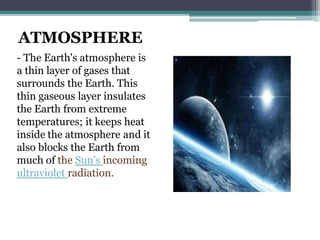
- The Earth's atmosphere is
a thin layer of gases that
surrounds the Earth. This
thin gaseous layer insulates
the Earth from extreme
temperatures; it keeps heat
inside the atmosphere and it
also blocks the Earth from
much of the Sun's incoming
ultraviolet radiation.
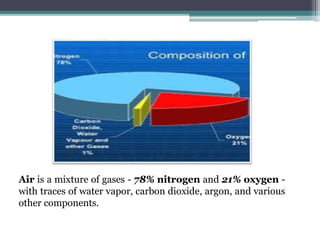
Air is a mixture of gases - 78% nitrogen and 21% oxygen -
with traces of water vapor, carbon dioxide, argon, and various
other components.
COMPOSITION OF AIR
A.Nitrogen - 78% - Dilutes oxygen and prevents rapid burning at the earth's
surface. Living things need it to make proteins. Nitrogen cannot be used
directly from the air. The Nitrogen Cycle is nature's way of supplying the
needed nitrogen for living things.
B.Oxygen - 21% - Used by all living things. Essential for respiration. It is
necessary for combustion or burning.
C. Argon - 0.9% - Used in light bulbs.
D.Carbon Dioxide - 0.03% - Plants use it to make oxygen. Acts as a blanket
and prevents the escape of heat into outer space. Scientists are afraid that the
buring of fossil fuels such as coal and oil are adding more carbon dioxide to the
atmosphere.
E. Water Vapor - 0.0 to 4.0% - Essential for life processes. Also prevents heat
loss from the earth.
F. Trace gases - gases found only in very small amounts. They include
neon, helium, krypton, and xenon.
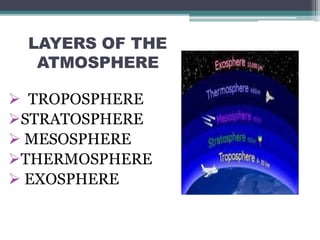
 TROPOSPHERE
STRATOSPHERE
 MESOSPHERE
THERMOSPHERE
 EXOSPHERE
LAYERS OF THE
ATMOSPHERE
TROPOSPHERE
The troposphere is the lowest region in the
Earth's (or any planet's) atmosphere.
On the Earth, it goes from ground (or water)
level up to about 11 miles (17 kilometers) high.
The weather and clouds occur in the
troposphere.
In the troposphere, the temperature generally
decreases as altitude increases.
STRATOSPHERE
The stratosphere is characterized by a slight
temperature increase with altitude and the absence of
clouds.
The stratosphere extends between 11 and 31 miles (17 to
50 kilometers) above the earth's surface.
The earth's ozone layer is located in the stratosphere.
Ozone, a form of oxygen, is crucial to our survival; this
layer absorbs a lot
of ultraviolet solar energy.
Only the highest clouds (cirrus, cirrostratus, and
cirrocumulus) are in the lower stratosphere.
EXOSPHERE
The exosphere is the outermost layer of the
Earth's atmosphere.
The exosphere goes from about 400 miles (640
km) high to about 800 miles (1,280 km).
The lower boundary of the exosphere is called
the critical level of escape, where atmospheric
pressure is very low (the gas atoms are very
widely spaced) and the temperature is very low.
MESOSPHERE
The mesosphere is characterized by
temperatures that quickly decrease as height
increases.
The mesosphere extends from between 31 and
50 miles (17 to 80 kilometers) above the earth's
surface.
THERMOSPHERE
A layer which contains a small fraction of the
atmosphere’s mass.
This is the layer with auroras from the sun. In
the thermosphere, temperature increases with
altitude.
The thermosphere includes the exosphere and
part of the ionosphere.
IMPORTANCE OF ATMOSPHERE
The earth's atmosphere acts as an
insulating layer that protects the earth's
surface from the intense light and heat of
the sun. The atmosphere protects us from
UV and other short wavelength light that
would otherwise do a lot of damage to the
DNA of living organisms.
The atmosphere is also important because it
contains oxygen, which we and other living
organisms breathe. It also acts as a medium of
transport for various chemicals, including, but not
limited to, water (in the form of rain, snow, steam,
etc), carbon dioxide and oxygen (for cycling of these
chemicals between plants and animals), and
nitrogen (which helps plants grow). There are also
other biogeochemical cycles (cycling of different
chemicals) between the land masses, the oceans,
and the atmosphere that are important for the
various kinds of ecosystems around the world!
THANK YOU!

layers of atmosphere.pptx

  • 1.
  • 2.
    ATMOSPHERE - The Earth'satmosphere is a thin layer of gases that surrounds the Earth. This thin gaseous layer insulates the Earth from extreme temperatures; it keeps heat inside the atmosphere and it also blocks the Earth from much of the Sun's incoming ultraviolet radiation.
  • 3.
    Air is amixture of gases - 78% nitrogen and 21% oxygen - with traces of water vapor, carbon dioxide, argon, and various other components.
  • 4.
    COMPOSITION OF AIR A.Nitrogen- 78% - Dilutes oxygen and prevents rapid burning at the earth's surface. Living things need it to make proteins. Nitrogen cannot be used directly from the air. The Nitrogen Cycle is nature's way of supplying the needed nitrogen for living things. B.Oxygen - 21% - Used by all living things. Essential for respiration. It is necessary for combustion or burning. C. Argon - 0.9% - Used in light bulbs. D.Carbon Dioxide - 0.03% - Plants use it to make oxygen. Acts as a blanket and prevents the escape of heat into outer space. Scientists are afraid that the buring of fossil fuels such as coal and oil are adding more carbon dioxide to the atmosphere. E. Water Vapor - 0.0 to 4.0% - Essential for life processes. Also prevents heat loss from the earth. F. Trace gases - gases found only in very small amounts. They include neon, helium, krypton, and xenon.
  • 5.
  • 6.
    TROPOSPHERE The troposphere isthe lowest region in the Earth's (or any planet's) atmosphere. On the Earth, it goes from ground (or water) level up to about 11 miles (17 kilometers) high. The weather and clouds occur in the troposphere. In the troposphere, the temperature generally decreases as altitude increases.
  • 7.
    STRATOSPHERE The stratosphere ischaracterized by a slight temperature increase with altitude and the absence of clouds. The stratosphere extends between 11 and 31 miles (17 to 50 kilometers) above the earth's surface. The earth's ozone layer is located in the stratosphere. Ozone, a form of oxygen, is crucial to our survival; this layer absorbs a lot of ultraviolet solar energy. Only the highest clouds (cirrus, cirrostratus, and cirrocumulus) are in the lower stratosphere.
  • 8.
    EXOSPHERE The exosphere isthe outermost layer of the Earth's atmosphere. The exosphere goes from about 400 miles (640 km) high to about 800 miles (1,280 km). The lower boundary of the exosphere is called the critical level of escape, where atmospheric pressure is very low (the gas atoms are very widely spaced) and the temperature is very low.
  • 9.
    MESOSPHERE The mesosphere ischaracterized by temperatures that quickly decrease as height increases. The mesosphere extends from between 31 and 50 miles (17 to 80 kilometers) above the earth's surface.
  • 10.
    THERMOSPHERE A layer whichcontains a small fraction of the atmosphere’s mass. This is the layer with auroras from the sun. In the thermosphere, temperature increases with altitude. The thermosphere includes the exosphere and part of the ionosphere.
  • 11.
    IMPORTANCE OF ATMOSPHERE Theearth's atmosphere acts as an insulating layer that protects the earth's surface from the intense light and heat of the sun. The atmosphere protects us from UV and other short wavelength light that would otherwise do a lot of damage to the DNA of living organisms.
  • 12.
    The atmosphere isalso important because it contains oxygen, which we and other living organisms breathe. It also acts as a medium of transport for various chemicals, including, but not limited to, water (in the form of rain, snow, steam, etc), carbon dioxide and oxygen (for cycling of these chemicals between plants and animals), and nitrogen (which helps plants grow). There are also other biogeochemical cycles (cycling of different chemicals) between the land masses, the oceans, and the atmosphere that are important for the various kinds of ecosystems around the world!
  • 13.