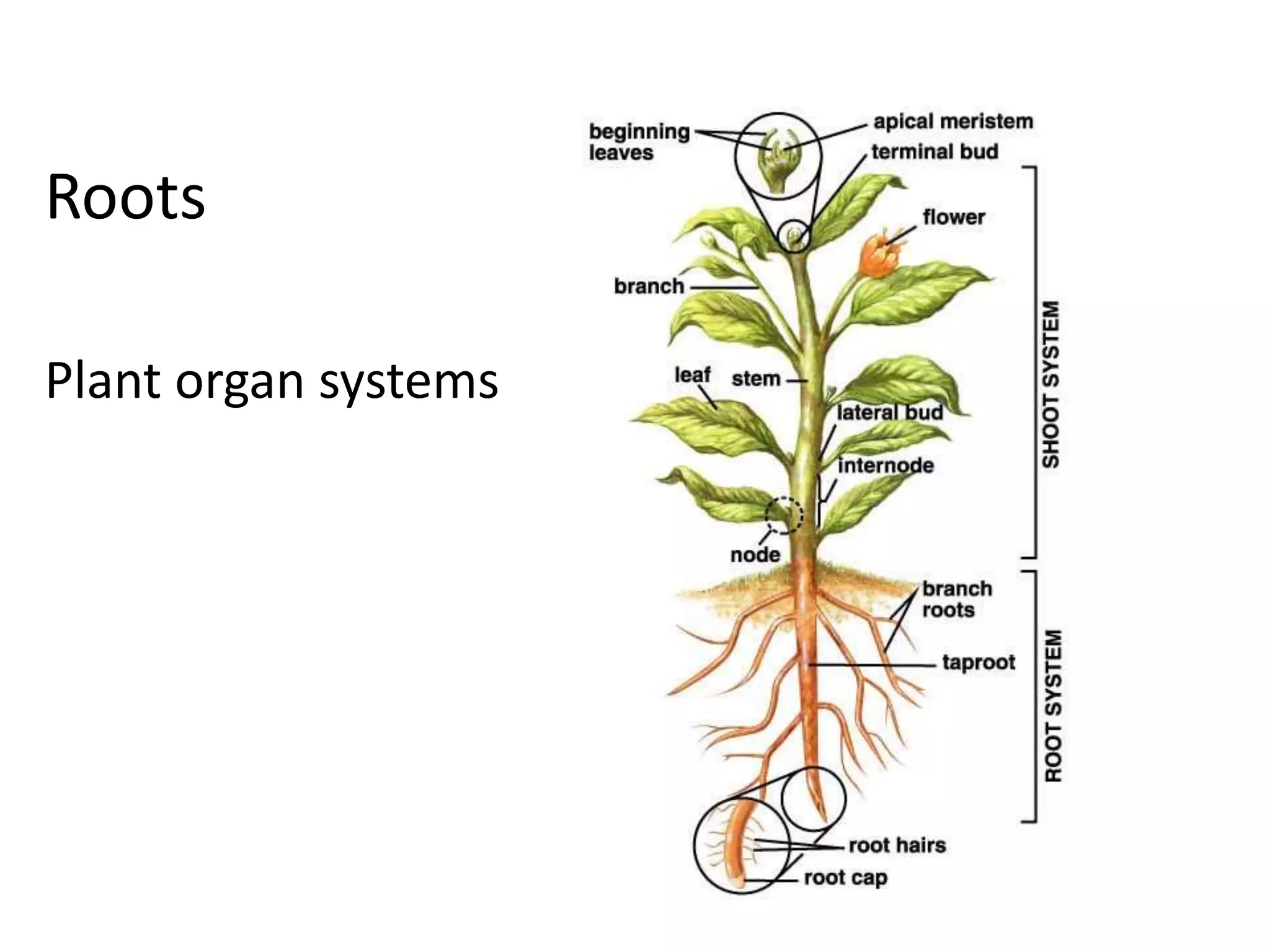
Roots 
Plant organ systems
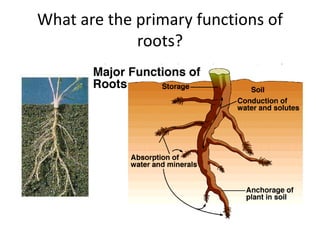
What are the primary functions of 
roots?
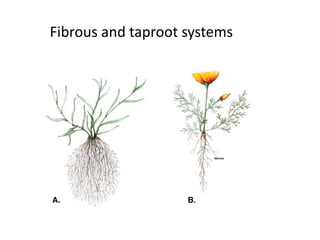
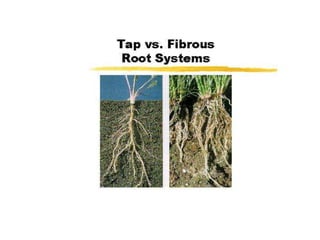
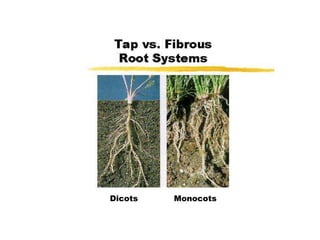
Fibrous and taproot systems
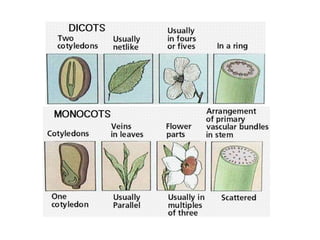
Dicots Monocots
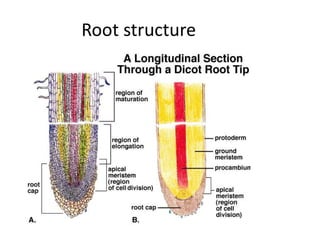
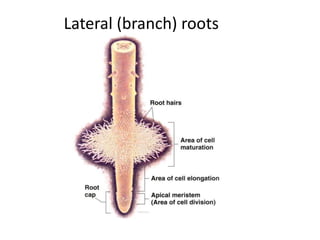
Root structure
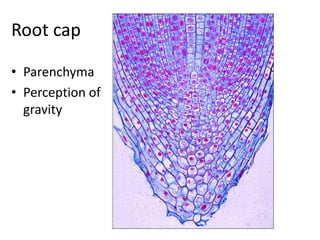
Root cap 
• Parenchyma 
• Perception of 
gravity
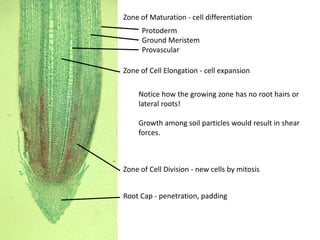
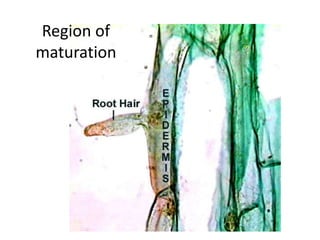
Zone of Maturation - cell differentiation 
Protoderm 
Ground Meristem 
Provascular 
Zone of Cell Elongation - cell expansion 
Notice how the growing zone has no root hairs or 
lateral roots! 
Growth among soil particles would result in shear 
forces. 
Zone of Cell Division - new cells by mitosis 
Root Cap - penetration, padding
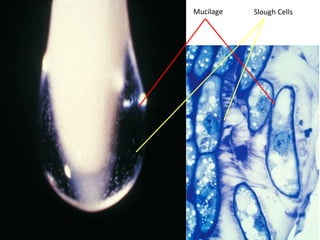
Mucilage Slough Cells
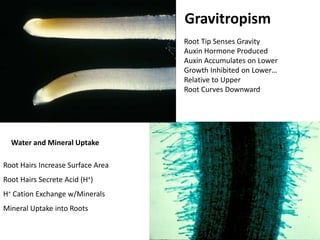
Gravitropism 
Root Tip Senses Gravity 
Auxin Hormone Produced 
Auxin Accumulates on Lower 
Growth Inhibited on Lower… 
Relative to Upper 
Root Curves Downward 
Water and Mineral Uptake 
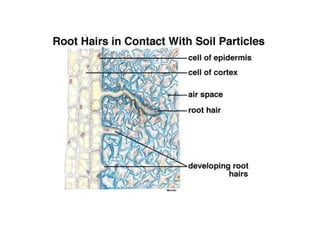
Root Hairs Increase Surface Area 
Root Hairs Secrete Acid (H+) 
H+ Cation Exchange w/Minerals 
Mineral Uptake into Roots
Region of 
maturation
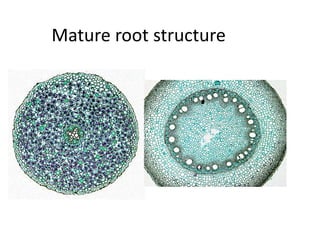
Mature root structure
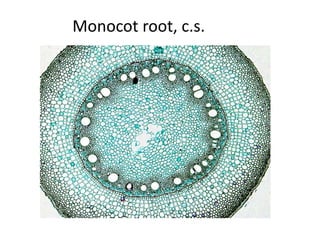
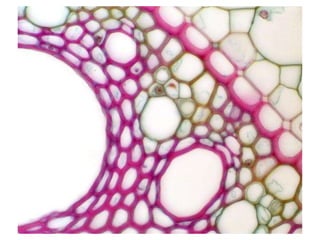
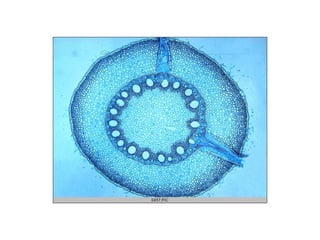
Monocot root, c.s.
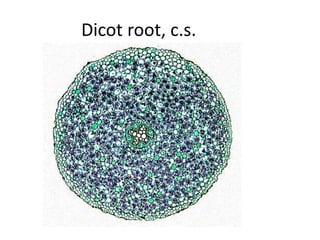
Dicot root, c.s.
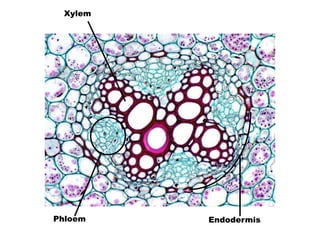
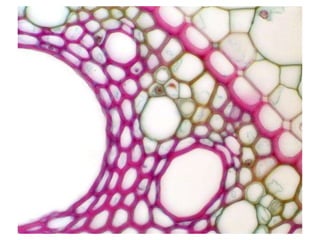
Xylem 
Phloem 
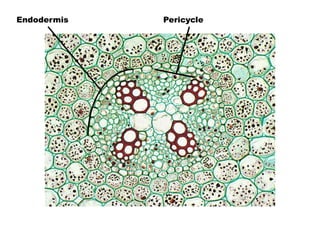
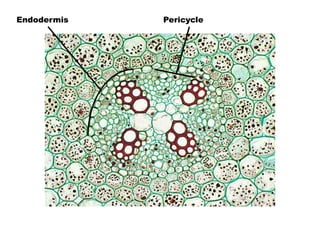
Endodermis
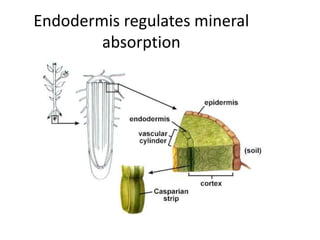
Endodermis regulates mineral 
absorption
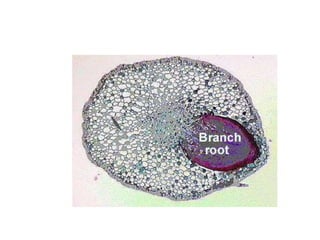
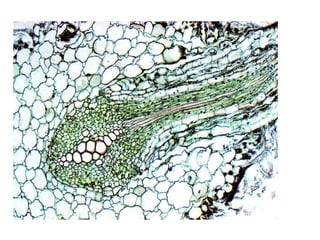
Lateral (branch) roots
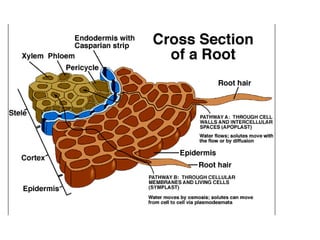
Endodermis Pericycle
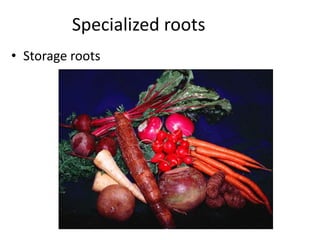
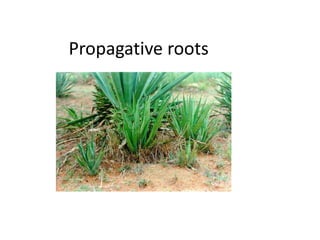
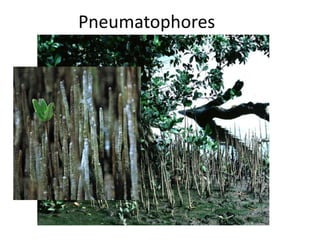
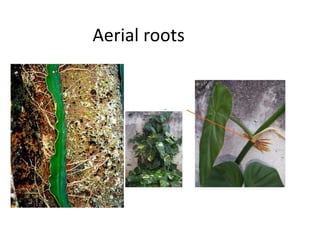
Specialized roots 
• Storage roots
Propagative roots
Pneumatophores
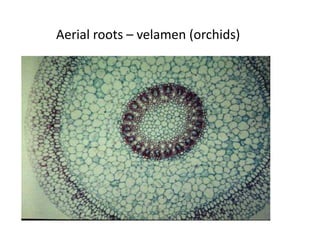
Aerial roots
Aerial roots – velamen (orchids)
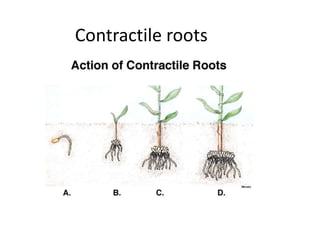
Contractile roots
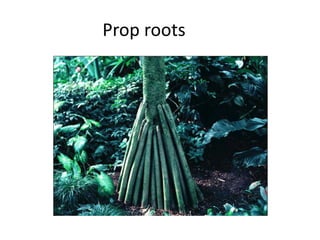
Prop roots
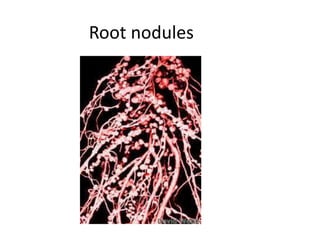
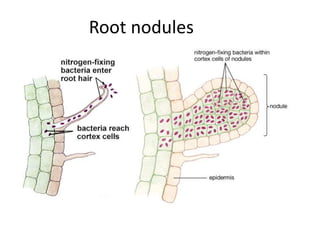
Root nodules
Root nodules
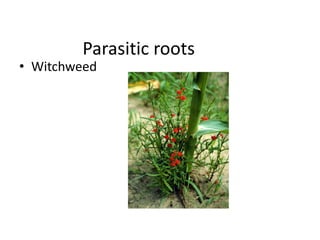
Parasitic roots 
• Witchweed
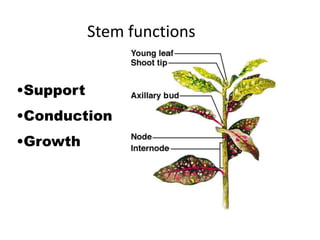
•Support 
•Conduction 
•Growth 
Stem functions
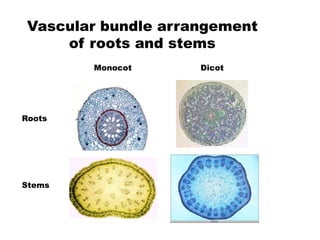
Vascular bundle arrangement 
of roots and stems 
Roots 
Stems 
Monocot Dicot
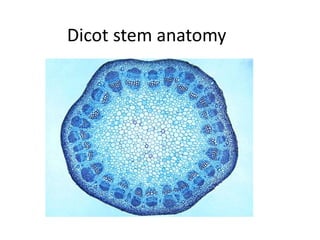
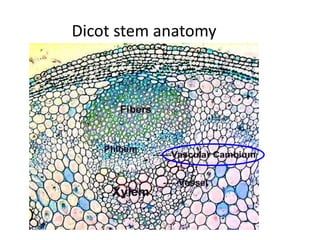
Dicot stem anatomy
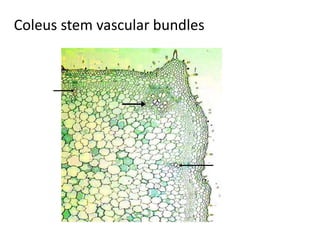
Coleus stem vascular bundles
Dicot stem anatomy
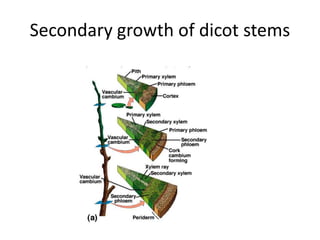
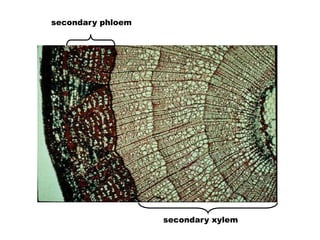
Secondary growth of dicot stems
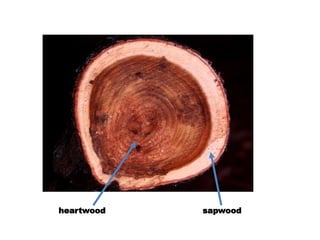
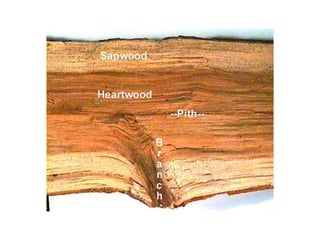
heartwood sapwood
secondary xylem 
secondary phloem
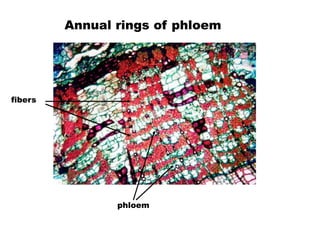
Annual rings of phloem 
phloem 
fibers
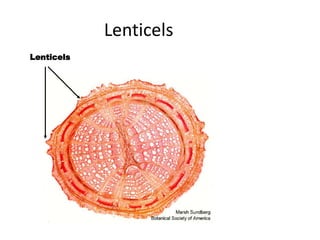
Lenticels 
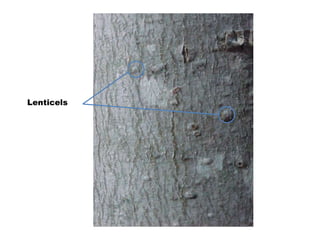
Lenticels
Lenticels
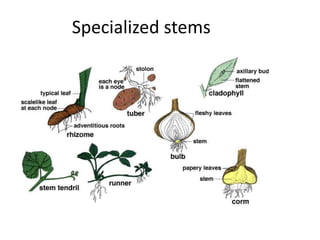
Specialized stems
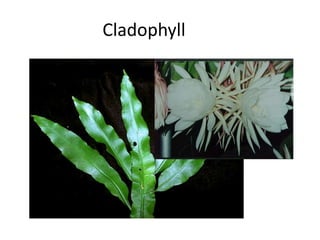
Cladophyll
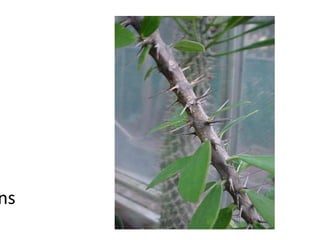
Thorns
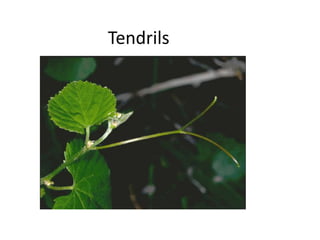
Tendrils
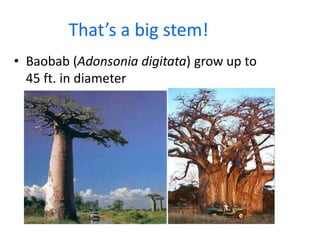
That’s a big stem! 
• Baobab (Adonsonia digitata) grow up to 
45 ft. in diameter
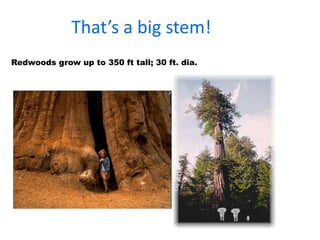
That’s a big stem! 
Redwoods grow up to 350 ft tall; 30 ft. dia.
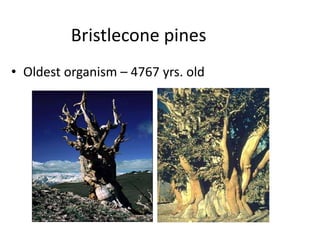
Bristlecone pines 
• Oldest organism – 4767 yrs. old

ROOTS AND STEMS - BOTANY LAB SEMI FINALS