Rococo
Paintings You
 Should Know
    About


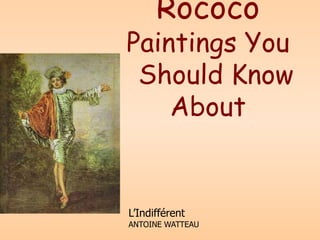
L’Indifférent
ANTOINE WATTEAU
Rubenisme vs.
      Poussinisme
• Rubenisme- natural
  supremacy of color and the
  coloristic style should be
  used as the artist’s guide
  (Watteau)
• Poussinisme- form is the
  most important element in
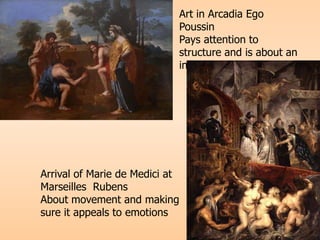
Art in Arcadia Ego
                            Poussin
                            Pays attention to
                            structure and is about an
                            intellectual subject


Arrival of Marie de Medici at
Marseilles Rubens
About movement and making
sure it appeals to emotions
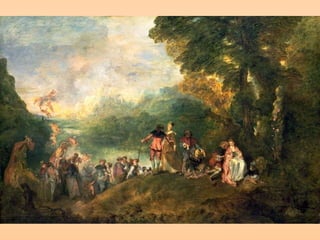
Return From Cythera
• Antoine Watteau 1717-1719
• Rubenisme
• Cythera is the birthplace of
  Venus; they are celebrating love
• Flowing, diagonal, looping feel
  with difficult movement and
  poise portrayals of figures
• Darker up front and lighter in
  back
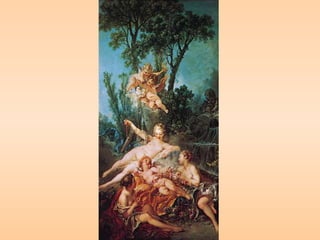
Cupid a Captive
• François Boucher 1754
• Took after Watteau
• Mythological subjects
• Love and “erotic frivolity”
• Based on Baroque diagonals
  and curves, but made it
  delicate
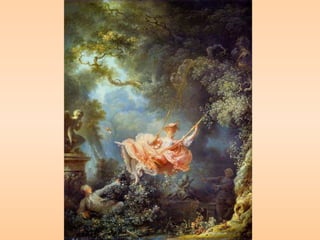
The Swing
• Jean-Honoré Fragonard 1766
• Sensual
• Cupid is warning against
  frivolity, but the woman
  kicks her shoe off at it
• Man in the corner is the
  patron
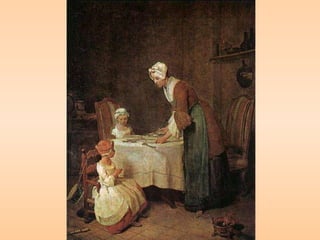
Grace at Table
• Jean-Baptiste-Siméon Chardin
  1740
• Natural
• Lessons
• Ordinary people, especially
  mothers and children
• Simplicity
• Back to light to dark
Rococo Paintings

Rococo Paintings

  • 1.
    Rococo Paintings You ShouldKnow About L’Indifférent ANTOINE WATTEAU
  • 2.
    Rubenisme vs. Poussinisme • Rubenisme- natural supremacy of color and the coloristic style should be used as the artist’s guide (Watteau) • Poussinisme- form is the most important element in
  • 3.
    Art in ArcadiaEgo Poussin Pays attention to structure and is about an intellectual subject Arrival of Marie de Medici at Marseilles Rubens About movement and making sure it appeals to emotions
  • 4.
    Return From Cythera •Antoine Watteau 1717-1719 • Rubenisme • Cythera is the birthplace of Venus; they are celebrating love • Flowing, diagonal, looping feel with difficult movement and poise portrayals of figures • Darker up front and lighter in back
  • 6.
    Cupid a Captive •François Boucher 1754 • Took after Watteau • Mythological subjects • Love and “erotic frivolity” • Based on Baroque diagonals and curves, but made it delicate
  • 8.
    The Swing • Jean-HonoréFragonard 1766 • Sensual • Cupid is warning against frivolity, but the woman kicks her shoe off at it • Man in the corner is the patron
  • 10.
    Grace at Table •Jean-Baptiste-Siméon Chardin 1740 • Natural • Lessons • Ordinary people, especially mothers and children • Simplicity • Back to light to dark